









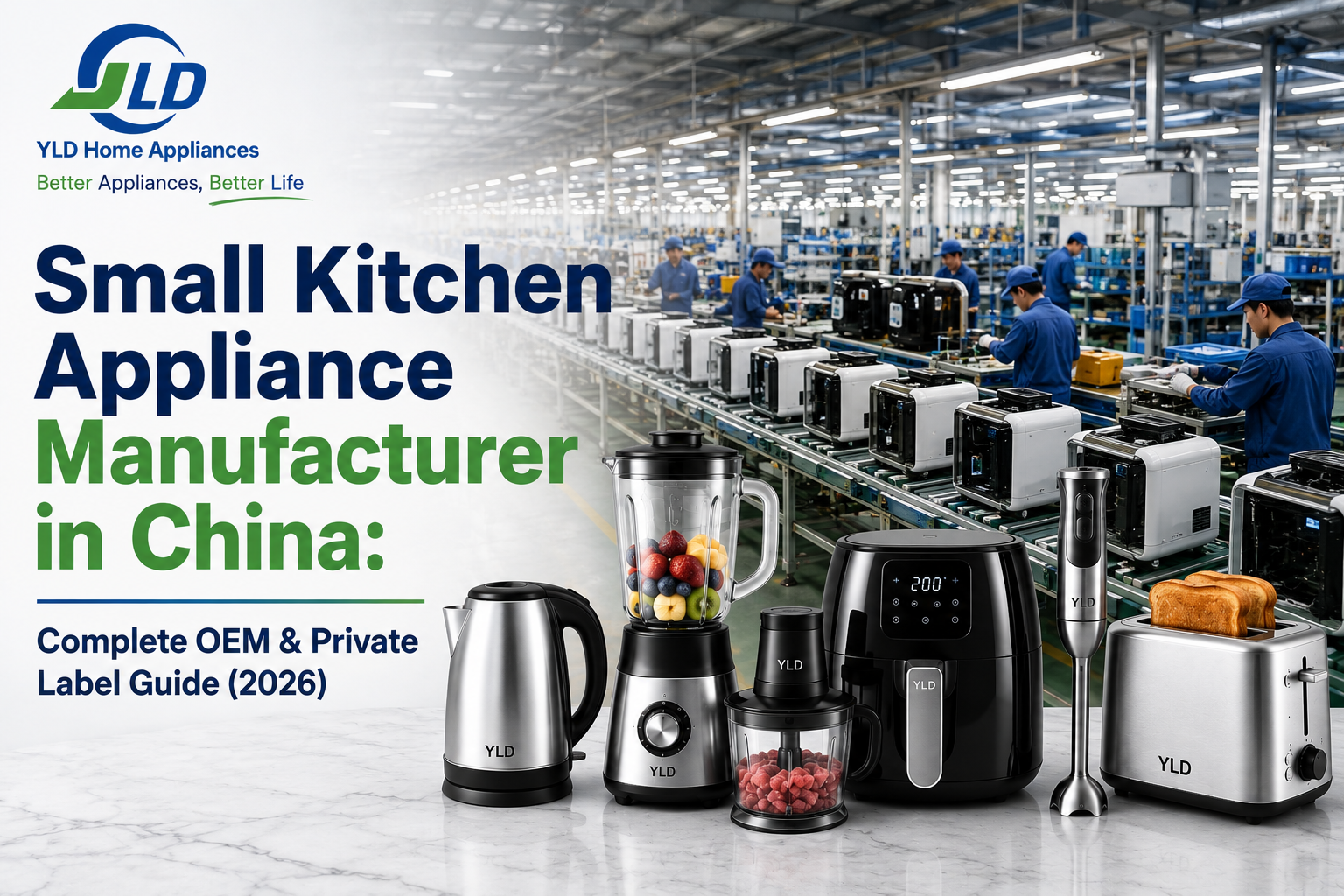
If you are searching for a reliable small kitchen appliance manufacturer in China, you have come to the right place. China remains the world’s most advanced hub for kitchen appliance production, offering distributors, wholesalers, and private label brands access to factory-direct pricing, full OEM customization, and globally certified products. Whether you are launching your first private label brand or scaling an existing wholesale operation, a trusted Chinese manufacturer gives you the production capacity and flexibility to grow.
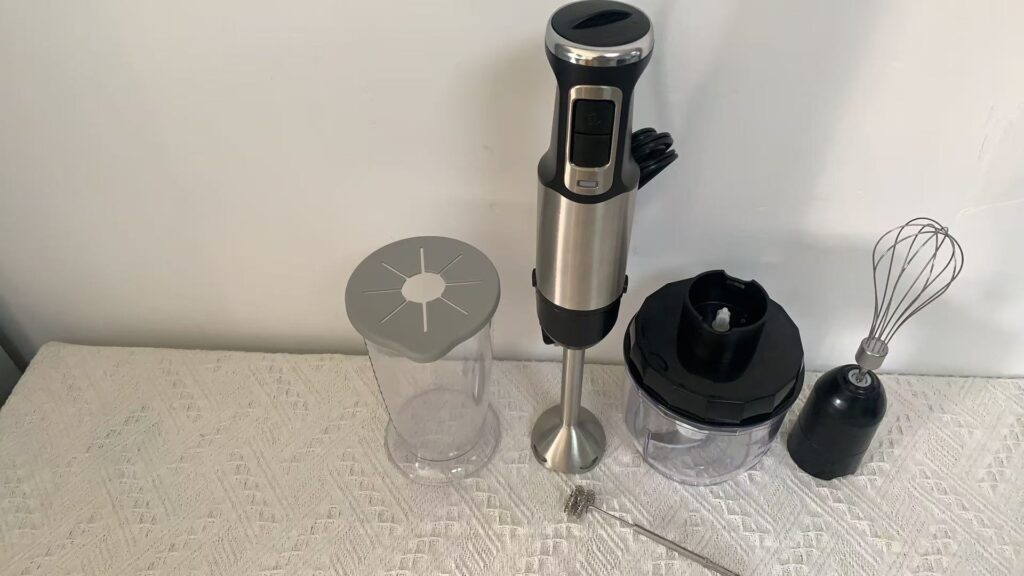
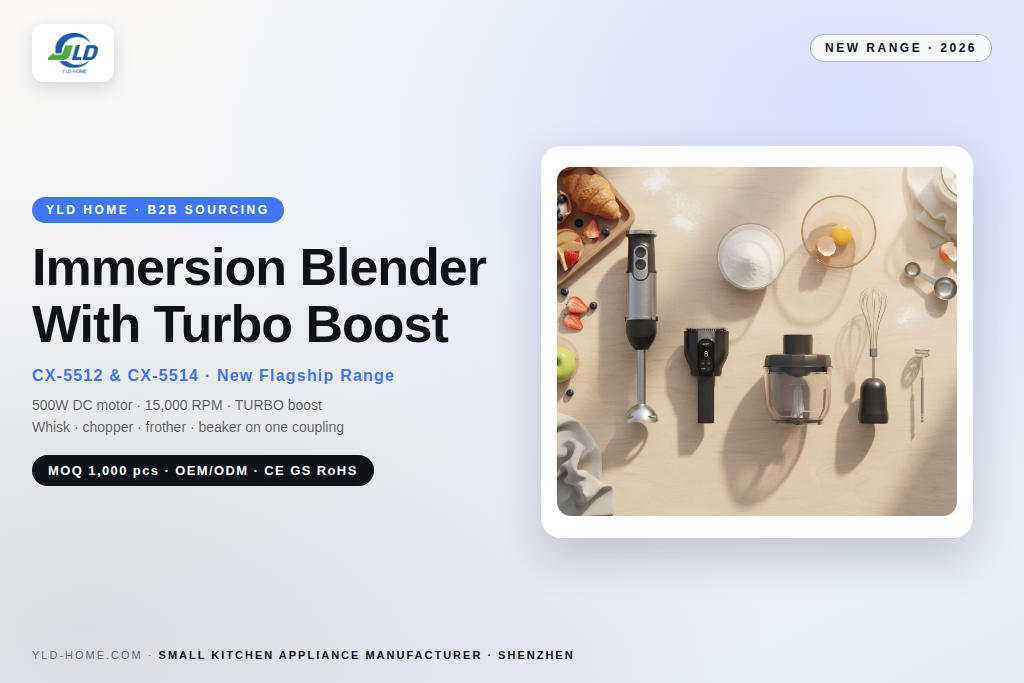
For buyers comparing supply options, the hand blender range from YLD HOME lists every model by type and wattage, with MOQ, lead time and certification stated per page.
In this complete guide, we will cover everything from evaluating a kitchen appliance factory China to understanding OEM vs private label models, certifications, MOQs, and step-by-step sourcing so you can make confident decisions in 2026.
Why China is Still the Global Leader Source for Small Kitchen Appliances
China’s position as the global leader in wholesale kitchen appliances China supply is built on decades of manufacturing excellence. The country offers a combination of deep supply chain integration, advanced tooling capabilities, and a skilled labor force that keeps production costs competitive without compromising on quality.
According to Grand View Research, the global small kitchen appliance market was valued at USD 67.06 billion in 2023 and is projected to grow at a CAGR of 5.7% through 2030. China accounts for a significant share of this supply, making it the most cost-efficient and scalable sourcing destination available to global buyers today.
China vs Other Sourcing Regions
| Factor | China | Vietnam | Bangladesh | Mexico | Turkey |
| Factory MOQ | 1,000 units | 1,000 units | 1,000 units | 1,000+ units | 1,000+ units |
| OEM Lead Time | 15-30 days | 30-50 days | 45-60 days | 40-55 days | 35-50 days |
| Avg. Unit Cost (Blender) | $8-$15 | $12-$20 | $14-$22 | $18-$28 | $16-$25 |
| Certification Support | CE, UL, ETL, RoHS | Limited | Very Limited | UL only | CE only |
For buyers sourcing wholesale kitchen appliances from China, the benefits include factory-direct pricing with no importer markup, full OEM and ODM support, flexible minimum order quantities, and products that carry internationally recognized certifications including CE, RoHS, ISO 9001, UL, and ETL.
What Products Does a Small Kitchen Appliance Manufacturer in China Offer?
China’s small kitchen appliances supplier ecosystem covers virtually every electrical kitchen appliance category available in the global market. According to UN Comtrade, China exported over USD 46 billion worth of electrical household appliances in 2023, representing approximately 38% of total global small appliance exports. This scale means buyers can source a complete product portfolio from a single factory partner without compromising on variety or quality.
Electrical Kitchen Appliances Available from China OEM Manufacturers
| Product Category | Key Products | Typical Wholesale Unit Price |
| Blenders | Hand blender, countertop blender, portable blender, table blender, cordless blender | $8-$35 |
| Juicers | Juicer extractor, citrus juicer, portable orange juicer, juice blender | $10-$40 |
| Mixers | Hand mixer, stand mixer, food processor | $12-$55 |
| Cooking Appliances | Air fryer, food chopper, meat grinder, smoothie machine | $15-$60 |
| Breakfast Appliances | Electric kettle, 2-slice toaster, 4-slice toaster, coffee machine | $8-$45 |
| Grinders | Electric coffee grinder, spice grinder | $7-$25 |
Buyers interested in blender sourcing can review this guide on countertop blender wholesale purchasing for detailed import specifications
For juicer-blender combo OEM units, this juicer blender manufacturer guide covers wholesale options in detail
Mixer buyers can review this comparison on stand mixer vs hand mixer to understand which type suits their target market
How to Evaluate a Kitchen Appliance Factory in China: 7 Key Criteria
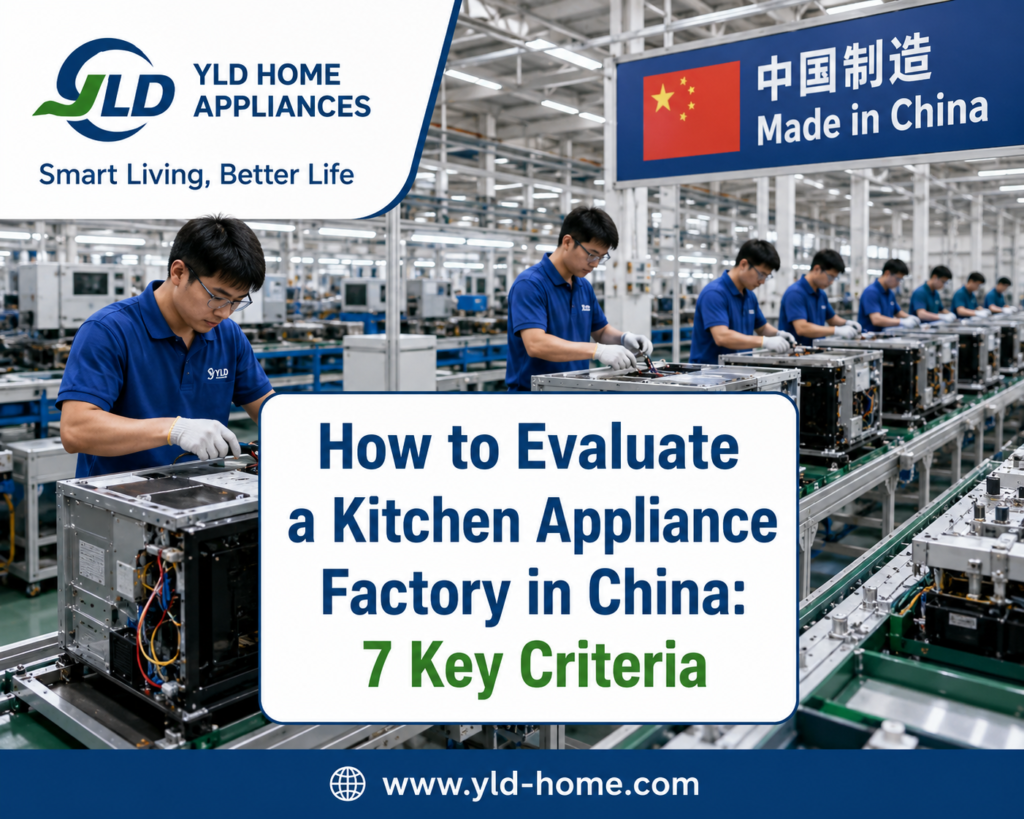
Selecting the right kitchen appliance factory China partner is one of the most critical decisions in your sourcing process. A wrong choice leads to quality problems, delayed shipments, and costly disputes. Evaluate every potential OEM kitchen appliance manufacturer against these seven criteria before placing any order.
1. Years of Manufacturing Experience
Look for factories with a minimum of 8 to 10 years of production history specifically in kitchen appliances. This experience directly impacts tooling precision, defect rates, and the factory’s ability to solve production issues quickly. A manufacturer with over a decade in the industry has refined its processes across hundreds of product variations.
2. Factory Scale and Production Capacity
A factory operating at 10,000 m² or more with 200 or more dedicated staff is generally equipped to handle medium to large wholesale orders without capacity conflicts. Verify the number of active production lines and monthly output capacity before committing. Factories with fewer than 5 production lines may struggle to meet peak season demand on time.
3. International Certifications Held
Any factory you shortlist must already hold the certifications relevant to your target market. For Europe these include CE and RoHS. For the United States and Canada, UL or ETL is required. ISO 9001 applies globally. Never accept promises of future certification as a substitute for current verified documentation.
4. In-House R&D and Prototyping Capability
A genuine custom kitchen appliance manufacturer has its own technical team capable of reading engineering drawings, developing new molds, and delivering prototypes within 15 to 25 days. Factories that outsource all design work cannot reliably support OEM product development timelines.
5. Quality Control Pass Rate
Industry-leading factories maintain a QC pass rate of 98% or higher. Request third-party pre-shipment inspection reports from recent orders to verify this figure independently. A factory that resists third-party inspection is a risk that should disqualify them from your shortlist.
6. Sample Availability and Lead Time
A reliable factory delivers stock product samples within 3 to 7 business days. Custom prototype samples with new tooling should arrive within 15 to 25 days. Slow sample delivery is often a sign of poor internal organization that will repeat itself at the production stage.
7. Verified Client References and Export Track Record
Request contact details for at least two current clients in your target region. A factory with a verified export history to Europe, North America, or your specific market has already navigated the documentation, shipping, and compliance requirements you will face.
OEM vs ODM vs Private Label: Choosing the Right Model
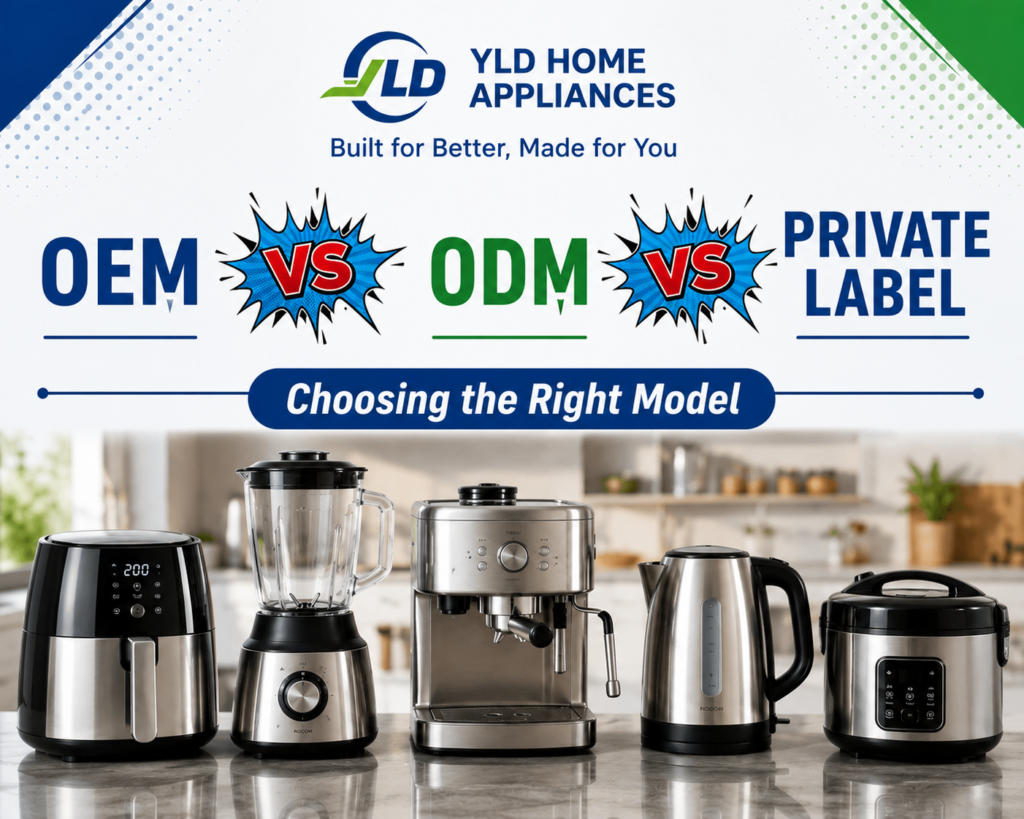
Before contacting a custom kitchen appliance manufacturer, understanding the three production models is essential for matching the right approach to your business goals.
OEM means you provide the product specifications and the factory manufactures the appliance to your exact design. This model suits businesses with an existing concept that needs scale production. OEM offers maximum product differentiation but requires more upfront investment in tooling and design development.
ODM means the manufacturer already has existing designs you can select and customize. You choose a model from their catalog, adjust colors, logos, packaging, and the factory produces it under your brand. ODM is the fastest route to market with lower development costs.
Private label means placing your brand on a manufacturer’s ready-made product with minimal structural change. This is the most accessible entry point for new brands and online sellers.
| Factor | OEM | ODM | Private Label |
| Product Customization | Full custom | Partial | Logo and packaging only |
| Development Time | 45-60 days | 20-30 days | 7-15 days |
| Minimum Investment | High | Medium | Low |
| Best For | Established brands | Growing brands | New entrants |
For a complete walkthrough of the process, this guide on how to start a private label kitchen appliance brand from China covers every stage from supplier selection to launch
Certifications Required for Wholesale Kitchen Appliances from China
When sourcing wholesale kitchen appliances China factories produce for international distribution, certification compliance is mandatory. Non-certified products face customs seizure, retail rejection, and legal liability in regulated markets. According to IEC, over 10,000 electrical product certification standards are currently active globally, making compliance verification a non-negotiable step before any shipment.
Required Certifications by Target Market
| Target Market | Required Certification | Scope |
| European Union | CE, RoHS, ERP | Safety, hazardous materials, energy |
| USA and Canada | UL or ETL | Electrical safety |
| Global / General | ISO 9001, CB, GS | Quality management, international trade |
| Germany (specific) | GS Mark | Enhanced safety compliance |
The Private Label Kitchen Appliances Process: Step by Step
Launching private label kitchen appliances through a China manufacturer is more accessible than many buyers expect. The process follows seven stages from initial contact to delivery at your warehouse.
Step 1: Product Selection
Browse the manufacturer’s existing ODM catalog or submit your own design brief for a fully custom OEM product. At this stage, shortlist two to three product models to sample simultaneously.
Step 2: Sample Request
Request physical samples to evaluate build quality, motor performance, and finish before committing to a production order. Never place a bulk order without approving a physical sample first.
Step 3: Branding and Customization
Submit your logo files, color specifications, and packaging artwork. The factory produces branded samples for your approval before full production begins.
Step 4: Compliance Verification
Confirm that all required certifications for your target market are in place. Request updated original certification documents and verify them with the issuing body where possible.
Step 5: Order Confirmation
Agree on MOQ, unit pricing, tooling fees if applicable, payment terms, and production
timeline in a formal purchase agreement signed by both parties.
Step 6: Production and Quality Control
The factory produces your order. Arrange a third-party pre-shipment inspection to verify quality before goods leave the factory floor.
Step 7: Shipping and Delivery
Choose air freight for speed (5 to 7 days) or ocean freight for cost efficiency (20 to 35 days). Your supplier should provide full export documentation support.
Buyers focusing on portable blenders for their private label line can refer to this portable juice blender OEM guide for features and MOQ detail
For commercial kitchen segments, this guide on high-speed blenders for commercial kitchens covers sourcing criteria and performance benchmarks in detail
Ready to Source Small Kitchen Appliances from China?
YLD Home is a Shenzhen-based small kitchen appliance manufacturer in China with over 13 years of OEM and wholesale manufacturing experience. Our 25,000 m² (monthly output 600,000 finished units) facility operates with 62 machines, 300 staff, and a 99.5% product quality pass rate. We carry CE, RoHS, ISO 9001, UL, ETL, GS, CB, and REACH certifications across our full product range.
Whether you need a custom kitchen appliance manufacturer for a private label launch or a reliable small kitchen appliances supplier for ongoing wholesale orders, our team is ready to support your business goals. Contact us today to request a free quote and get started.
Final Thoughts
Sourcing from a reliable small kitchen appliance manufacturer in China gives your business a real edge in 2026. With factory-direct pricing, full OEM and private label kitchen appliances support, and globally certified products, China remains the most complete sourcing destination available to wholesale buyers and distributors worldwide.
The key is choosing the right kitchen appliance factory China partner from the start. A manufacturer with verified certifications, proven R&D capability, and consistent quality control will not just fulfill your first order but will grow with your business for the long term.
Frequently Asked Questions
What does a small kitchen appliance manufacturer in China typically offer to wholesale buyers?
A small kitchen appliance manufacturer in China offers blenders, juicers, air fryers, mixers, kettles, and coffee machines with full OEM, ODM, and private label support for global wholesale buyers.
How do I find a reliable OEM kitchen appliance manufacturer in China?
Evaluate factories by checking certifications, production capacity, QC pass rate, and client references. Manufacturers with 10 or more years of experience and ISO 9001 certification are the most reliable starting point.
What is the minimum order quantity for private label kitchen appliances from China?
Private label kitchen appliances from China typically start at 1,000 units for standard ODM products. Custom OEM products requiring new tooling generally require 1,000 to 3,000 units minimum.
How much does it cost to source wholesale kitchen appliances from China?
Wholesale kitchen appliances China factories supply range from $8 to $15 for blenders and $18 to $35 for air fryers at standard MOQ. Higher volumes above 5,000 units unlock significantly better per-unit pricing.
What certifications should a kitchen appliance factory in China hold?
A kitchen appliance factory in China should hold CE and RoHS for Europe, UL or ETL for North America, and ISO 9001 globally. Always verify original certification documents before placing any order.
How long does it take to receive a custom kitchen appliance order from China?
A custom kitchen appliance manufacturer in China typically needs 30 to 45 days for first-run production after sample approval. Add 5 to 35 days shipping time depending on air or ocean freight.
Can I order multiple product types from one small kitchen appliances supplier in China?
Yes, most small kitchen appliances suppliers in China accept mixed container orders combining blenders, juicers, kettles, and air fryers in one shipment. This reduces shipping costs and lets buyers test multiple SKUs together.
What is the difference between OEM and private label kitchen appliances?
OEM kitchen appliances are built to your exact design specifications giving full product control. Private label uses an existing manufacturer design with your branding applied, making it faster and lower cost.
Is it safe to source from a kitchen appliance factory in China without visiting in person?
Yes, provided you request physical samples, third-party inspection reports, and verified certifications before ordering. Many global buyers use professional QC inspection services to audit kitchen appliance factories on their behalf.
Why do global distributors prefer wholesale kitchen appliances from China over other countries?
Global distributors prefer wholesale kitchen appliances China manufacturers supply because of factory-direct pricing, wide product variety, fast OEM lead times, and certification support no other region currently matches at scale.
Related models in this range: Hand Blender Manufacturer Direct and Kitchen Blender Wholesale.