







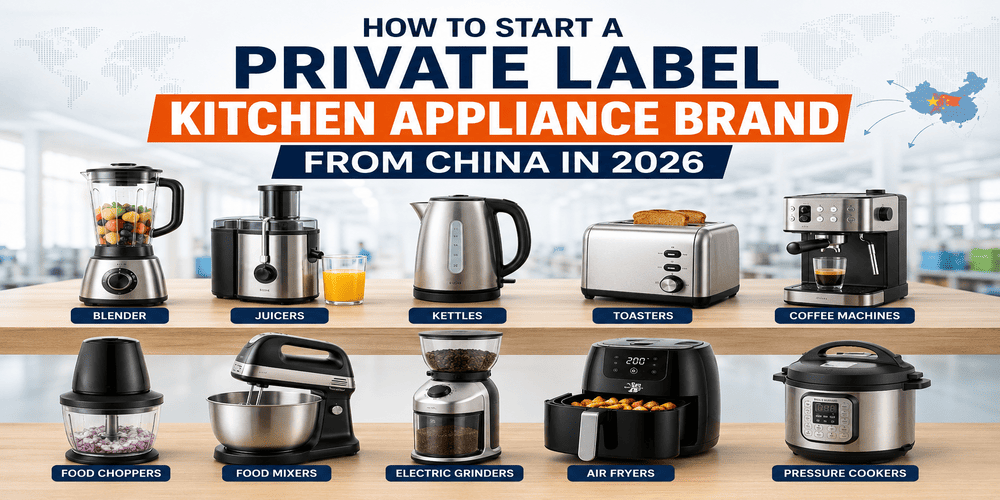

Every year, thousands of entrepreneurs decide to launch a private label kitchen appliance brand. Most of them make the same mistake — they find a generic product, print their logo on it, and call it a brand.
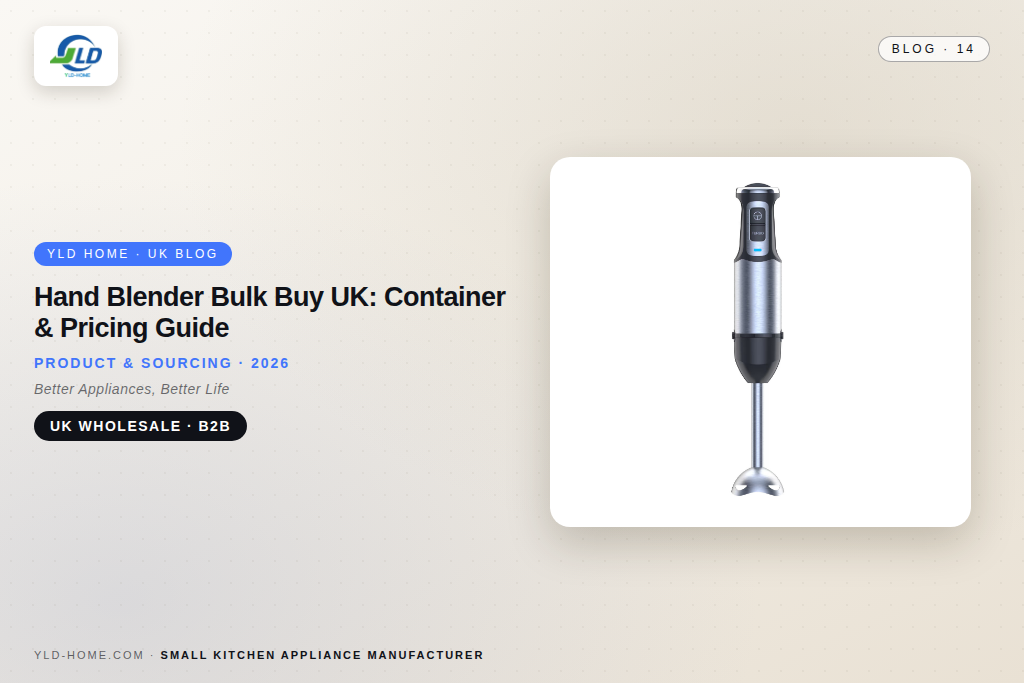
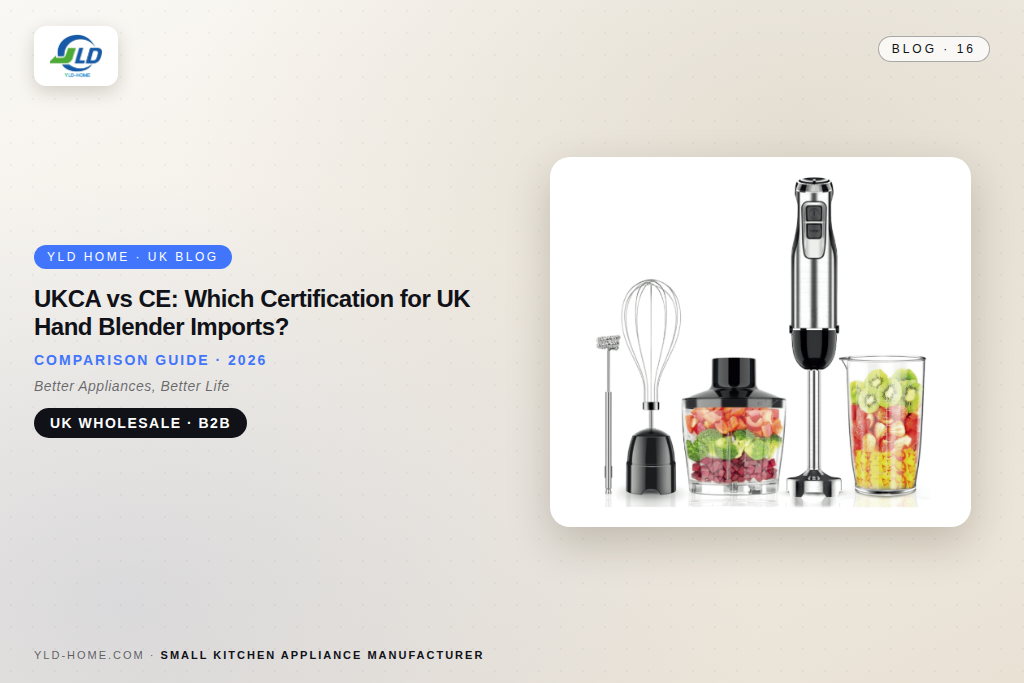
For buyers comparing supply options, the hand blender range from YLD HOME lists every model by type and wattage, with MOQ, lead time and certification stated per page.
That is not brand building. That is reselling in disguise.
The importers who actually build profitable, long-term private label brands do something different. They start at the factory level. They understand China’s manufacturing ecosystem. They match the right product to the right market before placing a single order.
In 2026, the global kitchen appliance market is growing at 6 to 8 percent annually. New retail channels are opening across Southeast Asia, the Middle East, and Africa. And the gap between brands that source smartly and brands that source cheaply is wider than ever.
This guide is designed for importers, private label businesses, kitchen appliance distributors, and sourcing managers looking to build a competitive kitchen appliance brand from China. It provides practical insights into product selection, supplier evaluation, branding strategy, manufacturing coordination, quality control, and market launch planning. By understanding the complete private label process, buyers can make informed business decisions, reduce sourcing risks, and develop a scalable brand with long-term market potential.
Quick Answer
Private label kitchen appliances are custom-branded products manufactured by OEM or ODM suppliers in China and sold under your own brand name. These products can be customized in design, voltage, packaging, logo printing, and performance specifications to match different retail and commercial market requirements. The entire process from first contact to first shipment typically takes 60–120 days depending on customization level.
Key Takeaways
- China still accounts for over 70% of global small appliance manufacturing output in 2026.
- Private label gives you brand ownership without designing a product from scratch — you customize an existing factory model.
- Operating power ranges from 150W to 3000W depending on motor and heating requirements
- Voltage configuration supports both 110–120V/60Hz and 220–240V/50Hz standards
- Motor speed can reach 3,000 to 30,000 RPM based on appliance application
- Heating systems achieve approximately 85% to 95% thermal efficiency
- Certification (CE, FCC, UL/ETL, RoHS) is non-negotiable for entering the US, EU, and UK markets.
- MOQs for private label appliances typically start at 500–1,000 units; trial orders of 50–100 units are usually possible at a cost premium.
- Landed cost (FOB + freight + duties + inspection) must be calculated before committing to any pricing strategy.
Private Label Kitchen Appliance Market Overview
The global kitchen appliance market is growing at 6 to 8 percent annually, with the market projected to reach nearly $380 billion by 2033. Private label brand development is the fastest-growing segment within this category. The shift from white label reselling to branded private label sourcing is driven by compressed margins on generic products and rising consumer expectations around brand quality and presentation.
China, specifically Shenzhen and Guangdong province, remains the dominant manufacturing source for private label kitchen appliances globally. Full OEM and ODM capability, in-house certification coverage, and flexible MOQ structures starting at 100 units make it the most accessible and complete sourcing destination available to importers in 2026.
Regional Market Data for Private Label Buyers
| Region | Market Direction | Entry Model |
| Europe | Premium, certified products | OEM to ODM |
| North America | Performance-focused buyers | Mid-range OEM |
| Middle East & Africa | Volume-driven, cost-sensitive | High-volume OEM |
| Southeast Asia | Fast-growing retail channels | Entry-level OEM |
Private label brands entering this category in 2026 are not entering a saturated market. They are entering a growing one — with room for new entrants who source the right product at the right quality level from the right manufacturer.
Core Components of a Private Label Kitchen Appliance
A private label kitchen appliance is not just a product you source and sell. It is a complete engineered system where each component directly affects final product performance, consumer satisfaction, and retail return rate. Even small differences in material grade or manufacturing tolerance can significantly affect product lifespan and brand reputation.
1. Motor (Power Source)
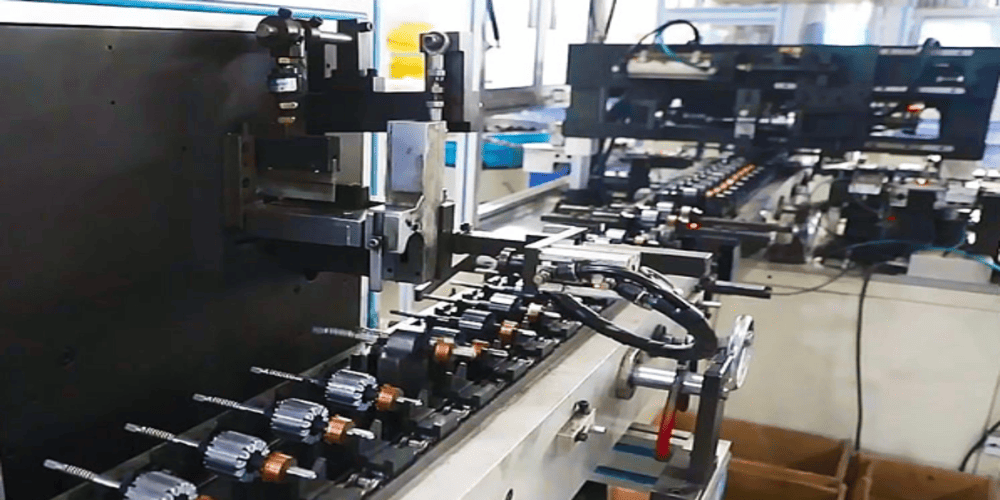
The motor is the core performance component of any kitchen appliance. It converts electrical energy into mechanical rotation that drives the blade assembly.
Full copper motors deliver 30 to 40 percent longer operational lifespan than aluminum motors under equivalent use conditions because copper generates less heat per watt delivered and maintains torque consistency under repeated load cycles.
Why it matters:
A factory that switches from full copper to aluminum after sample approval delivers a product that looks identical but fails in real world retail use within 3 months. Motor grade must be locked in writing before production begins — not assumed from the sample.
2. Blade Assembly (Performance Delivery)
The blade assembly converts motor power into actual blending, chopping, or grinding output. Stainless steel 430 is the minimum acceptable grade for food contact blade assemblies.
A blade assembly with loose jar fit tolerance generates vibration, leakage, and noise complaints that consumers experience as product failure even when the motor is fully functional.
Why it matters:
A 4 tip blade assembly marketed for ice crushing and frozen fruit processing produces inconsistent results regardless of motor power. Blade specification must match the intended use case before production begins.
3. Jar and Container (Food Safety and Compliance)
The jar material is a legal compliance requirement in regulated markets.
BPA or Bisphenol A found in standard polycarbonate plastics is classified as an endocrine disruptor under EU REACH regulations and restricted under California Proposition 65.
BPA free Tritan is compliant in all major regulated markets and a positive selling point in health conscious retail channels.
Why it matters:
A buyer who does not specify BPA free Tritan in writing may receive standard PC which passes visual inspection but fails regulatory compliance. This is not a factory error. It is a specification gap that must be closed before sample approval.
4. Control Panel (Product Tier Signal)
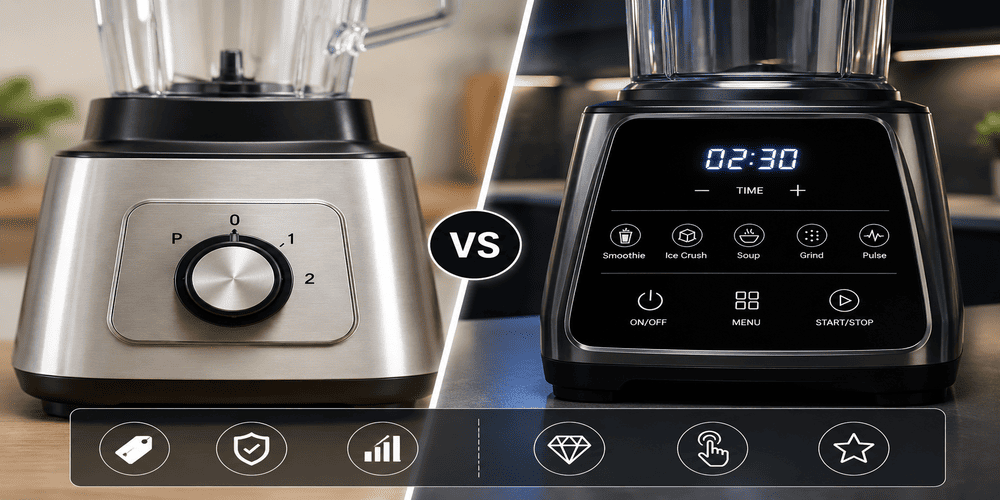
The control panel communicates product tier and brand quality to the consumer before they read a single specification on the packaging.
Mechanical controls suit entry level and mid range retail. Digital touch panels with preset programs define the premium and smart appliance segment.
Why it matters:
A premium control panel on a budget segment product creates a price expectation mismatch at the retail shelf. Control panel type must be selected based on positioning level before product selection, not based on what the factory’s standard configuration offers.
Engineering Insight
The performance of a private label kitchen appliance is not determined by any single component but by how well all components are specified and integrated as a system. Every component must be defined, every grade confirmed, and every tolerance locked in writing before production begins.
Choosing the Right Kitchen Appliance Category
Category selection is one of the most important early decisions. Balance market demand, competition intensity, technical complexity, certification requirements, and average selling price.
Google Trends data shows that air fryers, blenders, and coffee machines have maintained the highest and most consistent consumer search interest among all small kitchen appliance categories globally since 2022.
Blenders
Blenders are one of the most consistently sourced categories. Personal blenders (300–600W) have low MOQs and straightforward CE/UL compliance, while professional-grade models (1,000W+) carry higher ASPs and better margins.
| Spec / Factor | Personal Blender | Professional Blender |
| Typical ASP (retail) | $20–$60 | $80–$200 |
| FOB factory price | $6–$18 | $22–$65 |
| Entry MOQ | 300 units | 500 units |
| Best sales channel | Amazon, DTCH | Hospitality, fitness brands |
Why it matters: A fitness brand that launched a personal blender with a branded shaker cup bundle on Amazon generated $120,000 in its first 6 months by targeting gym-goers and meal prep audiences.
Juicers
Cold press (masticating) juicers command premium ASPs of $80–$300 and are popular with health-conscious consumers. Centrifugal juicers are lower-cost but heavily commoditized, making design and packaging the key differentiator at OEM level.
| Spec / Factor | Centrifugal Juicer | Cold Press (Masticating) |
| Typical ASP (retail) | $25–$70 | $80–$300 |
| FOB factory price | $8–$22 | $28–$90 |
| Entry MOQ | 300 units | 300 units |
| Best sales channel | Amazon, discount retail | DTC, specialty health retail |
Why it matters: A wellness brand that launched a cold press juicer with a 3-day juice cleanse guide insert achieved a 4.6-star rating and $95,000 in first-year sales through DTC and Instagram marketing.
Kettles
Electric kettles have high production volume in China and low tooling costs, making them an easy OEM entry point. Variable-temperature models with keep-warm functions attract tea and coffee enthusiasts, especially in the UK and EU markets.
| Spec / Factor | Basic Electric Kettle | Variable Temp / Smart Kettle |
| Typical ASP (retail) | $18–$40 | $45–$120 |
| FOB factory price | $5–$13 | $14–$38 |
| Entry MOQ | 300 units | 300 units |
| Best sales channel | Amazon, retail | DTC, specialty kitchenware, UK/EU |
Why it matters: A UK-based tea brand added a variable-temperature kettle under their existing label and increased average order value by 38% within the first quarter of launch.
Toasters
Toasters are a mature, price-competitive category best approached with strong design differentiation. Stainless steel retro aesthetic or matte-finish models perform well in mid-market retail positioning.
| Spec / Factor | 2-Slice Toaster | 4-Slice Toaster |
| Typical ASP (retail) | $20–$55 | $35–$90 |
| FOB factory price | $7–$18 | $12–$28 |
| Entry MOQ | 500 units | 500 units |
| Best sales channel | Amazon, mid-market retail | Amazon, retail, DTC bundles |
Why it matters: A kitchenware brand that launched a matte black 2-slice toaster targeting interior design enthusiasts sold out its first 500-unit order in 11 weeks through Pinterest and Amazon combined.
Coffee Machines
Coffee machines are one of the highest-margin categories for private label, with ASPs ranging from $25 (drip) to $350+ (semi-automatic). Active OEM suppliers in Guangdong cover all major machine types with strong customization options.
| Spec / Factor | Drip Coffee Machine | Semi-Auto Espresso |
| Typical ASP (retail) | $25–$80 | $120–$350+ |
| FOB factory price | $8–$25 | $38–$110 |
| Entry MOQ | 500 units | 500 units |
| Best sales channel | Amazon, retail | DTC, specialty coffee, hospitality |
Why it matters: A specialty coffee brand that launched a branded semi-automatic espresso machine at $189 retail generated over $260,000 in first-year DTC revenue by bundling it with their existing coffee bean subscription.
Food Choppers
Food choppers are a low-cost entry point for private label with very low MOQs and strong impulse purchase potential on social commerce channels. Mini choppers (300–500ml) work especially well in bundle strategies alongside other small appliances.
| Spec / Factor | Mini Chopper | Full-Size Food Chopper |
| Typical ASP (retail) | $12–$35 | $28–$70 |
| FOB factory price | $4–$11 | $9–$22 |
| Entry MOQ | 300 units | 300 units |
| Best sales channel | Amazon, social commerce | Amazon, retail |
Why it matters: A home cooking brand bundled a mini chopper with a recipe card set and sold 1,200 units in 8 weeks through TikTok Shop at a 52% gross margin, with zero paid advertising.
Food Mixers
Hand mixers offer an accessible private label entry with lower tooling investment, while stand mixers occupy a premium tier that requires stronger brand positioning. Stand mixer private labeling demands higher capital commitment due to competition from established brands.
| Spec / Factor | Hand Mixer | Stand Mixer |
| Typical ASP (retail) | $25–$70 | $80–$280 |
| FOB factory price | $8–$22 | $28–$90 |
| Entry MOQ | 300 units | 500 units |
| Best sales channel | Amazon, retail | DTC, specialty baking, mid-retail |
Why it matters: A baking content creator launched a co-branded hand mixer with their logo and custom color through their YouTube audience and sold out 300 units in 72 hours at $58 retail price.
Electric Grinders
Spice and coffee grinders are strong private label candidates — compact, high-demand, and mechanically straightforward. Bundling grinders with branded packaging and recipe content creates strong DTC margin potential.
| Spec / Factor | Spice / Coffee Grinder | Burr Coffee Grinder |
| Typical ASP (retail) | $15–$45 | $55–$180 |
| FOB factory price | $5–$14 | $18–$58 |
| Entry MOQ | 200 units | 300 units |
| Best sales channel | Amazon, DTC bundles | DTC, specialty coffee retail |
Why it matters: A spice brand that added a branded electric grinder to their product line saw a 44% increase in repeat purchase rate as customers returned to buy refill spice packs alongside the grinder.
Air Fryers
Air fryers are currently the single highest-demand category in kitchen appliances globally, with basket-style and oven-style variants both having active OEM supplier bases in China. Strong consumer repeat intent makes this category especially powerful when paired with a recipe or lifestyle content strategy.
| Spec / Factor | Basket-Style Air Fryer | Oven-Style Air Fryer |
| Typical ASP (retail) | $35–$90 | $70–$180 |
| FOB factory price | $11–$28 | $22–$58 |
| Entry MOQ | 500 units | 500 units |
| Best sales channel | Amazon, retail, DTC | Amazon, large-format retail, DTC |
Why it matters: A food blogger launched a branded 4L air fryer with a custom recipe booklet insert and crossed $500,000 in annual revenue within 18 months, driven entirely by organic content and Amazon reviews.
Pressure Cookers
Electric pressure cookers are technically complex and require additional safety certifications beyond standard appliance compliance. Higher ASPs and strong brand loyalty potential make this category worthwhile for brands with an existing cooking or kitchenware audience.
| Spec / Factor | 3L Model | 6L / 8L Model |
| Typical ASP (retail) | $60–$100 | $100–$200 |
| FOB factory price | $20–$35 | $35–$65 |
| Entry MOQ | 1000 units | 1000 units |
| Best sales channel | Amazon, DTC | Amazon, big-box retail, DTC |
Why it matters: A brand that launched a 6L multi-cooker on Amazon with 15 pre-programmed presets and a recipe eBook insert grew from zero to $380,000 in annual revenue within 14 months purely through organic search and repeat purchases.
Understanding OEM, ODM, and White Label Manufacturing
Not all manufacturing relationships are equal, and these three models are frequently misused in ways that lead to expensive sourcing mistakes.
- White label means the factory sells an existing, unmodified product to dozens of buyers simultaneously. You have zero product exclusivity and no barrier to a competitor ordering the same unit tomorrow.
- OEM means the factory manufactures a product to your specifications including logo, color, packaging, and minor component variations such as motor wattage between 300W and 2,400W. Your branding is applied exclusively to your order.
- ODM means you commission the factory to develop a product entirely owned by your brand. Tooling is registered in your company name and investment ranges from $8,000 to $80,000 depending on complexity.
Sourcing rule: Start OEM to validate market fit. Transition to ODM when annual volume exceeds 5,000 units per SKU.
For a detailed breakdown of how OEM and ODM manufacturing relationships are structured legally and commercially, refer to Investopedia’s OEM definition.
Product Customization for Private Label Kitchen Appliance Brands
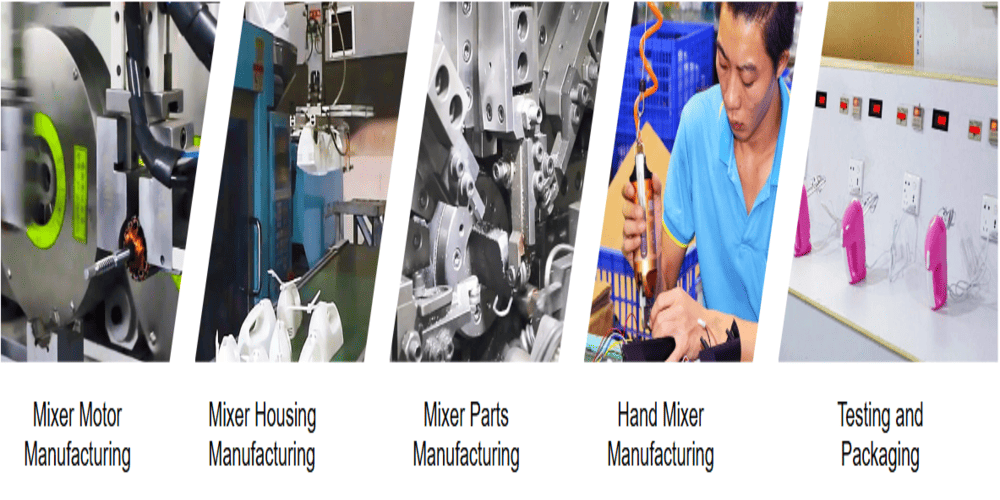
Building a private label kitchen appliance brand requires understanding exactly how far customization can go at each manufacturing level. Customization is what separates a brand from a generic reseller.
Key customization options available at OEM level include:
- Logo application through silk screen printing, heat transfer, or laser engraving on housing surfaces
- Colorway selection from RAL or Pantone standards, applied to ABS plastic housing during injection molding
- Packaging design including full-color retail box, inner tray, instruction manual, and warranty card
- Minor component variations such as cord length between 0.8m and 1.8m, power rating between 300W and 2,400W, and control interface type
Mold modification and internal component changes require ODM investment starting at $8,000. A private label kitchen appliance brand that invests in packaging and colorway customization at OEM level can achieve strong shelf differentiation without ODM tooling costs.
Certification Requirements for Private Label Kitchen Appliance Brands
Selling a private label kitchen appliance brand in any major market without the correct certifications results in customs seizure, retailer delisting, and direct consumer liability. Certification is not optional.
| Country | Certification Required | Validity Note |
| USA | UL 60335-1 / ETL, FCC Part 15 | ETL accepted equally to UL by all major US retailers |
| European Union | CE marking, RoHS, WEEE | Mandatory for all appliances sold within EU member states |
| United Kingdom | UKCA marking | CE marking no longer valid in UK market since January 2025 |
| Canada | CSA C22.2 / cULus | Dual-listed cULus covers both US and Canada simultaneously |
Always verify that certifications are issued in your brand name by checking directly on the UL Certification Directory, not the factory name, before placing any bulk order for your private label kitchen appliance brand.
MOQ Planning and Trial Order Strategy for Private Label Kitchen Appliances
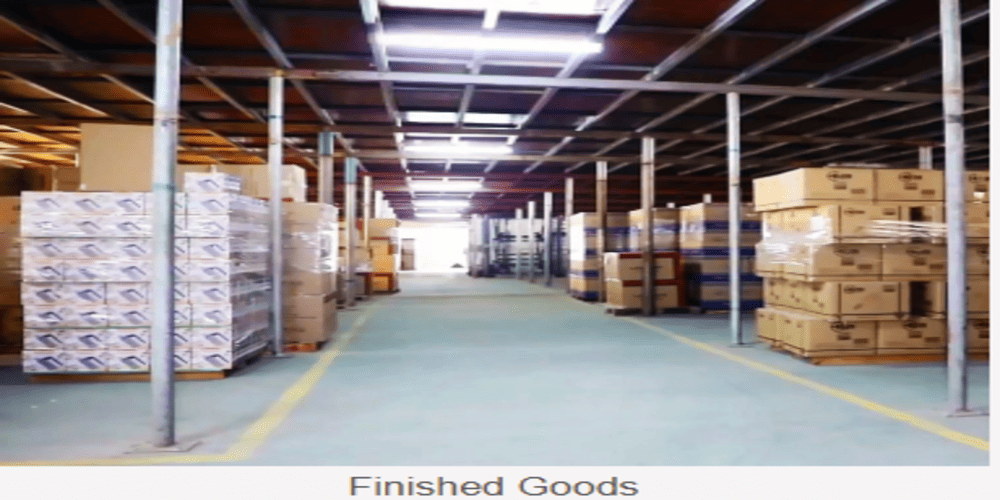
MOQ planning is one of the most misunderstood aspects of sourcing a private label kitchen appliance brand. Getting this wrong in your first order directly impacts your cash flow, landed cost, and launch profitability.
- Sample order: 1 to 5 units at 50% to 200% above bulk price, used exclusively for quality evaluation and specification verification before any production commitment
- Trial order: 50 to 200 units at 20% to 50% above bulk price, used for market validation, product photography, and Amazon listing launch
- First bulk order: 500 to 1,000 units at standard FOB pricing, the minimum volume at which full private label customization including branded packaging is viable
- Repeat order: 1,000 to 5,000 units with 5% to 15% volume discount applied by the factory
Negotiate a formal trial order clause into your first supplier agreement before committing to any bulk purchase order for your private label kitchen appliance brand.
Pricing Structure for Private Label Kitchen Appliance Sourcing
Most first-time private label kitchen appliance buyers calculate profit margins using only the FOB factory price. This is the single most common financial mistake in this industry.
Complete Landed Cost Breakdown
| Factor | Typical Range | Cost Impact |
| FOB Factory Price | $4 to $110 per unit | Primary cost driver |
| Ocean Freight | 8% to 25% of FOB | Varies by volume and route |
| Import Duties | 3% to 25% of FOB | Depends on HS code and market |
| Certification Cost | $800 to $8,000 | One-time per product model |
| Pre-Shipment Inspection | $300 to $500 per day | Mandatory before container loading |
Why Each Cost Component Matters
- FOB price directly affects every downstream cost calculation, making factory negotiation the primary lever for margin improvement across your private label kitchen appliance brand.
- Import duties vary significantly by market. US Section 301 tariffs on China-origin kitchen appliances currently add 7.5% to 25% on top of standard MFN duty rates.
- Certification cost is a one-time investment per product model but must be recalculated for each new market such as UKCA for the UK or RCM for Australia.
- Pre-shipment inspection at $300 to $500 per man-day is proportionally more cost-effective on orders above 1,000 units.
What This Means for Your Brand
Multiply your FOB price by 3x to 4x to establish a viable retail price. A private label kitchen appliance brand that prices based on FOB alone without accounting for duties, freight, and inspection will operate at negative margin within the first two shipments.
Finding a Reliable Private Label Kitchen Appliance Manufacturer in China
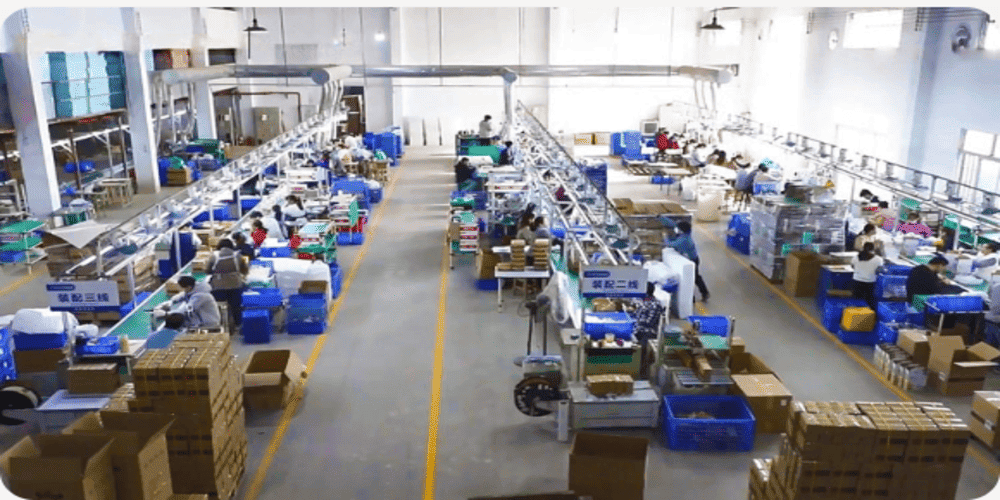
China has over 4,000 registered small appliance manufacturers, but fewer than 15% meet the quality, certification, and communication standards required for a serious private label brand.
Evaluating a manufacturer requires checking the following in sequence:
- Verify the business license through China’s SAMR database and confirm the entity name matches the bank account you will be paying.
- Commission a factory audit through SGS, Bureau Veritas, or Intertek. A standard audit costs $300 to $500 and covers production capacity, quality systems, and fire safety compliance.
- Request original certification documents and verify certificate numbers directly on UL, TÜV, or Intertek’s public database. Fake certifications are common among mid-tier Alibaba suppliers.
- Order 2 to 3 samples from different production runs, not the same showroom sample. Production samples reveal the actual quality your bulk order will reflect.
- Evaluate communication over 2 to 3 weeks. A factory that cannot answer questions about voltage tolerance of plus or minus 10% of rated voltage or AQL criteria is not ready for a serious brand.
Common Sourcing Challenges in Private Label Kitchen Appliance Brands
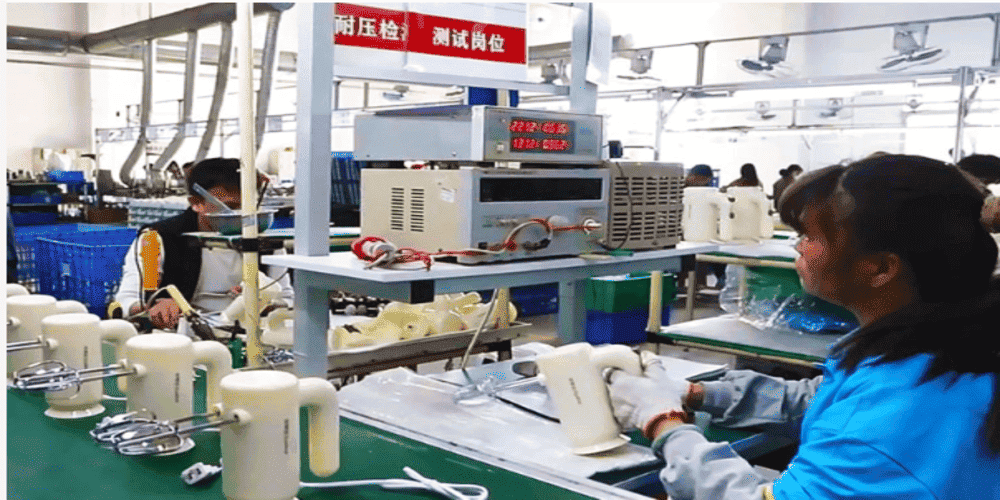
Every private label kitchen appliance brand encounters sourcing failures at some stage. Understanding the most common failure points before they occur is the difference between a profitable launch and a costly mistake.
Why Sourcing Goes Wrong
- Quality drop after sample approval: Factory substitutes components after your sample is approved. Prevention requires pre-shipment inspection through SGS or Intertek and retention of a golden sample signed by both parties.
- Certification fraud: Factory provides expired or mismatched certification documents. Prevention requires verifying every certificate number directly on UL’s Online Certifications Directory or TÜV Rheinland’s Certipedia platform before placing any order.
- IP theft: Factory sells your private label kitchen appliance design to competing buyers. Prevention requires a signed NDA and tooling ownership clause registered in your company name before sharing any brand assets.
- Payment fraud: Trading company poses as a direct factory. Prevention requires verifying that the bank account name matches exactly the registered business license name through China’s SAMR database.
Scaling a Private Label Kitchen Appliance Brand
Quick Answer
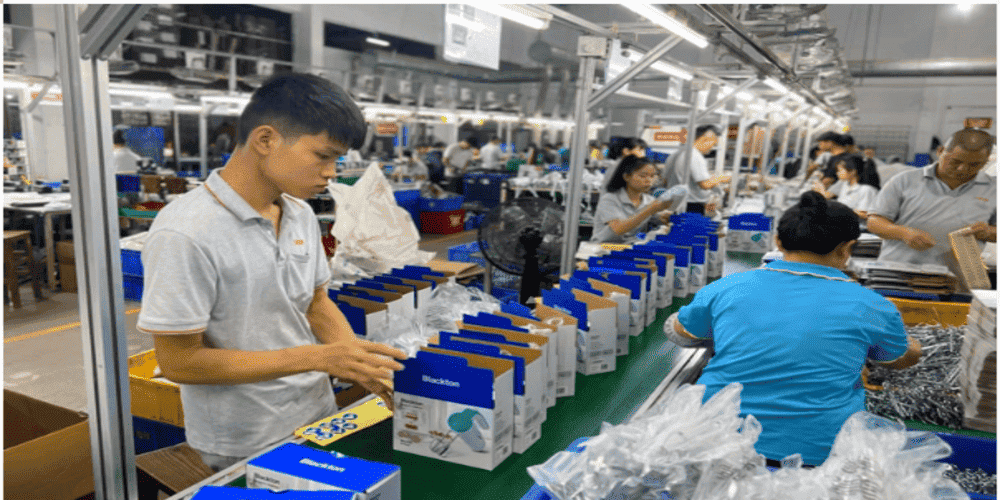
Scaling a private label kitchen appliance brand from launch to $1M and beyond requires a deliberate transition across four operational stages, each with different manufacturing, logistics, and channel requirements.
Scaling Checklist
- At launch stage with revenue of $0 to $200K: validate product-market fit with a single SKU, collect minimum 50 verified reviews, and maintain a single OEM factory relationship
- At growth stage with revenue of $200K to $1M: expand to 3 to 5 SKUs within the same appliance category, establish a 3PL fulfillment relationship, and begin packaging system standardization
- At scale stage with revenue of $1M to $5M: invest in exclusive OEM tooling, enter retail channel negotiations, and qualify a secondary factory for supply chain redundancy
- At brand stage with revenue above $5M: transition to full ODM manufacturing, register trademarks across all target markets, and develop proprietary product features that competitors cannot replicate
According to Jungle Scout’s Amazon Seller Report, private label sellers who focus on a single product category before expanding consistently achieve higher profit margins and faster scaling timelines than those who diversify too early.
Key Takeaway: Brands that attempt to scale across multiple appliance categories before dominating a single category consistently underperform against brands that go deep before going wide.
Why China Dominates Private Label Kitchen Appliance Sourcing
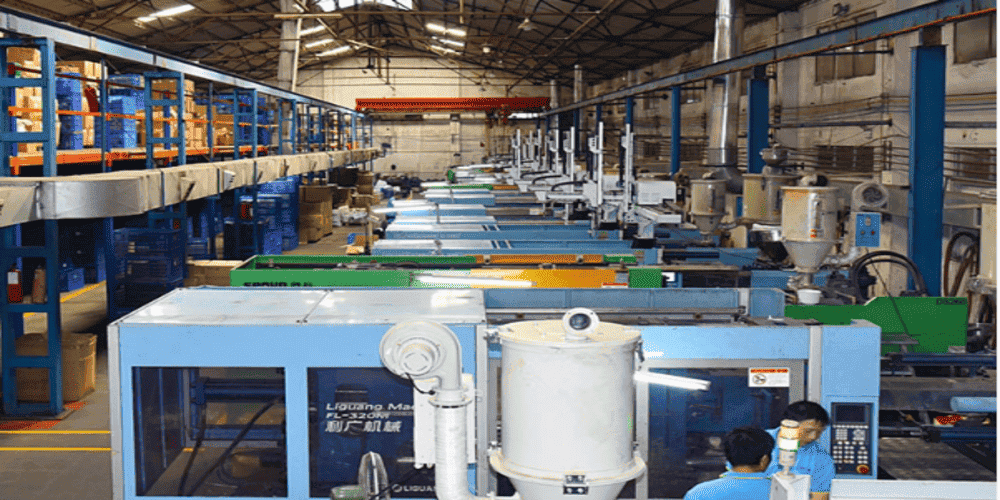
China’s dominance in private label kitchen appliance manufacturing is not based on low labor cost alone. It is built on a vertically integrated industrial ecosystem that no competing manufacturing destination has replicated at scale.
According to World Bank trade data, China accounts for over 28% of global manufactured goods exports, with small kitchen appliances representing one of its highest-volume export categories consistently since 2010.
A reliable private label kitchen appliance manufacturer sourced from China’s Guangdong Province offers capabilities that manufacturers in Vietnam, India, or Mexico currently cannot match across all of the following dimensions simultaneously.
Manufacturers such as YLD Home Appliances operate as direct OEM suppliers providing customized kitchen appliance solutions with controlled quality standards, scalable production capacity, and full certification support for US, EU, and UK markets.
Decision Insight: Sourcing from China for your private label kitchen appliance brand is not a risk to manage. It is an infrastructure advantage to leverage, provided supplier due diligence is executed correctly from the first contact.
Advantages of Building a Private Label Kitchen Appliance Brand
Compared with generic reselling or third-party brand distribution, private label kitchen appliance brands offer clear and measurable business advantages:
- Brand Equity: Every unit sold builds recognition and loyalty under your own brand name
- Higher Margins: Private label kitchen appliance brands operate at gross margins of 35% to 70%
- Channel Flexibility: Sell across Amazon, DTC, retail, and hospitality channels simultaneously
- Exit Value: Documented private label brands sell for 2x to 5x annual net profit on acquisition
These advantages make private label kitchen appliance brand building one of the highest-return product business models available to independent operators in 2026.
Buying Checklist for Private Label Kitchen Appliance Sourcing
Selecting the right factory and product for your private label kitchen appliance brand is not just about the lowest FOB price. It requires evaluating every technical, legal, and operational parameter before committing to a purchase order.
Why Each Parameter Matters
Certification Compliance
Markets including the USA, EU, and UK legally require valid certifications such as UL, CE, and UKCA. Sourcing without verified certification documents results in customs seizure and retailer delisting.
Factory Audit
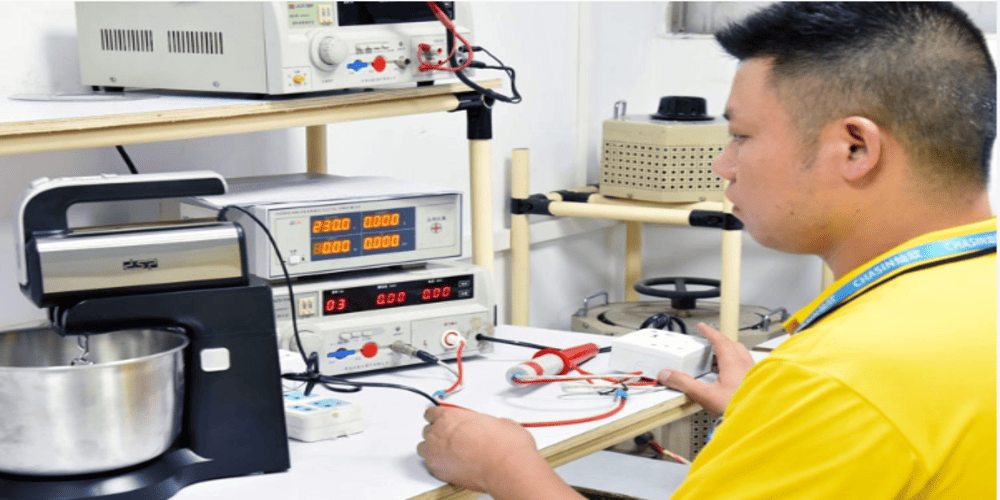
A third-party audit through SGS, Bureau Veritas, or Intertek confirms real production capacity, ISO 9001 quality system status, and fire safety compliance before any order is placed.
AQL Standard
Applying AQL 1.5 for critical defects and AQL 2.5 for major defects during pre-shipment inspection protects your private label kitchen appliance brand from receiving defective bulk inventory.
Sample Verification
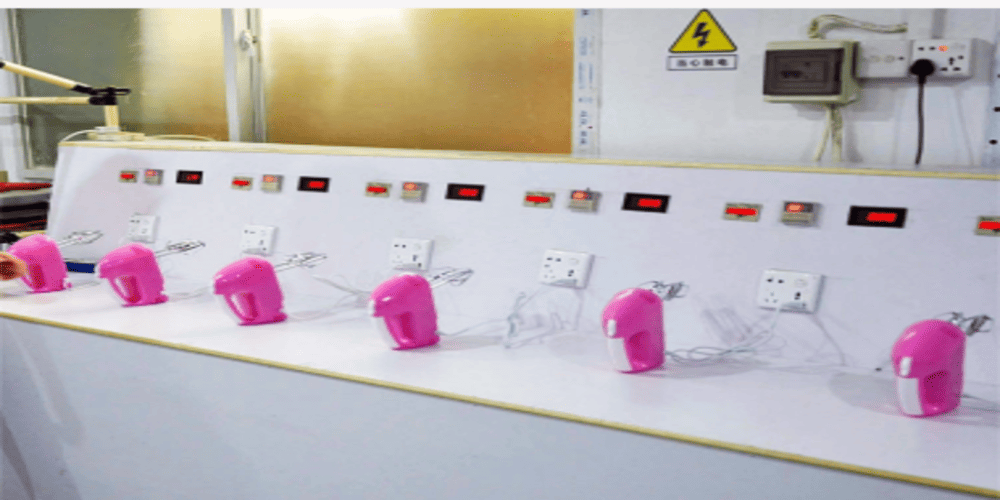
Ordering 2 to 3 samples from separate production runs confirms that factory output is consistent, not just hand-finished for showroom presentation.
| Core Parameter | Required Standard | Why It Matters |
| Certification | UL / ETL / CE / UKCA | Legal requirement for market entry |
| Factory Audit | SGS / BV / Intertek | Confirms capacity and quality systems |
| AQL Standard | Critical 1.5 / Major 2.5 | Controls defect rate in bulk production |
| Sample Approval | 2 to 3 production runs | Verifies consistency beyond showroom sample |
Key Takeaways
- Skipping inspection causes 8% to 15% return rates within 90 days.
- 30% of mid-tier Alibaba suppliers have fake or expired certifications.
- Missing UL or CE certification costs $3,000 to $12,000 per customs seizure.
Get the Right Private Label Kitchen Appliance Partner for Your Brand
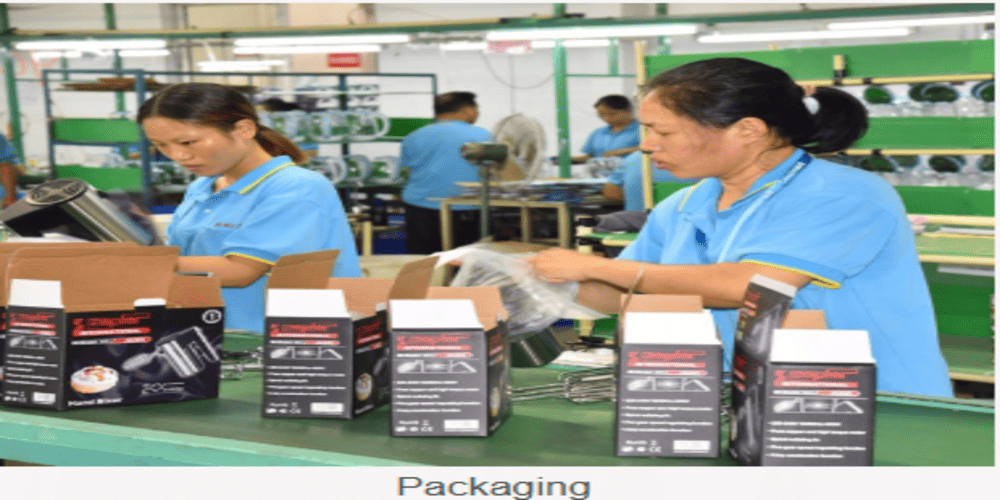
If you are planning to launch a private label kitchen appliance brand, choosing the right manufacturer, certification pathway, and customization level is critical for long-term brand performance and market success.
At YLD Home Appliances, we provide OEM and ODM private label kitchen appliance solutions tailored for Amazon sellers, retail brands, and hospitality supply businesses across the USA, EU, UK, and Australia.
Explore our private label kitchen appliance manufacturing capabilities to get expert sourcing support, accurate product specifications, and reliable production for your brand.
Private Label Kitchen Appliance Knowledge Hub
The following resources from YLD Home cover key topics related to kitchen appliance sourcing, manufacturing, and brand building across global markets.
- Top 10 China Kitchenware Manufacturers for Wholesale Buyers (2026)
- Single Boiler Espresso Machine: Working Principle, Benefits, and Buyer Guide (2026)
- Countertop Blender Wholesale: What Importers Must Know Before Placing Bulk Orders
- Commercial Automatic Espresso Machine for Wholesale Buyers: Pricing, Specs & Buying Guide (2026)
- High-Speed Blender for Commercial Kitchens: Improve Efficiency While Ensuring Consistent Performance
- Complete Guide to Espresso Machine Parts (2026): Names, Functions & Buying Guide
- Portable Juice Blender OEM Guide: Features, MOQ & Private Label Opportunities
- Juicer Vs Blender: Key Differences, Benefits, and Which One Is Better for Your Business (2026 Guide)
Final Thoughts
Building a private label kitchen appliance brand from China in 2026 is not complicated but it is disciplined. Validate the category, qualify the manufacturer, secure certifications, and price for landed cost not factory cost.
China’s manufacturing ecosystem in Shenzhen and Guangdong gives new brands access to OEM production, certification support, and scalable output no other sourcing destination can match.
Frequently Asked Questions
Q1. What is a private label kitchen appliance brand?
Answer: A private label kitchen appliance brand sells products manufactured by third-party factories under its own brand name, packaging, and market identity.
Q2. Why do most private label appliance brands source from China?
Answer: China offers large-scale manufacturing capacity, lower production costs, advanced supply chains, and strong OEM and ODM capabilities for kitchen appliances.
Q3. What is the difference between OEM and ODM manufacturing?
Answer: OEM manufacturing customizes existing products with your branding, while ODM manufacturing develops products based on custom designs and specifications.
Q4. What is the typical MOQ for private label kitchen appliances?
Answer: Most kitchen appliance manufacturers require MOQs ranging from 300 to 3000 units depending on product complexity, customization level, and packaging requirements.
Q5. Which kitchen appliance category is best for beginners?
Answer: Electric kettles, blenders, and food choppers are often considered suitable starting categories because of stable demand and simpler manufacturing structures.
Q6. What certifications are required for selling kitchen appliances internationally?
Answer: Common certifications include CE, RoHS, UL, ETL, FCC, and LFGB depending on the target market and appliance category.
Q7. How long does private label kitchen appliance production usually take?
Answer: Production timelines generally range between 30 and 60 days based on order quantity, customization requirements, and factory production schedules.
Q8. How can buyers verify the quality of a Chinese appliance manufacturer?
Answer: Importers typically evaluate factory audits, product testing reports, certification validity, production capacity, and third-party inspection results before placing bulk orders.
Q9. What factors affect the final cost of private label kitchen appliances?
Answer: Final costs are influenced by raw materials, motor specifications, certifications, packaging, shipping, import duties, and product customization requirements.
Q10. How can a private label kitchen appliance brand scale successfully?
Answer: Successful brands usually expand product categories, improve supplier relationships, strengthen distribution channels, and invest in product differentiation and branding.
Related models in this range: High Speed Emulsion Blender and Smart Stick Variable Speed Hand Blender.