









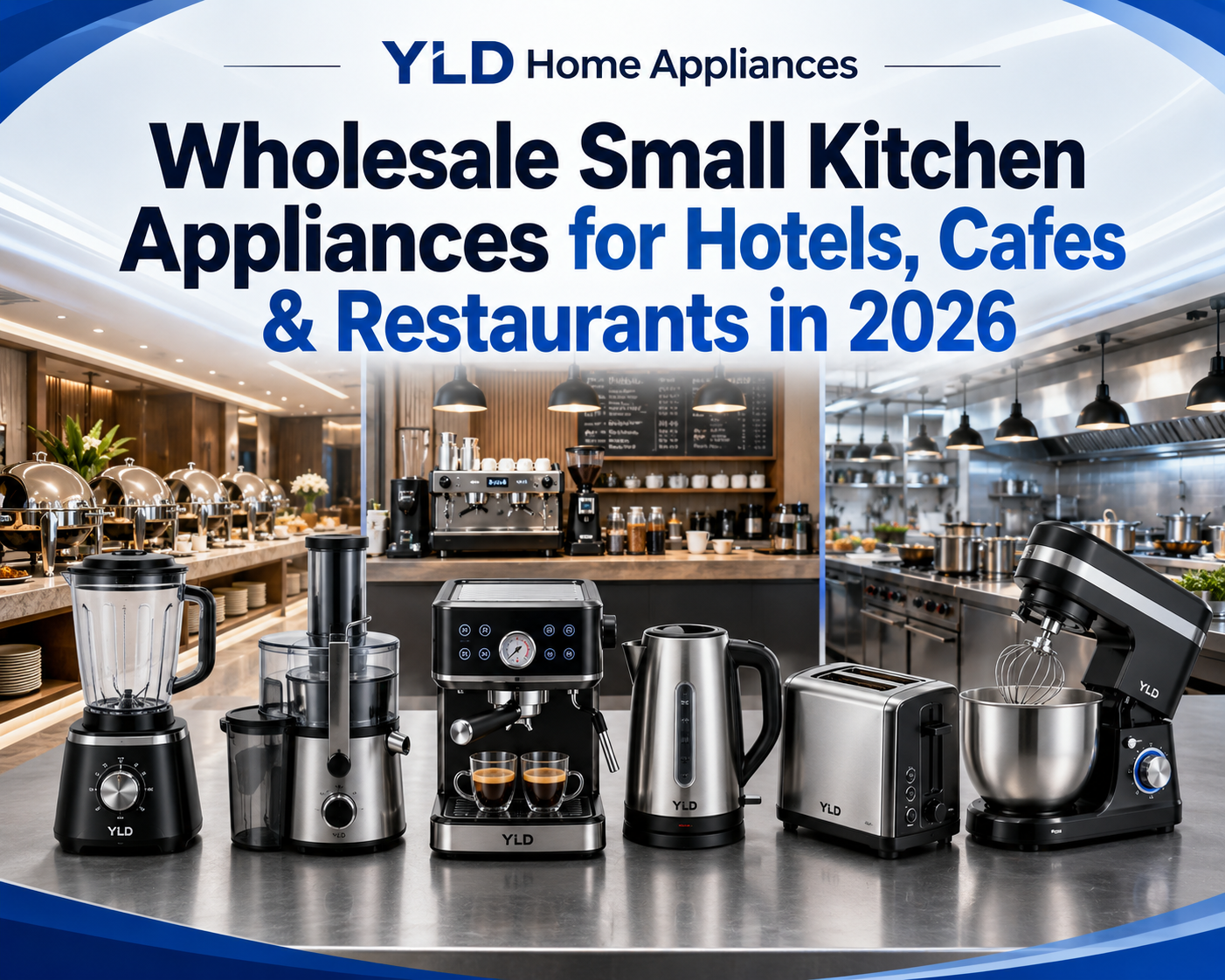

Wholesale small kitchen appliances have become one of the most important procurement decisions for modern hospitality businesses. From hotel breakfast buffets and boutique cafés to high-volume restaurants and catering operations, the right kitchen equipment directly determines food quality, service speed, operational efficiency, and long-term cost management.
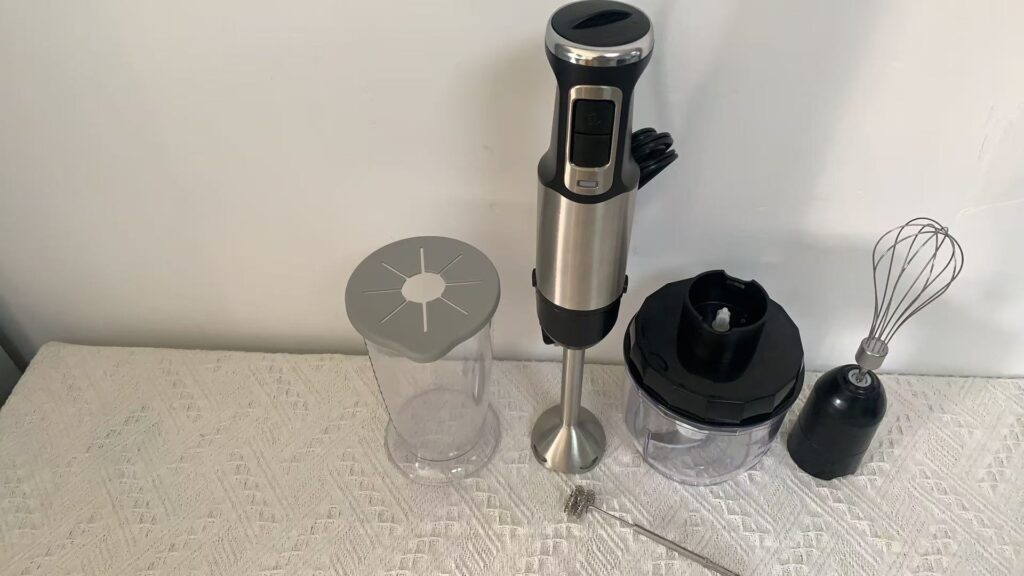
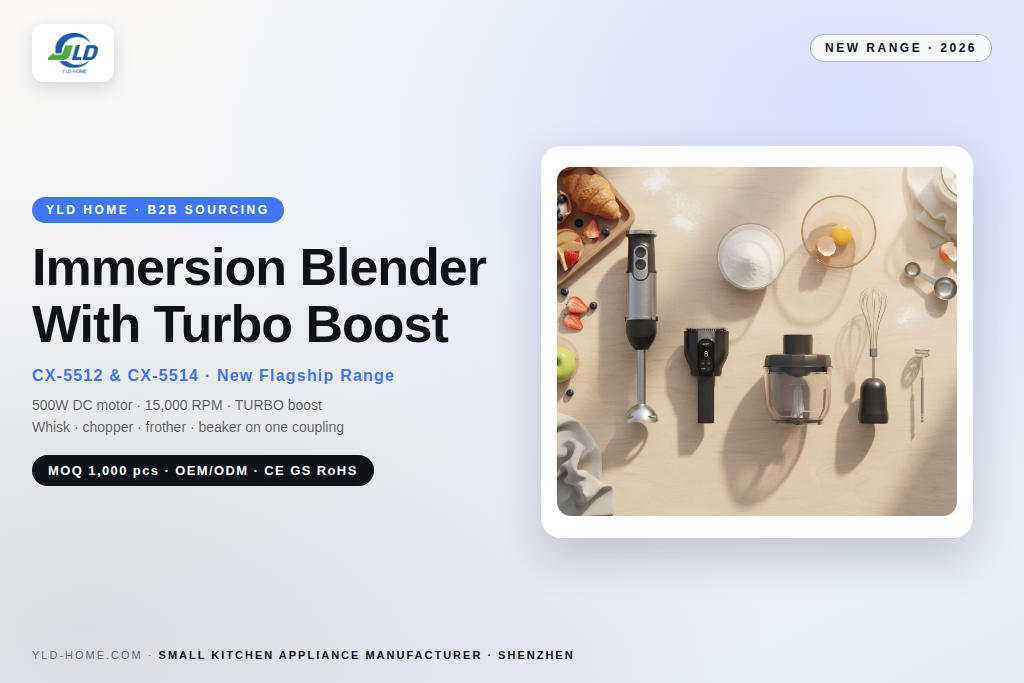
For buyers comparing supply options, the hand blender range from YLD HOME lists every model by type and wattage, with MOQ, lead time and certification stated per page.
Unlike retail-grade appliances designed for occasional home use, wholesale commercial kitchen appliances are engineered for continuous, high-frequency operation. Hotels, cafés, and restaurants require equipment that performs reliably across multiple shifts, handles demanding ingredients, and complies with international food safety and electrical standards.
However, selecting the right wholesale small kitchen appliances is not straightforward. Factors such as motor power, duty cycle, material quality, certifications, OEM branding options, and supplier reliability all play a critical role in the final procurement outcome.
This guide provides a complete, structured understanding of wholesale small kitchen appliances for the hospitality sector, including product types, performance standards, application-specific requirements, and how to choose the right manufacturer for your business.
Quick Answer
Wholesale small kitchen appliances are commercial-grade countertop equipment purchased in bulk directly from manufacturers or authorized distributors. For hotels, cafes, and restaurants, wholesale sourcing delivers better durability, lower per-unit costs, reliable supply, and OEM custom branding options compared to retail purchasing.
Key Takeaways
- Wholesale sourcing reduces per-unit cost by 30–60% compared to retail pricing
- Commercial-grade appliances are engineered for continuous, high-frequency use unlike home appliances
- Motor power, duty cycle, and food-grade material quality are the three most critical performance factors
- OEM/ODM options allow hotels and restaurant chains to brand appliances with their own logo and color
- CE, RoHS, CB, and UL certifications are minimum requirements for safe commercial kitchen use
- Proper appliance selection by venue type directly impacts operational efficiency and service quality
- ROI on commercial-grade wholesale appliances is typically achieved within 12–18 months
What Are Wholesale Small Kitchen Appliances
The global commercial kitchen appliances market was valued at USD 109.2 billion in 2025 and is projected to reach USD 166.3 billion by 2034, reflecting the rapid expansion of the hospitality and foodservice sector worldwide
Wholesale small kitchen appliances refer to compact, countertop-level food and beverage equipment purchased in bulk quantities directly from manufacturers or wholesale distributors. These appliances are specifically engineered to meet the high-frequency, continuous-use demands of commercial food and beverage operations.
Unlike home appliances, wholesale commercial kitchen appliances are built with heavier-duty motors, industrial-grade materials, higher protection ratings, and longer duty cycles. They are designed to operate dozens of times per hour, every day, without performance degradation.
Core Components of a Commercial Small Kitchen Appliance
| Component | Commercial Specification | Function |
| Motor | 300W – 1200W, continuous duty | Sustained high-frequency operation |
| Housing | Food-grade ABS / SS304 / Die-cast | Durability & hygiene compliance |
| Blade / Attachment | Hardened stainless steel | Consistent cutting performance |
| Control System | Variable speed / Digital display | Precision & repeatability |
| Safety Features | Overload protection, auto shut-off | Staff safety & appliance longevity |
| Certifications | CE, RoHS, CB, UL | Market & safety compliance |
Each component contributes to overall reliability and service life. For example, a motor without thermal overload protection will fail rapidly in a high-usage café environment, while food-grade stainless steel housing ensures compliance with health and hygiene regulations across all international markets.
To explore YLD Home’s full range of commercial-grade wholesale appliances, see wholesale kitchen appliances for B2B buyers
For OEM and bulk supply options, refer to wholesale blenders, juicers, and mixers for distributors and hospitality chains
Wholesale vs Retail Kitchen Appliances: Key Differences
Understanding the difference between retail and wholesale kitchen appliances is the first and most important step in making the right procurement decision for any hospitality operation.
| Feature | Retail Appliances | Wholesale / Commercial Appliances |
| Motor Durability | Light duty (household use) | Heavy duty (commercial continuous use) |
| Daily Usage Cycle | 1–3 times per day | 20–100+ times per day |
| Lifespan | 2–5 years | 5–10+ years |
| Price Per Unit | Higher retail markup | Lower bulk pricing |
| Branding Options | Fixed manufacturer brand | OEM/ODM custom branding available |
| Certifications | Basic consumer safety | Full commercial compliance (CE, CB, UL) |
| After-Sales Support | Limited consumer support | Dedicated B2B support team |
| Supply Consistency | No guaranteed stock | Confirmed supply agreements |
Retail appliances are not designed for commercial environments. Using retail-grade equipment in a hotel kitchen or busy café results in frequent breakdowns, higher replacement costs, operational disruptions, and potential hygiene compliance issues.
For a detailed comparison of appliance types and OEM supply options, see custom toaster design and wholesale supply for hospitality brands
Why Hotels, Cafes & Restaurants Need Wholesale Appliances
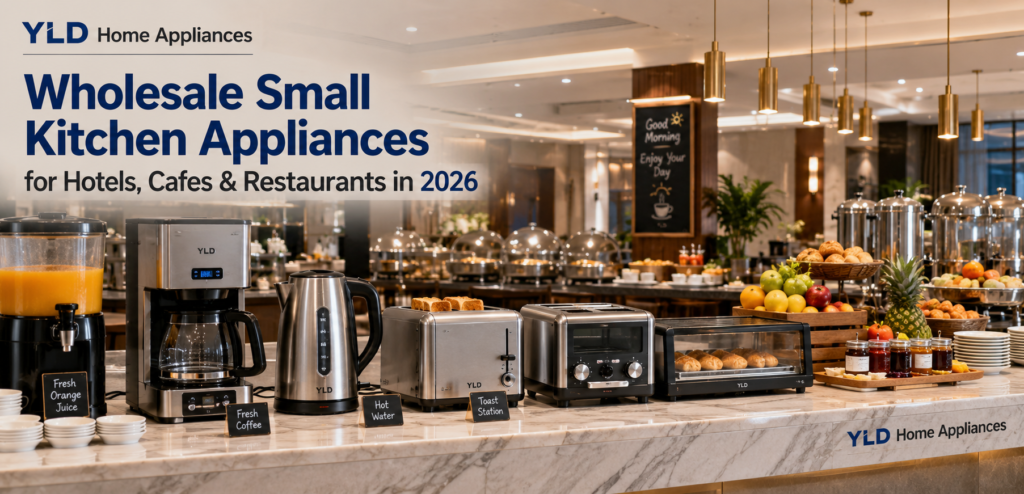
The hospitality industry operates under fundamentally different conditions than residential kitchens. Equipment must perform reliably across multiple shifts, under pressure, every single day, while meeting strict hygiene standards and consistent guest expectations.
There are four primary reasons why hospitality businesses should source wholesale small kitchen appliances rather than purchasing retail.
Cost efficiency at scale: When outfitting multiple rooms, kitchen stations, or locations, bulk wholesale pricing delivers significant savings. Procurement managers increasingly turn to a dedicated foodservice equipment supplier rather than retail channels, saving 30–60% per unit.
Consistent quality across locations: Restaurant chains and hotel groups require identical equipment performance across all properties. A reliable foodservice equipment supplier guarantees consistent product specifications, build quality, and replacement parts availability regardless of location.
OEM branding capability: Premium hotels and branded café chains want their appliances to carry their own logo and color scheme. For hotel chains sourcing hotel kitchen equipment wholesale, OEM capability means branded appliances across every guest room, buffet station, and kitchen zone.
Reliable supply chain: Working with an experienced foodservice equipment supplier means predictable restocking lead times, sample testing before bulk orders, and long-term supply agreements that protect against procurement disruptions.
Types of Wholesale Small Kitchen Appliances
Commercial kitchen appliances for the hospitality sector are selected based on venue type, menu requirements, service volume, and kitchen space constraints. Each appliance category is engineered for a specific function, and selecting the wrong type leads to poor performance, early equipment failure, and unnecessary replacement costs.
Wholesale small kitchen appliances fall into two broad categories. The first is commercial food preparation equipment — covering chopping, grinding, mixing, and processing tasks. The second is beverage and cooking equipment such as blenders, juicers, and coffee machines. Both are essential, but commercial food preparation equipment such as food processors, stand mixers, and meat grinders typically operates in the back-of-house prep zone, while beverage equipment operates in service-facing areas.
In 2026, demand for commercial food preparation equipment in the hospitality sector has grown significantly, driven by the expansion of hotel breakfast programs and restaurant production kitchens that rely on freshly prepared ingredients.
| Appliance Type | Primary Use | Key Performance Factor |
| Blenders & Hand Blenders | Smoothies, soups, sauces | Motor power, duty cycle |
| Juicers & Extractors | Fresh juice service | Yield efficiency, speed |
| Coffee Machines | Beverage service | Pressure, temperature control |
| Electric Kettles | Hot water, tea service | Boiling speed, temperature control |
| Toasters & Breakfast Sets | Breakfast service | Consistency, throughput speed |
| Food Mixers & Stand Mixers | Baking, pastry, dough | Bowl capacity, attachment range |
| Food Choppers & Processors | Prep, mincing, grinding | Blade quality, safety lock |
| Air Fryers | Snacks, quick cooking | Capacity, temperature range |
| Electric Grinders | Coffee, spices | Grind consistency, capacity |
Commercial Blenders & Hand Blenders
Blenders are among the most heavily used appliances in any hospitality kitchen. From smoothie bars and cocktail preparation to sauce finishing and soup blending, commercial blenders operate continuously during peak service hours. A weak motor or poor build quality will result in breakdowns precisely when demand is highest.
Technical Specifications: Commercial Blenders
| Parameter | Specification | Commercial Purpose |
| Motor Power | 600W – 1200W | Handle ice, frozen fruit, fibrous ingredients |
| Speed Settings | 3–10 variable speeds | Precision for different textures |
| Jar Capacity | 1L – 2L | Single-serve to batch preparation |
| Blade Material | Hardened stainless steel | Long-term cutting performance |
| Safety Lock | Lid-activated interlock | Prevent spills during operation |
| Duty Cycle | Continuous operation rated | High-volume service environments |
Hand blenders (immersion blenders) are essential for soups, sauces, and in-pan blending. Commercial-grade hand blenders feature detachable shafts for hygiene compliance, variable speed controls for precision, and splash guards for safe operation in busy kitchen environments.
Countertop blenders are used for smoothies, cocktails, and cold beverages. For cafes and juice bars, high-power countertop models deliver consistent results across hundreds of daily uses.
Portable blenders are increasingly used in hotel room service and breakfast operations, offering guests convenience and a premium self-service experience.
For bulk blender sourcing options, explore wholesale blenders for B2B hospitality supply
To view the full blender product range, see hand blenders, countertop blenders, and portable blenders for commercial use
Juicers & Juice Extractors
Fresh juice has become a core menu offering in hotel breakfast buffets, health-focused cafes, and upscale restaurant brunch services. The right commercial juicer determines juice quality, yield efficiency, operational throughput, and ease of daily cleaning.
Technical Specifications: Commercial Juicers
| Parameter | Specification | Commercial Purpose |
| Motor Power | 400W – 800W | High-volume extraction without motor fatigue |
| Yield Efficiency | 85–95% | Minimize fruit waste and reduce cost per serving |
| Speed (RPM) | 12,000 – 18,000 | Fast service throughput during peak periods |
| Feed Chute Size | Wide-mouth (60–80mm) | Reduce prep time with whole or halved fruit |
| Disassembly | Tool-free quick release | Fast cleaning between service periods |
| Noise Level | <65 dB | Suitable for front-of-house buffet placement |
Citrus juicers are ideal for hotels and cafes serving fresh orange, lemon, or grapefruit juice. They are fast, extremely easy to clean, and compact enough for direct buffet station display.
Juicer extractors handle a broader range of fruits and vegetables, making them the right choice for juice bars and health-focused restaurant menus where ingredient variety is important.
Portable orange juicer machines are visually appealing and ideal for buffet displays where guests serve themselves, adding a fresh, interactive element to the breakfast experience.
To view the full juicer range, explore citrus juicers, juice extractors, and portable orange juicer machines for wholesale supply
For factory-direct juicer supply, see juicer manufacturer and wholesale supply solutions
Coffee Machines
In any hotel, café, or restaurant, coffee is one of the highest-margin beverage categories. The commercial coffee machine you select directly impacts customer satisfaction, service speed, beverage consistency, and repeat business.
Technical Specifications: Commercial Coffee Machines
| Parameter | Specification | Commercial Purpose |
| Brewing Capacity | 10–20 cups per cycle | High-volume breakfast and service periods |
| Pump Pressure | 15–20 bar | Espresso-quality extraction |
| Temperature Control | Thermoblock / Boiler system | Consistent brew temperature across all cups |
| Milk Frothing | Steam wand / Auto-frother | Cappuccino, latte, and specialty preparation |
| Water Tank | 1.5L – 3L | Reduced refill frequency during service |
| Cleaning Mode | Auto-clean cycle | Hygiene maintenance without downtime |
For hotel room setups, portable coffee machines and compact single-serve machines offer guests a premium in-room experience without requiring staff intervention. For café service counters, semi-automatic and fully automatic espresso machines deliver consistent quality across high daily order volumes.
To explore coffee machine wholesale options, see coffee machines for commercial and hospitality use
Electric Kettles
Electric kettles are a staple in hotel room amenities, hotel breakfast stations, staff preparation areas, and café beverage counters. Commercial-grade kettles differ fundamentally from consumer models in their build quality, boiling speed, thermal consistency, and visual design standards.
Technical Specifications: Commercial Electric Kettles
| Parameter | Specification | Commercial Purpose |
| Capacity | 1.2L – 1.8L | Full service cycle without refill |
| Boiling Speed | 3–5 minutes | Fast turnaround for guest and service use |
| Housing Material | Stainless steel / Borosilicate glass | Hygiene compliance and premium aesthetics |
| Temperature Control | Variable (60°C – 100°C) | Precision brewing for tea, coffee, pour-over |
| Auto Shut-off | Yes | Safety compliance for unattended use |
| Keep Warm | 30–60 minutes | Guest convenience in hotel rooms |
Digital glass kettles with LED temperature displays are increasingly popular in hotel rooms and café counters, offering a premium visual aesthetic alongside the precise temperature control required for specialty teas and pour-over coffee programs.
To view electric kettle options for wholesale supply, explore digital glass kettles and stainless steel kettles for hospitality use
Toasters & Breakfast Sets
Toasters are a core component of hotel breakfast stations, café snack menus, and restaurant brunch service setups. Commercial toasters must handle continuous operation across multiple breakfast service hours every day, with consistent browning results and no performance degradation over time.
Technical Specifications: Commercial Toasters
| Parameter | Specification | Commercial Purpose |
| Slice Capacity | 2-slice / 4-slice models | Match to service volume requirements |
| Heating Element | Quartz / Nichrome wire | Even, consistent browning every cycle |
| Browning Control | 7-stage variable setting | Guest preference consistency |
| Crumb Tray | Removable, dishwasher-safe | Easy daily cleaning compliance |
| Housing | Brushed stainless steel | Commercial durability and hygiene |
| Wattage | 800W – 1500W | Fast cycle time for high-turnover service |
Breakfast set bundles: Combining a matching kettle and toaster — are among the most popular wholesale procurement categories for hotel buyers, offering aesthetic coordination and functional consistency for both buffet setups and in-room amenity packages.
For custom toaster branding and OEM color options, explore custom toaster design for hospitality brands
To view the full breakfast set range, see kettle and toaster breakfast sets for hotel and café wholesale supply
Food Mixers & Stand Mixers
Food mixers are essential in hotel pastry kitchens, bakery cafes, and restaurant dessert stations. They handle dough preparation, cream whipping, batter mixing, meringue production, and cake preparation — all tasks that require reliable, consistent motor performance across multiple daily batches.
Technical Specifications: Commercial Food Mixers
| Parameter | Specification | Commercial Purpose |
| Motor Power | 300W – 1000W | Handle heavy bread doughs and stiff batters |
| Bowl Capacity | 3L – 7L | Batch size flexibility for commercial volumes |
| Speed Settings | 5–12 variable speeds | Precision control for different preparations |
| Attachments | Dough hook, flat beater, wire whisk | Multi-function capability from one unit |
| Housing | Die-cast metal body | Stability and vibration control during operation |
| Motor Protection | Thermal overload cutout | Longevity protection under heavy sustained use |
Stand mixers provide hands-free batch mixing, making them ideal for pastry kitchens and bakery operations where staff productivity depends on parallel task management.
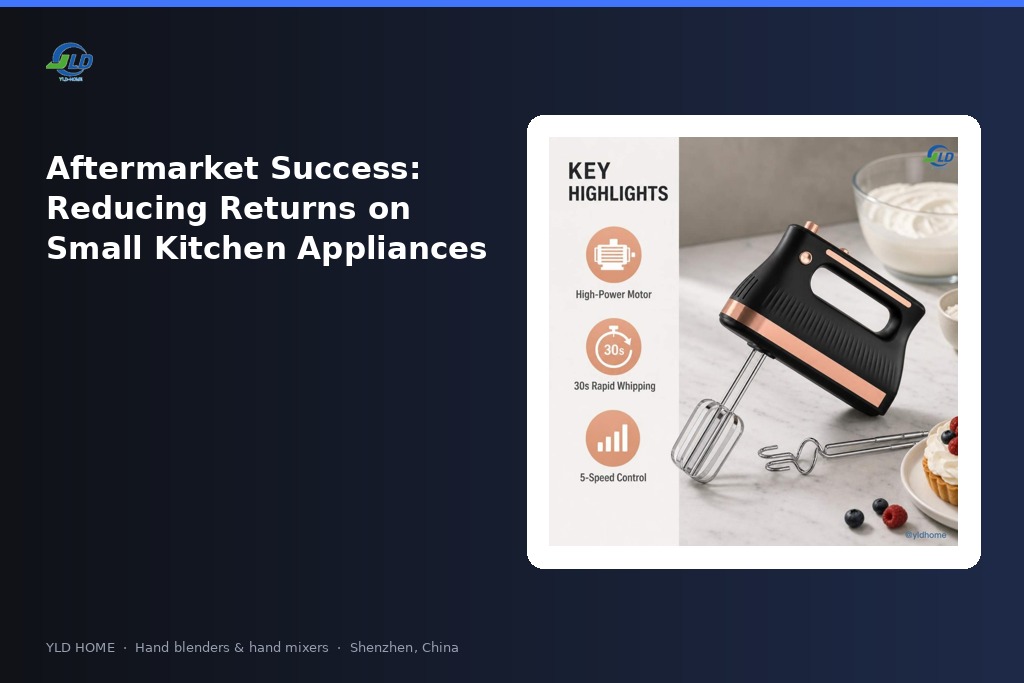
Hand mixers offer portability and are used for quick whipping and light mixing tasks in fast-paced line service environments.
For wholesale mixer supply, explore hand mixers and stand mixers for B2B wholesale and OEM supply
To view the full mixer range, see hand mixers and stand mixers for commercial hospitality use
Food Choppers, Processors & Meat Grinders
Food choppers and processors are among the most time-saving appliances in commercial kitchen operations. They handle vegetable chopping, herb and spice mincing, paste preparation, and meat grinding — significantly reducing prep time and improving consistency across high-volume service periods.
Technical Specifications: Commercial Food Choppers
| Parameter | Specification | Commercial Purpose |
| Motor Power | 300W – 600W | Handle dense vegetables and meat effectively |
| Bowl Capacity | 0.5L – 2L | Single-prep to multi-portion batch processing |
| Blade Material | Hardened stainless steel | Sustained sharpness through daily commercial use |
| Speed Options | Pulse / Variable | Texture control from rough chop to fine paste |
| Safety Lock | Lid-activated interlock | Staff safety in fast-paced kitchen environments |
| Cleaning | Dishwasher-safe removable parts | Hygiene compliance and easy turnaround |
Meat grinders are especially critical for restaurants processing fresh meat in-house, ensuring freshness, portion control, and cost savings compared to pre-ground supply.
For complete food processor and chopper wholesale options, explore food processor OEM/ODM solutions for commercial kitchens
To view the full chopper range, see food choppers and cordless blenders for commercial kitchen prep use
Air Fryers for Commercial Use
Air fryers have become a significant addition to hotel breakfast stations, café snack menus, and casual dining restaurant kitchens. They deliver oil-free or low-oil cooking with faster cycle times, reduced running costs, and healthier menu options — all of which align with growing guest and diner health awareness in 2026.
Technical Specifications: Commercial Air Fryers
| Parameter | Specification | Commercial Purpose |
| Basket Capacity | 5L – 12L | Single-serve to multi-portion batch cooking |
| Temperature Range | 80°C – 200°C | Full cooking versatility across menu items |
| Heating Technology | Rapid hot air circulation | Faster cooking times with even results |
| Timer | 0–60 minutes digital | Precise, repeatable cooking control |
| Non-stick Basket | Food-grade PTFE coating | Easy cleaning and food release |
| Power | 1400W – 1800W | Efficient and fast heat-up performance |
For air fryer wholesale supply and product range, explore air fryers for commercial and hospitality use
Electric Grinders
Electric grinders are essential in specialty coffee cafes, hotel beverage stations, and restaurant kitchens requiring freshly ground coffee or spices. Consistent grind quality is a direct factor in espresso extraction quality, flavor consistency, and customer satisfaction for any coffee-focused operation.
Technical Specifications: Commercial Electric Grinders
| Parameter | Specification | Commercial Purpose |
| Motor Power | 150W – 300W | Consistent grind without motor strain |
| Grinding Capacity | 50g – 200g per cycle | Batch flexibility for service volumes |
| Blade Material | Hardened stainless steel | Long-term grinding durability |
| Speed | Single / Variable | Coarse to fine grind control |
| Housing | Food-grade ABS / Stainless steel | Hygiene and durability compliance |
| Cleaning | Detachable grinding bowl | Fast between-use hygiene turnaround |
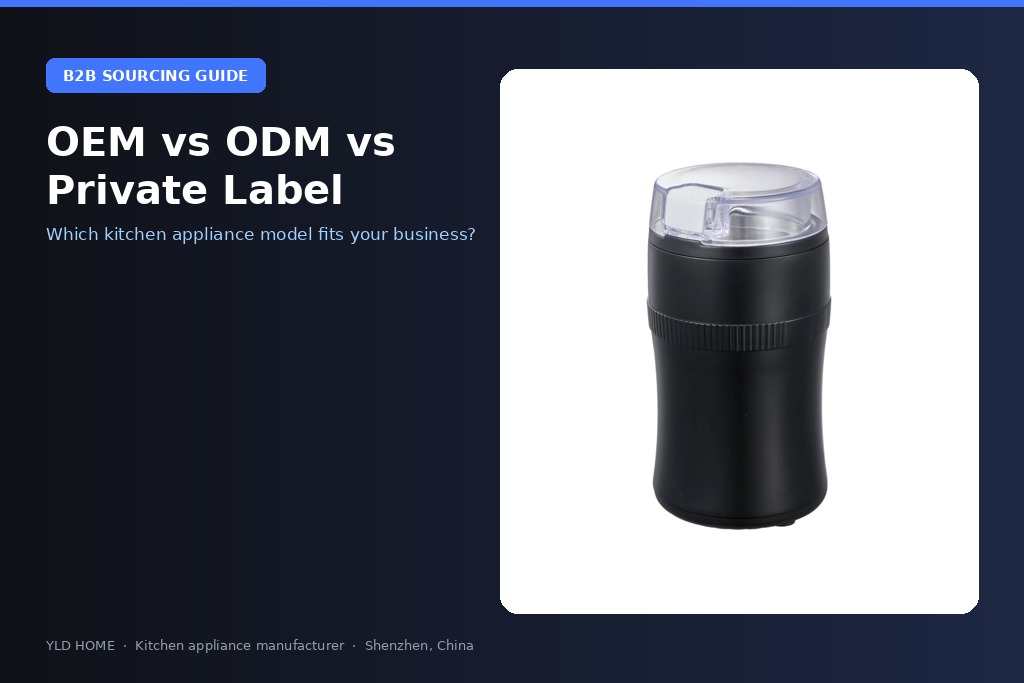
To view the full grinder range, explore electric coffee and spice grinders for wholesale hospitality supply
Performance Requirements for Commercial Kitchen Appliances
The commercial segment is anticipated to capture 69.7% of the global kitchen appliances market share in 2026, primarily driven by the foodservice industry including restaurants, cafés, and hotels — which is why performance standards for commercial appliances are significantly more demanding than consumer-grade equivalents.
In commercial kitchen environments, appliance performance is defined by measurable technical parameters rather than marketing claims. Unlike consumer appliances, commercial and hospitality equipment must meet precise standards for durability, hygiene compliance, safety, and operational reliability to ensure consistent performance across every service period.
Each parameter directly affects staff safety, operational continuity, compliance with health regulations, and long-term total cost of ownership.
| Parameter | Recommended Value | Why It Matters |
| Motor Duty Cycle | Continuous or 50%+ intermittent | Sustain high-volume use without overheating |
| IP / Splash Rating | IP54 minimum | Protect against kitchen splash and moisture |
| Food Contact Materials | FDA / LFGB compliant | Guest and staff food safety compliance |
| Noise Level | <75 dB | Suitable for front-of-house and customer-facing areas |
| Certification | CE, RoHS, CB, UL | International market and safety compliance |
| Warranty | 12–24 months commercial | Manufacturer reliability and after-sales commitment |
Key Performance Factors Explained
Motor Duty Cycle is the most critical performance parameter for commercial appliances. A continuous-rated motor can operate without rest breaks, while intermittent-rated motors require cool-down periods. In high-volume café or restaurant environments, a motor not rated for continuous use will overheat and fail within months.
Food Contact Material Compliance is non-negotiable in any professional kitchen. All parts in contact with food must meet FDA or LFGB standards to ensure there is no contamination risk. This applies to blades, bowls, shafts, and any material touching ingredients directly.
IP Rating determines how well an appliance is protected against water and dust. In a commercial kitchen where surfaces are regularly wiped and splashed, a minimum IP54 rating ensures the appliance remains safe and functional over time.
Certification determines whether an appliance can legally be used and insured in your market. CE certification is required for Europe, UL or ETL for North America, and CB for
general international markets.
For technical product specifications and certification documentation, see YLD Home appliance certifications for commercial buyers
Energy Efficiency & ROI Analysis
Commercial-grade wholesale appliances deliver clear and measurable financial advantages over retail-grade equivalents when analyzed on a total cost of ownership basis across a 3–5 year operational period.
Cost Comparison: Wholesale Commercial vs Retail Appliances
| Factor | Retail Appliances | Wholesale Commercial Appliances |
| Unit Purchase Cost | Higher (retail markup included) | Lower (direct from manufacturer) |
| Lifespan in Commercial Use | 2–4 years | 5–10+ years |
| Breakdown Frequency | High (not designed for commercial use) | Low (engineered for continuous use) |
| Maintenance & Replacement | Frequent and unpredictable | Rare and planned |
| Energy Efficiency | Lower motor efficiency | Higher efficiency motors reduce running costs |
| Total 5-Year Cost | Significantly higher | Significantly lower |
ROI Summary
According to Grand View Research, the commercial kitchen appliances market is projected to reach USD 149.34 billion by 2030, driven largely by hotel chains investing in energy-efficient equipment upgrades
- Cost savings per unit: 30–60% lower wholesale vs retail pricing
- Lifespan advantage: 2–3x longer service life in commercial environments
- Maintenance reduction: up to 70% fewer breakdowns compared to retail-grade equipment
- ROI period: typically 12–18 months for a full wholesale kitchen appliance upgrade
For a hotel outfitting 100 guest rooms with in-room kettles and coffee machines, the difference between retail and wholesale pricing alone represents savings that directly improve procurement budget performance. Multiplied across a full kitchen equipment package for restaurant or café operations, the financial case for wholesale sourcing is clear and compelling.
How to Choose a Reliable Wholesale Kitchen Appliances Supplier
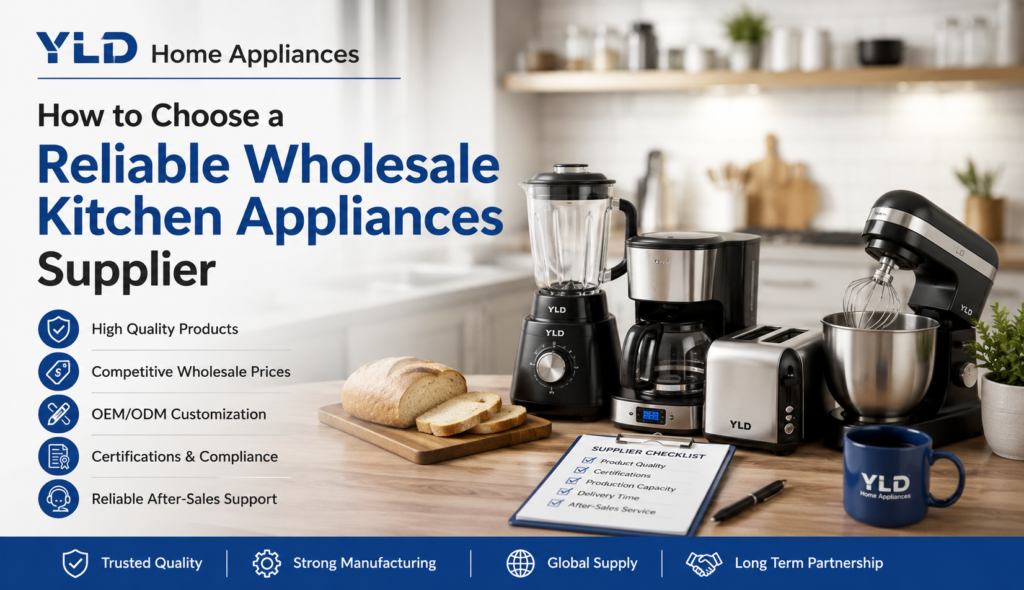
Selecting the right wholesale kitchen appliance supplier is as important as selecting the right products. A reliable manufacturer partner ensures consistent quality, on-time delivery, responsive technical support, and long-term supply security.
Step 1: Verify manufacturing capability
A genuine manufacturer — not just a trading company — controls product quality, lead times, and customization options. Look for suppliers with their own factory, R&D engineering team, and full production line capability.
Step 2: Check certifications
CE, RoHS, CB, UL, and ETL certifications are the minimum requirements for commercial kitchen appliances across international markets. Always request full certification documentation before placing any order.
Step 3: Request samples before bulk orders
Any credible wholesale supplier will offer sample testing before bulk production. This protects buyers from committing capital to products that do not meet operational requirements.
Step 4: Evaluate OEM/ODM capability
If custom branding is a priority, confirm that the supplier has in-house design capability, tooling infrastructure, and proven experience delivering branded products for hospitality clients.
Step 5: Assess after-sales support structure
Wholesale B2B relationships require long-term support. Confirm the supplier provides technical assistance, spare parts availability, and a clear warranty claim process before signing any supply agreement.
Step 6: Understand lead times and minimum order quantities
Predictable production and delivery timelines are essential for hospitality procurement planning. A supplier who confirms lead times in writing reduces operational and financial risk for multi-location buyers.
To begin a wholesale inquiry, explore dealer cooperation and become a distributor with YLD Home
Get the Right Wholesale Small Kitchen Appliances Quote for Hotels, Cafes & Restaurants
Looking for a reliable wholesale small kitchen appliances supplier? YLD Home specializes in delivering commercial-grade kitchen appliances with over 13 years of experience in design, development, and manufacturing. We help hospitality businesses source tailor-made appliances that meet precise operational requirements.
Our wholesale small kitchen appliances feature:
- Product range: Blenders, juicers, kettles, toasters, mixers, food choppers, air fryers, and electric grinders
- Motor power options: 150W – 1800W depending on application
- Certifications: CE, RoHS, CB, UL, ETL, GS
- Waterproof / IP rating: IP20 to IP54
- OEM and ODM services available
- Custom packaging and private label support
- Multiple capacity and speed options
- Custom color and branding solutions
Whether you require wholesale blenders for smoothie bars or custom toasters for hotel breakfast stations, YLD Home provides professional wholesale solutions tailored to your hospitality project requirements.
Final Thoughts
Investing in wholesale small kitchen appliances helps hotels, cafés, and restaurants improve operational efficiency while reducing long-term equipment costs.
For global hospitality buyers, sourcing kitchen appliances wholesale China remains the most cost-effective route to commercial-grade equipment in 2026. China-based manufacturers offer factory-direct pricing, full OEM capability, and international certification compliance that regional distributors simply cannot match. The combination of kitchen appliances wholesale China supply with CE, UL, and RoHS compliance means buyers across Europe, North America, and the Middle East can source confidently.
To maximize value, partner with a trusted foodservice equipment supplier that offers hotel kitchen equipment wholesale pricing, commercial food preparation equipment with full certification, private label kitchen appliances with OEM/ODM capability, and reliable kitchen appliances wholesale China supply — all from a single manufacturing relationship.
Frequently Asked Questions
What are wholesale small kitchen appliances?
Wholesale small kitchen appliances are commercial-grade countertop products supplied in bulk for hotels, cafés, restaurants, and other foodservice businesses. They are designed for higher durability and continuous commercial use.
Why do hospitality businesses prefer commercial kitchen appliances?
Commercial kitchen appliances are built for heavy-duty operation, longer service life, and consistent performance, making them ideal for hospitality and foodservice environments.
Which hospitality kitchen equipment is most commonly purchased wholesale?
Popular hospitality kitchen equipment includes blenders, coffee machines, electric kettles, toasters, food processors, stand mixers, and juicers.
Can I purchase OEM kitchen appliances with my own brand?
Yes. Many manufacturers offer OEM kitchen appliances with custom logos, colors, packaging, and private-label solutions for distributors and hospitality brands.
What certifications should restaurant kitchen equipment have?
Quality restaurant kitchen equipment should carry certifications such as CE, RoHS, CB, UL, or ETL to ensure safety and regulatory compliance.
How do I choose a reliable kitchen appliance manufacturer?
A trusted kitchen appliance manufacturer should have strong production capabilities, international certifications, quality control systems, and proven OEM/ODM experience.
What are the benefits of buying from a bulk kitchen appliance supplier?
A bulk kitchen appliance supplier can provide lower pricing, stable inventory, OEM customization, and long-term supply support for growing businesses.
Are foodservice equipment products suitable for continuous operation?
Yes. Professional foodservice equipment is specifically engineered for high-frequency daily use in hotels, cafés, restaurants, and catering operations.
How long does commercial food preparation equipment typically last?
High-quality commercial food preparation equipment can last 5–10 years or longer when properly maintained and operated according to manufacturer guidelines.
Why is B2B kitchen appliance sourcing better than retail purchasing?
B2B kitchen appliance sourcing provides better pricing, product consistency, customization options, and dedicated support compared to purchasing retail appliances.
Related models in this range: 5 In 1 Stainless Steel Hand Blender and Hand Blender Manufacturer Direct.