








Modern kitchens continue evolving rapidly across residential, commercial, and food service industries. Today, homeowners, bakeries, cafés, restaurants, catering companies, and food preparation businesses all require kitchen appliances that improve efficiency, mixing consistency, operational speed, and long term durability.
For buyers comparing supply options, the hand mixer range from YLD HOME lists every model by type and wattage, with MOQ, lead time and certification stated per page.
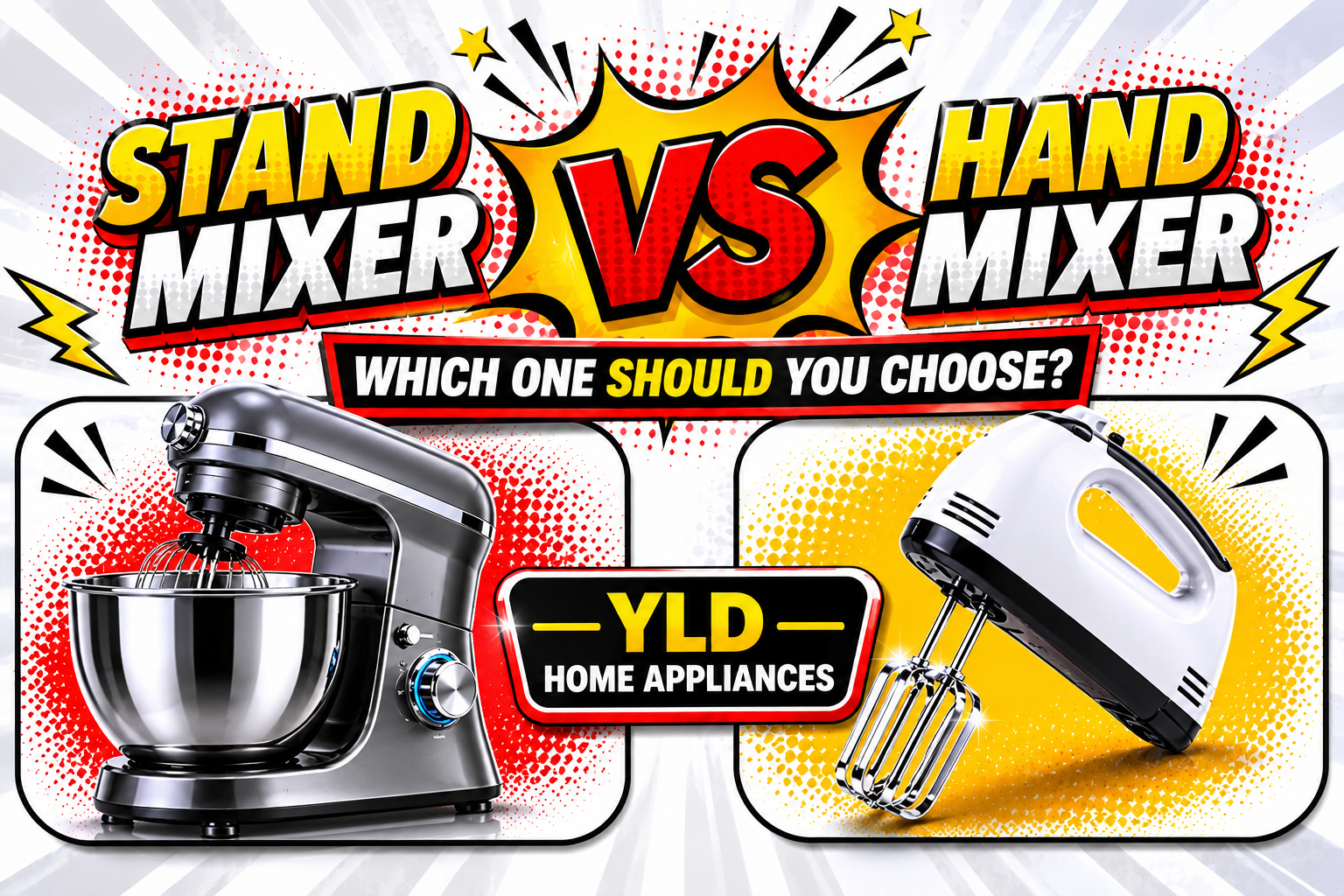
Among all countertop kitchen appliances, stand mixer vs hand mixers remain two of the most widely used food preparation tools worldwide. Both appliances are designed for ingredient mixing, but their engineering systems, motor structures, operational capacities, and commercial suitability are completely different.
For commercial buyers, OEM kitchen appliance brands, wholesalers, importers, and distributors, understanding the technical differences between stand mixers and hand mixers is extremely important before selecting suppliers or planning product sourcing projects.
This guide is written specifically for importers, wholesale distributors, OEM buyers, and private label brand builders who are evaluating stand mixer vs hand mixers as commercial sourcing categories. It covers product engineering, performance specifications, market fit, certification requirements, OEM customization, pricing structure, quality verification, and supplier evaluation — everything you need to make a profitable sourcing decision in 2026.
Why Mixer Selection Matters in Modern Kitchens
Mixer selection directly affects kitchen efficiency, food consistency, and long term operational stability in modern residential and commercial environments.
Modern kitchens now require mixing equipment that supports faster ingredient preparation, stable mixing consistency, continuous working performance, reduced energy consumption, and heavy duty ingredient handling.
Businesses often experience uneven dough texture, slower preparation efficiency, overheating problems, unstable motor performance, and shorter appliance lifespan when mixers do not match production requirements
Commercial buyers and wholesale importers usually analyze technical specifications carefully before selecting stand mixers or hand mixers for sourcing projects.
- motor wattage capacity
- cooling system structure
- voltage compatibility
- transmission performance
- product certifications
Proper mixer selection helps kitchens improve workflow efficiency, reduce maintenance costs, and maintain stable food quality during long term commercial operation.
What is a Stand Mixer?
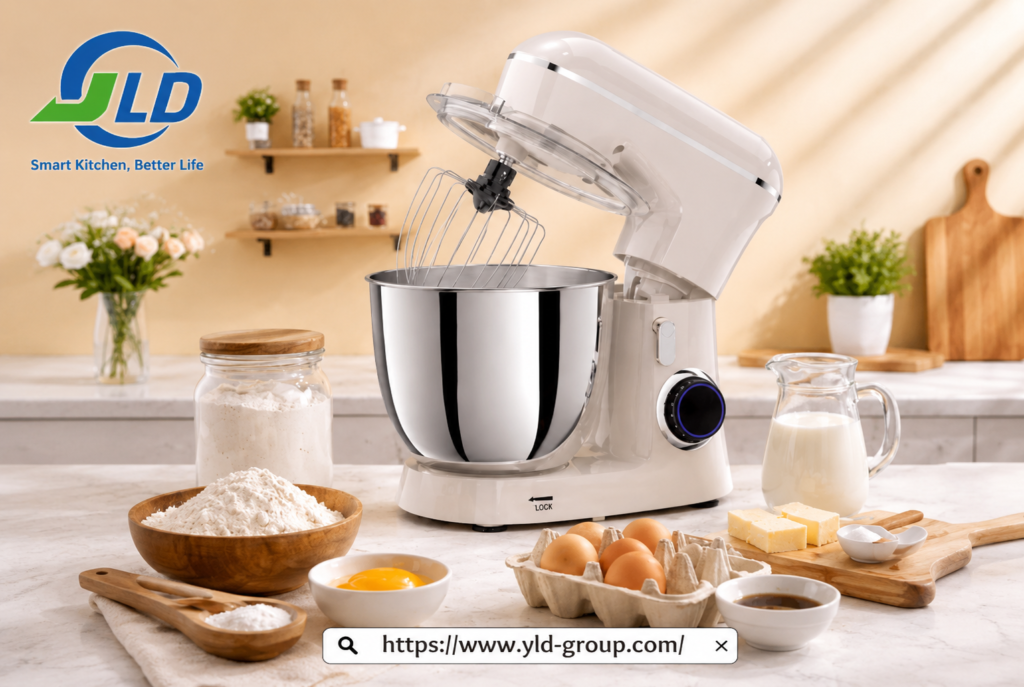
A stand mixer is a heavy duty countertop appliance designed for medium and large scale food preparation. Unlike hand mixers, stand mixers support automatic operation and continuous mixing capability.
Stand mixers are commonly used in:
- bakeries
- cafés
- restaurants
- hotels
- catering kitchens
Most stand mixers include larger motors, fixed mixing bowls, planetary mixing systems, and advanced cooling structures designed for continuous food preparation workloads.
Professional stand mixer vs hand mixer comparisons usually favor stand mixers for commercial environments because they improve productivity and ingredient consistency.
Stand Mixer Specifications
Stand mixer specifications directly affect dough handling capability, operational stability, and long term durability.
Commercial kitchens usually prefer higher wattage systems because they provide stronger torque performance during heavy food preparation.
| Feature | Specification | Kitchen Application |
| Motor Power | 500W–2000W | Heavy dough processing |
| Bowl Capacity | 4L–30L | Large batch preparation |
| Voltage Range | 110V–240V | Commercial applications |
| Cooling System | Advanced Ventilation | Continuous operation |
Higher performance stand mixers usually improve dough consistency, ingredient mixing speed, operational stability, and heat resistance during continuous commercial kitchen operation.
Commercial buyers comparing stand mixer vs hand mixer products should carefully analyze motor power, bowl capacity, and cooling systems before selecting mixers for OEM or wholesale sourcing projects.
Engineering Structure of Stand Mixers
Engineering structure plays an important role in stand mixer performance because commercial kitchens require stable operation during long mixing cycles and heavy ingredient processing.
Most stand mixers use planetary mixing mechanisms, metal gear transmission systems, reinforced motor housing, and advanced cooling ventilation to improve torque stability during commercial food preparation.
Heavy duty engineering improves operational reliability while reducing vibration during commercial food preparation.
Most commercial stand mixers support:
- bread dough preparation
- pizza dough mixing
- bakery production workloads
- continuous kitchen operation
- large batch ingredient processing
International buyers should always verify voltage compatibility, motor configuration, and safety certifications before importing stand mixer products for commercial markets.
Advantages of Stand Mixers
Stand mixers remain highly popular in commercial kitchens because they improve productivity, reduce manual labor, and support heavy food preparation applications.
Automatic operation allows kitchen staff to perform multiple tasks simultaneously during food production workflows.
Stand mixers improve heavy dough capability, support larger batch preparation, provide hands free operation, and maintain better ingredient consistency during continuous commercial operation.
Commercial bakeries and restaurants often prefer stand mixers because they deliver stable mixing performance during continuous daily operation.
Limitations of Stand Mixers
Despite their performance advantages, stand mixers also have several limitations that buyers should evaluate before purchasing commercial kitchen equipment.
Stand mixers usually require larger countertop space, consume more electricity, and increase overall equipment cost because of their heavier structure and stronger motor systems.
These limitations become important during stand mixer vs hand mixer comparisons for residential kitchens, compact apartments, and occasional baking applications.
What is a Hand Mixer?
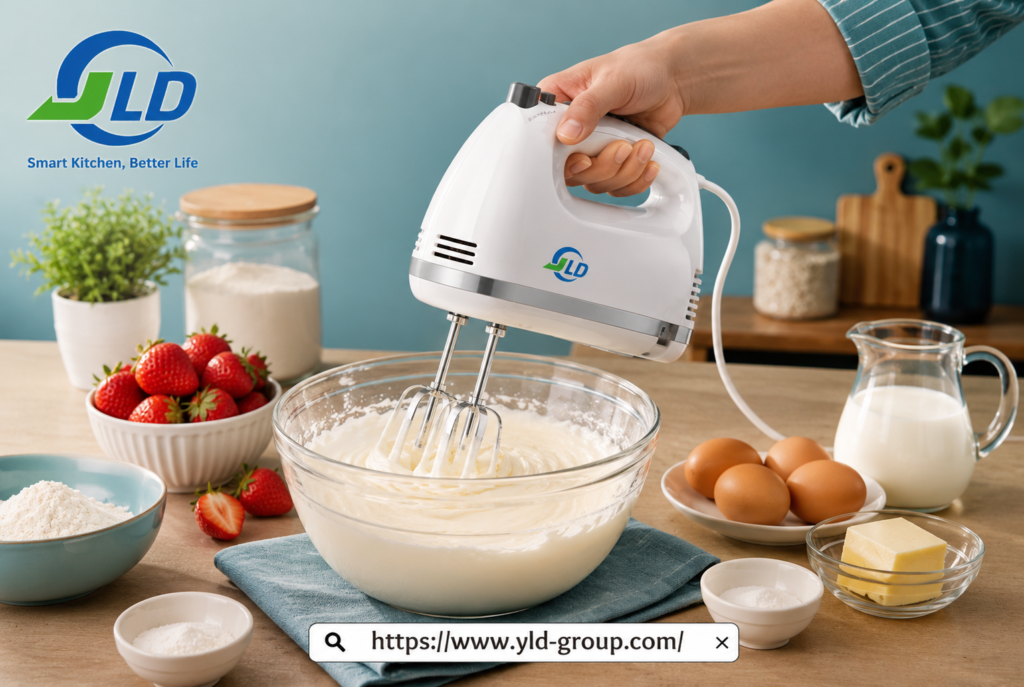
A hand mixer is a compact electric appliance designed mainly for light and medium food preparation applications. Most hand mixers include detachable beaters, lightweight housing, and multiple speed settings.
Hand mixers are highly popular in apartments, compact kitchens, small households, and occasional baking environments because of their lightweight structure and easier storage convenience.
Hand mixers are commonly used for whipping cream, beating eggs, frosting preparation, pancake batter, and cake batter in residential kitchens.
Hand mixers are usually not suitable for heavy dough preparation or continuous commercial operation.
Hand Mixer Specifications
Hand mixer specifications directly affect operational capability and mixing performance. Lower power systems are normally designed for lighter residential workloads.
| Feature | Specification | Kitchen Application |
| Motor Power | 150W–400W | Light batter and whipping |
| Voltage Range | 110V–240V | Residential kitchen usage |
| Speed Levels | 3–9 Speeds | Basic mixing flexibility |
| Cooling System | Basic Ventilation | Short operation cycles |
Engineering Structure of Hand Mixers
Engineering structure plays an important role in stand mixer vs hand mixer performance comparisons. Most hand mixers use compact universal motors with lightweight transmission systems.
The appliance receives electrical energy through proper voltage and current flow from wall outlets. Incorrect electrical specifications may reduce operational stability and damage internal motor systems.
Compact motors improve portability while lightweight structures reduce storage requirements. Most hand mixers also use plastic housing and basic ventilation systems to reduce manufacturing cost and overall appliance weight.
Most hand mixers support:
- 110V systems for North America
- 220V–240V systems for Europe and Asia
Commercial importers should always verify voltage compatibility before purchasing stand mixer vs hand mixer products for international markets.
Advantages of Hand Mixers
Hand mixers remain highly popular because they are affordable, compact, and easy to operate. Small kitchens especially benefit from their lightweight structure and minimal countertop requirements.
Hand mixers also support faster cleaning because detachable beaters simplify post-use maintenance.
- Lightweight and portable
- Lower purchasing cost
- Easier storage convenience
- Faster cleaning process
- Suitable for occasional baking
Residential buyers often prefer hand mixers because they provide practical mixing performance without requiring large kitchen space.
Limitations of Hand Mixers
Despite their convenience, hand mixers also have several operational limitations. Smaller motors usually struggle with dense dough and long mixing sessions.
Most residential hand mixers are designed mainly for lighter food preparation applications such as whipped cream, cake batter, frosting, and egg mixing. Smaller motors and lightweight transmission systems usually reduce their effectiveness during heavy dough preparation and long continuous mixing cycles.
Because of these limitations, hand mixers are generally more suitable for residential kitchens and occasional baking environments rather than commercial bakery production or heavy duty food processing.
Stand Mixer vs Hand Mixer Performance Comparison
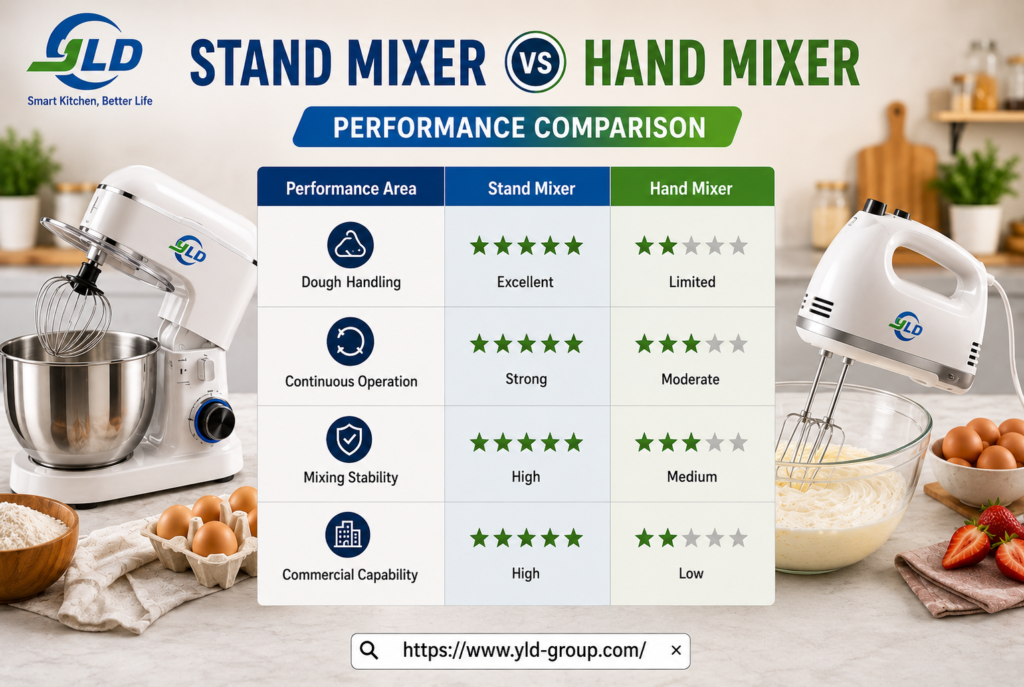
Operational performance is one of the most important factors in stand mixer vs hand mixer evaluations. Commercial kitchens require stronger systems capable of continuous operation and heavy ingredient handling.
| Performance Area | Stand Mixer | Hand Mixer |
| Dough Handling | Excellent | Limited |
| Continuous Operation | Strong | Moderate |
| Mixing Stability | High | Medium |
| Commercial Capability | High | Low |
Stand mixers usually provide better long term operational reliability because of their stronger engineering systems and motor capability.
Understanding Motor Engineering and Torque
Motor engineering directly affects mixing performance, torque stability, heat resistance, and long term appliance durability. Strong internal systems help mixers maintain stable performance during continuous kitchen operation.
Commercial stand mixers usually use copper motors, metal transmission gears, thermal protection systems, and stable RPM control systems. These components improve operational efficiency during heavy ingredient mixing.
Low quality mixers often fail because of weak motors, unstable RPM systems, poor cooling structures, and plastic transmission gears. Commercial buyers should always evaluate internal motor quality before selecting manufacturers.
Voltage Compatibility and Electrical Safety
Voltage compatibility is another important factor in stand mixer vs hand mixer sourcing projects. Incorrect electrical specifications may damage internal motor systems and reduce operational safety.
Electrical kitchen appliances require proper:
- Volt (V)
- Ampere (A)
- frequency ratings
Proper electrical specifications help improve appliance stability, operational safety, and long term motor performance during kitchen operation.
| Electrical Factor | Importance | Commercial Benefit |
| Voltage Rating | Prevents motor damage | Improves operational safety |
| Current Stability | Supports power consistency | Reduces overheating |
| Frequency Compatibility | Improves appliance efficiency | Supports long term operation |
| Plug Standards | Improves regional compatibility | Simplifies importing |
Commercial importers should always verify voltage compatibility, current ratings, plug configurations, and compliance certifications before purchasing stand mixer vs hand mixer products for international markets.
These factors help reduce importing risks and improve operational compatibility across different international markets.
How Motor Power Affects Mixing Performance
Motor power is one of the biggest differences between a stand mixer vs hand mixer. A stronger motor improves dough handling, mixing consistency, and operational stability during long mixing sessions.
Hand mixers usually operate between 150W and 400W. These mixers are suitable for:
- whipped cream
- eggs
- frosting
- cake batter
- light baking recipes
Stand mixers normally range between 500W and 2000W depending on the model and application. Higher wattage systems are designed for:
- bread dough
- pizza dough
- pastry preparation
- thick batter
- commercial food production
| Mixer Type | Typical Wattage | Best Application |
| Hand Mixer | 150W–400W | Light residential mixing |
| Stand Mixer | 500W–2000W | Heavy dough and bakery production |
| Commercial Stand Mixer | 1000W–2000W | Continuous commercial operation |
| Heavy Duty Mixer | 1500W+ | Large batch preparation |
Commercial kitchens usually prefer higher wattage stand mixers because they provide stronger torque stability during continuous operation.
Bowl Capacity and Batch Size Comparison
Bowl capacity directly affects ingredient volume and production efficiency. Smaller bowl systems are suitable for residential kitchens, while larger capacities improve commercial food preparation.
Hand mixers normally work with smaller bowls because they are designed for lighter recipes and lower ingredient quantities.
Stand mixers support larger fixed bowl systems that improve:
- batch consistency
- workflow efficiency
- preparation speed
- dough handling capability
| Bowl Capacity | Mixer Type | Recommended Usage |
| 1L–3L | Hand Mixer | Small household recipes |
| 4L–5L | Residential Stand Mixer | Family baking |
| 6L–10L | Commercial Stand Mixer | Bakery preparation |
| 20L–30L | Heavy Duty Mixer | Large food production |
Commercial bakeries and catering kitchens usually prefer larger bowl capacities because they reduce preparation time and improve production consistency.
Dough Mixing Performance and Commercial Kitchen Usage
Heavy dough preparation is one of the biggest differences in stand mixer vs hand mixer comparisons because thick mixtures require stronger motors and stable torque performance.
Hand mixers are mostly suitable for whipped cream, cake batter, and other light mixing applications used in residential kitchens and occasional baking environments.
Stand mixers are designed for bread dough, pizza dough, and commercial food preparation because they include stronger motors and more stable transmission systems.
These engineering systems improve dough consistency, mixing stability, and long term operational durability during continuous kitchen operation.
| Kitchen Type | Recommended Mixer | Main Advantage |
| Residential Kitchen | Hand Mixer | Compact and affordable |
| Bakery | Stand Mixer | Heavy dough capability |
| Café | Stand Mixer | Continuous operation |
| Restaurant Kitchen | Stand Mixer | Large batch preparation |
Commercial kitchens that use stand mixers for heavy dough preparation often also invest in high speed blender systems for food preparation workflows to improve operational efficiency.
How Does Material Quality Affect Electrical Kitchen Mixer Durability?
Material quality is one of the most important factors in stand mixer vs hand mixer durability because internal and external components directly affect operational stability, vibration resistance, and long term appliance lifespan.
Low quality mixers often use weaker plastic structures, unstable transmission systems, and lower grade electrical wiring. These components may reduce operational reliability during continuous kitchen usage.
Commercial stand mixers usually include die-cast metal housing, stainless steel bowls, reinforced transmission systems, and copper motor structures to improve durability and heavy workload performance.
| Material Type | Main Benefit | Commercial Value |
| Plastic Housing | Lower manufacturing cost | Residential usage |
| Die-Cast Metal Housing | Improved structural durability | Commercial kitchens |
| Stainless Steel Bowl | Better corrosion resistance | Long term operation |
| Copper Motor Components | Stable electrical performance | Heavy workload support |
Stand Mixer vs Hand Mixer Buying Checklist
Commercial buyers should evaluate several technical factors before selecting mixers for wholesale or OEM sourcing projects.
Important factors include:
- motor wattage
- voltage compatibility
- bowl capacity
- cooling systems
- transmission durability
- certifications
- operational stability
| Buying Factor | Why It Matters | Commercial Benefit |
| Motor Power | Improves dough handling | Better operational performance |
| Cooling System | Reduces overheating | Supports continuous operation |
| Voltage Compatibility | Prevents electrical problems | Improves safety |
| Bowl Capacity | Supports larger batches | Improves productivity |
Commercial buyers should always compare specifications carefully before selecting stand mixer vs hand mixer products for long term kitchen use.
OEM Mixer Sourcing Factors for Wholesale Buyers
Many wholesalers and private label brands source stand mixer vs hand mixer products from Chinese manufacturers because China offers strong production infrastructure and competitive manufacturing advantages.
OEM factories usually support customized solutions such as private label branding, voltage adjustment, packaging customization, and multilingual instruction manuals for international markets.
Before selecting a supplier, commercial buyers should carefully evaluate factory experience, production capability, compliance certifications, and internal quality control systems.
Reliable OEM manufacturers normally provide more stable production quality, better engineering consistency, dependable operational performance, and stronger after sales support for long term commercial projects.
Many international buyers also explore private label kitchen appliance manufacturing solutions when sourcing stand mixer vs hand mixer products for OEM and wholesale projects.
Certifications and Compliance Standards of Electrical Kitchen Mixers
Certifications are extremely important in stand mixer vs hand mixer sourcing projects. Commercial buyers and importers must verify compliance standards before importing kitchen appliances into target markets.
Different countries require different electrical and material safety certifications for kitchen equipment.
Common certifications include:
| Certification | Main Market | Purpose |
| CE | Europe | Electrical safety compliance |
| UL | United States | Product safety verification |
| ETL | North America | Appliance testing approval |
| RoHS | Europe | Hazardous material restriction |
Commercial buyers comparing stand mixer vs hand mixer products should always verify certification authenticity before placing wholesale orders.
Why Compliance Matters for Commercial Kitchens
Commercial kitchen equipments operate under stricter operational and safety requirements compared to residential environments. Poor quality mixers may create electrical safety risks, overheating problems, unstable operational performance, and compliance issues during continuous food preparation workloads.
Reliable stand mixer vs hand mixer manufacturers usually provide:
- testing reports
- certification documents
- voltage compatibility support
- safety inspection records
Commercial importers should also verify plug standards, regional voltage requirements, food contact material compliance, and frequency compatibility before importing stand mixer vs hand mixer products into international markets.
How to Choose a Reliable Stand Mixer and Hand Mixer Manufacturer?
Selecting the right stand mixer vs hand mixer manufacturer directly affects product quality, operational reliability, compliance safety, and long term commercial performance. Professional buyers usually evaluate engineering capability, electrical standards, and production consistency before placing wholesale or OEM orders.
Analyze Motor Torque and Transmission Configuration
Commercial stand mixers usually operate between 500W and 2000W, while most hand mixers range from 150W to 400W. Buyers should evaluate torque stability, copper motor quality, and metal gearbox durability before selecting manufacturers for heavy dough applications.
Evaluate Planetary Mixing Performance and Dough Handling Capability
Professional stand mixers commonly improve ingredient coverage by 60%–70% because planetary mixing systems rotate around the entire bowl surface. This improves dough consistency and reduces uneven ingredient distribution during bakery production.
Verify Thermal Protection and Cooling Engineering
Commercial mixers may operate continuously for 20–60 minutes depending on workload intensity. Reliable manufacturers usually integrate thermal overload protection and advanced ventilation systems to reduce overheating risks during long operational cycles.
Compare Bowl Capacity and Batch Production Efficiency
Residential stand mixers usually support 4L–7L bowl capacities, while commercial bakery mixers may exceed 20L–30L capacities. Larger bowl systems improve batch efficiency and reduce preparation time in commercial kitchens.
Confirm Electrical Specifications and Compliance Standards
Most international markets operate on either 110V–120V or 220V–240V electrical systems. Commercial buyers should verify voltage compatibility, frequency ratings, and certifications such as CE, ETL, CB, or RoHS before importing stand mixer vs hand mixer products.
Many wholesale buyers also compare leading China kitchenware manufacturers for OEM sourcing projects before selecting long term appliance suppliers.
Get the Right Electrical Kitchen Mixer Quote with YLD Home Appliances
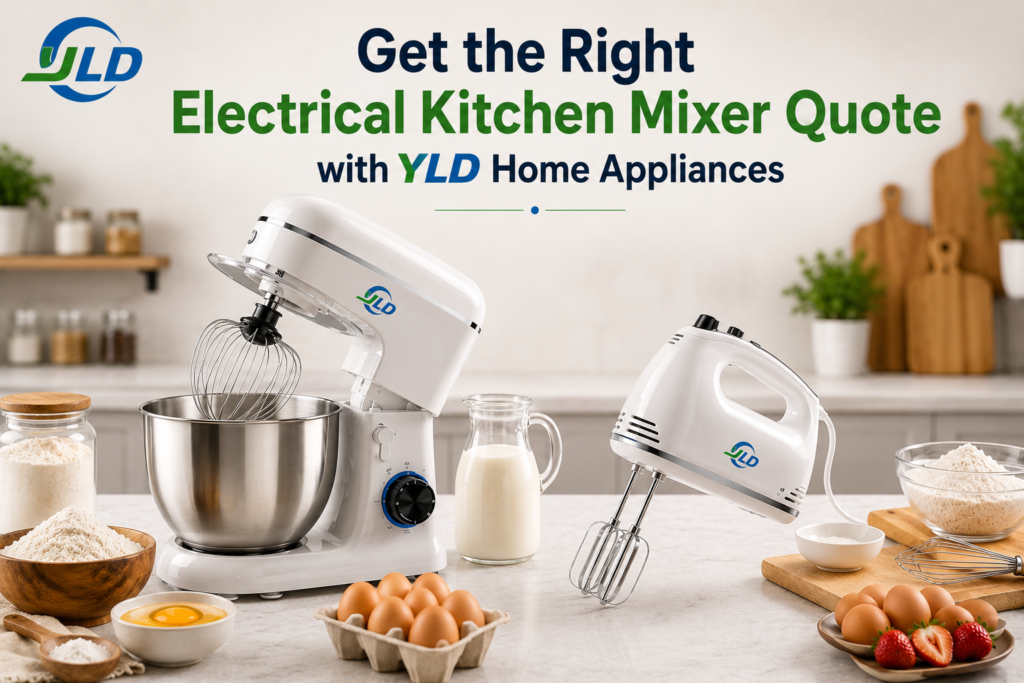
Global demand for kitchen mixers continues growing as bakeries, cafés, restaurants, and private label brands require more efficient and durable food preparation equipment.
YLD Home Appliances provides OEM and wholesale stand mixer and hand mixer solutions for international buyers. The company supports logo customization, voltage customization, packaging design, and private label manufacturing for global markets.
Commercial buyers usually evaluate:
- motor wattage and torque stability
- planetary mixing systems
- certification compliance
- cooling performance
- production consistency
With more than 10 years of manufacturing and export experience, YLD Home Appliances helps wholesalers, distributors, and OEM brands source reliable kitchen mixer solutions for long term commercial projects.
Many distributors sourcing stand mixer vs hand mixer products also compare countertop blender wholesale solutions when expanding commercial kitchen appliance categories.
Stand Mixer vs Hand Mixer Cost Analysis for Wholesale Buyers
Many importers comparing stand mixer vs hand mixer costs also evaluate commercial blender manufacturing solutions when planning broader kitchen appliance sourcing projects. Commercial buyers usually compare product specifications carefully before selecting mixers for OEM or wholesale sourcing projects.
Hand mixers are generally more affordable because they use smaller motors, lightweight structures, and simpler transmission systems. These products are commonly selected for residential and entry level retail markets.
Stand mixers usually have higher production costs because they include stronger motors, planetary mixing systems, larger bowls, reinforced transmission structures, and advanced cooling systems for commercial operation.
Commercial mixer pricing is also affected by:
- motor wattage
- bowl capacity
- material quality
- certification requirements
- OEM customization
- packaging specifications
| Cost Factor | Stand Mixer | Hand Mixer |
| Motor System | Higher Cost | Lower Cost |
| Bowl Structure | Larger and Heavier | Compact Design |
| Production Cost | Higher | Lower |
| Commercial Capability | Strong | Limited |
Wholesale buyers should always compare engineering quality, compliance standards, and long term operational value instead of focusing only on lower purchasing prices.
Businesses expanding commercial kitchen appliance sourcing strategies can also explore additional YLD Home Appliances industry resources and buying guides for supplier research and market analysis.
Final Thoughts
Choosing the correct stand mixer vs hand mixer is not only about kitchen convenience. For commercial buyers, the right mixer directly affects production efficiency, ingredient consistency, maintenance costs, and long term operational reliability
Commercial buyers should also carefully evaluate motor performance, material quality, certifications, voltage compatibility, and OEM capability before selecting suppliers, finalizing OEM projects, or placing long term wholesale orders.
Commercial buyers expanding appliance categories often combine mixer sourcing with OEM kitchen appliance manufacturing services to improve branding flexibility and long term supply chain efficiency.
Frequently Asked Questions
What is the main difference between a stand mixer and a hand mixer?
A stand mixer uses automatic mixing systems and stronger motors for heavy food preparation. Hand mixers are lightweight appliances mainly designed for light residential mixing tasks.
Which mixer is better for bread dough preparation?
Stand mixers are better for bread dough because they provide stronger torque performance and stable mixing capability. Hand mixers usually struggle during heavy dough preparation.
Are hand mixers suitable for commercial kitchens?
Hand mixers are mostly suitable for light preparation and occasional kitchen usage. Commercial kitchens generally prefer stand mixers for continuous operation and large batch mixing.
What motor wattage is recommended for commercial stand mixers?
Most commercial stand mixers operate between 1000W and 2000W depending on production requirements. Higher wattage systems usually provide better torque stability and dough handling capability.
Why do commercial mixers use metal transmission gears?
Metal gears improve operational durability and transmission stability during heavy mixing applications. They also reduce wear compared to plastic transmission systems.
Which mixer is better for small kitchens?
Hand mixers are usually better for compact kitchens because they require less storage space. Their lightweight structure also improves portability and convenience.
How does bowl capacity affect mixer performance?
Larger bowl capacities improve batch efficiency and support bigger ingredient volumes. Commercial kitchens usually prefer larger bowls for continuous food preparation.
What certifications should importers verify before purchasing mixers?
Commercial buyers commonly verify certifications such as CE, ETL, UL, CB, and RoHS. These certifications help improve importing compliance and operational safety.
Why is voltage compatibility important in mixer sourcing?
Incorrect voltage specifications may damage internal motor systems and reduce appliance lifespan. Proper compatibility also improves operational safety across international markets.
What factors affect stand mixer and hand mixer pricing?
Mixer pricing usually depends on motor wattage, bowl capacity, material quality, and certification requirements. OEM customization and packaging specifications may also increase production costs.
Related models in this range: Wholesale Food Dough Hand Mixer and Wholesale Food Dough Hand Mixer.