









In this guide:
- What “restaurant-grade” really means for a stick blender for soup
- Motor, shaft, and blade specs that survive a real soup kitchen
- Batch sizes, duty cycles, and why 120V matters in the US
- UL, ETL, and FDA compliance you cannot skip
- Wholesale, MOQ, and private label buying from YLD Home
- Menu math: soup-and-bakery programs that justify the cost
- Questions to ask any immersion blender supplier, including operators in Texas
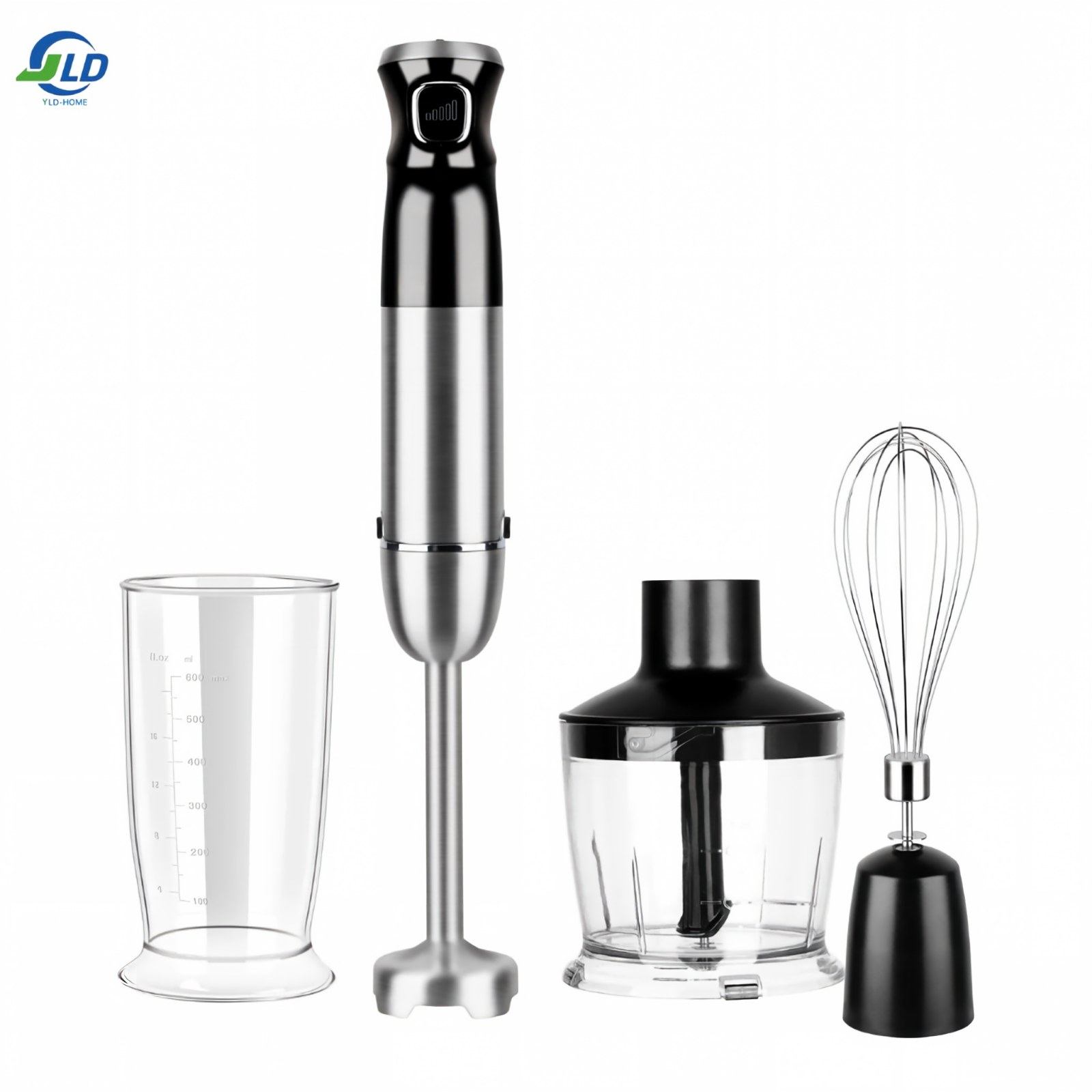
A stick blender for soup is the workhorse of every serious soup program in the United States. Walk into a deli in Chicago, a hospital kitchen in Houston, or a café chain in New York and you’ll find one hanging on the rail next to the stockpot. YLD Home builds these units at our Shenzhen factory, and we ship them to importers, distributors, and foodservice buyers across America every month. If you want to see why those accounts keep reordering, our why YLD Home is reliable video walks through the factory standards behind them. This guide is written from the factory floor, not a marketing desk, so you’ll get the specs, the compliance, and the real buying math that most articles skip.
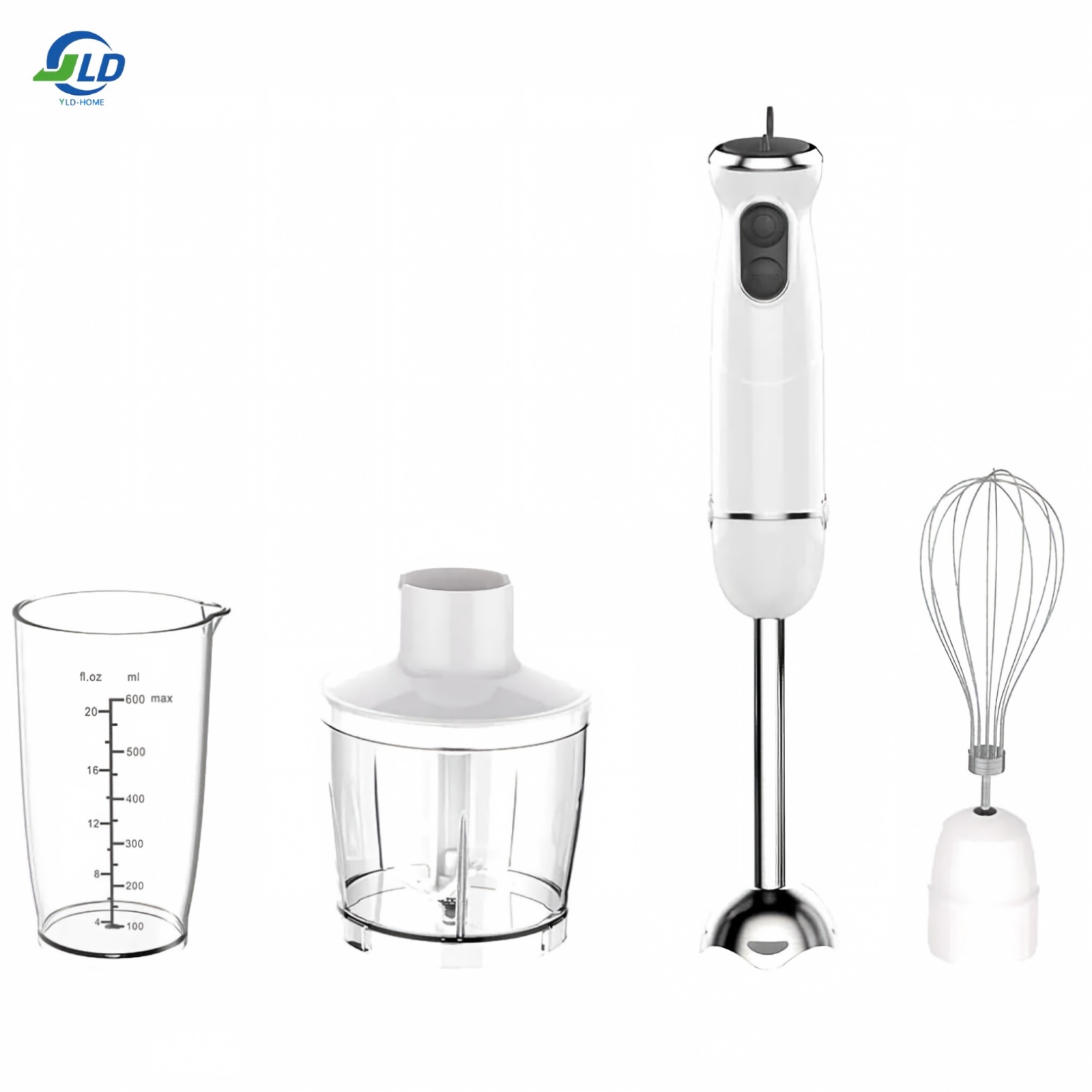
What “Restaurant-Grade” Means for an Immersion Blender for Soup
The phrase “restaurant-grade” gets thrown around a lot, and most of the time it doesn’t mean anything. For us it means one thing: the unit has to survive an eight-hour shift, every day, for years. A consumer stick blender from a big-box store will puree a batch of butternut squash soup now and then. It will also die quietly the first week a line cook runs it for twenty minutes straight.
Here’s what changes when you spec a real commercial unit. The motor is bigger, usually 350 to 500 watts of true output instead of the 200-watt “peak” numbers you see on retail boxes. The shaft is stainless steel, not plastic-coated, because hot soup at 190°F will soften and warp cheap housing. The blade guard is welded, not pressed, so it won’t loosen after a few hundred hours of vibration. And the duty cycle is rated for continuous use, which is the single biggest difference between a home gadget and a kitchen tool.
When we test a stick blender for soup at our factory, we run it for 30 minutes in a 190°F tomato base without stopping. If the motor housing gets too hot to hold, we change the fan design. If the shaft discolors, we change the steel grade. That test is the difference between a unit that lasts three months and one that lasts three years. Buyers who skip this spec usually find out the hard way, right in the middle of a busy lunch service. If you’re still comparing options, our how to choose a commercial immersion blender guide covers the full checklist, from motor output to warranty terms.
Motor, Shaft, and Blade: The Specs That Decide
You don’t need to be an engineer to buy a good stick mixer for soup. You need to know which numbers matter and which ones are marketing. Here’s the short version, straight from our production line.
| Spec | Consumer unit | Restaurant-grade unit |
|---|---|---|
| Motor output | 150–250W “peak” | 350–500W continuous |
| Shaft material | Plastic-coated | 304 stainless steel |
| Blade type | 2-blade, thin | 4-blade, hardened |
| Duty cycle | 1–3 min on / rest | 10–30 min continuous |
| Shaft length | 5–7 inches | 7–10 inches |
| Speed control | 2 fixed speeds | Variable + turbo |
| Warranty | 1 year | 1–2 years commercial |
The motor is the heart of the unit. A 350-watt continuous motor will blend a 5-gallon stockpot of chunky vegetable soup to a smooth finish in about ninety seconds. A weaker motor takes three times as long, overheats, and leaves lumps in the corners of the pot. The blade geometry matters just as much. We use four hardened blades with a slight upward angle so the unit pulls product down into the vortex instead of splashing it across the kitchen.
Shaft length is the spec most buyers get wrong. For a standard 12-quart stockpot, a 7-inch shaft is fine. For a 40-quart tilting kettle, you need 10 inches or the motor housing ends up too close to the steam. And if you’re buying for a soup kitchen that uses 60-quart kettles, talk to us about an extension shaft option before you place the order, not after.
Batch Sizes and Duty Cycles: Match the Tool to Your Volume
A soup program that makes 10 gallons a day has very different needs from one that makes 300 gallons. We see buyers over-spec and under-spec in equal measure. A deli in Miami blending two batches of lentil soup per shift can run a mid-range unit all year without trouble. A commissary kitchen in Los Angeles that purees fifty gallons of roasted tomato soup every morning needs the heavy-duty version, or it will burn through motors every quarter.
Think about your busiest day, not your average day. That’s the day your equipment has to survive. During the Thanksgiving week run-up, a catering kitchen in Chicago we work with runs three immersion blenders back to back for six hours straight, pureeing squash and sweet potato soups for holiday orders. Their units are 500-watt, continuous-duty machines with reinforced cords, and they still get warm by the end of the shift. That’s normal. What’s not normal is a machine that shuts itself off mid-batch because its thermal protection is set for a home kitchen.
Duty cycle is printed in the manual, but nobody reads the manual. So here’s the factory shortcut: ask the supplier how long the unit can run continuously at full load. If the answer is under five minutes, it’s a consumer product. If it’s 15 minutes or more, you’re in commercial territory. Also check the cord. A 6-foot cord on a 120V circuit means your cook is dragging an extension cord across a wet floor, which is a safety issue and a health-code issue.
120V, UL, ETL, and FDA: Compliance for the US Market
Every unit we ship to the United States is built for 120V, 60Hz. That sounds obvious, but it’s worth saying out loud because a surprising number of imported appliances are wired for 220V with a cheap converter slapped on. If your supplier can’t show you the UL or ETL listing for the exact model you’re buying, walk away. A UL mark on the box means the unit passed third-party testing for fire and electric shock risk. ETL is the same level of testing under a different certifier. Both are accepted by US inspectors and insurance companies.
FDA compliance is a separate question, and it matters more for a stick blender for soup than for almost any other appliance, because the shaft and blades sit directly in hot food. The stainless steel must be food-grade 304 or better, and any plastic or rubber parts that touch food have to be FDA-approved food-contact materials. Ask for the material certificates. A real factory will send them without a fight.
There’s also NSF, the certification many US health departments look for in commercial foodservice equipment. It’s not always required for a hand-held blender the way it is for a three-compartment sink, but if you’re selling to restaurants and school districts, an NSF-listed option makes your sales call easier. We offer the same motor platform with different certification packages, so tell us who your end customer is and we’ll point you at the right configuration. Our appliance certification page lists the standards and reports behind every configuration we ship.
Buying Wholesale: MOQ, Lead Times, and Private Label
Most of our US customers are not buying one blender. They’re importers, distributors, and private-label brands buying by the pallet. At YLD Home, the wholesale conversation starts with MOQ. For standard models, our MOQ is 1,000 units per model. For private label with your logo, your colors, and your packaging, the minimum is also 1,000 units, and the lead time is three to four weeks from sample approval. Custom colors on the handle are the easiest way to differentiate, and they cost less than you’d think.
The process works like this. You send us your target price and your market. We send samples of two or three models in the right range. You test them in your kitchen or your customer’s kitchen for two weeks. Then we lock the spec, you approve a pre-production sample, and production starts. A distributor in Houston told us the pre-production sample saved them $40,000 once, because it caught a blade design issue before 2,000 units went into the container.
If you’re new to importing, start with our China hand blender manufacturer guide. It walks through the whole supplier vetting process, from factory audits to payment terms. And if your business already reaches buyers outside the US, the same production line serves markets like South Africa, which is why our hand blender wholesale South Africa program runs on the same quality checkpoints. One factory, one standard, every market. And if your catalog also carries egg beaters, the same motors run through our hand mixer egg beater manufacturer line.
How We Test Soup Blenders Before They Ship
Testing isn’t a one-time thing at YLD Home’s factory. Every batch gets sampled, and every model gets re-qualified when we change a mold or a motor supplier — you can watch the whole process in our product quality control video. Here’s what a soup blender has to pass before it’s allowed in a shipping carton.
First, the motor run-in. Every unit runs for 15 minutes at full load on the test bench. We measure current draw, motor temperature, and noise. A unit that draws more than its spec is pulled and reworked. Second, the hot-liquid test. We blend a thick tomato base at 190°F for ten minutes and check the shaft for discoloration, the seal for leaks, and the blade for wobble. Third, the drop test. Each unit gets dropped onto a hard surface from waist height, because that’s what actually happens in a kitchen, and then it has to run again. Fourth, the cord test. We flex the cord at the strain relief 5,000 times, the way a cook yanks a blender out of a drawer.
The results go into a test report that your QC person can review. We send photos of the actual test bench setup, with the model number visible, so you know the report matches the product. A distributor in Phoenix told us this transparency was the reason they moved their soup blender line to us. Their old supplier sent PDFs with no photos and no serial numbers, and after two container-level complaints they’d had enough.
Five Mistakes Soup Kitchens Make (and How to Avoid Them)
We see the same five problems over and over when we visit US kitchens. Fix these and your equipment will outlast your expectations.
Mistake one: running the blender dry. Immersion blenders are designed to blend liquid. Running one in an empty pot, even for a few seconds, overheats the seal and warps the blade bearing. Train your staff to keep the blade submerged, and keep a water pitcher at the station.
Mistake two: overfilling the pot. When you puree hot soup, the vortex pulls air in and the volume expands. Fill the pot to 60 percent at most. A cook in Miami learned this the hard way when a 5-gallon pot of cream of mushroom soup erupted over her arms.
Mistake three: using a consumer unit for production. The $40 stick blender from the grocery store is for occasional home use. It will fail during your busiest week. Buy the right tool once, and the payback is usually under two months of labor savings.
Mistake four: skipping staff training. A 30-second demo on how to angle the head, when to pulse, and how to clean it will double the life of the unit. We include a laminated quick-start card with every wholesale order because we know training doesn’t happen otherwise.
Mistake five: ignoring the seal. The shaft seal is a wear part, not a lifetime part. Check it monthly for leaks and order spares with your initial stock. Spare seals cost pennies; a failed seal means a motor full of soup and a ruined $200 unit.
Soup-and-Bakery Programs: A Menu Idea That Justifies the Tool
Here’s a trend we keep seeing across US cafés: soup and bakery programs sold together. A shop in Portland runs three soups a day next to a case of bread and pastries, and their lunch ticket average is higher than the sit-down restaurants around them. The soup-and-bakery pairings that work best — tomato with grilled cheese, broccoli cheddar with a soft roll, chili with cornbread — all start the same way: a pot of base, a hand blender for soup, and a consistent puree in under two minutes.
The economics are worth doing the math on. A 12-quart batch of roasted red pepper soup is not expensive in ingredients at wholesale prices. Pureed by hand with a whisk, that batch takes a cook 45 minutes of arm-breaking work. Pureed with a good immersion mixer for soup, it takes under ten minutes. At $18 an hour for a line cook, that’s a savings of about $10 per batch, which means a $150 wholesale blender pays for itself in about fifteen batches. For a café selling 40 bowls a day, that’s three weeks.
Bakery tie-ins also smooth out your labor curve. Soup is made in the morning, when the baker is already in the building, so you’re not adding an afternoon cook. And because a stick mixer for soup cleans up in seconds under running water, the station reset is faster than a countertop blender with a pitcher to scrub. That’s the kind of detail a foodservice buyer notices when they visit a location. And for lighter prep, whisking a vinaigrette or whipping cream for dessert service, a hand mixer is often the faster tool; our hand mixer vs stand mixer guide walks through when each one earns its counter space.
What a Stick Blender for Soup Should Cost at Wholesale
Prices vary with motor, shaft length, and certification, but here’s a realistic wholesale picture for 2026.
| Configuration | Typical wholesale range |
|---|---|
| 350W, 7-inch shaft, basic | Quoted per model |
| 400W, 9-inch shaft, variable speed | Quoted per model |
| 500W, 10-inch shaft, commercial duty | Quoted per model |
| NSF-listed versions | Quoted per model |
| Private label (logo + packaging) | Quoted per model |
If a quote comes in far below the number other suppliers give you for the same configuration, ask what changed. Usually it’s the steel grade or the motor. We’ve seen containers of “commercial” blenders that were consumer motors with commercial-looking shafts, sold at a price that looked too good to be true. It was. The buyer’s customer base figured it out within six months, and the brand never recovered.
The other cost to plan for is spares. Buy one spare blade assembly per ten units and one spare seal kit per five units. That’s a small line item that keeps your customers out of down-time. A distributor in Chicago told us their spare parts margin is actually higher than their blender margin, and it’s what makes their reorders stick.
Questions to Ask Your Supplier (Including an Immersion Blender Supplier Texas Operators Use)
Before you sign anything, run this list past your supplier. If they hesitate on any of it, that’s your answer.
1. Show me the UL or ETL certificate for this exact model number. Not a similar model. This one.
2. What’s the continuous duty cycle at full load? Get it in writing.
3. What steel grade is the shaft, and can I see the material certificate?
4. What’s your defect rate target, and what happens to a bad batch?
5. Can you ship a pre-production sample before the full order?
6. What’s your lead time right now, and what’s your capacity during Q4?
For buyers in the southern US, the question is usually different: who do I talk to about regional stock? If you’re looking for an immersion blender supplier Texas distributors can call for fast reorders, ask us about our US warehousing options — we work with importers who keep buffer stock in Houston and Dallas, so you’re not waiting on an ocean crossing for your third reorder. A foodservice supplier in Austin told us that local buffer stock is the reason they switched from buying direct to buying through a Texas-based importer who uses our factory.
Frequently Asked Questions
Q1: Can an immersion blender for soup handle frozen vegetables and ice?
Yes, within limits. A 400W or 500W commercial unit will crush frozen vegetables and small amounts of ice, which is exactly what you want for a quick frozen-vegetable soup base. What it won’t do is chew through a bag of ice cubes the way a dedicated ice crusher does. For soup work, add your frozen product first, pour in your hot stock, and blend. The heat softens the product and the blade does the rest. If you’re blending a lot of ice, look at the turbo models with hardened blades.
Q2: How long can a commercial immersion blender run continuously?
A restaurant-grade unit is rated for 15 to 30 minutes of continuous use at full load, depending on the model. Consumer units are rated for one to three minutes. That rating is the single most reliable way to tell commercial equipment from home equipment, because it’s tested, not claimed. If your supplier can’t quote a continuous run time, treat that as a red flag.
Q3: Do I need NSF certification for an immersion blender for soup?
It depends on your customer’s health department and procurement rules. Many US health departments accept UL/ETL plus FDA food-contact compliance. School districts, hospitals, and some restaurant chains specifically require NSF-listed equipment. If any of those are in your target market, buy the NSF version from the start. Retrofitting certification later is expensive, because it involves a new evaluation and new labeling.
Q4: What shaft length do I need for a 40-quart kettle?
For a 40-quart tilting kettle, use a 10-inch shaft or an extension shaft. A 7-inch shaft leaves the motor housing too close to the steam and splashes at the rim. Measure from the blade to the top of the pot when the pot is at working level, and add two inches of clearance. When in doubt, buy the longer shaft. It works in every pot size down to a 12-quart stockpot.
Q5: Can YLD Home put my logo on the blender?
Yes. Private label is a core part of our business. You can start with a screen-printed logo on the handle, which is cheap and fast, or go full custom with your colors, your packaging, and your manual. MOQ for full private label is 1,000 units, and lead time from sample approval is three to four weeks. We’ve done private label programs for US brands selling through Amazon, restaurant supply catalogs, and direct to chains.
Q6: What’s the MOQ for an immersion blender for soup order?
Standard models start at 1,000 units per model. If you’re testing a new market, ask about our trial order options, which combine smaller quantities with a higher per-unit price. A distributor in Houston started with a trial order of 1,000 units, sold through them in six weeks, and then placed their first container order. Start small, prove the sell-through, then scale.
Q7: How should my kitchen clean the blender between batches?
Disconnect it, hold the blade under running warm water, and pulse it in a pitcher of clean water for ten seconds. That clears the blade guard. For a deeper clean, blend a little soapy water and then rinse. Don’t submerge the motor housing, and don’t put the shaft in a dishwasher unless the supplier confirms it’s dishwasher-safe. At the end of the shift, wipe the shaft dry and store the unit hanging or on a dry rail.
Q8: Do you ship to all US states, and what’s the typical lead time?
We ship to every US state, usually via ocean freight to Los Angeles, Houston, or New York, with final delivery by truck. Typical production lead time is three to four weeks after sample approval, plus 30–40 days of sea freight depending on the port. Air freight is available for urgent reorders. If you’re on the East Coast, ask about routing through New York, which often clears customs faster for small kitchen appliances.
Official references
How YLD Home keeps stick blender for soup supply predictable
Every stick blender for soup order runs through IQC on incoming parts, IPQC on the line and OQC before packing, and YLD Home shares inspection and loading photos so you see the shipment before it sails. Ask for the stick blender for soup test report set for your market.
How YLD Home keeps supply predictable
Every order runs through IQC on incoming parts, IPQC on the line and OQC before packing, and YLD Home shares inspection and loading photos so you see the shipment before it sails. Ask for the test report set for your market.