



In this guide:
- Why the personal blender for smoothies segment keeps growing
- Who buys a personal blender for smoothies in the US
- The specs that sell: a comparison table
- Food contact safety rules for smoothie cups
- Wholesale and private label options for your brand
- Finding a portable blender vendor in Los Angeles
- Packaging, shelf display, and retail compliance
- MOQ, sampling, and lead times for smoothie blender lines
The personal blender for smoothies is the quiet winner of the US small appliance market. It outsells full-size blenders in the personal-use category, appears in more online carts every quarter, and — most usefully for buyers — keeps a loyal repeat customer base. A shopper who buys a personal blender for smoothies this month is likely to buy a second one as a gift within a year. For US retailers, distributors, and private label brands, that pattern is worth planning around. This guide covers the sourcing side: who the customer is, which specs actually sell, what compliance costs, and how to build a wholesale program that survives contact with US retail.
Why the portable blender for smoothies segment keeps growing
Three years ago, a personal blender for smoothies was a novelty item in the back aisle. Today it sits at eye level in sporting goods stores, grocery chains, and big box retailers. The growth is not a trend cycle — it’s the product finally matching the habit.
The US smoothie habit is bigger than most people realize. Smoothie King and Jamba operate over a thousand locations combined, meal-prep culture normalized making drinks at home, and the at-home smoothie kit — frozen fruit, greens, protein powder — became a standard grocery basket. A portable blender for smoothies fits that basket perfectly: it blends a single serving in under a minute and cleans itself with a splash of water.
Social media does the rest. Short videos of green smoothies being blended in a cup, drunk in a car, and rinsed at a desk have made the product self-advertising. Every view is a demo. When we talk to US retailers, most say the category sells itself — their job is just to stock it at the right price and keep it in stock.
There is also a demographic shift underneath. Gen Z cooks less but drinks more specialty beverages at home. A travel blender for smoothies is one of the few kitchen appliances that demographic actually buys, which makes it the entry point for a whole future appliance relationship. Retailers who capture that customer now get first crack at their next purchase.
The result shows in sell-through. A mid-size sporting goods chain in Texas told us their mini blender for smoothies line turns seven times a year, against four for their countertop blenders. That gap is why the segment keeps earning shelf space.
Who buys a portable blender for smoothies in the US
Range planning starts with the buyer. Here are the five customer groups that move this category, in rough order of volume.
Gym members and fitness enthusiasts are the core. They blend protein shakes and fruit smoothies post-workout, and they buy on durability — a unit that survives a gym bag and a thousand charges. This group reads reviews before they buy and returns product that leaks.
Office workers are the second group. Desk blending means a quiet motor, a sealed lid, and a cup that looks professional enough to carry through a hallway. They buy mid-price and replace every couple of years.
Parents are third. A cordless blender for smoothies with a kid-safe cup and a lock function sells to families making after-school smoothies. Food-safe materials and BPA-free claims matter here more than motor power.
Travelers and commuters are fourth. Hotel rooms, road trips, and flights — the TSA-friendly size is a genuine selling point. This group buys on portability first and blends second.
College students round it out. Dorm rooms have no counter space and no patience for cleanup. A single-serve smoothie blender that fits in a backpack is the obvious purchase, and the back-to-school season is a real sales wave.
Each group wants a different variant, which is why a one-SKU program underperforms. The fitness buyer wants a 600 ml cup and a strong motor. The office buyer wants quiet and sealed. The parent wants locks and BPA-free claims. When we build a wholesale range, we usually suggest three variants: an entry 350 ml unit, a mid 500 ml unit, and a premium 600 ml unit with extra accessories. If you’re adding a wider small appliance line later, our hand mixer vs stand mixer comparison helps with the next decision after smoothie blenders.
The specs that sell: a comparison table
Buyers ask us for a simple spec map, so here it is. These are the numbers that appear in real US retail listings, and the ranges we see move at wholesale.
| Spec | Entry | Mid | Premium |
|---|---|---|---|
| Capacity | 300–350 ml | 400–500 ml | 550–600 ml |
| Motor (sustained) | 150–200W | 200–300W | 300–400W |
| Battery | 1500–2000 mAh | 2000–3000 mAh | 3000 mAh+ |
| Charging | Micro-USB | USB-C | USB-C fast charge |
| Cup material | Polypropylene | Tritan | Tritan, double-wall |
| Blades | 4-blade | 4-blade, stainless | 6-blade, stainless |
| Extras | Travel lid | Travel lid, straw | Second cup, carry case, cleaning brush |
| Typical retail | $24.99–$34.99 | $39.99–$49.99 | $59.99–$79.99 |
Three specs deserve extra attention. Capacity matters more than motor power for smoothies, because a 600 ml cup handles a full serving plus ice, while a 350 ml cup forces a half batch. Battery capacity sets the honest “blends per charge” number — buyers test this, and the packaging claim needs to match. And cup material decides both the food safety story and the leak reputation: Tritan resists odors and staining better than polypropylene, and a double-wall cup keeps a cold smoothie cold for the commute home.
One warning from our test bench — the same rigs you can watch in our product quality control video. When we tested entry units from three different factories, the weak points were always the same: the lid seal, the blade-to-cup bearing, and the charge port. A smoothie is thick, and thick liquids find every gap. Test any new model with frozen fruit and a full cup before you commit to a container.
Food contact safety rules for smoothie cups
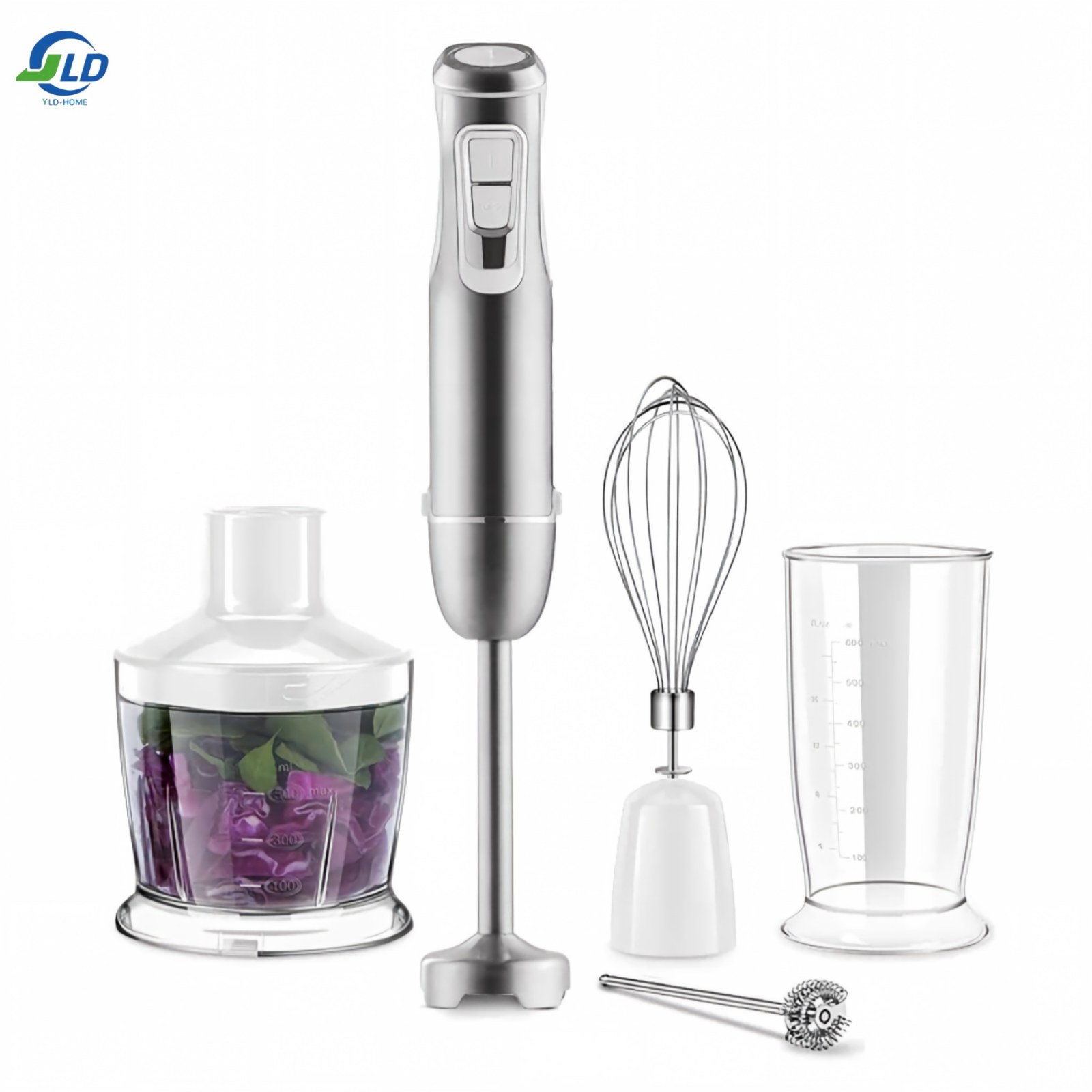
Here is the part buyers skip and regulators don’t. The cup of a personal blender for smoothies touches food directly, so the materials must be food-contact compliant, and the brand — not the factory — carries the liability in the US market.
The FDA sets the baseline. Food-contact plastics need to comply with the relevant sections of 21 CFR — for polypropylene cups, that’s 21 CFR 177.1520, and for Tritan, the resin manufacturer’s food-contact declaration plus migration testing. The paperwork should come with your sample: a material certificate, a migration test report, and a letter from the resin supplier.
BPA-free is the claim shoppers search for, and it needs evidence. The test is a simple laboratory screen, but the claim must be backed by a report before it goes on the box. We run this test for every cup material we ship and keep the reports in the compliance file.
The same food-safety logic applies abroad, and this is where we borrow a page from other markets. Food contact rules on both sides of the Atlantic ask for the same kind of evidence — the FDA here, and in the UK the Food Standards Agency, whose guidance on food contact materials is a good reference for what documentation a serious buyer expects. We benchmark our material certificates so one document set satisfies both markets, which matters if you ever sell the same SKU into Canada, the UK, or the EU.
Beyond the cup, check the sealing rings and the blade housing. Silicone seals need food-grade certification, and the blade housing — usually plastic or stainless — needs the same migration testing as the cup. A full food-contact file covers every surface that touches the smoothie, and we send that file set with every order. You can see the full list of what we test and certify on our about our appliance certification page.
Wholesale and private label options for your brand
The phrase you’ll hear from US buyers is travel blender for smoothies wholesale usa — meaning a factory-backed supply arrangement with your brand on the box. Here’s how that works in practice.
Most programs start with an OEM order. You pick a stock model from the factory line, change the cup color, print your logo, design the carton, and sell it as your own. MOQ at YLD Home is 1,000 units per model, and we mix models in a container so you can test two or three configurations with one freight bill.
Private label goes a step further: your brand on the unit, your SKU codes, your warranty terms, your Amazon listings. We handle the factory side — sourcing the cup, the motor, the battery pack, the packaging — and you own the customer relationship. The typical timeline: two to three weeks for samples and detail sign-off, three to four weeks for production, then 18 to 22 days of sea freight to the West Coast or about 30 days to the East Coast.
Two packaging decisions set the tone. First, retail-ready packaging with a printed master carton and clear English copy — not a plain brown box. Second, a gift-friendly option. A two-pack of smoothie blenders in a display sleeve sells disproportionately well in the holiday quarter, and it doubles your average order value with one SKU change.
If you’re new to importing, our China hand blender manufacturer guide covers the factory-selection process end to end — audits, samples, quality control, and the questions to ask before a PO. The same logic applies to smoothie blender lines, and most of the checklist transfers directly.
Finding a portable blender vendor in Los Angeles
Los Angeles is the natural home of this category. The wellness economy — gyms, juice bars, supplement shops, natural food stores like Erewhon and Whole Foods — makes the city a launch market for any new smoothie product. If you’re a portable blender vendor Los Angeles-based buyers trust, you serve one of the densest clusters of smoothie culture in the country.
The port is the other half of the story. Los Angeles and Long Beach handle the largest share of US container imports, which means a LA-based vendor can pull a shipment from the dock to a local warehouse in days instead of weeks. The 3PL infrastructure — City of Industry, Commerce, Rancho Dominguez — is built for exactly this: small appliance importers who want to land product, break containers, and distribute regionally.
What LA buyers look for in a supplier is specific. They want a vendor who can support Amazon FBA shipments, because a large share of smoothie blender volume flows through the marketplace. They want bilingual packaging capability for the large Hispanic market. And they want a partner who understands the fitness channel — gyms and supplement retailers buy in case quantities with their own labeling requirements.
Our advice for working with LA vendors: ask about their fulfillment setup before you ask about price. A vendor with a local warehouse, an FBA prep service, and a same-week delivery lane to your retail accounts is worth a higher unit cost than one who ships everything from a distant hub. We support LA-based distributors with direct dock deliveries, FBA-ready packaging, and bilingual cartons, because those are the details that decide whether a smoothie blender program works on the West Coast.
Packaging, shelf display, and retail compliance
A mini blender for smoothies can be perfect in the factory and dead on the shelf if the packaging fails. Here’s what US retail actually demands.
The carton has to sell itself. Shoppers decide in seconds, so the front panel needs a clear product photo, the capacity and battery claims in plain language, and a visible “BPA-free” or “food-grade” signal if you can substantiate it. The UPC barcode, the carton dimensions, and the gross weight per master carton all go into the retailer’s system before the buyer even approves the product — missing paperwork delays listing by weeks.
Shelf display matters more in this category than most. A smoothie blender is a visual product, and a window box or a hang-tab display sells better than a closed carton. Some retailers run a clip-strip or a countertop display near the produce section — the product sits next to frozen fruit, which is the perfect adjacency. If your packaging supports a display configuration, say so in the sell sheet; it’s a differentiator.
Amazon compliance deserves its own paragraph. If you sell through FBA, the product needs a barcode, the listing needs accurate spec data, and the images need to match the shipped unit exactly — the mismatch is the number one source of returns. Battery-powered items also need to meet Amazon’s lithium battery documentation requirements, which means your supplier’s battery certificates have to be current.
Retail compliance paperwork rounds it out: the SDS for the battery pack, the FCC declaration for the electronics, the Prop 65 assessment for California, and the FDA food-contact file we covered earlier. YLD Home assembles this entire set for every order, and our about our appliance certification page lists exactly what each document covers.
MOQ, sampling, and lead times for smoothie blender lines
Let’s put a calendar on a smoothie blender program, because timing is where most first orders go wrong.
Sampling comes first. Order three to five units of each candidate model, plus the compliance file, and test for two weeks. Blend frozen fruit daily, charge and discharge the battery, drop the cup from counter height, check the seal with the cup lying on its side in a bag. Our sample sets ship in about 7 days and include the material certificates you need to evaluate.
Production follows sample approval. For an OEM order of 1,000 units, production runs three to four weeks. Add three days for pre-shipment inspection if you use SGS or Intertek, then the transit leg: 18 to 22 days to Los Angeles, about 30 days to New York. Door to door, a first order typically lands 10 to 14 weeks after the deposit.
Seasonal planning decides whether you hit the waves. The January resolution bump is the biggest, and it needs inventory in the warehouse by mid-December. Back-to-school is second — August shelf presence means a May or June order. The holiday gift quarter is third, and a two-pack SKU ordered in July lands in time for Black Friday. Chinese New Year complicates the first quarter: factories close for two to three weeks, so a January order can slip into March without warning.
On quantities, resist the big first order. Start with what you can sell in twelve weeks — for most mid-size retailers, that’s 1,000 to 2,500 units across two or three models. Prove the sell-through, then scale. A distributor in Chicago we work with started with 2,500 units, hit a 90 percent sell-through in nine weeks, and reordered a full container. The same pattern repeats in every market we serve, from our hand blender wholesale South Africa program to the US.
How YLD Home builds smoothie blender programs
YLD Home is a Shenzhen factory specializing in small kitchen appliances — hand blenders, stick blenders, juicers, and the personal blender line that covers the cordless blender for smoothies category. We have supplied US importers, distributors, and private label brands since 2012, and smoothie blender programs are a growing share of our export volume.
What we bring to a program: stock models across all three price bands, OEM and ODM capability, a full compliance file set per model, and mixed-container shipping so you can test multiple SKUs with one freight bill. We also publish our testing process — the certifications, the standards, the reports — on the appliance certification page, because we’d rather you verify us before you order than after. And if you’re planning a wider small appliance assortment beyond smoothie blenders, our hand mixer egg beater manufacturer page walks through the mixer line we build alongside the blender family.
A typical first program looks like this. You tell us your target retail price and channel. We recommend two or three models, send samples with the compliance file, and walk you through packaging options. Once you approve, we lock the details, run production, and ship with inspection. The whole loop is designed to be verifiable at every step — you never take our word alone.
If that sounds like the right setup for your smoothie blender line, request a wholesale quote and we’ll respond within one business day with pricing, lead times, and sample availability.
Frequently Asked Questions
Q1: What is the best portable blender for smoothies to stock for US retail?
For most US retail channels, the mid-band personal blender for smoothies is the sweet spot: 400 to 500 ml Tritan cup, 250 to 300 watts sustained, USB-C charging, and a 12-month warranty. It retails between $39.99 and $49.99, turns fast, and keeps returns under 2 percent when the factory tests properly.
Q2: What MOQ applies to a private label portable blender for smoothies?
YLD Home’s MOQ is 1,000 units per model for OEM, with mixed models allowed in one container. Full custom projects — new cup molds, custom motors — run higher, typically 2,000 units, with tooling quoted separately per project.
Q3: Are portable smoothie blenders safe for food contact?
They are when the materials are certified. The cup, seal, and blade housing need FDA food-contact compliance — 21 CFR 177.1520 for polypropylene, resin-level declarations for Tritan — plus migration test reports. Ask for the material certificates with your sample and keep them in your compliance file.
Q4: How long does a wholesale order of portable blenders for smoothies take to arrive?
Plan on 10 to 14 weeks door to door: two to three weeks for samples and sign-off, three to four weeks for production, then 18 to 30 days of sea freight plus customs and trucking. Air freight cuts the transit leg to about a week at four to six times the cost.
Q5: Can the same portable blender for smoothies work for protein shakes?
Yes. A 500 to 600 ml model with a strong motor handles both smoothies and shakes, which is why that spec sits in the mid and premium bands. The entry 350 ml units are fine for shakes but underpowered for frozen smoothies — match the spec to the use case.
Q6: Do we need UL certification to sell portable blenders in the US?
For battery-powered units, yes in practice. The battery pack and charger should carry UL or ETL certification — UL 2054 or UL 2271 for the cells, UL 1310 for the charger — and Amazon requires the documentation for lithium-powered listings. Ask for the certificates with your sample.
Q7: What packaging works best for selling portable blenders on Amazon?
FBA-ready packaging means a printed retail carton, accurate specs on the listing, and images that match the shipped unit exactly. A window box or display-friendly design helps in physical retail, and a two-pack sleeve option lifts average order value in the holiday quarter.
Q8: How many units should a first order be?
Start with what you can sell in twelve weeks — for most mid-size retailers, 1,000 to 2,500 units across two or three models. Prove sell-through, then scale. The retailers who skip the test phase and order containers blind are the ones who end up with markdowns.