









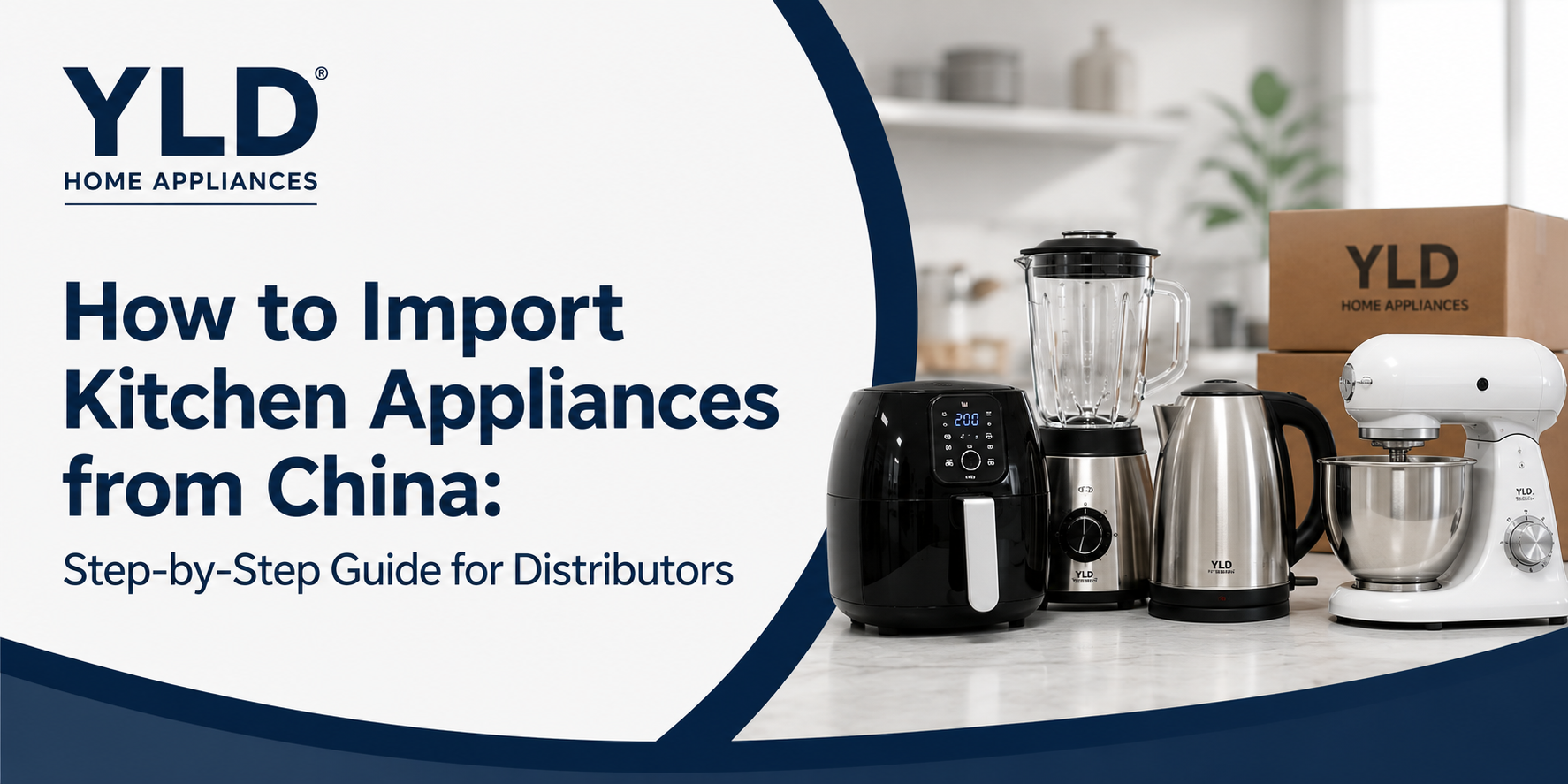
Importing kitchen appliances from China is one of the most reliable ways to build a profitable distribution business, but success depends entirely on how the sourcing and import process is managed. In most cases, the products themselves are not the problem. The real risks come from choosing unverified suppliers, missing required certifications, poor quality control, or releasing shipments without proper inspections.
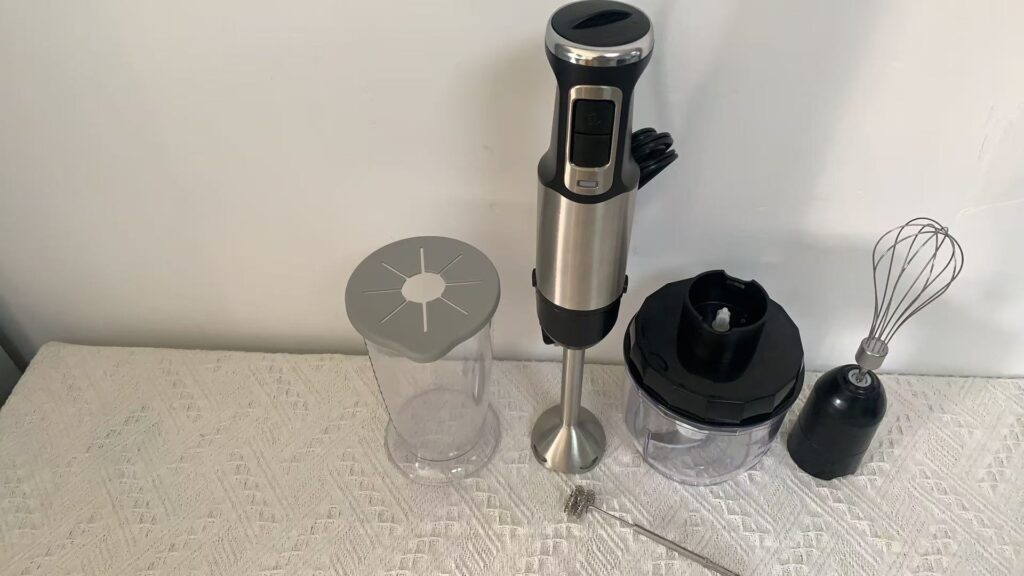
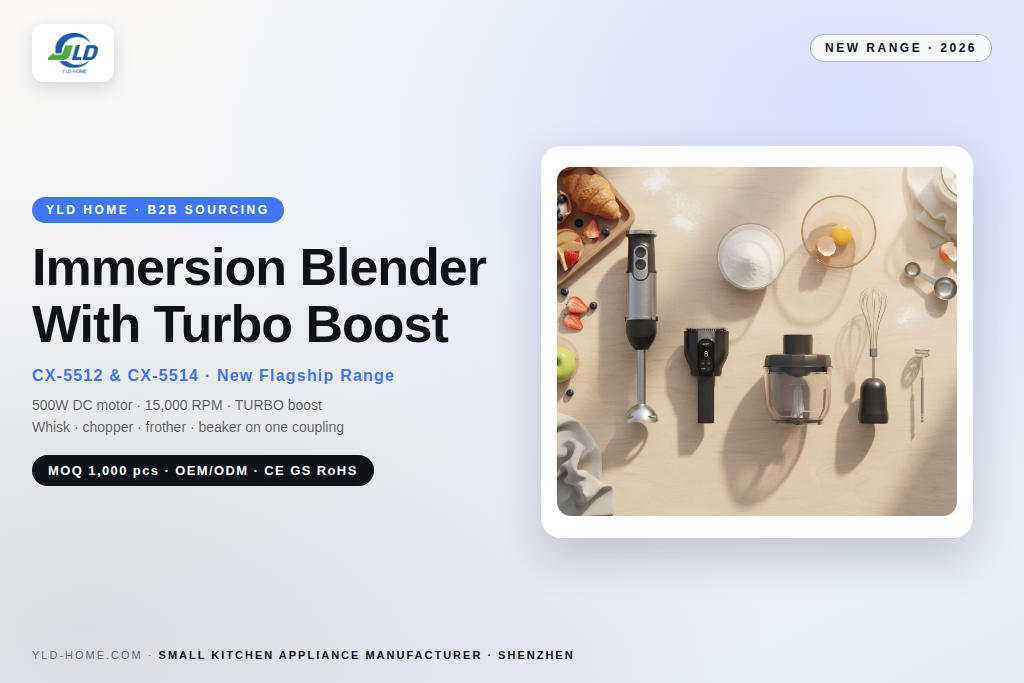
For buyers comparing supply options, the hand blender range from YLD HOME lists every model by type and wattage, with MOQ, lead time and certification stated per page.
This step-by-step guide explains how distributors can successfully import kitchen appliances from China, covering everything from market research and supplier verification to MOQs, certifications, payment terms, shipping methods, quality inspections, and common importing mistakes. Follow the process carefully and you can build a scalable, stable, and profitable supply chain for long-term business growth.
Quick Answer
To import kitchen appliances from China, distributors must first identify demand in their target market. Buyers should select a verified OEM or ODM manufacturer. Buyers must also confirm certifications required in the destination country. After that, they can negotiate MOQ, pricing, and payment terms. Requesting product samples before mass production is also important. Quality inspections should be completed before shipment release. Products can then ship by sea or air freight with proper customs documents. The complete importing process usually takes 45 to 90 days.
Why China Dominates the Kitchen Appliance Manufacturing Market
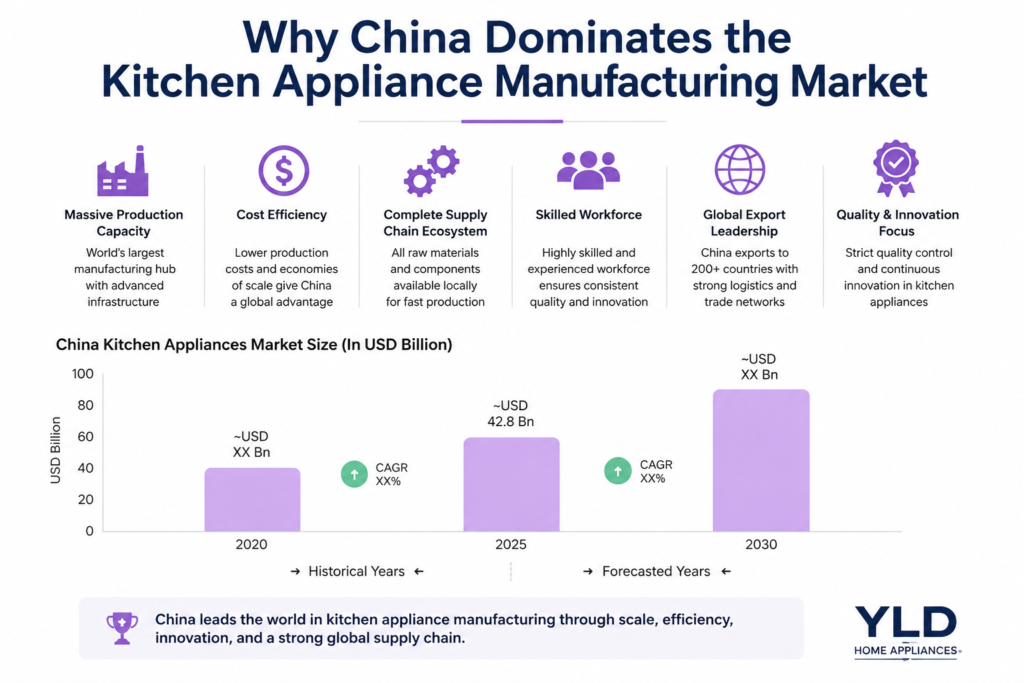
According to Grand View Research, the global kitchen appliances market is projected to grow steadily through 2030, driven by rising demand across Asia-Pacific, the Middle East, and emerging retail markets.
China produces over 70% of the world’s small kitchen appliances. The concentration of raw material suppliers, electronics component manufacturers, tooling factories, and assembly facilities in regions like Guangdong and Zhejiang creates a supply chain ecosystem that no other country currently replicates at scale.
For distributors, this means competitive pricing, wide product variety, and access to OEM and private label manufacturing that allows brand differentiation in crowded retail markets. The challenge is not finding suppliers but it is identifying the right ones and managing the process correctly from inquiry to delivery.
If you are evaluating which product categories offer the strongest import margins and global demand, read our overview of the Top 10 China Kitchenware Manufacturers for Wholesale Buyers before shortlisting suppliers.
Step 1: Define Your Product and Market
The most common mistake first-time importers make is contacting suppliers before they know exactly what they need. A clear product brief and market specification saves weeks of back-and-forth and eliminates suppliers who cannot actually meet your requirements.
What to Define Before You Search
| Decision | What to Specify | Why It Matters |
| Product category | Blenders, juicers, air fryers, mixers, kettles, toasters, or coffee machines | Different factories specialize in different appliance categories |
| Target market | EU, USA, UK, Australia, Middle East, or Southeast Asia | Certifications depend on the destination market |
| Price point | Budget, mid-range, or premium | Product quality and materials vary by pricing level |
| Volume per order | Units per SKU per shipment | MOQ requirements depend on order quantity |
| Private label or stock | Custom branding or ready-made products | OEM and ODM factories offer different services |
| Customization needed | Logo, packaging, color, or features | Advanced customization requires stronger factory capabilities |
Distributors building a long-term product line should prioritize categories with proven global demand. Air fryers, portable blenders, and coffee machines have shown consistent growth across major import markets and are worth evaluating before committing to a product category.
Step 2: Find and Verify the Right Kitchen Appliance Manufacturer
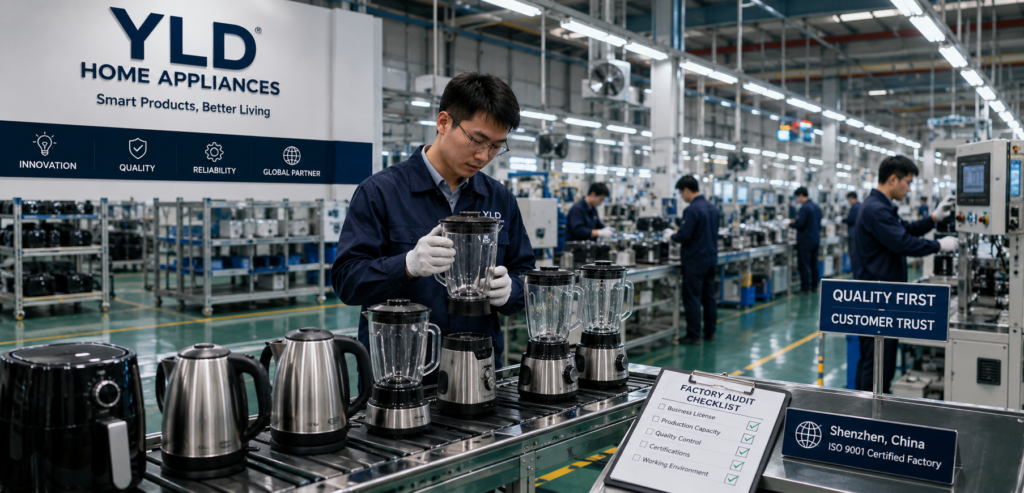
Finding a supplier is easy. Finding one that can consistently deliver the quality, volume, and compliance your market requires is the actual challenge. There are three types of suppliers you will encounter when sourcing kitchen appliances from China.
Supplier Types: Factory vs. Trading Company vs. OEM Manufacturer
| Supplier Type | What They Are | Best For | Watch Out For |
| Factory (own production) | Manufactures products in-house | Large volume, OEM/ODM, custom specs | Higher MOQ, less flexible on mixed orders |
| Trading company | Buys from multiple factories, resells | Small first orders, product variety | No control over quality — you are a step removed from production |
| OEM/ODM manufacturer | Factory with in-house design and customization | Private label brands, custom product development | Requires clear spec brief — generic inquiries get generic responses |
For distributors serious about building a brand, working directly with an OEM/ODM factory is the right choice. It removes the trading company margin, gives direct access to production, and allows product customization that builds defensible market differentiation. Read our complete guide on How to Start a Private Label Kitchen Appliance Brand from China to understand what this process involves before selecting a manufacturing partner.
How to Verify a Manufacturer Before Placing Any Order
Do not skip verification. A supplier with a professional website and fast response time is not the same as a verified, compliant manufacturing partner. Distributors typically begin their supplier search on platforms such as Alibaba or Global Sources, though platform presence alone is never a substitute for direct factory verification.
Business License Check Every legitimate Chinese manufacturer has a registered business license. Request it and verify the company registration name, registration number, and business scope at China’s National Enterprise Credit Information system.
Factory Audit or Video Verification A professional supplier will not hesitate to provide a factory video tour, live video call walkthrough, or third-party audit report. Reluctance to show the factory is a clear warning sign.
Certification Documents Request original certification documents — CE, ETL, CB, RoHS — and verify the certificate number with the issuing body. Check what certifications YLD Home holds as a benchmark for what a compliant manufacturer’s documentation looks like.
Sample Order Before Any Bulk Commitment Request physical product samples from at least two or three shortlisted suppliers before placing a bulk order. YLD Home offers a structured sample test service — evaluate build quality, motor performance, packaging, and whether the sample matches the specification discussed.
Step 3: Understand MOQ, Pricing, and Payment Terms
Pricing and minimum order quantity are the two numbers most first-time importers focus on. Payment terms are equally important and are where most importers expose themselves to unnecessary financial risk.
Typical MOQ and Price Ranges for Kitchen Appliances from China
| Product Category | Standard MOQ | Approximate FOB Price Range | OEM/Custom MOQ |
| Hand Blenders | 500–1,000 units | USD 8–22 per unit | 1,000+ units |
| Countertop Blenders | 300–500 units | USD 15–45 per unit | 500+ units |
| Stand Mixers | 200–500 units | USD 28–75 per unit | 500+ units |
| Air Fryers | 300–500 units | USD 22–60 per unit | 500+ units |
| Electric Kettles | 500–1,000 units | USD 6–20 per unit | 1,000+ units |
| Juicer Extractors | 300–500 units | USD 12–35 per unit | 500+ units |
| Food Processors | 200–500 units | USD 20–55 per unit | 500+ units |
| Coffee Machines | 200–300 units | USD 25–80 per unit | 300+ units |
| Toasters | 500–1,000 units | USD 8–25 per unit | 1,000+ units |
Payment Terms: What Is Standard and What to Avoid
- 30% Deposit / 70% Before Shipment:
This is the standard structure for established supplier relationships. The 70% balance is paid after production is complete and before goods leave the factory, giving you leverage to resolve quality issues before release.
- 100% Upfront Payment:
Only ever appropriate for small sample orders. Never pay 100% upfront for a bulk production order with a supplier you have not worked with before.
- Letter of Credit (L/C):
Used for large orders with new suppliers. Provides bank-level payment security for both parties and is worth the administrative overhead for orders above USD 50,000.
- PayPal or Western Union for Bulk Orders:
Neither provides meaningful buyer protection for commercial transactions. Avoid for bulk orders.
Step 4: Confirm Product Certifications for Your Target Market
Certifications are not optional. Importing kitchen appliances without the correct safety and compliance certifications for your destination market means your goods can be stopped at customs, refused by retailers, or recalled after sale. The certification requirement is determined by where you are selling — not where the product is made.
Required Certifications by Target Market
| Target Market | Mandatory Certifications | Additional Recommended |
| European Union | CE, RoHS, REACH, ERP | CB, LVD, EMC |
| United Kingdom | UKCA, RoHS | CB |
| United States | ETL or UL, FCC (if wireless) | LFGB (food-contact parts) |
| Canada | ETL (cETL), CSA | — |
| Australia / New Zealand | RCM (SAA) | CB |
| Middle East (GCC) | ESMA / SASO | CB |
| Southeast Asia | SIRIM (Malaysia), SNI (Indonesia), PSB (Singapore) | CB |
All major kitchen appliance certifications are governed by international standards bodies including the IEC (International Electrotechnical Commission), which sets the global baseline for electrical product safety testing.
Key rule: Your product is only as market-compliant as its weakest certification. A CE-marked appliance sold in the UK without UKCA is non-compliant regardless of product quality.
Always request the original certificate document from the supplier and verify the certificate number independently. You can review the full list of YLD Home’s international appliance certifications — including CE, GS, CB, RoHS, REACH, ERP, UL, and ETL — as a practical reference for what a fully certified product portfolio looks like.
Step 5: Request and Evaluate Samples Properly
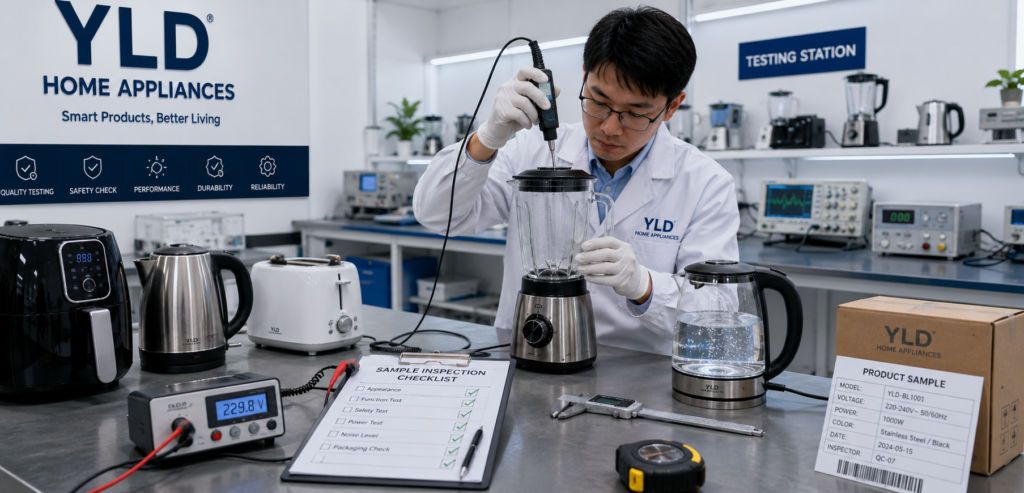
A sample order is not a formality. It is the only stage in the process where you can evaluate the actual product before committing to a production run. Most experienced distributors test samples more rigorously than their end customers ever will — because a fault found at sample stage costs nothing. The same fault found in 2,000 shipped units costs significantly more.
Sample Evaluation Checklist
| What to Test | What to Look For | Risk If Skipped |
| Motor performance | Consistent speed, no burning smell after sustained use | Undersized motor fails under real household conditions |
| Build quality | No sharp edges, tight tolerances, no rattle in the housing | Poor assembly quality generates customer returns |
| Electrical safety | Correct plug type for target market, fuse rating, cable gauge | Wrong plug or fuse fails compliance testing |
| Packaging | Drop test from 1m — does the product survive? | Poorly packed products arrive damaged in retail shipments |
| Labeling compliance | CE mark visible, wattage, voltage, country of origin, model number | Missing label elements can trigger customs holds |
| Certification match | Does the sample match the certified model specification exactly? | Uncertified modifications void the certificate |
Request samples from at least two suppliers and evaluate them side by side. For category-specific buying considerations before ordering samples, read our detailed guides:
Countertop Blender Wholesale: What Importers Must Know
How to Source Wholesale Electric Kettles from China, and Commercial Automatic Espresso Machine for Wholesale Buyers
Step 6: Place Your Production Order and Monitor Manufacturing
Once samples are approved and terms are agreed, the production order begins. This stage is where importers who are not actively managing the process lose control of quality, timeline, and costs.
Production Timeline by Order Type
- Stock / Off-Shelf Products: 7–15 days production + shipping lead time. No tooling or customization required — factory builds from existing molds and components.
- OEM with Logo and Packaging Customization: 25–35 days. Artwork approval, packaging print run, and label application add time to standard production. Learn how YLD Home handles custom branding through its prototyping design service.
- ODM / New Product Development: 45–90 days. Includes prototype development, tooling, sample approval cycles, and full production run. This timeline shortens significantly when working with a factory that has existing molds that can be adapted.
What to Confirm During Production
Contact your factory contact at key milestones — not just at the beginning and end. Confirm raw material procurement is complete within the first week. Request in-production photos at the 50% completion mark. Confirm packaging materials are ready before the final assembly stage begins. These three check-ins catch most problems before they become shipment delays.
Step 7: Quality Inspection Before Shipment
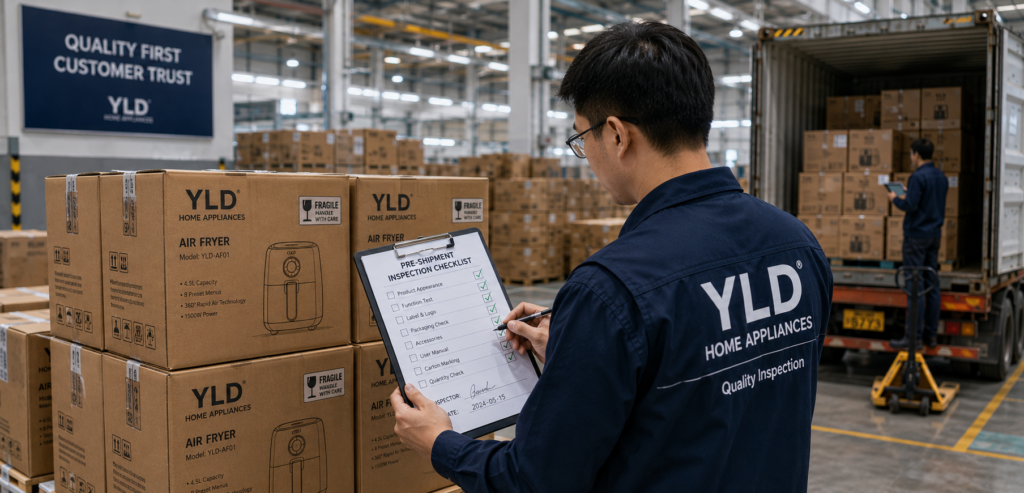
Never release payment for a shipment that has not been inspected. Pre-shipment inspection is the single most effective risk management step available to importers and costs a fraction of what a defective shipment costs to resolve.
Inspection Types and When to Use Each
Pre-Production Inspection — Verifies raw materials and components before production starts. Used for high-value OEM orders or when working with a new supplier for the first time.
During Production Inspection (DUPRO) — Conducted when 30–50% of production is complete. Catches systematic issues early enough to correct before the full run is finished.
Pre-Shipment Inspection (PSI) — The most commonly used option. Conducted when 100% of production is complete and at least 80% is packed. Covers random sampling, AQL defect rate testing, labeling compliance, carton dimensions, and packing list accuracy.
Container Loading Inspection — Confirms that the goods loaded match the inspection results and that cartons are loaded correctly. Required for high-value or fragile product categories.
For most first-time orders, a Pre-Shipment Inspection using AQL 2.5 sampling standard is the appropriate choice. Third-party inspection companies such as SGS, Bureau Veritas, and Intertek operate across China and can schedule an inspection within 24–48 hours.
Step 8: Choose the Right Shipping Method
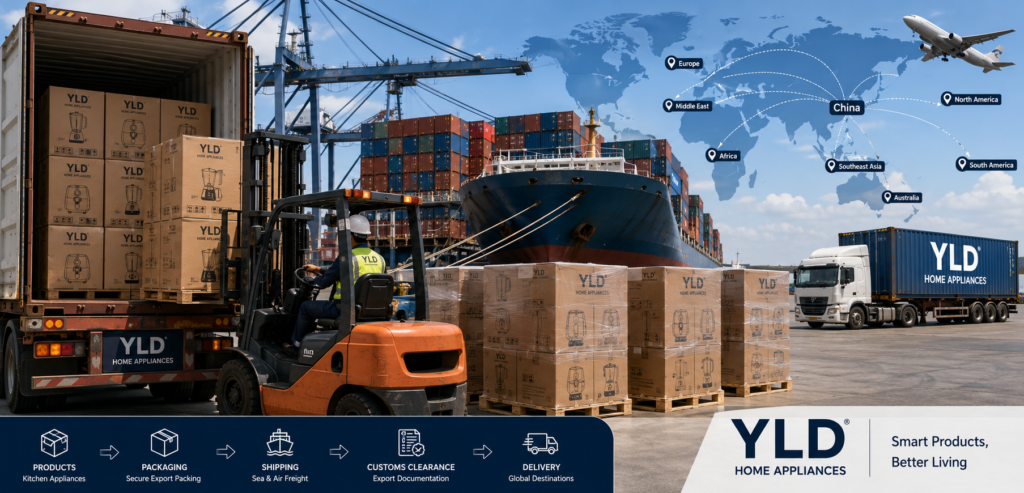
Shipping method selection is determined by order volume, timeline, and product category. Kitchen appliances contain motors, heating elements, and in some cases lithium batteries — each of which has specific shipping classification requirements.
| Method | Transit Time | Cost Level | Best For | Key Consideration |
| Sea Freight FCL | 18–35 days | Lowest per unit | Orders filling a full 20ft or 40ft container | Most cost-effective for large volume |
| Sea Freight LCL | 20–40 days | Low-medium | Orders below container load — under 15 CBM | Shared container — slightly longer due to consolidation |
| Air Freight | 5–10 days | High | Urgent restocks, small high-value orders | Cost-prohibitive for heavy kitchen appliances at scale |
| Express Courier | 3–7 days | Highest | Sample shipments, small test orders | Customs duty thresholds apply |
Most kitchen appliance distributor shipments move by sea freight. A standard 40ft container holds approximately 2,500–4,000 units of small kitchen appliances depending on product size and packaging dimensions. YLD Home provides guidance on logistics through its dealer cooperation program for distributors building a long-term supply chain.
Documents Required for Import Customs Clearance
- Commercial Invoice: States product description, quantity, unit price, total value, and Incoterms. Must match the packing list exactly.
- Packing List: Details carton count, gross weight, net weight, dimensions, and units per carton.
- Bill of Lading / Airway Bill: Issued by the freight forwarder or shipping line. Required for customs clearance at destination port.
- Certificate of Origin: Required by many countries to determine applicable import duty rates.
- Certification Documents: CE declaration of conformity, test reports, or other compliance documents required by destination market customs authorities.
Step 9: Calculate Your True Landed Cost
Most importers calculate product cost. Experienced importers calculate landed cost — the total cost of getting the product from the factory floor to your warehouse shelf. These two numbers are different, and the gap between them determines whether your margins are viable.
Landed Cost Calculation Framework
| Cost Component | Typical Range | Notes |
| FOB Product Cost | Varies by product | The factory price — your starting point |
| Freight (Sea FCL) | USD 1,500–4,500 per container | Varies by origin port, destination, and season |
| Destination Port Charges | USD 300–800 | Port handling, terminal fees, documentation |
| Import Duty | 0–25% of CIF value | Varies by HS code and destination country |
| VAT / GST | 5–25% depending on country | Reclaimed in most B2B import scenarios |
| Customs Broker Fee | USD 150–400 | Required for commercial imports in most markets |
| Inland Transport | Varies | Port to warehouse delivery |
| Pre-Shipment Inspection | USD 250–400 per inspection | Per factory visit |
Add all components to your FOB product cost to arrive at true landed cost per unit. Then calculate your retail or wholesale margin from that number — not from the factory price. For a realistic starting point, request an instant quote from YLD Home with your target product and volume — landed cost estimates can be built from verified FOB pricing.
Common Mistakes Distributors Make When Importing Kitchen Appliances from China
Most import problems are not caused by bad products. They are caused by skipped steps and incorrect assumptions. These are the most expensive mistakes first-time importers make.
- Choosing a Supplier Based on Price Alone
The cheapest quote often reflects corners cut on materials, motor quality, or certification compliance. Price is one factor among several, not the primary one.
- Skipping the Sample Stage
A factory that resists sample requests is not confident in its own product. YLD Home provides a structured sample test process — never proceed to bulk order without approved samples in hand.
- Ignoring Certification Requirements
Certification is not something to figure out after the goods arrive. A shipment without the correct certifications for the destination market can be seized, returned, or destroyed at the importer’s cost. Review YLD Home’s full certification portfolio to understand what proper compliance documentation looks like.
- Paying 100% Upfront to a New Supplier
Standard trade payment terms exist for good reason. No legitimate factory requires full payment upfront from a first-time buyer.
- Using FOB Price as the Margin Basis
Calculating profitability from the factory price without accounting for freight, duties, inspection, and destination fees produces incorrect margin projections. Always work from landed cost.
- No Quality Inspection Before Shipment
A defective batch discovered after delivery costs far more than the inspection would have. Pre-shipment inspection costs less than 0.1% of most order values.
- Working With Trading Companies for OEM Products
Trading companies cannot customize products, hold certification documentation, or guarantee consistent factory-level quality control.
For OEM or private label work, read our guide on How to Start a Private Label Kitchen Appliance Brand from China to understand why direct factory relationships are non-negotiable.
- Choosing the Wrong Product for Your Market
Not all appliances suit all markets. A stand mixer vs hand mixer decision, for example, changes your target customer, retail price point, and logistics cost profile significantly. Research product fit before committing to a category.
Why Work With YLD Home for Kitchen Appliance Imports
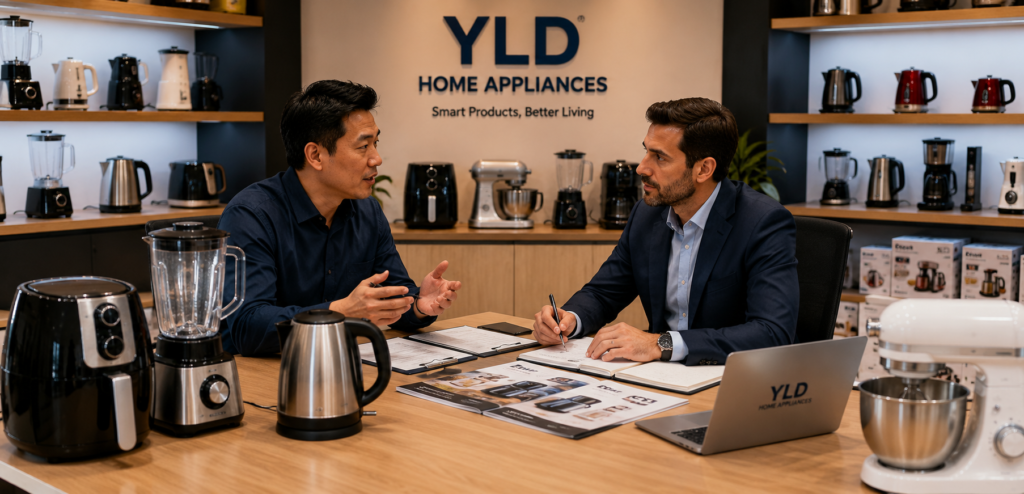
YLD Home is a direct OEM/ODM kitchen appliance manufacturer based in Shenzhen, China, with over 13 years of experience supplying distributors, retail brands, and wholesale buyers across global markets.
Our company operates a 25,000 m² (monthly output 600,000 finished units) factory with 300 staff, 62 production machines, and dedicated R&D, tooling, injection, assembly, and quality control departments — all under one roof. Products carry international certifications including CE, GS, CB, RoHS, REACH, ERP, UL, and ETL, covering major markets including the EU, USA, UK, Australia, and the Middle East. View the complete appliance certification list.
YLD Home’s product range covers the full small kitchen appliance category: hand blenders, juicers, stand mixers, food processors, air fryers, electric kettles, toasters, hand mixers, and coffee machines — all available for wholesale, OEM, and private label programs.
Distributors can become a dealer, request a sample test, download the 2025 product catalog, or submit a sourcing inquiry directly via the YLD Home contact page.
Explore More From Our Sourcing & Wholesale Guides
Expand your import knowledge with our in-depth guides covering wholesale buying frameworks, OEM manufacturing strategies, private label development, and product-specific sourcing advice for global kitchen appliance distributors.
- How to Start a Private Label Kitchen Appliance Brand from China in 2026
- Top 10 China Kitchenware Manufacturers for Wholesale Buyers (2026)
- Countertop Blender Wholesale: What Importers Must Know Before Placing Bulk Orders
- How to Source Wholesale Electric Kettles from China: Step-by-Step Buying Guide (2026)
- Commercial Automatic Espresso Machine for Wholesale Buyers: Pricing, Specs & Buying Guide (2026)
- High-Speed Blender for Commercial Kitchens: Improve Efficiency While Ensuring Consistent Performance
- Stand Mixer Vs Hand Mixer: Which One Should You Choose?
- Portable Juice Blender OEM Guide: Features, MOQ & Private Label Opportunities
- Juicer Blender Manufacturer: OEM Combo Appliances for Wholesale Buyers
- Juicer Vs Blender: Key Differences, Benefits, and Which One Is Better for Your Business
Conclusion
Importing kitchen appliances from China occupies a central and growing position in global distribution, sitting at the crossroads of manufacturing scale, certification compliance, and supply chain management.
Understanding supplier verification, MOQ structures, quality inspection protocols, and landed cost calculations ensures every import decision is built on accuracy rather than assumption.
As demand for small kitchen appliances continues rising across global markets, distributors who master the China import process will be consistently positioned to scale their business with confidence.
Frequently Asked Questions (FAQs)
What is the first step to import kitchen appliances from China successfully?
The first step to import kitchen appliances from China is proper kitchen appliance sourcing. You must define your product, target market, and budget before contacting suppliers.
How important is kitchen appliance sourcing when importing from China?
Kitchen appliance sourcing is the most critical step because it determines product quality, pricing, and supplier reliability when you import kitchen appliances from China.
Why should I choose a China OEM manufacturer for my business?
A China OEM manufacturer helps you produce customized products with better control over quality and branding when you import kitchen appliances from China.
Can I build private label kitchen appliances while importing from China?
Yes, private label kitchen appliances allow you to create your own brand while working with factories during the process to import kitchen appliances from China.
What is the role of a wholesale kitchen appliance supplier?
A wholesale kitchen appliance supplier provides bulk products at competitive prices, helping distributors reduce costs when they import kitchen appliances from China.
Why is importing from China so popular for kitchen appliances?
Importing from China is popular due to low manufacturing cost, large product variety, and strong OEM support when companies import kitchen appliances from China.
What is an appliance factory audit and why is it important?
An appliance factory audit checks production capacity, quality control, and certifications before you import kitchen appliances from China.
How does a kitchen appliance distributor benefit from China sourcing?
A kitchen appliance distributor benefits from lower costs, private labeling options, and scalable production when they import kitchen appliances from China.
What certifications are needed before importing from China?
Certifications like CE, RoHS, and ETL are required depending on the market when you import kitchen appliances from China for legal compliance.
How can I reduce risk when importing kitchen appliances from China?
You can reduce risk by working with verified suppliers, checking certifications, and doing proper kitchen appliance sourcing before you import kitchen appliances from China.
What makes China OEM manufacturers better for long-term business?
China OEM manufacturers offer customization, better pricing, and consistent production quality for businesses planning to import kitchen appliances from China.
How should a kitchen appliance distributor choose suppliers?
A kitchen appliance distributor should evaluate quality, certifications, and factory audits before they import kitchen appliances from China.
Related models in this range: Kitchen Blender Wholesale and Mixer Blender Wholesale.