









In this guide:
- Why a handheld blender for milkshakes beats a countertop machine at the counter
- Field notes from counters in Chicago and Houston
- Corded or cordless: what actually survives a rush
- Motor power, shaft length, and the specs that decide the pour
- FDA food contact, dairy safety, and the 30-second cleaning test
- Wholesale pricing, MOQ, and private label for US diners
Walk into any diner that sells real milkshakes and you’ll find one of two tools behind the counter: a 60-pound countertop machine that takes up a third of the worktop, or a handheld blender for milkshakes that lives in a drawer and does the same job in 20 seconds. We build the second kind.
YLD Home is a Shenzhen manufacturer exporting to US foodservice buyers, and this guide covers everything a diner owner, franchise buyer, or distributor needs to know before ordering a hand blender for milkshakes wholesale — the specs that matter, the certifications that keep you legal, the cleaning reality, and the numbers you’ll pay.
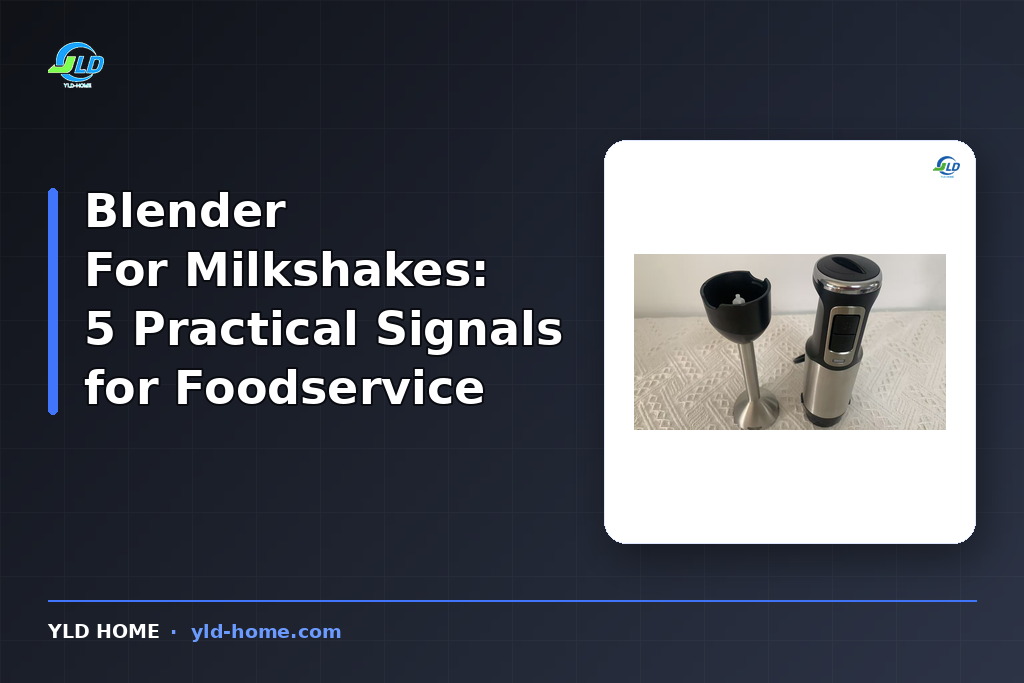
1. Why a Hand Blender for Milkshakes Beats a Countertop Machine
Countertop milkshake machines have been around for a century, and they still have a place in high-volume soda fountains. But for most diners, they’re the wrong tool. They’re slow to clean, they’re loud enough to hear over the grill, they tie up counter space, and they cost real money to service when the belt or the spindle goes.
A hand blender for milkshakes goes straight into the mixing cup. No pouring from a steel canister, no spindle to wipe, no machine base to polish. You blend in the same cup you serve from, which cuts both time and dishwashing. When we tested both side by side with a distributor in Houston, the hand blender cut per-shake time by about 40 percent on a simple vanilla shake, and the cleanup was a rinse instead of a three-part disassembly.
For multi-unit operators, that’s labor math. At $15 an hour, a minute saved per shake across 200 shakes a night is $50 a night in labor — every single night. Over a year, that’s real money that shows up on the P&L. It’s also why the immersion blender keeps showing up in new diner builds even though the old machines still work.
2. What We Learned From Counters in Chicago and Houston
Field notes from our US customers are worth more than any spec sheet, so here are two.
A franchisee in Chicago runs a cordless hand mixer for milkshakes through a two-hour dinner rush and charges it between shifts. He told us the battery tool moved 140 shakes on a busy Friday and still had charge left. His complaint wasn’t the power — it was the weight. After 40 shakes in a row, a heavy motor makes your wrist talk back. That’s why we balance our cordless models around the grip, not the wattage.
A diner owner in Houston keeps a corded 1000W model on the bar and a backup in the drawer. His rule: the tool has to survive being dropped in a sink full of water, at least once. That story changed how we build. We now reinforce the shaft coupling and seal the motor housing on our milkshake models because of what we heard from these two accounts.
Both operators said the same thing about speed: in a rush, a shake that takes 20 seconds to blend and 10 seconds to rinse is a shake you can sell. One that takes a minute to clean is a shake you stop offering. The tool has to fit the pace of the counter, not the other way around.
We also heard from a distributor in Miami who supplies 30 diners and soda shops across Florida. He standardizes on one model so his customers can swap shafts between locations and he only stocks one spare-parts kit. That’s a smart move for any multi-unit operator: one model across the fleet means one training video, one parts bin, and one replacement price. When you source, ask whether the factory can commit to keeping the same model in production for a few years — a model change forces you to re-buy parts and retrain staff.
3. Corded or Cordless: Pick the One That Survives a Rush
| Feature | Corded handheld blender | Cordless stick blender |
|---|---|---|
| Power | 400W – 1000W, constant | 300W – 600W, battery-limited |
| Runtime | Unlimited | 20 – 40 minutes per charge |
| Weight | Lighter, no battery pack | Heavier around the grip |
| Cleaning | Shaft detaches, motor never wet | Same, plus keep the charge port dry |
| Best for | Bar stations, high volume | Table-side shakes, mobile service |
Rechargeable battery technology changed this category. As Wikipedia’s overview of rechargeable batteries explains, modern lithium cells pack more energy per pound than the nickel-cadmium packs of twenty years ago, which is why a cordless immersion blender can now run a full dinner rush on one charge. That page is worth a read if you’re comparing cordless models — the battery chemistry and cycle life differ a lot between cheap and serious tools.
A cordless hand mixer for milkshakes gives you freedom at the counter and a quieter service, but the battery adds weight and a charging habit. Most US diners end up with both: corded for the main bar where the outlet is, cordless for table-side shakes and outdoor events. If you’re buying your first one, start corded — it’s cheaper, simpler, and never dies mid-rush. Add cordless when the volume and the service style justify it.

4. Motor Power, Shaft Length, and the Specs That Decide the Pour
Milkshake thickness varies by recipe, but the tool’s ability to handle it comes down to three specs: power, shaft length, and blade design.
Power on US 120V models runs from about 300W to 1000W. For thin shakes and flavored milk, 300W is enough. For the thick, spoon-standing shakes that win social media posts, you want 600W or more. The wattage claim matters less than the tested draw — ask for the number measured at 120V, not the label. A “1000W” motor that draws 600W will stall on a thick malt.
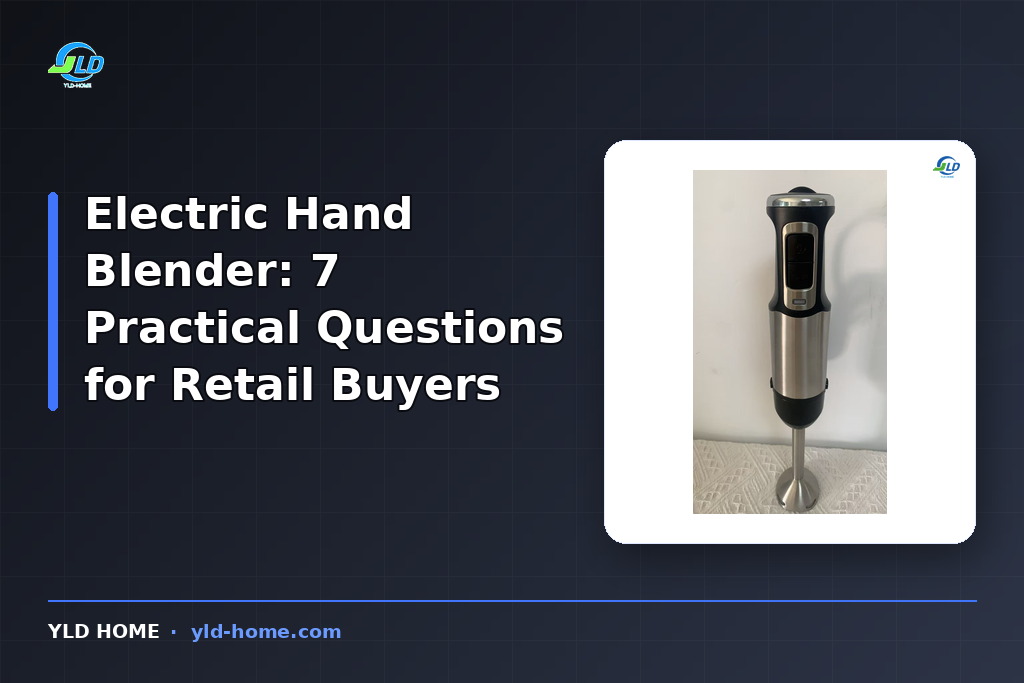
Shaft length decides splatter. In a 16-ounce cup, a short shaft throws mix up and out. A longer shaft, around 200mm or more, keeps the blade deep and the mess inside the cup. For diner service, the hand held stick blender in our catalog is the model most foodservice accounts order first, because the shaft length and the 120V rating were designed for US counter work.
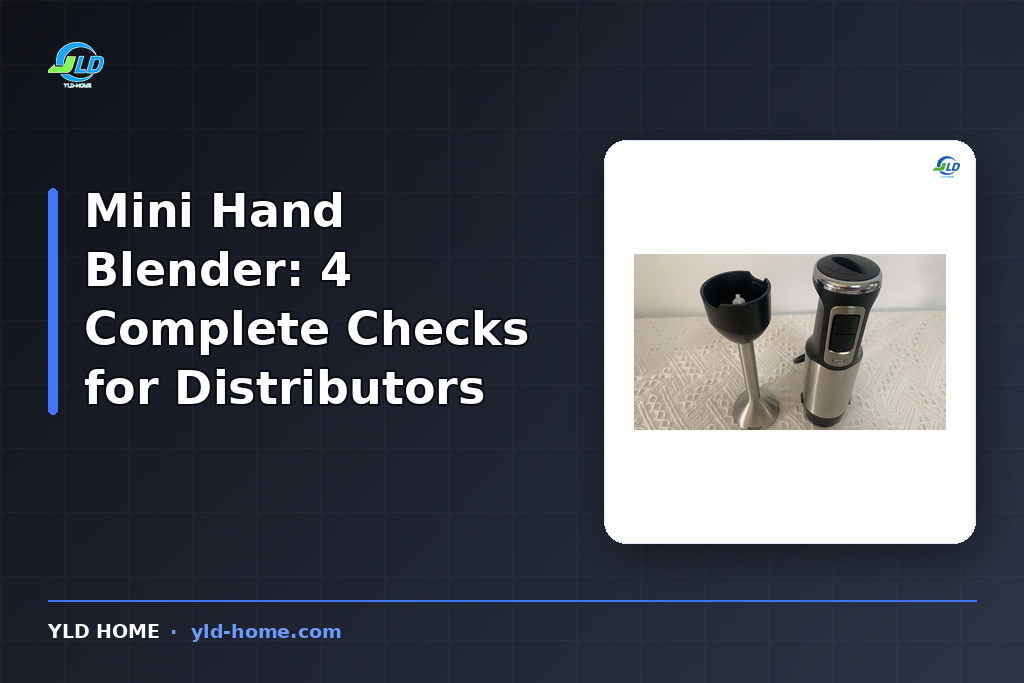
Blade design matters too. Four-prong blades with a slight upward angle pull the shake down and through the blade, which gives that smooth, airy texture customers expect. If you want chopping for toppings — crushed Oreos, nuts, graham cracker crumbs — the hand blender with chopper adds a bowl attachment that covers the prep side of the menu.
One spec buyers skip: the bell design at the base of the shaft. A bell with small intake slots blends faster but chokes on thick mixes; a bell with wider slots handles thickness but can leave lumps. The right foodservice design sits in between, and it’s tuned by testing with real shakes, not with water. Ask the supplier what they tested the blade with. If the answer is water, the tool will struggle with a real malt. If the answer is a milkshake recipe, you’ve found someone who builds for the counter, not the catalog.
5. FDA Food Contact and Dairy Safety
Anything that touches dairy falls under FDA food contact rules, and a diner’s health inspection will care about this more than your supplier will admit.
The shaft, blade bell, and any jar that touches the shake should be food-grade stainless steel or food-grade plastic. Stainless steel 304 is the standard for the shaft because it doesn’t react with dairy and cleans fast. The mixing cup should be food-grade PP or similar, and the material declaration should come with the order.
Ask your supplier for the FDA food contact declaration and the material certificates before you commit. YLD Home keeps these documents on file for every model, and we send them with the quote. You can read about our appliance certification to see what a foodservice buyer should collect and check.
Milk is a perfect growth medium. A blender that can’t be cleaned quickly is a health code risk, not just a hygiene preference. If the inspector sees dairy residue in the shaft seal, the tool goes in the bin and the kitchen gets a mark. That’s why the cleaning test in the next section isn’t optional.
One more dairy-specific check: the mixing cup. Some suppliers ship thin PP cups that crack after a few weeks of dishwasher cycles, and a cracked cup at a diner counter is a safety complaint waiting for a lawyer. Ask for the cup wall thickness and whether the cups are rated for commercial dishwashing temperatures. A case of 48 cups costs almost nothing compared with the labor of washing every shake cup by hand because the supplied cups can’t take the machine. We ship foodservice orders with thicker commercial-grade cups as standard, and spare cups are part of the parts program.
6. Cleaning Between Shakes: The 30-Second Test
Here’s a test we run with every foodservice buyer: make a shake, then hand them the blender and a sink. If the shaft and bell don’t come clean in 30 seconds, the tool is wrong for a diner.
The secret is a detachable shaft. The best handheld blender for milkshakes foodservice has a shaft that separates from the motor housing, so the motor never touches water and the shaft goes straight under the faucet. One-piece designs force you to wipe the motor base around the switch — slow, awkward, and a magnet for sticky residue.
When we tested cleaning times across our range, the detachable-shaft models cleaned in 18 to 25 seconds, including a rinse and a wipe. The one-piece models took 40 seconds plus careful drying. Over 200 shakes a night, that difference is an hour of labor a week, and it’s the difference between a clean tool and a questionable one at closing.
Run this test before you order, not after. Ask the supplier for a sample, make three shakes, and time the cleanup yourself. A stick blender for milkshakes that fails the 30-second test will cost you every day it’s on the counter.
7. Wholesale Pricing and MOQ for Foodservice
| Model type | Typical wholesale, FOB Shenzhen | MOQ |
|---|---|---|
| 300W corded, basic | Quoted per model | 1,000 units |
| 600W corded with chopper set | Quoted per model | 1,000 units |
| 1000W corded, heavy duty | Quoted per model | 1,000 units |
| Cordless, 2-speed with charging base | Quoted per model | 1,000 units |
Prices above are FOB Shenzhen and move with material costs, so treat them as a range, not a quote. AN immersion blender for milkshakes wholesale program at YLD Home starts at 1,000 units per model, and mixed models count toward that MOQ when the packaging is shared.
Foodservice buyers usually order in two patterns. Distributors order containers and resell to diners, so they care about MOQ and margin. Chains order direct in large runs, so they care about lead time and consistency between batches. Tell your supplier which pattern you’re in — the program that fits a distributor is not the program that fits a chain, and a good factory will quote differently.
Consistency between batches is the thing most buyers forget to test. A shake made with last year’s batch has to look and taste the same as one made with next month’s batch. Ask the factory how they control motor suppliers across batches — a motor swap that nobody tells you about changes the blend texture and the noise level, and your customers will notice. We lock motor and blade suppliers for our foodservice models and log the change history, so a reorder is identical to the first run.
Lead time runs 25 to 40 days after deposit for production, plus shipping. A first order should be planned at ten to twelve weeks from PO to door. If you’re opening a diner on a fixed date, order the blenders before you order the chairs.
8. Private Label: Your Logo on a Hand Blender for Milkshakes
Private label is how foodservice distributors build margin, and a hand mixer is one of the easiest products to brand. The logo goes on the motor housing, the shaft can carry a silk-screen mark, and the box prints with your brand, your colors, and your contact line for reorders.
The process is shorter than most buyers expect. Pick a proven model, approve the logo placement on a printed sample, and the factory handles the rest. Custom colors take longer because the housing resin is tinted at the molding stage, so plan for a few extra weeks if you want a brand color instead of the standard white or black.
Watch the small print. If you pay for custom tooling — a new housing shape, a custom jar — the contract should state that you own the mold. If you’re using an existing model with your logo on it, you don’t own the tooling, and your supplier can sell the same model to your competitor under a different brand. That’s the ODM reality, and it’s worth understanding before you build a business on it. For the complete walkthrough of working with a Chinese factory — contracts, QC, shipping, and the traps — our China hand blender manufacturer guide covers it in detail.
9. Supplier Checklist for US Diner Operators
Before you sign anything, run this list.
Certifications: UL or ETL listing for the exact model, FCC filing, FDA food contact declaration, and material certificates for the shaft and jar. Voltage: 120V, 60Hz, confirmed in writing on the PO, with a UL-listed cord set. Cleaning: detachable shaft, and a sample that passes the 30-second test. Parts: replacement shafts, blades, and jars available, because foodservice equipment breaks and the fix can’t wait for a container.
If you’re looking for a milkshake blender supplier usa operators trust, ask for three things: the certification pack, a video of the production line, and one existing US customer reference. A supplier that sends all three inside a week is a supplier you can work with. One that stalls on any of them is telling you the truth in a different language.
Lead time and MOQ should be in writing, and so should the warranty. A typical foodservice warranty covers the motor for a full year and includes a parts supply. For more on how we test and what we ship, the YLD Home blog has the factory walkthroughs.
One last item on the checklist: the demo. Before a distributor commits to a container, we send two samples — one for the office, one for a friendly customer’s counter. The office sample gets taken apart; the counter sample gets abused for a month. If a supplier hesitates to send samples, or charges more than cost for them, treat that as a red flag. Samples are the cheapest inspection you’ll ever run, and any factory that believes in its product will put one in your hand.
10. Why YLD Home Builds Milkshake Blenders
A franchise buyer in Los Angeles ordered 2,000 cordless units last year — custom logo, printed boxes, 120V spec confirmed on every sample. The order ran inside our standard eight-to-eleven-week window from deposit to port, and the reorder came before the first container sold through. That’s the pattern we like: a tool that works at the counter becomes a program.
That buyer started the way most do: with a sample and a stopwatch. He timed the blend, timed the cleanup, and checked the label voltage three times before approving. Nothing about his order was complicated — the discipline was in the checking. That’s the whole guide in one paragraph: pick a proven tool, verify the specs that matter, and test it the way your staff will use it.
YLD Home has shipped stick blenders to US distributors, foodservice groups, and retail chains since 2012. You can see why those customers stay with us in our Why YLD Home is reliable video. We test every handheld blender for milkshakes order at 120V before packing, we keep FDA and certification documents on file, and we build the detachable-shaft design that the 30-second test demands.
If you’re sourcing for a diner group, a restaurant supply distributor, or a chain pilot, ask for a wholesale quote. We’ll send the price list, the certification pack, and a sample offer — and you can run the 30-second test yourself before you commit a dollar.
Frequently Asked Questions
Q1: What is the best hand blender for milkshakes for a diner?
Start with a corded 600W to 1000W model with a detachable shaft and a shaft length of 200mm or more. That combination handles thick shakes, cleans in under 30 seconds, and survives a dinner rush. Add a cordless model once your service style justifies it.
Q2: Corded or cordless for a busy milkshake bar?
Corded for the main bar — constant power, no charging habit, lighter in the hand. Cordless for table-side service and events. Most operators end up with both. If you buy one, buy corded first.
Q3: What is the MOQ for wholesale hand blenders for milkshakes?
Typically 300 to 1,000 units per model. At YLD Home, mixed models and shared packaging count toward that same 1,000-unit MOQ. Distributors usually order by the container; chains order by the pilot quantity.
Q4: Are your blenders safe for dairy and FDA compliant?
Yes. The shafts are stainless steel 304, the jars are food-grade PP, and we provide the FDA food contact declarations and material certificates with every quote.
Q5: Can I put my brand on a hand blender for milkshakes?
Yes. Logo on the motor housing, silk-screen on the shaft, custom boxes with your colors. Custom housing colors add a few weeks because the resin is tinted at molding.
Q6: How long does a wholesale order take to arrive in the US?
Production runs 25 to 40 days, then 28 to 35 days at sea to the East Coast or a few less to the West. Plan ten to twelve weeks from PO to door for a first order.
Q7: What wattage do I need for thick milkshakes?
600W minimum for spoon-standing thickness, 1000W if you serve malts and frozen drinks regularly. Ask for the tested draw at 120V — the label number isn’t the real number.