









In this guide: The UK Hand Blender Wholesale Market in 2026 · Why UK Buyers Need a Hand Blender Wholesale UK Line · What UK Wholesale Buyers Look For · Hand Blender Wholesale UK: Step-by-Step Sourcing Process · Factory vs Trading Company · UK Compliance for Imported Hand Blenders · Case Snapshot: A UK Distributor’s First Container · Pricing, MOQ and Lead Times · Frequently Asked Questions
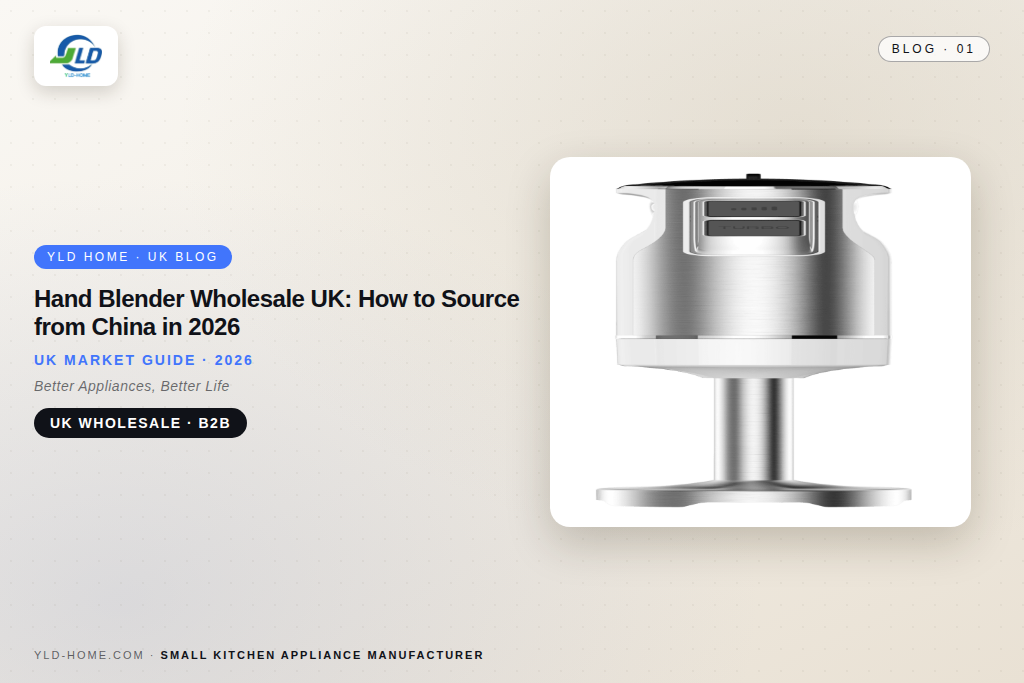
If you are building a hand blender wholesale uk supply line for 2026, the formula is straightforward: buy factory-direct from China, configure every model for the British market, and let compliance and packaging be solved at the source. This guide covers UK market trends, what British wholesalers, distributors and marketplace sellers actually demand, the step-by-step sourcing process, the factory-versus-trading-company decision, UKCA compliance, and one realistic case snapshot. Whether you are a distributor in Birmingham, an importer in Manchester or a retailer building a private label range, the hand blender wholesale uk route remains the most cost-effective way to stock a category that sells all year round. The details below separate a profitable first container from an expensive lesson.
For buyers comparing supply options, the food processor range from YLD HOME lists every model by type and wattage, with MOQ, lead time and certification stated per page.
The UK Hand Blender Wholesale Market in 2026
The UK small kitchen appliance market is mature, price-sensitive and volume-driven, which makes hand blenders one of the most dependable wholesale categories you can carry. Unlike seasonal products, hand blenders sell through every quarter: households replace worn-out units, caterers expand their kitchens, and e-commerce sellers constantly hunt for new SKUs to differentiate. Three structural trends are reshaping the market in 2026.
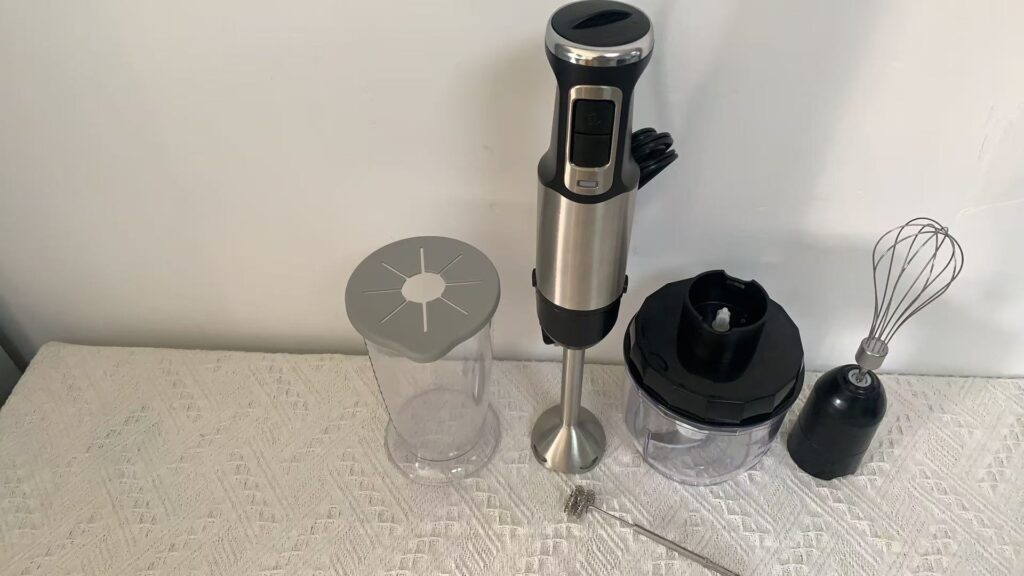
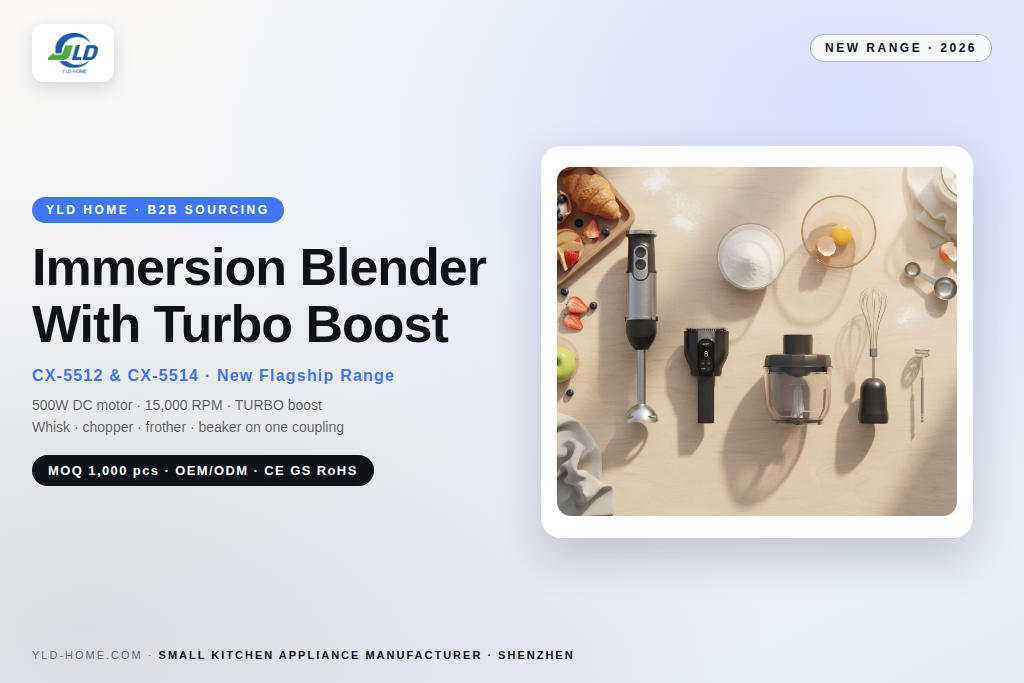
The first is cordless and rechargeable models. UK retailers have given serious shelf space to battery-powered blenders, and wholesale buyers report that cordless SKUs command noticeably higher margins than corded equivalents. The second is compliance filtering. Since the full UKCA regime came into force, customs and marketplaces have been rejecting goods without proper documentation, which quietly removes non-compliant competition from the market. The third trend is multifunction sets: a blender shaft bundled with a whisk, chopper cup and milk frother. These sets lift average order value and are now the format most UK grocery and homeware chains prefer.
For a wholesale buyer these trends translate into three practical decisions. Carry both corded and cordless lines so you can serve value and premium segments. Confirm UKCA paperwork for every model you import, not just the flagship. And use multifunction sets as your margin builder; the current hand blender collection shows how the range is structured around exactly these segments. A single supplier who can configure all three saves you months of supplier-switching later. Wholesale buyers who aligned their range with these trends in 2025 reported steadier reorder cycles and fewer price wars with commodity sellers, because the market is moving upmarket faster than most importers expect. Even localised searches now carry commercial intent: an enquiry for a hand blender wholesale supplier London or Manchester is usually a distributor ready to place a first order, not a consumer browsing. For ongoing updates on UK demand, compliance changes and sourcing data, the YLD Home blog publishes notes for British importers.
Why UK Buyers Need a Hand Blender Wholesale UK Line
Why do so many British businesses now insist on a dedicated hand blender wholesale uk line instead of buying from local distributors? The economics are simple: factory-direct pricing from China typically lands 30-45% below the equivalent UK trade price before freight, which is the margin that funds marketing, warehousing and private label development. On a container of 3,000-5,000 units, that difference is the entire profit of the first order.
The demand itself comes from three buyer groups. UK households replace or upgrade small kitchen electrics on a steady cycle, and hand blenders remain a staple wedding-gift and kitchen-starter item. The horeca sector, restaurants, hotels, care homes and catering companies, buys commercial-grade immersion blenders for soups, sauces and purees at volume, and these buyers reorder on a predictable schedule. Finally, UK e-commerce sellers need differentiated products, which only factory-direct sourcing and private label can provide, since the same unbranded SKU is already listed by fifty other sellers on the marketplaces.
A true UK line means more than a UK plug. It means 220-240V motors configured and tested for the British grid, BS 1363 three-pin Type G plugs with the correct fuse rating, UKCA documentation in the factory’s name, English-language manuals, and retail packaging that carries the importer’s details. Buyers who skip these details discover the hard way that a compliant product is the entry ticket, not the differentiator. The hand blender wholesale uk buyers who grow fastest treat the line as a system, not a single product, and they plan the range, the compliance pack and the reorder cycle before they sign the first contract.
What UK Wholesale Buyers Look For in a Supplier
When British buyers evaluate a Chinese supplier, they check the same list in the same order. The table below is the checklist our clients use when comparing quotations.
| Priority | What UK buyers check | Why it matters |
|---|---|---|
| UK plug & voltage | 220-240V, UK 3-pin (Type G), correct fuse | Non-UK plugs block retail and marketplaces |
| UKCA / CE documents | Certificate for the exact model number | Customs, platforms and retailers all demand them |
| MOQ flexibility | Low MOQ for the first test order | Startups and mid-size distributors need room |
| Mixed models | One container, several SKUs | Spreads risk and tests demand before reordering |
| Branding options | OEM, ODM, private label | Builds margin and shelf loyalty |
| Lead time & delivery | Written production and freight dates | UK buyers plan stock around seasons |
Two items on this list deserve extra attention. First, certificates must match the exact model number you are importing; a certificate for a similar model is not acceptable to customs or to retailers like John Lewis or Argos buyers. Second, mixed containers matter more than MOQ: a 20-foot container holding three models lets you test the market with real sales data before committing to full quantities. Ask each candidate supplier for a sample configured for the UK, then test performance, noise and blade durability yourself. The supplier who answers quickly with a UK-configured sample and a document pack usually becomes the supplier who delivers the first production order on time.
Hand Blender Wholesale UK: Step-by-Step Sourcing Process
A disciplined process protects you from the classic importing mistakes: wrong voltage, mismatched certificates, and packaging that misses the UK legal requirements. Follow these seven steps for every hand blender wholesale uk order, whether it is a first trial container or a hand blender bulk buy uk from China factory program running all year.
Step 1, define your range. Decide household, commercial or both, your target retail prices, and your private label ambitions. Step 2, shortlist three factories that export to the UK and hold UKCA certificates in their own name, using our hand blender manufacturer in China guide to structure the evaluation. Step 3, order samples configured for the UK: Type G plugs, 220-240V, and ask for the exact retail packaging proposal; YLD Home, for example, sends UK-configured samples with the certificate pack within [fill actual] days of specification sign-off, which is the response speed you should expect from a serious supplier. Step 4, verify certificates against the sample model numbers, and ask for the Declaration of Conformity and test reports. Step 5, confirm MOQ [fill actual], production lead time [fill actual] and Incoterms in writing before any deposit. Step 6, arrange pre-shipment inspection and agree shipping marks, carton specs and palletisation for your UK warehouse. Step 7, plan the UK side: customs clearance, warehousing or DDP delivery, and a small stock of spare blades and motors for after-sales.
The step most buyers rush is the sample test. Put the sample through the actual jobs your customers will do: soup blending, mayonnaise, crushed ice if you carry a chopper attachment, and a 100-cycle durability check. Note the noise level, because UK retail and marketplace reviews punish noisy blenders. A sample that survives your test with a 220-240V UK configuration is worth more than a cheaper quotation that saves you pennies per unit and costs you a customer complaint per week.
Factory vs Trading Company: Which One for Your UK Business
Every importer eventually faces the same question: buy from the factory or from a trading company? A factory owns the tooling, the production lines and the certification, so it gives you better pricing, direct customisation and faster communication on engineering changes. A trading company offers a wider catalogue across many factories and can sometimes handle small mixed orders more flexibly, but it adds a margin layer and cannot always explain the technical details of the products it resells.
For a hand blender wholesale uk operation, factory-direct is almost always the right answer. The category rewards repeat orders, private label work and continuous cost engineering, all of which require a direct relationship with the people who actually build the product. A hand blender distributor uk that wants to own its margin needs that direct relationship too, because a trading company’s price list is someone else’s margin structure. When you evaluate a factory, verify it directly: request a video walkthrough of the production line, ask for export records to the UK, and check that the UKCA and CE certificates are in the factory’s name rather than a trading company’s. A factory that offers OEM/ODM/private label services with CE, UKCA and ETL certifications, such as YLD Home, a Shenzhen-based small kitchen appliance manufacturer in China, is the profile that matches what UK buyers need: one accountable partner for compliance, customisation and quality.
See the production floor for yourself before you commit to a supplier, because a genuine factory is easy to verify on video and impossible to fake in a PDF:
Inside the YLD Home production floor: automated assembly line
Beware of the two classic traps. The first is the “factory” that is actually a showroom with a trading licence; cross-check the business licence and the factory address on the certificate. The second is the ultra-low quotation that excludes certification, packaging or testing. Ask for a full breakdown in writing, and compare landed costs, not FOB prices, before you decide.
UK Compliance for Imported Hand Blenders
Since Brexit, most electrical goods placed on the UK market need UKCA marking, with CE accepted in many product categories during the transition window. The rules are still evolving, so confirm the current position with the government guidance and your customs broker before each order. For a hand blender, the practical compliance pack has five parts.
First, the certificate: a UKCA (or valid CE) certificate issued for the exact model, covering the Low Voltage Directive and EMC requirements. Second, the Declaration of Conformity signed by the manufacturer or your importer. Third, the physical configuration: 220-240V, BS 1363 Type G plug with the correct fuse, and an appliance flex of adequate rating. Fourth, labelling: the UKCA mark on the product or its packaging, plus the manufacturer’s and importer’s details, the model number and safety warnings in English. Fifth, environmental obligations: WEEE registration for the electrical equipment you place on the market, and RoHS compliance for the materials.
None of this is negotiable if you sell through UK retailers or marketplaces, because both now verify documentation at listing stage. Wholesale buyers who import first and ask questions later end up paying for urgent re-labelling, storage fees and, in the worst case, a destroyed shipment at customs. The cheap and easy version of compliance is to make it a supplier requirement from day one: the certificate for the exact model, in the factory’s name, delivered with the quotation; the appliance certification overview explains how a factory organises UKCA and CE documentation for the UK market. YLD Home provides UKCA documents for each exact model at quotation stage, and its UK clients build a compliance file per model before the first container is booked, which is exactly the discipline described above. Marketplace verification adds another layer. Amazon UK and eBay now require sellers to confirm certification details for electrical goods at listing stage, and retailers such as Argos and John Lewis audit supplier documentation ahead of range reviews. Keep a digital compliance file per model, with the certificate, the Declaration of Conformity and the batch test report, because you will be asked for it at least once a year, usually with a 48-hour deadline. Importers who cannot produce the file lose listings, not just sales.
Case Snapshot: A UK Distributor’s First Container
A distributor in London wanted to launch a private label hand blender range but had three worries: UKCA documents, low initial volumes, and retail-ready packaging that would not embarrass the brand on marketplace listings. The team had been burned once by a trading company that promised CE documents and delivered a generic pack that customs rejected, so this time they sourced by the checklist rather than by price.
The solution was a factory-direct engagement built around the hand blender wholesale uk model. YLD Home configured two household models and one commercial model, the PressPro 1600W hand blender, with UK plugs and 220-240V, provided UKCA documentation for each exact model number, and supported a mixed first container at a startup-friendly MOQ [fill actual]. Packaging was designed with the distributor’s brand, including the importer’s details required by UK law, and a pre-shipment inspection confirmed the certificates matched the serialised units in the cartons.
The result was a launch in six weeks from order confirmation, first sell-through above the distributor’s forecast, and a reorder within the quarter. The lesson is consistent with every successful UK wholesale launch we have seen: compliance and packaging solved at the factory level are what make the hand blender wholesale uk model work. When the certificate, the plug, the manual and the box are right before the container sails, the UK side of the business becomes a pure sales and logistics problem, which is exactly where a distributor wants to spend its energy.
Pricing, MOQ and Lead Times for the UK Market
Price your range from the landed cost, never from your competitor’s shelf price. Build the calculation step by step: product cost, freight and insurance, UK import duties, import VAT, warehousing, and marketing. Check the current duty rate and any preference agreements for hand blenders in the GOV.UK trade tariff (Trade tariff – GOV.UK) before you finalise the model, because rates change and the tariff line for food grinders and mixers has been adjusted in recent years. Hand blenders move at higher volume with thinner margins than premium appliances, so the range mix matters: household models pay the bills, commercial and private label lines build the margin.
| Parameter | Typical range | Notes for UK buyers |
|---|---|---|
| MOQ per model | [fill actual] | Lower for mixed containers and existing tooling |
| Sample lead time | [fill actual] | UK-configured samples take longer than standard |
| Production lead time | [fill actual] | Depends on tooling, packaging and season |
| Sea freight Shenzhen-Felixstowe | 4-6 weeks | Southampton and London Gateway also common |
| Air freight (samples/restocks) | 3-7 days | Reserve for urgent stock, not bulk |
| Customisation (logo, box, manual) | [fill actual] | Private label adds lead time on first order |
For private label, the margin story is completely different. A branded product can be priced well above an unbranded equivalent because the buyer perceives value, and UK distributors routinely use private label on proven models: the factory cost is similar, the shelf price is not. Start with two household models and one commercial model; five models done well beat fifteen models done poorly in the first two quarters. Track sell-through by model and channel, the same discipline that runs through our hand blender wholesale programmes in other markets, then let the data decide the second container. Most successful UK importers start with a mixed 20-foot container, validate demand for one selling season, and expand only after the reorder cycle proves the range. Seasonality also shapes your ordering calendar. UK sales of hand blenders peak in the run-up to Christmas, driven by gift buying and kitchen-set promotions, with a smaller spring lift around Mother’s Day and wedding season. Order your peak-season stock so that production finishes in September and the container clears customs by late October; late November arrivals miss the selling window entirely and turn margin into storage fees. Plan two order cycles a year once the range is proven: a Q3 peak-season order and a Q1 restock, and keep four to six weeks of safety stock on your two best-selling models at all times. Ask YLD Home for the Get Wholesale Price quotation with the UKCA documentation pack included, and compare landed costs across your shortlist before committing; the wholesale blender range page shows the current configurations and MOQ structure you can benchmark against.
Frequently Asked Questions
- Q1: What is the MOQ for hand blender wholesale uk orders? MOQ depends on model and customisation level [fill actual], and YLD Home confirms the per-model minimum in writing with the quotation. Mixed containers let you spread the minimum across several SKUs.
- Q2: Do you supply UK plugs and 220-240V configuration? Yes, the UK configuration with BS 1363 Type G plugs and correct fuse rating is standard for the UK market, and YLD Home factory-fits these plugs and tests every unit at 220-240V before shipment.
- Q3: Can you provide UKCA documents for customs? Yes, certificates and Declarations of Conformity for the exact model numbers are shared at quotation and finalised before shipment; YLD Home includes them in the quotation pack for every model in its UK range.
- Q4: Can I order mixed models in one container? Yes, mixed loads are supported and recommended for the first order so you can test demand; YLD Home structures its mixed-container programme around exactly this first-order test.
- Q5: What is the difference between FOB and DDP for UK orders? FOB means you arrange freight from the Chinese port; DDP means the supplier delivers to your UK door. Costs and responsibilities differ significantly, and YLD Home can quote both FOB and DDP so you can compare the landed cost directly.
- Q6: Do you support private label for UK brands? Yes, logo, carton design, manual translation and importer labelling are all customisable; YLD Home’s OEM/ODM/private label service covers the full packaging and documentation set for UK brands.
- Q7: How long does sea freight take to the UK? Typically 4-6 weeks to Felixstowe, Southampton or London Gateway, depending on the sailing and port congestion; YLD Home’s shipping team provides sailing schedules and tracking from booking to delivery.
- Q8: Can I test the UK market with a small first order? Yes, low MOQ support and mixed loads are designed exactly for that: validate demand before you commit to full quantities, which is how most YLD Home UK clients place their first order.
Official references: Trade tariff – GOV.UK
Related models in this range: Hand Blender Uk Factory Direct Wholesale and 1600W Hand Blender Wholesale Supplier.