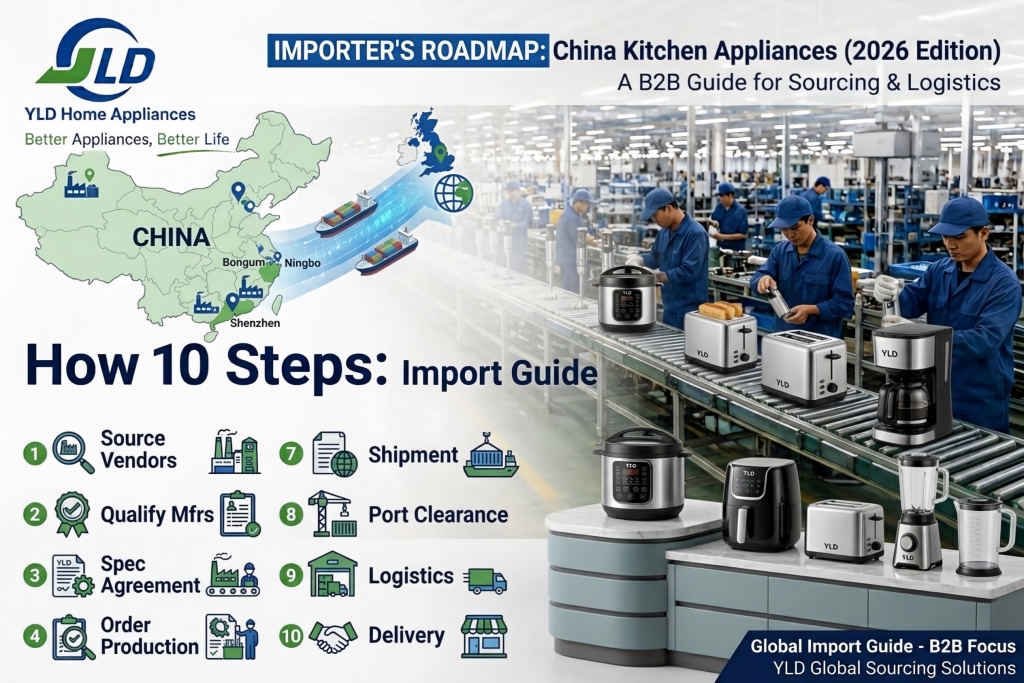





In this guide: Why It Protects Your First Container · Why Samples Matter · Writing the Factory Sample Request · Building a Testing Protocol · Performance Tests · Compliance Checks · The Decision Record · How UK Importers Use Samples Well · From Approval to Production · FAQ
The cheapest mistake in importing is skipping samples; the most expensive is skipping them twice. A hand blender sample testing checklist turns a hopeful order into a verified decision, catching design faults, compliance gaps and performance lies before you commit a container. This guide is written for UK importers who want to know exactly what to test, how to test it, and how to record the results so the whole team can trust the decision. It covers the hand blender factory sample request, a complete testing protocol, performance and compliance tests, and the decision record that protects you through production. Follow it once, and every future sample round becomes faster and more reliable.
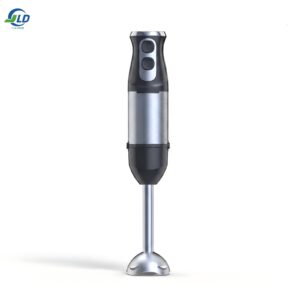
Hand Blender Sample Testing Checklist: Why It Protects Your First Container
A container of hand blenders costs real money: product, freight, duty, VAT and warehouse space. The sample, by contrast, costs a few units and a courier fee. Every UK importer who has been burned by a bad container will tell you the same thing: the fault was visible in the sample, and the sample was never properly tested. A structured hand blender sample testing checklist exists to make sure that does not happen to you, and it works at three levels.
Level one is verification: does the product match the specification you were quoted, the motor, the wattage, the accessories, the plug? Level two is performance: does it blend, whisk, chop and froth to a standard your customers will accept? Level three is compliance: does it carry the right markings, certificates and packaging for the UK market? Most importers test level one, half test level two, and almost nobody verifies level three until customs or a marketplace objects. The checklist below is designed so you never discover a level three problem after the container lands.
A written checklist matters more than intuition. When you test three factories’ samples in the same week, memory blends them into one; a scored checklist keeps them separate and comparable. When the boss asks why you chose factory B, the checklist is the evidence. And when the factory ships production and the product is worse than the sample, the checklist plus the retained sample is your strongest bargaining chip in the dispute. Documentation is not bureaucracy; it is the currency of quality, and it costs nothing compared with the risk it removes.
Why Samples Matter Before a Container Order
Samples are the only way to verify claims. The data sheet says 500W and 18,000 RPM; the sample tells you whether the motor genuinely delivers under load, whether the blade stays sharp after fifty blends, and whether the shaft overheats in a commercial kitchen. Factories are not dishonest by default, but marketing specifications and production reality differ, and the sample is where the difference shows. The hand blender sample testing checklist is the tool that keeps every factory honest, including the good ones whose catalogue photos flatter their own products. Even a well-regarded model like the 1600W PressPro hand blender earns its place in your range faster when the sample proves the specification.
Samples also test the relationship. How fast did the factory respond? Did they send the exact model you asked for, or a substitute? Did they include the certificate, the manual and the plug you specified? Did they charge a fair sample fee and courier, or inflate it? A factory that is sloppy with a three-unit sample order will be worse with a three-thousand-unit production order. Sample behaviour is a preview of production behaviour, and it costs almost nothing to observe. If a factory cannot manage a sample order, nothing you read on their website should convince you they can manage a container.
Finally, samples anchor your production quality. The approved sample becomes the reference: the golden sample against which production is compared at pre-shipment inspection, the standard for colour, finish, weight and function. Without a retained reference sample, “this is how it always looks” becomes an argument you cannot win. Keep the approved sample sealed and stored, and tell the factory it will be used at inspection; that single sentence improves production consistency more than any contract clause. The process for qualifying the factory itself is covered in our guide to choosing a hand blender manufacturer in China, which pairs with this testing checklist.
How to Write a Hand Blender Factory Sample Request
A precise hand blender factory sample request gets you a useful sample; a vague one gets you whatever the factory had in stock. Write the request as a specification, not a wish. Start with the model number or catalogue reference, then the exact configuration: 220-240V, 50Hz, BS 1363 Type G plug, UK market, and the accessories you expect in the box, whisk, chopper, beaker, with quantities. Factories like YLD Home that specialise in the UK market ship UK-configured samples with the full document set by default, but you should still specify everything in writing so there is no ambiguity later.
Then specify the physical requirements: housing colour and finish, button layout, cord length, blade material, shaft length and diameter. State your packaging requirements: retail box or export carton, brand marking if any, manual language (British English) and labelling that carries the importer’s details. Ask for the documents to travel with the sample: the UKCA and CE Declaration of Conformity, the test report and the model’s certificate, plus photos and a video of the unit running, because a video shows vibration and noise that a photo cannot. Popular UK sample lines include the 2-in-1 hand blender, which lets you test blending and whisking in one unit.
Finish with the commercial terms: number of units, two or three is wise so you can test one and keep one, sample cost, courier and timeline, and what happens if the sample does not match the specification, replacement or refund. Put a deadline on it and a named contact. A sample request that arrives as a one-line message invites a one-line response; a structured request signals a serious buyer and gets serious treatment. This hand blender sample order UK importer guide habit alone separates professional importers from amateurs, and it makes the testing phase shorter for everyone.
Build a Sample Testing Protocol Your Team Can Follow
A testing protocol is the checklist turned into procedure: who tests, what they test, in what order, with what pass criteria. Keep it short enough to follow and specific enough to repeat, because the point is consistency across factories and across weeks. Assign one person as the tester, or two for a second opinion, and give them the specification sheet and the scoring sheet before they start. If nobody owns the testing, nobody tests; a named owner is the difference between a checklist that lives on a screen and one that protects your money.
Run the protocol in a fixed order. First, unboxing and documentation: everything present, manual in English, plug correct, certificates included. Second, visual and dimensional inspection: finish, seams, weight, shaft and blade dimensions against the spec, logo and markings correct. Third, functional tests: switch, speeds, turbo, accessories fitting correctly. Fourth, performance tests: the measured blending, noise and heat checks below. Fifth, endurance: a short duty-cycle test to see how the motor holds up. Sixth, cleaning and disassembly checks, because UK buyers wash blenders after every use, and a shaft that cannot be cleaned properly becomes returns.
Record everything on the same sheet, including the date, the tester and the factory. Take photos and a short video at each stage, and keep them with the sheet. The protocol is not about finding perfection; it is about finding differences. A hand blender sample testing checklist that is too strict rejects everything, and one that is too loose approves everything; calibrate the pass criteria with your actual customer and price point, and review the calibration once a year as your range evolves.
Performance Tests: Motor, Blades, Noise and Heat
Performance testing is where samples reveal their true specification. Test the motor under load, not on empty: blend a standard volume of soup or smoothie, and time how long it takes to reach a defined smoothness. A blender that sounds powerful on air can stall in cold soup, so always test with real food, at the temperature your customers will use. If you sell into catering, test the same way a chef would, including the longer run times a commercial kitchen demands; our guide to choosing a commercial immersion blender explains the duty expectations for professional use.
| Test | How to run it | What to record | Typical pass |
|---|---|---|---|
| Motor under load | Blend 500ml soup, time to smooth | Seconds, stall yes/no | No stall, under 60s |
| Power draw | Plug-in watt meter, measure under load | Actual watts vs stated | Within 10% of spec |
| Blade performance | Chop onions or herbs, count remaining pieces | Consistency | Uniform pieces |
| Noise level | Meter at 30cm distance | dB at max speed | Below 85 dB |
| Heat build-up | Run 3 min continuous, measure shaft and motor | Temperature rise | Below spec limit |
| Vibration | Hold at arm’s length, observe | Juddering yes/no | Smooth operation |
| Duty cycle | Blend 30s on / 30s off, 10 cycles | Overheat or odour | No cut-out |
| Whisk / chopper | Whip cream, chop nuts with accessories | Time, result | Acceptable result |
This is what a proper test bench looks like in practice. The clip below shows the QC process at YLD Home’s factory, where every sample and production unit is run, checked for noise and heat, and logged before packing, the same discipline your own checklist is trying to build.
alt:hand blender sample testing checklist
Blade quality deserves its own check: blend fibrous ingredients and inspect the blade for dulling, and check the blade-to-shaft seal for leaks after washing. Heat is the silent killer of cheap blenders: a motor that cuts out after two minutes of soup is a returns machine. Run the endurance test twice, because the first pass can flatter a motor that fails on the second. This is the performance half of the hand blender sample testing checklist, and it is where most importers separate the factories they will reorder from and the ones they will not.
Compliance Checks: UKCA, Plugs and Materials
Compliance is the section of the hand blender sample testing checklist most importers skip, and it is the one that gets you blocked at customs or delisted by a marketplace. On the sample, check the plug: BS 1363 Type G, three-pin, fused, 220-240V rated. Check the markings: UKCA or CE mark on the product, the importer’s name and address, model number, wattage and voltage. Check the manual is in British English and covers the accessories actually in the box. None of this is optional for the UK market, and all of it is visible on the sample.
| Compliance item | What to verify on the sample | Why it matters |
|---|---|---|
| UKCA / CE marking | Mark present on product and packaging | Customs and marketplace requirement |
| Declaration of Conformity | Covers the exact model number | Technical file must match |
| Plug type | BS 1363 Type G, fused | Non-UK plugs are rejected |
| Voltage | 220-240V, 50Hz label | UK mains standard |
| Food contact materials | Certificate for food-safe plastic and steel | UK food contact rules |
| RoHS | Declaration for restricted substances | Electrical goods regulation |
| WEEE registration | Registered with UK scheme | Legal for EEE placing |
| Importer details | Name and UK address on product | Legal requirement |
Electrical safety testing should reference the BS EN 60335 series, the household appliance safety standards published by the British Standards Institution, BSI. Ask the factory to send the compliance file with the sample: Declaration of Conformity, test reports and material certificates. YLD Home provides the full compliance file with every sample, including test reports for the exact model, and the certificate library is published on its appliance certification page. If the documents do not arrive with the sample, treat that as a fail, because production will not improve; the factories that hesitate are the ones whose documents do not exist.
The Decision Record: Document Every Result
The decision record turns your tests into a decision. Use a simple scoring sheet: one row per test, one column per factory, and a score from one to five, with a note column for evidence. When you have tested two or three factories, add the scores and compare, but do not let the total decide alone; weight the categories by what your customers care about most, which for most UK buyers is blending performance, noise and compliance. The decision record closes the hand blender sample testing checklist loop, because a test without a recorded decision protects nobody.
Write the decision down with reasons, and date it. Include the retained sample reference, the certificates received, the agreed specification and the commercial terms. This record serves three audiences: your team, who should not have to re-litigate the choice; your bank or investor, who may ask how you chose the supplier; and the factory, if production drifts from the sample. A dated decision record with a retained sample is the strongest evidence you can hold in a quality dispute, and it settles most disputes before they start.
Keep the process lightweight: a spreadsheet and a shared folder for photos is enough for most importers. The failure mode is not too much documentation, it is none. Importers in Hull, Dover and every other UK port who skip the record end up relying on memory, and memory is the least reliable document in international trade. Make the record the last step of every sample round, before you pay the production deposit, and update it whenever a specification changes.
From Hull to Dover: How UK Importers Use Samples Well
Good importers treat samples as a process, not an event. They test in rounds: round one, three factories compete on the same checklist; round two, the two best factories receive a revised specification and new samples; round three, the winner gets the production order, with the approved sample sealed as the reference. Each round costs a few units and a courier fee, and each round removes a layer of risk. The blender sample testing traditions in Hull’s food-processing businesses, where sample rigour is a matter of food safety, are a good model: verify before you commit, document before you decide.
UK importers who do this well share four habits. They test with their own market in mind: UK plugs, British English manuals, and recipes their customers will actually blend. They involve the people who will sell the product, so a marketplace seller tests unboxing and a distributor tests the warranty story. They keep the scoring sheets, so the decision survives staff changes. And they time the rounds backwards from their launch date, because sample rounds take two to three weeks each, and the plan must include them.
The same discipline that keeps a food factory safe keeps an import margin safe, and it applies whether you are bringing in a commercial immersion blender or a household stick model; you can watch factory test footage on the YLD Home YouTube channel before you even order samples. If your supplier resists a structured sample round, that is information too; the best factories welcome serious testing, because it separates them from their competitors. A supplier that has nothing to hide has nothing to fear from your checklist.
From Sample Approval to Production: Common Pitfalls
Sample approval is the beginning of quality control, not the end. The classic failure is the production sample: the factory approves a beautiful sample, then ships production with a different motor, cheaper plastic or a thinner blade, on the theory that you will not notice. The defences are the retained golden sample, pre-shipment inspection against it, and a contract that names the sample as the quality reference. A hand blender sample testing checklist that ends at approval has done half its job; the other half is protecting the approved standard through production.
The second pitfall is changing the specification after approval. Every change, a new colour, a longer cord, a different accessory, is a new sample round; if you skip it, you approve an untested product. Third is testing only one unit: motors vary, and a sample of one tells you nothing about consistency; order two or three and compare them to each other. Fourth is ignoring packaging: the retail box is part of the product, and a sample with a torn box or a manual that lists the wrong accessories will be returned by customers.
Finally, keep the sample lifecycle visible to the factory. Tell them the approved sample is stored and will be used at inspection, ask for photos of production units before shipment, and run a pre-shipment inspection on a random selection of cartons. The factories that deliver consistent quality expect this; the ones that complain are telling you something. When you are ready to scale, a dependable hand blender supply partner such as YLD Home will treat your sample discipline as a strength, not a burden.
FAQ
- How many samples should I order? At least two of each model, so you can test one and keep one as the golden reference; YLD Home recommends this and prices sample pairs accordingly.
- How much do samples cost? The unit price plus courier; most factories refund or credit sample fees on the first production order [fill actual], and YLD Home confirms the sample terms in writing.
- What if the sample does not match the specification? Require a replacement before you approve; never proceed to production on a non-conforming sample, and YLD Home treats non-conforming samples as a quality failure to correct.
- How long does sample delivery take? Typically 7-14 days production plus 3-7 days courier to the UK; YLD Home gives a dated sample schedule with every quote.
- Should I test samples from more than one factory? Yes, test at least two factories on the same checklist before deciding, and YLD Home welcomes being tested against competitors on the same criteria.
- Do I need the UKCA certificate with the sample? Yes; if the document set does not travel with the sample, treat it as a fail, and YLD Home includes the full compliance file with every UK sample.
- Do I really need a hand blender sample testing checklist? Yes; it is the cheapest quality insurance an importer can buy, and it protects you in production disputes; YLD Home supplies a scoring sheet with its samples.
- Does YLD Home provide samples for testing? Yes, UK-configured samples with the full compliance file; sample fees are credited on the first production order.
Ready to test before you invest? Contact YLD Home to request UK samples, the compliance file and a sample testing score sheet to use with your own team.
Official references: Household appliance safety standards – BSI
For buyers planning their next order, hand blender sample testing checklist decisions come down to supplier reliability, unit cost and compliance. hand blender sample testing checklist buyers who compare factory-direct options against trading company quotes tend to get better pricing, and hand blender sample testing checklist ranges with UKCA-certified models move faster at retail. If you are evaluating a new line, keep hand blender sample testing checklist specifications such as wattage, speeds and shaft material in a checklist before you request samples.