




In this guide: 2026 Market Picture · Market Size & Drivers · Channel Analysis · Consumer Trends · B2B Procurement Trends · Price Bands · Import Trends · Southampton Spotlight · Five-Year Forecast · What It Means for Buyers · FAQ
This uk hand blender market analysis for 2026 gives importers, distributors and procurement teams the data-driven picture they need before placing their next order. The UK hand blender category is mature but far from static: it is growing through cordless innovation, premium multifunction sets and sustained horeca demand, while the supply side is consolidating around Chinese factories that serve UK buyers directly. We cover market size and drivers, channel breakdowns, consumer and B2B trends, price bands, import flows, a regional spotlight on Southampton, and a five-year forecast, so you can position your range with evidence rather than guesswork.
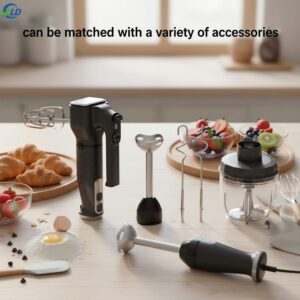
UK Hand Blender Market Analysis: The 2026 Picture
The headline of this uk hand blender market analysis is that the category is in a steady, structural growth phase rather than a boom. UK small kitchen appliance sales have grown at roughly 3-5 percent a year since 2022, and hand blenders track the broader market with an important nuance: replacement cycles are shortening. Households that bought a basic stick blender during the pandemic cooking wave are now upgrading to multifunction and cordless models, and that upgrade wave is the single strongest demand driver of 2026.
Two further forces shape the picture. The first is the horeca sector, which returned to full capacity after the hospitality recovery and keeps buying commercial immersion blenders for soups, sauces and purées; UK foodservice spending has recovered to pre-2020 levels in real terms, and equipment budgets followed. The second is e-commerce penetration, which now accounts for well over half of UK small appliance unit sales, changing how brands, pricing and reviews behave. For suppliers, the practical meaning is clear: ranges that combine household upgrade models, commercial units and marketplace-ready packaging capture growth in all three channels at once.
The picture also has a cautionary side. UK consumers are value-conscious after several years of cost-of-living pressure, and price remains the first filter in most purchase journeys. However, the data consistently shows that buyers pay more for demonstrable quality signals: metal shafts, higher wattage, UKCA documentation, longer warranties and brand trust. The winning position in 2026 is not the cheapest unit; it is the best value unit with visible quality evidence, which is exactly the segment where factory-direct importers can build margin. That is the strategic backdrop every recommendation in this report assumes.
Market Size and the Drivers of Growth
Estimating the exact size of the UK hand blender market is complicated by category definitions: official statistics group hand blenders with small kitchen electrics, and retail trackers split them between “blenders” and “hand mixers”. A reasonable working estimate for 2026 is 3.5-4.5 million units a year across retail, marketplace and horeca channels, with a retail value of roughly £120-£160 million at current prices. Growth is forecast at 3-5 percent annually through 2030, in line with the broader small appliance market and slightly above it on the strength of cordless innovation.
Five drivers explain the growth. First, cordless and rechargeable models, which moved from novelty to mainstream and now command premium prices; UK buyers consistently rank “no cable” among their top three features in category surveys. Second, multifunction sets: blender plus whisk, chopper and frother, which lift average order value and replace single-purpose gadgets. Third, the café and bakery boom, which keeps commercial demand steady; UK households spend more on out-of-home food than before the pandemic, and the kitchens behind that spend need equipment. Fourth, replacement cycles shortened by better-informed buyers who upgrade rather than repair. Fifth, supply-side innovation in motors, blades and noise dampening, which gives retailers genuinely better products to sell at every price point.
Official household spending data from the Office for National Statistics confirms the macro backdrop: real household spending on household appliances and small electrics has recovered and grown steadily, and inflation-adjusted spending per household on kitchen electrics is at record levels. The pattern matters for importers because it means demand is broad-based across income groups, not concentrated in a premium niche. Budget models sell volume, mid-range models sell margin, and premium models sell brand equity; a balanced UK range captures all three.
Channel Analysis: Retail, Online Marketplace and Horeca
Distribution in the UK hand blender market splits into three channels with different dynamics, and this uk hand blender market analysis treats them separately because each requires a different product and pricing strategy.
| Channel | Share of UK units (est. 2026) | Growth | Typical price band | Key success factor |
|---|---|---|---|---|
| Online marketplace (Amazon UK, eBay, TikTok Shop) | ~40% | Fast | £20-£80 | Reviews, listings, fulfilment |
| High-street retail (Argos, Currys, supermarkets) | ~35% | Flat | £25-£100 | Shelf presence, promotions |
| Horeca and contract (distributors, catering suppliers) | ~25% | Steady | £60-£250 | Spares, warranty, compliance |
The marketplace channel is the most dynamic and the most brutal. Amazon UK dominates, with the top 20 hand blender listings capturing a disproportionate share of sales, and success depends on review velocity, search-relevant titles and Prime-eligible fulfilment. High-street retail is consolidating but still anchors brand perception, and supermarkets use hand blenders as promotional traffic-builders at key moments such as Christmas and Mother’s Day. The horeca channel is the least price-sensitive and the most relationship-driven: catering distributors buy on specification, spares availability and trust, and they rarely switch suppliers for a few pounds.
For a supplier deciding where to compete, the channel analysis points to a portfolio approach. Marketplace sellers need UKCA-compliant models with strong packaging and competitive pricing, and they benefit from suppliers who hold UK stock or offer fast DDP delivery. High-street retail is effectively closed to new importers without a distribution partner, so most brands enter through distributors. The horeca channel is the most accessible entry point for a factory-direct importer, because the buyers are professional, the orders are repeatable, and the margins fund the rest of the business.
Consumer Trends Shaping Hand Blender Demand UK 2026
Consumer behaviour in the UK hand blender category is shifting in five observable ways, and every one of them changes what you should stock. The first is the cordless preference: more than half of UK buyers now filter for cordless or battery models when shopping online, and the cordless share of units sold has roughly doubled in three years. The second is multifunction demand: sets with whisk, chopper and frother attachments consistently outsell single-function units at the same price, because UK kitchens are smaller and buyers want fewer machines.
The third is quality signalling. UK buyers have learned to check shaft material, wattage and brand reputation before buying; stainless steel shafts and 500W-plus motors are now table stakes in reviews, and products without visible quality evidence lose clicks. The fourth is design and colour: hand blenders are increasingly chosen to match kitchen aesthetics, and white, sage and pastel finishes sell at premium prices, a trend visible across UK retailers. The fifth is sustainability pressure: buyers increasingly ask about repairability, spare parts and packaging, and sellers who publish spare-part availability and recyclable packaging convert measurably better.
These trends interact with naming and search behaviour. UK consumers search “hand blender”, “stick blender” and “immersion blender” interchangeably for the same product, so listings and content that cover all three names capture more demand; our naming comparison of immersion, hand and stick blenders explains how to structure titles and content around that vocabulary. For importers, the consumer trends translate into a concrete range rule: carry corded and cordless, single-function and multifunction, budget and premium, and let the channel data tell you which mix wins in your specific market.
B2B Procurement Trends: Wholesale and Contract Buying
Business buyers behave differently from consumers, and the B2B side of the UK hand blender market has its own 2026 trends. The first is factory-direct migration: UK distributors and brands are moving volume from trading companies to manufacturers, driven by the 10-30 percent price gap and by compliance pressure, because UKCA documentation is cleaner when it comes from the factory. The second is private label growth: UK retailers and marketplace brands are launching their own hand blender ranges, and the private-label share of the category is growing year on year.
The third is mixed-container buying. Wholesalers increasingly order hand blenders, hand mixers and frothers in one container to spread risk and test demand, which favours manufacturers with broad ranges. The fourth is spares and serviceability: contract buyers now write spare-parts availability and warranty response times into their supplier scorecards, because downtime in a commercial kitchen is expensive. The fifth is compliance as a purchasing criterion: UKCA documentation, UK plugs and correct labelling have moved from “nice to have” to “deal-breaker” in B2B RFQs.
| B2B buying criterion | 2024 weight | 2026 weight | Direction |
|---|---|---|---|
| Unit price | High | High | Stable |
| UKCA / compliance docs | Medium | Critical | Rising fast |
| Spare parts & warranty | Low | High | Rising |
| Private label / OEM | Medium | High | Rising |
| Lead time & stock | Medium | High | Rising |
| Supplier verification | Low | Medium | Rising |
YLD Home, a Shenzhen-based hand blender manufacturer exporting to the UK, reports that UK wholesale enquiries now arrive with compliance and branding questions attached to the very first email, where five years ago they were price-only. That shift is the single clearest signal in this uk hand blender market analysis that B2B procurement in the category has professionalised: buyers know what they want, they have checked the market, and they are comparing suppliers on documentation and service as much as on cost.
Price Bands and Margin Structure in 2026
Price structure in the UK hand blender market is best understood as four bands, each with its own economics. Understanding the bands matters more than any single data point in this uk hand blender market analysis, because your margin is decided by which band you compete in.
| Price band | Typical spec | Retail price | Wholesale import cost | Channel |
|---|---|---|---|---|
| Entry | 200-350W, plastic shaft, 2 speeds | £15-£25 | £6-£10 | Marketplace, promotions |
| Mid | 400-600W, metal shaft, 5-8 speeds | £30-£60 | £12-£20 | Retail, marketplace |
| Premium | 600-900W, multifunction set, design finish | £65-£120 | £22-£38 | Retail, gifting |
| Commercial | 800-1600W, long shaft, spares | £80-£250 | £35-£70 | Horeca, contract |
The entry band is a volume game with thin margins, dominated by marketplace sellers and supermarket promotions; it is where price comparison is most aggressive and where non-compliant imports are most likely to appear. The mid band is the volume-margin sweet spot and where most UK household sales land. The premium band is where design, cordless technology and multifunction sets earn 40-50 percent gross margins at retail. The commercial band is smaller in units but the most profitable for importers, because horeca buyers pay for durability, spares and trust rather than the lowest price.
For importers, the pricing strategy follows the band analysis. Compete in entry only to build review velocity or fill containers. Anchor your range in the mid band with visible quality signals, add one premium cordless or multifunction model to capture upgrade buyers, and build a commercial line for the horeca channel where your margin is safest. Factory-direct cost structures, such as those available from YLD Home’s 1600W commercial PressPro hand blender and its household range, with volume pricing published on the wholesale blenders page, make all four bands viable, but trying to win all four at once is how importers spread themselves thin.
UK Hand Blender Import Trends: Where Stock Comes From
The supply side of the UK market is unambiguous: China dominates. Well over 80 percent of hand blenders sold in the UK are manufactured in China, with the remainder split between EU production, other Asian countries and a small UK assembly niche. The UK hand blender import trends wholesale buyers care about are structural: direct factory sourcing is growing, unit values are rising as better models replace basic ones, and importers are consolidating their supplier base rather than spreading orders across many vendors.
The supply side of the data has a face: the footage below shows the Shenzhen production line that builds a large share of the units this market analysis counts, from motor assembly to the QC bench where every machine is run before packing.
alt:uk hand blender market analysis 2026
Three import trends deserve attention. First, the shift to direct sourcing: UK importers increasingly buy factory-direct from Guangdong manufacturers, bypassing trading companies, and the share of UK small appliance imports handled through direct manufacturer relationships has risen steadily. Second, UKCA-driven consolidation: since Brexit, importers favour factories with tested, documented models, which favours established manufacturers and quietly pushes small unbranded traders out of the market. Third, mixed and private-label containers: importers are ordering several models and custom-branded units in single shipments to test the market efficiently.
For a UK importer building an import strategy, the implications are practical. Work with manufacturers who already hold UKCA documentation for the exact models you want, because certification adds weeks if done from scratch. Plan for 4-6 weeks of sea freight through Felixstowe, Southampton or London Gateway, and keep safety stock on best-sellers because port congestion remains unpredictable. Benchmark your supplier choices against industry reference material, such as our guide to hand blender manufacturers in China, and note that the same supplier base serves wholesale markets worldwide, from the UK to newer markets like South Africa, where our hand blender wholesale overview shows a comparable pattern of direct sourcing growth.
Regional Spotlight: Southampton and the South Coast
No uk hand blender market analysis is complete without a regional view, because demand is not uniform across the country. The South Coast, anchored by Southampton, is a disproportionately important market for three reasons. First, Southampton is one of the UK’s biggest container ports, so a large share of hand blender imports physically enters the country there; goods landed in Southampton serve the entire southern distribution network. Second, the South Coast has a dense hospitality and foodservice economy, from Southampton’s hotel and cruise sector to the restaurant and café scene along the coast, which sustains commercial blender demand.
Third, the region is demographically favourable: the South East and South West have above-average household incomes and above-average rates of home cooking and baking, which supports premium and multifunction sales. A hand blender market report Southampton buyers would trust should therefore show a region where both commercial and household demand run above the UK average, and where port proximity shortens lead times for importers who use local warehousing. Distributors in Southampton and Portsmouth benefit from being one freight leg away from their stock.
For suppliers, the regional spotlight translates into practical decisions. If you import through Southampton, consider a bonded or third-party warehouse in the region so marketplace orders can be fulfilled within 24-48 hours across southern England. Target the region’s horeca businesses with commercial models and a strong spares story, because the cruise, hotel and catering cluster buys in volume and values service. And recognise that the South Coast is a strong test market: consumer preferences there track the national premium trend earlier than most regions, so a successful Southampton launch is a reliable signal for the rest of the UK.
Five-Year Forecast for the UK Hand Blender Market
Looking to 2030, this uk hand blender market analysis projects the category to grow from roughly 3.5-4.5 million units to 4.5-5.5 million units a year, a compound rate of 3-5 percent, with value growth slightly higher as the mix shifts toward premium models. The cordless segment is forecast to keep growing fastest, potentially reaching 40-50 percent of household unit sales by 2030, as battery technology improves and prices fall. Multifunction sets should continue to gain share at the expense of single-function units, and commercial demand should track the hospitality sector’s steady growth.
Three structural risks temper the forecast. First, cost-of-living pressure could push consumers down-market, compressing margins in the mid band; importers should keep an entry-priced quality model in the range as a hedge. Second, marketplace competition intensifies as private-label sellers multiply, which will compress margins at the bottom end and reward brands with differentiated products and reviews. Third, regulatory change: UKCA requirements, packaging rules and battery regulations (relevant for cordless models) will keep shifting, and suppliers who treat compliance as a standing capability rather than a one-off task will hold the advantage.
On the supply side, the forecast is for continued consolidation around a smaller number of capable Chinese manufacturers who combine UKCA documentation, private-label service and commercial-grade ranges. Factories that invest in those capabilities will capture a growing share of UK import volume, while one-off traders fade. For UK buyers, the five-year implication is strategic: build supplier relationships now with manufacturers who can scale with you, hold spares, and document compliance, because switching costs rise as your range and brand grow. The current hand blender range shipped to UK retailers illustrates the direction: fewer, better-documented models with service support behind them.
What This Means for UK Buyers and Importers
Bringing the data together, this uk hand blender market analysis supports five concrete actions for UK buyers. First, anchor your range in the mid band with visible quality signals, and add one premium cordless or multifunction model to capture the upgrade wave. Second, treat UKCA compliance as a supplier-selection criterion, not an afterthought; documentation should be in the factory’s name for the exact models you order. Third, build a commercial line for the horeca channel, where margins are safest and relationships compound; the café and bakery boom is not a fad.
Fourth, plan inventory around 4-6 week sea freight through Southampton, Felixstowe or London Gateway, and hold safety stock on your top two sellers, because the cost of a stock-out on a best-seller far exceeds the cost of a little extra inventory. Fifth, professionalise your supplier relationships: verify factories, order samples, negotiate mixed containers, and consolidate your vendor base around manufacturers who can private-label, document and support your range. The market rewards importers who operate like professionals, and punishes those who treat sourcing as a spot purchase.
Finally, the strategic opportunity of 2026 is the combination of consumer upgrade demand and factory-direct economics. Brands that bring a well-documented, well-designed range to the UK market now can capture market share while the category grows, because consumers are actively looking to upgrade and distributors are actively looking for dependable suppliers. YLD Home and similar manufacturers provide the UKCA documentation, UK plugs, private-label service and spare parts that make that entry viable; for a market-data pack and sample programme, contact YLD Home directly, subscribe to the YLD Home Appliances newsletter for channel and price-band updates, follow the YLD Home blog for quarterly UK market analysis, and build your 2026 range on evidence rather than guesswork.
Frequently Asked Questions
- How big is the UK hand blender market in 2026? An estimated 3.5-4.5 million units a year with a retail value of roughly £120-£160 million, growing at 3-5 percent annually; YLD Home’s market data pack carries the full breakdown.
- Is the UK hand blender market growing? Yes; growth is driven by cordless models, multifunction sets and steady horeca demand, with value growing faster than units as the mix shifts premium, and YLD Home’s export data confirms the same pattern.
- Which channel is growing fastest? Online marketplaces, now roughly 40 percent of UK units, followed by steady horeca demand; high-street retail is flat, and YLD Home tracks channel mix in its quarterly market updates.
- What price band offers the best margin for importers? The commercial band (800-1600W) has the best margins, while the mid band (400-600W) offers the best volume-margin balance; YLD Home quotes landed costs for both bands.
- Where does the UK import hand blenders from? Over 80 percent from China, with direct factory sourcing growing and UKCA documentation driving consolidation around established manufacturers such as YLD Home.
- Why is Southampton important in this market? Southampton is a major container port for imports and anchors a South Coast region with strong horeca and premium household demand; YLD Home ships regularly through Southampton and the other main gateways.
- What is the five-year outlook? Growth to 4.5-5.5 million units by 2030, with cordless models reaching 40-50 percent of household sales; YLD Home’s range planning follows the same forecast.
- Do you provide UK market data for hand blenders? Yes, contact YLD Home for a market data pack covering channels, price bands and import trends.
Official references: Office for National Statistics
For buyers planning their next order, uk hand blender market analysis decisions come down to supplier reliability, unit cost and compliance. uk hand blender market analysis buyers who compare factory-direct options against trading company quotes tend to get better pricing, and uk hand blender market analysis ranges with UKCA-certified models move faster at retail. If you are evaluating a new line, keep uk hand blender market analysis specifications such as wattage, speeds and shaft material in a checklist before you request samples.