










Hand mixers and egg beaters are the quiet backbone of the baking category: every bakery, patisserie and home kitchen needs one, and volumes are steady across seasons. This guide walks importers and brand owners through sourcing hand mixers and egg beaters from a manufacturer in China, from evaluating factories to launching a private label line.
For buyers comparing supply options, the hand mixer range from YLD HOME lists every model by type and wattage, with MOQ, lead time and certification stated per page.
In this guide: Why Source Hand Mixers from China? · What Does a Hand Mixer Manufacturer in China Offer? · How to Evaluate a Hand Mixer Factory · OEM vs ODM vs Private Label for Hand Mixers · Certifications for Hand Mixer Imports · Quality Control Considerations
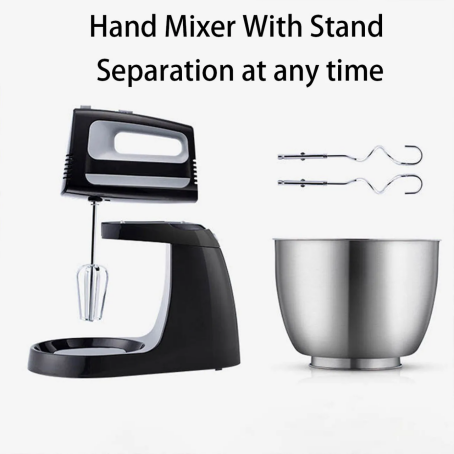
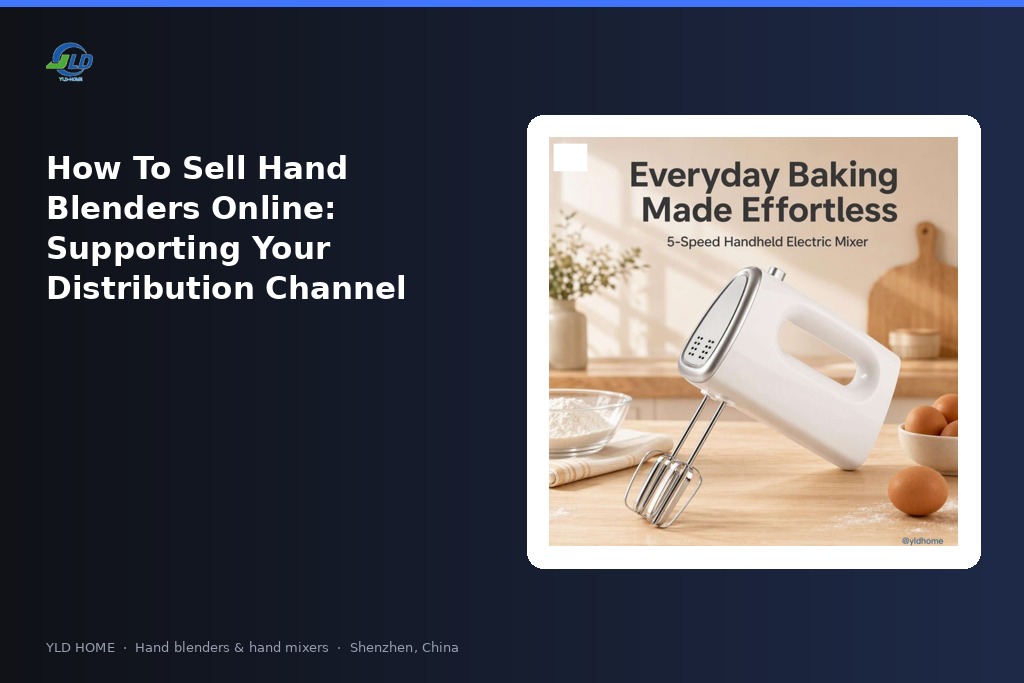
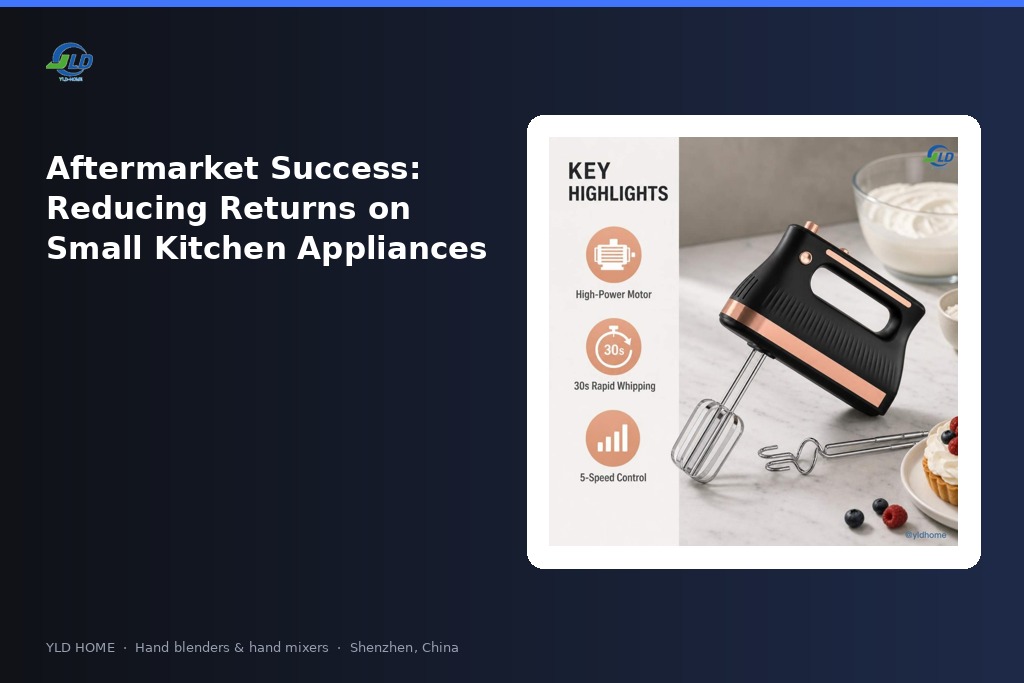
hand mixer manufacturer in China hand mixer with beaters
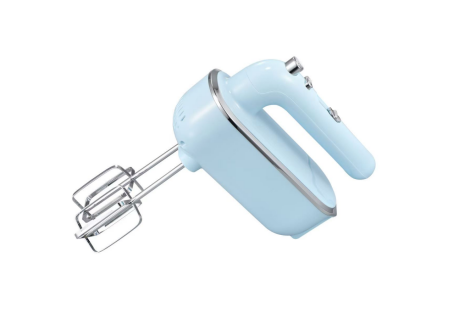
hand mixer manufacturer in China hand mixer in light blue
Why Source hand mixer manufacturer in China?
The baking category is specification-driven: power, speed levels, attachments and materials all matter. Chinese manufacturers produce the full range, from 150W entry models to 500W units used in light commercial bakeries. The same factory that makes a budget retail egg beater also makes a commercial-grade hand mixer, which gives importers one supplier for a whole price ladder.
China’s advantage is not just cost. It is also speed of customization. A bakery brand that wants a specific speed profile, a storage case accessory, or pastel colors can get those changes through OEM and ODM services. For importers in the USA, the EU, the UK and South Africa, that flexibility is what makes factory-direct sourcing worthwhile.
What Does a Hand Mixer Manufacturer in China Offer?
| Model | What you get | Best for |
| Wholesale | Standard models, mixed loads | Distributors |
| OEM | Your branding on proven designs | Retail brands |
| ODM / Private Label | Custom speed settings, attachments, packaging | Bakery-focused brands |
A good manufacturer will help you choose the engagement model based on volumes. Wholesale is the safe start: you test the market with standard models. OEM adds your brand to a proven design. ODM and private label give you control over specifications, which matters in baking where speed control and attachments define the product’s value.
YLD Home’s hand mixer line, for example, covers 300-500W motors, 5 speed levels from 500-1,500 RPM, stainless steel beaters and ABS bodies, with storage-case options. That range maps cleanly onto retail and light-commercial segments.
How to Evaluate hand mixer manufacturer in China
Use the same seven criteria as any appliance factory: experience, capacity, certifications, in-house R&D, quality control, sample speed, and client references. For hand mixers, pay extra attention to two details.
First, motor quality. A hand mixer’s motor is its heart, and cheap motors overheat in minutes under load. Ask about the motor supplier and the duty cycle, and test the motor temperature during a long whipping session. Second, attachment fit. Beaters and dough hooks must seat firmly and release cleanly. Sloppy fitting is the most common quality complaint in the category, and it ruins the user experience.
OEM vs ODM vs Private Label for hand mixer manufacturer in China
OEM is the fastest route for bakery brands: pick a proven 300-500W model, add your brand and packaging. ODM matters when you want a specific speed profile or a storage-case accessory. Private label works for e-commerce sellers who need a reliable product under their own brand without engineering investment.
Before choosing, calculate the economics. OEM tooling and packaging costs are modest; ODM tooling can be significant but is justified when the product will sell for years. Ask the manufacturer for a cost breakdown per model so you can compare the total landed cost, including tooling amortization, packaging and shipping.
Certifications for hand mixer manufacturer in China
The same market requirements apply as for other small appliances: CE for the EU, ETL/UL and FCC for the USA, SABS/SANS for South Africa, INMETRO for Brazil. Ask for certificates for the exact model you plan to import, and verify them with the issuing body. Keep certificates on file for customs and for your retail customers who ask for compliance documentation.
Quality Control Considerations
Hand mixers are assembled products with several moving parts, so QC matters. Ask the factory about beaters alignment checks, motor temperature testing and packaging drop tests. For first orders, request pre-shipment inspection or a video of your batch being tested. These checks protect you from the two most common failures: overheating motors and loose beaters.
The Private Label Hand Mixer Process: Step by Step
Step 1: Select base models, household and bakery grades. Step 2: Request samples and test motor temperature under load. Step 3: Customize branding, color, storage case and manual. Step 4: Verify certification documents for your market. Step 5: Confirm MOQ [1 piece], lead time [ 7 days] and shipping terms. Step 6: Run pre-shipment inspection. Step 7: Launch and manage after-sales with spare beaters and parts support.
Ready to Source hand mixer manufacturer in China?
Send your target models and annual volumes. We will reply with factory pricing, sample options and a formal quotation within 24 hours.
Marketing the Hand Mixer Category
The hand mixer category sells through a simple story: everyday baking made easy. For retail, use application imagery of cream peaks, cake batter and glossy frosting. For B2B, position the range by class: household models for value, bakery-grade models for professional consistency. Provide spec sheets and images to channel partners so they can sell without guesswork.
Seasonal angles work: baking peaks around holidays, and retailers plan promotions accordingly. Time your reorders and marketing pushes around those windows. A steady year-round base plus seasonal peaks is the pattern to plan for.
Factory Audit Basics
A factory audit does not require a week on site. A focused audit covers four areas: production lines and equipment, QC stations and records, warehouse and material handling, and documentation. Check that the motor and blade components match the specification, that QC records are real, and that the warehouse protects finished goods.
Video audits are a practical alternative for first orders: ask for a live video walkthrough of the line and the QC process. Combine the video with third-party inspection for your batch. These steps build confidence without a full site visit.
Product Photography and Assets
Strong product photography sells mixers. Build an asset library: white-background studio shots, application shots of cream and batter, attachment close-ups, and packaging shots. Use the same style across the range for a professional catalog. Factories often share base images; have them edited for your brand.
For e-commerce, provide multiple angles and spec callouts. For B2B, provide clean spec sheets. Consistent assets make every channel launch faster and cheaper.
Seasonal Planning
Baking demand peaks around holidays, and retailers plan ahead. Build a seasonal calendar: identify the baking peaks in your markets, plan reorders with lead time, and time marketing pushes before each peak. A steady base order plus seasonal lifts is the healthy pattern. Use sell-through data to size each seasonal order instead of guessing.
Market Trends for Hand Mixers and Egg Beaters
The baking category is stable and recession-resistant, which makes hand mixers a dependable import line. Two trends are reshaping it. First, cordless and rechargeable hand mixers are gaining share in Europe, especially for small kitchens and on-the-go baking. Second, attachment sets are expanding: storage cases, multiple beater styles and dough hooks turn a basic mixer into a system.
For distributors, the trend implications are clear: carry both wired and cordless lines, and emphasize attachment flexibility in your catalog. For OEM and private label buyers, these trends mean the specification sheet matters more than ever, because differentiation now happens at the accessory level.
Common Sourcing Mistakes
The classic mistake is choosing a factory on motor wattage alone, without checking motor quality and duty cycle. A 500W machine with a cheap motor fails faster than a 300W machine with a good motor. The second mistake is ignoring attachment fit in samples: beaters that wobble or stick ruin the user experience. The third is neglecting spare parts planning, which becomes a service burden for distributors.
Another common error is skipping a written specification. Voltage, plug type, speed levels, attachment set, packaging, manual language and certification must be on paper. Verbal agreements cause disputes later. Finally, buyers who rush first orders without pre-shipment inspection take on avoidable quality risk.
Cost Breakdown and Negotiation
A hand mixer’s cost is driven by the motor, beaters, body materials and packaging. Motors and beaters are the quality-critical components, so price pressure usually shows up there first. When comparing quotes, ask for the component breakdown and the motor supplier.
Negotiation levers: volume commitments, mixed-container orders across multiple models, longer payment history, and design simplification. A factory is more flexible when you bundle products. Avoid squeezing prices below sustainable levels, because quality will follow the price down.
Documentation Checklist
Collect the specification sheet, commercial invoice, packing list, certificate of origin, safety certificates for your market, and QC reports. For hand mixers, keep the motor and attachment specifications documented, because retailers increasingly ask for component details. Check certificate validity before each reorder.
Household vs Bakery-Grade: A Side-by-Side Comparison
Hand mixers split into two practical classes. Household models run 150-300W, have 3-5 speeds, and suit occasional baking. Bakery-grade models run 300-500W, offer 5 speeds with a wider RPM range, and use stronger beaters and attachments for daily work. The difference shows in motor heat, torque and lifespan.
For importers, the class split defines the catalog: household models for volume retail, bakery-grade models for professional accounts. Both classes are steady sellers, but the mix should match your channel. A distributor serving bakeries should weight the range toward bakery-grade and stock spare beaters.
Sample Testing Protocol for Hand Mixers
Order samples of shortlisted models and run the same protocol for each: whip cream to stiff peaks and note the time; mix a standard cake batter and check for lumps; run the motor for five continuous minutes and measure heat; test the speed dial and attachments repeatedly; check noise in a quiet room. Record the results in a table and compare models on the same criteria.
The sample test also covers packaging: open the carton, check the manual language, and confirm the voltage and plug. A model that fails any critical test is out, regardless of price.
Warranty and After-Sales Planning
Agree warranty terms before ordering: the coverage period, which components are covered, and how replacements are handled. Hold a small stock of beaters and attachments for fast after-sales. For distributors, a clear warranty policy is part of the retail story, because buyers ask before they purchase. Keep the factory’s warranty commitment in writing.
Glossary
RPM: revolutions per minute. ABS: a durable plastic used for bodies. Dough hooks: attachments for mixing dough. Torque: turning force; higher torque handles thicker mixtures. Retail packaging: consumer-ready box with branding and manual.
A reliable hand mixer manufacturer in China publishes its QC pass rate; ask for it during quotation.
Official references: [Stand Mixer – Wikipedia](https://en.wikipedia.org/wiki/Stand_mixer)
Frequently Asked Questions
- What should I check in a factory audit? Production lines, QC records, warehouse conditions and documentation.
- Can you do a video audit? Yes, live video walkthroughs are available before order confirmation.
- Do you provide marketing assets? Yes, product images and spec sheets are provided to partners.
- What images should I request? Studio shots, application shots, attachment close-ups and packaging.
- How do I plan seasonal orders? Map baking peaks in your market, add lead time, and size from sell-through data.
- Can you edit images for our brand? Yes, we provide base images for your design team.
- Can cordless hand mixers match wired power? Cordless models are improving but wired models still lead on torque and price.
- What attachment sets are available? Beaters, whisk and dough hooks are standard; storage-case sets are available.
- Do you provide retail-ready packaging? Yes, retail packaging and multilingual manuals are supported.
- What is the difference in motor quality between classes? Bakery-grade units use stronger motors with better duty cycles; verify the motor supplier.
- Can a bakery-grade mixer do light dough? Yes, with dough hooks, for light doughs.
- Do you offer warranty parts stock? Yes, we can configure a parts stock with your first order.
- What is the MOQ for hand mixers? [1 piece]
- Can the hand mixer be made with dough hooks? Yes, most models include beaters and dough hooks.
- Do you offer a storage case version? Yes, storage-case models are available for private label.
- What voltage options are available? 110-120V and 220-240V versions.
- Can you print our logo on the body and packaging? Yes, OEM and private label branding are standard services.
- How long does sample production take? Typically about 7 days for existing models.
- What is your warranty policy? Standard warranty terms are agreed at quotation; spare parts are available for supported models
What about Hand mixer market size?
Do follow us for YLD newsletter
Related models in this range: Hand Mixer With Storage Case and Hand Mixer With Storage Case.