











In this guide: The Two Hubs · Wholesale kitchenware distributors UK Small Appliance Wholesale · London vs Manchester · Logistics and Warehousing · Distributor Strategy · Case Study: London to Bradford · Building the Network · Omnichannel Distribution · FAQ
For anyone building a hand blender Wholesale kitchenware distributors UK distribution business in the UK, wholesale kitchenware distributors london and Manchester define the two poles of the trade. London concentrates importers, cash-and-carry operators and foodservice wholesalers, whilst Manchester anchors the northern network that feeds Scotland, the Midlands and Ireland. We’ve watched suppliers try to run the whole country from one warehouse, and it rarely ends well. This guide compares both hubs, explains how they differ, and shows how a supplier can build a national network around them.
For buyers comparing supply options, the hand blender range from YLD HOME lists every model by type and wattage, with MOQ, lead time and certification stated per page.
Why Two Hubs, Not One?
UK small appliance distribution is a two-hub story. London is the gateway for imports: Felixstowe, Southampton and London Gateway ports sit close by, and the capital hosts the densest concentration of wholesalers, cash-and-carry operators and foodservice distributors in the country. Manchester is the northern hub, positioned at the centre of a corridor that reaches Liverpool, Leeds, Sheffield and the industrial Midlands, with the M62 and M6 motorways running through it.
The split reflects population and retail geography. The south-east holds roughly a third of the UK population, which is why national brands and importers base themselves in or near London. The north holds the next concentration, and Manchester has become the logistics capital of the region because of its motorway access and lower operating costs.
For a hand blender Wholesale kitchenware distributors UK supplier, the practical implication is that two warehouses, one near London and one in the Manchester orbit, can serve the whole UK with next-day delivery. One warehouse cannot: the country is simply too long for a single site to deliver next-day everywhere at reasonable cost.
The geography also shapes how stock moves. A container discharged at Felixstowe can reach a London warehouse the same day, whilst northern routing through Liverpool or Hull saves a full journey across the country. Distributors who plan port selection at the order stage cut a meaningful share of internal freight cost, and suppliers who offer split-discharge options make the two-hub model easier to run. Importers who skip the northern hub pay for it on every northern order. We’ve also found that a northern hub changes the sales conversation: distributors who can promise next-day delivery to Leeds or Newcastle win accounts that a London-only supplier never gets invited to quote for.
Wholesale kitchenware distributors UK London: The Capital’s Network
Wholesale kitchenware distributors UK london form the densest and most competitive trading network in the country. The trade clusters around historic wholesale districts, and new importers enter through the same channels: wholesale markets, trade shows such as Spring Fair and the Harrogate Home and Gift show, and direct relationships with national chains. Overseas manufacturers such as YLD Home enter London through distributor partners rather than opening their own branches.
London distributors sell to three distinct customer groups. Independent retailers across the south-east: cookware shops, gift shops, delis and department stores that buy mixed cases and expect next-day delivery. Foodservice operators: restaurants, hotels and caterers buy commercial-grade immersion blenders in volume, and London’s hospitality density makes it one of the largest foodservice markets in Europe. And marketplace sellers, who warehouse in London-area fulfilment centres and need fast replenishment.
The competitive pressure is real: margins are thinner in London because so many distributors chase the same accounts, and warehouse space is the most expensive in the country. Successful wholesale kitchenware distributors london differentiate on range depth, credit terms and delivery speed rather than price alone.
Timing matters in London. The trade calendar runs on Spring Fair in February, the Harrogate Home and Gift in July, and the autumn buying season for Christmas stock, so a supplier who aligns sample delivery with those dates opens doors that stay closed the rest of the year. London buyers also respond to speed: a catalogue and price list delivered within 48 hours of the first meeting is a competitive signal in itself.
Manchester Small Appliance Wholesale: The Northern Hub
Manchester small appliance wholesale is the northern counterpart to London, and for many categories it is the more profitable market. Trafford Park, one of Europe’s largest industrial estates, hosts distribution centres for national retailers and wholesalers, while the city’s position on the M62 corridor gives it reach across the north of England, Scotland and Northern Ireland.
Northern distributors serve a different customer mix. Independent retailers in the north are more numerous per capita than in the south, and they buy in smaller, more frequent orders, which rewards distributors who offer mixed-case terms and low minimum order values. The foodservice channel is strong but less dense than London’s, spread across cities rather than concentrated in one centre.
Operating costs are the big advantage. Warehouse rents in Greater Manchester run well below London’s, labour is cheaper, and the motorway network reduces last-mile costs for the dense urban belt from Liverpool to Leeds. A distributor running from Manchester can offer next-day delivery across a territory that covers more than half of England.
Manchester also anchors the ecommerce side of northern trade. Fulfilment centres across the region restock daily, and distributors with next-day capability win that replenishment business over southern competitors who add a day to every delivery. For a supplier, appointing a Manchester partner with ecommerce fulfilment experience is often the fastest route to northern marketplace sellers. We have also seen northern distributors win national accounts simply by being reachable: a Leeds or Newcastle retailer comparing two quotes will often pick the northern supplier with the shorter delivery promise. Keep that in mind when you set your service levels.
London or Manchester: Which Hub Should You Target First?
| Factor | London hub | Manchester hub |
|---|---|---|
| Customer mix | Importers, foodservice, national chains | Independents, regional chains, ecommerce |
| Order profile | Larger, less frequent | Smaller, more frequent |
| Warehouse cost | Highest in the UK | 30-50% lower |
| Delivery radius | South-east, 1-2 hours | North, Scotland and Ireland reach |
| Competition | Very dense, price-led | Dense but relationship-led |
| Margin pressure | High | Moderate |
| Growth driver | Hospitality and imports | Ecommerce and independent retail |
Reading the table, the two hubs are complementary rather than competing. A national distributor needs both: London for the volume accounts and the foodservice sector, Manchester for the independent retail base and the lower-cost operating model. Suppliers should expect different conversations in each: sharper price negotiation in London, more relationship building in Manchester.
Range strategy also differs. London accounts favour breadth, commercial models and depth of stock for immediate call-off. Manchester accounts favour curated ranges, value models for independent shops and kits that sell through ecommerce; the hand mixer range is a proven add-on category for northern independents. A supplier who configures the range differently for each hub sells more in both, which is why the strongest wholesale kitchenware distributors london operate a northern arm rather than selling long-distance.
The difference in pace matters too: London decision cycles are faster but more transactional, whilst northern buyers take longer to decide and stay loyal longer once convinced. Budget your sales effort accordingly. And think about pricing architecture: some suppliers run a London price list and a northern list with slightly better terms, because northern order sizes carry higher delivery costs per unit. Keep the gap small and the lists private.
Logistics and Warehousing for Two-Hub Distribution
Two-hub distribution stands on three pillars, and logistics is the one that decides whether the model works at all: inbound freight, warehousing and outbound delivery. Inbound: containers from China typically land at Felixstowe, Southampton or London Gateway in the south, and Liverpool or Hull in the north. Routing the southern container to the London warehouse and the northern container to Manchester avoids double-hauling goods across the country. YLD Home ships UK-configured containers to both port groups, so distributors can stage stock at the hub nearest their territory.
See how the YLD Home production floor builds and packs UK-configured batches before they reach either port group:
Inside the YLD Home production floor: automated assembly line
Warehousing: choose facilities with pallet racking, a small repack area for mixed cases and enough space for spares stock. London warehouses cost more, so keep the London site compact and push bulk stock north. Many distributors run a larger Manchester warehouse and a smaller London cross-dock, which balances cost and delivery speed.
Outbound: UK parcel and pallet networks make next-day delivery standard. Parcel carriers cover the final mile for single units and small mixed cases, whilst pallet networks and regional hauliers handle full pallets to retailers. For marketplace sellers, delivery to Amazon UK fulfilment centres is a routine weekly operation.
Plan for seasonality: Q4 volumes run two to three times the annual average, so agree peak surcharges and capacity with carriers in advance, and stage extra stock at both hubs from October. Build the returns reverse flow into the same warehouses: RMAs should come back to the hub that dispatched them, get sorted for refurbishment or scrap, and feed the spares shelf. A shared 3PL contract covering both directions of flow is usually cheaper than separate deals.
Distributor Strategy: Range, Pricing and Terms
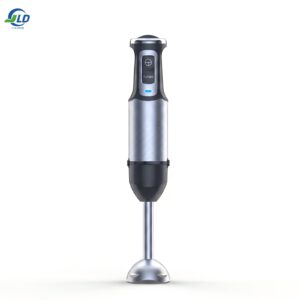
Wholesale profitability comes from strategy, not from product alone. Structure the range in three tiers: value models for independent shops and marketplaces, mid-range kits for the volume middle, and commercial models for foodservice. A distributor carrying all three sells to every channel in its territory; the YLD PressPro 1600W hand blender, for example, anchors the commercial tier in several UK wholesale catalogues. The wholesale blenders range shows how the value and mid tiers are priced for UK distributor margins.
Price from landed cost, freight, warehousing and the cost of after-sales, then benchmark against comparable UK wholesale offers. The middle tier carries the margin; the value tier defends shelf space; the commercial tier funds the sales effort. Review the mix quarterly and let reorder data decide.
Credit terms are a competitive weapon in UK wholesale. Standard terms are 30 days net, with some distributors offering 60 days to established accounts. Tighten credit for new accounts, because appliance distribution has real bad-debt risk, and use credit insurance or factoring once volumes justify it.
Minimum order values and mixed-case terms decide whether independents can buy from you at all. A distributor that accepts mixed cases down to modest values captures the independent market that volume-only wholesalers ignore. Two operational details separate professional distributors from traders: a published price list with tiered breaks keeps negotiations fast and consistent, and a simple web catalogue with live stock levels reduces order calls dramatically, especially from independents who order after shop hours. On credit, one habit worth stealing: run a monthly review of the aged debt list, and stop shipping to any account past 90 days until it clears. A single bad account can wipe the margin of a good month.
Case Study: Blender Wholesale London to Bradford
How blender wholesale London Bradford trade flows illustrate the two-hub model in action, and the pattern is the classic one for wholesale kitchenware distributors london supplying the north. A London importer holds the container stock and the national brand relationship, while a Bradford-based distributor serves Yorkshire and the North East, buying in pallet quantities against its own retail accounts.
The London side handles what it does best: imports, compliance, branding and the south-eastern accounts. The Bradford side handles what it does best: local relationships with independent retailers, market towns and regional foodservice buyers, plus next-day delivery across Yorkshire. Neither competes with the other for the same customers.
YLD Home supports this exact structure, supplying the London importer with UK-configured, private label models from the hand blender range and the Bradford distributor with mixed pallets, spares and marketing materials. The result is a chain from the Chinese factory to a Yorkshire shop shelf with two specialist links instead of one stretched generalist. Both partners follow the same factory-selection criteria we set out in our guide to choosing a hand blender manufacturer in China.
The economics work because each link stays small and fast. The London importer funds the stock, the Bradford distributor funds the relationships, and the end retailers buy in the quantities and delivery windows they need. For a supplier, supporting this structure means consistent pricing between the two links, clear territories and reliable spares support. Bradford sits at the heart of the M62 corridor, so the distributor’s next-day reach extends naturally into Leeds and Manchester, and the London importer never has to manage those accounts directly.
Building a Hand Blender Distribution Network UK Wholesale
A hand blender distribution network UK wholesale does not have to start with two warehouses. Most successful networks start with one hub and one distributor partner, then grow by adding partners in defined territories. The sequence: import into London or Manchester, appoint a distributor for the opposite half of the country, then extend to Scotland and Northern Ireland as volumes justify. YLD Home’s network playbook starts exactly this way, one hub and one partner per territory.
Territory discipline is the rule that makes networks work. Each partner needs an exclusive or semi-exclusive territory, a minimum purchase commitment and a shared price list, otherwise partners compete with each other and margins collapse. Written agreements matter, even between friendly partners.
The network should carry the full support package: spares, warranty handling, marketing materials and training. A distributor that receives this support resells it to retailers, which is how a small supplier builds national reach without a national sales force. Monthly sales reports from each partner give the supplier the data to plan production. Once the blender network is stable, distributors often add the juicer manufacturer line as a second category from the same supplier. The structure follows the same framework as our hand blender wholesale market playbook, adapted to UK geography.
Set the network rules before the second partner signs. Decide how territories are defined, whether by postcode area or county, how conflicts between partners are arbitrated, and what happens if a partner misses two consecutive purchase commitments. Written rules prevent the disputes that kill young networks. Add ecommerce sellers as a separate, complementary layer: marketplace sellers are not territory-bound, so handle them at supplier level, with pricing that does not undercut the distributor partners. Contact YLD Home for distribution pricing and territory availability.
Ecommerce and Omnichannel Distribution
Distribution in 2026 is omnichannel. The same hand blender model sells through wholesale accounts, marketplace sellers, DTC websites and foodservice suppliers, and the distributor’s job is to serve all of them without cannibalising any. Clear price architecture is the foundation: a wholesale price to distributors, a separate price band for marketplace sellers, and an RRP that protects everyone.
Marketplace sellers in the UK have become a channel of their own, warehousing in fulfilment centres and replenishing weekly. Distributors serve them with fast, reliable replenishment and compliance-ready listings, which is why sellers increasingly buy from UK distributors rather than importing directly. Listing strategy follows the naming differences between immersion and stick blenders, because the same unit ranks under both names on UK marketplaces.
Wholesale ecommerce platforms, where retailers order online against a live catalogue with tiered pricing, have replaced much of the traditional sales rep function for smaller accounts. A distributor with a good web catalogue and mixed-case capability can serve hundreds of independents with a tiny sales team, and even wholesale kitchenware distributors london now run web catalogues for the independent south-east trade.
The practical consequence for a distributor is a weekly rhythm: marketplace replenishment orders on Monday and Thursday, wholesale web orders daily, and a consolidated DTC dispatch window that keeps courier costs low. Channels that look separate on the spreadsheet share the same stock, so the inventory system must be live across all of them. Finally, data flows both ways: order data shows which models, price bands and territories are growing, and shared back to the supplier it drives better production planning. Omnichannel distribution is a data business wearing a logistics uniform.
Frequently Asked Questions
- Who are the wholesale kitchenware distributors london serving? Independent retailers, foodservice operators and marketplace sellers across the south-east. That is the whole market in one sentence, and YLD Home’s London partner network covers each of those groups.
- How do wholesale kitchenware distributors london differ from Manchester wholesalers? London is denser, price-led and foodservice-heavy; Manchester is relationship-led with lower costs and northern reach. YLD Home supplies UK-configured stock to both hubs.
- What is the advantage of Manchester for wholesale? Lower costs and next-day reach across the north, Scotland and Ireland. Simple as that, which is why YLD Home recommends a northern staging point for northern territories.
- Do I need two warehouses? Two hubs, one south and one north, give national next-day delivery at reasonable cost. One site cannot cover the country, and YLD Home ships containers to both port groups to support the model.
- Does YLD Home work with UK distributors? Yes, with UK-configured containers, private label and spares support for both hubs.
- What is the MOQ for a distributor partner? [fill actual]; YLD Home’s mixed pallet terms are designed for first distributor orders.
- Do you protect distributor territories? Yes, exclusive territories with written agreements, and YLD Home enforces the same rule across its UK partner network.
- How do I start as a UK distributor? Start with one hub and one partner, then expand by territory. Resist the urge to sign five partners in month one, and let YLD Home’s network playbook guide the sequence.
Official references: Logistics – Wikipedia · Retail sales index – Office for National Statistics
For buyers planning their next order, wholesale kitchenware distributors london decisions come down to supplier reliability, unit cost and compliance. wholesale kitchenware distributors london buyers who compare factory-direct options against trading company quotes tend to get better pricing, and wholesale kitchenware distributors london ranges with UKCA-certified models move faster at retail. If you are evaluating a new line, keep wholesale kitchenware distributors london specifications such as wattage, speeds and shaft material in a checklist before you request samples.
Related models in this range: Hand Blender Set With Food Chopper and 1000W Hand Blender Wholesale.