




In this guide: The Decision That Defines Your Brand · What Is Private Label · What Is OEM · What Is ODM · Side-by-Side Comparison · UK Cost Breakdown · Decision Framework: Control, Speed & Budget · Supplier Support in Each Model · From London Startup to National Brand · FAQ
Every UK brand that sells a hand blender faces the same fork in the road: do you buy a proven product and put your name on it, commission a factory to build your own design, or pick from the factory’s catalogue and brand it? That is the private label vs oem vs odm hand blender question, and the answer determines your costs, your control, your speed to market and ultimately your margin. This guide explains all three models in plain language, compares them side by side, breaks down the hand blender private label OEM ODM UK cost picture, and gives you a decision framework you can use today. Whether you are a London startup or an established retailer, choosing the right sourcing model is the single most important brand decision you will make this year, and this article is designed to make it an easy one.
Private Label vs OEM vs ODM Hand Blender: The Decision That Defines Your Brand
Sourcing model is strategy. The three-letter acronyms decide who owns the design, who owns the risk and who captures the margin. Get the model wrong and you either pay for development you did not need or lose control of the product that carries your name. Get it right and the factory becomes an extension of your team, quietly manufacturing the product while you build the brand on top.
The private label vs oem vs odm hand blender decision is really three questions in one. First, do you have your own product design? If yes, OEM; if not, private label or ODM. Second, how fast do you need to launch? Private label is fastest, ODM next, and OEM slowest because of tooling and development. Third, how much control do you need over cost, quality and exclusivity? Control costs money, so match the level of control to the level of ambition, not to pride. A brand that needs exclusivity but has no design team is often better served by ODM with a negotiated exclusivity clause than by full OEM.
UK brands often assume more control is always better. The market says otherwise: many of the most successful UK hand blender brands launched on a private label basis, proved demand, and only moved to OEM or ODM once volumes justified the tooling investment. The model is not permanent; it is a stage in your brand’s journey. The rest of this guide helps you pick the right stage to start on, and the comparison table in the middle gives you the full picture at a glance.
What Is Private Label?
Private label means the factory’s existing, proven design, produced to your brand: your logo on the motor housing, your colours on the box, your manual, your warranty promise. You do not pay for design or tooling, and you do not wait for development. The factory already produces the product for other markets, so quality and certification are established, and your job is to differentiate the presentation, not the engineering. This is the fastest route from idea to shelf, and it is why private label dominates the first year of most UK appliance brands.
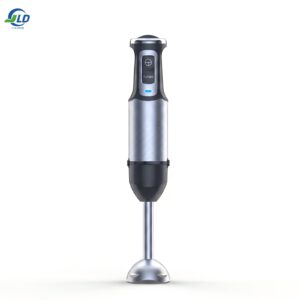
For UK brands, private label is the classic entry model. It suits marketplace sellers, retailers and distributors who want a branded product fast, with low risk and a low minimum order quantity. The 1600W PressPro hand blender is exactly the kind of proven platform UK brands start with on a private label basis. It is also the model used by supermarket own-brand ranges: the retailer chooses a proven design, wraps it in its own brand, and sells it at a price the market already accepts. The economics are forgiving, because there is no development cost to amortise and the break-even point comes after a small number of units.
The trade-off is exclusivity. Because the design belongs to the factory, other buyers can sell the same hardware under different names, and a competitor can undercut you on the same product. Mitigate this with packaging, accessory bundling, colourways and after-sales service that make your offer feel different, and with agreements that reserve a model or a market for you where the factory allows. Some factories will grant territorial exclusivity on a specific SKU once your volume is predictable, which turns private label into something close to ODM.
What Is OEM?
OEM, original equipment manufacturer, means you bring the specification and the factory manufactures it. You define the design, the materials, the motor, the blade geometry, the colours and the packaging, and the factory builds to your drawings. OEM is the model behind most premium and differentiated brands: the product is genuinely yours, and no one else can sell it without your permission. It is a specific form of contract manufacturing, where an outside company produces goods under your brand and to your specification, and it gives you the strongest ownership position in the sourcing spectrum.
OEM costs more and takes longer. You typically pay for moulds or tooling, a higher minimum order quantity, development samples and engineering changes, and you carry the risk that the market does not love your design. In return you get exclusivity, control over cost structure and quality, and a product that competitors cannot copy overnight. For a UK brand with a clear product idea and patient capital, OEM builds the strongest moat, and it is the natural end point for brands that have outgrown shared designs.
A common middle path is OEM with a factory’s existing platform: you keep the proven motor and drivetrain, and customise the body, colours, accessories and branding. This gives most of the exclusivity at a fraction of the development cost, because the risky engineering is already proven. When a supplier describes “OEM options”, this platform customisation is usually what they mean, and it is the version most UK brands actually use when they graduate from private label.
What Is ODM?
ODM, original design manufacturer, sits between the two: the factory designs the product, using its own research and development, and offers it to you for branding. You choose from the factory’s catalogue, sometimes with light modifications, and the factory takes responsibility for design, testing and certification. ODM is how most private label products are actually developed in China: the factory designs, the buyer brands, and the line between the two services is deliberately blurred.
The practical difference from private label is that ODM often means a design built for a specific buyer or market trend, with a little more customisation room, while private label often means an existing volume product. In practice the boundary shifts from factory to factory, and the same supplier may call the same service both things. What matters for your decision is the contract: who owns the design, what exclusivity you get, and what happens if you want to change suppliers later. Those three clauses matter more than the name on the service.
ODM suits UK brands that want more than a sticker on a commodity product, but cannot fund full OEM development. You get a product designed for the category, tested and certified by the factory, with room to adjust colours, accessories and packaging. The risk is lower than OEM because the factory has already solved the engineering; the exclusivity is weaker because the design may be sold to other brands unless you negotiate a reserved model or market. For most UK brands, ODM is the smart upgrade path after a successful private label launch.
Private Label vs OEM vs ODM Hand Blender: Side-by-Side Comparison
| Factor | Private Label | OEM | ODM |
|---|---|---|---|
| Design ownership | Factory | You | Factory |
| Your design input | Minimal (branding) | Full | Light customisation |
| Tooling / development cost | None | Yes (moulds, samples) | Usually none |
| Minimum order quantity | Lowest | Highest | Medium |
| Time to market | Fastest (4-6 weeks) | Slowest (12-20 weeks) | Medium (8-12 weeks) |
| Exclusivity | Low | High | Low to medium |
| Risk | Lowest | Highest | Medium |
| Best for | New brands, marketplaces | Differentiated premium brands | Brands wanting design input on a budget |
Reading the table: the private label vs oem vs odm hand blender choice is a triangle of speed, control and cost, and no model wins all three. Private label trades exclusivity for speed and low risk. OEM trades speed and cash for control and a moat. ODM sits in the middle and is the model most UK brands graduate to after a successful private label launch. Note also that the models are not rigid: a private label order with a reserved colourway, an OEM order built on a factory platform, and an ODM order with a negotiated exclusivity clause all blur the boundaries in your favour.
Hand Blender Private Label OEM ODM UK Cost Breakdown
Cost is where the models really separate, and in the private label vs oem vs odm hand blender comparison the headline difference is not the unit price; it is the structure of the investment. Private label has almost no entry cost beyond samples and the minimum order. OEM adds tooling, engineering and sample rounds, which can multiply your first-order cash outlay several times. ODM adds little beyond private label but may carry a design or modification fee for changes you request. Understanding the structure tells you which model you can actually afford this quarter.
| Cost item | Private Label | OEM | ODM |
|---|---|---|---|
| Sample cost | 1-2 units | Development samples, multiple rounds | 1-2 units |
| Tooling / moulds | None | Yes [fill actual] | Usually none |
| Minimum order | Lowest [fill actual] | Highest [fill actual] | Medium [fill actual] |
| Unit price | Benchmark | Lower at volume | Benchmark + small premium |
| Packaging design | Yours | Yours | Yours |
| Certification | Factory’s (model-specific) | Factory + your design changes | Factory’s |
| Break-even speed | Fastest | Slowest | Medium |
Unit prices tell the same story. A private label or ODM unit bought at a factory’s standard volume price is the cheapest way to fill a shelf. An OEM unit costs more per unit at small volumes because tooling and development are amortised, but the landed cost per unit falls as volume grows, and exclusivity lets you hold a retail price that competitors cannot match on identical hardware. When you compare the hand blender private label OEM ODM UK cost figures, the decision depends on your volume forecast: under a few thousand units a year, private label wins on cost; at sustained volume, OEM wins on margin. YLD Home provides current price bands and landed cost examples for all three models on request, the wholesale blenders page shows the volume pricing, so you can run this comparison with real numbers instead of estimates.
Decision Framework: Control, Speed and Budget
Use three questions to decide. First, do you have a differentiated design? If you have drawings, prototypes or a clear specification, OEM is viable; if not, you are buying a proven product, which is private label or ODM. Second, what is your deadline? A launch tied to a season, a marketplace event or a trade show forces speed, and private label wins every race against the calendar. Third, what is your appetite for fixed cost? Tooling and development only make sense when you can spread them across volume, so be honest about your forecast before you sign for moulds.
Score each private label vs oem vs odm hand blender option against your actual answers, not your aspirations. A useful test: take your forecast sales for the first twelve months, and calculate the total cost under each model, including tooling, samples, certification and rework. In most UK scenarios, the private label or ODM route breaks even faster, and the OEM route wins only after the second year. That is why the recommendation is usually the same: start private label, gather sales data, then move to OEM or ODM when your reorder pattern justifies the investment.
Your uk brand hand blender sourcing model also affects your brand’s future flexibility. A private label product is easy to switch factories on; an OEM product with your tooling is not, because your moulds stay with the factory. If supplier lock-in worries you, put design ownership and tool release clauses in the contract before you pay for the moulds. UK brand owners who skip this clause discover its cost only when they want to change suppliers, and by then the moulds are a bargaining chip, not a right.
Supplier Support: What to Expect in Each Model
Whatever model you choose, the supplier’s support stack should include: UK plug and voltage configuration, UKCA and CE documentation for the exact model, British English manuals, retail-ready packaging design support, mixed-model containers, spare parts and after-sales service. These matter more than the model acronym, because a private label product with weak documentation is worthless to a UK marketplace, and an OEM product without spare parts destroys your warranty reputation. The practical checklist for vetting a supplier is in our guide to choosing a hand blender manufacturer in China.
In private label, expect the supplier to handle everything technical while you handle brand: artwork, colours, packaging, listings. In ODM, expect support with light modifications, accessory bundles and packaging, plus factory testing and certification. In OEM, expect engineering support, development samples, tooling management and a formal change process; you are the architect and the factory is the builder, so communication discipline matters more than in any other model.
A supplier that can move you between models is worth far more than a specialist in one. A small kitchen appliance manufacturer in China that supports UK brands across private label, OEM and ODM on the same product platforms is the ideal partner: a brand can launch private label this quarter, add an exclusive colourway next quarter, and develop a full OEM variant once volume justifies it, without changing factories or renegotiating from zero. YLD Home works this way as standard. That continuity protects your supply chain and your brand consistency, and it means the model you choose today does not lock you out of the model you will want next year. The same factory platforms also build the hand mixer range, so a brand can widen its catalogue without taking on a second supplier.
The platforms behind private label, OEM and ODM all start on the same factory floor. This short tour of the YLD Home production line shows how one plant supports all three sourcing models: standard runs on the main lines, custom colours and branding at the packing stage, and QC checks on every unit before the cartons close.
alt:private label vs oem vs odm hand blender
From London Startup to National Brand: A UK Roadmap
The typical UK journey starts with a brand decision, not a product decision. A London startup with a strong brand idea and a modest budget usually launches private label: pick two proven models, brand them, list them, and learn what the UK market actually buys. The branding hand blender London agencies and marketplace sellers will tell you the same thing: first sales data beats third-party market research, and a launch in weeks beats a launch in months.
Stage two is productisation. Once a model proves itself, add exclusivity: a reserved colourway, a bundle with a whisk or chopper, an ODM tweak like a different shaft length or a stronger motor, and packaging that tells your brand story. The naming and channel choices you make here are covered in our immersion blender vs hand vs stick blender guide, because the listing language is part of the product. Stage three is full differentiation: when volumes reach the point where tooling amortises in a reasonable period, move to OEM, add your own design details, and protect the product with design registration if it is genuinely novel.
Through all three stages, keep the fundamentals fixed: UKCA and CE documents for every SKU, BS 1363 plugs, British English manuals and reliable after-sales. National brands are built by repeating the basics consistently, not by clever one-off product stunts. With a dependable hand blender supply partner and a sourcing model that matches each stage, the private label vs oem vs odm hand blender decision is made once but revisited every season, and the brands that win are the ones who revisit it with data rather than habit.
FAQ
- Which is best for a new UK brand, private label or ODM? Private label for the fastest, lowest-risk launch; ODM when you want modest design input without tooling costs, and YLD Home can quote both options on the same platform.
- Is OEM worth the extra cost? Only at volume; under a few thousand units a year, the tooling rarely pays back, so YLD Home usually advises UK brands to start private label and revisit OEM at scale.
- Can I move from private label to OEM later? Yes, and it is the most common UK path; choose a supplier that supports all three models, as YLD Home does on the same product platforms.
- Who owns the design in ODM? Usually the factory; negotiate exclusivity and design ownership in the contract, and YLD Home documents these terms clearly before tooling decisions.
- What does the hand blender private label OEM ODM UK cost look like? Private label costs least to start; OEM costs most up front but wins on margin at volume. Ask YLD Home for current price bands [fill actual].
- Is the private label vs oem vs odm hand blender choice permanent? No; most UK brands start with private label and graduate to ODM or OEM as volumes grow, and YLD Home supports that migration without switching factories.
- Do I need my own trademark? Yes, register your UK trademark before ordering branded goods; see the IPO guidance below, and YLD Home can print your registered mark on packaging and manuals.
- Does YLD Home support all three sourcing models? Yes, private label, OEM and ODM are available on the same product platforms, with UKCA documents for every branded SKU.
Ready to brand your own hand blender line? Contact YLD Home for a branding quotation, packaging mock-ups and UKCA documentation support, whatever model you choose, and read the launch guides on the YLD Home blog first.
Official references: Contract manufacturer – Wikipedia · Register a UK trade mark – GOV.UK
For buyers planning their next order, private label vs oem vs odm hand blender decisions come down to supplier reliability, unit cost and compliance. private label vs oem vs odm hand blender buyers who compare factory-direct options against trading company quotes tend to get better pricing, and private label vs oem vs odm hand blender ranges with UKCA-certified models move faster at retail. If you are evaluating a new line, keep private label vs oem vs odm hand blender specifications such as wattage, speeds and shaft material in a checklist before you request samples.