









In this guide: The Trend · Retailer & Distributor Demand · Cordless vs Corded · Motor & Battery Tech · Specs That Matter · Supply Chain & ODM · Compliance · Case Study: Glasgow · Pricing & Margins · FAQ
Cordless hand blender wholesale UK orders have become the surprise growth story of the British small-appliance trade. What began as a niche product for campervan owners has turned into a mainstream category that retailers, distributors and e-commerce sellers are all chasing — and the numbers justify it. Cordless models now command a meaningful price premium over equivalent corded units, they sell to a broader audience (renters, students, boat owners, event caterers), and they carry higher margins for everyone in the chain. For a UK buyer — whether you are a distributor stocking shelves, a retailer building a range, or an importer launching your own brand — the question is no longer whether to stock cordless, but which products, which supplier and which price points. This guide breaks down the trend data, the product differences that matter, the compliance requirements, and the supply-chain reality of buying cordless hand blender wholesale UK volumes from a factory that understands the category. If you are new to the format, our comparison of immersion, hand and stick blender differences is a useful starting point.
Why Cordless Is the UK’s Fastest-Growing Small-Appliance Trend
The cordless shift is not unique to blenders — it swept through vacuums, kettles and mixers first — but hand blenders are now the category where it is accelerating fastest. Several forces are compounding. First, the UK housing market: a large share of British households live in flats and small kitchens where storage and socket access are real problems, and a blender that lives in a drawer, charges on a shelf and works anywhere is an easier sell than one that needs to be parked next to a plug. Second, the outdoor-living and van-life boom: camping, caravanning and van conversion are mainstream hobbies in the UK, and cordless cooking gear is the natural upgrade path for that audience.
Third, and most important for trade buyers, is the demo-cooking effect. Recipe videos and live cooking content have trained consumers to expect blending wherever the action is — at the table, on the counter, in front of a camera. A cordless blender is visibly better for that use case, which is why it converts shoppers in-store: the demo sells itself. Retailers report that cordless models routinely outsell their corded equivalents at the same counter once a customer has seen them used. Search demand tells the same story: cordless hand blender searches in the UK have grown year on year, and the category is being stocked by every major kitchenware chain.
For wholesalers the structural appeal is margin and repeat rate. Cordless units carry 30–50% price premiums over comparable corded models, the accessory ecosystem (charging docks, spare batteries, travel pouches) creates add-on sales, and the product is new enough that price comparison is harder — which protects margin. Add the fact that Chinese factories have solved the battery-cost curve, and you have a category that is growing, profitable and still early. That is the definition of a trend worth stocking now rather than next year. If you want the category numbers on your desk each month, the YLD Home Appliances newsletter tracks UK cordless demand and pricing signals for trade buyers.
What UK Retailers and Distributors Are Asking For
Talk to any UK kitchenware buyer and the cordless conversation follows a predictable pattern. The first question is always runtime: how many minutes of actual blending per charge, measured honestly, not the marketing figure. The second is charging — buyers want to know whether it is a charging dock, a USB-C cable or both, and how long a full charge takes. The third is battery replacement: a cordless blender with a sealed, non-replaceable battery has a built-in expiry date, and both retailers and consumers now ask about it openly.
Then come the commercial questions. Distributors want a product that arrives UKCA-compliant with the full certification pack, because they pass that paperwork to their own retail customers. They want reliable MOQs and lead times so they can commit to catalogue listings and pre-orders. They want colourways that photograph well for e-commerce (pastel and muted tones sell, but so does a professional stainless option for the catering trade). And they want packaging that works on a shelf: display-ready boxes, clear power claims on the front, and barcodes that scan first time.
Independent retailers add their own priorities: a supplier who holds stock in the UK or can ship small top-up orders without container-sized minimums, a warranty process that does not leave the customer dealing with a factory in Shenzhen, and spare batteries or accessories they can sell alongside the blender as margin items. E-commerce sellers, by contrast, care about listing protection: clear spec sheets, unique photography and, increasingly, exclusive colourways to prevent price wars with other sellers of the same SKU. Any distributor who wants to win the cordless hand blender wholesale UK market should treat these answers as a pre-sales checklist, because the buyers asking them are comparing three or four suppliers on exactly these points before they commit.
Cordless vs Corded: Product Differences That Drive Sales
The reason cordless commands a premium is not magic — it is a genuinely different product with different engineering. The comparison below is what you should be explaining to your own retail customers, because it is also what sells the upgrade.
| Feature | Corded hand blender | Cordless hand blender |
|---|---|---|
| Motor power | 300–1600W continuous | 200–600W equivalent output |
| Runtime | Unlimited | 15–40 minutes per charge |
| Weight | 700–1200g | 900–1300g (battery included) |
| Use cases | Pro kitchens, batch cooking | Home, flats, travel, events, demos |
| Charging | Never | Dock, USB-C or both; 2–4h full charge |
| Battery care | None | 500+ charge cycles; replacement procedure |
| Retail price band | £14.99–£49.99 | £29.99–£79.99 |
| Retailer margin | Standard | 30–50% higher typical margin |
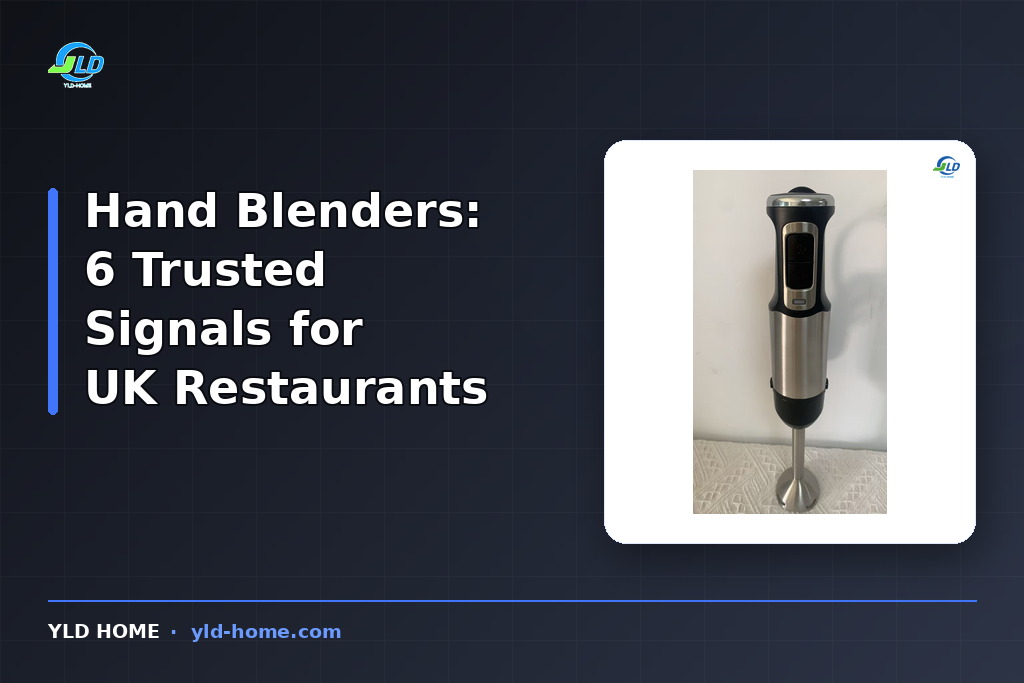
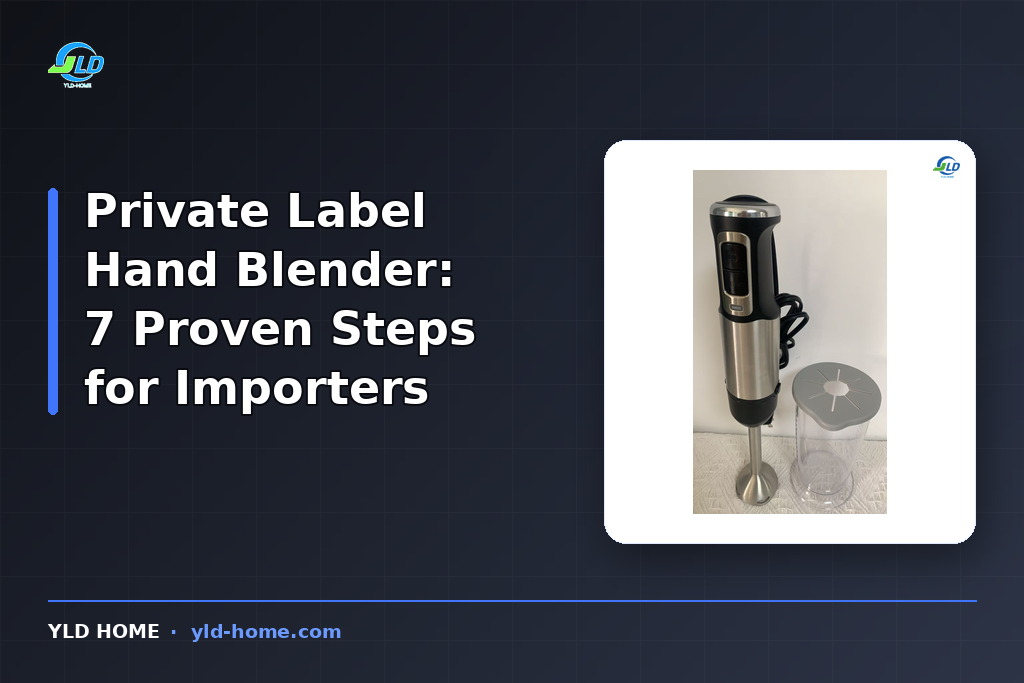
The honest engineering trade-off is power: a cordless motor cannot match a 1200W corded unit drawing from the wall, so cordless is about convenience, not raw capability. That is exactly why the two products coexist rather than cannibalise. Corded remains the choice for heavy batch work and professional kitchens — our flagship PressPro 1600W hand blender is the reference for that role — while cordless wins everywhere the socket is the problem: small kitchens, outdoor use, travel, demonstrations, and any customer who has ever tried to blend soup at a table with a 2-metre cable. YLD Home covers both sides of that split, which makes it easy to source a complete range from one factory.
For retailers, the sales lesson is to sell the difference rather than the compromise. The customer buying a cordless blender is not settling for less power; they are buying portability, storage convenience and the ability to blend anywhere. Frame the 600W-equivalent output as “enough for soups, sauces, smoothies and baby food — the tasks people actually blend” and the sale becomes easy. And because cordless shoppers skew younger and more social, the same customers become your best marketing: a blender that works in a TikTok recipe video is a blender that sells itself to their followers. That is the demand engine behind the cordless hand blender wholesale UK opportunity.
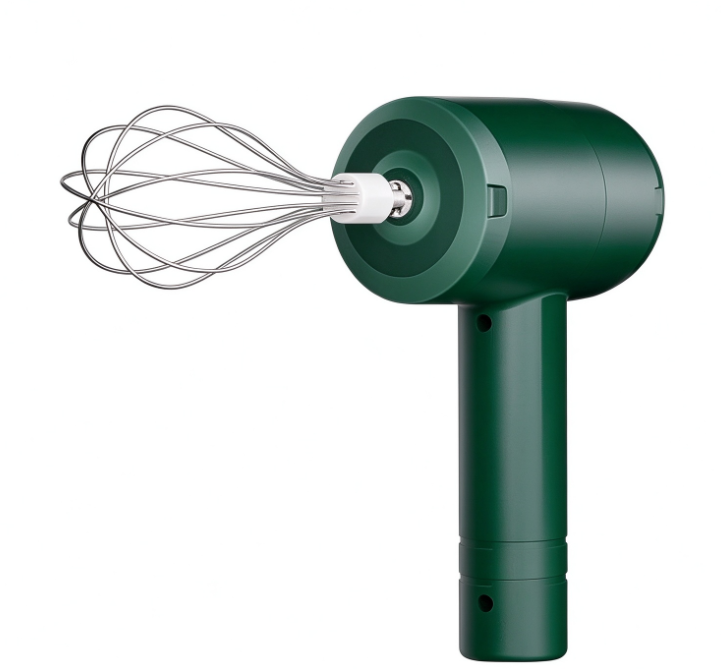
Inside a Modern Rechargeable Stick Blender: Motor, Battery and Blade Tech
To buy cordless well, you need to understand what is inside the machine, because that is where quality differences — and price differences — actually live. The modern rechargeable stick blender has three core systems. The motor: most cordless units use a brushless DC motor, which is more efficient and longer-lived than the brushed motors in cheap corded units, and the efficiency matters doubly when every watt comes from a battery. A brushless motor converts more of the battery’s energy into blade torque, which is why a 600W-equivalent cordless unit can feel stronger than its wattage suggests.
The battery is the heart of the product. Most units use lithium-ion cells — either 18650 or 21700 format — part of the rechargeable battery family that now powers consumer appliances — arranged in a pack with a battery management system (BMS) that protects against overcharge, over-discharge and overheating. The BMS is invisible but it decides the difference between a battery that lasts 500+ cycles and one that swells or dies within a year. Reputable factories certify the pack to UN38.3 for transport safety and provide the MSDS documentation that freight forwarders require when shipping lithium batteries by air.
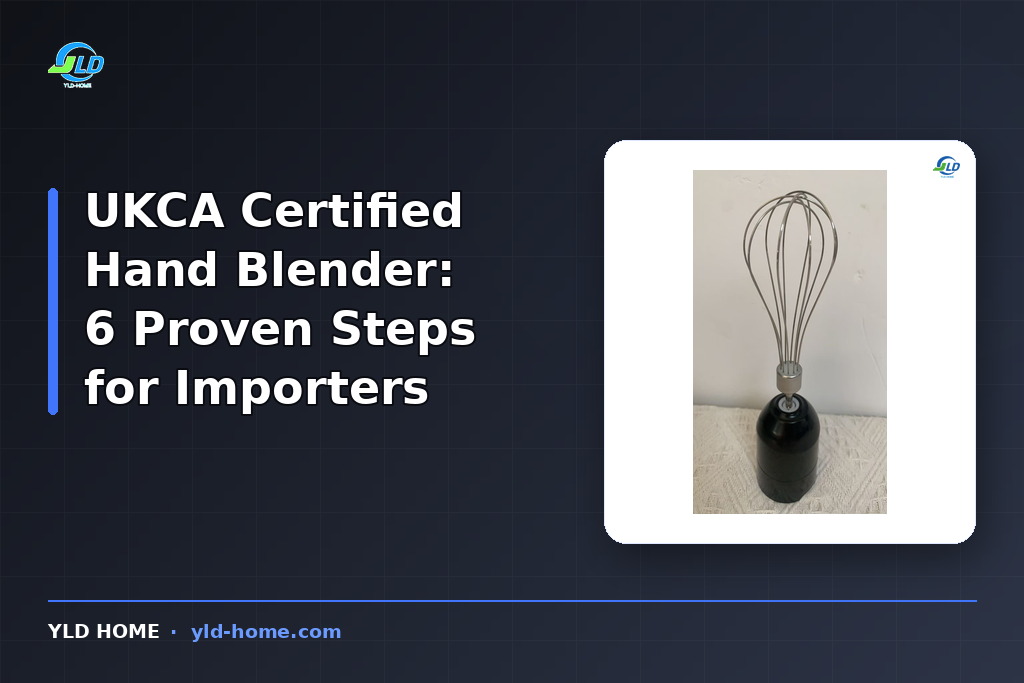
The blade and shaft matter more than most buyers realise. Cordless units typically run a two- or four-pronged stainless blade; four-pronged designs emulsify better and are worth specifying. Shafts are stainless or, in cheaper units, plated metal — specify 304 stainless if the product will blend hot or acidic ingredients. Finally, the charging interface: a magnetic dock is premium-feeling but adds cost; USB-C is the universal standard customers now expect; many mid-range units offer both. Each of these decisions moves the landed cost by pennies but moves the perceived quality by pounds, which is why a disciplined spec sheet is the difference between a £29.99 commodity and a £59.99 premium product.
Battery, Charging and Runtime Specs That Matter for Bulk Buyers
When you buy cordless hand blender wholesale UK volumes, the specification sheet is your contract with the customer — and the battery figures are the ones that generate complaints if they are wrong. Runtime is the first battleground. Marketing figures are usually measured at light load with a fresh battery; real-world blending of thick soup draws more current. A defensible approach is to quote a realistic range — for example “up to 20 minutes of continuous blending” — and back it with the battery capacity in mAh. Typical packs run from 1500mAh in entry units to 3000mAh+ in premium models.
Charging time is the second number customers check. Two to four hours for a full charge is the current norm; anything longer feels outdated. USB-C is now the expected standard, with a charging dock offered on premium models as an alternative. Cycle life is the third: specify cells rated for 500+ charge cycles (roughly 2–3 years of daily use), and make the battery replacement path explicit — a removable battery module or a factory replacement service. Retailers will ask, and an honest answer is a selling point.
YLD Home’s cordless models, for example, use tier-1 cells with certified BMS protection and publish realistic runtime figures — a useful benchmark when you compare quotes. Then the logistics numbers, which are your numbers: UN38.3 test certification for the battery, MSDS documentation for air freight, and correct labelling of the battery watt-hour rating (Wh) on the product and packaging — shipments of lithium batteries above certain thresholds need dangerous-goods declarations. Your factory should provide all of this in the compliance pack; if they hesitate, that is a red flag, because air freight without proper lithium documentation gets delayed or rejected at the carrier. Finally, set your own quality gates: batch-test runtime on sample units, verify the charger plug is BS 1363 UK spec, and keep one unit from every production batch for your own testing. Battery claims are the easiest spec to fudge and the fastest way to destroy a brand’s reviews.
Working with a Rechargeable Stick Blender Factory: ODM and Customisation
The supply chain for cordless is more specialised than for corded blenders, because you are not just buying a motor and a shaft — you are buying a certified battery system, charging electronics and their compliance paperwork. That argues for working with a factory that already ships cordless products to regulated markets, not a generalist that assembles corded units and sources batteries ad hoc — our hand blender manufacturer in China guide explains how to shortlist and audit that kind of partner. The right partner is a rechargeable stick blender factory with proven battery sourcing, in-house assembly and a compliance file that covers the whole product.
YLD Home, a Shenzhen small-appliance factory running OEM, ODM and white-label programmes with CE, UKCA and ETL certifications, is exactly the profile to look for: they assemble cordless and corded blenders, hold UN38.3 battery certification for the packs they use, and produce the full documentation set — test reports, Declarations of Conformity, MSDS — that UK importers need. On an ODM programme you can customise colourways, logo placement, battery capacity (within the platform’s design envelope), the charging interface and the accessory bundle, with a typical MOQ of 1,000 units and a lead time of 6-8 weeks after sample approval.
Before you negotiate, watch what a cordless production line actually looks like — the battery assembly, the testing and the packing are where quality is won or lost:
Inside the YLD Home production floor: automated assembly line
The practical negotiation points for cordless are specific. Ask for the battery supplier and cell brand (Samsung, LG, EVE and other tier-1 cells cost more and are worth it). Confirm the BMS is certified and the pack passes UN38.3 for the exact configuration you are buying. Negotiate a spare-battery SKU you can sell as an accessory — it is a margin line and a customer-service answer. And demand a pre-production sample with your exact branding, tested for runtime and charging, before the production run. A factory that handles these questions without hesitation is a factory you can build a cordless line with.
UKCA, Battery and Packaging Compliance for Cordless Blenders
Compliance is where cordless differs most from corded, and it is non-negotiable for UK retail. The electrical side follows the standard UKCA regime: the product must meet the Electrical Equipment (Safety) Regulations 2016 and EMC Regulations 2016, carry UKCA marking, and come with the Declaration of Conformity and test reports. The charger must be a BS 1363 UK plug on the mains adapter — a US or EU plug on the box is an instant returns problem. Voltage is 220–240V for the charger; the blender itself runs from its internal battery, which simplifies the safety case compared with a mains-powered unit.
The battery adds a second compliance layer. The lithium pack must be UN38.3 tested for transport, the product needs a UK responsible party for the Waste Batteries and Accumulators Regulations (registration and recycling obligations apply to battery-containing products), and the packaging should show the battery Wh rating and recycling marks. RoHS applies to the electronics. If you import air freight, the shipper needs the MSDS and, depending on volume, dangerous-goods paperwork — factor this into your freight planning, because it is a common cause of customs and carrier delays for first-time importers.
Packaging compliance is the part buyers often forget. Retail boxes need the UK importer’s details, the UKCA mark, correct watt-hour and voltage labelling, and barcodes (GTIN/EAN via GS1 UK). If you sell on Amazon UK, add FNSKU labelling and battery-transport-compliant shipping cartons. The practical advice is to make the compliance pack part of the purchase contract: your factory delivers test reports, DoC, MSDS and UN38.3 certificates with every order, and you keep a compliance file per SKU — our appliance certification overview shows the full document set a UK-bound cordless blender needs. Trading Standards and marketplace platforms both ask for this paperwork eventually — producing it in an hour is a competitive advantage.
Case Study: A Glasgow Distributor Scales a Cordless Blender Line
The pattern that works in the UK market is best illustrated by a real shape of business: a Glasgow-based home and kitchen distributor that built a cordless line from a standing start. The company — call them a typical Scottish importer-distributor — supplied Scottish independent retailers with small appliances for years, almost all corded. In early 2025 they watched cordless searches climb and decided to test the category with a single ODM SKU: a 600W-equivalent rechargeable stick blender in two colourways, with a USB-C charger and a travel pouch.
The launch logic was deliberately low-risk. One SKU, 1,000 units, MOQ met with room to spare, sold through a mix of their existing retail base and a new Amazon listing. The unit’s landed cost left enough margin to sell to independents at a wholesale price that still undercut the big brands by a third, while keeping a healthy gross margin at retail. The compliance pack — UKCA test reports, DoC, UN38.3 battery certificate — was ready before the first container, which meant their retail buyers could list the product immediately without chasing paperwork.
Eighteen months in, the results follow the pattern the trend data predicts: the cordless line now outsells the company’s corded blenders, the Amazon listing carries the bulk of volume, and two reorders have grown the original MOQ into a container-level programme. The distributor, now a recognised cordless blender distributor Glasgow independents reorder from, added a spare-battery SKU and a charging-dock accessory, which lifted average order value without any additional marketing spend. The lessons transfer to any UK buyer: start with one proven ODM platform, get the compliance pack right first time, sell through channels you already own, and let reorder data — not forecasts — drive the second order.
Pricing and Margin Strategy for Cordless Hand Blender Wholesale UK Buyers
The economics of cordless are the reason the category is worth your attention, so model them properly. On a typical 600W-equivalent ODM unit, four lines set the landed cost: FOB factory price, freight and insurance, import duty (about 2-4%, HS 8509.40) and UK VAT (20%, reclaimable on top). Confirm each line at quotation, because exchange rates and freight markets move them. Landed cost then sets your wholesale price to independent retailers and the retail price they apply — which leaves you around 25–30 points of margin at wholesale and your retailers a healthy margin on top.
| Scenario | FOB | Landed | Wholesale | Retail | Your margin |
|---|---|---|---|---|---|
| Entry cordless, 200–300W | On quotation | On quotation | On quotation | On quotation | On request |
| Mid cordless, 600W equiv. | On quotation | On quotation | On quotation | On quotation | On request |
| Premium cordless + dock | On quotation | On quotation | On quotation | On quotation | On request |
Every figure in that grid is a live quote rather than a list price: send us the model, the carton count and your UK port, and the FOB, landed, wholesale and retail numbers come back the same business day.
Three margin levers are specific to cordless. First, accessories: a spare battery, travel pouch or charging dock added to the bundle lifts average order value by 15–25% at minimal cost — and accessories are where retailers make their best margin. Second, exclusive colourways: an ODM colour exclusive to your channel kills price-matching on marketplaces and protects the retail price. Third, staged range building: launch one hero SKU, prove velocity, then add a premium docked model and an entry model. The entry model defends shelf space against unbranded imports; the premium model defends your margin. Model the MOQ of 1,000 units and the 6-8 week lead time into your cash plan, and reorder on sell-through data. Current volume wholesale pricing and ordering terms are published on our wholesale page, and the wholesale blenders catalogue lists the cordless models available for branded orders. This is how distributors turn a trend into a durable, profitable line.
FAQ: Cordless Hand Blender Wholesale UK
What MOQ Do I Need for a Cordless Hand Blender Wholesale UK Order?
ODM cordless programmes at YLD Home start at 1,000 units per colourway, with better price breaks at 3,000 and 5,000 units; white-label stock orders can sometimes start smaller, and OEM tooling is the largest commitment. YLD Home quotes all three routes side by side, so the hand blender wholesale budget is modelled on real numbers.
How Long Is the Lead Time From Order to Delivery in the UK?
Allow 8 to 11 weeks: sample approval, 6 to 8 weeks of production, then sea freight from Shenzhen in 4 to 6 weeks plus customs. Air freight works for urgent reorders at a higher unit cost, and lithium cells need UN38.3 and MSDS paperwork either way, which YLD Home builds into the quoted schedule.
What Runtime Should a Cordless Stick Blender Genuinely Deliver?
A mid-range 600W-equivalent unit gives 15 to 25 minutes of real blending per charge, while premium models with larger packs reach 30 to 40 minutes. YLD Home publishes honest runtime ranges per model measured under load, because marketing figures taken at no-load create returns, poor reviews and chargebacks from UK retailers.
Can I Get My Own Branding on a Cordless Blender?
Yes, ODM covers logo placement, colourways, retail packaging and accessory bundles, with a one-off tooling charge per SKU on top of the unit price. YLD Home runs branded cordless programmes with CE, UKCA and ETL certification included, so the compliance file and the branding arrive together rather than as two separate projects.
What Battery Certifications Does the Factory Need to Provide?
Three: a UN38.3 test report for the pack, MSDS documentation for transport, and evidence of compliance with the Waste Batteries and Accumulators Regulations. YLD Home bundles all three in the compliance pack for its cordless models, so ask for them before the order is placed rather than after the forwarder requests them.
Are Spare Batteries Available for Reorder?
Yes. Specify a spare-battery SKU when you place the order and the factory can run it alongside your main batch. YLD Home tools a spare-battery option on cordless programmes, which answers the most common after-sales question and gives you one of the highest-margin accessories to sell with the blender.
Do Cordless Blenders Need UKCA Marking Like Corded Appliances?
Yes. Product, charger and packaging all carry UKCA marking backed by electrical safety, EMC and RoHS evidence, plus a BS 1363 plug on the charger, while the cell pack adds UN38.3 transport certification. YLD Home delivers the complete marked document set with every cordless order, model number included.
What Price Should I Retail a Cordless Blender At?
The UK market supports GBP 29.99 to 39.99 for entry models, 39.99 to 59.99 for mid-range 600W-equivalent units and 59.99 to 79.99 for premium models with docks. YLD Home’s wholesale bands follow those shelf prices, and keeping wholesale at 50 to 55 percent of retail protects margin for both sides.
Official references: Rechargeable battery (Wikipedia)
The cordless wave is already breaking — position your range before the shelf space is gone. Browse the full YLD Home blender range, then get factory pricing, battery certification files and branded samples: MOQ 1,000 units, lead time 6-8 weeks. Get Wholesale Price today.
Before you commit, confirm runtime, battery certification and the plug configuration in writing, then compare quotes on landed cost rather than unit price. YLD Home quotes cordless programmes at MOQ 1,000 units, ships samples in about seven days and sends the battery document pack with the price.