









In this guide:
- Why the mini hand blender niche keeps growing in US retail
- What “mini” really means: a spec-by-spec comparison table
- Mini hand blender wholesale pricing, MOQ, and lead time reality
- How mini hand blender OEM USA private label programs work
- UL/ETL, FCC, and FDA food-contact compliance for imports
- 120V, plug types, and packaging rules for the US market
- Which retail channels move mini hand blenders fastest
- Inside the factory: how YLD Home builds a mini hand blender
- Shipping, landed cost, and inventory planning for importers
- A practical supplier checklist for mini hand blender sourcing
Walk down the housewares aisle of any Target, Walmart, or Kroger in 2026 and you’ll see the same pattern: full-size blenders hogging half a shelf while a compact stick sits at eye level. The mini hand blender has stopped being a novelty. It’s a category US retailers actually plan around, and importers who got in early are reordering by the container, not by the carton. For buyers who treat a mini hand blender as a real wholesale line instead of an impulse add-on, the math is surprisingly good.
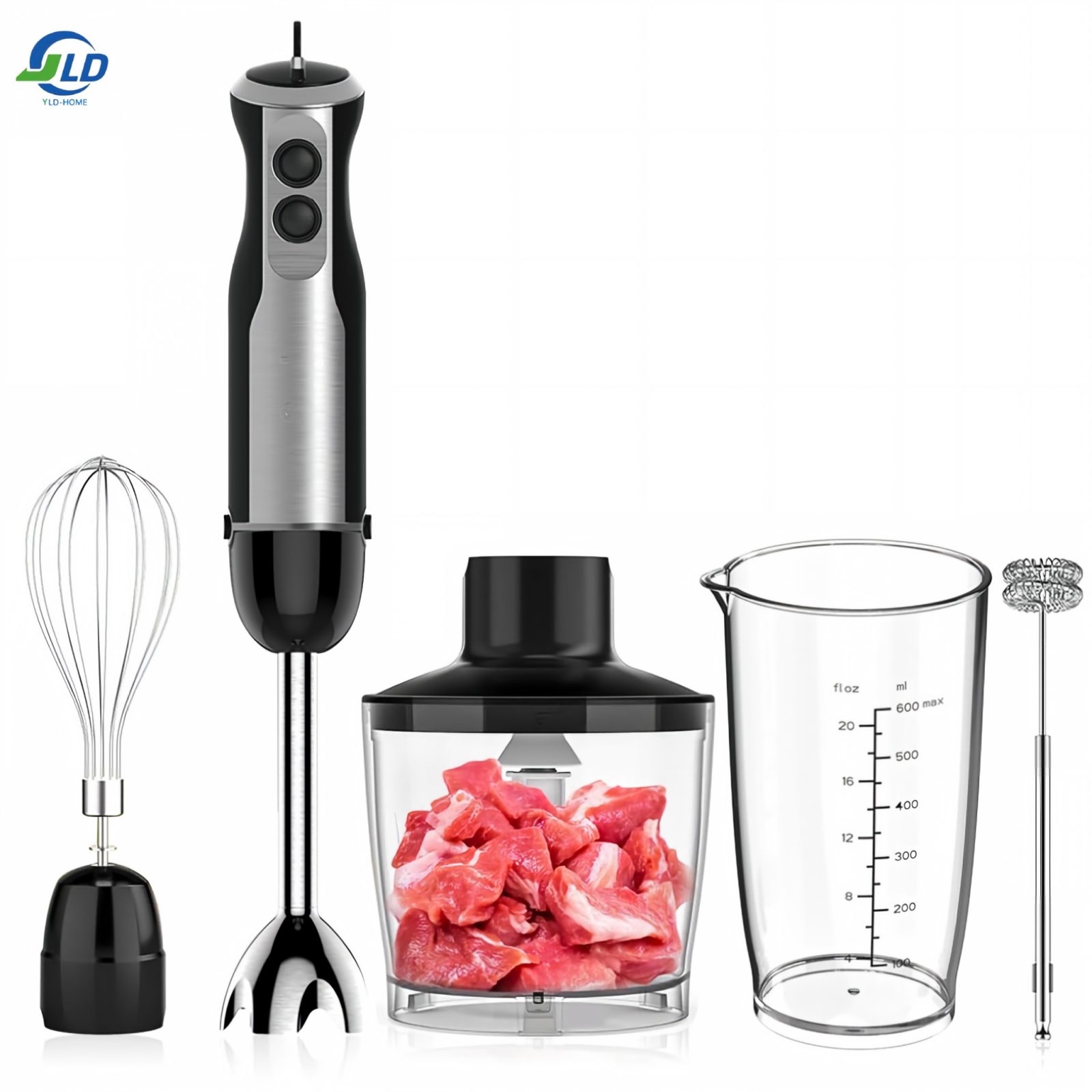
Why the Mini Hand Blender Niche Is Growing in US Retail
A few numbers explain the shift. Dense city apartments in New York, Chicago, and Miami have tiny kitchens, and a mini hand blender fits in a drawer that can’t take a full-size unit. College students in Boston and Austin buy one for dorm cooking. RV owners and van-lifers need something that stores easily. Add the smoothie and single-serve trend, and you have a product with multiple buyer profiles instead of one.
Retailers noticed that mini hand blender units carry higher margin per square foot than almost anything else in the small appliance section. They’re cheap to ship, light to warehouse, and easy to gift. A distributor in Houston told us his mini hand blender wholesale orders grew three years in a row while his full-size blender business stayed flat. The compact form also survives Amazon’s fee structure better because dimensional weight stays low. If the naming feels fuzzy, our breakdown of the immersion vs hand vs stick blender families explains where the mini sits in the broader category.
That’s why big-box buyers now request dedicated mini hand blender SKUs with their own colorways and retail packaging, rather than folding them into a general blender program. If you’re sourcing for a US importer, retailer, or private label brand, this category deserves a real allocation, not a leftover budget line.
What “Mini” Actually Means: Specs That Define the Segment
There’s no official definition of a mini hand blender, which is exactly why buyers get burned. Some factories call a 500-watt stick a “mini” just because it’s shorter. We test against real usage, so here’s the range that actually performs in US kitchens:
| Spec | True mini hand blender | Standard hand blender | Why it matters |
|---|---|---|---|
| Motor power | 150–300 W | 400–800 W | Enough for shakes, soups, dressings without overheating |
| Shaft length | 14–18 cm | 20–25 cm | Fits in mugs, tumblers, and small pitchers |
| Weight | 450–650 g | 700–900 g | Comfortable for one-handed use over long sessions |
| Capacity | 500 ml–1 L | 1–2 L | Matches single-serve and small-batch cooking |
| Voltage | 120 V | 120 V | Both must be 120 V for the US market |
| Speed settings | 2–3 speeds | 5–10 speeds | Simpler is better for a compact tool |
When we tested a 200-watt mini hand blender against a full-size 700-watt model on the same tomato soup batch, the mini finished within seconds of the big unit. For small quantities, motor size matters less than blade design and cup fit. That’s the engineering insight we lean on when we build compact units for private label clients. If you’re still deciding between a countertop machine and a compact stick, our detailed comparison of a hand mixer vs stand mixer covers the trade-offs on torque, space, and cleanup.
Mini Hand Blender Wholesale Pricing and MOQ Reality
Pricing a mini hand blender wholesale is different from pricing a full-size blender, because the cost structure is tighter. A typical landed cost breakdown for a 200-watt mini hand blender from China runs: motor and electronics about 35%, shaft and blade 20%, housing and buttons 15%, packaging 10%, and the rest freight, duties, and overhead. At container volumes, wholesale ex-works pricing usually lands in the $6–$10 range for a basic model, and $11–$15 for one with a travel cup, USB-rechargeable battery, or premium aluminum finish.
MOQ is where US buyers trip up. Many factories quote MOQs of 1,000 units for a custom mini hand blender with your own color and logo. At YLD Home we can start custom programs lower because we run the same motors across several compact lines, so changeover cost stays small. Ask any supplier three questions before you negotiate: MOQ for stock colorways, MOQ for a private label box, and lead time for the first production run. If the answers are vague, treat that as a red flag.
For a first order, most importers do one 20-foot container of one SKU, test the sell-through, then expand to a mixed container with three or four mini hand blender variants. That staged approach keeps cash tied up for less time and gives you real retail data before you commit to deeper inventory.
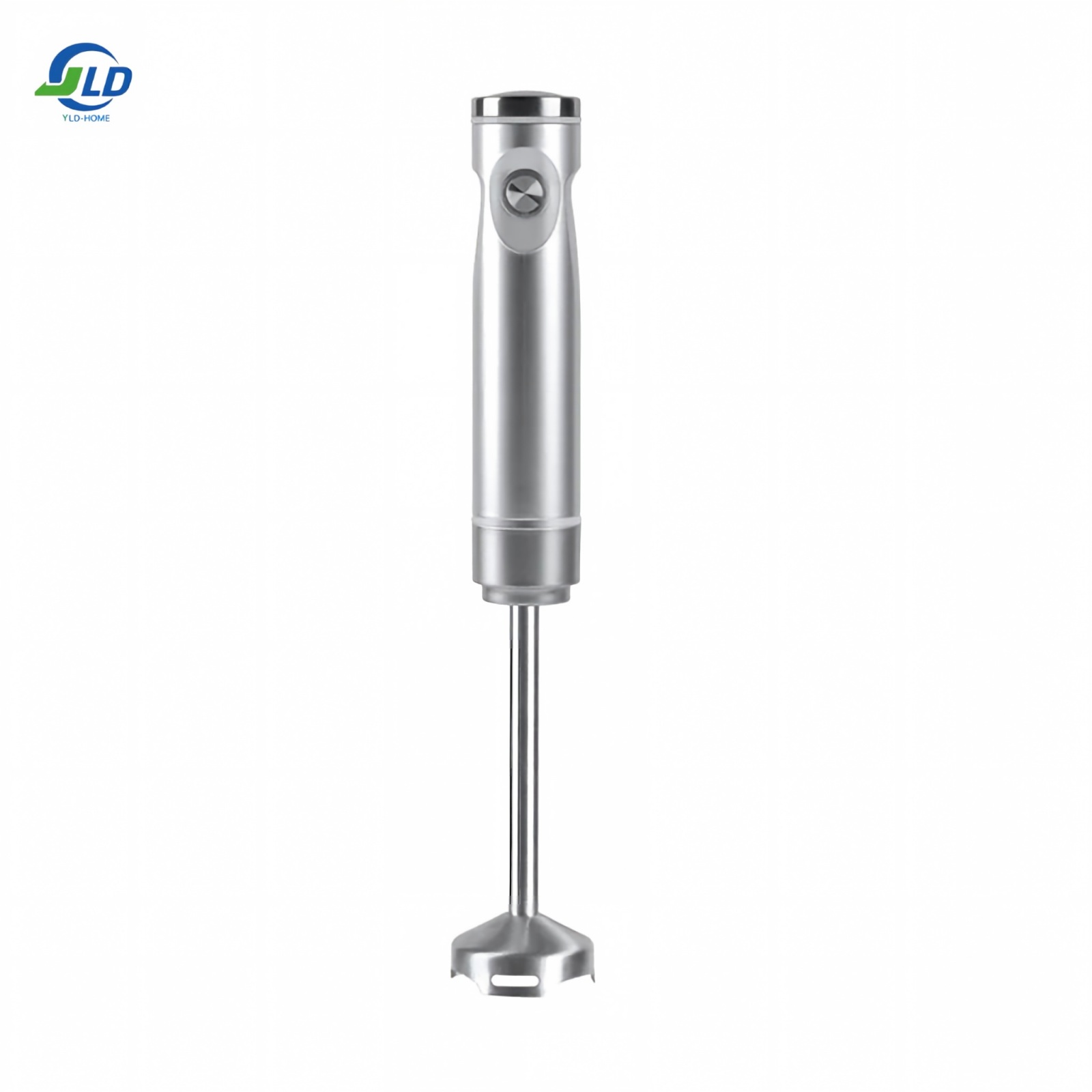
How Mini Hand Blender OEM USA Private Label Works
Private label is the fastest route to margin in this category, because the shelf price is set by the brand, not by the commodity. A mini hand blender OEM USA private label program usually works like this: you own the brand and the packaging design, the factory handles engineering, tooling, certification, and production. You register the model with UL or ETL under your brand, carry your own liability insurance, and control distribution.
The factory should give you more than assembly. Look for a supplier that will do color matching to your Pantone, print your logo on the motor housing, design retail packaging that meets your retailer’s shelf requirements, and keep your tooling in a dedicated mold bank so no other brand can copy the exact shape. We’ve done this for US brands that started with one mini hand blender SKU and grew to a full compact appliance line within two years.
Two paperwork items matter more than people expect. First, make sure your contract names the factory as the manufacturer for customs purposes so your entry documents are clean. Second, agree in writing who owns the molds after the first run, and what the buyout price is. A distributor in Los Angeles lost his tooling once because the mold ownership clause was a single vague sentence. Don’t let that be you.
UL, ETL, FCC, and FDA Compliance for Mini Hand Blender Imports
A mini hand blender sold in the US needs more than a CE mark from the factory. For retail channels, you’ll want a nationally recognized testing laboratory mark, usually UL or ETL, on the cord and the motor housing. Online marketplaces increasingly ask for proof of a safety certification file, and big-box retailers will walk away from a meeting if you don’t have one. Budget for certification in the $3,000–$8,000 range depending on the lab and how many variants you submit, and expect 4–8 weeks of testing time.
FCC applies because the unit has an electric motor and, in some models, a USB charger. The certification requirement here is straightforward but easy to overlook. FDA food-contact rules matter for the shaft, blade, and any cup that touches food. Your supplier should provide FDA-grade material declarations for the stainless steel shaft and food-safe plastics, and you should keep those documents in your compliance file. YLD Home’s appliance certification page lists the full document set for each model we ship.
One thing we tell every US buyer: get the compliance testing done on the exact production sample, not the pre-production sample. We’ve seen factories pass certification on a hand-built sample and then ship a unit with a cheaper capacitor that changes the electrical signature. Ask your supplier to freeze the bill of materials before testing starts.
120V, Plugs, and Packaging Rules for the US Market
US market appliances run on 120V/60Hz, and a mini hand blender built for the EU at 230V won’t work here no matter how good the price is. Confirm the motor winding, the switch rating, and the charger input are all 120V versions. We keep separate 120V and 230V lines in the factory for exactly this reason, and the only difference you should ever see is the label and the plug.
Speaking of plugs, use the US two-prong plug for basic models. If you add a ground, the cord cost goes up and the retail packaging gets more complicated. Most mini hand blenders are double-insulated, so two-prong is standard and accepted.
Packaging also has US-specific rules: English-only instructions, a proper UPC/EAN barcode, California Prop 65 labeling if the product or packaging contains listed substances, and clear wattage and capacity claims on the box. Big retailers enforce shelf-ready packaging standards, so confirm carton dimensions and display-friendly design before production, not after.
Which Retail Channels Move Mini Hand Blenders Fastest
The mini hand blender sells differently by channel, and you should plan inventory channel by channel. Amazon and Walmart marketplace buyers want lightweight, well-reviewed units with simple operation, because returns spike when a product is confusing. Big-box stores want retail packaging that hangs or stands on a peg, plus a case pack that fits their warehouse slots. Specialty kitchen retailers and catalog brands want a story: materials, warranty, and a design that looks more expensive than it is.
Foodservice is a quiet channel most importers ignore. Hotel breakfast bars, cafes, and juice shops buy mini hand blenders for single-serve smoothies and salad dressings. A supplier in Florida told us his foodservice mini hand blender orders spike every spring when juice bars reopen after winter. If you sell through a US distributor, that channel can absorb steady volume without the marketing cost of a consumer launch. Buyers scaling up to bigger batches should read how to choose a commercial immersion blender before they commit, because the specs for high-volume kitchens are different.
Gift and novelty buyers matter too, especially between October and December. A mini hand blender in a gift box with a travel cup sells as a stocking stuffer, and retailers reorder aggressively when it moves. Plan your container schedule so holiday inventory lands by September, not November.
We also see steady pull from meal-kit and nutrition brands that bundle a mini hand blender with their subscription boxes. One client in California adds a mini hand blender to every first box for new subscribers, and the churn on that cohort dropped measurably. If you sell to that kind of buyer, ask for their bundle timeline early in the year, because they plan SKUs a full season ahead.
Inside the Factory: How YLD Home Builds a Mini Hand Blender
We’ve been building compact blenders in Shenzhen since 2012, and the mini hand blender line is the one we test hardest, because small motors overheat faster than big ones. As a small kitchen appliance manufacturer in China, we’ve learned that compact products need stricter process control, not looser specs. Every unit gets a no-load run test and a loaded test with a standard mix before it leaves the line — our product quality control video shows how those tests run on the line. When we tested a batch of 1,000 mini hand blender units for a US customer last year, we caught a bad batch of bearings before shipping, which is exactly why we don’t skip burn-in.
Our compact line shares parts across models: the same 200-watt motor block appears in the standard mini and the USB-rechargeable version, and the same stainless shaft fits three different housings. That part commonality is what lets us quote mini hand blender OEM USA private label programs at MOQs small enough for a first-time importer. It also means replacement parts stay in stock for years, which your US customer service team will thank us for.
Quality checks cover the things that generate returns: shaft wobble, button feel, noise level, and whether the base seals correctly after washing. We measure noise in decibels during the run test because a loud mini hand blender gets returned even when it works fine. Small details like these are why we ask US buyers for their return reason codes every quarter; the data tells us exactly what to fix next.
A word on motors, since that’s the part that fails first. A 150-watt motor in a cheap mini hand blender will bog down on frozen fruit and trip its thermal fuse within months of daily use. We size ours so there’s headroom: the 200-watt motor in our standard mini keeps turning at speed even when the blade meets ice, and the fuse only protects against real abuse, not normal operation. When you compare quotes from different factories, ask what happens to the motor under a five-minute continuous load. The answer tells you more than any spec sheet.
Shipping, Landed Cost, and Inventory Planning
Most mini hand blender wholesale shipments leave Shenzhen or Yantian port and land in Los Angeles, Long Beach, or Oakland after 15–25 days at sea. From there, rail or truck moves goods to Chicago, Dallas, or New York in another 5–10 days. You’ll pay ocean freight, US customs duties, drayage, and warehouse fees, so use the Harmonized Tariff Schedule to confirm the right HTS code for your unit before you book freight. Blender duties are modest, but the code determines your entry, and getting it wrong costs you time at the border.
Plan for at least 60–75 days from order confirmation to your US warehouse for a first order: 15–20 days for materials and production, 20–30 days for sea freight, and a week for customs and drayage. Reorders run faster, usually 45–55 days, because your tooling and packaging are already set. We advise importers to hold 6–8 weeks of safety stock, because a factory delay or a port strike doesn’t care about your promotion calendar.
Cash flow math matters too. With a 30% deposit and 70% balance before shipment, a $50,000 container of mini hand blenders ties up about $15,000 for the production window. Most US importers fund this comfortably and then use the retail sell-through to finance the next order.
A Hand Blender Wholesale Supplier Checklist for Mini Sourcing
Before you sign anything, run every candidate supplier through the same checklist. Confirm they build for 120V and hold current UL/ETL certification on a comparable model. Ask for FDA-grade material declarations on food-contact parts. Verify the factory does its own run testing and can share test reports from the last three shipments. Check mold ownership terms in the contract. Confirm the MOQ for stock colorways, private label packaging, and full custom design separately, because they’re three different numbers.
Then do the softer checks. Ask for video of the production line, not just photos — you can see ours on our YouTube channel. Request a pre-production sample and test it for a week in a real kitchen, as your customers will. Call the factory at a time that matches Shenzhen business hours and see if the sales engineer can answer technical questions without a script. A Chicago distributor switched suppliers after a factory engineer walked him through blade geometry on a video call; that level of service prevents problems later.
One last tip: build a relationship with one solid factory instead of splitting your mini hand blender wholesale volume across three cheap ones. Consistent quality, honest lead times, and a supplier who tells you about a problem before you find it are worth more than a few cents per unit. That’s the standard at YLD Home, and why most US accounts stay with their first supplier for years. If you want to see how far a compact line can go, our 2-in-1 hand blender shows the same motor platform with a whisk attachment for dressings and egg whites.
Frequently Asked Questions
Q1: What is a mini hand blender used for, and who buys it wholesale?
A mini hand blender is a compact immersion blender sized for single-serve and small-batch jobs: smoothies in a travel cup, salad dressings, baby food, soups in a mug, and whipped cream in a bowl. US buyers include Amazon sellers, big-box retail importers, kitchen specialty stores, foodservice operators, and private label brands building their own compact appliance line.
Q2: What’s the minimum order quantity for a mini hand blender?
Stock colorway MOQs usually start around 1,000 units at Chinese factories, while a custom mini hand blender with your own color and logo typically requires 1,000 units. At YLD Home we can start private label programs at lower volumes because our compact line shares motors and tooling across models.
Q3: How long does a mini hand blender order take from China to the US?
Plan for 60–75 days on a first order: about 15–20 days of production, 20–30 days of sea freight to Los Angeles or Long Beach, and a week for customs and drayage. Reorders usually run 45–55 days once tooling and packaging are locked.
Q4: Does a mini hand blender need UL certification for US retail?
Yes. UL or ETL certification is expected by big-box retailers and increasingly required by online marketplaces. Budget $3,000–$8,000 for testing and plan 4–8 weeks, and make sure certification is run on the exact production sample with a frozen bill of materials.
Q5: Can I sell a mini hand blender under my own brand?
That’s the standard private label path. You own the brand, packaging, and distribution; the factory handles engineering, tooling, certification, and production. Agree on mold ownership and buyout terms in writing before the first run.
Q6: What’s the typical wholesale price for a mini hand blender?
Ex-works pricing at container volumes usually runs $6–$10 for a basic 200-watt model and $11–$15 for one with a travel cup, rechargeable battery, or aluminum finish. Retail prices in the US typically land between $29 and $59.
Q7: What certifications does a mini hand blender need besides UL?
FCC applies because the unit has a motor and often a USB charger, and FDA food-contact rules cover the shaft, blade, and cups. Keep the certificates and material declarations in your compliance file, and check California Prop 65 labeling requirements for packaging.
Q8: How do I find a reliable mini hand blender supplier in the USA market?
Most US importers source directly from Chinese manufacturers and manage quality through samples, audits, and test reports. Look for a factory that builds 120V units, holds current certifications, shares real test data, and lets you video-call the production line. A checklist like the one in this guide will catch most problems before you commit.