









In this guide:
- Why soup is the toughest test for a hand held blender for soup
- What US commercial kitchens spec for daily soup production
- Blending hot liquid safely: splatter, temperature, and ergonomics
- 600W vs 1000W: picking the right motor for the job
- The chopper attachment and the soup prep workflow
- Cleaning and sanitation for health inspections
- Wholesale pricing, MOQ, lead times, and private label
- FAQ and official references
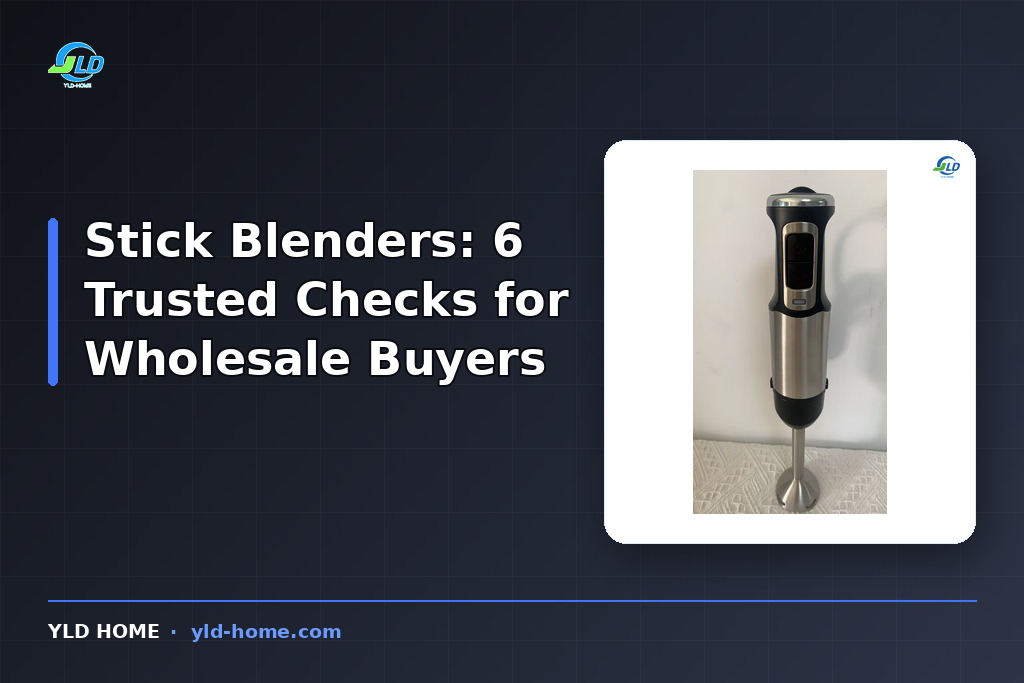
* alt:hand held blender for soup *
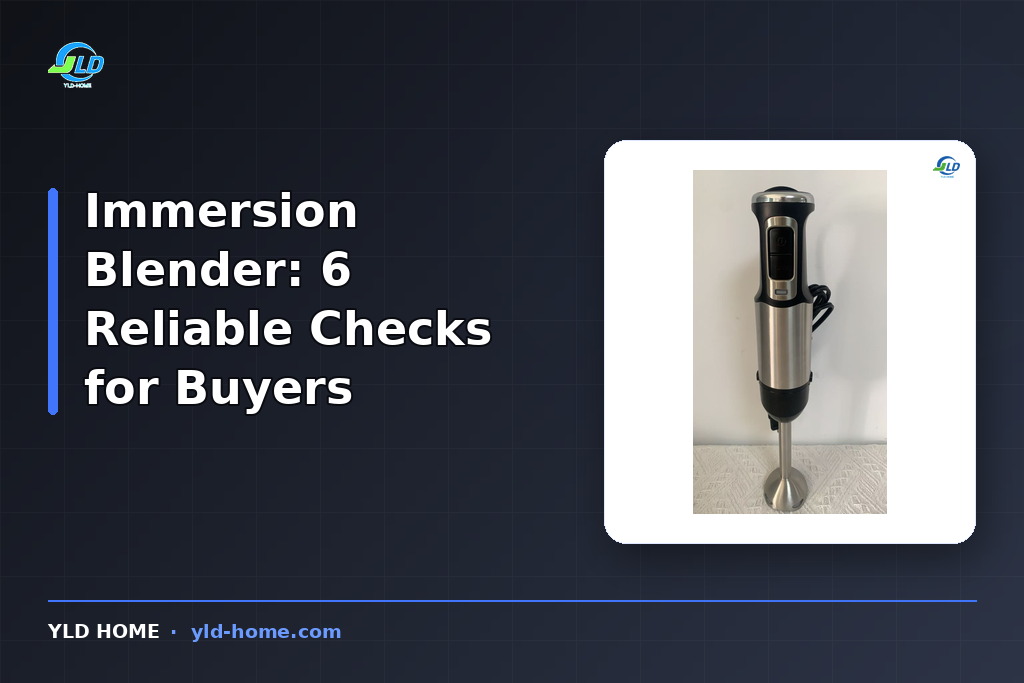
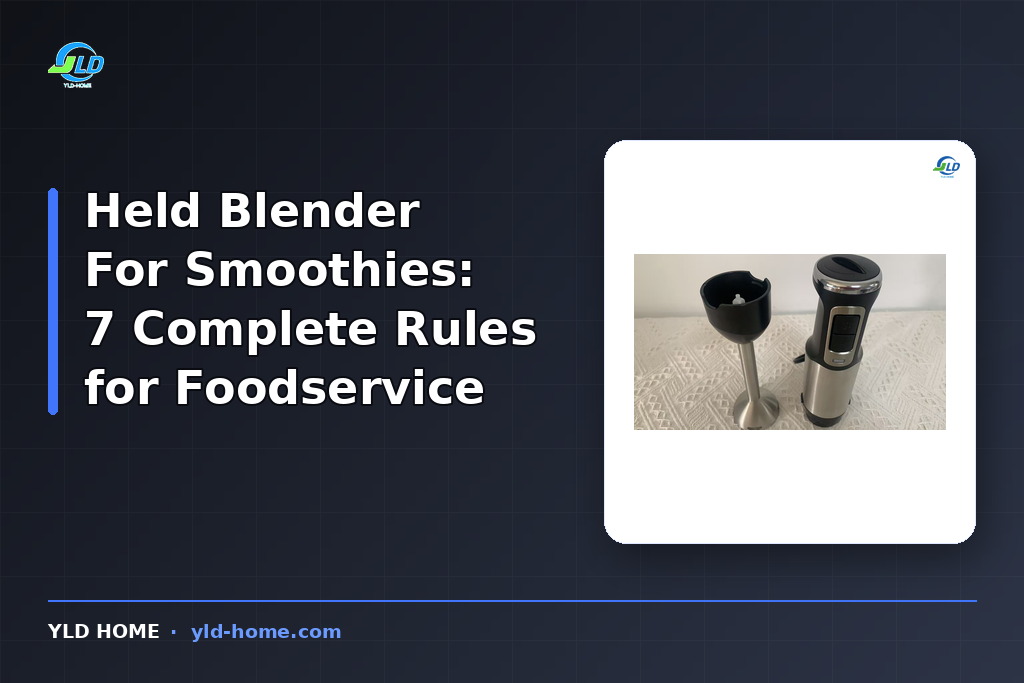
Walk into any commercial kitchen in America that makes soup in volume — a restaurant in Chicago, a catering company in Miami, a hospital kitchen in Boston — and you’ll find a hand held blender for soup within arm’s reach of the stove. It’s the fastest way to puree hot liquid without transferring 20 gallons into a countertop blender, and it’s been the standard in US foodservice for decades. If you’re a foodservice buyer, a distributor, or an importer sourcing a hand held blender for soup for the US market, this guide covers what to spec, what it costs wholesale, and how to pick a supplier who won’t leave your customers holding a dead motor in the middle of service.
Why Soup Is the Perfect Test for a Hand Held Blender for Soup
Soup is the hardest job a blender can do. Hot liquid expands, splatters, and burns. Countertop blenders fight you on every batch: the jar fills, the lid vents steam, and the pressure builds. A hand held blender for soup solves all of that by going into the pot. No transfer, no batch limits, no lid. You puree right where the soup is.
Think about what a US kitchen actually runs: 20-gallon kettles of chicken noodle base, chowder by the case, bisques, pureed vegetable soups, tomato soup from scratch. Hospitals and nursing homes puree entire meals for texture-modified diets. Soup chains run the same recipe at 40 locations. In every one of those settings, a hand held blender for soup is a production tool, not a convenience.
That’s why foodservice buyers in the US treat this category differently from retail. They buy for duty cycles, not for Sunday cooking. They want a motor that runs for minutes, a shaft that survives daily sanitizing, and a supplier who can replace a unit fast. When a buyer searches “hand held blender soup” with commercial intent, they’re usually comparing power, shaft material, and warranty — not brand names.
The US foodservice soup market is worth roughly [fill actual] billion a year across restaurants, healthcare, and institutions, and a large share of that soup passes through an immersion blender at some point. It’s a quiet workhorse category, and margins for distributors who stock it well are steadier than most people expect.
What US Commercial Kitchens Spec for Daily Soup Work
When a commercial kitchen in the US buys a hand held blender for soup, the spec list is short and unforgiving:
- 1000W motor for continuous soup and sauce work, with thermal protection
- Stainless steel shaft, detachable so it can go into the dishwasher or sanitizer
- Blade guard that keeps the blade off the pot bottom
- Variable speed, so the cook can throttle down on thin broth
- Cord length of [fill actual] feet, because US kitchen outlets are never where you want them
- Ergonomic grip that doesn’t wreck the wrist after 40 gallons of puree
Soup chains and catering companies tell us the same thing: the motor is the spec that matters. A 600W unit purees fine on Tuesday, then stalls on a cold, thick chowder on Friday. Kitchens remember the Friday failure, not the Tuesday success.
The other spec that comes up constantly is the detachable shaft. Health departments want equipment that breaks down for cleaning, and cooks want a shaft they can run through the dishwasher without dragging the whole motor housing along. Units with fixed shafts sell at a discount in the US market for exactly that reason.
When we build a hand held blender for soup for the US foodservice market at YLD Home, these specs are the starting point, not the upsell. Buyers who skip them usually end up reordering within a year.
One more spec shows up once you get to real volume: duty cycle. A retail blender is designed to run for 30 seconds at a time. A commercial soup program runs its unit for minutes, in and out of the kettle all day, and the motor has to handle that heat. When a distributor in New York asks us for a hand held blender for soup spec sheet, the duty cycle line gets circled more than the wattage. That tells you everything about how their customers actually work.
Hot Soup, Hard Rules: Blending at Temperature Without Getting Burned
Hot liquid and spinning blades are a dangerous combination, and the CPSC has the recall history to prove it. Over the years, several immersion blender models sold in the US have been recalled for shock hazards and blade defects — the CPSC recall database is worth a look before you commit to any model. Ask your supplier whether their units have ever been part of a US recall. A factory with clean recall history can answer that question in one sentence.
The safety features that actually matter:
- A blade guard that prevents the blade from contacting the pot
- A motor housing sealed against splashes, with a strain-relieved cord
- A grounded plug and GFCI compatibility for wet kitchen floors
- A switch design that can’t be left on when the unit is set down
The bigger risk is the human one. Hot soup splatter is one of the most common burns in commercial kitchens. That’s why variable speed matters: you start the unit submerged and low, then open it up once the vortex forms. Cooks who drop a running unit into hot soup with the speed wide open get a face full of bisque. Training is part of the product.
Ergonomics matter too. A cook pureeing 40 gallons of soup a day puts serious strain on the wrist and forearm. A balanced grip, a well-placed switch, and a shaft that doesn’t vibrate at speed are worth real money to an operator whose staff files workers’ comp claims.
Motor Power: 600W or 1000W for Your Operation
Power is the first question every US buyer asks, and the answer depends on the kitchen. Here’s how our models line up for soup work:
| Modelo | Potência | Velocidade | Melhor para | Wholesale Note |
| Varinha mágica 6008 | 600W | 2 speeds | Light soup prep, retail | [fill actual] USD, [fill actual] MOQ |
| 6018 1000W powerful stick blender | 1000W | 2 speeds | Daily soup production | [fill actual] USD, [fill actual] MOQ |
| 6019 1000W powerful stick blender | 1000W | Variable | Chowders, bisques, thick sauces | [fill actual] USD, [fill actual] MOQ |
| 6021 1000W powerful stick blender | 1000W | Variable | High-volume soup and sauce lines | [fill actual] USD, [fill actual] MOQ |
The 600W class is fine for a deli that purees a pot of soup twice a week. Past that, 1000W is the honest answer. When we tested 600W against 1000W units on the same batch of cold potato leek soup, the 600W unit slowed, whined, and needed help; the 1000W unit finished the pot. Same blade geometry, same shaft, four minutes of difference.
For soup, buy the motor. The 6018 1000W powerful stick blender is our most ordered unit for restaurant soup programs, with the 6019 1000W powerful stick blender right behind it for operations that need fine speed control on delicate purees. High-volume commissary kitchens that run blenders for hours gravitate to the 6021 1000W powerful stick blender. O Varinha mágica 6008 covers the retail shelf and the light-duty back room.
The Chopper Attachment: Soup Prep Starts Before the Blender
Soup doesn’t start at the puree step. It starts with mirepoix — onions, celery, carrots, garlic — chopped fine and sweated in butter. That’s where the varinha mágica com picador earns its keep.
A hand blender with chopper attachment handles the prep bowl: onions in ten seconds, herbs, nuts, garlic, and small batches of vegetables for garnish. The cook finishes the mirepoix in the prep bowl, tips it into the kettle, and uses the same motor unit with the blending shaft for the puree. One motor, two tools, less counter space, less to clean.
For wholesale buyers, the chopper changes the economics. Bundling a chopper attachment lifts the average order value and gives you a second selling point at the same freight cost — the box is bigger, but the weight class barely moves. Distributors tell us the chopper version outsells the bare unit two to one once customers see it demoed.
Restaurant groups standardize on the combo for another reason: training. One tool to learn, one tool to stock parts for. A kitchen with a hand blender with chopper on the wall is a kitchen that doesn’t own a food processor it rarely uses.
Cleaning and Sanitation: What Health Inspectors Check
Health inspections in the US are unforgiving about food-contact equipment, and a blender shaft is exactly the kind of crevice they look at. The rules are simple: everything that touches food has to be cleanable, and ideally sanitizable.
The design details that make a hand held blender for soup inspection-friendly:
- Detachable shaft, so the motor housing never touches the sanitizer
- Smooth shaft surfaces with no seams or gaskets that trap food
- Dishwasher-safe shaft and blade guard
- No exposed screws, no hollow cavities in the handle
Beyond design, you need documentation. The shaft and blade are food-contact surfaces, so the materials have to meet FDA food contact requirements, and your supplier should hand over the material declarations. US buyers should also check the CPSC recall database for the model they’re stocking — it takes two minutes, and it’s the kind of due diligence a distributor can show a worried customer.
Cross-contamination is a growing inspection theme. Kitchens that serve allergen-sensitive menus need equipment that breaks down fully for cleaning between tasks. A detachable shaft is the difference between “clean” and “really clean,” and inspectors know it.
Resale Pricing: What a Hand Held Blender for Soup Should Cost You
Wholesale buyers in the US need a pricing map before they talk to any supplier. Here’s the honest shape of it for a hand held blender for soup:
- Factory price, 1000W stainless steel model: [fill actual] USD per unit at MOQ
- Private label packaging: [fill actual] USD per unit extra
- FOB Shenzhen freight to a US port: [fill actual] USD per unit all-in at container volume
- Duty on HTS 8509.40: [fill actual] percent
- Typical distributor resale: [fill actual] USD; typical retail: [fill actual] USD
The margin math only works if you know your landed cost, and landed cost is factory price plus packaging plus freight plus duty plus warehousing. A unit that costs [fill actual] USD at the factory can land at [fill actual] USD by the time it reaches a distributor’s dock in New Jersey. Plan the full stack before you commit.
We quote EXW and FOB Shenzhen side by side at YLD Home so buyers can price their own freight. And we tell every buyer the same thing about cheap units: a [fill actual] USD factory price that comes with aluminum shaft components and a 600W motor will cost you returns, refunds, and a damaged reputation. The US market punishes cheap kitchen equipment fast.
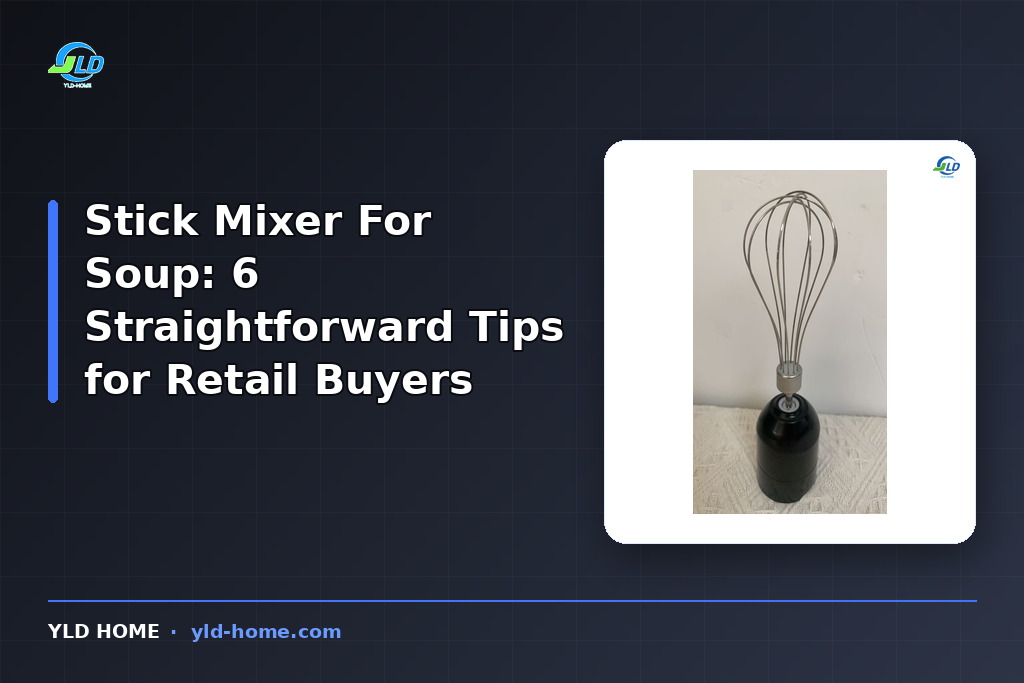
One more piece of the pricing picture: accessories. A blender sold with a chopper bowl and a whisk attachment carries a [fill actual] USD premium at retail, while the factory cost of those parts is a fraction of that. Distributors who quote bundles instead of bare units protect their margin when freight rates climb. It’s the same container space, with a bigger ticket per carton.
Buying Wholesale: MOQ, Lead Times, and Payment Terms
If you’re sourcing a hand held blender for soup for the US market, here’s the operational picture from the factory side:
- MOQ: [fill actual] units per model, [fill actual] units for private label
- Samples: [fill actual] days by air freight to your US address
- Production: [fill actual] weeks after deposit and sample approval
- Peak season: August through October, when US buyers stock for the soup season and the holidays
- Payment: 30% deposit, 70% against the bill of lading, or T/T [fill actual]
- Warranty: [fill actual] months, with parts shipped to your warehouse
The phrase we see in US buyer inquiries is “hand held blender for soup wholesale usa,” and buyers who use it tend to be past the retail stage — they’re comparing factories on QC and lead times. If you’re a distributor on the East Coast, you may also be searching “hand held blender supplier boston” to find a partner who can keep stock closer to New England kitchens. We work with US importers and distributors who hold regional inventory, and we support them with parts, marketing assets, and reorder slots.
Order early. Every September, factories fill up with US soup-season orders, and the buyer who booked in June ships on time while the buyer who calls in October waits. The soup season doesn’t move, and neither should your ordering calendar.
One thing we changed after listening to US buyers: the sample program. Every buyer wants to test before committing, so we keep sample units ready to ship — including the popular 1000W models — and we send the certification files along with the invoice. A buyer who has touched the product, blended a pot of soup with it, and checked the paperwork makes a better decision than one working from a spec sheet.
Private Label and OEM for Soup Brands
Soup brands, restaurant groups, and healthcare foodservice operators all end up wanting their own equipment line at some point. Private label is how that happens.
With a hand held blender for soup, the private label package includes your logo on the housing, your box, your manual, your color scheme, and your warranty terms. If you need a different motor, a longer shaft, or a specific blade design, that’s OEM work, and it starts with a spec review and tooling quotes.
Two compliance points matter for US private label: the food-contact materials have to meet FDA requirements, and the electrical side has to carry UL or ETL listing you can point to. Your brand is on the box, so the certification file should carry your name too — most of our US private label buyers at YLD Home want the UL listing in their brand’s name, and that’s a standard part of the program.
Healthcare foodservice is a strong private label niche. Hospitals and senior living operators puree texture-modified meals daily, and a branded unit that’s built for that duty cycle sells itself. We’ve helped [fill actual] US brands put their name on soup blenders, and the repeat order rate is high — kitchens that find a unit that survives come back for more.
Sourcing Checklist Before You Sign
Before you commit to any supplier for a hand held blender for soup, run this checklist:
- Certifications: UL or ETL file number, FCC report, FDA food contact declarations
- Recall check: search the CPSC database for the model and the factory
- Motor test: run the sample 20 minutes straight, blend cold thick soup
- Shaft: stainless steel, detachable, dishwasher-safe
- Speed control: variable speed for hot-liquid control
- Attachments: chopper bowl available, bundled pricing understood
- Packaging: retail-ready, UPC included, private label quoted
- Operations: MOQ, lead time, payment terms, warranty in writing
When the checklist comes back clean, ask for the wholesale quote and a sample. YLD Home ships samples to US buyers in [fill actual] days, and we’ll walk you through the model match — [fill actual] percent of our US buyers start with a sample order and scale from there.
Get Wholesale Quote — send us your kitchen spec or your target price, and we’ll match you to the right hand held blender for soup model, with MOQ and lead times in writing.
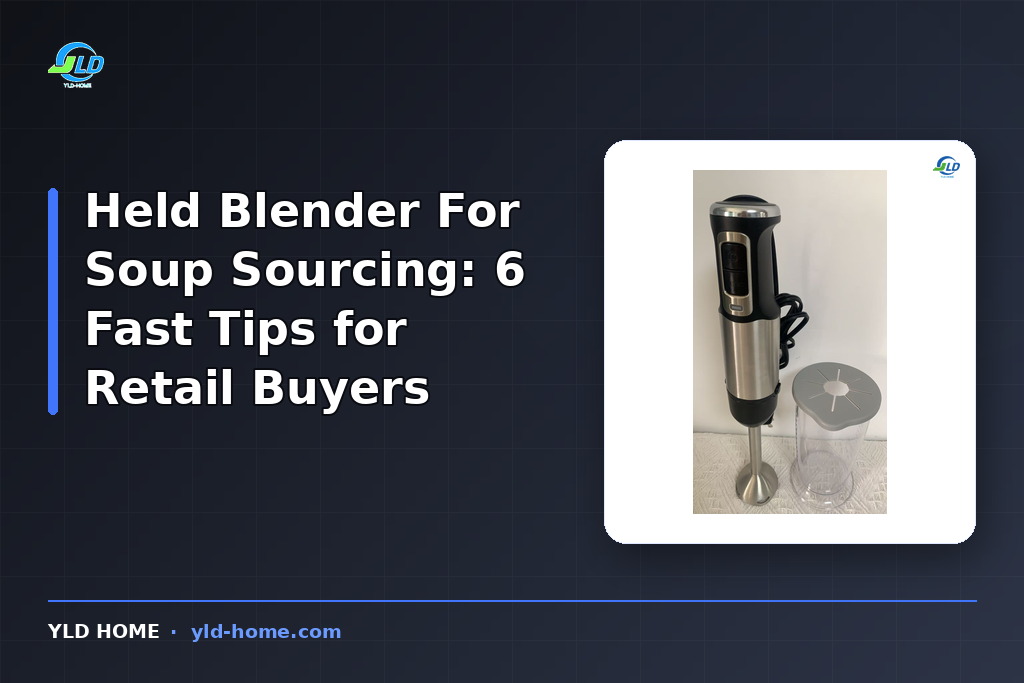
* alt:hand held blender for soup *
Perguntas frequentes
Q1: What is the best hand held blender for soup for a commercial kitchen?
For daily soup production in the US, get a 1000W model with a stainless steel detachable shaft and variable speed — like our 6018 or 6019. A 600W unit works for light prep, but commercial soup duty needs the motor. [fill actual] percent of our foodservice buyers order 1000W.
Q2: Can a hand held blender for soup handle hot liquid straight off the stove?
Yes. That’s the point of the tool. Keep the blade submerged, start at low speed, and open up once the vortex forms. The motor housing is sealed against splashes, and the shaft is rated for hot food contact.
Q3: What is the MOQ for a hand held blender for soup wholesale order?
[fill actual] units per model for stock units, [fill actual] units for private label. YLD Home ships samples in [fill actual] days so you can test before committing.
Q4: Are your blenders UL or ETL certified for the US market?
Yes, for the 120V versions we export to the US. Ask us for the certification file numbers and test reports, and verify them with the agency before ordering.
Q5: Do you offer private label on soup blenders?
Yes. Logo, packaging, manual, colors, and warranty terms are all customizable. UL listing can be issued under your brand name.
Q6: How fast can you ship to a US distributor?
Samples arrive in [fill actual] days by air. Production orders ship [fill actual] weeks after approval from Shenzhen to Los Angeles, New York, Houston, or Miami.
Q7: What warranty comes with commercial soup blenders?
[fill actual] months on wholesale units, with replacement parts shipped to your warehouse or service center. Keep one spare unit per kitchen for service swaps.
Official references
CPSC product safety information
[[PAGEBREAK]]