









In this guide
- What “hand blender for sale” means in wholesale
- Why US importers buy from Shenzhen
- Wholesale, OEM and private label
- 120V and US compliance
- The YLD Home range
- MOQ, lead times and shipping
- Working with a Miami vendor
- Case study: a Houston distributor
When a US consumer types “hand blender for sale” into a search bar, they want one unit and a checkout button. When an importer, distributor, or retail buyer searches the same phrase, they mean something bigger: a product line, a factory relationship, and a container. This guide is for the second group. We’ll walk through the wholesale options for a hand blender for sale in the United States — 120V configuration, UL and FDA requirements, MOQ realities, lead times to US ports, and how to separate a real manufacturer from a trading company before you wire a deposit.
What “Hand Blender for Sale” Means in Wholesale
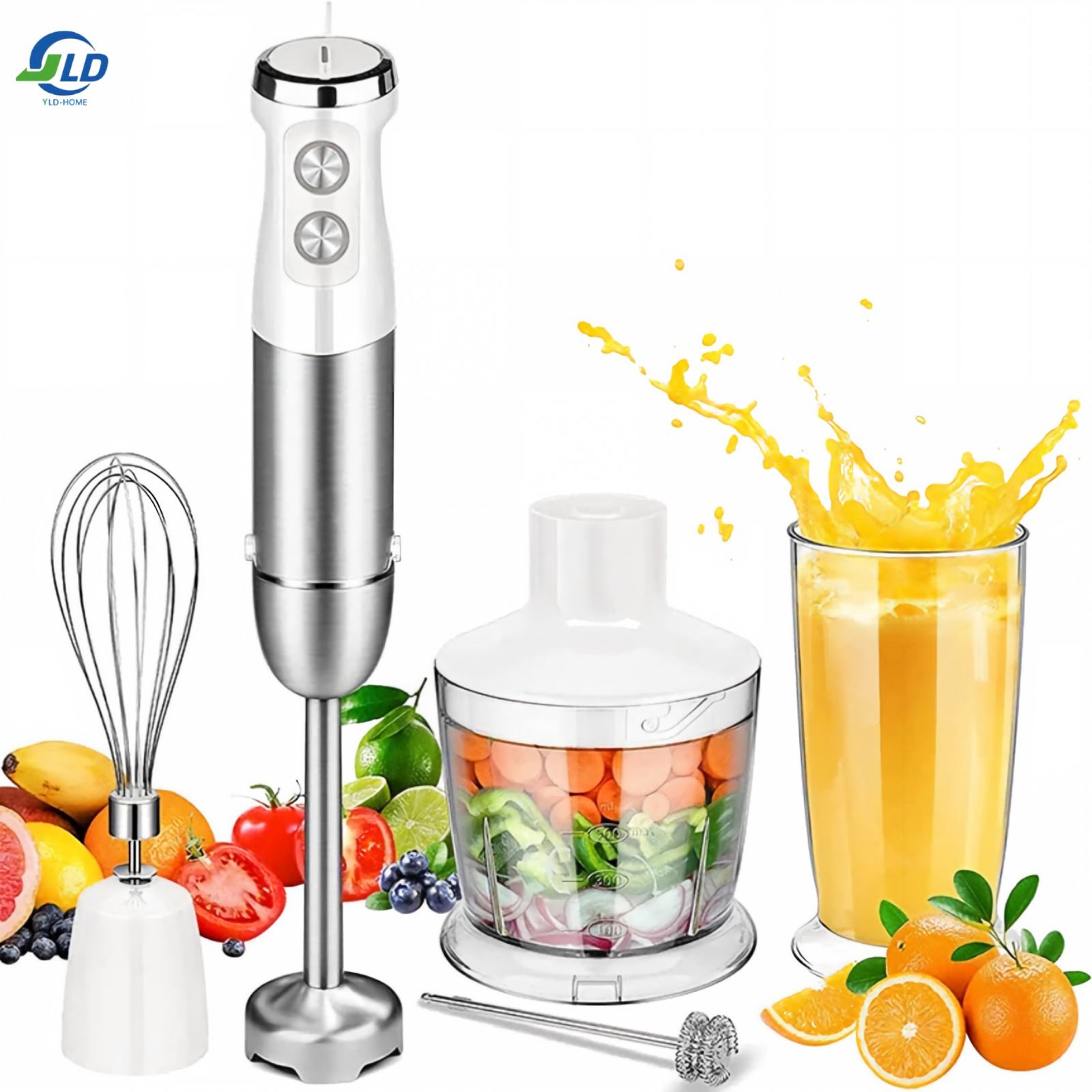
In wholesale, a hand blender for sale is not a single SKU. It is a range: household units at 300-500W, commercial stick blenders at 600-1000W, and multifunction sets with whisk, chopper and frother attachments, each priced by volume tier and each configured for the US market. The buyers differ too. Importers bring containers through Los Angeles, New York or Houston. Distributors serve restaurant supply dealers and grocery chains. E-commerce operators need 500 to 2,000 units a month to feed their listings. Foodservice groups buy through dealer networks with warranty expectations attached.
We supply all of these channels, and the first question is always the same: what is your channel, and what volume do you actually move? A hand blender for sale in a distributor’s catalog has to survive restaurant use. The same model in an online listing has to survive a return rate. That split drives every decision downstream, from motor power to packaging design to the accessory set in the box.
The second thing wholesale buyers learn is that unit price is the last number that matters. Two quotes for a hand blender for sale can look identical on paper and produce very different results in the field. The difference lives in the motor brand, the blade steel, the shaft seal, and the QC that catches failures before they ship. We will come back to that in the quality control section.
The volume conversation changes the quote too. A hand blender for sale at 500 units a month prices differently than the same model at 5,000 units, and the tier breaks are worth knowing before you negotiate. Most factories publish three tiers: sample pricing, small-lot pricing, and container pricing. The gap between tiers is where distributors earn their margin, which is why the first question to a factory should be about the tier structure, not just the unit price.
Why US Importers Buy Hand Blenders From Shenzhen
The economics are straightforward. A 500W household hand blender that retails in the US for $29 to $49 can be bought factory-direct in Shenzhen for a fraction of that, leaving margin for the importer, the distributor, the dealer and the retailer. That spread is why US buyers have sourced this category from Guangdong for two decades, and why the supply chain there keeps getting deeper. Motors, blades, shafts, housings and packaging are all produced within a short radius of the appliance clusters around Shenzhen, Zhongshan and Dongguan.
Three advantages matter most. Cost structure comes first, obviously. Range comes second: one factory can supply household blenders, commercial immersion blenders, cordless units and 4-in-1 sets, so a single supplier covers a whole assortment without a second vendor. Flexibility comes third: 120V motors, US plugs, UL testing support, English manuals and private label packaging are standard services in Shenzhen, not special requests that cost a premium.
YLD Home has built this category in Shenzhen for years and ships to US importers and distributors on a fixed schedule — you can see the factory floor on our YouTube channel. We know which models move in Houston and which move in Miami, because we watch reorder data, not marketing copy. That feedback loop is the practical reason to work factory-direct: the factory hears what sells and adjusts the line accordingly.
Wholesale Options: OEM, ODM and Private Label Compared
Before you ask for pricing, decide which of four buying models you need. They overlap, but the commitments are different, and the pricing tiers follow the commitment.
| Buying model | What you get | Melhor para |
|---|---|---|
| Comércio grossista | Standard models at tiered factory pricing | Distributors, importers, e-commerce sellers |
| OEM | Your brand on a proven existing model | US brands entering the category |
| ODM | Modified capacity, color, accessories, tooling | Brands with a specific spec |
| Private label | Logo, box, manual and retail packaging | Retail and online startups |
The four wholesale options differ in commitment. Wholesale is the entry point for most US buyers: you test demand with standard models and mixed loads before you invest in anything custom. Our wholesale blenders page walks through how the wholesale program works. OEM — original equipment manufacturing — means the factory builds your branded product on an existing platform while you own the brand and the market; the model is explained in detail in the Wikipedia article on original equipment manufacturers. ODM is the step where you invest in tooling for a genuinely different product, and it only makes sense once volume justifies the tooling cost. Private label sits between wholesale and OEM: your logo on the box, the housing and the manual, without changing the product underneath.
Most of our US clients start wholesale, prove the sell-through, then move to OEM once reorders are predictable. That sequence keeps risk low and data high. One importer in New Jersey ran exactly this path and now sources three models under his own brand, with the factory handling compliance documentation and packaging changes.
ODM and private label timelines follow the same rhythm as wholesale, with two additions: artwork approval and certificate transfer. Artwork usually takes one to two weeks per SKU, and the certificate question should be settled before production starts. For a US buyer, the practical rule is to allow two extra weeks on the first branded order, and to lock the packaging spec in writing so reorders do not re-open the artwork debate.
120V, UL and FDA: What US Compliance Costs
A hand blender for sale in the US has to be built for 120V/60Hz with a US plug, and that is the easy part. The harder part is the certificate stack your retail and foodservice customers will ask to see. Wholesale buyers should request three documents before committing: the UL or ETL test report for the exact model number, an FDA food-contact statement for the blades and shaft, and the FCC documentation if the model is cordless.
| Document | What it proves | What US buyers should check |
|---|---|---|
| UL / ETL report | Electrical safety tested to US standards | Exact model number, current date |
| FDA food-contact statement | Blades and shaft use food-safe materials | Covers the parts that touch food |
| FCC (cordless models) | RF emissions within US limits | Applies to rechargeable units |
| Certificate of origin | Manufacturing origin for customs | Matches your import documentation |
UL and ETL both count as Nationally Recognized Testing Laboratory marks, and most US retailers and restaurant chains accept either. The practical question is whether the report covers the model you are importing, not a similar one. Ask every supplier to list which wholesale options carry a matching report, because a certificate for a sister model will not clear a retail audit. When we audited this with a New York importer last year, the certificate check alone eliminated two shortlisted suppliers whose reports did not match their model numbers.
Budget compliance into the landed cost per unit, and confirm who owns the certificates before you put your brand on the product. In OEM programs, certificate ownership is a negotiation point: some factories hold the reports, some transfer them to the brand. Get it in writing, because your retail buyer will ask for a copy regardless.
The YLD Home Range: Hand Blenders Built for US Wholesale
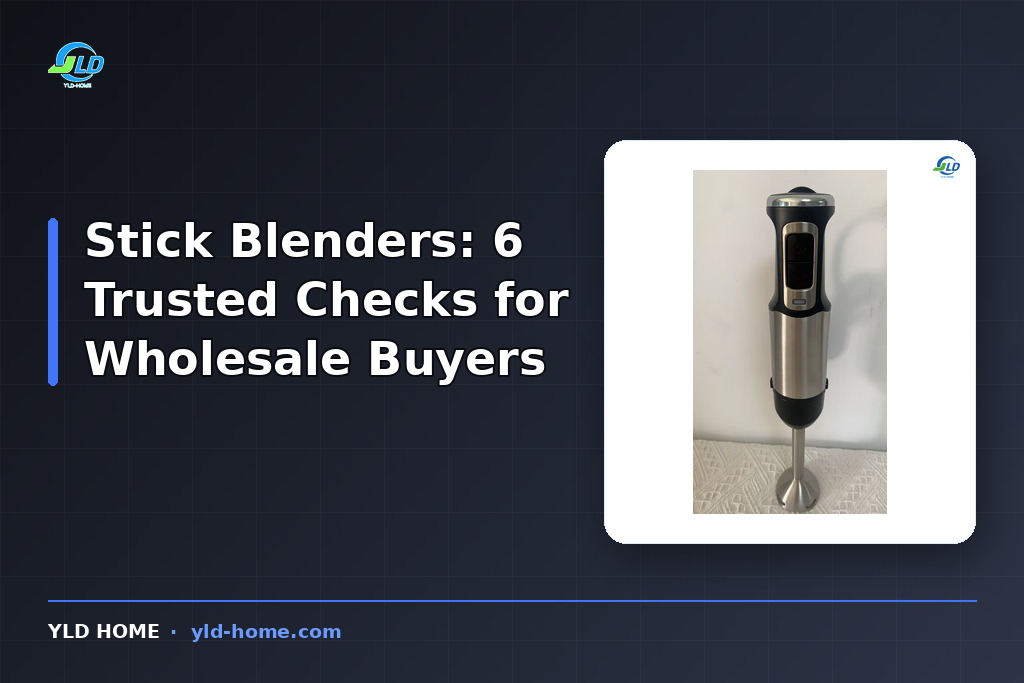
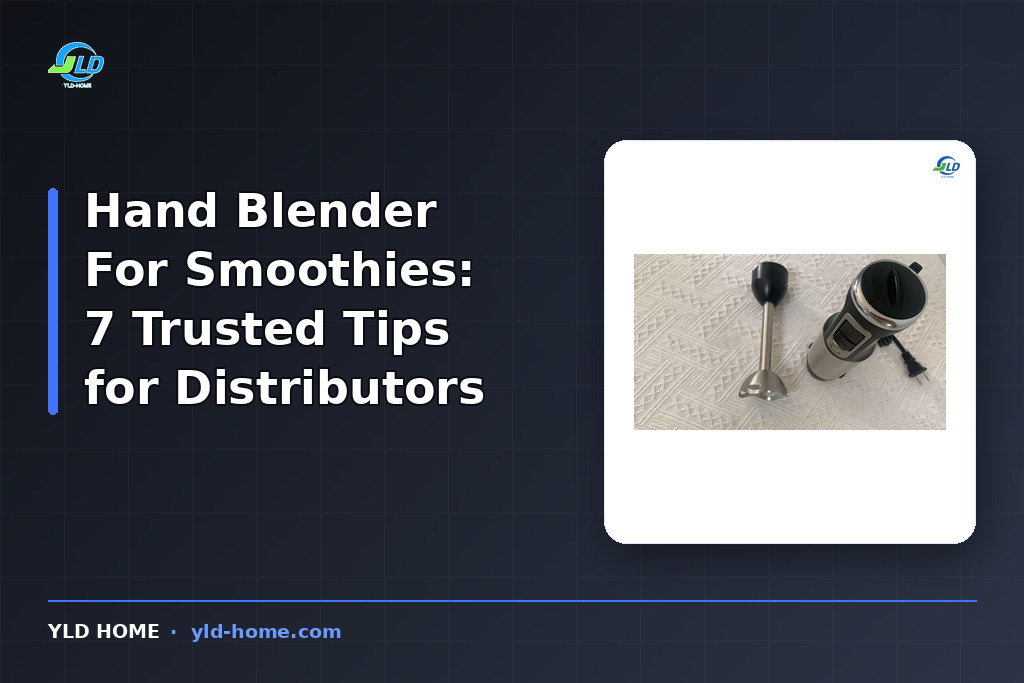
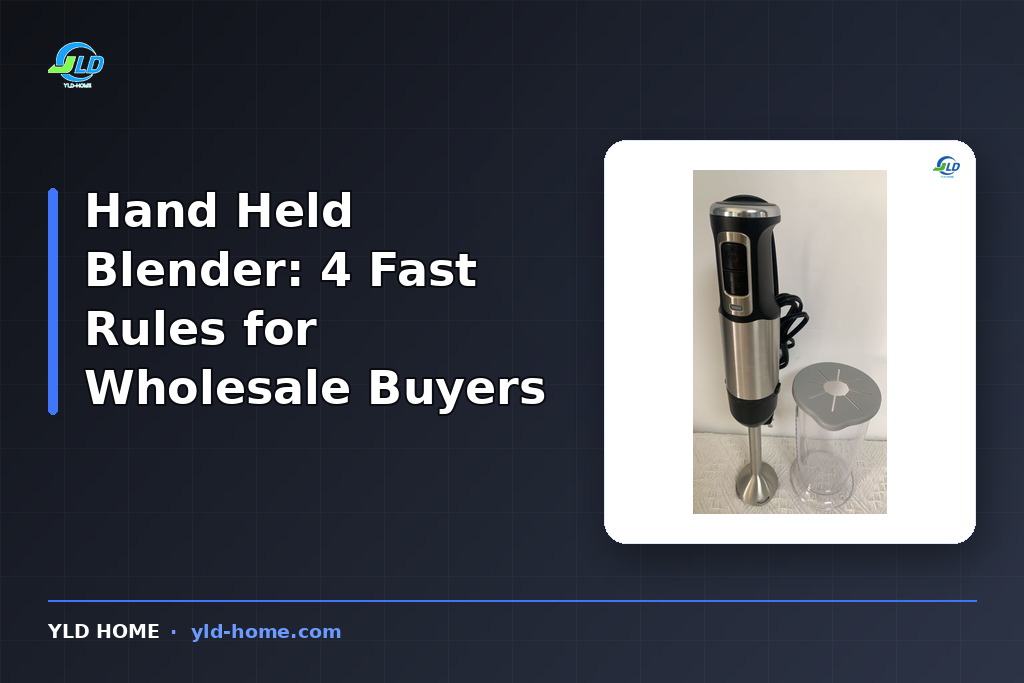
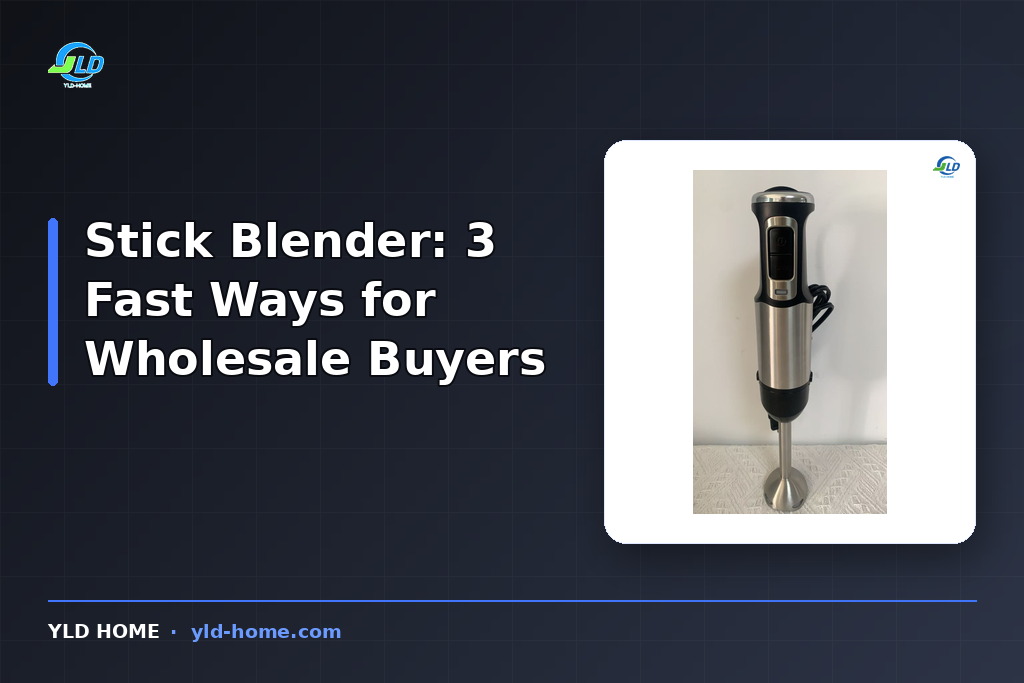
Our catalog is built around the models US buyers actually reorder. The workhorse of the line is the 6006L powerful stick blender, a 600W unit that sits in the sweet spot between household and commercial duty. For entry price points, the 6007 varinha mágica potente covers lighter household demand, and the Varinha mágica 6008 adds torque for thicker mixes like nut butters and frozen drinks. The 4-in-1 hand blender — blender, whisk, chopper and milk frother in one set — is the assortment builder that lifts average order value in retail and online channels. Full specifications, photos and pricing tiers are on the hand blender range page.
| Modelo | Potência | Best channel | Notes |
|---|---|---|---|
| 6007 | 500W | E-commerce, entry retail | Value price point |
| 6006L | 600W | Distributors, general retail | Best-selling all-rounder |
| 6008 | 600W+ | Retail, light foodservice | Higher torque for thick mixes |
| 4-in-1 | 600W | Retail sets, online bundles | Blender + whisk + chopper + frother |
Every model ships in 120V US configuration with UL-ready documentation, English packaging and manuals written for the US market. When a distributor in Houston told us his dealers kept asking for a set they could sell at a $39 retail point, we pushed the 4-in-1, and it outsold the single-function units in the same container. That is the kind of channel feedback that only shows up when you talk to the people who sell the product.
Wholesale Options on MOQ, Lead Times and US Ports
MOQ is the number every US buyer asks first, and the honest answer is that it depends on the model and the buying model. This is where wholesale options diverge most sharply: a standard catalog run, an OEM run and a private label run each carry a different floor. Standard wholesale runs start at 1,000 units per model. OEM and private label start higher, because branding, packaging and documentation add setup work. Mixed loads are the lever US importers use to reach MOQ efficiently: combine household and commercial models in one container and spread the commitment across your assortment. For buyers running a hand blender for sale USA bulk program, mixed containers are the norm rather than the exception.
Lead times follow a predictable rhythm. US-configured samples take about 7 days. Production runs 20 to 30 days depending on quantity. Sea freight from Shenzhen to Los Angeles or Long Beach runs about 18 to 22 days; to New York, Houston or Miami, around 25 to 30 days. A first order typically lands 8 to 11 weeks after deposit.
Plan the calendar around two things: the Chinese New Year production pause and the US retail peak season. Importers who want shelf stock for Q4 place their orders by early summer. One Miami distributor we work with orders on a fixed quarterly cycle and has not missed a peak season in three years, because the schedule is written into the contract rather than improvised around it. Freight rates fluctuate, so lock your Incoterms and shipping window at quotation.
Working With a Hand Blender Vendor in Miami — or Anywhere in the US
The phrase “hand blender vendor miami” gets searched a lot, and for good reason. Miami is the gateway for distribution into Florida, the Southeast, and the Latin American and Caribbean markets. A vendor based in Miami can offer local stock, faster replenishment and Spanish-language service. The goods, however, still come from the same factories. The real question is who holds the relationship with the factory.
We work with US-based distributors and importers in Miami, Houston, Los Angeles and New York, and the pattern is the same everywhere. The local partner handles warehousing, credit and customer relationships. YLD Home handles manufacturing, quality and compliance. If you are a US company without an import license or warehouse yet, starting with a Miami-based distributor is a fast way to test the category. If you already import, the factory-direct route with a US forwarder is usually cheaper at container volume.
Either way, ask the vendor three questions. Which factory produces the goods? What certificates does the exact model hold, and can you see them? And what happens to warranty claims — who replaces a failed unit and how fast? The answers will tell you whether you are buying from a stockist or a supply chain.
Case Study: A Houston Distributor’s First Container
A distributor in Houston came to us in early 2025 with a clear problem. His restaurant supply customers were asking for stick blenders, and his existing supplier kept missing delivery dates. He ordered samples of three models, tested them with two dealer customers for a month, and came back with a mixed order: household units for a regional grocery chain and commercial units for his foodservice dealers.
The first container taught us both something. His initial forecast was conservative, and the commercial models sold out in six weeks. We adjusted the second order ratio — more 600W units, fewer entry models — and by the third container he was ordering on a fixed cycle with a reorder trigger at 60% sell-through. He now runs a line of branded units under his own label through the OEM path, and that line carries his best margin in the category.
The details are worth copying. His 120V units ship with English manuals and US packaging. His dealers get a warranty process with a single contact at the factory. His landed cost stays stable because freight and duty structure are agreed up front. That is what a repeat-order relationship looks like, and it is why we push new US clients to start small, test fast, and reorder on data instead of gut feel.
Quality Control From Sample to Container
Quality control in hand blender production runs in five stages, and a serious factory will describe them without being prompted. Incoming material inspection checks motors, blades, housings, cords and plugs before they enter the line. Pre-production sets your approved sample as the batch reference. Inline inspection during assembly covers wiring, fastening torque and cosmetic checks. Final testing puts every unit — or a statistical sample — through a motor run test, blade balance check, cord strain relief and a 120V voltage check. Pre-shipment inspection verifies the packed goods against your order, with photos or video you can review before the container leaves the factory.
Insist on three deliverables: pre-shipment photos, a packing list that matches the container, and a written test report for the batch. For commercial models, ask for the duty-cycle result, because a blender that overheats after three minutes of continuous blending becomes a warranty claim within weeks of arrival. The AQL system — typically 1.0 for critical defects, 2.5 for major, 4.0 for minor, on the ISO 2859-1 tables — is the industry standard for sampling. YLD Home runs this QC sequence on every production batch, and a factory that quotes AQL levels unprompted is usually a factory that actually uses them. You can see the sequence in action in our product quality control video.
How to Get a Wholesale Quote From YLD Home
Getting a real quote on any of these wholesale options takes about a week, and the fastest route is direct. Send us your channel, your target volume per model, and your target retail price. We will come back with tiered pricing, MOQ, lead times and Incoterms in writing. If you are not sure which models fit your market, tell us your channel and we will recommend a starting assortment — that is what the reorder data is for.
Samples for the US market, 120V with US plugs, take about 7 days to prepare. Order samples of the models you actually plan to import, test them the way your customers will use them, and compare landed cost across suppliers before you commit. Most US buyers start with one mixed container across two or three models. That spreads the risk and generates the sell-through data that sets the reorder ratio. That first container is the cheapest market research you will ever run, and the second one is where the margin starts.
Buying for State and Regional Retail Chains
State-level retail chains — hardware co-ops, regional grocery groups and buying groups that serve the Midwest and Southeast — buy differently from national accounts. They run smaller order cycles, approve vendors once, and expect consistent reorders across a network of stores. When a buying group puts a hand blender for sale on its approved vendor list, every member store can order the same SKU through the same catalog number, and the group consolidates freight. YLD Home supports these programs with fixed tier pricing, stable lead times and a compliance file per model, so the paperwork asked for once is the same paperwork every member sees. State accounts also ask about warranty coverage across states, which is why we keep a single warranty contact per program and ship spare parts to the regional warehouse. If you serve state and regional chains, ask about the approved-vendor package when you request a hand blender for sale quote.
Perguntas frequentes
Q1: What is the wholesale price for a hand blender for sale in the US?
Wholesale options and pricing depend on model, volume tier and buying model. A hand blender for sale at container volume starts in the single digits to low teens per unit; the tiered quote and landed cost are confirmed at quotation.
Q2: What is the MOQ for wholesale orders?
Standard wholesale MOQ starts at 1,000 units per model, and mixed loads let you combine models to reach it. OEM and private label start higher.
Q3: Are your blenders certified for the US market?
Yes. Models ship in 120V configuration with UL/ETL test reports, FDA food-contact documentation, and FCC coverage on cordless units.
Q4: Can you put my brand on the blender?
Yes, through OEM and private label: logo on the housing, custom colorways, retail packaging and English manuals.
Q5: How long does a first order take to arrive?
About 8 to 11 weeks from deposit to a US port: 7 days for samples, 20 to 30 days for production, and 18 to 30 days of sea freight depending on the port.
Q6: Do you support US warranty and after-sales?
Yes. Warranty claims run through a single contact, and spare parts ship to your US warehouse.
Q7: Can I order a mixed container of different models?
Yes. Mixed loads are the standard way US distributors start, and YLD Home will advise on the assortment split.
Q8: How do I get samples?
Request them with your enquiry. US-configured 120V samples take about 7 days to prepare.