










Blade Grinder vs Burr Grinder: Which Should You Buy Wholesale?
Two words decide most coffee grinder purchases: blade and burr. If you are a distributor, importer or café buyer, the choice affects your cost structure, your product range and your customers’ coffee quality. Here is the practical difference, explained for wholesale buyers
In this guide: What Is a the unit? · What Is a Burr Grinder? · this model vs Burr Grinder: Key Differences · Which Is Better for Your Market? · B2B Buyer Considerations · How to Stock the Right Mix
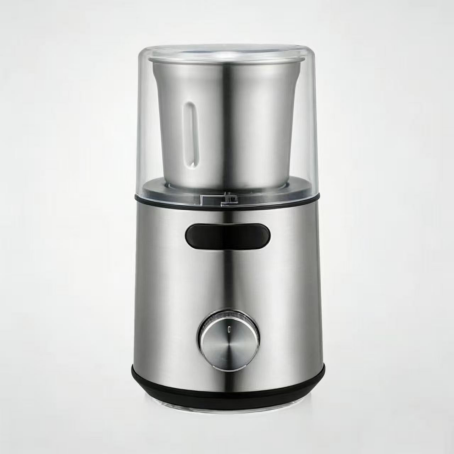
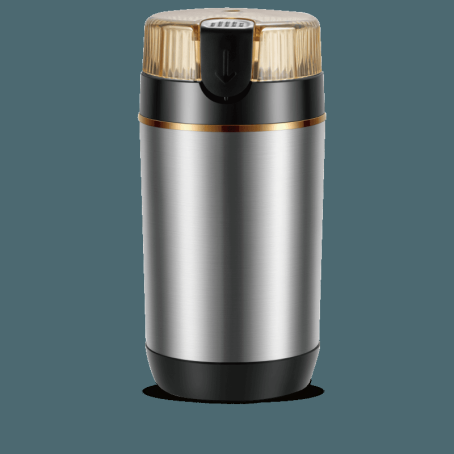
What Is a Blade Grinder?
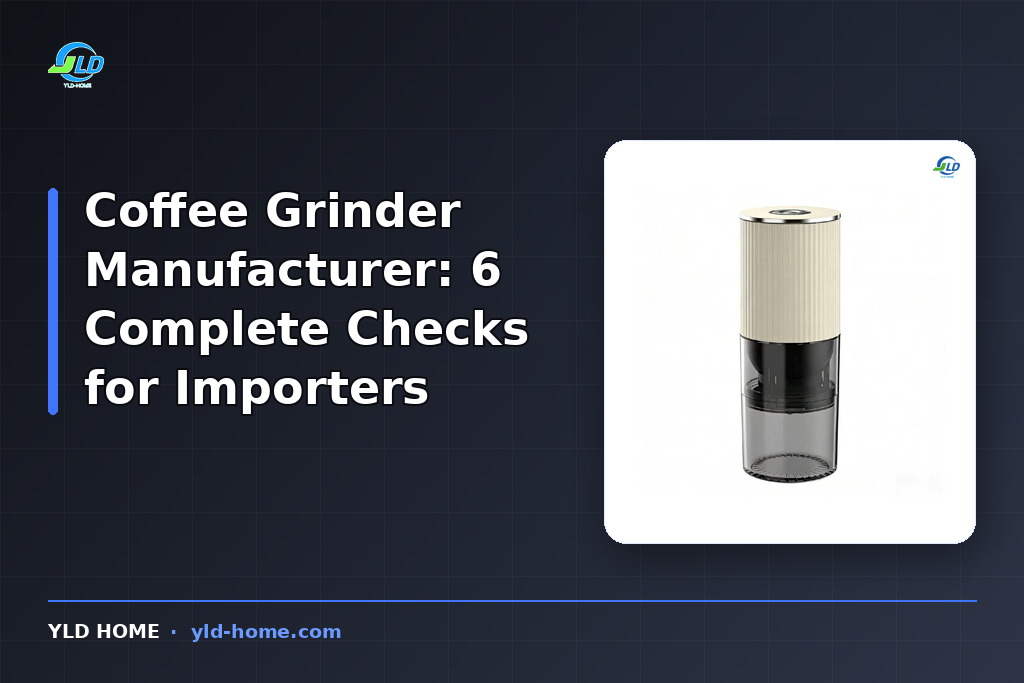
A the appliance uses a spinning stainless steel blade to chop beans. It is simple, fast and inexpensive to manufacture. A typical 200W the product with a 4 oz (110g) capacity costs a fraction of a burr grinder, which is why it dominates entry-level wholesale catalogs. It is also a multi-purpose machine: the same unit grinds coffee, spices, nuts and grains.
The trade-off is grind consistency. Because the blade chops randomly, particle sizes vary. For drip coffee and French press, that variation is acceptable. For espresso and pour-over, it is a problem, because inconsistent grind leads to uneven extraction.
What Is a Burr Grinder?
A burr grinder crushes beans between two abrasive surfaces, giving uniform particle size. Uniformity matters for espresso and pour-over, where extraction consistency directly affects flavor. Burr grinders are more complex, slower and significantly more expensive to produce.
There are flat burrs and conical burrs. Conical burrs are common in entry and mid-range models because they are quieter and easier to manufacture consistently. Burr grinders also offer adjustable grind settings, which expands their use across brew methods.
Blade Grinder vs Burr Grinder: Key Differences
| Factor | Blade grinder | Burr grinder |
| Grind consistency | Inconsistent | Uniform |
| Price (wholesale) | Baixa | Elevado |
| Motor | Simple, e.g. 200W | Heavier duty |
| Melhor para | French press, spices, budget ranges | Espresso, specialty coffee |
| Maintenance | Easy | Periodic cleaning |
Which Is Better for Your Market?
For budget retail and multi-purpose grinding, including coffee, spices, nuts and grains, blade grinders sell well and are easier to stock. They are the volume product that keeps shelves moving. For specialty cafés and premium brands, burr grinders justify the price with consistency.
For buyers running the numbers on a blade grinder vs burr grinder, that gap is the difference between a healthy listing and a thin one.
Many importers carry both: blade grinders for volume and value, burr grinders for the specialty segment. The mix protects you from seasonality and gives retailers a complete coffee equipment story. When building your catalog, position blade grinders as the affordable multi-purpose option and burr grinders as the consistency upgrade.
B2B Buyer Considerations
Blade grinders are excellent OEM products: simple, reliable and cheap to brand. Burr grinders require stronger supplier quality control; verify grinding plates and motor specs before ordering. Ask for samples of both before committing, because grind quality is best judged in the cup.
Check your supplier’s spare parts policy for both types. Blade grinders need replacement blades; burr grinders need replacement burrs and calibration. A supplier with a spare parts program protects your after-sales reputation.
How to Stock the Right Mix
Start with a ratio that matches your market: budget channels need more blade grinders, specialty channels need more burr grinders. Test both segments for a season, track sell-through, and adjust. A mixed container with both categories is usually the most economical way to start.
Selling the Comparison Story
The blade-versus-burr comparison is a selling tool. Use it to qualify buyers: value buyers get blade grinders, consistency buyers get burr grinders. Build a comparison chart for your catalog, show grind samples, and explain the trade-offs in plain language. Buyers who understand the difference trust your recommendation and reorder within your range.
For B2B buyers, the comparison becomes a margin story: blade grinders for volume, burr grinders for margin. Help your channel partners position both, and the range sells itself.
Sustainability and Packaging
Grinder packaging should protect the product and support sustainability claims. Confirm recyclable materials and minimal plastic. For retail, the packaging is part of the brand experience
Every blade grinder vs burr grinder question in this guide maps back to one of those three decisions.
r wholesale, it protects margins by reducing damage. Work with suppliers who document packaging materials and can adjust design per market.Cross-Selling and Bundling
Grinders bundle naturally with coffee equipment and accessories. Pair a grinder with a French press, a pour-over kit, or storage canisters. For wholesale, offer a coffee starter bundle: grinder, brewer and accessories. Bundles raise order value and position your brand as a coffee equipment partner, not just a grinder seller.
Train your channel partners to suggest bundles at the point of sale. A simple bundling chart in your catalog increases average order size across the range.
Receiving and Stocking
Receiving discipline keeps your grinder line healthy. Inspect cartons, test units, and verify certificates at receiving. Stock by model with clear labels and rotate stock for freshness. Keep spare blades and burrs adjacent to the product for fast service. A well-stocked, well-documented line supports both sales and after-sales.
Inventory Management for Grinders
Grinders are a staple category, so inventory discipline pays. Set reorder points from sell-through data, not from guesswork. Track blade grinders and burr grinders separately, because they move at different speeds. Keep spares for the fastest models and rotate stock to avoid stale inventory. Review the numbers monthly and let data drive the next order.
Reading Your Sales Data
Grinder sales data is your compass. Track sell-through by type, blade versus burr, and by channel. If burr grinders out-sell blades in your specialty channel, shift stock accordingly. Review monthly, adjust the mix, and keep the data visible to your buying team. The numbers always beat the opinions.
Seasonal and Promotional Planning
Coffee equipment sells in waves, and you can ride them. Plan promotions around holiday gifting, coffee days and café opening seasons. Bundle grinders with brewers and canisters for gift sets. Track which promotions move which tier, and repeat what works. A simple promotional calendar keeps your grinder line moving all year.
Feature Comparison in Depth
The blade-versus-burr decision is really about four features. Grind consistency: burr grinders deliver uniform particles, which matters for espresso and pour-over. Adjustability: burr grinders offer grind settings, while blade grinders rely on pulse timing. Motor duty: commercial burr grinders are built for continuous service, while blade grinders suit intermittent use. And cost: blade grinders win on price, which is decisive for budget retail lines.
Maintenance also differs. Blade grinders need blade replacement when dull; burr grinders need burr replacement and occasional calibration. For distributors, the service story matters: a product with available spare parts is easier to keep in retail and keeps customers returning.
Blade Grinder vs Burr Grinder: A Checklist for First Orders
For a first container, the the unit vs burr grinder decision resolves into five practical checks. First, confirm the model mix: most importers open with two blade SKUs for value retail and one burr SKU for the specialty channel, then widen the range once sell-through data arrives. Second, fix the MOQ at 1,000 units per model, so tooling and packaging costs stay predictable across the whole catalogue. Third, agree the carton configuration, because 2 PCS/CTN is the standard export pack for grinders and keeps pallet counts tidy on a 20ft load. Fourth, ask for the spare-parts list: blades, burrs, lids and drive couplings should all be orderable separately. Fifth, put the terms in writing, on FOB Shenzhen with the inspection report attached to the shipping documents.
Run samples before you commit. A burr grinder that clogs on oily beans and a this model that overheats on spices both pass a visual check and then fail in a customer’s kitchen, so test every SKU against the food your market actually grinds. Ask for the defect rate on the last three months of production, and ask how warranty claims are handled when the buyer is eight thousand kilometres away. Buyers comparing a the appliance vs burr grinder shortlist usually find that the supplier who answers both questions quickly is also the one who answers the technical questions properly. The current electric grinder range is a useful starting point for that conversation.
Blade Grinder vs Burr Grinder: What Buyers Get Wrong in Year One
The expensive mistakes in this category are rarely about the machine itself. They are about the range built around it, and they surface in the first twelve months.
Mistake one is stocking a single technology. A catalogue that offers a the product vs burr grinder choice converts better than one that forces a single answer, because the value shopper and the espresso drinker are different customers with different budgets and different expectations of the grind. Mistake two is ignoring the service story: a grinder with no replaceable blades or burrs becomes a return rather than a repeat sale, and the retailer blames the brand on the box.
Mistake three is buying on unit price alone. Freight, duty and the cost of a failed batch usually outweigh a few cents saved per unit, and the cheapest quote is often the one that arrives without a full document pack. Mistake four is skipping the packaging specification; a retail box designed for a European shelf will not survive a humid warehouse or a long inland haul. Mistake five is launching without a reorder point, so the best-selling SKU runs out while the slow one occupies the aisle.
Every one of those mistakes is cheaper to avoid at the sampling stage than at the claims stage. Review the quality control process your supplier actually runs, book a factory tour, and ask to see a previous shipment’s inspection report before you sign. YLD Home shares all three with new buyers, because a grinder programme that starts with evidence rarely ends with a credit note.
Real-World Use Cases
In a budget retail line, a 200W the unit serves the home coffee drinker, the spice user and the nut grinder in one SKU. In a specialty café, a burr grinder with adjustable settings delivers the consistent grind that espresso demands. In an office or foodservice setting, a dependable this model covers drip coffee and French press without the cost of a commercial burr machine.
For a distributor, the use-case spread defines the catalog story: blade grinders for volume and versatility, burr grinders for the specialty and commercial segment. The two lines complement rather than compete.
Regional Buying Behavior
Price sensitivity varies by region. In South Africa and much of Latin America, blade grinders dominate because of price. In the USA and the EU, specialty coffee culture pushes burr grinder demand, especially at the premium end. Distributors should align their mix with local coffee habits: higher burr share in specialty markets, higher blade share in value markets.
Decision Framework for Buyers
Choose by use case and price point. If you sell to budget retail and multi-purpose users, stock blade grinders. If you serve specialty cafés and premium channels, stock burr grinders. If you cover a full market, carry both and position them clearly in your catalog. Test samples of both types before committing, because grind quality is judged in the cup.
What Buyers Ask Us
The most common questions are about the price gap, the durability difference, and whether both types can be private labeled. The honest answers: the price gap narrows at volume, durability depends on motor quality, and yes, both types are available for OEM and private label.
Building a Price Ladder for Your Catalog
A healthy grinder catalog has three price tiers. At the entry tier, 200W blade grinders deliver volume with thin margins. At the mid tier, upgraded blade grinders with better motors and larger capacities attract value buyers. At the top tier, burr grinders serve specialty and commercial accounts with fatter margins. Each tier feeds a different channel, and together they protect you from margin pressure.
When building the ladder, keep the brand story consistent: the same private label across all tiers builds recognition, and customers who start at the entry tier can upgrade within your brand. Confirm packaging per tier, because premium tiers justify retail packaging investment.
Testing Protocol for Wholesale Buyers
Test before you stock. For blade grinders, grind coffee, spices and nuts, sift the results, and run back-to-back batches to check motor heat. For burr grinders, adjust the settings and verify the grind changes consistently, then clean the burrs to check maintenance. Compare both types on the same test sheet and keep the results for your product team.
After-Sales and Spare Parts Planning
Grinders wear out: blades dull, burrs need replacement, and switches fail. Plan spare parts with your first order, because after-sales service decides repeat purchases. Keep replacement blades or burrs in stock for your best-selling models, and document the service steps in the manual. A distributor with a parts program owns the after-sales relationship.
Glossary
Pulse: short bursts of operation for control. Grind fineness: the coarseness of the ground coffee. Oil build-up: residue that affects flavor and requires cleaning. Calibration: adjusting grind settings for consistent output. SKU: stock keeping unit.
Wholesale buyers who understand the blade grinder vs burr grinder difference stock the right mix per channel.
Official references: [Burr Mill – Wikipedia](https://en.wikipedia.org/wiki/Burr_mill)
FAQ
- How do I explain blade vs burr to customers? Use a comparison chart and grind samples in your catalog.
- What packaging options exist? Standard retail and export packaging, with recyclable options.
- Do you support comparison marketing materials? Yes, we provide spec comparisons and images.
- What bundles work with grinders? French press, pour-over kits and storage canisters.
- How do I manage grinder stock? Label by model, rotate stock, and keep spares adjacent.
- Do you support bundle packaging? Yes, bundle packaging can be configured at order.
- How do I set reorder points? From sell-through data plus the full lead time.
- Should blade and burr stock be managed separately? Yes, they move at different speeds and serve different segments.
- How do I read grinder sales data? Track sell-through by type and channel, then adjust stock monthly.
- What if my mix is wrong? Shift stock toward what the data shows is selling.
- When should I promote grinders? Around holiday gifting, coffee days and café opening seasons.
- What bundles work for promotions? Grinder, brewer and canister gift sets.
- How long do blade grinders last? With proper use, years; replace blades when grinding slows or becomes uneven.
- Do burr grinders need calibration? Some models do; follow the manufacturer’s guidance.
- Can I private label burr grinders? Yes, subject to MOQ and specification confirmation.
- What is the warranty on grinders? Standard terms are agreed at quotation, with spare parts available.
- How do I choose the tier mix? Start with entry volume, add mid tier, then premium as sell-through grows.
- Do you support retail packaging per tier? Yes, packaging can be configured per tier and market.
- Can a blade grinder make espresso-fine grind? It can, but inconsistently; burr grinders are the standard for espresso.
- Is a blade grinder good for spices? Yes, multi-purpose blade grinders handle coffee, spices, nuts and grains.
- Which is cheaper to import? Blade grinders, by a wide margin, especially at container volume.
- Do burr grinders cost much more? Wholesale prices are significantly higher; the gap narrows at volume.
- Can I brand both types? Yes, OEM and private label are available for both.
- Which sells better? Blade grinders sell in higher volume; burr grinders earn higher margins.
Who we are and what we can delivery?
Shenzhen YLD Electrodomésticos Limited is a professional and number 1 home appliances manufacturer in China. Our slogan is “High-Quality Product at Reasonable Prices.” First, we ensure fair dealing in all our business. We also have a professional team in each department.
FAQ
What is the minimum order for a private-label grinder?
MOQ is 1,000 units per model, which covers tooling, print plates and the first production run on a single line. YLD Home quotes the tooling separately from the unit cost, so you can see exactly what the private-label programme adds before you commit to a full container.
Can I mix blade and burr models in one shipment?
Yes, and most first orders do. Each model carries its own 1,000-unit minimum, and the cartons are marked per SKU so the container can be unloaded in the order your warehouse needs. YLD Home labels every carton with model, quantity and destination before loading.
Which certificates should a grinder carry for Europe and North America?
For Europe, ask for CE, GS, EMC, LVD and RoHS documentation covering the exact model and voltage. For North America, ask for ETL or UL safety reports plus an FCC statement where electronics are involved. YLD Home issues each certificate against a named model list rather than a generic product family.
How long does sampling take before a bulk order?
Samples normally ship in about a week, and the sample fee is credited against the first production order. YLD Home runs the sample on the same line as bulk production, so the unit you test is built the way the container will be built, not hand-assembled for the photo.
What carton and pallet configuration should I expect?
Grinders usually pack at 2 PCS/CTN with a retail-ready inner and a master carton rated for export handling. YLD Home confirms carton dimensions, gross weight and pallet pattern before production starts, so your freight forwarder can quote against real numbers instead of estimates.
How do I keep spare blades and burrs available after the first season?
Order the wear parts with the container rather than after it. YLD Home keeps spare blades, burrs, lids and couplings for current models and ships them alongside production orders, which keeps a retailer’s first complaint from turning into a dead SKU.