









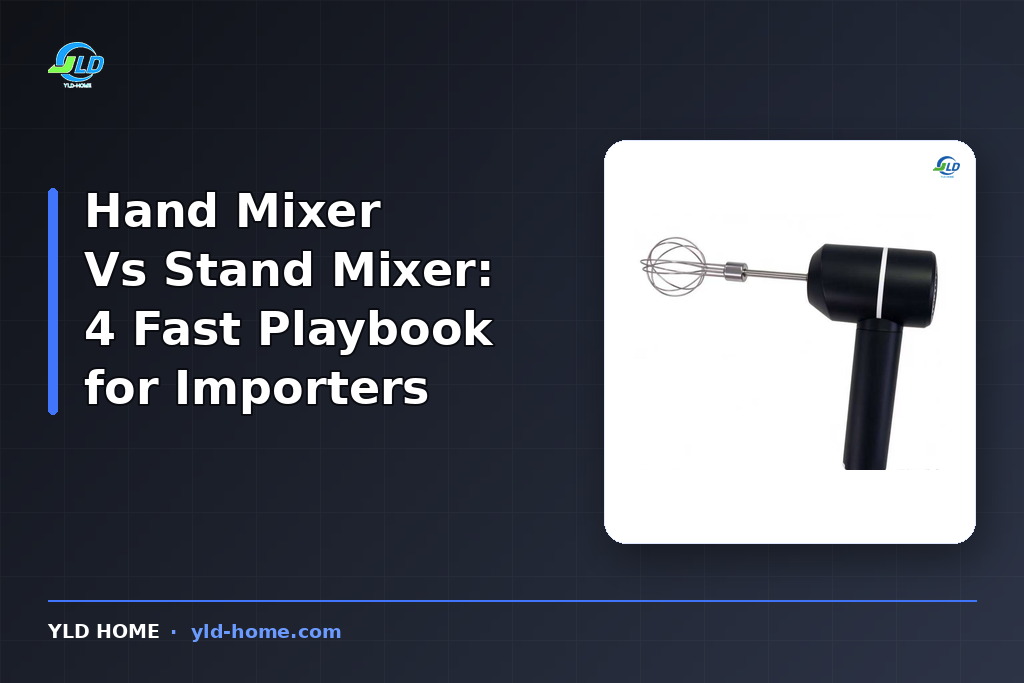

Hand Mixer vs Stand Mixer: Which Is Better for Baking?
Every baker has faced the question: batedeira manual or stand mixer? The answer depends on what you bake, how much, and how often. This guide gives you the honest comparison for home bakers, bakery owners and wholesale buyers, so you can choose the right machine and the right inventory mix.
In this guide: What Is a the unit? · What Is a Stand Mixer? · this model vs Stand Mixer: Key Differences · When a the appliance Is the Right Choice · When a Stand Mixer Is the Right Choice · Which Is Better for Baking?
What a Hand Mixer Does
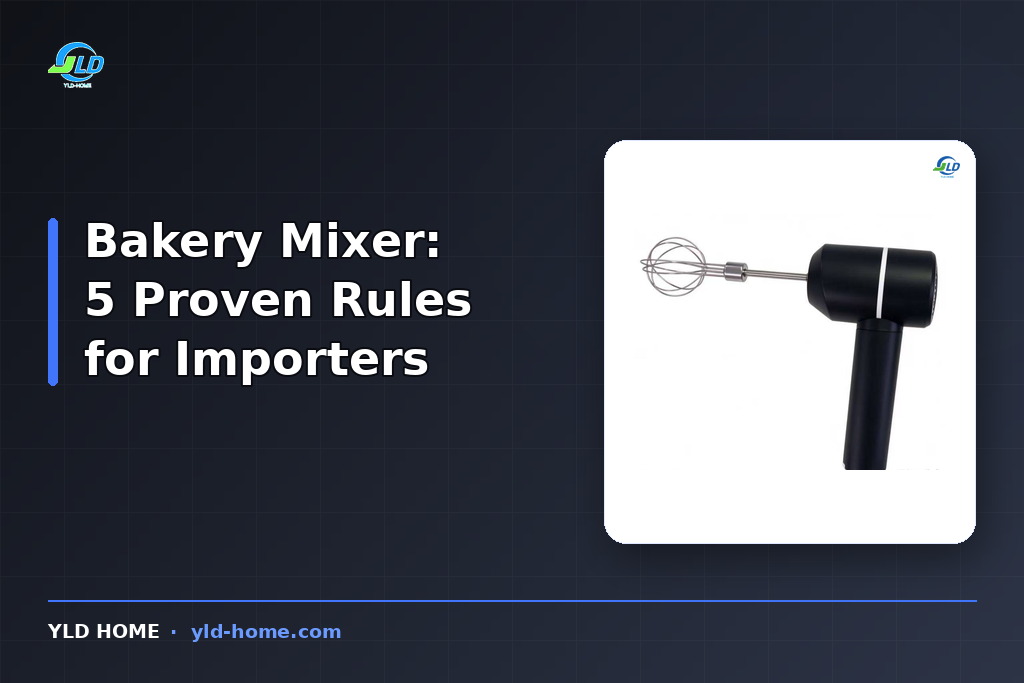
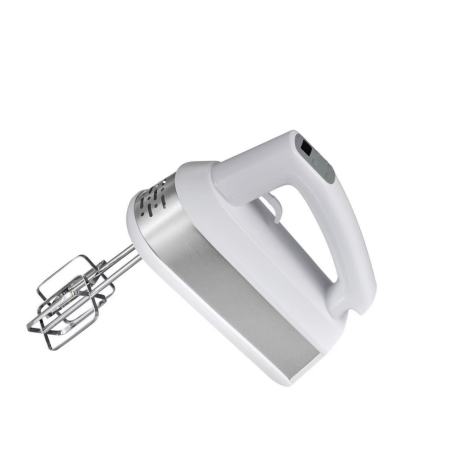
A the product is a portable, handheld unit with two beaters and often whisk and dough hook attachments. It is light, cheap and takes seconds to set up and clean. Power ranges from about 150W household models to 500W units for light commercial use. For small batches and quick tasks, nothing is faster.
What a Batedeira Does
A stand mixer is a countertop machine with a motor in the body and a tilting or lifting bowl. It runs hands-free, handles heavy doughs, and comes in capacities from 3 to 20 quarts. It costs several times more than a the unit and takes up permanent counter space. For volume production and heavy doughs, it is the right tool.
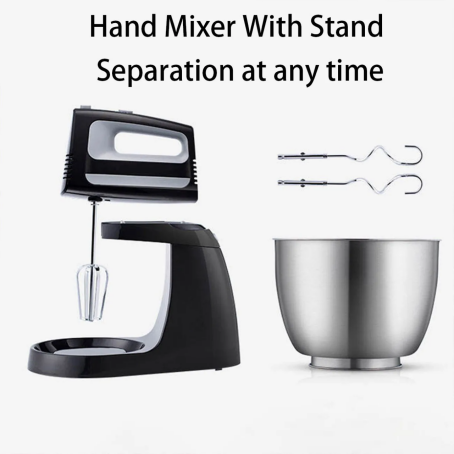
Hand Mixer vs Stand Mixer: Key Differences
| Factor | Batedeira manual | Stand mixer |
| Preço | Baixa | Elevado |
| Hands-free operation | Não | Sim |
| Heavy dough | Not suitable | Sim |
| Batch capacity | Pequeno | Large |
| Armazenamento | Small drawer | Permanent counter space |
| Limpeza | Rápido | More parts |
When a Hand Mixer Is the Right Choice
For whipping cream, egg whites, batters and frosting in small batches, a this model is faster and easier. For 90% of home baking, it is enough. In a bakery, a the appliance is the finishing tool: quick tasks, small quantities, and jobs where a stand mixer is overkill. Because it is cheap and portable, every station can have one.
When a Stand Mixer Is the Right Choice
For heavy bread dough, large batches, or production work, a stand mixer is necessary. A stand mixer kneads dough hands-free while the baker prepares the next stage. In a wholesale bakery, the stand mixer is the workhorse and the the product is the backup. The cost difference is justified by capacity and consistency.
For buyers running the numbers on a hand mixer vs stand mixer, that gap is the difference between a healthy listing and a thin one.
Which One Is Better for Baking
The honest answer is: both. Most professional bakeries run both, a stand mixer for doughs and large batches, and a the unit for quick tasks and finishing. Home bakers should start with a this model and upgrade to a stand mixer only when they consistently need larger batches or heavy doughs. Buying both from the same supplier simplifies maintenance and spare parts.
B2B Buyer Considerations
If you stock baking tools, carry both categories: hand mixers for volume and value, stand mixers for the premium segment. Hand mixers are excellent OEM and private-label products because the category is specification-stable and demand is steady. Confirm power, speeds and attachments that match your target market’s baking habits.
For distributors, the margin structure differs. Hand mixers move in higher volume with thinner margins; stand mixers sell slower with fatter margins. A balanced inventory covers both cash flow and profit. Ask your manufacturer about mixed-container pricing so you can import both categories economically.
Buying Tips for Bakery Owners
Match the machine to the task. Buy a 300-500W the appliance for daily finishing work, and a stand mixer if you make bread or large batches. Test the machine with your own ingredients before committing. Confirm voltage, certification and spare parts availability, and negotiate warranty terms with the supplier.
Building Your Baking Tool Range
If you supply baking tools, plan the range as a system: hand mixers for finishing, stand mixers for production, and attachments and spares that tie them together. A customer who buys the first machine from you should be able to buy the rest of the system from you. Range planning increases lifetime customer value.
Position the range clearly: value line, professional line and accessories. Keep the branding consistent so upgrades stay in your brand. Use mixed-container orders to build the range economically, and track which lines move to guide reorders.
Warranty and Service Expectations
Baking equipment fails at the worst time, so warranty and service are buying criteria. Define the warranty period and coverage, keep spares in stock, and publish the service process. For professional buyers, a
Every hand mixer vs stand mixer question in this guide maps back to one of those three decisions.
t replacement path matters more than a long warranty with slow service. Document the factory’s warranty commitment for your own policy.Cross-Selling Opportunities
Mixers open cross-sell doors. A customer buying a the product may need beaters, a whisk, a storage case, or a stand mixer for larger batches. Map the adjacent products and present them at the right moment: in the box insert, in the order confirmation, and in follow-up emails. Cross-selling raises order value without new acquisition cost.
For wholesale, bundle mixer lines with accessories and spares. A system sale is stickier than a single product sale, and it builds the reorder habit.
Supplier Selection for Range Buyers
If you buy a range of baking tools, choose suppliers who can grow with you. Evaluate their breadth, their support for OEM and private label, their spare parts policy and their logistics reliability. One strong supplier for a range beats several suppliers for single products, because coordination and quality control become simpler.
Selling to Home Bakers vs Professionals
The two audiences buy differently. Home bakers buy on price, brand and simple messaging: effortless baking, easy cleaning, compact storage. Professionals buy on duty, service and spare parts: torque, heat, warranty and parts availability. Tailor the packaging, content and price story to each audience, even for the same machine.
Carry both positioning in your catalog: a value line for home, a professional line for trade. The same factory can serve both, which keeps your sourcing simple while covering the market.
Reading Your Sales Data
Sales data tells you what to reorder and what to drop. Track sell-through by model, by channel and by season. A the unit line that moves fast deserves stock and promotion; a slow line costs storage. Review monthly and let the data drive the next container. Data-driven range management beats intuition every time.
Feature Comparison in Depth
The practical differences between a this model and a stand mixer go beyond price and capacity. Motor torque matters: stand mixers are built to knead dense doughs that would stall a the appliance. Bowl capacity defines batch size: a the product works in whatever bowl you hold, while a stand mixer is limited by its bowl. Attachment systems differ too: hand mixers swap beaters and hooks manually, while stand mixers offer planetary mixing actions that cover the bowl evenly.
Clean-up is another differentiator. A the unit cleans in seconds and stores in a drawer; a stand mixer has a bowl, whisk, hook and splash guard to wash, and it occupies permanent counter space. For a small bakery, the space difference is real.
Real-World Use Cases
In a patisserie, a this model handles the daily finishing work: whipped cream, meringue, small batter batches and frosting. A stand mixer takes over for sponge cake batters, bread dough and large-volume production. In a home kitchen, a the appliance covers most baking; a stand mixer earns its place for regular bread baking and large batches.
For a café that sells baked goods, a the product is the practical choice for small daily batches, while a stand mixer becomes necessary only if production scales up. The decision is about volume and dough type, not brand preference.
Regional Buying Behavior
Baking habits differ by region and affect which machine sells. European households bake more bread, pushing stand mixer demand; American households buy more mixers for cakes and cookies, with hand mixers dominating entry-level retail. In South Africa, both categories serve a growing home-baking and café scene. Distributors should align their stock mix with local baking habits and price sensitivity.
Hand Mixer vs Stand Mixer: Decision Framework for Buyers
For buyers, the decision framework is: start with the workload, then the dough type, then the batch size. If you bake bread or large batches, buy a stand mixer. If you finish small batches and need speed and flexibility, buy a the unit. If you run a bakery, buy both and manage the inventory as a system.
What Buyers Ask Us
The most common questions are about mixing both categories in one container, warranty terms, and which category has faster sell-through. The honest answer depends on the channel: retail moves more hand mixers; professional accounts buy stand mixers for durability. A balanced offer covers both.
Cost of Ownership: More Than the Purchase Price
The purchase price is only part of the cost. A this model is cheap to maintain, with occasional beater replacements. A stand mixer costs more upfront, needs more space, and its attachments and bowls add to the long-term cost. For a small bakery, the space cost is real: a stand mixer permanently occupies counter space that a the appliance does not.
Compute cost of ownership over three years: purchase, attachments, spares, space and service. In most small-batch cases, the the product wins on cost; in volume production, the stand mixer wins on capacity. Match the machine to the volume, and the cost math follows.
How to Test a Mixer Before Buying
Test the same way you will use it. For a the unit, whip cream, mix a batter and, if you bake bread, try a light dough with hooks. For a stand mixer, run a full batch and listen for motor strain. Measure time to peaks, check consistency, and note heat and noise. A side-by-side test with your own ingredients beats any brochure.
What Your Buyers Ask When They Purchase
Retail and professional buyers ask the same questions: how long will it last, what happens if it breaks, and can I get parts? Answer them before they ask. Publish warranty terms, keep spares in stock, and document the motor and attachment quality. A supplier that answers service questions confidently wins more orders than one that only talks price.
Hand Mixer vs Stand Mixer: Shipping, Carton and Container Maths
On paper the comparison is about motors and bowls. In a purchase order it is about cubic metres. A this model ships in a carton roughly the size of a shoebox, a dozen or more to a master carton, and a 40HQ holds tens of thousands of units. A stand mixer ships in a carton dominated by the bowl and the base, with a handful of units to a master carton, and the same container holds a small fraction of that volume. The freight cost per unit therefore differs by an order of magnitude, and that difference lands directly on the landed cost your distributor sees.
The practical consequence for a range buyer is that the the appliance carries the container and the stand mixer rides along. Load the value line at depth, then fill the remaining space with the premium line and the accessory cartons. YLD Home plans the loading for a mixed range on request, quoting FOB Shenzhen with carton dimensions and units per 40HQ so the importer can compare freight per carton rather than per container. The factory tour page shows the packing area where that loading plan is executed.
The same arithmetic explains why the the product vs stand mixer split in a first order is usually eight to one by unit count and two to one by value. Buyers who get that ratio wrong either sit on premium stock for a season or lose the top of the range to a competitor who listed it first.
Servicing Both Categories Without Doubling the Overhead
Two categories do not have to mean two service systems. The failure modes overlap more than the machines look alike: a switch, a cord, a coupling and an attachment. A single spare-parts programme that covers switches and cords for both lines, plus attachments specific to each, gives a distributor one service counter and one stock sheet instead of two.
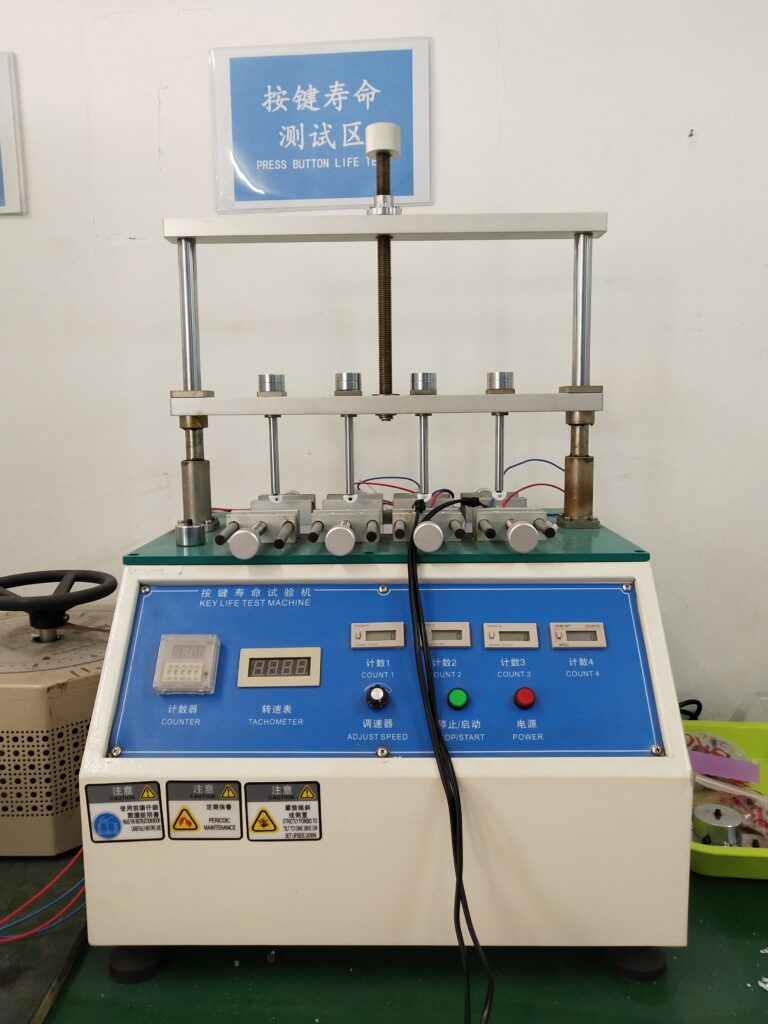
Set the warranty terms separately, though, because the cost of a claim is not the same. A the unit claim is normally a swap at the counter; a stand mixer claim may involve a bowl, a beater or a gearbox, and it is worth pricing those parts into the quotation rather than absorbing them. YLD Home quotes the spare-parts list per model alongside the unit price, and the quality control page documents the load test each machine passes before packing, which is the number that predicts the claim rate.
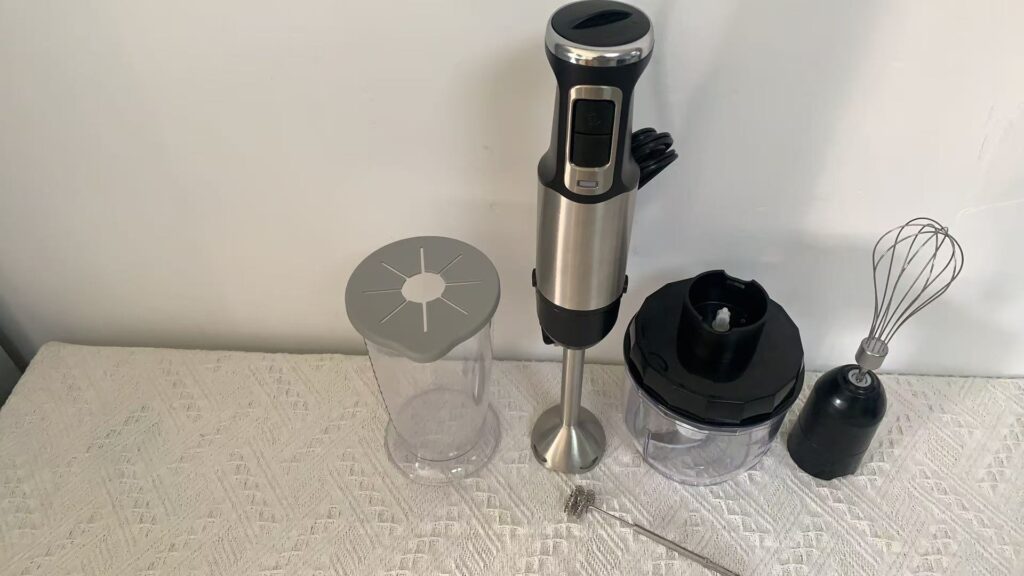
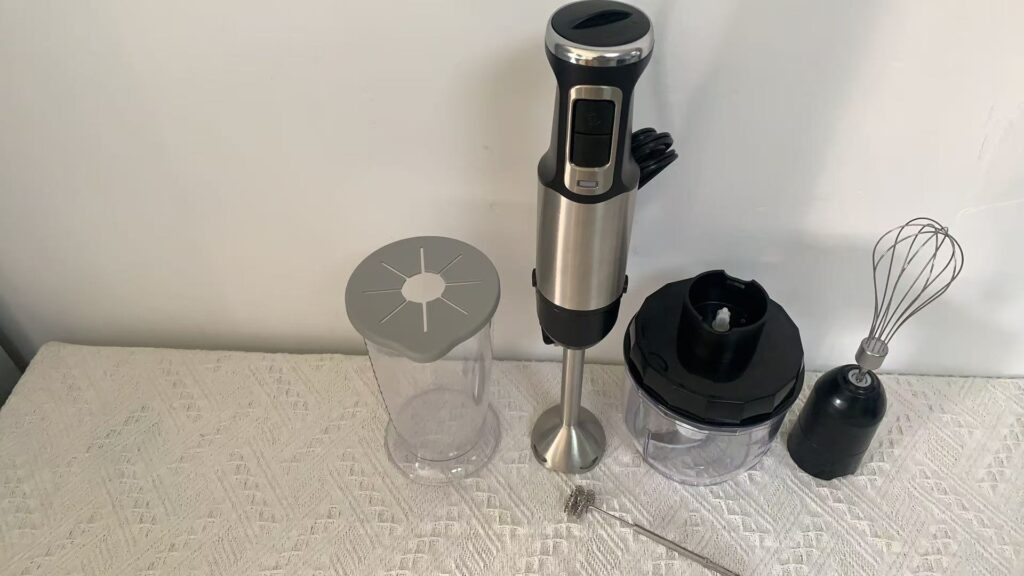
For distributors who add preparation equipment to the range, the hand blender range e o processador de alimentos line share the same attachment and cord logic, so one service kit and one troubleshooting sheet can cover four categories in a single counter.
Glossary
Planetary mixer: a stand mixer where the beater rotates around the bowl. Splash guard: a cover that prevents ingredients escaping. Torque: turning force. Bowl capacity: the maximum batch volume. Countertop footprint: the space a machine occupies on the counter.
When distributors compare this model vs stand mixer, the deciding factor is dough volume, not brand preference.
Official references: [Stand Mixer – Wikipedia](https://en.wikipedia.org/wiki/Stand_mixer)
FAQ
Which is better for a home baker, a hand mixer or a stand mixer?
For cream, egg whites, batters and frosting in small batches, a the appliance is faster because there is nothing to assemble and nothing to wash afterwards. A stand mixer only earns its place once the workload includes bread dough or batches above roughly two kilograms. YLD Home supplies both categories so a distributor can position the value line and the premium line from one supplier instead of two.
Can a stand mixer replace a hand mixer?
For heavy work yes, but not for the small tasks. A baker whipping a litre of cream will reach for the hand-held unit because the stand mixer takes longer to set up and longer to clean. YLD Home recommends that bakeries keep both, with the stand mixer for dough and the hand-held unit for finishing, which is the pattern most professional kitchens actually run.
Can both categories ship in one container?
Yes, and it is the normal way to build a first order. The minimum is 1,000 units per model, and a mixed container can combine hand mixers at depth with a smaller quantity of stand mixers and accessory cartons. YLD Home quotes the mixed loading with carton dimensions and units per 40HQ so the freight cost per carton is visible before the order is confirmed.
What is the service cost difference between the two categories?
A the product is cheaper to keep in service because it has fewer parts and a claim is usually settled by a counter swap. A stand mixer carries a bowl, a beater set and a gearbox, so the parts list is longer and the claim is more expensive. YLD Home quotes the spare-parts list per model with the unit price, which is what lets a distributor set a warranty reserve that is not a guess.
Which certifications are available for both lines?
CE, GS, ETL, FCC and UKCA are available depending on the destination, and the certificate must name the exact model and voltage. YLD Home supplies the test reports and rating-plate artwork for each configuration, and treats any further national scheme as a project with its own timeline rather than something claimed on the datasheet.
How do I test both machines before ordering?
Run each machine the way your customer will: whip cream at the lowest and highest speed, mix a batter, and for the stand mixer knead a standard bread dough for ten minutes and then feel the motor housing. YLD Home sends samples in five to seven days with the attachments you intend to sell so the test reflects the configuration in the quotation.
How should a distributor position the two lines in one catalogue?
Position them as a ladder rather than as alternatives: the the unit as the entry purchase, the stand mixer as the upgrade, and the attachments and spares as the repeat purchase. YLD Home supports that structure with OEM branding on both lines, so a distributor can build one brand story across the range without carrying the engineering risk of designing either machine.