









In this guide:
- Why the factory pick decides your margins
- What US distributors actually sell: retail, foodservice, private label
- The factory audit: what to check before you fly home
- Certification paperwork: UL, ETL, FCC, FDA for 120V
- Engineering and OEM: how much can the factory really customize?
- Quality control and defect rates that make or break a season
- MOQ, lead times, and payment terms distributors accept
- Red flags on the factory floor
* alt:hand blender *
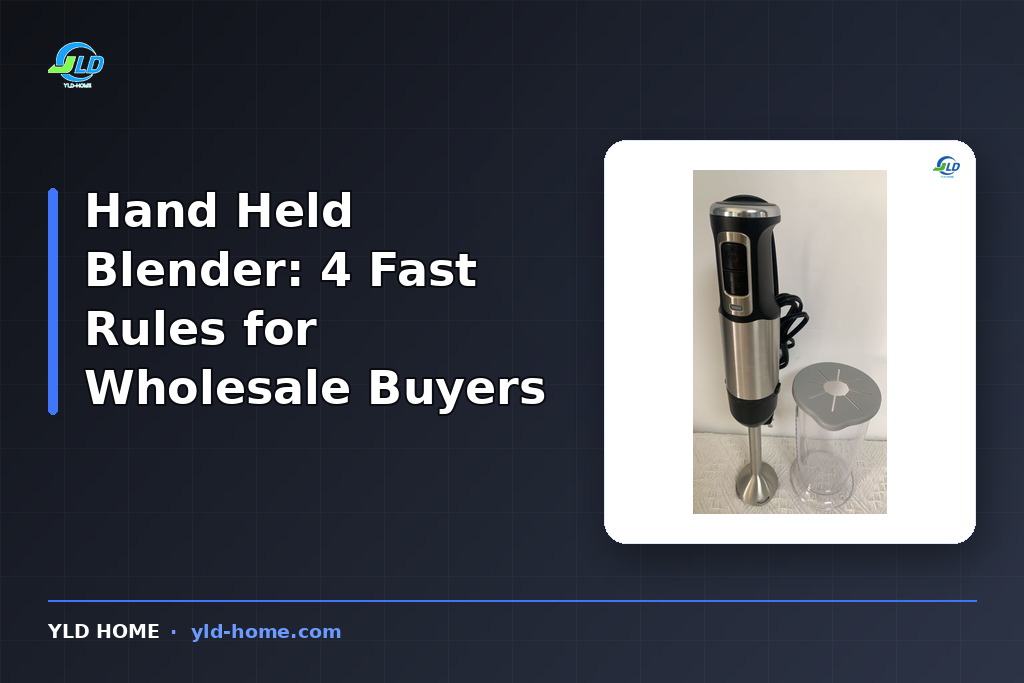
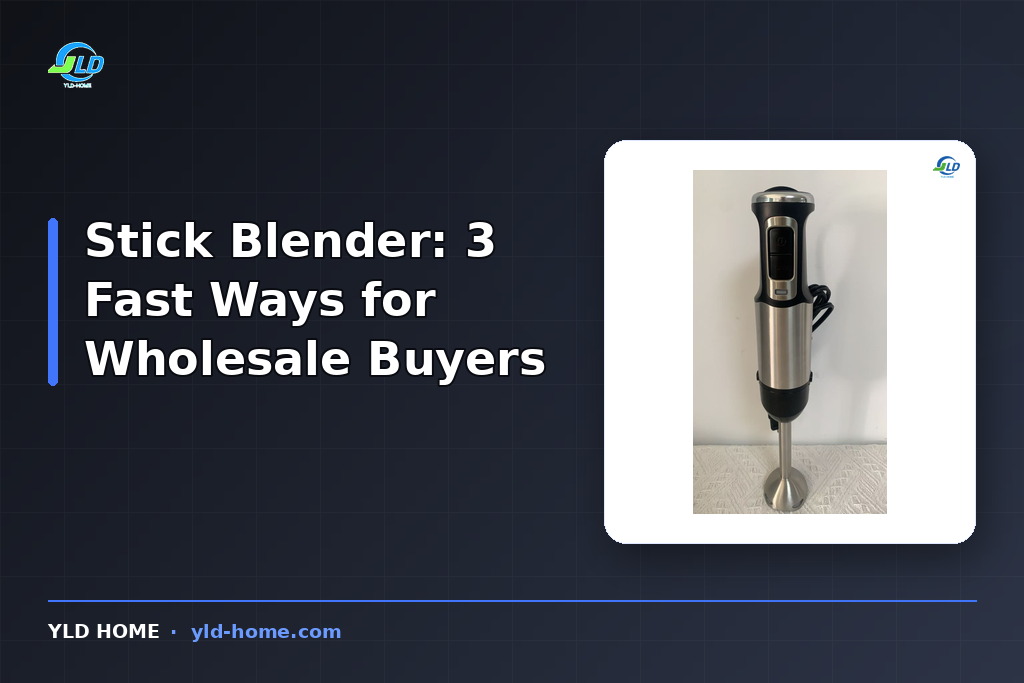
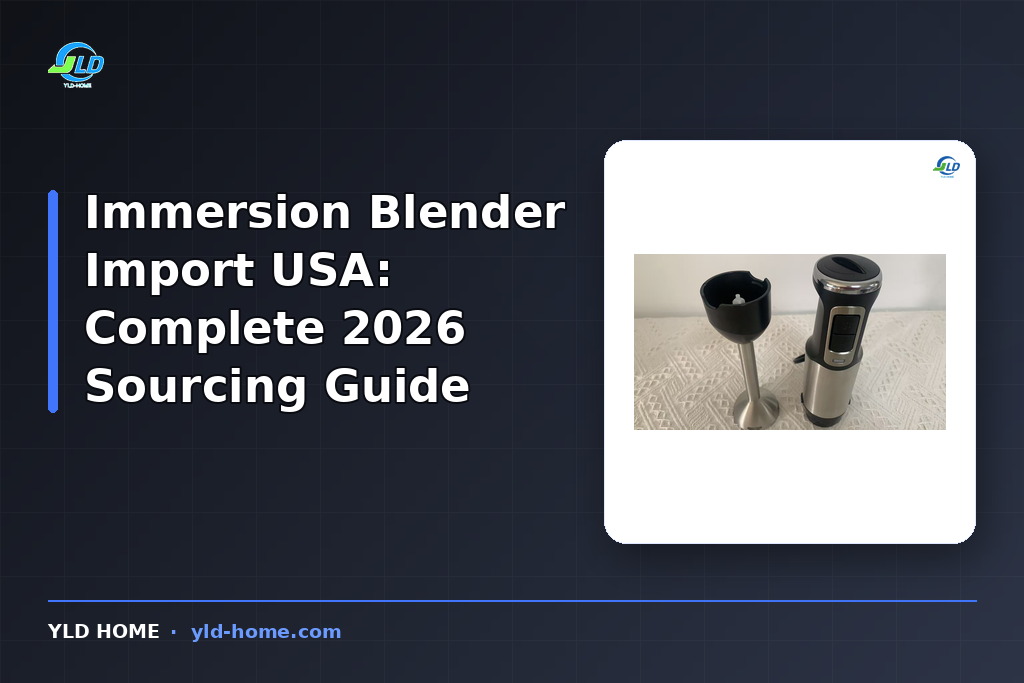
Ask ten distributors what killed their appliance margins last year and eight of them will point at the factory, not the market. The hand blender category is crowded, the retail price points are squeezed, and the difference between a profitable season and a loss usually comes down to one decision: which factory you signed. This guide is written for US distributors, importers, and private-label buyers who want a systematic way to pick a hand blender manufacturing partner. We are YLD Home, a Shenzhen factory that has supplied hand blender programs to American distributors for years, and we will tell you exactly what we think a buyer should check.
Why the factory pick decides your margins
A hand blender that fails in the field costs you three times its invoice price. First you refund or replace the unit. Then you pay the freight both ways. Then you lose the shelf space, because retailers remember which vendor’s products came back. Distributors who learned this the hard way now treat factory selection as a margin decision, not a sourcing errand.
The margin math is brutal when you look at it honestly. A mid-range hand blender sells at retail for $29 to $49. The distributor’s landed cost has to sit somewhere around 30 to 40 percent of that, or the margin disappears after warehousing, sales commissions, and chargebacks. That leaves very little room for a factory that ships inconsistent quality. One bad batch of motors can erase a quarter of your annual profit on the category.
We see the other side of this too. Distributors who pick a solid factory and stay with it build compounding advantages: stable lead times they can promise to retail buyers, a defect history they can show to new accounts, and volume pricing that improves every year. In our experience at YLD Home, the distributors who succeed treat the factory relationship like a partnership with regular reviews, not a one-time transaction. You can see the long-term relationships behind that in our clients and certificates video.
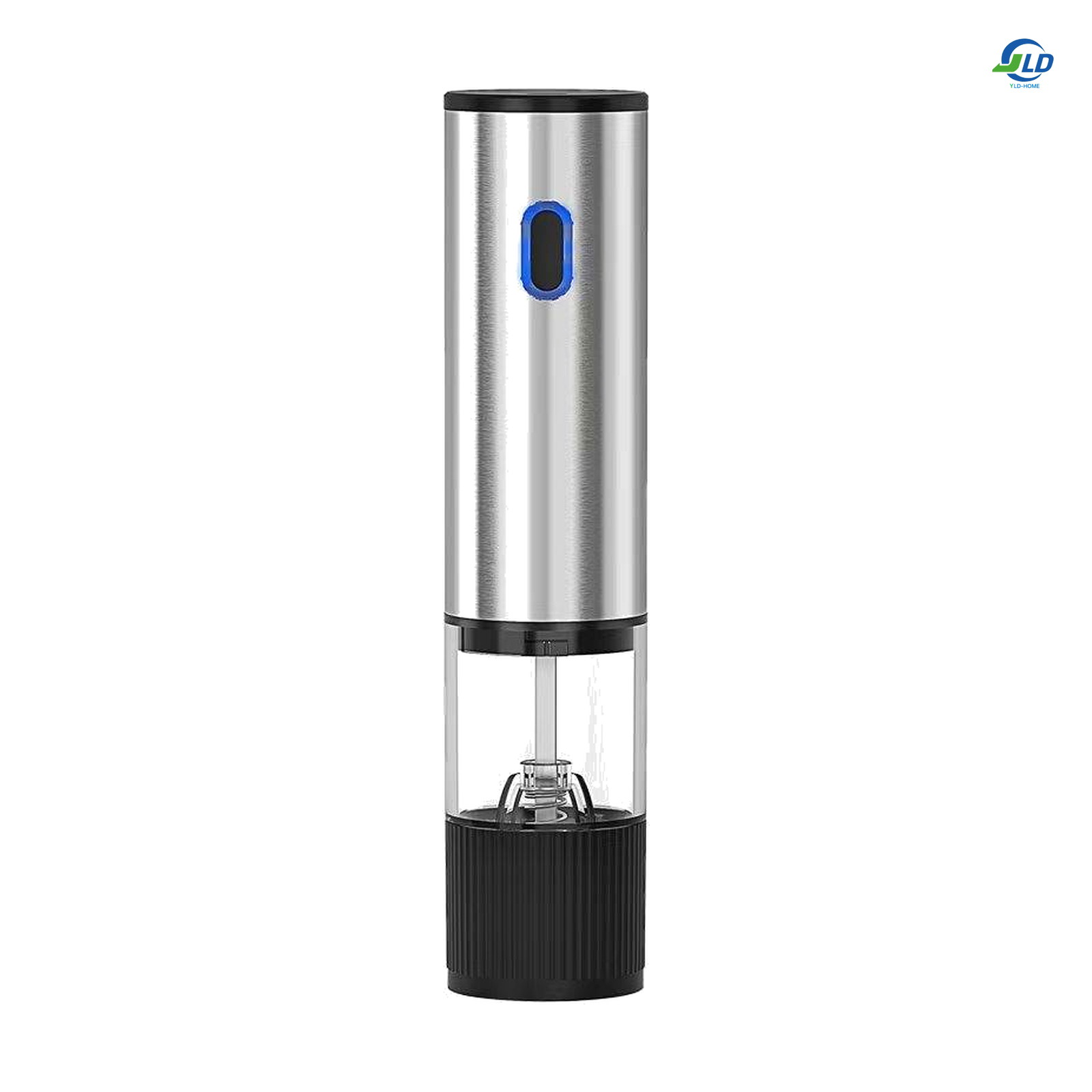
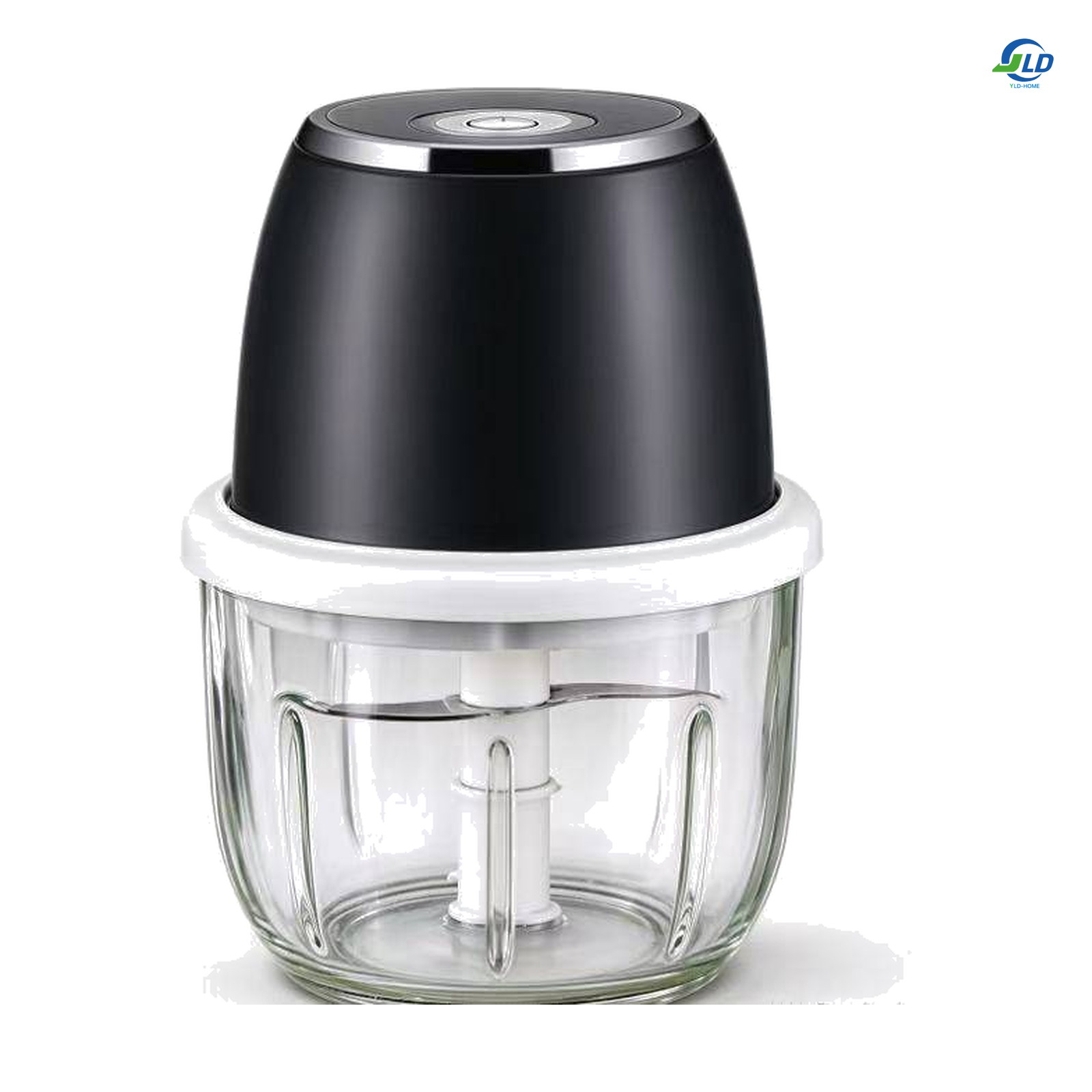
What US distributors actually sell: retail, foodservice, private label
Before you evaluate factories, know what you are actually selling. The hand blender business in the United States splits into three distinct channels, and each one needs a different product and a different factory capability.
Retail distribution is about shelf price points, packaging that pops, and certifications that let you into the building. Big-box and grocery buyers want UL-listed units, clean cartons, and dependable delivery windows. Foodservice distribution is about durability: 1,200 to 1,600 watt motors, detachable stainless shafts, and units that survive a line cook’s shift. Private label is about branding: your logo, your colors, your packaging, and a factory that can execute custom details without drama.
Most successful US distributors run two of the three channels, sometimes all three. That is why the multi-function hand blender models are so popular in our order book. A 3-in-1 hand blender with a whisk and chopper covers the retail story, while a heavy-duty commercial unit covers foodservice. If you want the full history of the tool before you go further, Wikipedia’s immersion blender entry is a decent read and covers the category’s origins. If you are building a catalog, you want a factory that can supply both tiers from the same QC system.
The factory audit: what to check before you fly home
A factory audit does not have to be a five-day affair, but it has to be more than a tour of the showroom. When a distributor visits us at YLD Home, we walk them through the whole chain: motor winding, injection molding, assembly lines, QC benches, and the warehouse — the same walk you can preview in our factory floor video. If a supplier cannot or will not show you production, that is your answer.
Start with the motor section. The motor is the heart of any hand blender, and you can learn a lot in five minutes: are the windings clean, are the commutators consistent, is there a motor test station before assembly? Then look at the assembly line: is there a run-in test where units actually run before packing? How many units per hour, and what is the defect rate on the line? Ask to see the last three QC reports and the return rate on the last few shipments.
Check the warehouse too. A factory that ships a thousand units a month has stock, components, and organized racks. A factory that shows you a spotless empty warehouse is either between runs or trading. And ask about the QC standard: what does the factory consider a defect, and how do they decide pass or fail? We use an AQL sampling standard on every hand blender order, and we put the numbers in the production contract. You can see our QC benches at work in our product quality control video.
* alt:hand blender *
Certification paperwork: UL, ETL, FCC, FDA for 120V
American distributors cannot sell electrical appliances without certification paperwork, full stop. Retailers require it, online marketplaces require it, and foodservice buyers in most states require it. The four letters that matter are UL or ETL for electrical safety, FCC for electromagnetic emissions, and FDA for food-contact materials. Your hand blender also has to run on 120 volts, 60 hertz, with a US plug, obviously, but you would be surprised how often that detail gets missed in early samples.
Here is the question most distributors forget to ask: whose name is on the certificate? If the UL report lists the factory as the manufacturer, you can private-label the product under that listing with a simple update. If the certificate belongs to some other brand, you may be importing a product that is not actually listed for your use. Get the certificate PDFs, check the manufacturer name, and keep them in your import file.
FDA compliance on a hand blender means the stainless shaft and the blade are made from food-grade materials, and any plastic that contacts food meets the FDA’s regulations. Ask for the material certificates. A factory that exports to the US regularly will send these without hesitation. One that hesitates probably does not have them. When we quote a private-label hand blender program at YLD Home, the UL report, FCC report, and FDA material declarations ship with the quotation.
Engineering and OEM: how much can the factory really customize?
Every distributor eventually gets a customer asking for something specific: a different color, a longer shaft, a quieter motor, a custom accessory set. How the factory responds to that request tells you whether you have a manufacturer or a middleman. Real OEM capability means the factory has engineers who can change the tooling, adjust the motor spec, and test the result before you commit to a run.
Ask about their engineering team: how many engineers, what do they handle, and can they do custom tooling? Ask about mold ownership too. If you invest in a custom color or a custom accessory, who owns the mold afterward? The answer should be in the contract, and it should match your business plan. Some distributors want to own the mold; others are fine leasing it per project.
Customization tiers are worth understanding before you negotiate. Tier one is branding: your logo, your box, your manual. Tier two is cosmetic: custom colors, custom textures, custom packaging structure. Tier three is engineering: new shafts, new speeds, new attachments, changed motor specs. Each tier costs more and takes longer. A good factory quotes all three clearly so you can decide where your budget goes.
Quality control, defect rates, and red flags on the factory floor
Defect rates are the quiet killer in the hand blender business. A 1 percent defect rate sounds great until you ship 50,000 units and 500 customers complain. Retail chargebacks, Amazon returns, and negative reviews all flow from that small percentage. The factories that control it are the ones with real QC systems, not just a person with a checklist at the end of the line.
Ask for the factory’s actual defect data: incoming material rejection rate, in-line defect rate, final inspection pass rate, and customer return rate on the last twelve months of shipments. A serious factory tracks all four. If the supplier gives you vague answers like “very low,” treat that as a red flag.
Your own protection is third-party pre-shipment inspection. For a few hundred dollars, an independent inspector samples the cartons, runs the units, checks the packaging, and issues a report before the container loads. We recommend it to every distributor, including ones who have worked with us for years. The inspection is not about trust; it is about catching problems while they are cheap to fix. One defective batch caught at the factory costs you a production delay. The same batch caught in your warehouse costs you a season.
You will see the same warning signs at factory after factory if you look for them. Certificates with a different company name. A sales office that cannot reach the production manager. An MOQ that grows after you send the deposit. A promised lead time that slips two weeks at a time. Samples that arrive with no test reports attached. Any single one of these is survivable; two or more together should end the conversation.
The subtler red flag is the factory that says yes to everything. You ask for a custom color, a custom shaft length, and a new motor, and the answer is yes, yes, yes, with no discussion of tooling costs or timelines. That factory is planning to slap your logo on whatever they have in stock and hope you do not notice. A real factory tells you what a change costs, how long it takes, and whether it is worth doing. Pushback is a good sign.
Watch the numbers too. A price 40 percent below the market is not a bargain; it is a promise that something is missing, usually the motor quality or the certifications. When a distributor brings us a sample from a too-cheap supplier, we can usually tell within a minute what was cut. The motor smells like varnish that was never cured. The shaft flexes. The speed trigger feels loose. None of that shows in a photo.
MOQ, lead times, and payment terms distributors accept
The commercial terms are where good factories and bad factories separate fast. A standard hand blender program from a Chinese factory typically starts at [fill actual] units per model, with private-label and custom-color programs starting higher. Those numbers are negotiable, but they are also a signal: a factory that accepts a tiny MOQ with a smile is probably planning to source your order from someone else.
Lead times for a standard model usually run [fill actual] weeks from order confirmation, plus [fill actual] weeks for private-label packaging and colors. Peak season is the trap. Orders for the holiday push need production slots booked in July and August, not October. Distributors who plan their calendar around the factory’s capacity get their goods on time; the ones who order late pay for air freight or miss the season.
Payment terms in this industry are usually a 30 percent deposit with the balance before shipment, or a letter of credit for larger programs. Be careful with anyone demanding a big deposit up front with no production schedule attached. And get the warranty in writing: what is covered, for how long, and what the replacement process looks like. A factory that stands behind its product will put the warranty terms in the purchase order without argument.
A realistic cost model for a hand blender program
Let us put the numbers on paper so the margin conversation is concrete. These are representative ranges for a mid-tier program, and your actual figures depend on model, volume, and customization level.
| Cost item | Typical range | Notes |
| Unit cost, standard model, FOB Shenzhen | [fill actual] USD | 120 V, UL-listed motor |
| Unit cost, private label with custom box | [fill actual] USD | Logo, colors, English manual |
| Pre-shipment inspection | [fill actual] USD per shipment | Third-party, AQL sampling |
| Sea freight, 40 ft container to Los Angeles | [fill actual] USD | Peak season adds 30–50% |
| Customs duty and broker fees | [fill actual] % of value | Depends on HTS classification |
| Warehousing and distribution in the US | [fill actual] % of landed cost | Varies by region |
| Retail chargeback reserve | 1–3% of sales | Returns and deductions |
Add those up and you get your true landed cost. If your retail price point does not support the total, the problem is not the factory’s price; it is the program structure. That is the conversation we have with distributors every week, and it is why we price honestly on the factory side.
How a distributor in New York vets suppliers: our checklist
A distributor in New York who runs a successful hand blender line shared his vetting checklist with us, and it is worth repeating because it is simple and it works. He starts with documentation: certificates, factory license, export history, and references from two other US buyers. Then he orders samples from three factories, not one, and tests them side by side for a week. He runs hot soup, he runs thick sauce, he lets the units run for ten minutes straight, and he checks the noise level.
Then he video-calls the factory floor and asks to see the motor test station. Then, if the shortlist is down to two factories, he flies to Shenzhen and spends one day at each. He told us the flight pays for itself every time, because the factory that looks great on paper and the factory that runs a disciplined line are often different companies.
His final test is communication. He sends a complicated question at 9 pm Beijing time and watches how long the answer takes and how accurate it is. “The factory that answers my hardest question in 24 hours with a real answer,” he said, “is the factory I can build a season around.” We would add one thing: ask the factory how they handled their last quality complaint. The story tells you more than any brochure.
Direct from China vs a US supplier, and how to start
Some distributors buy from US-based importers instead of going direct to China, and that model works for small volumes. You get faster delivery, easier communication, and someone local to call when a unit fails. You also pay a markup that eats the margin you would have kept by importing directly. For a distributor doing a few hundred units a year, that trade-off is often worth it.
Once you pass a few thousand units a year, the math flips. The markup on direct importing covers your freight, your broker, and your QC costs, with room left over. That is the point where most distributors in this industry make the switch, and it is the point where they start asking the questions in this guide.
There is a middle path too. Many distributors import direct for their core volume and keep a US-based supplier as a backup for urgent reorders. The backup costs more per unit, but it protects your retail commitments when a container is late. We have seen distributors survive a peak-season shipping disaster precisely because they had that second source. It is an insurance policy that costs a little margin and saves a lot of relationships.
You do not need to fly to China this week. The first step is a disciplined shortlist. Pick three hand blender factories that hold the certifications you need, ask for samples, and run them through the same tests your customers will run. Compare the documentation as carefully as the price. Then take the winner of that process and place a first order at the MOQ, not at the volume you dream about. Measure the actual lead time, the actual defect rate, and the actual communication quality against what was promised.
That first order is your audition, and both sides know it. When we take on a new distributor at YLD Home, we treat the first order the same way: we send the QC plan, we hold the schedule, and we ask for honest feedback on the samples. We also send our full model family so the buyer can plan the whole catalog: a ручной блендер из нержавеющей стали for premium retail, a PressPro 1600W hand blender for foodservice accounts, a 6010 мощный блендер for the commercial tier, and a HB006-3 detachable food processor for the multi-function shelf. The distributors who come back with detailed notes become our best long-term customers, because they treat the relationship as a partnership from day one.
The hand blender business rewards patience. A distributor who vets factories properly, tests samples honestly, and builds one relationship at a time will outlast every buyer who chases the lowest quote. The factory is the foundation of your margin, and foundations are worth building carefully.
Часто задаваемые вопросы
Q1: How do I find a reliable hand blender manufacturer for the US market?
Start with the certifications. A factory that sells into the US regularly holds UL or ETL listings, FCC reports, and FDA food-contact documentation for its hand blender models. Ask for the certificate PDFs and check the manufacturer name on them. Then order samples, run them hard, and do a video call inside the factory before you commit.
Q2: What is the minimum order quantity for hand blenders from China?
Standard hand blender MOQs typically start around [fill actual] units per model at a Chinese factory. Private-label programs with custom colors and packaging start higher, usually [fill actual] units. If a supplier quotes a suspiciously low MOQ, ask who actually produces the order.
Q3: Do I need UL or ETL certification to sell hand blenders in the USA?
Yes, for retail and online channels. US retailers and marketplaces require a UL or ETL listing for small kitchen appliances, and foodservice buyers commonly ask for it too. Both UL and ETL are accepted, so choose whichever your factory holds for the exact model you plan to import.
Q4: How long does a hand blender order take from order to delivery?
A standard model runs about [fill actual] weeks of production, and private-label programs add a few more weeks for colors and packaging. Sea freight to the US West Coast takes roughly [fill actual] days, and East Coast ports take longer. Plan eight to twelve weeks total, and book peak-season production early.
Q5: Can I private-label a hand blender made by a Chinese factory?
Yes. Private label is the standard route: your logo on the unit, your brand on the box, English manuals, and barcodes to your spec. Custom colors and accessories are available at higher MOQs. Most US distributors start with an existing certified model and add branding, which keeps costs and timelines under control.
Q6: What should I do if a hand blender batch arrives with defects?
Document everything with photos, file a defect report with the factory, and reference the warranty terms in your purchase order. A serious factory will replace or credit defective units. Pre-shipment inspection prevents most of these situations, because defects found at the factory are cheap; defects found in your warehouse are expensive.
Q7: Is a trading company ever a good choice for hand blenders?
For small test quantities, a trading company can work, but you pay a markup and you lose control of quality and schedules. Once you are ordering regularly, work directly with a manufacturer that owns the production line and holds the certifications. The relationship pays for itself in lead times and problem-solving.
Q8: What is a fair payment structure for a first order?
The industry standard is a 30 percent deposit with the balance due before shipment, or a letter of credit for larger programs. Get the production schedule, the QC plan, and the warranty terms in writing before you send any deposit. A factory that hesitates to commit terms in the purchase order is a factory to avoid.
Official references
[[PAGEBREAK]]
How YLD Home keeps hand blender models supply predictable
Every hand blender models order runs through IQC on incoming parts, IPQC on the line and OQC before packing, and YLD Home shares inspection and loading photos so you see the shipment before it sails. Ask for the hand blender models test report set for your market.