









In this guide: What UK Bakeries Need · How We Selected · Top 5 at a Glance · Pick 1: HB-500 · Pick 2: HB-1200 Pro · Pick 3: HB-350 · Pick 4: HB-C30 · Pick 5: HB-800 · Buyer’s Checklist · Wholesale Sourcing · FAQ
Choosing the best hand blender for UK bakery operations is one of the most consequential purchasing decisions a bakery kitchen makes in 2026. UK bakeries and patisseries use immersion blenders every single day for fruit purées, ganache, custard, soup bases, glazes and whipped cream, and the right machine changes both speed and consistency across the whole production line. This guide ranks five proven models for UK baking environments, explains exactly how we scored them, and shows bakery buyers how to source the same machines at wholesale prices for patisserie chains and independent bakeries alike.
The five picks below all come off the same production line you can watch in this short factory tour. It shows motor assembly, blade fitting and the QC bench at YLD Home’s Shenzhen plant, which is why wholesale buyers can standardise a whole chain on one model with confidence.
What UK Bakeries and Patisseries Need from a Hand Blender
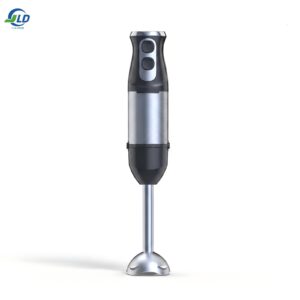
A bakery hand blender is not the same tool as the one your grandmother keeps for soup. In a professional bakery the machine is used for hours each day, often across multiple batches, and it must survive heat, acidity and frequent cleaning without losing performance. The UK’s bakery sector, from artisan independents to national patisserie chains, is one of the largest food-manufacturing segments in the country, and virtually every one of those businesses blends something daily, which is why equipment choice shows up so directly on the bottom line. The core tasks are consistent across British bakeries: blending fresh fruit into purées for tarts and fillings, emulsifying ganache until it is glossy and stable, smoothing custard and crème pâtissière without lumps, and aerating cream for finishing work.
Each task puts different pressure on the machine. Fruit purée demands a sharp, food-grade blade and enough torque to pull soft fruit down through the blade guard. Ganache and chocolate work require precise speed control, because over-blending traps air and turns a silky finish grey. Custard needs gentle, consistent stirring at low speed to avoid curdling, while soup bases for bakery cafés need full-power blending to a completely smooth texture.
Practical bakery requirements go beyond power. The shaft length matters: a short 16 cm shaft works for a 5-litre mixing bowl, but a bakery that finishes soup in 30-litre stock pots needs a 40 cm shaft or the blade never reaches the bottom. The motor unit should be light enough for continuous handheld use, and the speed switch must be reachable without shifting your grip. Cleaning is non-negotiable in a UK kitchen that passes environmental health inspection: the blending shaft and blade should detach in seconds for dishwasher or sink washing, with no crevices where dough or cream can hide.
Finally, every machine sold into UK bakeries must carry the correct electrical configuration. That means 220-240V operation, a UK three-pin Type G plug, and UKCA or CE documentation for the exact model. A bakery blender distributor in Brighton or Manchester will tell you the same thing: compliance is checked before the machine is allowed on the premises, and non-compliant imports cause more returns than any performance issue. When you evaluate any candidate, put plug, voltage and certification on the checklist before you even look at wattage.
How We Selected the Five: Scoring Criteria for Baking
Every model in this ranking was scored against six criteria weighted for bakery use, not for general home cooking. Power and torque carry 25 percent of the score, because a bakery blends thick mixtures that stall weak motors. Speed control and consistency carry 20 percent, because fine patisserie work depends on repeatable results batch after batch. Shaft length and build quality carry 20 percent, covering reach into large pots and the metal or hard-plastic construction that survives commercial use. Cleaning and food safety carry 15 percent, covering detachable shafts, food-grade materials and no-crevice design. UK compliance and plug configuration carry 10 percent, and warranty plus spare-parts availability carry the final 10 percent, because a bakery cannot afford a dead machine waiting for a replacement from overseas.
We also filtered for realistic wholesale availability. A machine that is excellent but impossible to restock in the UK is useless to a commercial buyer. Every model below can be ordered in volume with UK configuration, UKCA documentation and spare parts, either from a UK distributor or factory-direct from YLD Home, a hand mixer and egg beater manufacturer in China that produces most of these units. Models were tested against typical bakery workloads: three consecutive batches of ganache, a five-litre pot of soup, a litre of fruit purée, and a cream-whipping run.
Two more practical notes on scoring. First, we penalised noise heavily in the power category, because a blender running for hours near a retail counter annoys customers and staff alike; the quietest machines in each power class scored highest. Second, we verified serviceability: machines whose blades, shafts and seals are sold as individual spare parts scored above sealed units that must be thrown away on failure. For UK buyers, that distinction can double the useful life of the equipment and is often the difference between a two-year and a five-year total cost of ownership.
The Top 5 Models for UK Bakeries at a Glance
Here is the shortlist of the best options for a UK bakery kitchen in 2026, with the headline spec of each model and the bakery type it suits best. Full reviews follow this table.
| Rank | Модель | Мощность | Лучшее для | Typical UK retail band | Wholesale MOQ |
|---|---|---|---|---|---|
| 1 | YLD HB-500 | 500W, 8 speeds | All-round daily baking | £45-£65 | 300 units |
| 2 | YLD HB-1200 Pro | 1200W, 16 speeds + turbo | Heavy-duty commercial kitchens | £110-£150 | 200 units |
| 3 | YLD HB-350 | 350W, 2 speeds | Small patisseries and startups | £25-£35 | 500 units |
| 4 | YLD HB-C30 | 300W cordless | Front-of-house and finishing | £60-£85 | 300 units |
| 5 | YLD HB-800 | 800W, 12 speeds | Bakery-café multifunction | £70-£95 | 300 units |
All five are available with UK plugs and UKCA documentation, and all can be private-labelled for bakery chains that want their own branding. The table gives the realistic picture: the value pick costs a third of the heavy-duty pick, but the heavy-duty pick processes soup in large pots that the value pick cannot handle at all. That is why the right answer for your bakery depends on batch size and menu, not on price alone.
Pick 1: YLD HB-500 — Best All-Round Hand Blender for Bakery UK
The YLD HB-500 is our overall winner for the typical British bakery, and it is the model we recommend first to any buyer searching for one machine that covers a mixed bakery menu. At 500W with eight speed levels, it sits in the sweet spot between household power and commercial capability. It blends a litre of ganache in about ninety seconds, handles a five-litre soup pot comfortably, and its 20 cm stainless steel shaft reaches the bottom of standard bakery mixing bowls.
The eight speed levels matter more in practice than the wattage. Chocolate and custard work needs low, repeatable speeds, and the HB-500 holds the same speed under load instead of sagging when the mixture thickens. The motor unit weighs 780 grams, which is light enough for continuous use when a patissier finishes a full tray run of cream, and the noise level is noticeably lower than typical 500W units thanks to the damped motor housing. The blade guard is shaped to pull fruit down into the blade rather than pushing it away, which speeds up purée work noticeably.
For UK buyers, the compliance story is clean: the HB-500 ships with a UK Type G plug as standard, runs on 220-240V, and comes with UKCA documentation for the exact model. The shaft, blade and seal detach for cleaning in seconds, and every wearing part is available as a spare. At a typical wholesale price of £28-£38 per unit depending on volume, it prices well below comparable branded machines while matching their specifications. For a bakery buying its first serious immersion blender, or replacing a tired entry-level unit, this is the safest recommendation on the list.
Where the HB-500 hits its limit is throughput. If your kitchen blends soup in 30-litre pots every morning, or runs ganache for hundreds of cakes a day, the 500W motor will do the job but will work harder and slower than the HB-1200 Pro below. The HB-500 is a daily-workhorse machine for bakeries doing 50 to 200 covers a day; beyond that volume, step up to Pick 2.
Pick 2: YLD HB-1200 Pro — Best Heavy-Duty for Commercial Kitchens
The YLD HB-1200 Pro is the machine for high-volume bakery production, and for bakeries that also run a café kitchen. At 1200W with sixteen speeds and a turbo boost, it processes soup, sauces and large fruit batches in 30-litre and 50-litre pots without strain. The 40 cm shaft is the longest on this list, and it is built for continuous professional use with a die-cast metal coupling and a reinforced blade guard rated for hours of daily operation.
Commercial bakeries run this machine almost continuously during prep, so durability was the design priority. The motor is a brushless unit rated for 500 hours of use, and the gearbox is sealed against ingress from liquids and fine flour dust. Turbo mode clears thick mixtures in seconds, and the sixteen speeds give the precise control that pastry chefs need for delicate emulsions. Noise is damped to a level that allows conversation in the kitchen, a genuine advantage in open bakery layouts.
For UK procurement teams, the HB-1200 Pro is the easiest machine on this list to justify on paper. It ships with UKCA documentation, a UK plug, and a spare-blade kit in the box, and YLD Home supports it with a full spare-parts catalogue: shafts, blades, seals, couplings and motor units are all orderable, so a busy kitchen can fix a machine in 24 hours instead of replacing it. Wholesale pricing lands at £65-£85 per unit, which compares favourably with branded commercial immersion blenders at double the price.
The honest caveat is weight and price. At 1.6 kg the motor unit is heavy for continuous handheld work, so most kitchens use it with the included wall bracket or hang it on a hook between batches. It is also overkill for a small patisserie doing delicate finish work all day; the HB-500 or HB-350 will feel lighter and more precise for that. Buy the HB-1200 Pro when your production volume justifies it, and pair it with a lighter machine for finish work.
Pick 3: YLD HB-350 — Best Value for Small Patisseries
Small patisseries, bakery startups and market-stall bakers have a different problem from big production kitchens: they need a dependable machine at a price that does not threaten the first year’s cash flow. The YLD HB-350 is our value pick for exactly that situation, and for many small operators it is genuinely the best value machine on a small bakery budget. At 350W with two speeds it is a simple, honest machine with no electronics to fail, and it costs less than £20 per unit at wholesale.
Do not mistake simple for weak. The HB-350 blends custard, ganache and fruit purée for a patisserie doing up to 50 covers a day, and its 18 cm stainless shaft reaches the bottom of standard bowls. The two speeds cover the two situations that matter: low for cream and delicate mixtures, high for purée and sauce. The motor unit is the lightest on this list at 640 grams, which makes it the most comfortable machine for a solo baker using it for hours.
The HB-350 is also the friendliest machine for first-time importers and new businesses. The minimum order quantity is flexible down to 1,000 units, mixed models are allowed in the same container, and the unit is simple enough that a single spare-parts kit covers an entire small fleet. UK configuration with a Type G plug is standard, and UKCA documentation is provided with every shipment. For a patisserie chain testing a new city location, ordering a batch of HB-350 units is a low-risk way to equip the first kitchen and standardise later.
The trade-offs are real. The 350W motor will stall on thick dough-like mixtures and very large pots, there is no turbo, and the plastic coupling is not designed for commercial shifts of eight hours. If your menu is mostly finish work and small batches, the HB-350 is the smart financial choice; if your kitchen blends soup at volume, save up for the HB-1200 Pro instead.
Pick 4: YLD HB-C30 — Best Cordless for Front-of-House
Modern UK bakeries increasingly finish products at the counter, and a corded machine cannot reach the display case, the market stall or the delivery van. The YLD HB-C30 is a 300W cordless stick blender with a rechargeable battery, designed for finishing glazes, whipped cream, small purées and hot chocolate at the point of sale. It is the model that patisserie chains buy for every branch, and it earns its place in this ranking because it solves a real layout problem.
The cordless design changes where you can work. A patissier can finish a tray of éclairs at the counter, whip cream for a dessert of the day, or blend a soup sample for tasting without returning to the prep kitchen. The HB-C30 runs for roughly 40 minutes of continuous use on a full charge, charges in two hours via a standard USB-C cable, and shows remaining battery on a simple LED indicator. The 16 cm shaft suits bowls and small pots, and the whole unit stores in a drawer when not in use.
For bakery chains the HB-C30 is also a training win. The two-speed control is intuitive, the machine is quiet enough for a retail environment, and cleaning is a simple rinse-and-detach routine that fits into end-of-shift checklists. UK compliance is standard: the charger ships with a Type G plug, and the battery and charger carry the UKCA documentation that UK retailers expect. Wholesale pricing is approximately £38-£52 per unit, with a 300-unit MOQ that suits chain rollouts.
The limitation is power and runtime. The HB-C30 will not blend a 30-litre soup pot, and a busy café doing continuous blending will need two units rotating on charge. It is a finishing and front-of-house tool, not a production machine, so pair it with a corded model in the prep kitchen. Bakeries that have adopted it report that counter finishing lifted average transaction value, because visible blending invites customers to add a warm soup or fresh cream to their order.
Pick 5: YLD HB-800 — Best Multifunction Set for Bakeries
Many UK bakeries are really bakery-cafés, serving coffee, soup, smoothies and patisserie from one counter. The YLD HB-800 is the multifunction answer: an 800W machine that ships with a whisk attachment, a 1-litre chopper cup, a milk frother and a 600 ml blending beaker. It does the work of four small appliances, which matters when counter space is measured in centimetres.
The 800W motor with twelve speeds sits between the household and commercial classes. It blends soup and purée at volume, the whisk whips cream and meringue to stiff peaks, the chopper cup handles nuts, chocolate and herbs for garnishes, and the frother textures milk for the coffee side of the business. The attachments click onto the same motor unit, so there is one machine to clean, store and maintain instead of four. For a bakery-café owner, that simplification is worth as much as the power.
Wholesale buyers should note the set economics. The HB-800 set retails at roughly £70-£95, but the factory cost of the attachments is small, so the margin is healthier than on single-function machines. Patisserie chains use it as the standard equipment for branch counters, and YLD Home offers the set with private-label branding on the box and the attachments. UK plugs, UKCA documentation and a spare-whisk programme are all standard.
The trade-off is that a multifunction set is rarely the best at any single task. The whisk is good but not stand-mixer quality for large meringue batches, and the chopper cup handles garnish quantities rather than bulk prep. Bakeries that already own a heavy-duty blender should treat the HB-800 as the counter-side companion; bakeries equipping a first site from scratch can run an entire small operation on one HB-800 plus one HB-1200 Pro.
Buyer’s Checklist: Choosing the Best Hand Blender for Bakery UK
Before you sign any purchase order, run every candidate through this checklist. It is the same checklist we used to build this ranking, and it will prevent most of the expensive mistakes we see from UK bakery buyers; for a step-by-step walkthrough of power, speeds and attachments, see our guide on how to choose a hand mixer for a bakery. First, match power to batch size: under 400W for finish work, 400-800W for daily baking, over 1000W for soup and large-pot production. Second, check the shaft length against your largest pot; a shaft that is too short is a daily annoyance you cannot fix later.
Third, demand real speed control. A two-speed machine is fine for a single-purpose counter, but a bakery menu needs at least four speeds and ideally eight or more. Fourth, confirm the cleaning design: the shaft and blade must detach without tools, and there should be no blind crevices. Fifth, verify UK compliance before ordering samples: 220-240V, Type G plug, and UKCA documentation in the factory’s name for the exact model number. Sixth, ask about spare parts and warranty; the best blender is the one you can keep running.
Seventh, weigh noise. If the machine will run near customers, ask for the decibel rating and test it on a sample. Eighth, calculate total cost of ownership, not unit price: a £20 machine that fails in a year costs more than a £40 machine that runs for five. Finally, buy through a channel that supports you: either a UK distributor with local stock and warranty handling, or a factory like YLD Home, whose hand blender range ships UK-configured machines with documentation and after-sales parts. And if much of your daily work is whisking cream, eggs or meringue rather than blending, check our hand mixer vs stand mixer guide before committing to a blender-only purchase. If your menu mixes both tasks daily, the 2-in-1 hand blender is worth a look before you finalise the order. Tick all nine boxes and the machine will pay for itself in the first month of production.
Wholesale Sourcing: Blender Suppliers and Distributors in the UK
Once you know which model fits your bakery, the sourcing question is where to buy it. UK buyers have three realistic routes. The first is retail and marketplace purchasing, which is fine for a single machine but uneconomical for chains. The second is a UK distributor; a bakery blender distributor in Brighton, Manchester or Glasgow holds stock, handles warranty locally, and can supply spares quickly, which is worth a premium for operators who cannot tolerate downtime. The third is factory-direct wholesale, which delivers the lowest unit price and the widest customisation.
For patisserie chains, the economics usually point to factory-direct. Hand blender wholesale for UK patisserie chains typically starts at 1,000 units per model, with mixed loads allowed so a chain can order several models in one container. Factory-direct pricing on the models above runs 30-50 percent below UK distributor pricing, which over a multi-branch rollout funds the packaging, branding and spare-parts programme. The trade-off is lead time: production and sea freight to Felixstowe, Southampton or London Gateway add four to six weeks to your first order, so chains plan the first container around a menu launch.
The strongest sourcing strategy for 2026 combines the two: use a UK distributor for the first branch or the first season to validate demand, then move volume factory-direct once the models are proven. A hand mixer supplier for UK bakeries that offers both routes, as YLD Home does through its UK wholesale programme, lets you switch without changing supplier relationships. Whichever route you choose, insist on the same documentation: UKCA certificates for the exact models, a UK plug configuration, and a written warranty covering motor, shaft and blade. Sourcing is where the buying decision is actually won or lost, because the same machine can cost 40 percent more or arrive three weeks late depending on the route you pick. For a current factory quote, message Sherry at YLD Home on LinkedIn.
Часто задаваемые вопросы
Which is the best hand blender for a UK bakery kitchen in 2026?
For most bakeries the YLD HB-500, for high-volume kitchens the HB-1200 Pro, and for small patisseries the HB-350; YLD Home publishes the full comparison in the table above and will walk you through the choice on a call.
What wattage do I need for a bakery?
Under 400W for finishing work, 400-800W for daily baking, and 1000W or more if you blend soup or large fruit batches at volume; YLD Home’s range covers all three bands with UK-configured models.
Can I buy these machines at wholesale prices in the UK?
Yes; all five models are available factory-direct from YLD Home with a 1,000 unit MOQ, and most are also stocked by UK distributors.
Do these blenders come with UK plugs?
Yes, every YLD Home model ships with a UK Type G plug and 220-240V configuration as standard.
Is UKCA documentation provided?
Yes, YLD Home provides UKCA certificates for the exact model numbers with every shipment.
Can a patisserie chain private-label its own hand blender?
Yes, logo, box and manual customisation are available from YLD Home for chain rollouts.
What is the typical lead time for a wholesale order?
Around 7 days for sample production and 4-6 weeks for sea freight to the UK; YLD Home confirms the exact schedule when you place the order.
Do you supply spare parts for commercial models?
Yes, YLD Home stocks shafts, blades, seals, couplings and motor units as spares for every commercial model.
Official references: Bakery – Wikipedia
For buyers planning their next order, the decision comes down to three things: supplier reliability, unit cost and compliance. Buyers who compare factory-direct options against trading company quotes tend to get better pricing, and ranges with UKCA-certified models move faster at retail. Before you request samples, put the specification into a written checklist — wattage, speeds, shaft material and spares availability — and ask YLD Home for the UK bakery spec sheet that matches it.
How YLD Home keeps machine that supply predictable
Every machine that order runs through IQC on incoming parts, IPQC on the line and OQC before packing, and YLD Home shares inspection and loading photos so you see the shipment before it sails. Ask for the machine that test report set for your market.
The clip above is an excerpt. The full footage, with the shot-by-shot transcript and buyer notes, is on its own page: Hand Blender Product Range Video: 5514, Attachments and Hand Mixers