









In this guide: Why BPA-Free Matters · UK Food Contact Material Rules · BPA-Free vs Food-Grade · Material Breakdown · Verifying a Stick Blender Wholesale Supplier · BPA Free Stick Blender Wholesale Sourcing Checklist · Certifications and Test Reports · Claims That Fail UK Audits · Food Safe Blender Supplier Bristol · FAQ
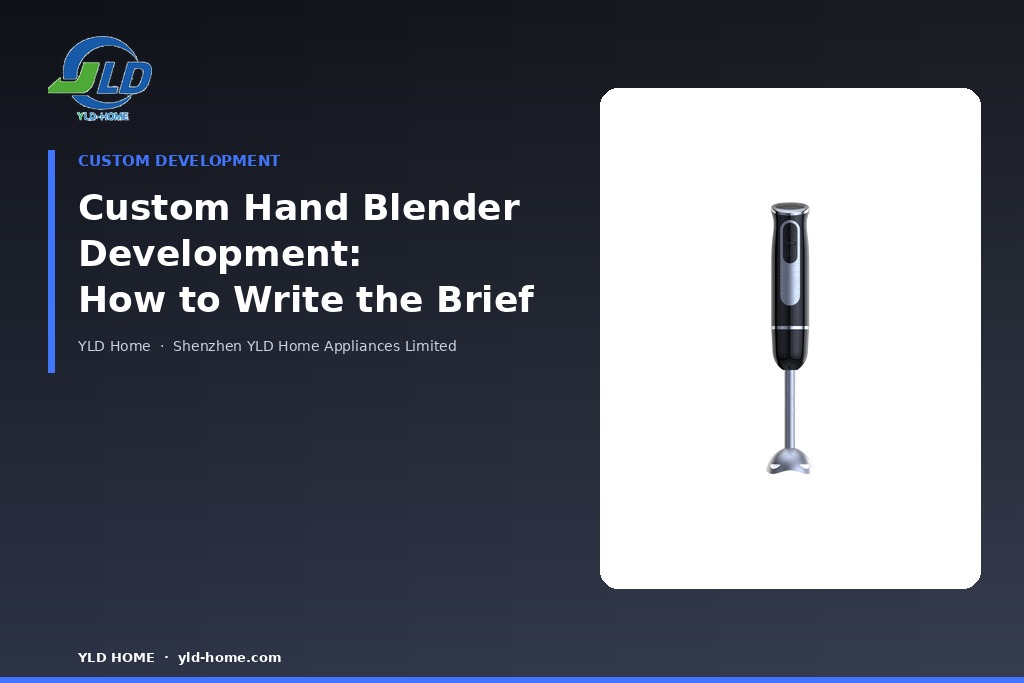
When UK buyers plan a bpa free stick the process order, the first question is rarely about wattage or price. It is about what the product is made of, whether those materials are legal for food contact, and whether the paperwork proves it. This guide walks through the UK rules, the materials, the certificates, and the sourcing checklist that keeps a bpa free stick blender wholesale programme safe, sellable and audit-proof in 2026.
Before the paperwork, it helps to see the quality story on the factory floor. The short tour below shows how a bpa free stick blender wholesale line checks food-contact materials, seals and finished units before anything ships:
bpa free stick the process
Why BPA-Free Matters for UK Food Safety
Bisphenol A, or BPA, is a chemical used in polycarbonate plastics and epoxy resin linings. For decades it appeared in food containers, water jugs and the plastic components of kitchen appliances, including the blending cups and shaft sleeves of immersion blenders. The concern is migration: when food, especially hot or acidic food, touches a plastic containing BPA, trace amounts can transfer into the food. European regulators have progressively tightened their view of that transfer, and consumer awareness in the UK has followed.
For a wholesale buyer, BPA is not just a health talking point; it is a market access issue. UK supermarkets, restaurant groups and marketplaces increasingly reject products that cannot demonstrate food contact safety. A stick blender that fails a material check can be delisted from Amazon UK, refused by a catering buyer, or held at customs when the documentation is incomplete. In other words, “BPA-free” is now a commercial specification, not an optional feature.
The science explains the caution. BPA is an endocrine-disrupting chemical, meaning it can interfere with hormone systems even at low doses. The European Food Safety Authority (EFSA) re-evaluated BPA and cut the tolerable daily intake dramatically, and while the UK maintains its own food safety regime, UK regulators monitor the same evidence. A litre of hot soup blended with a 1500W commercial immersion blender, for example, creates exactly the conditions where migration matters: heat, acidity, and prolonged contact between food and the shaft.
The practical consequence for importers is simple. If you are bringing stick blenders into the UK, every component that touches food must be free of BPA and documented as such. Treat any supplier who cannot produce a BPA test report for the exact model with suspicion, because a bpa free stick blender wholesale shipment is only as good as the test report behind it.
UK Food Contact Material Regulations
Let’s talk regulations, because this is where first-time importers get unstuck. Food contact materials in the UK sit on a legal framework inherited from the EU and now enforced nationally. The umbrella requirement is that materials and articles intended for food contact must not transfer their constituents into food in quantities that endanger human health, change the composition of the food, or deteriorate its taste and smell. That principle covers every part of a stick blender that touches food: the stainless shaft, the blade, the blending beaker, the silicone gaskets and any plastic scoop or cup supplied in the box. The official GOV.UK guidance on food contact materials sets out the framework and the duties of UK businesses, and it is the first document a new importer should read.
The plastics used in blenders are regulated under the retained EU Regulation 10/2011, which sets an overall migration limit of 10 mg of substance per dm² of food contact surface, plus specific migration limits for individual substances. BPA itself is restricted: under current rules it may not be detected in food at levels above the analytical limit of detection (0.01 mg/kg), and the same restriction now extends to several other bisphenols. The Food Standards Agency (FSA) and local authority trading standards enforce these rules, and importers are the responsible economic operators, meaning the UK company placing the product on the market holds the legal duty.
There is also a geography wrinkle that catches importers. Great Britain (England, Scotland and Wales) applies the retained GB framework, while Northern Ireland continues to follow EU food law under the Windsor Framework. In practice, a certificate set that satisfies the EU rules satisfies both sides of the Irish Sea, which is why the most experienced suppliers simply keep everything aligned with EU 10/2011 and its amendments.
| Regulation or rule | What it controls | Who enforces |
|---|---|---|
| Retained EU Regulation 1935/2004 | General safety framework for all food contact materials | FSA, trading standards |
| Retained EU Regulation 10/2011 | Plastics: authorised substances, migration limits | FSA, trading standards |
| UKCA / CE marking | Electrical safety of the appliance itself | OPSS, market surveillance |
| UK REACH | Chemical substances, including BPA restrictions | HSE |
A bpa free stick the process import therefore needs two parallel document sets: electrical compliance (UKCA or CE) and food contact compliance. Buyers who only ask for the electrical certificate discover the gap at the worst possible moment, usually when a retail buyer requests the food contact file during due diligence.
BPA-Free vs Food-Grade Labels Explained
The two terms are often used as if they were the same, and they are not. “BPA-free” is a narrow claim: it says that bisphenol A was not used in the material. “Food-grade” is a broader claim: it says the material is suitable for contact with food under the intended conditions of use. A product can be BPA-free and still fail food-grade requirements, for example because other bisphenols such as BPS or BPF were substituted in, or because the material releases heavy metals, plasticisers or odour compounds.
This distinction matters commercially. When a UK buyer sees “BPA-free” printed on a box, the natural assumption is that the product has been tested and approved. In reality, many factories print the claim because the raw material supplier told them the resin was BPA-free, with no laboratory report behind it. The claim then travels through the chain and lands on the importer’s liability.
There is a second trap: substitution. When polycarbonate was phased out of food containers, some manufacturers switched to materials with similar chemistry, and BPS became the best-known replacement. BPS is now treated with the same regulatory suspicion as BPA, so the correct question to a supplier is not “is it BPA-free?” but “what bisphenols were tested, and what were the results?”. A good food grade hand blender manufacturer answers with a specific migration report naming the substances tested, not with a marketing phrase.
The practical translation for buyers is a two-level check. Level one: confirm the material list for every food-contact component. Level two: confirm the test report covers the actual substances of concern, including bisphenols, heavy metals and overall migration. If a supplier can only offer a generic “food-grade materials” line in an email, keep looking.
Materials in a BPA-Free Stick Blender
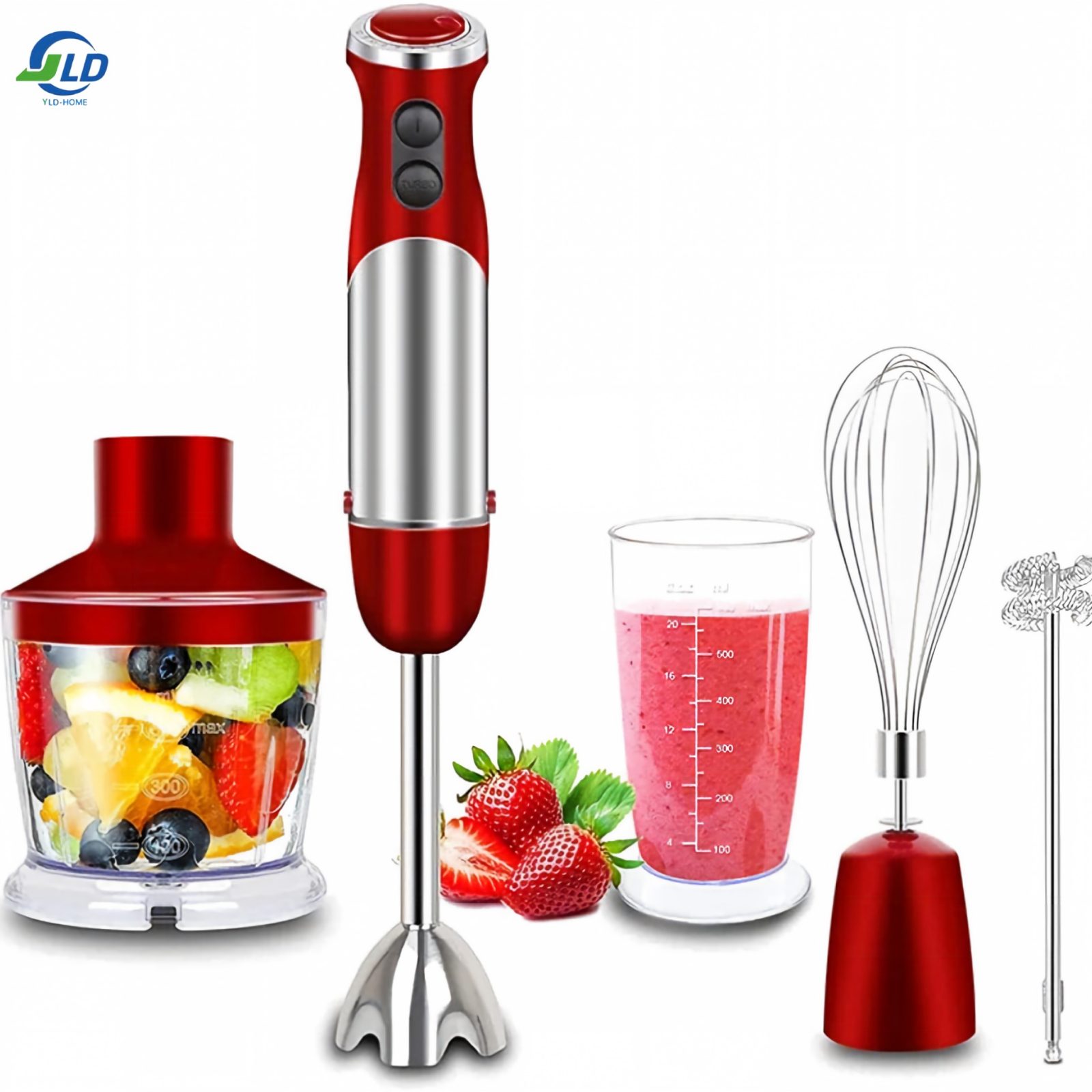
Knowing which materials are acceptable makes it much easier to evaluate a sample and to spot a supplier who is cutting corners. A well-built, genuinely BPA-free stick blender uses stainless steel wherever food contact is heavy, and food-approved polymers only where steel is impractical.
| Component | Typical food-safe material | Food contact role |
|---|---|---|
| Blending shaft | 304 stainless steel | Direct, prolonged contact with hot food |
| Blade assembly | 304 or 420 stainless steel | Direct contact, high wear |
| Blending beaker / cup | Polypropylene (PP) or Tritan | Direct contact, hot and acidic food |
| Silicone gaskets and seals | Food-grade silicone | Direct contact, heat exposure |
| Whisk and chopper accessories | Stainless steel + PP | Direct contact |
| Motor housing and handle | ABS or similar | No food contact |
| Scoop or measuring cup | PP | Direct contact |
The shaft and blade are the heart of the product, and stainless steel is the right answer there for two reasons: it has effectively zero migration risk, and it withstands the heat and acidity of soup, sauces and smoothies. When a factory offers a plastic or plated shaft to save cost, that is the moment to walk away.
Polypropylene is the workhorse plastic for beakers and cups. It is stable, dishwasher-tolerant and cheap, and it does not require BPA by design. Some brands upgrade to Tritan, a copolyester with excellent clarity and impact resistance; Tritan is marketed as BPA-free and is widely used in premium blender cups. The gaskets are worth a close look. In our own tests, it’s the part where cut-price factories most often cut corners: genuine food-grade silicone passes migration and sensory tests, while non-food grades can release odour or plasticiser traces into the first batch of soup.
When you receive samples, the first ten minutes of inspection should cover materials: magnet test on the shaft (304 stainless is non-magnetic), check the recycling marks on plastic parts (PP is marked 5), smell the silicone gasket, and read the resin grade stamps on the moulded parts. None of this replaces a laboratory report, but it tells you which suppliers to bother testing at all. YLD Home, a manufacturer that supplies UK-configured bpa free stick blender wholesale stock, publishes the material grade of every food-contact component in its product datasheets, which is the standard UK buyers should expect. Its catering line, the 1600W PressPro hand blender, is documented to exactly this level.
How to Verify a Stick Blender Wholesale Supplier
Finding a genuine food grade hand blender manufacturer is a verification exercise, not a brochure exercise. The factory’s own claims matter far less than the documents and behaviours you can check. Start with the factory’s certification stack: ISO 9001 for quality management, and ideally BRC or BSCI for social and food-safety-adjacent audits. These do not prove food contact safety on their own, but they tell you whether the factory runs controlled processes at all.
The critical document is the food contact test report for the exact model you intend to buy. It should come from an independent laboratory, such as SGS, Intertek, TÜV or a national testing institute, and it should name the model, the materials tested, the test standard (usually EU 10/2011 or the German LFGB), the migration results, and the date of testing. Check three things before you accept it: the model number matches the product, the report is current (ideally within the last two years, and matched to the production batch), and the tested parts include the shaft, blade, cup and gasket, not just “the product” as a single line. YLD Home follows this structure in its own documentation, which is why its reports are routinely accepted by UK retail due diligence teams.
Then order a sample and do two things with it. First, use it with hot, acidic food exactly as a UK kitchen would, and check for odour, taste transfer or discolouration. Second, send one sample to a UK or EU laboratory yourself for a targeted BPA and overall migration test. This costs a few hundred pounds and it is the single best due-diligence spend an importer can make, because it converts the factory’s claim into your evidence.
Finally, look at batch traceability. A food grade hand blender manufacturer should be able to tell you which raw material lot went into which production batch, and to re-run tests when the resin supplier changes. Factories that cannot answer batch questions cannot support you when a customer or regulator asks for the paperwork after delivery. In food contact goods, the document trail is the product, which is why our guide to working with a hand blender manufacturer in China makes documentation verification the first step, before price is ever discussed.
BPA Free Stick Blender Wholesale: Sourcing Checklist
This checklist condenses the whole guide into the sequence a buyer should run on every bpa free stick blender wholesale inquiry, from first contact to container release. Work through it in order. You’ll be tempted to skip the verification steps for speed. Don’t. A failed batch costs far more than a slower start.
| Check | Why it matters | Red flag |
|---|---|---|
| 1. Material list per component | Confirms which parts touch food and what they are made of | Supplier cannot list materials for the cup, gasket or shaft |
| 2. BPA / bisphenol test report | Proves the claim for the exact model | Report names a different model or no lab name |
| 3. Overall migration report | Proves compliance with EU 10/2011 limits | Report older than two years or batch mismatch |
| 4. UK plug and 220-240V configuration | Required for UK retail and marketplace listing | Supplier ships EU or US plugs by default |
| 5. Sensory test (odour and taste) | Hot food use must not transfer smell or flavour | Silicone smells rubbery on the sample |
| 6. Batch traceability system | Links raw material lots to production batches | No batch records available on request |
| 7. Sample re-test by your own lab | Converts factory claims into importer evidence | Factory refuses or delays a sample |
| 8. Written declaration of conformity | Names the importer as responsible economic operator | Supplier offers no DoC or UKCA/CE file |
Run the checklist on paper first, then on samples. Suppliers such as YLD Home work through the same eight steps internally before they quote, which is why their quotations arrive with documents attached rather than promised, and their hand blender range lets buyers compare documented models side by side. For BPA-free stick blender stock specifically, the wholesale blenders range lists the UK-configured models importers order most, each with its food contact file attached. A supplier who passes all eight steps has done the work; a supplier who fails on steps one or two is almost certainly not worth the time to test, because the foundation of the whole bpa free stick blender wholesale transaction is the material story, and without that there is nothing to build on.
Certifications and Test Reports You Need
Buyers often ask for “certifications” without knowing which ones matter for the UK. The distinction to keep in mind is between reports that prove food safety and documents that prove legal compliance. Both are needed, and they are not interchangeable.
| Document | What it proves | Needed for the UK? |
|---|---|---|
| BPA / bisphenol migration test report | BPA below detection limit in food-contact parts | Yes, the core evidence |
| Overall migration test report | Total substance transfer under EU 10/2011 | Да |
| LFGB report (German standard) | Strict migration and sensory testing | Strong supporting evidence, not a UK requirement |
| FDA 21 CFR compliance letter | US food contact compliance | Useful for export flexibility, not required for UK |
| UKCA or CE declaration of conformity | Electrical safety of the appliance | Yes, required for sale |
| RoHS declaration | Restricted hazardous substances in electronics | Yes, required |
| UK REACH registration evidence | Chemical registration, including BPA restrictions | Yes, required |
The LFGB report deserves a special mention because UK and EU retailers recognise it as the gold standard for food contact: it tests migration under realistic conditions and includes sensory testing, so a product that passes LFGB rarely surprises anyone later. Many UK buyers therefore ask their Chinese supplier for the LFGB report even though the legal requirement is the EU 10/2011 framework, because it de-risks the whole chain. YLD Home publishes its UK appliance certification and test documentation openly on its appliance certification page, which lists the certificates behind each model — exactly the transparency UK buyers should demand from any food grade hand blender manufacturer.
The declaration of conformity ties everything together. It should name the manufacturer, the importer, the model, the standards applied, and the signature of a responsible person. Keep the full file for at least ten years, because food contact documentation must be available to enforcement authorities on demand, and it becomes the evidence base if a customer ever raises a query about a batch you supplied.
Common BPA Claims That Fail UK Audits
The most common failure is not a product that contains BPA; it is paperwork that does not prove what it claims. Trading standards and retail due diligence teams see the same patterns repeatedly, and each one is avoidable.
The first pattern is the wrong-model report. A supplier shows a BPA test report from a different model in the same family, on the theory that “the materials are the same”. Enforcement does not accept that logic, and neither should you: the report must name the exact model, because factories change resin suppliers and moulds without telling anyone. The second pattern is the generic food-grade letter. A one-page PDF from the factory saying “our products are food grade” is not a test report; it is marketing. If the letter has no laboratory name, no standard, no date and no model, it is worth nothing at an audit.
The third pattern is substitution. A factory proudly states “BPA-free” while using a resin that contains BPS or another bisphenol. Since UK and EU rules now restrict the broader bisphenol family, the honest question is what bisphenols were tested, and the honest answer includes a report. The fourth pattern is the expired or batch-mismatched report: valid documents that describe a production run from three years ago, while the current batch uses a different material lot. Batch traceability exists precisely to close this gap.
The fifth pattern is counterfeit reports. High-volume categories attract document forgery, so verify the laboratory directly: call or email the lab named on the report with the report number and ask whether it issued that document for that model. Legitimate labs confirm quickly; fake reports do not survive the call.
The consequences of failure are real. A product found non-compliant can be seized at the border, delisted by marketplaces, recalled from retail, and named in FSA alerts, which destroys a brand faster than any margin saving could justify. That’s why the sourcing checklist exists: bpa free stick blender wholesale claims that fail audits fail because somebody skipped a verification step, not because the test was impossible.
Food Safe Blender Supplier Bristol: Sourcing Close to Home
Bristol is a useful case study for UK food businesses. The city and its surrounding region host thousands of food producers, caterers, artisan manufacturers and restaurant groups, and the local food economy runs on trust: a supplier recommendation travels fast, and a food safety failure travels faster. When a Bristol kitchen or distributor searches for a food safe blender supplier Bristol, they usually want the same thing as a buyer in Manchester or Glasgow: a supplier who can prove the food contact story, not just tell it.
There are two sourcing routes from Bristol. The first is a UK-based importer or distributor who stocks tested, BPA-free stick blenders locally; this suits buyers who need a few units fast and value face-to-face relationships. The second is factory-direct sourcing from China with UK compliance handled at origin, which suits distributors and brands who need volume, private label or margin. The two routes are not rivals; many successful Bristol food businesses start with local stock to validate demand and then move to factory-direct as volume grows.
What matters in either route is that the food contact evidence travels with the product. A food safe blender supplier Bristol buyer should receive, without being asked twice, the material declaration, the migration reports and the batch record for every model supplied. Suppliers who treat food safety paperwork as an afterthought are the ones who will not be there when the audit letter arrives.
For distributors who want to build their own brand, the factory-direct route needs a small kitchen appliance manufacturer in China who understands UK food law. YLD Home supplies Bristol and other UK markets with BPA-free configured models, publishes food contact documentation per model, and supports mixed first orders, which lets a local distributor test two or three models before committing to volume. The same factory-direct model powers its hand blender wholesale supply for markets such as South Africa, and the combination of local market knowledge and factory-level compliance is what the UK food sector actually rewards. More UK-focused sourcing guidance is published on the YLD Home blog.
Часто задаваемые вопросы
Can Every Wholesale Batch Carry a BPA Test Report?
Yes, but only if you ask for it in the purchase order. Every batch can be traced to a report, so request the batch number and the matching laboratory document before shipment rather than after arrival. YLD Home attaches the batch-specific report to every wholesale consignment it ships. the requirement is the part that decides whether the rest of your plan survives the port.
What Is the Difference Between BPA-Free and Food-Grade?
BPA-free claims only the absence of bisphenol A; food-grade means the material passed migration and sensory testing under the intended conditions of use. They are different tests with different evidence. YLD Home documents both claims per model in its datasheets, so neither statement is left unsupported.
Do I Need UKCA and Food Contact Documents Separately?
Yes. UKCA or CE covers electrical safety and EMC; food contact migration reports under EU 10/2011 cover the parts that touch food. A wholesale blender order needs both files. YLD Home supplies the complete set with every UK-configured model, so the retailer’s technical file request is answered in one email.
How Do I Verify a Report Is Genuine?
Contact the laboratory named on the report with the report number and confirm the model, the date and the test conditions. Genuine labs answer quickly and will confirm whether the document covers the exact material used. YLD Home encourages buyers to verify its reports the same way rather than take them on trust.
Are Stainless Steel Shafts Always Safe?
304-grade stainless has negligible migration risk, but plated or unknown-grade shafts can corrode and release metals into acidic food. Ask which grade, and check that the report names the material. YLD Home specifies 304 stainless on every shaft in its blender range.
What Is the Overall Migration Limit for Blender Plastics?
10 mg per square decimetre of food contact surface under EU 10/2011, with bisphenol A at or below the detection limit of 0.01 mg/kg. Those are the two numbers an auditor asks for. YLD Home’s migration reports state both figures explicitly for each food contact component.
Can I Order Small Quantities to Test First?
Yes. Most exporters, YLD Home included, support sample orders and small trial quantities, and a mixed first load keeps the test affordable across several models. Standard production then starts at 1,000 units per model, which is where wholesale pricing becomes meaningful.
Do Silicone Gaskets Need Separate Testing?
Yes. Silicone is a food contact component in its own right and needs migration and sensory testing, so confirm it is food-grade silicone rather than a generic compound. YLD Home tests gaskets separately and includes the results in the same document pack as the shaft and bowl reports.
Official references: Food contact materials – GOV.UK