










In this guide: Why Commercial Grade · Power · Speed & Control · Blade & Shaft · Duty Cycle · Ergonomics & Safety · Spec Table · Supplier Checklist · Wholesale for Hotels · Maintenance & Warranty · FAQ
Choosing a commercial the unit supplier uk kitchens can rely on is about more than price: it decides soup consistency, staff safety and how long the machine survives a real service. This guide covers the specifications that matter, the duty cycle question, and how to source commercial models wholesale for UK hotels, restaurants and catering companies in 2026, the businesses that together form the UK catering industry (see the catering overview on Wikipedia).
Why UK Commercial Kitchens Need a Commercial-Grade Hand Blender
A household hand blender and a commercial immersion blender look similar, but they are different machines. The household model runs for a few minutes at a time, a few times a week, on light tasks. A commercial model faces hours of daily use, thick soups boiling in 40-litre pots, and staff who do not always treat equipment gently. Buying household-grade equipment for a professional kitchen is the most common procurement mistake in UK catering.
The difference shows in four areas. Motor: commercial units use larger, heavier-duty motors rated for sustained running. Shaft and blade: commercial shafts are full stainless steel with robust blade assemblies, whilst household shafts often mix plastic and metal. Duty cycle: commercial models are designed for continuous or near-continuous blending, with thermal protection. Serviceability: commercial models have replaceable blades, shafts and motor brushes, so a worn part is a repair, not a replacement.
The cost of getting this wrong is downtime. A blender that overheats mid-service, a shaft that bends in a heavy pot, or a motor that burns out after three months costs far more than the price difference between household and commercial units. For any serious UK kitchen, from a pub kitchen to a hotel banqueting operation, the the appliance for UK commercial kitchens must be specified as commercial-grade, and your supplier must back it with spare parts and warranty service. The right specification also protects the kitchen’s reputation: a blender that leaves fibrous lumps in a soup that should be silky reflects on the chef, not on the machine’s price tag. Specifying commercial-grade equipment is therefore a quality control decision as much as a procurement one.
Power: Watts Are Not the Whole Story
Commercial hand blenders range from about 500W up to 1600W, and power is the first specification buyers check. It is also the most misleading one. Wattage on the label reflects electrical input, not blending performance; two 1200W machines from different factories can feel completely different because torque, motor quality and blade efficiency vary. A supplier that UK buyers can trust will publish both wattage and performance expectations, and will let you test the difference.
Trust the test, not the label. You’ll feel the difference the first time you blend a thick soup.
See what the wattage labels actually mean in the clip below, where two commercial classes run the same thick soup batch under identical conditions.
commercial the unit supplier uk
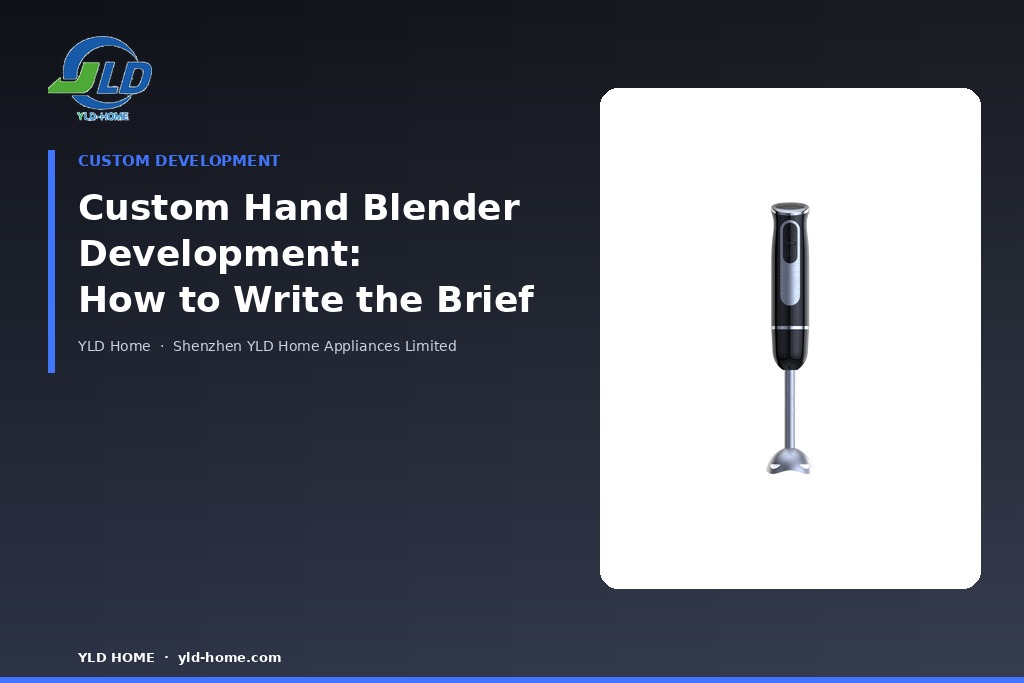
For UK kitchens, match power to the task. A 500-800W unit suits light duty: sauces, small batches, vinaigrettes and dressings. An 800-1000W unit handles standard soup and sauce production in 10-20 litre pots. A 1000-1600W unit is the workhorse for 30-40 litre pots, thick vegetable soups, and continuous production in busy kitchens. As a rule of thumb, buy one power class above your estimated need, because kitchens always find heavier uses for a good blender; at the top of the scale, the 1600W PressPro commercial this model is built for continuous heavy production.
Torque matters more than peak wattage for thick food. A motor with strong low-end torque blends a thick leek and potato soup without bogging down, whilst a peaky motor revs fast when empty and struggles under load. Ask the supplier how the motor performs under load, and test the sample with the thickest soup you actually make. Also check the motor type: quality commercial units use copper-wound motors with proper insulation, which last longer than cheaper aluminium-wound alternatives under daily UK kitchen conditions.
Speed, Speed Control and Turbo
Speed control separates a professional blender from a basic one. Entry commercial models offer two or three fixed speeds; better units offer variable speed from a dial or slider, typically 8 to 16 steps; the best add a turbo button for maximum power on demand. Variable speed matters because different tasks need different settings: folding air into a mousse at low speed, emulsifying a sauce at medium, and pulverising fibrous vegetables at high speed.
Constant speed under load is the hidden spec. A cheap motor slows down dramatically when it meets thick food, which changes texture and increases blending time. Quality commercial motors hold closer to their set speed, giving consistent results batch after batch. This is critical in UK kitchens that plate the same soup day after day: consistency is the product.
The turbo function is not a gimmick; it is the tool for the hardest jobs, breaking down fibrous leeks, celery and onions in seconds. Choose a machine where the turbo is a separate trigger, not part of the speed dial, so staff can pulse it without losing their speed setting. Digital speed control, where fitted, adds repeatability: staff can dial in a specific speed and get the same result every time. For operators running multiple sites, repeatable settings reduce training time and keep the product identical across kitchens. If catalogue naming ever confuses your procurement team, the immersion blender vs hand vs stick blender guide clarifies how the same machine family is labelled across UK channels.
Blade and Shaft Specification
The blade and shaft do the actual work, and this is where cheap machines cut corners. Commercial shafts should be full stainless steel, 304 or 316 grade, because they sit inside hot, acidic food and get scrubbed daily. A shaft with plastic components degrades, stains and eventually fails. Shaft length matters too: a 200mm shaft suits shallow pans, a 250-300mm shaft handles standard catering pots, and a 400mm shaft reaches the bottom of 40-litre stock pots without splashing the operator.
Blade design determines blending quality. Commercial blades are typically four-blade assemblies in a bell guard, sometimes with a serrated edge for tougher ingredients. The bell guard is not just safety; it creates the vortex that pulls food into the blade, so its geometry affects how quickly the blender emulsifies and how smoothly the result is. Ask the supplier whether the blade assembly is replaceable as a spare part, because blades eventually dull and a replaceable assembly extends the machine’s life for years. For the busiest kitchens, a spare shaft kept in the drawer means a blade change or a shaft repair never interrupts service; the fifteen-second swap is the difference between a fix and a failure.
For restaurant kitchens blending soups, sauces and emulsions daily, choose a unit with a detachable shaft for easy cleaning and a splash guard for deep pots. The immersion blender for restaurant kitchens must also survive the dishwasher or the sink; confirm the shaft and blade assembly are dishwasher-safe or at least fully immersible for washing. These details are easy to check on a sample and expensive to discover after a hundred units are in service.
Duty Cycle and Overheating Protection
Duty cycle is the specification most UK buyers never ask about, and it is the one that determines whether a commercial hand blender survives its first year. Duty cycle describes how long a machine can run before it needs to cool: a machine rated at 5 minutes on, 3 minutes off can be used for five minutes of continuous blending, then must rest. A household machine might be rated for one minute on, several minutes off; that is fine for home use and fatal in a busy kitchen.
Get it wrong and you’ll find out mid-service, with a queue of tickets and a motor that smells of burnt wiring.
Match the duty cycle to your operation. A café making soup in small batches can work with a 3-5 minute cycle. A hotel kitchen producing soups, sauces and purees across a service can easily hit 20-30 minutes of cumulative blending per day, so look for machines rated for longer continuous runs, ideally with a stated duty cycle of 5 minutes or more on, and shorter cool-downs. High-end units approach continuous-duty ratings with forced ventilation.
Thermal protection is the safety net. A quality motor has a thermal cut-out that shuts the machine down before the motor damages itself, instead of letting it burn out silently. When the machine overheats, it should cool and restart, not fail permanently. Ask the supplier for the duty-cycle specification in writing and for the thermal protection behaviour. This single conversation filters out household-grade units dressed up as commercial ones, which is exactly the filter a serious commercial blender supplier should pass easily. Our full guide to choosing a commercial immersion blender expands on power classes, shaft lengths and the sample testing you should run before committing.
Ergonomics and Safety in a Busy Kitchen
A commercial hand blender is held, angled and triggered thousands of times per service, so ergonomics is a productivity issue, not a comfort issue. Look for a balanced weight distribution, a soft-grip handle that stays secure when hands are wet or oily, and controls positioned so the thumb and fingers operate them naturally. A heavy, front-heavy machine fatigues staff, slows service and increases the risk of dropping the unit into a hot pot.
Safety features matter in a kitchen where the machine is used near heat, water and hard surfaces. The trigger should have a lock function so the blender cannot start accidentally, and the bell guard should be deep enough to keep blades away from the operator’s hand. The cable should be long enough to reach from the socket to the pot without stretching, and the strain relief where the cable enters the motor housing should be robust, because cable failure is one of the most common field faults.
For UK compliance, electrical equipment in commercial kitchens must meet the relevant safety standards and be maintained in safe condition; the Health and Safety Executive guidance on catering equipment is the practical reference for duty holders. Practical ergonomics checks include: does the blender hang easily on its storage hook? Can a smaller-handed chef trigger and lock the controls one-handed? Does the splash guard sit securely when blending deep pots? Test these with the actual staff who will use the machine, because their feedback predicts adoption better than any spec sheet.
Commercial Hand Blender Spec Table by Kitchen Type
| Kitchen type | Recommended power | Shaft length | Duty cycle | Accessories to specify |
|---|---|---|---|---|
| Café / deli counter | 500-800W | 200-250mm | 3-5 min on | Whisk, small chopper cup |
| Restaurant kitchen | 800-1000W | 250-300mm | 5 min on / 3 off | Whisk, splash guard |
| Hotel banqueting | 1000-1400W | 300-400mm | 5 min+ on | Spare blade kit, whisk |
| Central production | 1400-1600W | 400mm | Near continuous | Full spare parts kit |
The table also shows why multi-site operators should standardise by site type rather than buying one model for everything: a central production kitchen and a pub kitchen have different duty requirements, and standardising per class keeps procurement simple while matching the machine to the workload.
Use the table as a starting point and adjust for your actual menu. A restaurant that only makes soups in 10-litre batches can run lower in power; a hotel that produces pureed food for banqueting needs the top class. YLD Home’s commercial line covers all four classes, which lets a single procurement decision cover every kitchen in the estate. For café counters that also whisk eggs and cream, the 2-in-1 hand blender covers both tasks with one motor unit. Where a menu is still evolving, choose the class that leaves headroom: power classes are not upgradeable after purchase, so a kitchen expecting to add a banqueting line should specify the higher class from the start rather than discovering the limit mid-service. The right moment to confirm the class is the sample trial, when the machine runs against the actual menu, not the spec sheet. In our own trials, when we tested the 1200W class against a hotel banqueting menu, it ran through a full 40-litre batch without cutting out, whilst the 800W class needed a rest between batches.
Commercial Hand Blender Supplier UK: The Sourcing Checklist
Once you know the specification, sourcing is a checklist exercise. A commercial hand blender supplier uk procurement teams can verify against is one that answers all of the following in writing. Our UK clients tell us this checklist has saved them at least one bad purchase each. You can also watch the commercial line running under real kitchen loads on the YLD Home YouTube channel before you request samples.
1. Specification transparency. Can they provide full specs, duty cycle and motor type for each model, not just wattage?
2. UK compliance. Do the models carry the appropriate UKCA/CE conformity documents for the exact model numbers?
3. Samples. Can they send a sample configured for the UK for a kitchen trial, and how fast? About 7 days is the benchmark.
4. Spare parts. Are blade assemblies, shafts, motors and brushes stocked and available for the life of the model?
5. Warranty terms. What is covered, for how long, and how are claims handled in the UK?
6. Mixed ordering. Can you combine power classes and accessories in one order or container?
7. Reference sites. Can they point to UK or European kitchens using their commercial machines?
Treat the trial seriously: run the sample through a full service, not just a single pot, because duty cycle behaviour shows up only under real workloads. Note the noise level too, because a noisy blender in a small kitchen is a staff complaint waiting to happen. Work through the checklist with two or three suppliers, trial samples in real service, and score the results. The supplier that passes every line, including spare parts availability, is the one worth standardising on. YLD Home, a Shenzhen-based small kitchen appliance manufacturer, shares certificates at quotation, ships UK-configured samples within about 7 days, and stocks commercial spare parts for supported models. The certificate set for each model is listed on the appliance certification page.
Commercial Hand Blender Wholesale for UK Hotels
Hotel groups buy differently from single restaurants: procurement is centralised, quantities are larger, and every site needs identical machines, spare parts and training. Commercial hand blender wholesale for UK hotels therefore runs on standardisation. Choose one power class for banqueting kitchens, one for pastry, and one for the smaller outlets, then standardise those models across the group so staff moving between sites find the same controls. Standardisation also simplifies training: one machine to learn, one set of controls, one cleaning routine, across every site in the group. YLD Home supports hotel group procurement directly, with consolidated orders, parts kits per site and model standardisation across the estate.
Wholesale economics favour the buyer who consolidates. Ordering all sites’ machines in one purchase earns better unit pricing, and a single spare parts kit per site, rather than one-off replacements, keeps machines running with minimal downtime. Include a service arrangement in the wholesale contract: parts availability, warranty handling and a recommended spares list per kitchen. Hotels should also ask the supplier to train a nominated engineer or head chef on basic maintenance, because blade replacement and cleaning are simple tasks once demonstrated.
Volume ordering also unlocks customisation. Hotel groups can have their brand applied to the motor housing, custom accessory sets per kitchen type, and manuals written for their own training programme. A supplier experienced with hotel procurement will manage these details as standard, exactly as our hand blender wholesale guide for South Africa describes consolidated distributor buying in that market. The outcome is a lower total cost of ownership than buying cheap machines repeatedly, which is the real calculation behind commercial hand blender wholesale for UK hotels.
Maintenance, Spare Parts and Warranty
A commercial hand blender is a serviceable machine, and how the supplier handles parts decides the machine’s real lifespan. Confirm that blade assemblies, shafts, motor brushes and switches are available as spare parts, and that the commercial hand blender supplier uk you choose stocks them for the supported models. A machine is only as good as its parts supply: a dull blade that cannot be replaced turns a £150 blender into a £150 paperweight.
Establish a simple maintenance rhythm. Daily: detach the shaft and wash it, check the blade for damage. Weekly: check the cable, strain relief and trigger mechanism. Monthly: inspect the motor vents for grease build-up and confirm the thermal protection works by running a full duty cycle. Record these checks in the kitchen’s equipment log; inspectors and auditors respond well to documented maintenance.
Warranty terms should be explicit: what is covered, the duration, the claim process and how the claim is resolved without shipping the unit back to China. The best arrangement is parts replacement through the supplier with local diagnosis, plus a stock of critical spares held by the operator; the commercial models covered by parts support are listed in the hand blender range. YLD Home provides warranty support and spare parts for commercial models, and works with UK buyers on parts kits sized to their kitchen count, so a failure in service is a 30-minute repair, not a procurement crisis. Keep the parts list simple and printed inside the machine’s storage box, so any chef can find the replacement part without waiting for a phone call.
Часто задаваемые вопросы
What Should I Compare Between Two Commercial Blender Quotes?
Verify the specification, duty cycle, certificates, sample turnaround, spare-parts availability, warranty terms and reference sites against the checklist in this guide. YLD Home answers all seven points in writing at quotation, which means the comparison sits on paper rather than on a supplier’s sales call.
What Power Do I Need for a Restaurant Kitchen?
800 to 1000W covers standard soup and sauce production; go to 1300W or 1600W for heavy volume, thick ingredients or continuous service. YLD Home’s commercial range spans every power class from 500W to 1600W, so the class can be matched to the menu rather than to a catalogue page.
What Is Duty Cycle and Why Does It Matter?
It is how long the motor runs before it must cool, expressed as minutes on and minutes off. Match it to your daily blending minutes: a ten-minute duty cycle fails in a kitchen that blends for forty. YLD Home states the duty cycle for every commercial model in its specification sheet.
Can a Household the unit Be Used Commercially?
Not reliably. Household motors lack the duty cycle, the shaft bearing life and the spare-parts support a professional kitchen needs, and warranty terms usually exclude commercial use. YLD Home’s commercial models are built and rated for professional service from the first shift, with replaceable shafts and blades.
Do You Supply Spare Blades and Shafts?
Yes. Commercial models take replaceable blade assemblies and shafts rather than sealed units, so a worn shaft does not scrap the whole machine. YLD Home stocks spares for supported models and will size a parts kit to your kitchen count, which is cheaper than holding a spare machine per site.
How Long Do Samples Take?
About seven days for a commercial model configured for the UK market, including the Type G plug and the shaft length you specified. YLD Home ships the sample with the accessories you intend to order, so the trial reflects the production configuration rather than a demonstration unit.
Can Hotel Groups Order Wholesale With Custom Branding?
Yes. Volume orders can carry branding, custom accessory sets and site-standardised models, and multi-site groups benefit from one specification across properties. YLD Home manages consolidated hotel group orders with per-site parts kits, so each kitchen receives the right spares without a separate purchase order.
What Is the Warranty on Commercial Models?
Terms are confirmed at quotation, with parts replacement and local diagnosis as the standard arrangement, so a kitchen is not shipping a machine back to China for a fuse. YLD Home works with UK buyers on parts kits sized to their kitchen count, which shortens downtime more than a longer paper warranty would.
Official references: Catering – Wikipedia
Before you commit, confirm duty cycle, shaft length and spare-parts support in writing, then compare quotes on total cost of ownership rather than sticker price. YLD Home answers UK catering enquiries at MOQ 1,000 units, ships samples in about seven days and quotes parts kits sized to your kitchen count.