




In this guide:
- Why cafés choose a small blender for milkshakes over full-size machines
- What a small blender for milkshakes faces in a real shift
- Stainless steel and FDA food-contact materials
- 120V and ETL/UL compliance for café use
- Small blender for milkshakes wholesale: MOQ, pricing, lead times
- Comparing our blenders for milkshake work
- Private label for café brands
- Choosing a small blender supplier in the USA
- Cleaning, care, and spare parts
* alt:small blender for milkshakes *
Milkshakes are the quiet profit center of the American café. A $0.60 scoop of ice cream, $0.30 of milk and syrup, and a $6.50 menu price — the margin is better than coffee. But the machine matters: a café needs a small blender for milkshakes that can churn through a Friday rush without overheating, fits behind a compact counter, and cleans fast between orders. This guide covers what café owners and equipment buyers should check when sourcing a small blender for milkshakes, from motor spec and stainless steel construction to FDA compliance, MOQ, and working with a small blender supplier in the USA.
Why a Café Needs a Small Blender for Milkshakes (Not a Two-Horsepower Monster)
Walk into most US cafés and you will see a full-size commercial blender sitting on the counter, taking up a third of the prep space and costing $400 to $800. Most of them run for maybe forty seconds at a time, a few times an hour. That is a lot of machine for very little work.
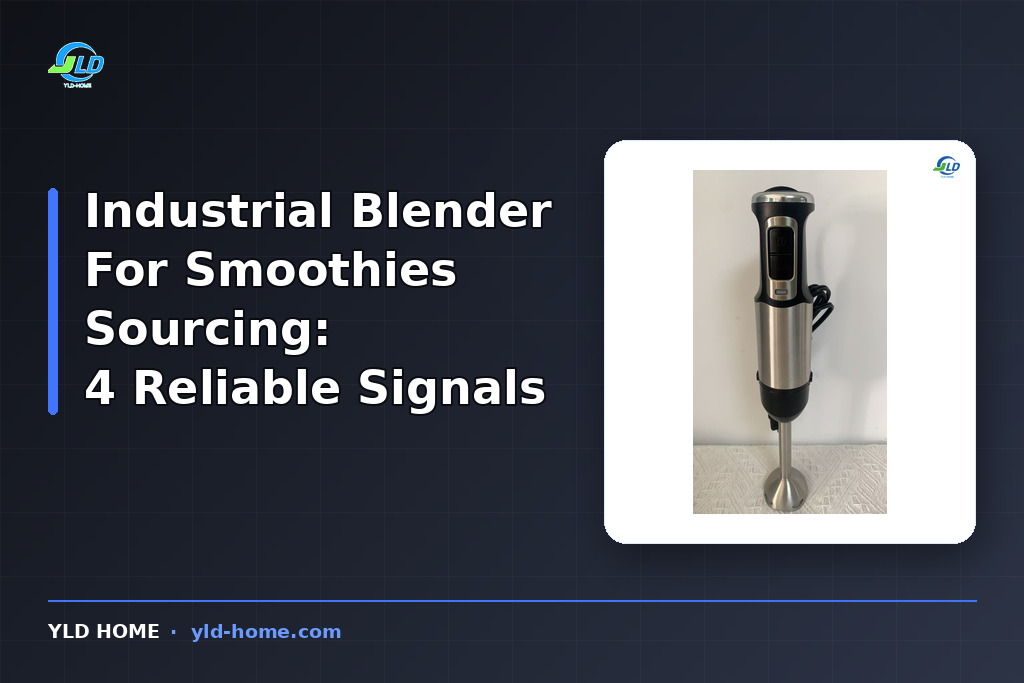
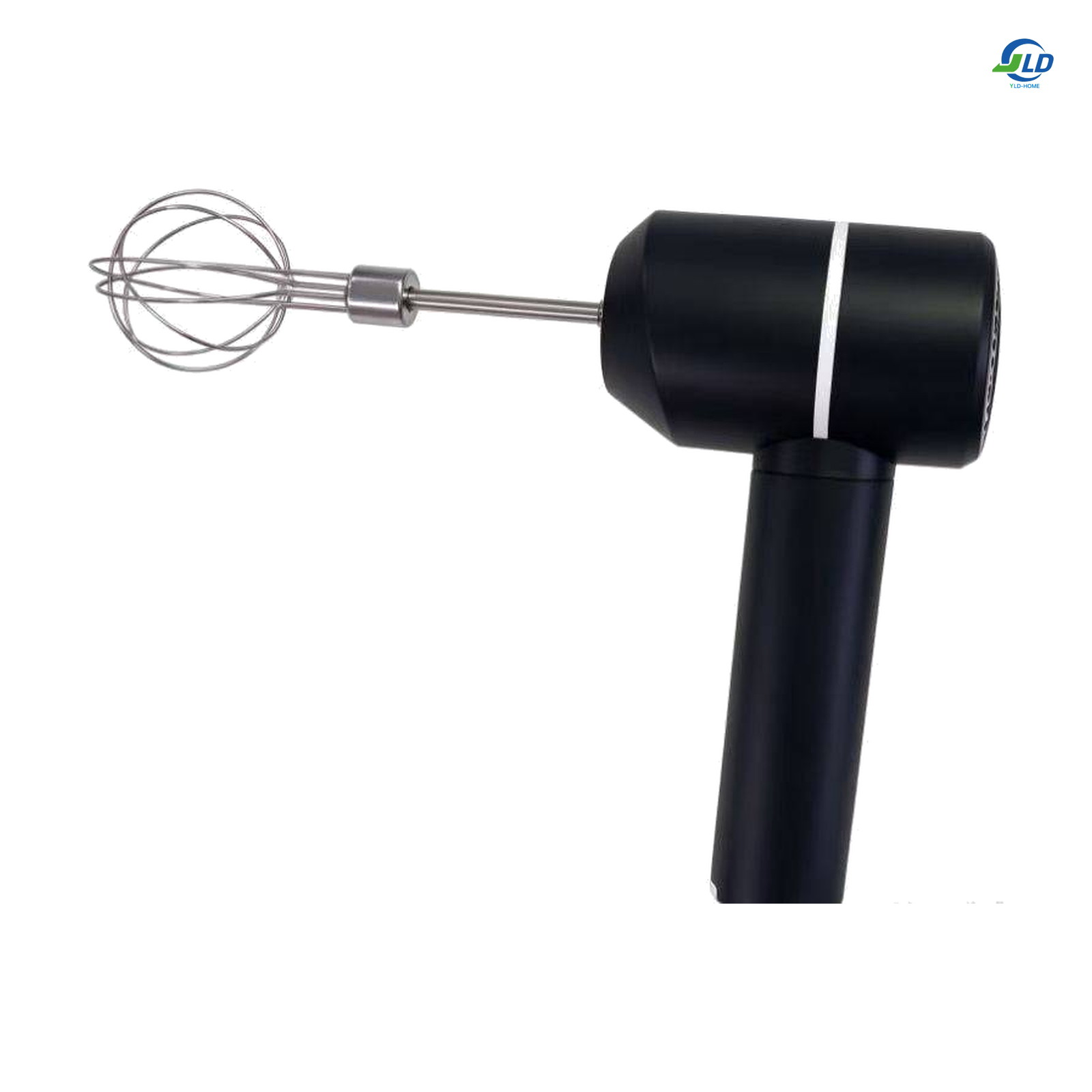
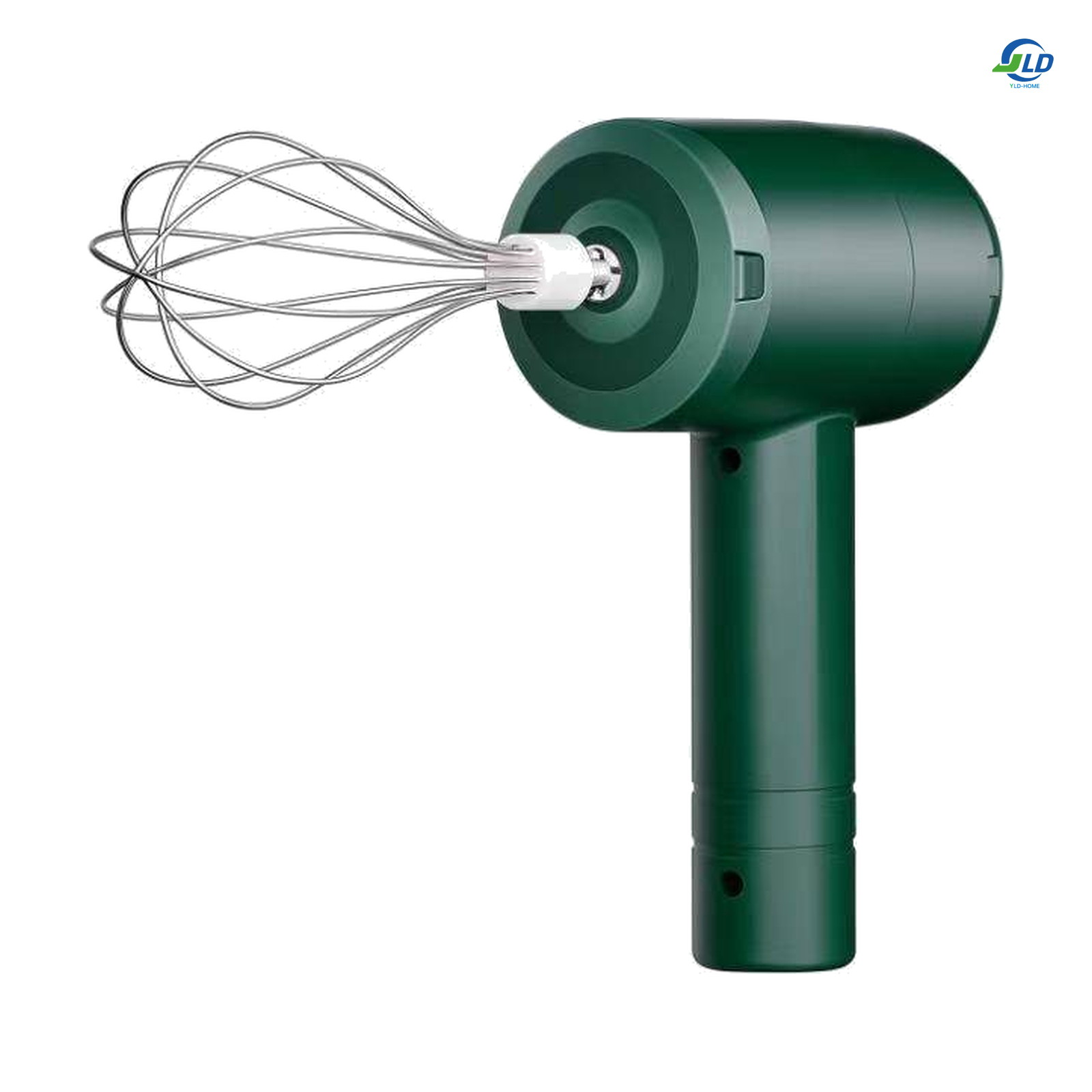
A small blender for milkshakes is the practical middle ground. A 500–1000W unit with a compact footprint handles the actual workload — two scoops of ice cream, milk, syrup, thirty seconds on high — without the noise, the price, or the counter space of a commercial monster.
Think about the math of a café counter. You have an espresso machine, a grinder, a POS terminal, cups, and a pastry case. Every square inch is contested. A machine with a 5-inch base that tucks beside the register is worth real money in layout terms. That is why drive-through kiosks, food trucks, and compact coffee shops in cities like Seattle and Austin keep choosing a small blender for milkshakes over the big countertop units.
The noise angle matters too. Full-size commercial blenders hit 90dB or more, and in an open café that noise carries into the seating area. A well-built small unit stays under 80dB at one meter. Customers notice the difference, and so does the barista who runs forty shakes a shift.
And when demand spikes — summer weekends, after-school hours, holiday specials — a café can run two small units in parallel for less than the price of one commercial machine. That redundancy is worth more than raw power. A machine that dies mid-rush is a line of angry customers; two smaller units mean the show goes on while one gets swapped.
What a Small Blender for Milkshakes Faces Every Shift
Let me walk you through what a small blender for milkshakes actually endures in a busy US café, because that is the spec sheet nobody writes down.
A mid-size café sells 150 to 300 shakes a day in season. Each shake is 30 to 45 seconds of blending at full speed. That adds up to two to four hours of actual motor run time per day — more than most consumer blenders see in a month.
The load is the hard part. Ice cream straight from the freezer is dense and cold. At the start of a batch, the blades are fighting a solid block; the motor has to produce torque at low speed without stalling, then hold speed as the shake liquefies. Cheap machines stall on that first scoop, and a stall in front of a customer is a lost sale, not just a mechanical hiccup.
The duty cycle is brutal. Back-to-back shakes mean the motor never fully cools. We tested a 600W unit in our own lab running forty consecutive shakes — two hours of near-continuous operation — and measured the housing temperature rise. That test is why we push café buyers toward the 1000W class or a well-vented 600W unit, depending on their volume.
There is also the mess factor. Spills, drips, sticky syrup on the base. A machine with seams and vents pointing upward collects sugar and grime. The cleaning story matters as much as the blending story, and we will come back to that.
Finally, think about who operates it. In a busy café, the blender gets used by whoever is free — often a teenager on their second shift. It has to survive rough handling, overfilling, and the occasional spoon dropped in the jar. Durability is a training problem as much as an engineering one.
Stainless Steel and Food-Contact Safety: Materials That Pass FDA Review
The materials that touch your milkshake are a compliance issue and a quality issue at the same time. This is where stainless steel earns its place in the spec.
Food-contact stainless — the 304 grade that dominates commercial kitchen equipment — resists the cold, the dairy fat, and the aggressive cleaning chemicals that cafés use. You can read the full metallurgy on the Wikipedia page for stainless steel, but for a buyer the short version is: 304 is the default food-safe grade, and the blade and shaft on any decent small blender for milkshakes should be 304 or better.
Why stainless matters for milkshakes specifically. Dairy is corrosive to cheap metals over time. A blade that starts rusting after six months of contact with milk and sanitizer is a health-department red flag and a customer-repelling sight. Stainless does not flake, does not pit, and survives the dishwasher cycle that kills coated blades.
Check the whole food path. On a stick-style milkshake blender, the shaft, the blade, and the bell all touch the shake. Ask for the FDA 21 CFR material declarations for each of those parts, not just a generic “food grade” claim. The jar, if there is one, should be Tritan or glass — BPA-free, with the resin declaration to prove it.
There is one more subtle point: stainless blades need proper heat treatment. A blade that is stainless but soft will dull in weeks, and a dull blade tears ice cream instead of cutting it — the shake comes out chunky and the motor works harder. Ask the factory about blade hardness. The answer separates a real manufacturer from an assembler.
120V and ETL/UL: What Café Owners Must Check
A café blender runs on the same wall power as everything else in the shop, so the electrical compliance questions are short but non-negotiable.
Voltage and plug. US cafés run 120V, 60Hz. A small blender for milkshakes should come with a fixed 120V build and a NEMA 5-15 plug, not a universal-voltage unit with a loose adapter. A 1000W machine draws about 8.3A — fine on a 15A circuit shared with a register and a printer, comfortable on a dedicated 20A kitchen circuit.
Safety certification. UL or ETL is the baseline. UL 982 covers household blenders, and café equipment usually falls under the same or a directly related standard. Ask for the certificate number and check it on the lab’s public database. A café owner should never accept “we are working on it” from a vendor — health departments and insurance carriers ask for paperwork, and so should you.
NSF for commercial cafés. If the café is a chain, a school, or a hospital account, expect an NSF requirement. The listing applies to the food-contact and cleanability design. Check which NSF standard your buyer’s spec calls for before you order — retrofitting is slow.
FCC. Units with electronic speed control or digital displays need FCC Part 15 verification. It is a simple declaration, but it must exist.
One practical note from the YLD Home export desk: we keep every certificate on file per model and reissue documents under the buyer’s brand for private label. When a health inspector in Miami asks a café owner for the paperwork on their blender, the owner should be able to pull it from their phone.
Small Blender for Milkshakes Wholesale: MOQ, Pricing, and Lead Times
Buying a small blender for milkshakes wholesale is a different game from buying one unit for the counter. Here are the numbers that matter.
MOQ. Our standard is [fill actual: 1,000 units per model], mixable across colors and sometimes across the stick blender line. Café chains order 200–600 units for a store rollout; equipment dealers order in smaller lots and reorder more often. Ask whether the factory supports rolling orders, because chain rollouts rarely arrive in one perfect lump.
Pricing. FOB Shenzhen, a 500W stick-style milkshake blender runs $12–$18, and a 1000W unit runs $18–$28 depending on motor brand and build. Add freight of roughly $1.00–$1.50 per unit and duty at 4.2% under HTS 8509.40, and you have your landed cost. Dealers typically mark up 40–60% and still undercut the big commercial brands by half.
Lead times. Samples in 7–10 days, production [fill actual: 30–45 days] after deposit, sea freight 18–25 days to Los Angeles and 28–35 days to New York or Miami. If you are stocking for the summer milkshake season, the order should be placed by late winter.
Payment. 30% deposit, 70% against the bill of lading is the standard. L/C at sight for larger chain programs.
Warranty. 12 months, with a parts kit — motor, shaft, blade, bell, switch — shipped to your warehouse. Budget 3–5% of units per year for motor replacements in heavy café use; that is normal wear, and a factory that quotes zero failures is not being straight with you.
Comparing Our Blenders for Milkshake Work
We get asked which of our machines works best as a small blender for milkshakes, and the honest answer depends on your volume. Here is the lineup we walk café buyers through.
| Modell | Motor | Shaft | Best café fit | Price band (FOB) |
| [6008 powerful stick blender](https://yld-home.com/product/6008-powerful-stick-blender/) | [fill actual] | Stainless | Low-volume cafés, single store | $ [fill actual] |
| [6018 1000W powerful stick blender](https://yld-home.com/product/6018-1000w-powerful-stick-blender-copy/) | 1000W | Long stainless | Deep mixing containers, big batches | $ [fill actual] |
| [6019 1000W powerful stick blender](https://yld-home.com/product/6019-1000w-powerful-stick-blender-copy-2/) | 1000W | Stainless | High-volume shake counters | $ [fill actual] |
| [6021 1000W powerful stick blender](https://yld-home.com/product/6021-1000w-powerful-stick-blender-copy/) | 1000W | Reinforced | Thick shakes, cookie-dough blends | $ [fill actual] |
| [hand blender with chopper](https://yld-home.com/product/hand-blender-with-chopper/) | [fill actual] | Stainless | Prep work, sauces, small batches | $ [fill actual] |
For a single café doing under 100 shakes a day, the 6008 powerful stick blender is usually enough and keeps the ticket low. For drive-through counters and high-volume shops, the 6019 1000W powerful stick blender is the model most of our café customers reorder — it holds up on back-to-back batches and the parts are shared with the rest of the 1000W family.
The 6018 1000W powerful stick blender adds a longer shaft, which helps when operators blend directly in deep mixing containers instead of a blender jar. The 6021 1000W powerful stick blender has the reinforced build for the thickest loads — the cookie-dough, peanut-butter, double-fudge shakes that stall weaker motors.
And the hand blender with chopper earns its place behind a café counter for a different reason: prep. Chopping fruit, blending caramel sauce, whipping cream for topping — the same operator, same power point, one more tool. Chains that standardize on one parts family across all their stores tell us it cuts their service inventory in half.
Private Label: Your Café Brand on a Small Blender for Milkshakes
Café chains and retail brands increasingly sell their own equipment — a branded blender sells for $60 on the counter and reinforces the brand every time it runs. Private label on a small blender for milkshakes is one of the easiest programs we run.
The standard path is ODM with customization: pick an existing model, choose the shell color to match your brand palette, print your logo on the housing, and design packaging that matches your store aesthetic. Turnaround from artwork approval is [fill actual: 15–20 days] because the tooling already exists.
For a chain, we also do the boring but essential work: documentation reissued under your brand, UPC codes on your account, cert files in your name, and a spare parts program sized to your store count. When your maintenance team calls, they should be talking to your supplier as your brand, not as a factory in Shenzhen.
Custom tooling is the longer road — 90–120 days and [fill actual: $20,000–$50,000] in molds — and it only pays off once you have proven the category. We tell café brands the same thing we tell every private label client: sell the existing design for a season, then invest in the custom shell once the numbers justify it.
YLD Home has produced branded small appliances for US foodservice brands for over a decade, and the café equipment programs follow the same playbook: color match, logo placement, packaging, and parts. If your brand is on the door, the blender should carry it too.
Case Study: A Miami Café Chain That Fixed Its Blender Problem
A café chain with twelve locations in Miami and Fort Lauderdale came to us in 2024 with a complaint we hear often. They were buying $40 consumer stick blenders at retail — two per store per month, because the shafts kept bending and the motors kept dying. Their repair and replacement bill was running close to $15,000 a year, and the health department had flagged two stores on rusted blade assemblies.
We started them with a pilot: six stores, twenty units of the 6019 1000W powerful stick blender and ten of the 6018 1000W powerful stick blender for their larger prep containers. Within eight weeks, the pilot stores stopped buying retail blenders entirely.
The numbers from their own records: blender spend per store dropped from about $250 a month to under $40, counting parts. Their maintenance person now carries one spare motor kit instead of a shelf of dead machines. And the shakes got faster — the 1000W units cut blend time from about 55 seconds to 35, which matters when the drive-through line is twelve cars deep in July.
They rolled out to all twelve locations the following spring, with a branded private label order of 180 units through our ODM program — their logo on the housing, their color, their packaging. The store rollout was the case study we now show to every café chain that asks about a small blender for milkshakes.
The lesson their owner repeats: the machine is not a cost center, it is part of the product. A blender that keeps up with the rush keeps the line moving, and a line that moves is a line that spends.
* alt:small blender for milkshakes *
Choosing a Small Blender Supplier in the USA: What to Check
You can import direct, or you can buy through a distributor — a small blender supplier in the USA who carries stock and handles the logistics. Either route, the checklist is the same.
Verify the factory. Ask for the factory name, address, and a video walkthrough of the line. We send video tours to any buyer who asks. A supplier who cannot show you where the machine is made is a supplier with something to hide.
Check the certificates. UL or ETL number verified on the lab’s database, FCC declaration, FDA food-contact declarations, and NSF status if you sell to chains. Ask for copies, not screenshots of a website.
Ask about parts and warranty. How fast can they air-ship a motor? Is there a parts kit in the country? A supplier with a US-side parts position will tell you immediately; a pure trading desk will hesitate.
Ask about MOQ and mixing. Can you mix models in one container? Can you split delivery across quarters? The answers tell you whether they understand café cash flow.
Ask about testing. Every-unit functional testing or spot checks? We test every unit before packing, and any serious supplier should do the same.
Ask about documentation. Food-contact declarations, cert files, and packing documents per shipment — a supplier who keeps these organized saves you hours at customs and in front of a buyer’s compliance team.
One more: ask who answers the phone. When a café in Chicago has a machine down on a Saturday, the supplier’s response time decides whether it becomes an emergency. Ours is a direct line to the factory’s export desk, and it is the same number for a 20-unit order or a 2,000-unit program.
Cleaning, Care, and Spare Parts That Keep Milkshake Lines Moving
A small blender for milkshakes in a café gets cleaned dozens of times a day, and the design of the machine decides how much that cleaning costs you in labor and downtime.
The rinse cycle. The fastest cleaning method is a water rinse in a designated container: run the machine for ten seconds in warm water with a drop of sanitizer, then wipe the shaft. Blenders with detachable shafts make this dramatically easier — the shaft goes in the wash sink, the motor stays dry.
What to look for in the design. A sealed motor housing that keeps water out of the vent path. A shaft that detaches without tools. Smooth surfaces on the bell with no crevices for syrup to hide. These are the details that decide whether cleaning takes twenty seconds or five minutes, and whether the health inspector finds buildup.
Dishwasher compatibility. If the shaft and bell survive the dishwasher, the café saves labor. Ask the factory which parts are dishwasher-safe, and make sure the answer is in the manual — the operator in the store reads the manual, not your spec sheet.
Spare parts that matter. For a milkshake program, carry these: one motor per ten units, two shafts per ten units, blades, bells, and switches. The motor is the wear item; shafts and blades take the abuse. A $15 motor kit replaces a $40 retail blender and keeps the store open.
The maintenance schedule is simple: daily rinse and wipe, weekly full disassembly and sanitize, monthly inspection of the shaft for bends and the blade for dulling. A café that follows that schedule will tell you their machines last years. A café that does not will tell you the machine is the problem.
* alt:small blender for milkshakes *
If you are outfitting cafés or building a branded milkshake program, ask YLD Home for a wholesale quote. We will send the comparison spec sheet, cert files, parts pricing, and a landed-cost breakdown for your city — and we will tell you straight which of our models fits your volume.
Häufig gestellte Fragen
Q1: What is the best small blender for milkshakes for a US café?
For most cafés, a 1000W stick-style unit with a stainless shaft is the sweet spot: fast on ice cream, durable through back-to-back batches, and easy to clean. Low-volume shops can start with a 600W class unit; high-volume counters should step up to the 1000W class.
Q2: What is the MOQ for a small blender for milkshakes wholesale?
[fill actual: 1,000 units per model] at YLD Home, mixable across colors and models. Café chains often order 200–600 units per store rollout, and dealers reorder quarterly.
Q3: What certifications do I need to sell blenders to US cafés?
UL or ETL safety certification, FCC Part 15 for electronic controls, FDA food-contact declarations, and NSF listing if you sell to chains, schools, or hospitals.
Q4: Can a stick blender really make good milkshakes?
Yes — a stainless-shaft stick blender blends directly in the mixing cup, which is faster to clean than a jar blender and takes less counter space. That is why many US cafés prefer them for shake work.
Q5: How long does a café blender last with daily use?
With a 1000W build and proper cleaning, expect 3–5 years of daily café use, with motors replaced every 12–18 months as normal wear. Parts kits keep the cost low.
Q6: What stainless steel is used in food-contact blender parts?
304 stainless is the food-safe standard for shafts and blades, per FDA 21 CFR requirements. The Wikipedia entry on stainless steel covers why the grade matters for food contact.
Q7: Do you offer private label blenders for café brands?
Yes. YLD Home handles shell color, logo printing, custom packaging, and documentation reissued under your brand, with turnaround of [fill actual: 15–20 days] after artwork approval on existing models.
Q8: How fast can you ship spare parts to the US?
We ship parts kits with every order and air-freight replacements within 48 hours of a claim. For a café with a machine down, that is usually faster than a local repair call.
Official references
Next steps for small blender for milkshakes
If you are shortlisting small blender for milkshakes suppliers, send your target specification, target retail price and annual volume to YLD Home and the team will answer with a matched model, certification list and a sample date you can plan around.
- hand blender range for wholesale buyers — ask the YLD Home team for small blender for milkshakes samples, lead times and FOB pricing.
- all hand blender models — ask the YLD Home team for small blender for milkshakes samples, lead times and FOB pricing.
- request a quotation — ask the YLD Home team for small blender for milkshakes samples, lead times and FOB pricing.
- book a factory tour — ask the YLD Home team for small blender for milkshakes samples, lead times and FOB pricing.
- MOQ and sample answers — ask the YLD Home team for small blender for milkshakes samples, lead times and FOB pricing.