






In this guide:
- Why the portable blender category keeps growing in the US
- What US buyers actually use a portable blender for
- Price bands, margins, and sell-through numbers
- Portable blender vs stick blender: where the lines blur
- Compliance checks before you import your first unit
- OEM and private label deals for US brands
- Working with a portable blender distributor in Miami
- MOQ, lead times, and planning your first 2026 PO
* alt:portable blender *
Walk any US trade show floor in 2026 — the Inspired Home Show in Chicago, the Fancy Food Show in New York — and the same pattern repeats aisle after aisle. The portable blender has moved from impulse gadget to everyday staple. Gym members carry one in a duffel bag, office workers blend at their desks, parents throw one in the car for road trips. For US distributors, retailers, and private label brands, that shift shows up in one place: repeat orders. This guide is written for wholesale buyers who want to understand the portable blender market before committing a single PO. We’ll cover what sells, what fails, and what a dependable factory partner should bring to the table.
Why the portable blender category keeps growing in the US
Let’s start with a number. A distributor in Houston told us portable blender units grew from 12% of his small appliance mix in 2023 to just over 20% in 2025. He didn’t plan it. His customers simply kept ordering.
Four forces are pushing that curve. First, the on-the-go protein culture. Gym memberships in the US are at record levels, and post-workout shakes are the default. Second, hybrid work. Millions of Americans blend at their desks now, and nobody wants to haul a full countertop jar to the office. Third, travel is back, and the TSA-friendly size of a personal cup blender makes it a natural packing item. Fourth, the steady war on single-use plastic cups. Reusable bottle culture keeps gaining ground, and a self-cleaning blending bottle fits the same habit.
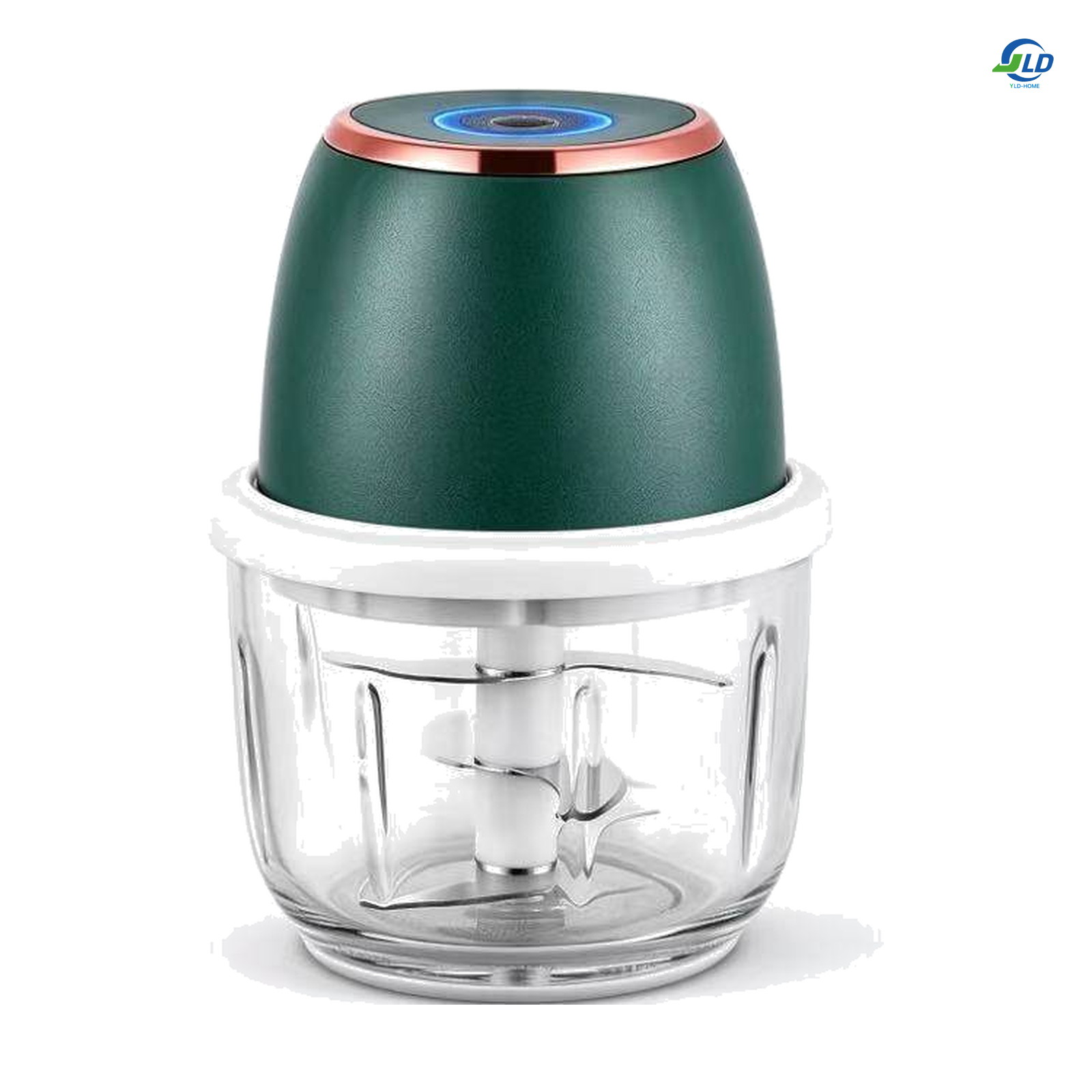
The hardware has improved too. Current portable blender models run on rechargeable lithium-ion cells, charge over USB-C, and hit 200 to 400 watts of peak motor power. Capacities of 300 to 600 ml cover a protein shake or a single smoothie. Blades are stainless steel, cups are food-grade Tritan or polypropylene, and the whole unit weighs under a pound and a half.
Retailers are responding. Big box chains and specialty fitness retailers both added shelf space for personal blenders in 2025, and house brands are starting to appear next to name brands. Even foodservice buyers are testing the category — hotel breakfast bars and smoothie trucks want units that survive daily abuse.
The honest read: this is not a fad. The category solves a daily friction — quick blending without cleanup — and that friction is not going away. For a wholesale buyer, that means the question is no longer whether to stock a portable blender, but which models, at what price points, and from which factory.
What US buyers actually use a portable blender for
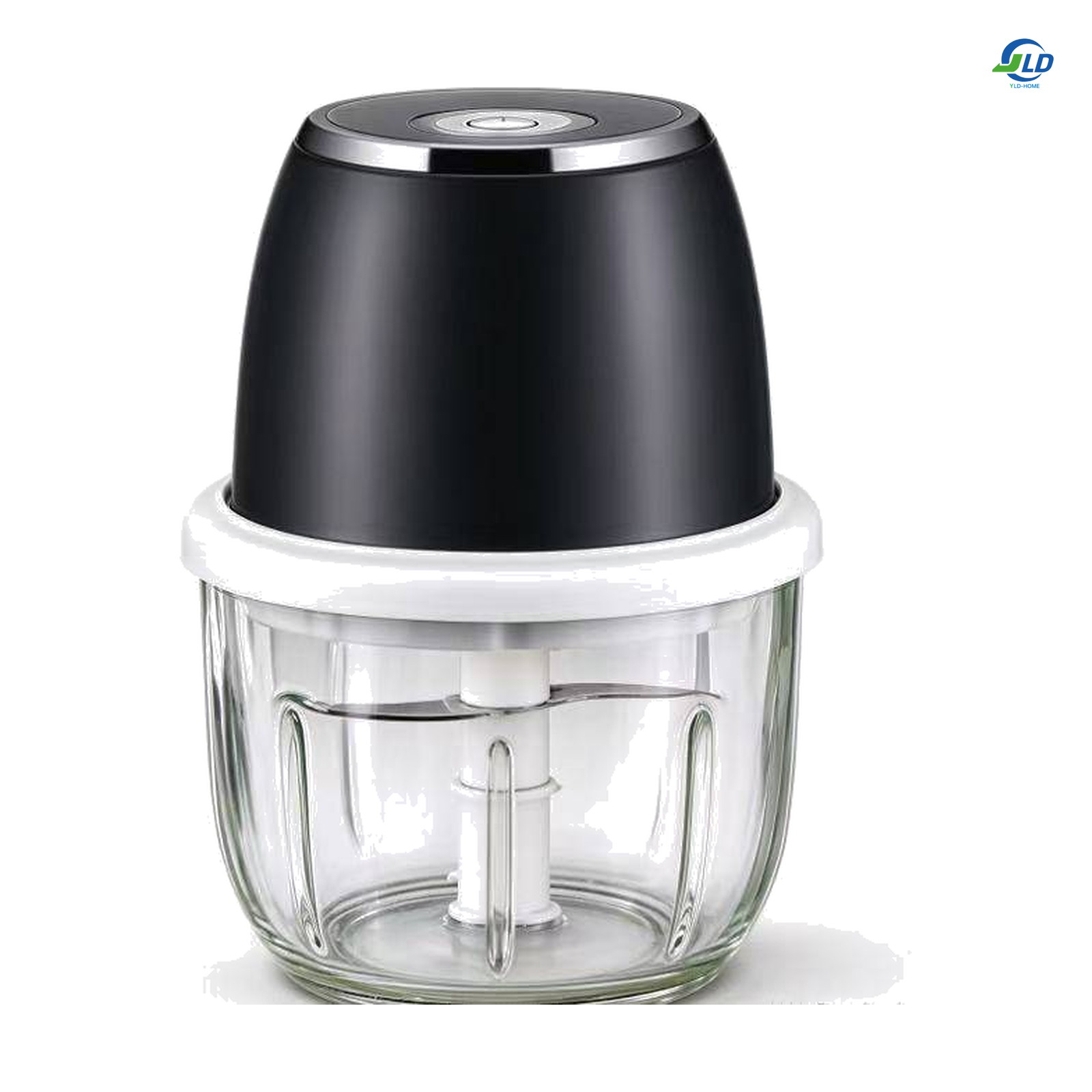
Before you pick SKUs, map the jobs your customers will put them to. We talk to US retailers and distributors every week, and the use cases keep coming back to five.
Protein shakes are number one. The portable blender for shakes is the biggest single sub-segment in the category — think gym bags, locker rooms, and morning routines. A sporting goods chain in Phoenix told us their portable blender for shakes line outsells every other blender they carry, three to one.
Smoothies run second. Fresh fruit, greens, frozen berries, a splash of juice — blended in ninety seconds and drunk from the same cup. This is the social-media engine of the category, and it drives the premium end of the market.
Salad dressings and sauces come third. Home cooks use a personal blender to emulsify a vinaigrette or blitz a small batch of hot sauce without dirtying a big jar. It sounds small, but this use case wins over a surprising share of buyers over 45.
Baby food and travel purees are fourth. Parents blend fruit and vegetables on the road, at hotels, at the grandparents’ house. Food-grade materials matter enormously here, and parents will pay for BPA-free cups.
Iced drinks round out the list. Cold brew mixed with milk, matcha, fruit slush — the café-at-home crowd blends directly into the travel cup.
Why does this matter for a wholesale buyer? Because one SKU does not serve all five jobs. A 350 ml unit with a basic 4-blade set is fine for a post-workout shake. A 600 ml unit with a stronger motor and two blade options covers smoothies and sauces. Range planning starts with use cases, not with a price list.
* alt:portable blender for shakes *
Price bands, margins, and sell-through: the numbers that matter
The US portable blender market sorts into three workable price bands. Here is how they looked at wholesale in YLD Home’s 2025 order data.
| Price band | Typical retail | Wholesale range | Retail margin | What sells it |
| Entry | $19.99–$29.99 | $9–$14 | 40–55% | Impulse buys, high volume, thin specs |
| Mid | $34.99–$49.99 | $15–$22 | 45–60% | The sweet spot: USB-C, 350–500 ml, trusted brand |
| Prämie | $59.99–$89.99 | $24–$38 | 50–65% | Strong motors, extra cups, travel case, 2-year warranty |
The entry band looks attractive until you count returns. When we tested entry-level units from three factories, the failure pattern was predictable: weak blades that stall on frozen fruit, lids that leak in a gym bag, batteries that fade after 200 charges. Every return eats the margin you planned for. A distributor in Chicago told us he stopped buying sub-$10 wholesale portable blender units entirely — the return rate ran over 6%, and his customer service team was drowning.
The mid band is where private label brands live. Retail between $34.99 and $49.99 gives you room for a decent motor, a Tritan cup, and honest battery life, while still looking like a value next to the $79 countertop machines.
The premium band is smaller but sticky. Buyers here want the full kit: a 600 ml cup, a second travel lid, a cleaning brush, maybe a carry pouch. Margin holds because customers rarely return a premium unit that works, and repeat purchases come from gift-giving.
One planning note: sell-through speed matters more than margin per unit. A $39.99 portable blender that turns over in six weeks beats a $79 model that sits for five months. Use your sell-through data to reorder, not your instincts.
* alt:portable blender wholesale *
Portable blender vs stick blender: where the lines blur
Buyers often ask us whether a portable blender and a stick blender compete for the same shelf. The honest answer: they share a shopper, but they do different jobs.
A portable blender is a closed system. You put ingredients in the cup, blend, and drink from the same vessel. It is built for liquids — shakes, smoothies, dressings — and for portability. Nothing transfers between containers.
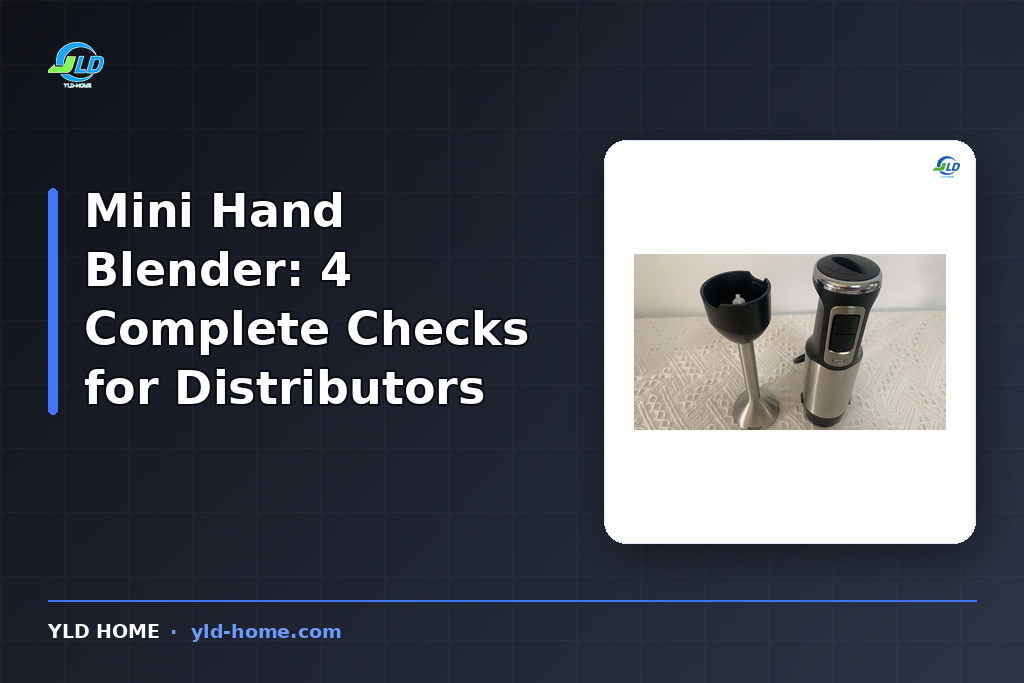
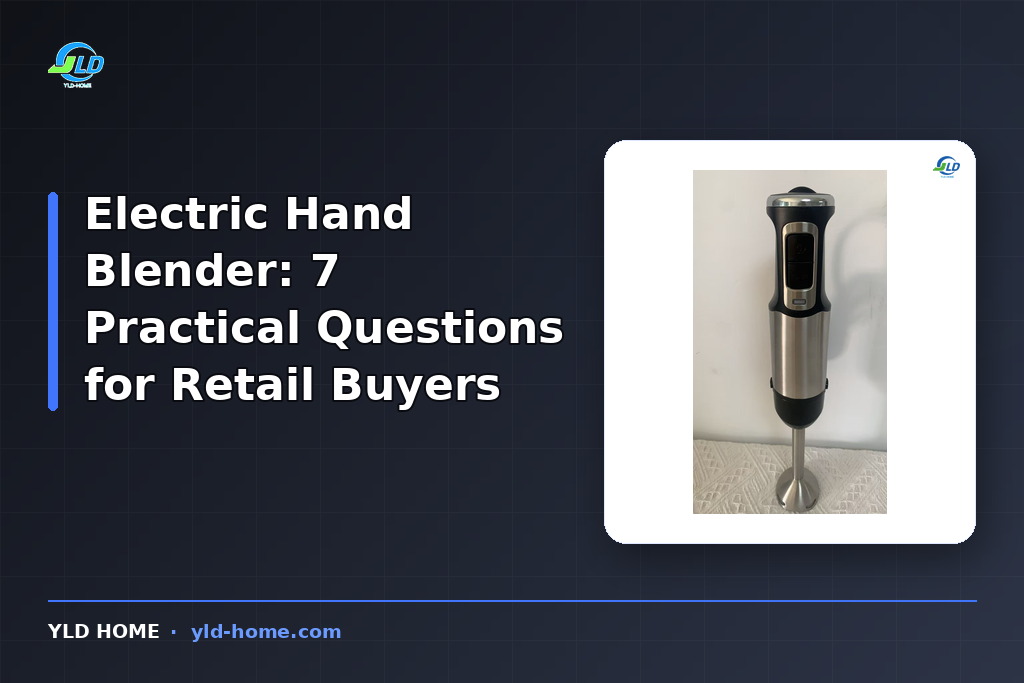
A hand held stick blender works in an open pot or bowl. You lower the shaft into soup, sauce, or puree and blend in place. It handles hot liquids, larger batches, and jobs like mayonnaise or pancake batter that a portable cup simply can’t do. We make both at our factory, and the product pages tell the story better than we can summarize it here — our Stabmixer line covers the open-pot jobs, while the portable line covers the cup jobs.
For a US retailer, the two categories are complementary. Fitness retailers run portable units as the hero SKU and stick blenders as a kitchen-adjacent add-on. Kitchen retailers do the reverse. What you should avoid is treating them as interchangeable — the shopper who wants a portable blender for shakes will not be talked into a stick blender, and the home cook who wants to blend soup in the pot will not be talked into a cup.
When we set up mixed containers for US distributors, we often combine both categories in one shipment. Same factory, same compliance files, same quality gates. That is the practical answer for range planning: carry both, position them by job, and let the shelf teach you the local mix.
Compliance checks before you import your first unit
Here is where wholesale buyers lose money fastest: assuming a portable blender from any factory is automatically legal to sell in the US. It is not.
Battery-powered units need their charging system and cells to carry UL or ETL certification. Look for UL 2054 or UL 2271 on the battery pack documentation and UL 1310 on the charger. If your supplier cannot produce those certificates, walk away — retailers and Amazon both ask for them, and the liability sits with the brand, not the factory.
FCC compliance matters for any unit with electronics. Most portable blenders with USB charging fall under FCC Part 15. The test report is cheap to obtain; the fine for importing non-compliant electronics is not.
Food contact is the one most buyers forget. The cup, the blade housing, and the seals touch your customer’s food, so the materials need FDA food-contact compliance — for polypropylene cups, that means meeting 21 CFR 177.1520, and for Tritan, the manufacturer’s food-contact declaration. Ask for material certificates with your sample. We keep the full set for every model we ship, and you can read about our appliance certification on our site — we publish what we test and how.
California adds one more layer. Proposition 65 requires warning labels for products that expose users to listed chemicals above safe-harbor levels, which means lead and phthalate testing for plastics and coatings. National retailers will not accept a portable blender without the Prop 65 paperwork.
Voltage is the last checkbox. Corded personal blenders must be 120V/60Hz for the US market. Battery units are agnostic on voltage but need the right charger plug and, ideally, dual-language packaging if you serve any Hispanic-market retail. YLD Home keeps the compliance file — UL, FCC, FDA, Prop 65 — for every portable blender model we ship, and we share it with the buyer before the first PO.
Portable blender OEM and private label deals, explained
The phrase you’ll hear from US importers is portable blender OEM. It means you take an existing factory design, put your brand on it, and adjust the details: cup color, logo, packaging, accessories. Private label is the same idea applied to a whole program — your brand, your SKU codes, your warranty terms, your sell sheet.
We are YLD Home, a Shenzhen factory that has built small kitchen appliances for export since [fill actual], and portable blender OEM work is a large part of what we do. The typical flow looks like this. You pick a base model from our wholesale blender line. We send you samples. You test them for two weeks — actually blend frozen fruit, carry them in a bag, charge them 50 times. Then we lock the details: cup color, logo placement, carton design, retail-ready packaging, and the user manual in English.
MOQ for a private label portable blender order is [fill actual] units per model. If you want a new cup color, a custom blade set, or a different battery capacity, that is an ODM project — new tooling for the parts you change, with mold investment quoted separately, typically [fill actual]. Lead time for a repeat OEM order runs [fill actual] days from deposit to shipment. First orders take longer because of pre-production samples and inspection.
Two pieces of advice from the factory side. First, lock your packaging early. Carton art is the most common cause of sample delays, and it is fully within your control. Second, test before you commit. A portable blender with a weak seal will generate returns for years, and no logo makes a leaking lid sell better.
If you want the full background on how we work with importers, the China hand blender manufacturer guide on our site walks through factory selection, audits, and quality control in detail. You’ll find more case notes from US buyers on the YLD Home blog.
Working with a portable blender distributor in Miami
Miami occupies a special place in this market, and if you are a portable blender distributor in Miami, you already know why. The city is the gateway for Latin America and the Caribbean. Distributors there serve not just Florida retail but re-export buyers across the region, plus the cruise and hospitality trade that docks in the port every week. Type “portable blender distributor Miami” into any trade directory and you’ll get dozens of results — the niche is real, and it is crowded.
A distributor we work with in Miami runs a warehouse ten minutes from the port. His business model is simple: he brings in mixed containers of small appliances, services the Hispanic grocery channel — chains like Sedano’s and Presidente — and re-exports a portion to Central America and the Caribbean. For him, a portable blender SKU has to do double duty. The same unit needs to work on 120V at home and on 220V in Bogotá or Santo Domingo, and the packaging needs to read correctly in both English and Spanish.
If you plan to serve that market from Miami, ask your factory four questions before ordering. Can the unit run on dual voltage or accept a different charger? Is the packaging bilingual-ready? Do the certification files cover the destination countries? Can the factory supply Spanish-language manuals? We answer yes to all four, because the same questions come up constantly.
The broader lesson applies to any US hub city: the wholesale game is about what your buyers can move, not what you can buy. A portable blender that only works in one voltage world caps your distributor’s market at the Florida border. A flexible SKU opens up the hemisphere.
Labeling and advertising: what the FTC expects from your brand
Putting your brand on a portable blender means owning every claim on the box. The FTC’s guidance on advertising and labeling is the reference US buyers should read before they print a single sell sheet, and it is worth a full read on your side. The rules are not complicated, but they are enforced.
Battery life is the classic trap. If your packaging says “12-hour battery,” you need test data showing the unit runs 12 hours under realistic use — not in standby, not at lowest speed. We test runtime at full load and quote the number we can prove. The same logic applies to “800 charges” or “3x faster charging.”
Wattage claims trip up private label brands too. Some factories quote peak wattage on the motor, and the box ends up saying 1000W when the unit sustains 300W. FTC rules require that a power claim be truthful and non-misleading. Our solution is simple: we quote sustained wattage on packaging and reserve peak numbers for internal specs.
“BPA-free” is another claim that needs evidence. The statement is a material representation about food safety, and you should hold a test report from an accredited lab before printing it. The same goes for any “made in USA” language, which has a strict definition — assembly in the US is not the same as manufacturing in the US, and the FTC is specific about the difference.
Build your compliance file before launch, not after a complaint. It costs a few hundred dollars in lab tests and saves you from pulling product. When we ship portable blender OEM programs, we include the test documentation in the brand kit, so your team has the evidence behind every claim.
MOQ, lead times, and planning your first 2026 PO
Let’s build a timeline for a first order, because timing decides whether you hit the Q4 window or miss it.
Say you want a private label portable blender on shelves by October. Work backward. Sea freight from Shenzhen to Los Angeles runs [fill actual] days, and to East Coast ports like New York or Miami it runs [fill actual]. Add [fill actual] days for production after your deposit, plus two weeks for samples and one inspection visit. That puts your order placement somewhere in June or July. Miss that window and you are paying air freight or waiting for spring.
Two calendar traps to know about. Chinese New Year shuts factories for two to three weeks, usually in late January or February — orders placed in December often slip into March. And the US peak season for portable blender sales starts earlier than you think: the New Year resolution wave in January, then back-to-school in August, then the holiday gift run. Each wave needs inventory in the warehouse roughly six weeks ahead.
On quantities, start with what you can sell in twelve weeks, not what you dream of selling in a year. A distributor in Chicago started with 3,000 units across three models, proved the sell-through, and scaled to full containers in two seasons. Slow and consistent beats big and stuck. The same program structure runs in every market we ship to — our hand blender wholesale South Africa program operates under the same quality gates.
MOQ for our portable blender line is [fill actual] units per model, with mixed models per container. We also support third-party inspection — SGS or Intertek — before shipment, so the container leaves the factory with a clean report. If you want to talk numbers, the fastest route is a wholesale quote request to YLD Home; we answer within one business day with current pricing, lead times, and samples available.
Häufig gestellte Fragen
Q1: What is the best portable blender for wholesale buyers to stock in 2026?
For most US wholesale buyers, the answer is a mid-band portable blender: 400 to 500 ml capacity, USB-C charging, 300 watts sustained, Tritan cup, and a 12-month warranty program. It sells at $34.99 to $49.99 retail, keeps margins near 50%, and its return rate stays under 2% when the factory tests properly. Entry units look cheaper and cost you more in returns.
Q2: What MOQ does a portable blender OEM require for a private label order?
Our MOQ is [fill actual] units per model for OEM, and [fill actual] for a full custom ODM project with new tooling. If that is too heavy for a first test, YLD Home can start with a sample order of [fill actual] units at a slightly higher unit price while you prove the market.
Q3: Do portable blenders need UL or ETL certification to sell in the US?
For battery-powered portable blenders, yes in practice. The battery pack and charger should carry UL or ETL marks — look for UL 2054 or UL 2271 on the cells and UL 1310 on the charger. US retailers and Amazon both request these certificates, and liability for a defective charger sits with the brand.
Q4: How long does a private label portable blender order take from sample to delivery?
Plan on 10 to 14 weeks door to door. Two to three weeks for samples and detail sign-off, [fill actual] weeks for production, then [fill actual] days of sea freight plus customs and trucking. Air freight can cut the transit leg to about a week if you are filling a gap.
Q5: What is a typical wholesale price for a portable blender with my own brand?
For a mid-band unit with a Tritan cup and USB-C charging, wholesale generally lands between $15 and $22. The exact number depends on capacity, motor, accessories, and packaging complexity. Ask for a landed-cost quote — factory price plus freight and duties — before you set your retail price.
Q6: Should I carry a portable blender for shakes or a stick blender first?
Carry the portable blender for shakes if your customers are fitness or office shoppers, and the stick blender if they are home cooks. If you are starting a mixed program, we regularly combine both categories in one container so you can test both with one freight bill.
Q7: How do I handle warranty returns on battery-powered portable blenders?
Set the policy before you order. Most US importers run a 12-month exchange program: customer contacts the retailer, retailer ships a replacement, and the factory credits the defective unit on the next order. The key is a factory that honors defect rates above [fill actual]% — get that commitment in writing.
Q8: Can one portable blender SKU serve both the US and Latin American markets?
Yes, if you plan for it. Choose a unit that charges on both 120V and 220V or ships with interchangeable charger plugs, and ask for bilingual English/Spanish packaging and manuals. That single decision makes your SKU sellable from Miami to Buenos Aires.
Official references
FTC advertising and labeling guidance
[[PAGEBREAK]]
How YLD Home keeps portable blender for shakes supply predictable
Every portable blender for shakes order runs through IQC on incoming parts, IPQC on the line and OQC before packing, and YLD Home shares inspection and loading photos so you see the shipment before it sails. Ask for the portable blender for shakes test report set for your market.