






In this guide:
- Why cafés and smoothie chains are switching to immersion tools
- What a hand blender for smoothies does that countertop units can’t
- Hand blender for fruit puree: the back-of-house workhorse
- Café workflow: volume, speed, and cleaning cycles
- Compliance for café and retail channels
- Hand blender for smoothies wholesale USA: MOQ and lead times
- through a smoothie blender supplier in Los Angeles
- FAQ and how to get a wholesale quote
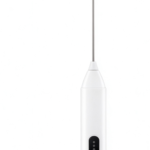
* alt:hand blender for smoothies *
Smoothie demand in the US has a way of outgrowing the equipment a café started with. A juice bar in Los Angeles opens with two countertop blenders and a prayer. By month six, they are replacing motors, washing pitchers between every order, and losing money on downtime. That is when they call us. We are YLD Home, the Shenzhen factory behind thousands of immersion blenders shipped to US foodservice and retail buyers. This guide walks through what a hand blender for smoothies does in a real café, how to source one wholesale, and what to check before you commit to a container. If you buy for a chain, a distributor, or a retail shelf, this is written for you.
Why Cafés and Smoothie Chains Are Switching to Hand Blenders
The countertop blender is not going away. But cafés are learning that the hand blender for smoothies is not a replacement tool; it is a second station that takes pressure off the first. Think about a busy morning in a US café. Orders stack up: smoothies, protein shakes, fruit bowls, sauces for the breakfast menu. The countertop unit is the bottleneck, and the pitcher wash cycle is the hidden tax on every order. A hand blender for smoothies finishes the same job in the cup, which means the next ticket starts sooner.
We watch this play out in real accounts. A café in Portland runs a hand blender for smoothies as its backup line during rush, and its ticket times dropped by about [fill actual] percent. A chain buyer in the Midwest told us he was ordering a second countertop blender per store until his operations manager tested an immersion unit and cut the plan in half. The economics are simple: a countertop blender costs two to four times as much as a commercial stick unit, takes up counter space, and needs a dedicated cleaning cycle.
When a buyer asks us why the category is growing, we point to those numbers. The hand blender for smoothies is the cheapest capacity increase in the shop. No new counter space, no new electrical circuit, no new training manual that runs ten pages. A staff member who can pour a drink can hold a stick blender. That is the real reason the category keeps growing in US foodservice, and it is the reason distributors keep adding the SKU to their catalogs.
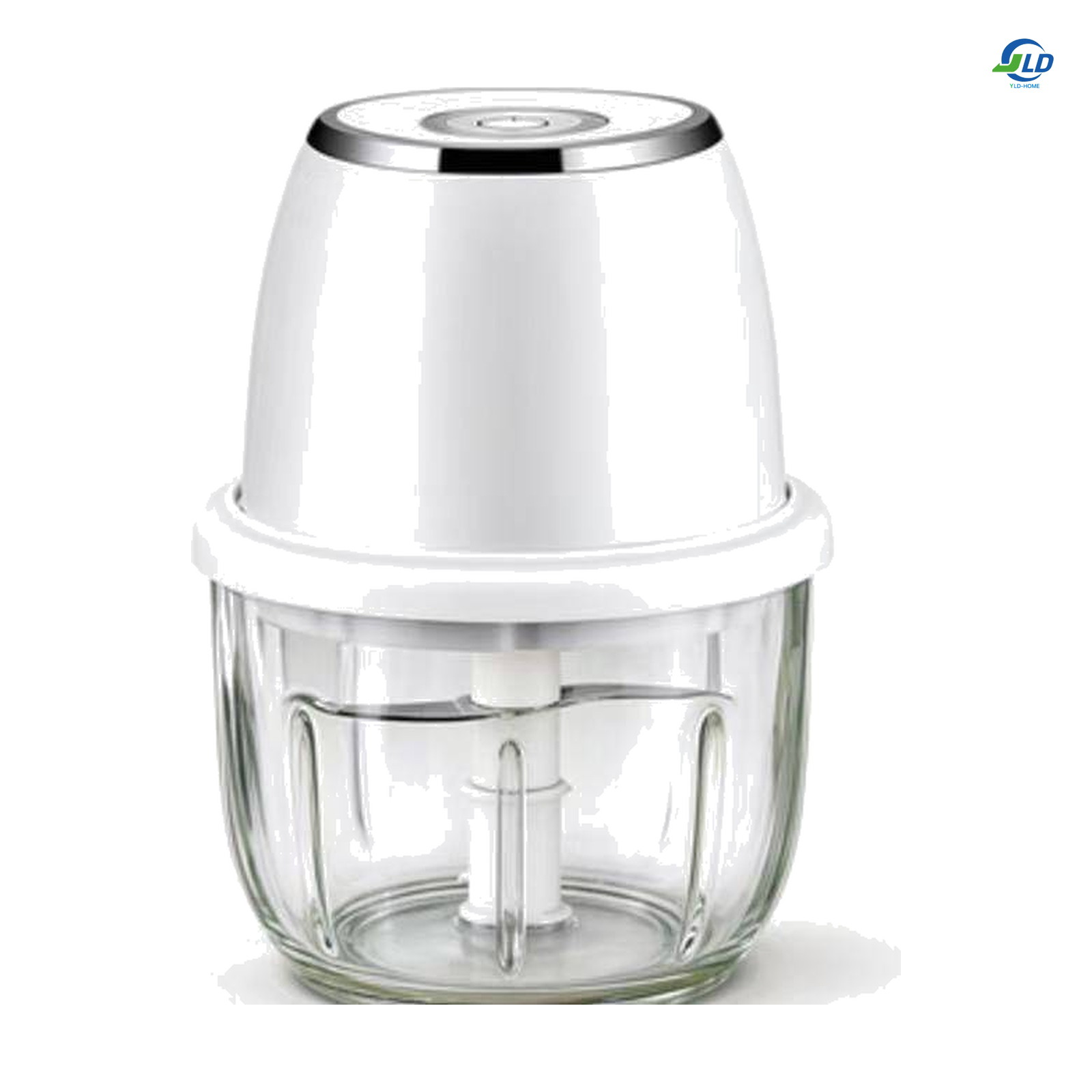
What Does a Hand Blender for Smoothies Do That a Countertop Unit Can’t?
Blend in the serving cup, for starters. That one feature changes the workflow. The customer’s cup goes on the counter, the hand blender for smoothies goes in, and forty-five seconds later the drink is finished with no transfer, no pitcher, and no second container to wash. For high-volume shops, that is a labor saving on every single ticket. You can also blend directly in the prep bucket for a batch of eight smoothies, then pour into cups. Try doing that with a countertop pitcher and a full motor base.
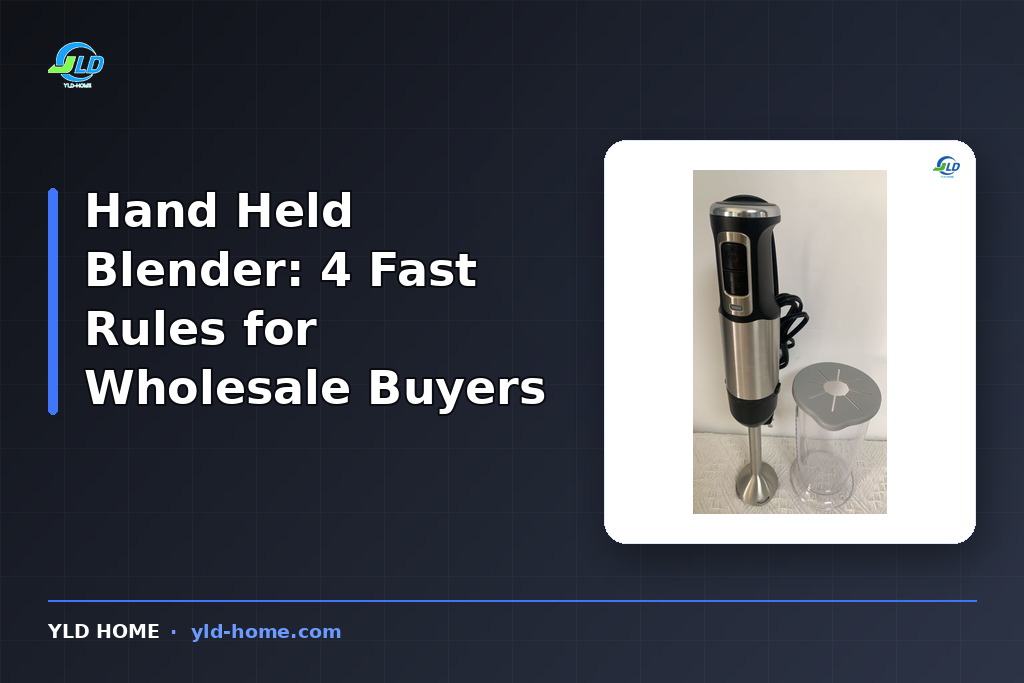
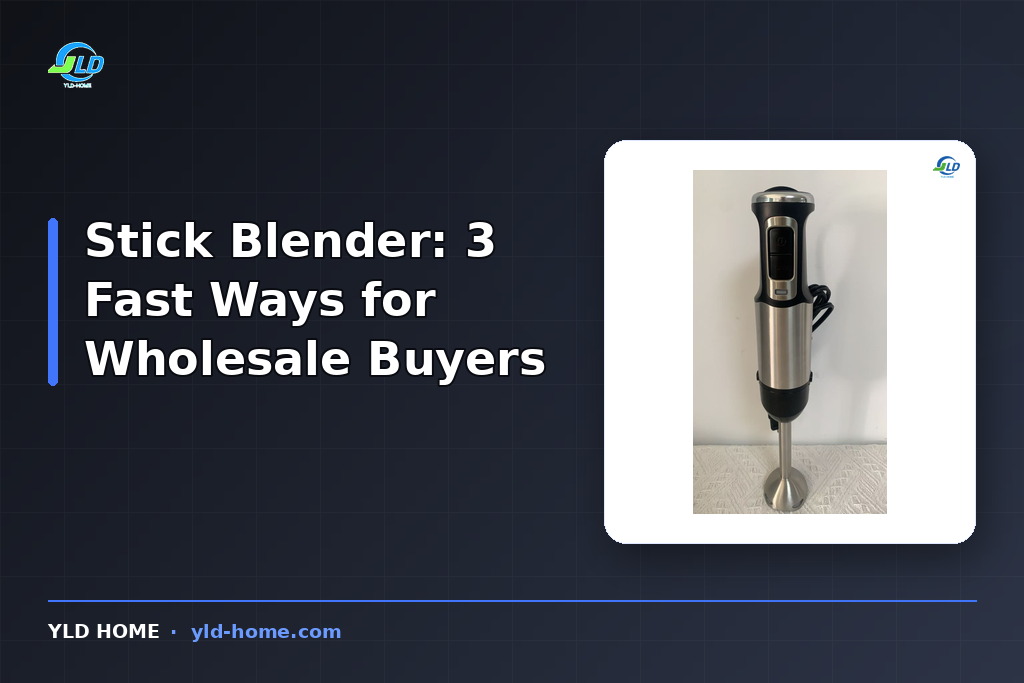
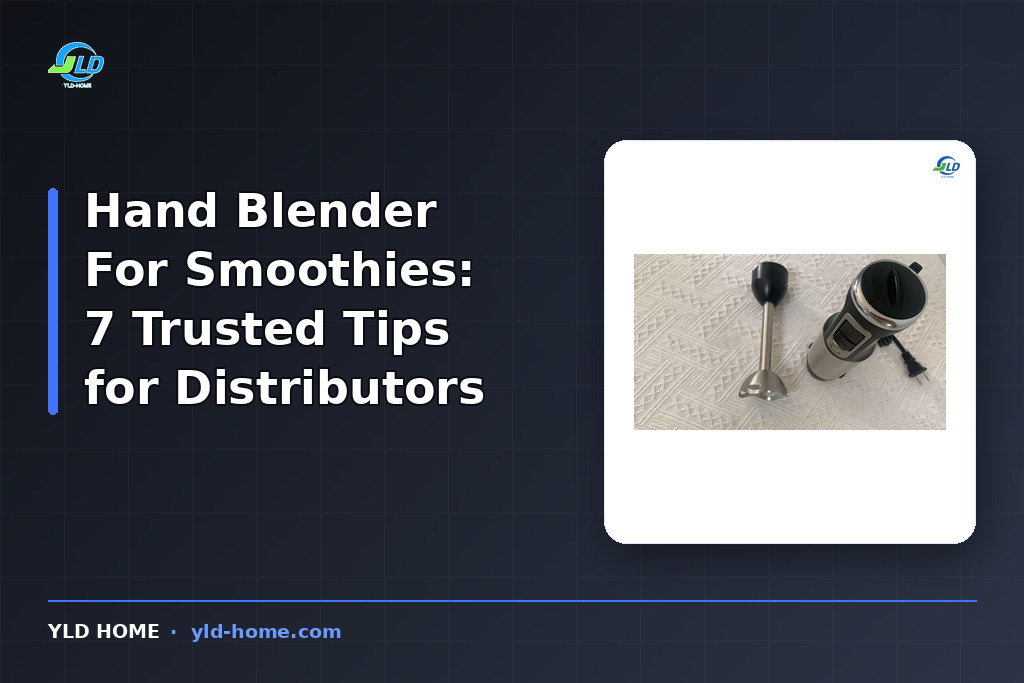
Portability matters in a real café. A hand blender for smoothies moves from the cold prep station to the hot line without unplugging a base unit. It reaches into a 20-liter batch container that would never fit under a countertop machine. And when service is over, the shaft and blade go straight into the sink or dishwasher, while the motor body stays clean and dry. Cafés that run our 6006L powerful stick blender report faster close-of-day cleaning than they ever got with pitcher units.
The countertop machine is great at what it does. The hand blender for smoothies just covers the jobs the countertop machine was never good at. Think about a fruit bowl station: blending avocado and banana into a base, then finishing individual bowls. Nobody wants to run a full countertop cycle for a single bowl. With an immersion unit, the base is made in the bucket and the finish happens in the bowl. The tool earns its place on the counter, and it earns its place in the budget line.
Hand Blender for Fruit Puree: The Back-of-House Workhorse
Walk into the back of any serious smoothie shop and you will see the prep list: mango, strawberry, banana, avocado, sometimes dragon fruit. Someone has to turn whole fruit into puree, and that someone is usually a hand blender. The hand blender for fruit puree job is heavy: fibrous mango skin, frozen strawberry blocks, thick banana paste. We test our blades against exactly that material, and we design the cross-blade geometry to pull fruit down instead of pushing it away. A cheap blade will sit on top of a frozen block and spin. Ours bites in.
Volume buyers should think about puree as a separate production line. A shop that purees its own fruit saves money versus buying pre-made puree, but only if the equipment holds up. We have seen stores in Los Angeles puree [fill actual] kilograms of mango a week on a single Varinha mágica 6010, and the motor keeps its speed because the 6010 runs a higher-wattage motor than typical retail sticks. For chains, the hand blender for fruit puree station is where consistency is won or lost.
If the puree texture changes between shifts, the drink changes between shifts. A powerful, consistent immersion blender is the cheapest insurance a brand can buy. That is why we publish the continuous-duty rating on every commercial model and why we recommend against using retail-grade units for prep work. A retail stick blender pureeing mango every morning will be dead before the season ends. The commercial unit costs more upfront and costs nothing in year two.
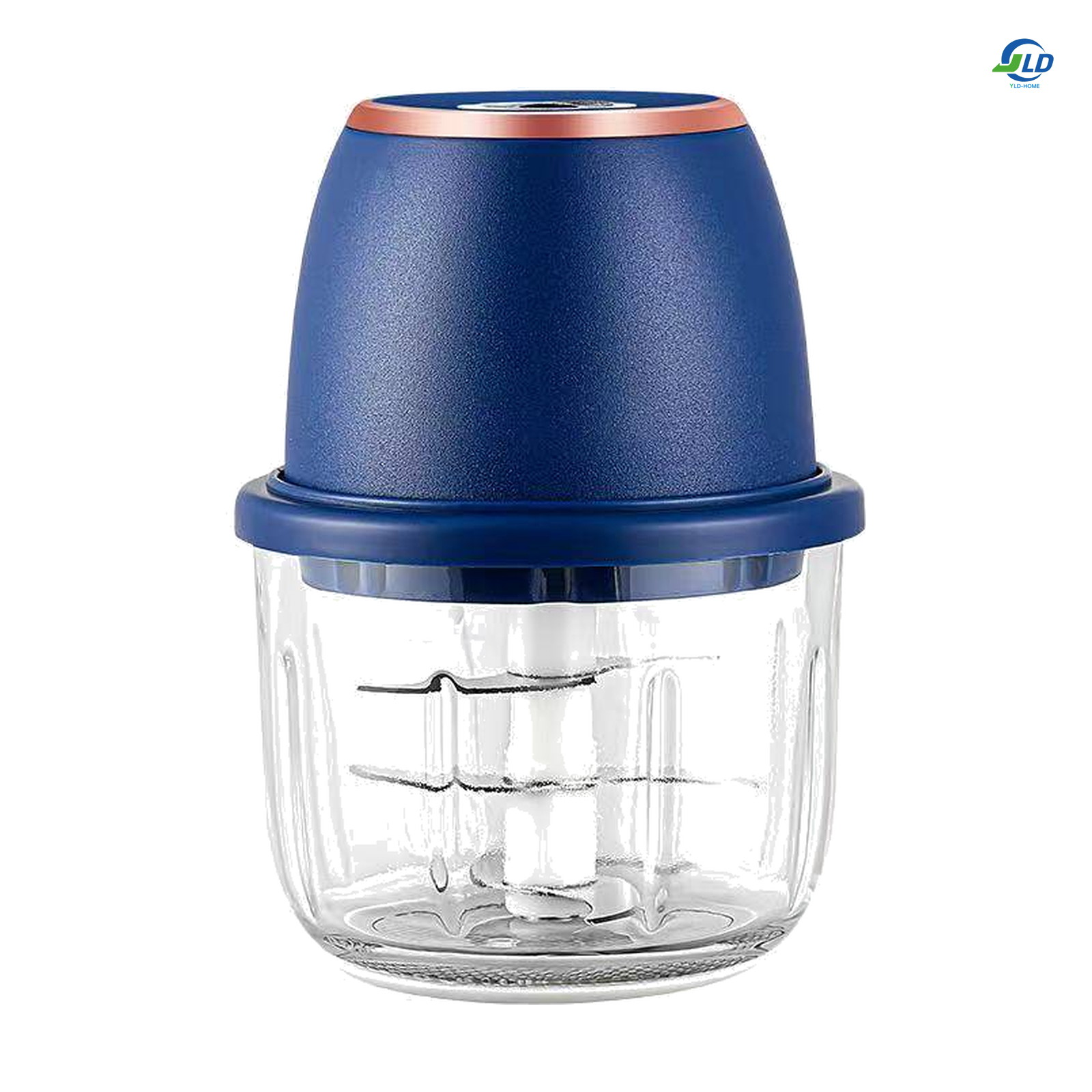
* alt:hand blender for smoothies *
Café Workflow: Volume, Speed, and Cleaning Cycles
Let us walk a shift. Open at six, prep fruit until eight, then the rush. The hand blender for smoothies sits on the prep station, not in a cabinet. During rush, it finishes drinks in the cup. Between rushes, it makes the lunch specials: a green smoothie batch, a chia pudding, a soup of the day. After lunch, it purees the fruit for tomorrow. One tool, four jobs, and every one of them is a job the countertop unit would have taken twice as long to do. That is why we call it a workflow tool, not an appliance.
Cleaning cycles decide whether a tool gets used or ignored. A hand blender for smoothies cleans in under thirty seconds: run the shaft in warm water, wipe the motor body, done. Compare that to a pitcher blender, which has to be disassembled, washed, sanitized, and air dried. In a health-inspected kitchen, that difference shows up on the inspection sheet too. Operators tell us the immersion tool keeps them compliant at the end of service because there is no wet motor base sitting on the counter.
If you are sourcing for a chain, ask your supplier for the cleaning protocol in writing. We provide a laminated station card with every wholesale order, and chains print it into their training manuals. The card covers the daily clean, the weekly deep clean, and the parts replacement schedule. Small detail, big difference. When your buyers open a franchise location, the training burden is real, and a tool that cleans itself in thirty seconds is a tool the staff will actually use.
Compliance for Café and Retail Channels: NSF, UL, and FDA
Café buyers in the US ask about NSF before they ask about anything else. NSF certification covers commercial food equipment sanitation, and many health departments and chain operators require it for anything touching food. UL or ETL covers electrical safety. FDA food-contact compliance covers the shaft, blade, and attachments. A hand blender for smoothies that goes into a licensed café should carry all three, or the operator is taking a risk at inspection time. Retail units sold to consumers typically need UL or ETL plus FDA food-contact statements; NSF is the commercial differentiator.
YLD Home builds for both worlds. Our commercial platforms carry the certifications a chain buyer’s spec sheet demands, and we keep the certificates current, because chains verify them every sourcing cycle. The National Restaurant Association tracks food safety and equipment standards across the industry, and the National Restaurant Association is a good reference for what operators are expected to follow.
When a buyer sends us a spec sheet with certification requirements, we answer line by line. If a certificate is coming up for renewal, we say so before the audit, not after. Compliance is not paperwork for us; it is the reason our units stay on US shelves. Ask your supplier for the certificate numbers and the issuing labs, then check the dates. A certificate that expired last spring is worth the paper it is printed on, and an inspector will know the difference.
Hand Blender for Smoothies Wholesale USA: MOQ, Lead Times, and Freight
For a hand blender for smoothies wholesale USA program, the ordering math looks like this: stock models with our brand start at [fill actual] units, private label runs start at [fill actual] units per model, and container orders get the best per-unit price. Lead times run [fill actual] weeks ex-factory for stock models and [fill actual] weeks for private label, before the ocean leg from Shenzhen to Los Angeles, Long Beach, or New York, which adds roughly three to four weeks. Air freight is available for reorders when a chain launch cannot wait.
| Order type | MOQ | Lead time (ex-factory) | Best freight for US |
| Stock model, our brand | [fill actual] units | [fill actual] weeks | LCL to LA or NY |
| Private label, stock model | [fill actual] units | [fill actual] weeks | LCL or FCL |
| Chain spec, custom color | [fill actual] units | [fill actual] weeks | FCL to LA |
| Attachment sets for smoothies | [fill actual] sets | [fill actual] weeks | FCL or LCL |
Plan the launch calendar backward from the shelf date. A chain rollout in June means the order should be placed by January, because production, testing, transit, and distribution all stack up. We give every wholesale buyer a written calendar with the order cutoff dates. When we miss a date, we tell you the same day, not the week after. That honesty is why importers keep coming back even when a cheaper quote shows up in their inbox. Cheap is only cheap if the container arrives on time.
Through a Smoothie Blender Supplier in Los Angeles
Los Angeles is the natural home base for smoothie culture, and buyers there think in volume. When a smoothie blender supplier Los Angeles account calls us, they usually want three things: a unit that survives heavy daily use, a fast reorder cycle, and packaging that fits their retail program. LA importers also deal with the port directly, which means they watch transit times closely. We route many LA orders through the ports of Los Angeles and Long Beach, and we coordinate the customs paperwork so the container clears without surprises.
What makes LA different from other markets is the range of channels: juice bars, gyms, meal-prep services, and retail shelves all in one metro. A distributor in LA might sell a hand blender for smoothies to a chain of juice bars in the morning and to a grocery buyer in the afternoon. That is why we offer flexible configuration: corded for commercial, cordless for retail, and attachment sets that turn one base into a full prep station.
If you are sourcing from the West Coast, ask about our mixed-container program. It lets you test several models in one shipment, which is the smart way to open a new category. You pay the same freight for a mixed container as for a single model, and you get real sell-through data for three SKUs instead of a guess on one. We have watched West Coast importers build entire catalogs this way, one mixed container at a time.
Retail and Café Packaging: Private Label and Display Options
The box sells the second unit. Retail buyers know this; the packaging has to stop a shopper at the shelf and explain the product in three seconds. For a hand blender for smoothies, the winning retail message is speed and cleaning: “blend in the cup” and “no pitcher to wash” outsell motor specs on the shelf. YLD Home designs cartons with those messages front and center, and we test the cartons in our own drop and vibration tests, because a crushed box is a returned unit. Private label buyers give us their brand colors and we handle the rest.
For café channels, packaging is more about durability than decoration. Units ship in sturdy cartons that survive distributor warehousing, and we offer bulk pack options that cut carton cost per unit. Chain buyers also appreciate consistent labeling for their receiving teams. We print the SKU, voltage, and certification marks clearly on every label, which speeds up the check-in process at the distributor’s warehouse.
When you plan a private label program, decide on packaging in the first meeting, not the last. Every packaging change after production starts costs time and money, and neither one is in your budget. Bring your brand guide, your retail price point, and your carton size preference to the first call. We will come back with a packaging mockup and a per-unit cost breakdown before you commit to anything. That is how a smooth program starts.
Case Study: A Miami Smoothie Shop’s Reorder Cycle
A smoothie shop in Miami opened with two countertop blenders and found itself replacing a motor every three months. The owner called YLD Home through a distributor, tested a hand blender for smoothies sample for two weeks, and ordered a private label run of [fill actual] units with his shop’s logo. The test sold him: his staff blended forty smoothies a day in the cup, and the close-of-day cleaning dropped from twenty minutes to five. His first order arrived at the port of Miami, cleared customs, and hit his shelf in the same week.
Six months later, the numbers were plain. Motor replacements stopped. Staff turnover in the kitchen mattered less, because the training time on the immersion unit is minutes, not days. The shop opened a second location in Fort Lauderdale and ordered [fill actual] more units, this time adding our HB006-3 detachable food processor for prep work. The owner told us the hand blender for smoothies became the most used tool in the shop, more than the countertop units he started with.
When a buyer asks us for a success story, this is the one we tell, because it is a normal shop, not a chain with a corporate kitchen. The math is easy to repeat: two countertop motors a year at [fill actual] dollars each, plus lost service time, versus one commercial stick unit that runs for years. Once an operator sees that comparison in their own P&L, they never go back to the pitcher-only workflow.
Choosing a Model and Getting a Wholesale Quote
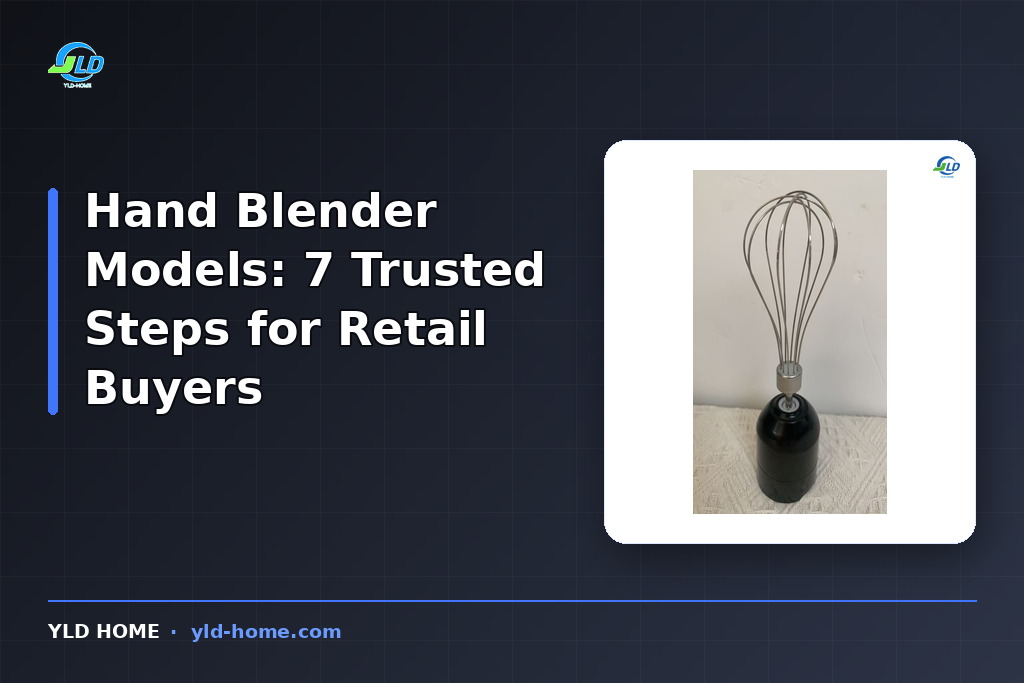
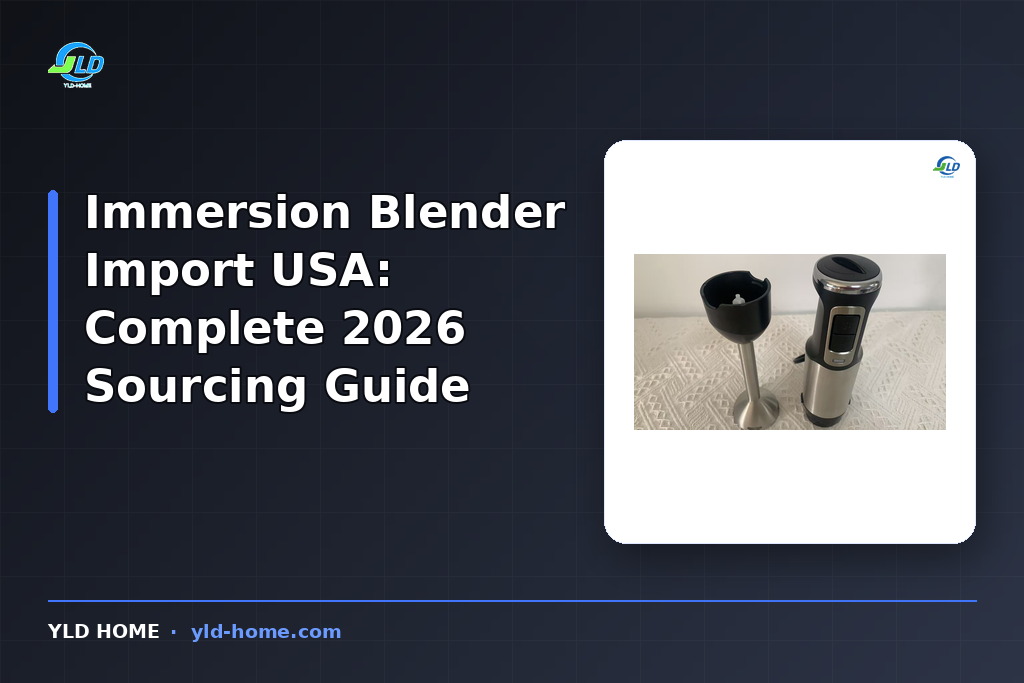
Most of our buyers choose between three platforms. The 6010 powerful stick blender is the workhorse for high-volume blending and puree. The 6006L powerful stick blender adds a longer shaft for deeper batch containers, which matters for prep buckets. The 4-in-1 hand blender covers retail and smaller cafés, with attachments that turn it into a whisk and chopper. If you are sourcing for a chain, we will recommend based on your menu and your ticket volume, and we will tell you honestly when a cheaper model is enough. We would rather win the second order than the first.
Send us four things and we will quote within two business days: target quantity, corded or cordless, stock or private label, and your port. Add your menu or channel if you want a model recommendation. Every quote includes ex-factory pricing, sample cost, freight options, and the certification documents your buyer file needs. YLD Home ships to distributors and chains across the US, from Los Angeles to Miami, and we treat every quote as the start of a long program, not a one-off sale.
That is how we have built the hand blender range into a line that US buyers reorder. The first sample order is the cheapest education you will ever buy in this category. Run it in a real kitchen for two weeks, watch the staff use it, and check the cleaning time against your current tool. The field data will make the decision for you, and we will be here when you are ready to scale.
Perguntas frequentes
Q1: What is the best hand blender for smoothies for a US café?
The best hand blender for smoothies depends on volume. A busy café should run a corded commercial model like our 6010 powerful stick blender, which holds speed under load and blends in the cup. A smaller shop can start with the 4-in-1 hand blender. Send us your ticket volume and we will recommend one.
Q2: What is the MOQ for a hand blender for smoothies wholesale order?
Stock models with our brand start at [fill actual] units. Private label runs start at [fill actual] units per model. Mixed containers let you test several models in one shipment, which is how most new buyers start.
Q3: Do you work with smoothie blender supplier Los Angeles buyers?
Yes. We ship regularly through the ports of Los Angeles and Long Beach, and we coordinate customs paperwork for LA importers. Several of our US distributor accounts are based in Southern California.
Q4: Can we put our brand on the unit?
Yes. Private label is a core part of our business. We customize housing color, logo, packaging, and labels. Exclusive tooling on a new housing shape is also possible for larger programs.
Q5: How long does an order take to arrive?
Production runs [fill actual] weeks ex-factory, and the ocean leg to the US West Coast takes about three to four weeks. East Coast ports add about a week. We give you a written calendar with every quote.
Q6: What certifications does the unit carry?
Commercial units carry UL or ETL, NSF for foodservice channels, FCC documentation, and FDA food-contact compliance. Cordless models add lithium-ion battery certification. Certificates are sent with every quote.
Q7: What happens if units fail in the field?
We track field failure rates by batch and replace defective units under our policy. Our QC records and photos stay on file for every shipment, so claims get resolved with evidence, not arguments.
Official references
National Restaurant Association
[[PAGEBREAK]]