






In this guide: Why this category sells all year · The US smoothie market in 2026 · What US buyers expect from a hand held blender for smoothies · 120V, UL/ETL and FDA compliance · Wholesale and private label paths · The YLD Home lineup · Case study: a New York brand · Shipping and inventory planning
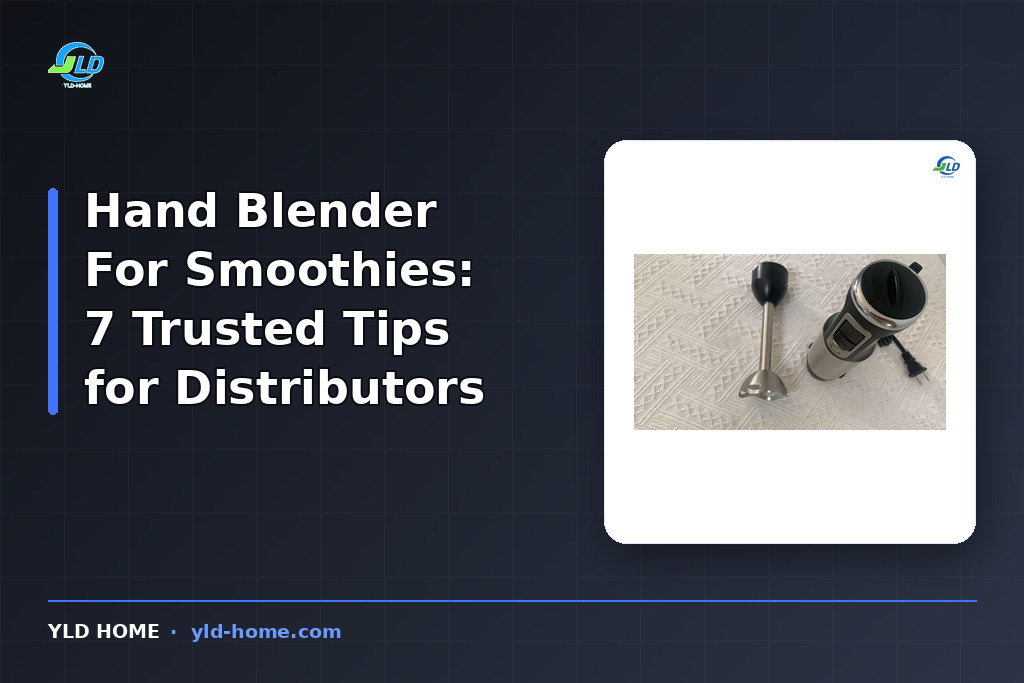
A hand held blender for smoothies is one of the fastest-moving small appliances in US retail, and the interesting part is that it sells in every channel at once: big-box kitchen departments, grocery end caps, online marketplaces, and foodservice counters. For US buyers — importers, distributors and private label brands — the category is attractive because demand is broad and the product is proven. This guide covers the category from a wholesale perspective: what sells, what specs US customers expect from a hand held blender for smoothies, how compliance works at 120V, and how to source it profitably.
Why “Hand Held Blender for Smoothies” Sells All Year
The smoothie habit in the US is not seasonal. January brings New Year resolution spikes, summer brings frozen drink demand, and the rest of the year is carried by breakfast and post-workout routines. That makes a hand held blender for smoothies a rare appliance: it has multiple demand peaks instead of one, which is exactly what retail buyers want from a category. The product also fits small kitchens, dorm rooms, offices and RVs, so the addressable audience is wider than a countertop blender’s.
The search data matches the sales data. Queries for hand held blender smoothies climb in January, again in May, and again in September when schools restart. For distributors, that pattern means a steady reorder cycle rather than a single seasonal gamble. For private label brands, it means the category can support a year-round SKU instead of a promo item.
The category also benefits from a behavior shift. More US households are making smoothies at home because café prices keep climbing — a $9 smoothie at a juice bar is a $0.90 smoothie in a kitchen. Meal prep culture pushed the same direction: batch smoothies for the week, portioned into jars, blended fresh each morning. A hand held blender for smoothies is the cheapest entry point into that routine, which is why it converts well at entry price points.
Retailers also like the shelf story: a handheld blender for smoothies takes less shelf space than a countertop blender, boxes smaller for e-commerce, and carries better margin density per cubic foot. Those logistics advantages show up in buyer conversations long before the product is unboxed.
The US Smoothie Market in 2026: Retail, Foodservice, CPG
The US smoothie market splits into three buying channels, and each buys differently. Retail — grocery, mass merchandisers, club stores — buys on margin, packaging and sell-through history. Foodservice — juice bars, cafés, gym smoothie counters — buys on durability, duty cycle and serviceability. CPG and private label brands buy on specification, compliance and the ability to scale from a first order to container volume without quality drift.
For wholesalers, the growth channel right now is foodservice. Smoothie counters inside gyms, airports and corporate cafeterias keep opening, and each one needs blending equipment plus backup units. A hand blender for smoothies sold wholesale to this channel needs a longer duty cycle and a warranty process, because a counter blender runs dozens of times a day. The retail channel, meanwhile, is consolidating around fewer, proven SKUs with strong packaging, which favors suppliers who can refresh artwork quickly.
The third channel — stick blender for smoothies wholesale usa buyers who serve online sellers — is the fastest to start and the most volatile. Marketplace sellers test SKUs in small lots and scale fast when a listing works. They need fast samples, flexible MOQs and packaging that photographs well. YLD Home supplies all three channels from the same factory, and the assortment advice differs per channel, which is why we ask about the channel before quoting.
The price architecture is worth understanding too. Foodservice programs buy on service cost, retail buys on sell-through, and online buys on review velocity. Those three metrics produce different assortment decisions from the same factory line, which is why channel-first thinking saves money before the first quote arrives.
What US Buyers Expect From a Hand Held Blender for Smoothies
US consumers judge an immersion blender for smoothies on four things: does it crush ice, is it easy to clean, does it feel solid, and does it last past the warranty. Wholesale buyers should spec for those four judgments, because they show up in reviews and return rates. The table below is the spec sheet we recommend US buyers use when comparing models.
| Spec | Entry level | Mid range | Notes for US buyers |
|---|---|---|---|
| Motor power | 300-400W | 500-600W | More power = better ice crush |
| Jar capacity | 20 oz | 25-30 oz | Match US serving sizes |
| Speeds | 2 + pulse | 2 + pulse + turbo | Pulse is expected in the US |
| Blade material | Acier inoxydable | Stainless steel, detachable | Detachable shaft sells |
| Dishwasher-safe parts | Shaft only | Shaft + jar | Big review driver |
| Cord length | 3 ft | 4 ft+ | US kitchens have few outlets |
| Tension | 120V/60Hz | 120V/60Hz | Non-negotiable |
Ice crush is the make-or-break feature. A handheld blender for smoothies that leaves ice chunks gets returned or review-bombed, so the motor and blade design have to be matched to frozen fruit and ice, not just soft blending. When we tested a batch for a US client last spring, the ice test alone separated the models: two passed a 30-second frozen berry blend, one did not. You can see the blending action in our hand blender and juicer maker video.
Cleaning is the second decision driver. US buyers strongly prefer detachable, dishwasher-safe shafts and jars. The packaging should say “dishwasher safe” in plain English on the front, because that phrase drives conversion in retail and online. Cord length matters more than most importers expect: US kitchens are outlet-poor, and a 4-foot cord is a real selling point at retail.
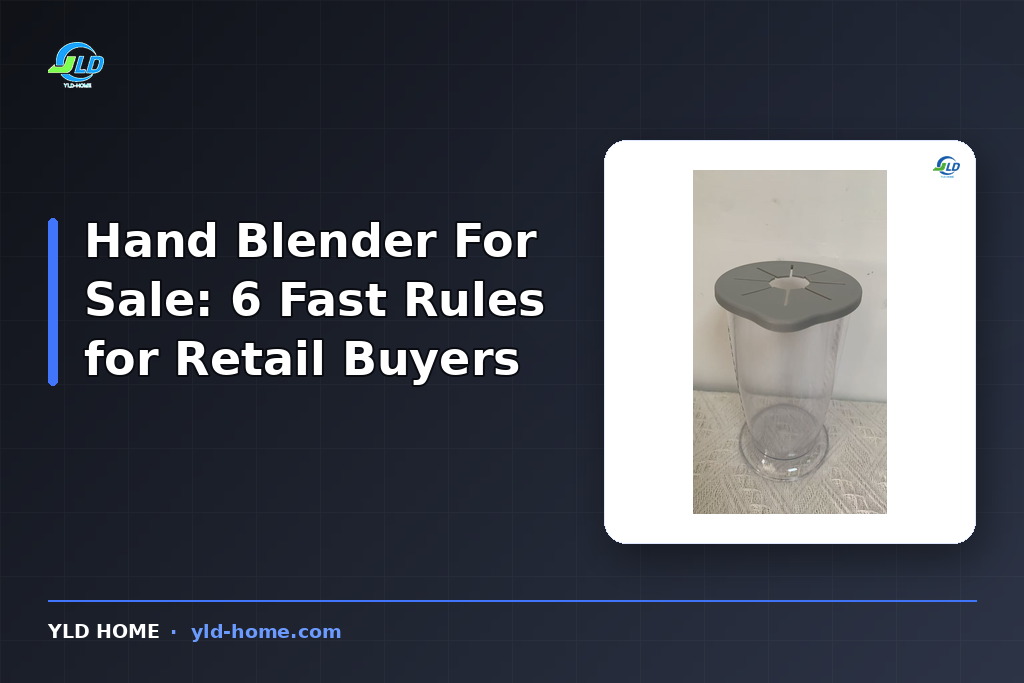
Jar design is the third driver. US buyers look for measurement marks in ounces and cups, a leakproof lid for on-the-go drinks, and a jar that stands stable while the blender runs. A hand blender for smoothies with a 30 oz jar covers the standard US serving size and the sharing size in one SKU, which is why mid-range models outsell the smallest jars in most programs.
120V, UL/ETL and FDA: Compliance for Smoothie Blenders
A stick blender for smoothies sold in the US runs on 120V/60Hz with a US plug, and compliance starts there. Retailers will ask for a UL or ETL report on the exact model number; foodservice and private label buyers will also ask for FDA food-contact documentation for the blades, shaft and jar. Cordless models add an FCC requirement for RF emissions. None of this is exotic — it is the standard stack for the category — but the reports have to match the model, and the dates have to be current.
| Exigence | Who asks | What to show |
|---|---|---|
| UL / ETL | Retailers, marketplaces, chains | Test report for the exact model |
| FDA food contact | Foodservice, private label | Material statement for food-touching parts |
| FCC (cordless) | Importers, marketplaces | RF test documentation |
| Proposition 65 | California retailers | Compliance statement for the state |
For buyers stocking blenders that touch food in a commercial setting, the USDA Food Safety and Inspection Service publishes practical guidance on safe food handling and cleaning for retail and foodservice operations — a good reference to share with your compliance team. Cleaning protocols matter here: a blender shaft that is easy to disassemble and sanitize is easier to keep compliant, which is another reason detachable shafts win in this category.
California adds one more layer: Proposition 65 compliance statements are routinely requested by California retailers and their distribution partners. Confirm your supplier can provide the statement for the markets you serve, and keep the documentation in your compliance file per model.
Wholesale and Private Label Paths for Smoothie Brands
The fastest route into the US market is wholesale: standard models, tiered pricing, mixed loads, and sell-through data before you invest in branding. The next step is private label: your brand on the box, the housing and the manual, using a proven platform. OEM goes further, with custom colorways and accessory changes. Most US smoothie brands we work with start on wholesale or private label, prove the demand, then decide whether custom tooling makes sense.
Private label is where the margin is, and the packaging is where the work is. US consumers buy smoothie appliances on packaging trust: clear imagery of the finished drink, honest power claims, and explicit dishwasher-safe and ice-crush claims. A factory that can refresh artwork and print in short runs keeps your packaging current without container-level commitments. Brand owners should also lock the certificate question early: who owns the UL report and the FDA statement once your logo is on the product.
For online sellers, the private label path is faster than most expect. A proven model, your packaging, US manuals and barcodes, and the listing is live in weeks. The risk is quality drift across batches, which is why the QC section matters as much as the price. A smoothie blender that fails in month three becomes a return, a bad review, and a dead listing.
Retail readiness matters for the grocery and mass channel. US retailers expect a barcode (UPC or EAN), a pack quantity that matches their planogram, and packaging that survives the supply chain without damage. Factories that ship to US retailers handle these details routinely; factories that only serve local markets treat them as surprises. Ask for a retail-ready packaging review before you commit to a container.
The YLD Home Lineup for the Smoothie Category
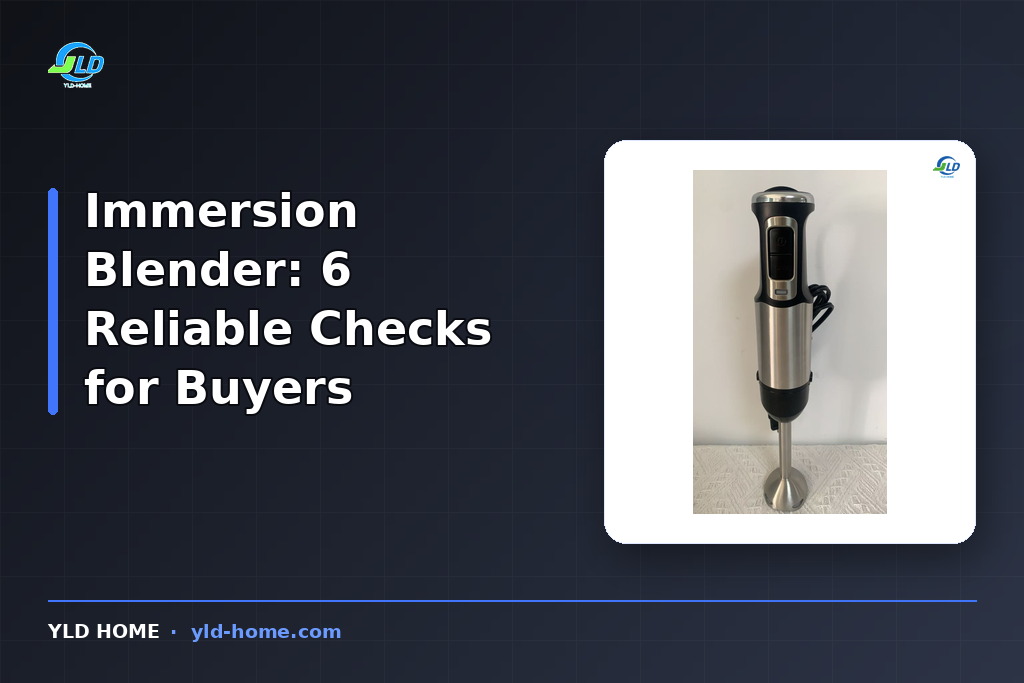
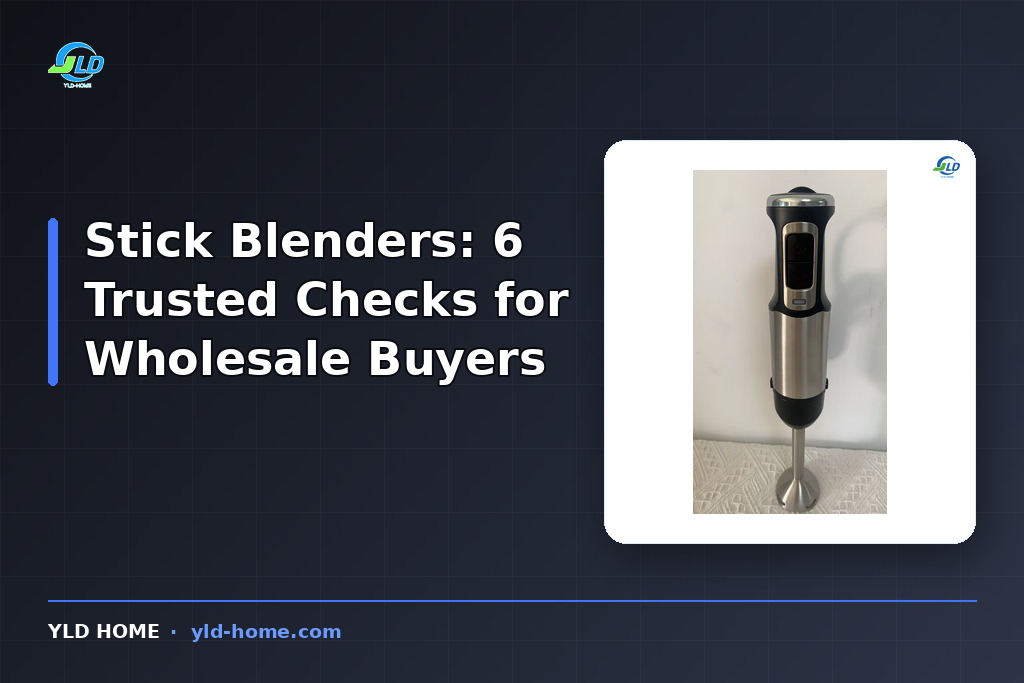
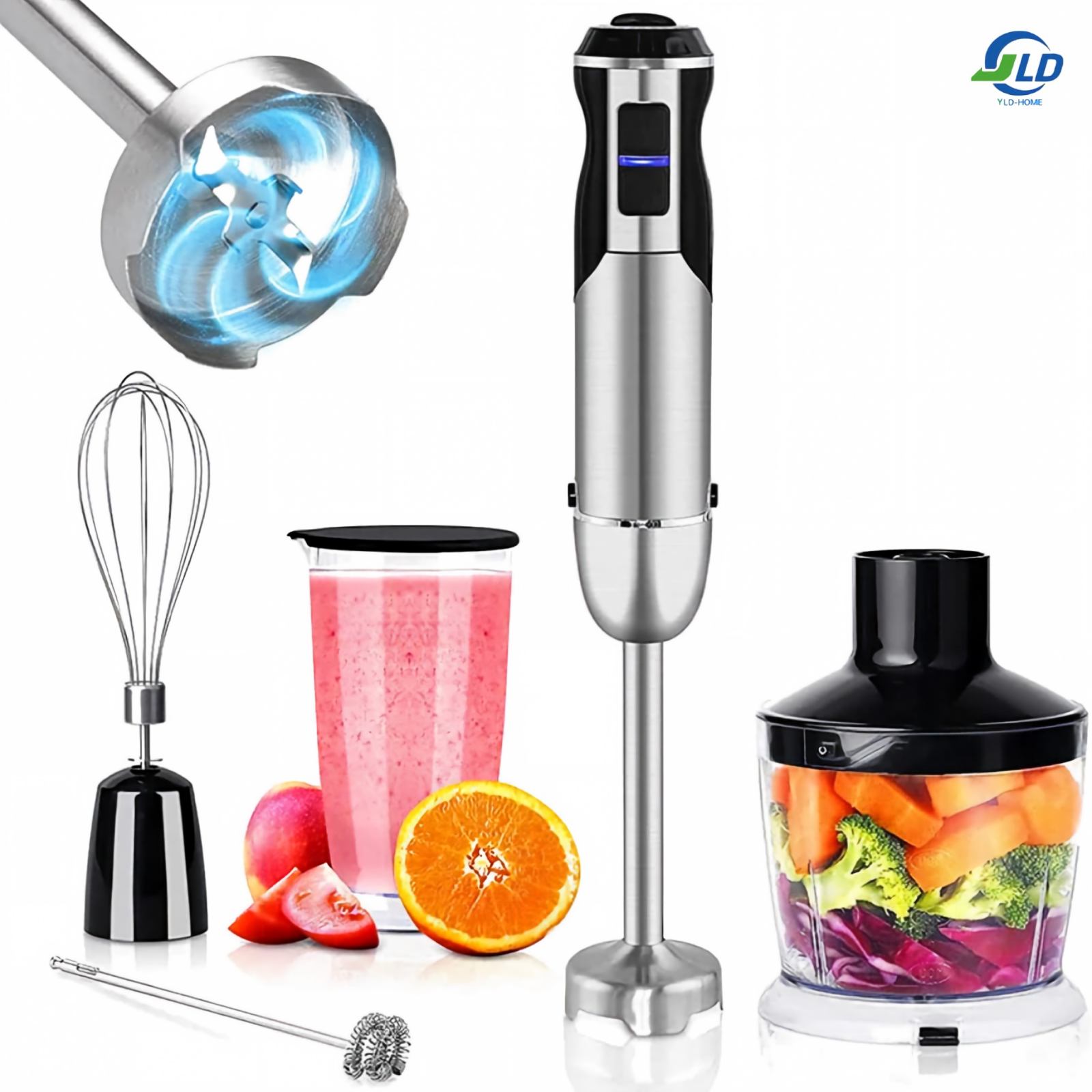
YLD Home builds the models US smoothie buyers actually reorder, and the lineup maps cleanly onto the channels above. The 6006L powerful stick blender is the volume model: 600W, detachable stainless shaft, strong ice performance, priced for distributor programs. The 6007 puissant mixeur à bâtons covers entry price points for e-commerce and grocery. The 6008 puissant mixeur à bâton adds torque for thicker blends and small-batch commercial use. For foodservice counters that need serious power, the 6018 1000W powerful stick blender handles continuous blending through a service day. The full range with specs is on the hand blender range page, and for smoothie bars that also run a juice line, the juicer manufacturer page covers our juicer models.
| Modèle | Puissance | Channel fit | Notes |
|---|---|---|---|
| 6007 | 500W | E-commerce, entry retail | Value price point |
| 6006L | 600W | Distributors, general retail | Volume best-seller |
| 6008 | 600W+ | Retail, light foodservice | Torque for thick blends |
| 6018 | 1000W | Foodservice counters | Continuous-duty capable |
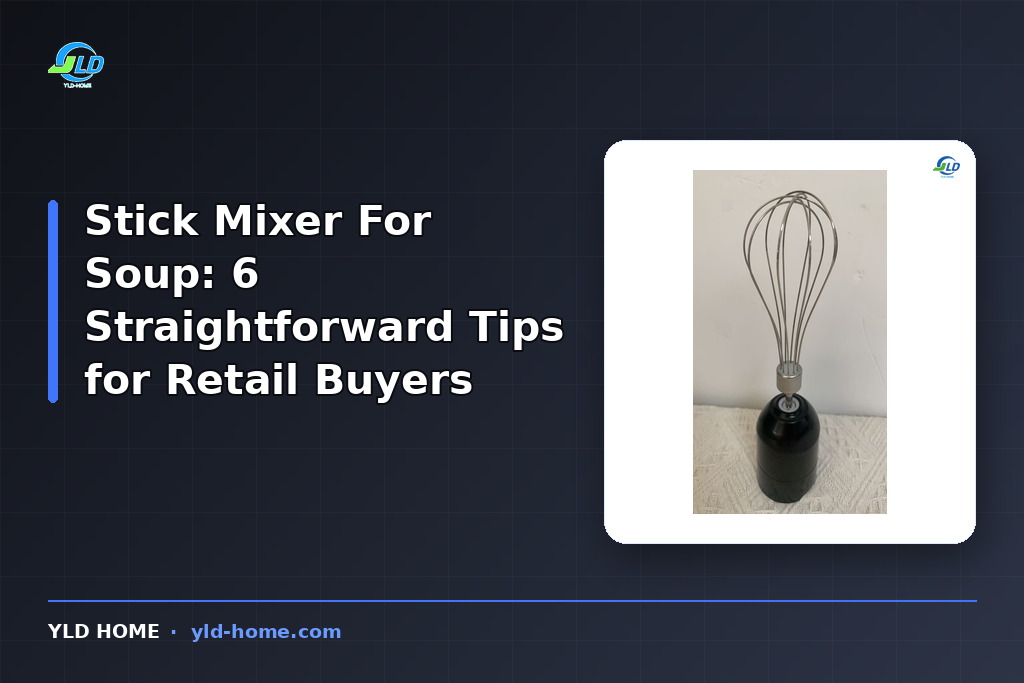
Every model ships in 120V configuration with UL-ready documentation, FDA food-contact coverage, and packaging that states ice-crush and dishwasher-safe claims in plain English. When a New York brand asked us to build a smoothie set around a 30 oz jar with a frother attachment, we configured the 6006L platform with their branding and had samples in their hands in nine days.
Case Study: A New York Brand’s Smoothie Launch
A New York-based brand came to us in 2024 with a private label concept: a smoothie-focused blender set priced at $39.99 retail, sold through their website and one national marketplace. They had no import experience, so YLD Home walked them through the full path — samples, compliance, packaging, freight.
We started with three sample units of the 6006L platform configured with their colorway and branding. They tested the units with 40 customers in a two-week beta, and the feedback drove two changes: a longer cord and clearer speed labeling on the housing. Both were cheap fixes at the sample stage. Their first order was 1,200 units, and their second order, placed 10 weeks later, was 3,000 units.
The launch worked because the category data held. Their best month was not January — it was May, exactly the summer spike we had flagged in the assortment review. The brand now runs a three-SKU line, and the margin on the private label line beats their imported accessories category by a wide margin. The lesson we repeat to every US buyer: test with real users before the container, and let the first sell-through quarter set the second order.
Shipping, Lead Times and Inventory Planning
AN immersion blender for smoothies wholesale usa order follows a standard rhythm. US-configured samples take about 7 days. Production runs 20 to 30 days depending on volume. Sea freight from Shenzhen to Los Angeles or Long Beach takes 18 to 22 days; to New York, about 30 days. Plan 8 to 11 weeks from deposit to dock, and add customs clearance time on the US side — a broker who knows small appliances will clear most shipments in days.
Inventory planning for this category is easier than most because demand is year-round, but two dates still rule the calendar. The Chinese New Year pause in January-February shifts production windows, and the Q4 retail season pulls orders forward. Brands that want holiday shelf stock order by early summer. Foodservice buyers should also carry backup units, because a smoothie counter without a blender is a counter without revenue.
The landed cost calculation deserves its own line. Unit price, ocean freight, US duty on small kitchen appliances, broker fees, drayage and warehousing all add up, and the freight line alone can swing 10 to 15 percent depending on the season. US buyers who compare quotes on landed cost, rather than FOB price, make better decisions every time, and a supplier that quotes Incoterms clearly makes that comparison easy.
| Milestone | Timing |
|---|---|
| Sample approval | Week 1 |
| Production | Weeks 2-6 |
| Sea freight to West Coast | Weeks 6-9 |
| Sea freight to East Coast | Weeks 6-10 |
| Customs and delivery | Weeks 8-11 |
How to Shortlist a Smoothie Hand Blender Supplier in the USA
The phrase “smoothie hand blender supplier usa” usually leads to distributors, and that is a fine place to start — but the shortlist questions are the same whether you buy from a US stockist or direct from the factory. Ask each candidate five things: which factory makes the goods, what certificates the exact model holds, what the QC process covers, how warranty claims are handled, and what the reorder lead time actually is.
Then test the product the way your customers will. Freeze the berries, time the blend, check the ice. Wash the parts the way a busy household would, and inspect the shaft seal after 30 cycles. Compare landed cost, not unit price: freight, duty, broker fees, and the cost of holding inventory all belong in the number. A supplier that answers the five questions in writing, ships fast samples, and stands behind the QC process is worth more than the cheapest quote on the sheet.
YLD Home answers all five questions in writing on every enquiry, ships US-configured samples in about 7 days, and supports warranty claims through a single contact. If you want to see the factory before you call, our YouTube channel has the production walkthroughs. If you want to compare us against your current supplier, that is exactly the test we recommend you run.
Two more checks belong on the shortlist. Ask how flexible the MOQ is for a first order — many factories will open a smaller trial lot for a new customer and scale on reorder. And ask for a reference in your channel: a US importer, a distributor or a brand in the same category. A supplier that can name a working reference in your channel has already solved the problems you are about to hit.
Planning the Seasonal Sales Cycle for Smoothie Blenders
The smoothie category peaks three times a year — January resolutions, May-June summer demand, and September back-to-school — and each peak needs inventory before the search traffic arrives. Distributors who miss the May window watch the July clearance rack. The cycle: place the spring order in February, land it in April, and let May-June sell-through set the fall quantity. A handheld blender for smoothies that sells out of its first peak becomes the reorder that builds the program; one that arrives late becomes dead stock. YLD Home builds the shipping calendar around these peaks, so US buyers can lock production slots before the Chinese New Year pause and again before the Q4 retail push. We also track sell-through patterns across clients — which colorways move in the summer window, which jar sizes sell at back-to-school — because that data turns a hand blender for smoothies order from a guess into a forecast.
Questions fréquemment posées
Q1: What is the best hand held blender for smoothies for my US retail program?
The best model depends on your channel: 300-400W covers entry price points, 500-600W covers mainstream retail, and 1000W covers foodservice counters. A stick blender for smoothies at the 600W level is the volume sweet spot in US wholesale.
Q2: What is the MOQ for smoothie blender wholesale orders?
Standard wholesale starts at 1,000 units per model; mixed loads across models count toward the MOQ.
Q3: Are your smoothie blenders certified for the US market?
Yes — 120V configuration, UL/ETL reports per model, FDA food-contact documentation, and Proposition 65 statements for California.
Q4: Can I private label a smoothie blender?
Yes, with logo, packaging, manuals and custom colorways on proven platforms; samples in about 7 days.
Q5: Do these blenders crush ice and frozen fruit?
The 500W and above models handle frozen berries and ice in 30-second blends; the ice test is part of our sample approval process.
Q6: How long is the lead time for a first order?
About 8 to 11 weeks from deposit to a US port, depending on volume and destination.
Q7: What warranty and after-sales support do you provide?
YLD Home provides a single warranty contact, spare parts shipped to your US warehouse, and replacement guidance for dealers.
Q8: Can you help with packaging design for US retail?
Yes, we produce US-market packaging and English manuals, and we coordinate artwork refreshes for private label programs.