





Thursday, 6:40 pm. Six tables are set, twenty-two players due at seven, and the glass kettle behind the counter has been boiled three times already. Someone’s aunt wants hot water for the tea bag she brought from home. Two players at the window table ordered iced lemon tea. The air fryer is still cold, because nobody thought about snacks until last week.
That half hour before doors is where most mahjong club equipment decisions really get made. Not in a showroom. In a queue at a counter with one free outlet and one person working it.
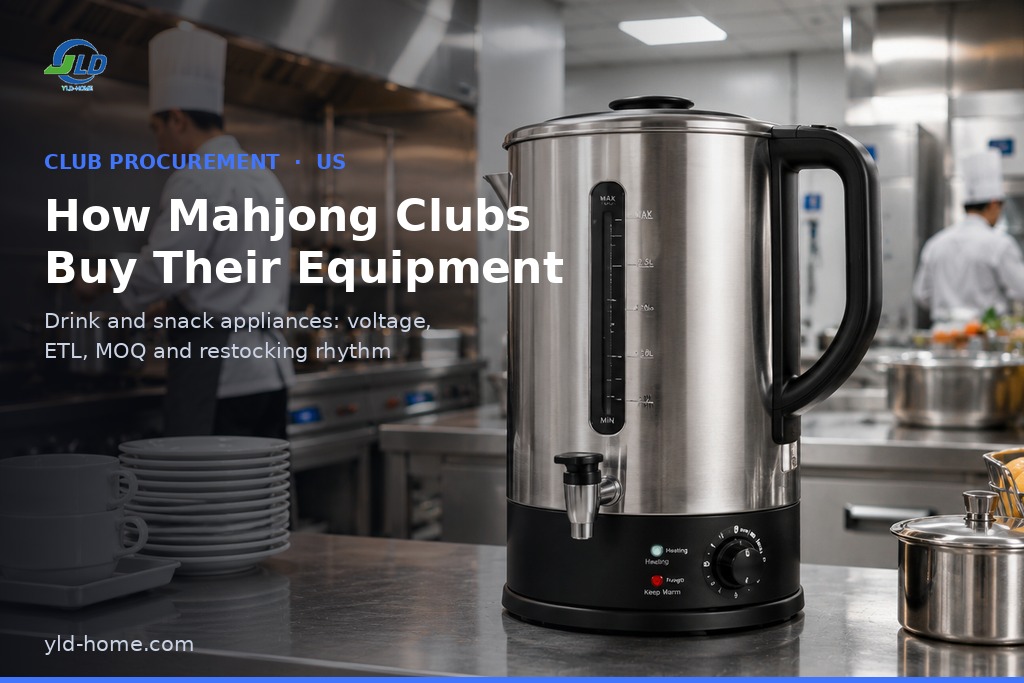
Here, mahjong club equipment means the drink and snack side: kettles, coffee machines, blenders, juicers, warmers, something for the late crowd. Tiles and tables belong to a different supply chain, and YLD Home doesn’t make those. YLD Home builds the appliances — the side where clubs overspend, underspec, and rebuy within a year.
This guide is for operators replacing a dead kettle at short notice, mahjong brands putting their name on a bundled kit, and importers selling into a scene they’ve never sat in.
What Counts as Mahjong Club Equipment (And What Doesn’t)
The play side is tables, tiles, racks, dice, scorecards, chairs, lighting. Nobody in that category will help you with a blender.
The service side is the kitchen corner: hot water, coffee, cold drinks, snacks, and the cleaning that follows. Ordinary small-kitchen equipment, except the duty cycle is strange. Nothing runs for hours. Everything runs in bursts, twenty times a night, operated by people who have never touched that machine before.
That burst pattern is the design brief. A club doesn’t need a machine that performs beautifully for a skilled user; it needs one that survives being operated badly by a different person every ten minutes. YLD Home sits on the service side, and has since 2012 — a factory in Shipai, Dongguan, a showroom in Bao’an, Shenzhen, roughly 300 people, 25,000 m², five lines, 62 machines, about 600,000 units a month.
The Buying Unit Is the Table, Not the Player
New operators budget per player. Experienced ones budget per table, then add a buffer for the counter.
Six tables seating four is twenty-four people, but it is also six clusters of demand arriving at once. When a hand ends, four people at one table want something, then the next table does. Peak load is set by tables, not headcount.
Ratios that hold up in practice:
- One hot-water vessel per four to six tables, plus one spare that stays empty
- One cold-drink path per eight tables — a juicer cup or a blender station, not both
- One snack appliance for the room, away from the quietest tables
- One backup of whatever single item, if it dies, stops service entirely
Clubs rarely regret buying the second kettle. They often regret buying only one.
Five Buyers, Five Different Briefs
The independent club operator. Two to ten units, working this month. Cares about plug type, counter footprint, and whether staff can clean it without a manual. Usually buys through a distributor.
The mahjong brand. Sells tables and tiles, wants a co-branded kit to lift the average order — kettle, grinder, warmer in matching trim. Cares about packaging and logo placement more than unit cost.
The importer. Factory volume, holds stock, resells to clubs and home players. Cares about paperwork, carton dimensions, and a range that looks coherent on one page.
The club café operator. Runs the food side inside a shared venue. Cares about heat, smell and grease, because the room isn’t theirs alone.
The tournament organiser. Buys or rents for a weekend and never wants to see a fault.
Write down which one you are before requesting a quote. MOQ, documentation and packaging all change — which is why two mahjong club equipment quotes for the same room can look nothing alike.
A Working Inventory List for a Mahjong Club
The list most clubs converge on after a year of trial and error. Deliberately short — every extra appliance is another thing to clean and replace.
| Zone | Appliance | What it does | What goes wrong without it |
|---|---|---|---|
| Front counter | 1.7L glass electric kettle | Hot water for tea, instant coffee, cup noodles | Staff boil a small kettle five times an hour and burn out the switch |
| Front counter | Semi-automatic coffee machine | Espresso and milk drinks for the evening crowd | Players leave for the café next door and don’t come back that night |
| Drink station | 370W portable juicer cup | Juice and smoothies, no plumbing | Cold drinks become cans only, and margin stays flat |
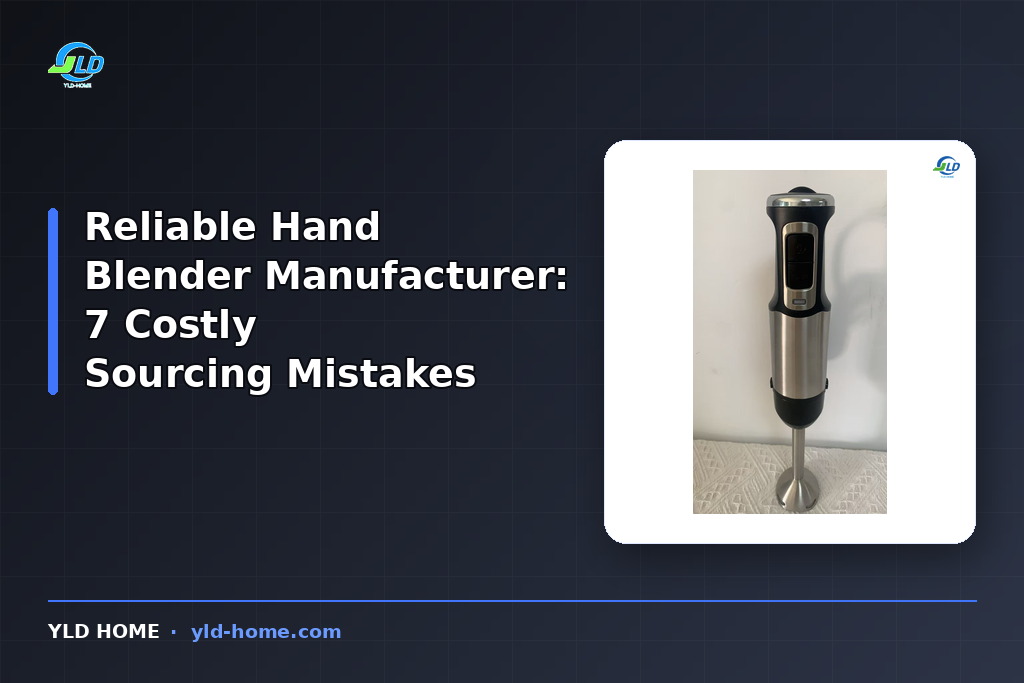
| Back room | Hand blender (YLD-5510 or YLD-5520) | Soup, sauce, fruit prep in batches | Staff improvise with a fork and lose twenty minutes |
| Back room | 702 wireless grinder, 800mAh | Fresh-ground coffee, no cord across the bench | Pre-ground coffee goes stale and the machine sits idle |
| Late service | Air fryer | Hot snacks after 9 pm without a full kitchen | The club closes early because there’s nothing to eat |
| Quiet corner | WN-02 warmer | Holds milk or tea at temperature | Staff reheat and overheat, and nobody wants the result |
The juicer cup and the hand blender overlap on paper and don’t in practice — one is front-of-house and cordless, the other back-room and batch. The warmer looks least important and gets used most in winter.
Voltage, Plugs and Listings: The First Filter
Every other decision sits downstream of this one, and it’s where clubs get hurt.
US clubs run on 120V at 60Hz. A unit built for 220–240V at 50Hz will underperform or run hot until something fails. A plug adapter does not fix a voltage mismatch, and a step-up transformer on a counter is a risk nobody wants to explain to an insurer.
YLD Home builds a US version at 120V/60Hz with ETL listing, tested against UL 1082 or UL 982 depending on product family, plus FCC where relevant. Europe is 220–240V with CE and GS; the UK line carries UKCA. Separate builds, not one unit with a different sticker.
One distinction worth putting in front of any club buyer: ETL listing is a North American safety listing, tested to UL standards. It is not the UL mark itself, which is a separate service. If your insurer asks for UL specifically, say so at quote stage, not after the container lands. Those standards are published by UL Solutions; the appliance safety framework behind them is the IEC 60335 family, documented at the IEC.
Three questions settle most voltage problems: destination voltage in writing, the listing mark on the rating label, and whether the plug matches the club’s sockets. The certification set per product is at yld-home.com/certifications.
Noise, Heat and Smell: Appliances That Fit the Room
Mahjong is a listening game. Players talk, but they also think, and a club that sounds like a food court loses the older regulars first.
Kettles are loud at the worst moment. A kettle reaching boil during a close hand is more disruptive than background music. Put it behind a half-wall or in the back room, with a carafe run to the tables.
Air fryers smell like they’re working. Fine at 9 pm, unwelcome at 3 pm in a room with no extraction. Put it near a window or hood, or accept a narrower menu.
Espresso machines need a dedicated circuit. A machine plus a kettle plus a warmer on one counter circuit is how breakers trip mid-evening. None of this is exotic, but it is the difference between a supplier who has shipped to a club and one who has only shipped to a kitchen.
Corded or Cordless: Where the Outlets Are
Look at the room before the catalogue. Most clubs have outlets on two walls and none in the middle, which is exactly where the players are.
So drink equipment splits into two patterns: a fixed station at the counter, all corded, all where the power is; and a mobile layer that goes to the tables — a portable juicer cup, a cordless grinder, a hand blender that doesn’t need a socket within reach.
The cordless layer isn’t a gimmick here, it’s a routing decision. Grinding beans at the table for a four-top is small theatre that sells the second round. Doing it means walking to the back, so nobody does it.
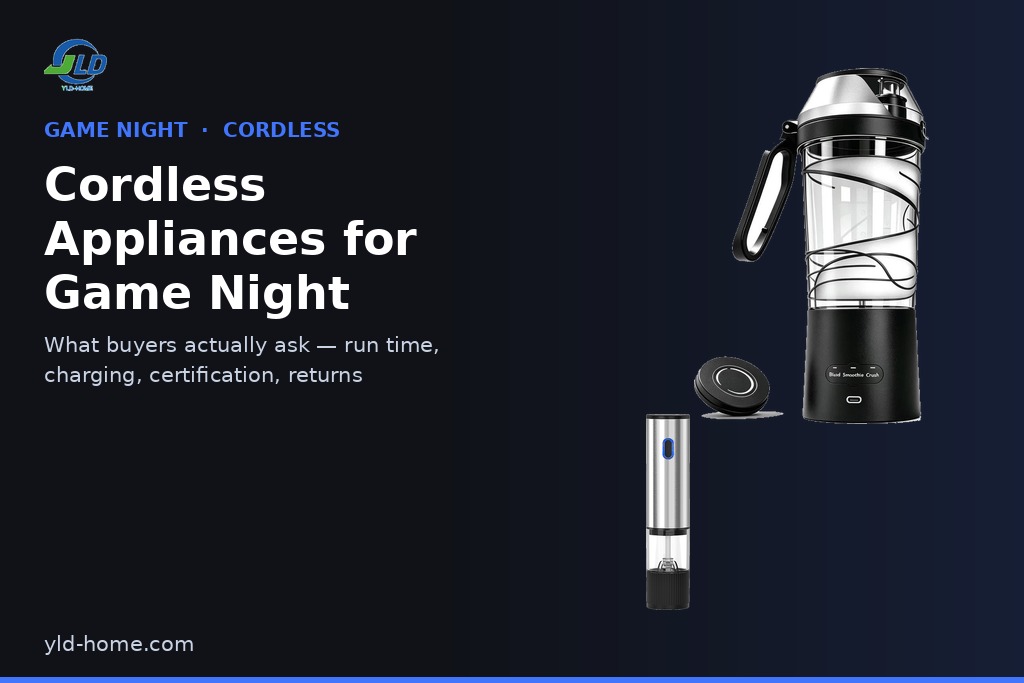
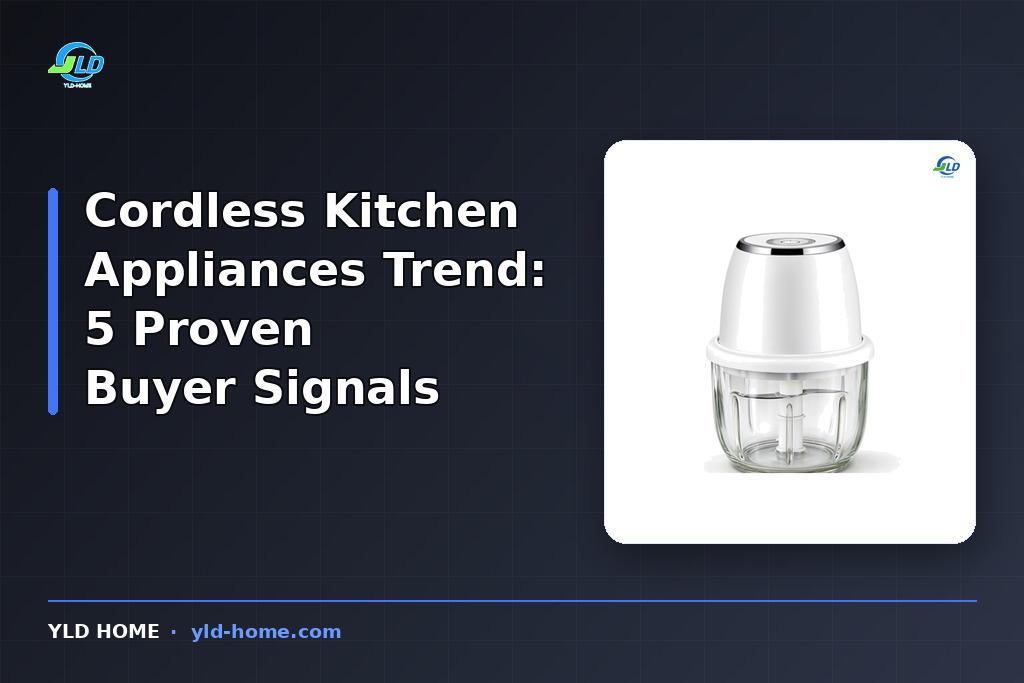
YLD Home’s cordless range — the 702 grinder at 800mAh and the HD-13 370W juicer cup — trades watts for being usable where the players sit. Fuller picture at cordless kitchen appliances.
Home Kitchen vs Mahjong Club Purchasing
The comparison first-time club buyers never see, and the reason a home kettle dies in a club in four months.
| Dimension | Home use | Mahjong club use |
|---|---|---|
| Duty cycle | 2–6 cycles a day | 20–40 cycles an evening, 5–7 evenings a week |
| Operator | Same person, learns the quirks | Rotating staff and volunteers, no learning curve |
| Failure cost | Inconvenience | Lost service, lost players, refunds |
| التنظيف | Once, at end of day | Between users, often in a hurry |
| Noise tolerance | Household normal | Must not break concentration at the tables |
| التخزين | Cupboard | Counter space that also holds cups and napkins |
| Buying unit | One | Two to ten per site, or a mixed pallet for a chain |
| Paperwork | Receipt | Listing mark, voltage confirmation, spare-parts path |
| Replacement | Buy another | Needs a plan before the first one fails |
The takeaway isn’t “buy commercial-grade everything.” It’s that the spec that matters is duty cycle and operator turnover, not the number on the box. A club serving forty hot drinks a night is not a household, even if the machine looks like one. That gap is what a mahjong club equipment spec has to close.
Mixed Bundles and MOQs: How Small Clubs Buy at Factory Volume
Here’s the awkward part. A single club needs eight units. A factory MOQ is 1,000 pieces per model.
That gap is why most clubs buy through a distributor, and why importers who know the scene do well. But there’s a middle path, because a club’s needs are naturally a set: hot water, cold drink, snack, prep. YLD Home’s structure:
- Single model: 1,000 pcs
- Mixed bundle: 300 sets, 100 pcs per model inside the set
- Sampling: 5–7 days
- Mass production: 25–35 days
- Terms: FOB Shenzhen
For a mahjong brand, the mixed bundle is the useful line. Three hundred kits, each with a kettle, a grinder and a warmer, is a launch quantity rather than a container gamble — the smallest workable mahjong club equipment order that still looks like a range.
For a single club, 300 sets is too many, which is why the club should buy from the importer who placed that order. The chain is three steps, and pretending it’s two is how clubs end up with a grey-market unit and no warranty path.
Sampling, Lead Times and the Club Calendar
Work backwards from the date you need stock on the counter, not forwards from the day you send an inquiry.
A realistic chain for a mahjong club equipment order: sample in 5–7 days, approval, 25–35 days of production, then freight and customs. If a club wants a new drinks setup before a holiday tournament, the inquiry lands months earlier, not weeks.
For brands launching a kit the calendar is tighter, because packaging and logo approval sit in the middle. Approve artwork against a physical sample, not a rendering, or the trim colour won’t match the kettle.
YLD Home samples in 5–7 days on the same lines that will run the order — 62 machines across five lines, so a small run doesn’t queue behind a container.
Paperwork: What Clubs and Importers Ask For
The paperwork request looks bureaucratic until the first insurance conversation, and then it’s the only thing that matters.
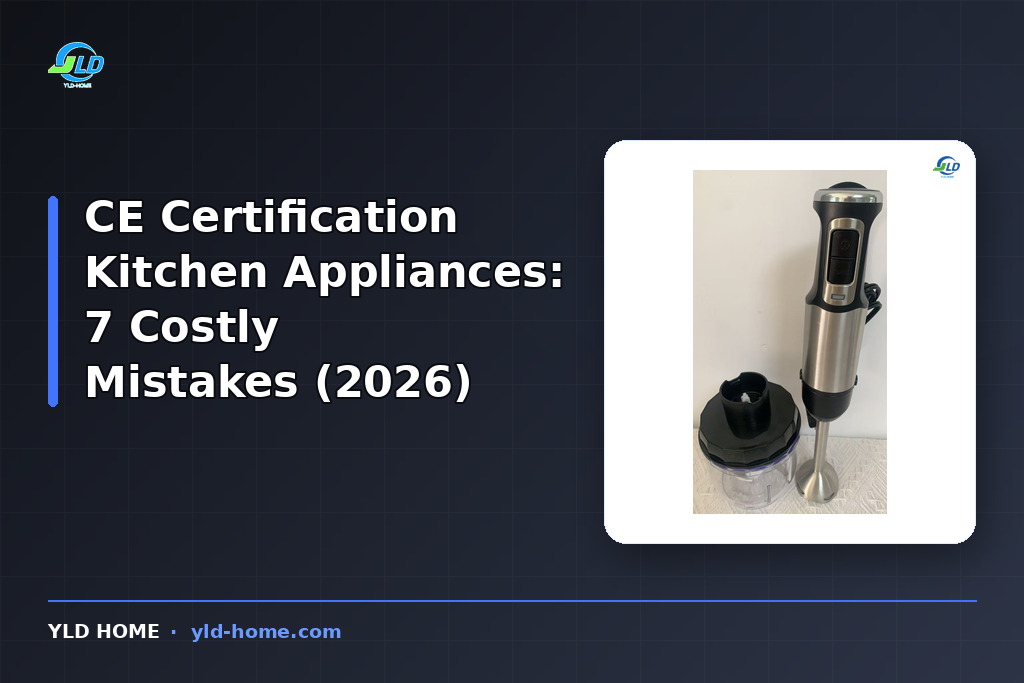
YLD Home holds CE, GS, CB, UKCA, ETL tested to UL 1082/982, and FCC. Not every mark applies to every SKU — the US build carries ETL and FCC, the European build CE and GS, the UK build UKCA — so ask for the certificate matching the model and the destination.
Three documents worth requesting: a production rating label photo showing voltage, wattage and listing mark; the certificate number and issuing body; a spare-parts list covering seals, carafes, blades and cords.
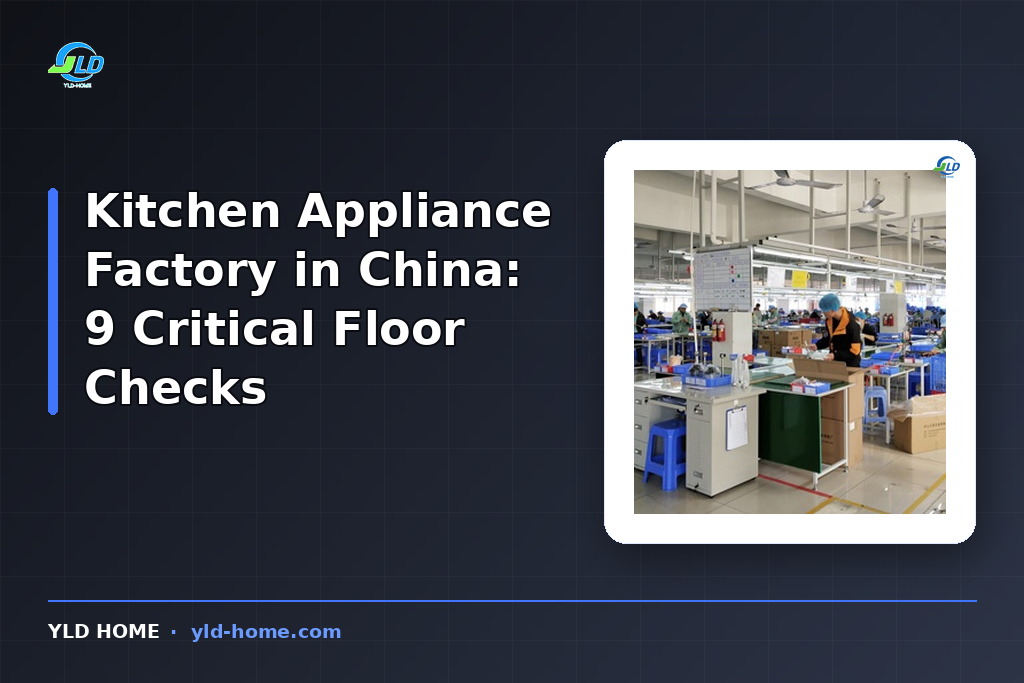
The last one is the quiet differentiator. A club that can get a replacement carafe in ten days keeps the machine. One that can’t, bins it. Factory process documentation is at yld-home.com/quality-control.
Total Cost of Ownership Over Three Years
Unit price is the smallest part of what a club spends, which is why the cheapest kettle is often the most expensive decision in the room. The real cost of mahjong club equipment sits in five lines.
- **Descaler and cleaning.** Hard water kills kettles, and a glass kettle you can see into gets descaled more often than a sealed one.
- **Breakage.** Carafes, jugs, lids. Glass looks better and breaks more.
- **Adapters.** Every voltage mistake becomes a hardware purchase and a safety conversation.
- **Staff time.** Four minutes of cleaning per service adds up faster than any price gap between two models.
- **Downtime.** One failed service evening outweighs the difference between a good unit and a cheap one.
YLD Home’s argument isn’t that the units are unbreakable. It’s that the parts that fail are parts we can list. The reasoning on the kettle is at the FY-788C glass kettle page.
For Importers: Turning the Scene Into a Sellable Bundle
If you’re selling into clubs, the product isn’t the appliance. It’s the kit and the story.
Sell the evening, not the SKU. A page built around game night, with kettle, grinder and warmer shown together, converts better than three product pages explaining wattage. Structured that way at game night appliance bundles.
Price the range, not the unit. Clubs buy in twos and threes. A bundle mixing a kettle, a juicer cup and a hand blender at one freight cost sells more easily than a single hero item.
Be the paperwork source. Hand a club a certificate and a spare-parts list, and you’ve removed the reason they’d shop around.
Range overview at portable kitchen appliances wholesale, the coffee side at the coffee machine range, and hand blenders — the item club kitchens most often under-spec — at the 500W hand blender range.
An Eight-Question Checklist Before You Order
Print it, and take it to the quote call before you place a mahjong club equipment order.
- Is this a 120V/60Hz build for the US, and which listing mark is on the label?
- Does the plug match the club’s sockets?
- How many cycles a day is this rated for, in the supplier’s own words?
- Which parts wear out, and can I buy them separately?
- What’s the MOQ for one model, and for a mixed set?
- How long is the sample, and how long is production after approval?
- Who handles a unit that arrives dead, and how fast?
- Can I see the certificate number for this exact model?
Question seven separates a supplier from a marketplace listing.
The Half Hour Before Doors
Back to Thursday at 6:40.
The club that got this right has hot water in two places, a cold-drink path away from the counter, a grinder that can be carried to a table, and one spare kettle nobody has needed since March. Nothing there is clever. It’s specified for the room, bought in the right quantity, and documented well enough that the next replacement is a ten-minute job.
Buying mahjong club equipment is less a product decision than a small operations design. The clubs that get it right aren’t the ones with the biggest budget. They counted tables instead of players, and asked about voltage before price.
YLD Home builds the appliances for that half hour. Not the tiles, not the tables — the kettle, the grinder, the blender and the warmer, at 120V with ETL for the US, 220–240V with CE and GS for Europe, UKCA for the UK. If you’re specifying a drinks and snack setup for one club, a chain, or a bundle you want to sell into the scene, طلب عرض أسعار with your table count and destination voltage.
More on the range at yld-home.com.
الأسئلة الشائعة
What counts as mahjong club equipment in a drinks and snack setup?
The service-side list: a kettle, a coffee machine, a cold-drink path such as a juicer cup or blender, a warmer for slow periods, and a snack appliance. Tiles, tables and racks come from a different supply chain — YLD Home doesn’t make or sell those.
Do US mahjong clubs need 120V appliances specifically?
Yes. US mains is 120V at 60Hz, and a 220–240V unit will underperform or overheat. A plug adapter changes the connector shape, not the voltage. YLD Home builds a dedicated US version at 120V/60Hz with ETL listing tested to UL 1082/982 and FCC, separate from the European and UK builds.
Is ETL the same as UL certification?
No. ETL is a North American safety listing issued after testing to UL standards; the UL mark is a separate service. If a club’s insurer asks for UL specifically, raise it before ordering — it’s a different certification path, not a different label.
How many appliances does a six-table club actually need?
Two hot-water vessels (one working, one spare), one coffee machine, one cold-drink path, one hand blender for prep and one snack appliance — six to eight units. Count tables rather than players, because demand arrives per table at the end of each hand.
What is the minimum order for a mahjong club equipment bundle?
1,000 pcs for a single model, or 300 sets for a mixed bundle at 100 pcs per model inside the set. A single club usually buys through a distributor; the bundle MOQ is aimed at mahjong brands and importers building a game-night range.
How long does a first order take from sample to delivery?
Sampling runs 5–7 days, mass production 25–35 days after approval, then freight and customs. Work backwards from the date you need stock — a tournament deadline means the inquiry goes out months earlier.
Does YLD Home sell mahjong sets or tables?
No. YLD Home is a kitchen appliance manufacturer — glass kettles, air fryers, coffee machines, grinders, hand blenders, warmers — operating since 2012 from Shipai, Dongguan. It supplies the drink and snack side of a club, not the game side.