









In this guide:
- Why US distributors keep restocking the hand held blender category
- What American kitchens actually use a hand held blender for
- The 120V, UL/ETL, FCC, and FDA compliance stack
- Private label: selling a hand held blender under your own brand
- Hand held blender bulk wholesale USA: MOQ, lead times, and shipping
- What we check on our own hand held blender production line
- Case study: a Houston distributor builds a shake program
- FAQ and how to get a wholesale quote
* alt:hand held blender *
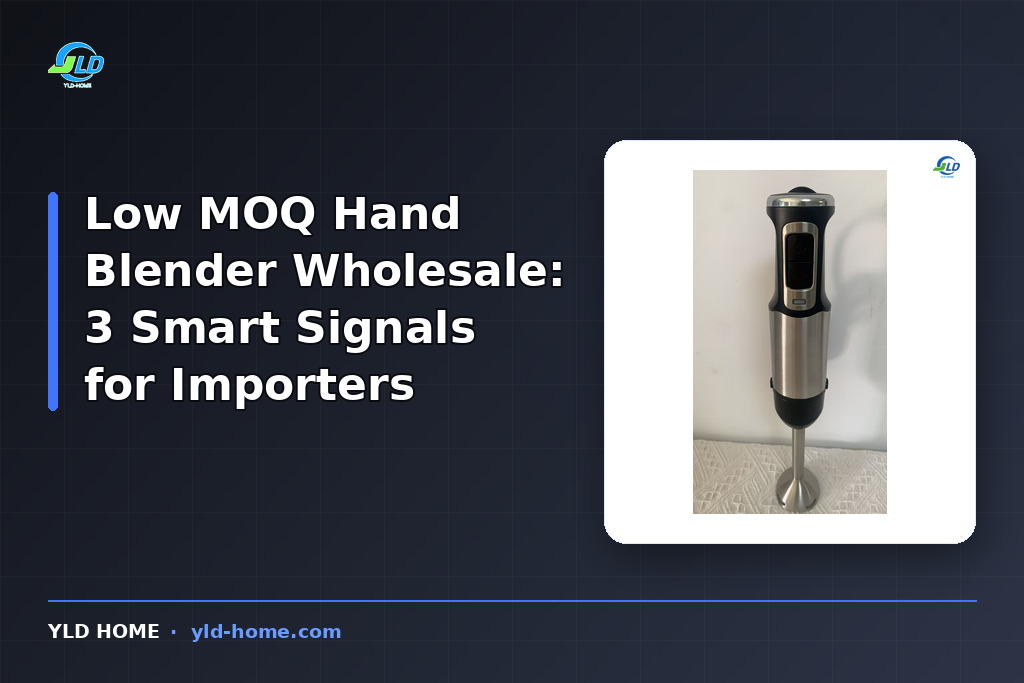
Every week we talk to importers in New York, Los Angeles, Houston, and Chicago who are hunting for a dependable hand held blender line. Some are switching suppliers because quality fell apart mid-season. Others are adding their first SKU after watching smoothie shops and meal-prep brands grow. The questions repeat on every call: Will it pass UL? What is the real MOQ? Can you hold our lead time? This guide answers those questions from the factory side, because we are the factory. YLD Home makes hand held blenders in Shenzhen and has shipped tens of thousands of units into the United States. Here is what wholesale buyers need to know before that first container order lands on your desk.
Why US Distributors Keep Restocking Hand Held Blenders
The category sells because it earns its shelf space. US households bought more immersion-style blenders last year than the year before, and foodservice keeps adding stick blender stations in hot kitchens where countertop units get in the way. For a distributor, the hand held blender is a low-risk SKU: small box, high turnover, and a replacement cycle faster than any full-size machine. One distributor in Chicago told us he restocks his hand held blender SKU every six weeks, while his countertop models sit for a whole quarter. Small tools that solve daily problems move.
Retailers like the category because shelf space is tiny and margins hold. Foodservice buyers like it because a hand held blender purees a 40-quart stockpot without moving hot liquid, which means fewer burns and faster turnarounds at the pass. Meal-prep brands use it for portion-size sauces and dressings. The common thread is repeat orders. When we pull our own export records, US orders for our 6010 خلاط عصا قوي 6010 and the rest of our hand blender range grew year over year, even in months when the broader appliance market flattened. That is the demand pattern a buyer can build a plan around.
If you are still debating whether to carry the category, call three of your current retail accounts first. Ask how often they replace their immersion blender and whether they would buy again from the same vendor. The answers will arrive faster than you think, and they will tell you whether the category belongs in your next catalog. In our experience, distributors who add a hand held blender line in Q1 see the reorder curve start by summer, because the tool sells itself once it is in front of the right buyer.
What American Kitchens Actually Use a Hand Held Blender For
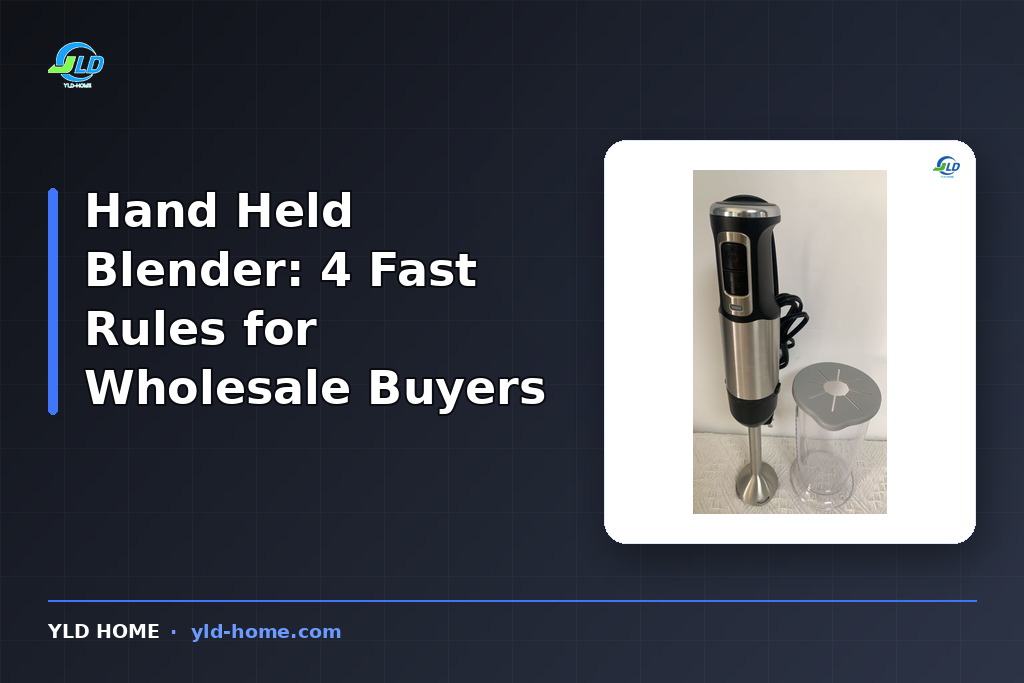
Shakes come first. The hand held blender for shakes is a staple in gyms, juice bars, and diners across the country, because it finishes a protein shake in seconds with no pitcher to wash. We see big repeat volume on that use case, which is exactly why our 4-in-1 hand blender sells so well into cafe channels. Next comes soup. Kitchens puree hot soup right in the pot, which saves a transfer step and an extra piece of equipment to clean at the end of service. Sauces and dressings come third: a hand held blender emulsifies vinaigrette in the same container it ships in, a detail restaurant buyers notice.
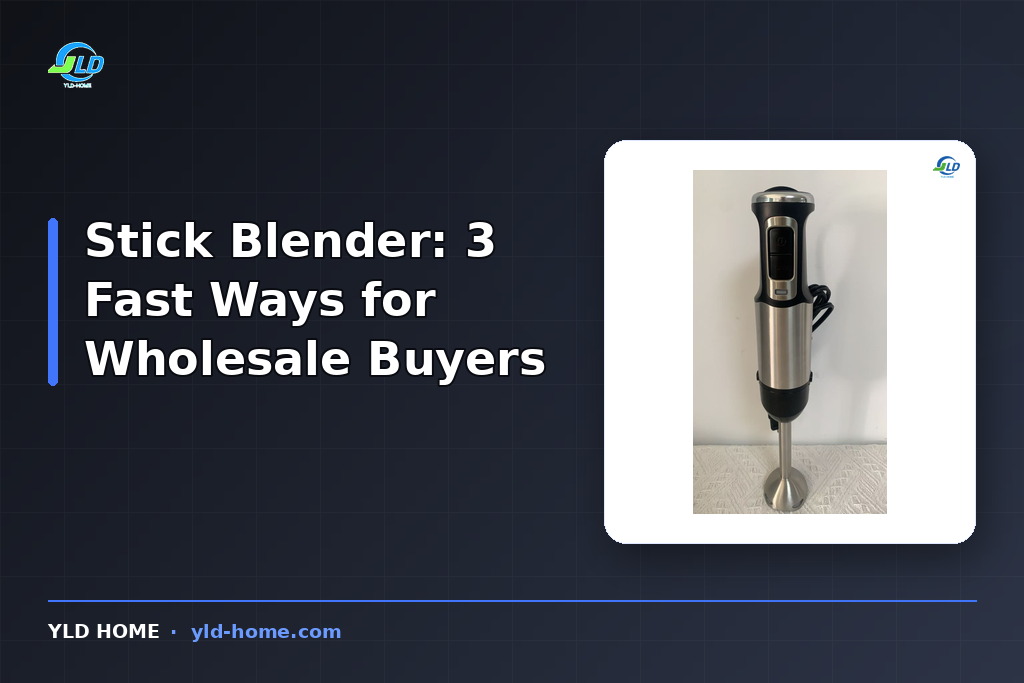
Then there is baby food, smoothie bowls, whipped cream, and hollandaise. The pattern across every account we serve is the same: one tool, many jobs. When we design a hand held blender, we test it against all of those jobs, not just the headline one. We blend frozen fruit, fibrous greens, hot soup, and thick batter in the same test cycle. A machine that only works on soft food will come back as a warranty claim. For buyers whose customers chop as much as they blend, the HB006-3 detachable food processor turns the same motor into a prep tool. So when a buyer asks us what a hand held blender can do, we answer with the test log, not a brochure.
That is the difference between a factory that understands use cases and one that just assembles parts. Look at the use cases before you look at the wattage. A 300-watt motor looks fine on a spec sheet and dies on the third batch of frozen mango. The motor has to be sized for the hardest job in your channel, not the easiest one. When you evaluate samples, run the hardest job first. If the unit survives frozen fruit and thick batter in the first ten minutes, it will probably survive your customers.
120V, UL/ETL, FCC, and FDA: The Compliance Stack US Buyers Expect
US retail and foodservice buyers ask about certification before they ask about price. The floor is UL or ETL listing for the electrical safety of the motor, housing, and cord. Both are accepted by US retailers, and UL marks are the most common in the small appliance space. FCC applies to any electronics that could cause interference; for a simple motor appliance this is usually a formality, but it still has to be on file. FDA food-contact compliance matters for the shaft, blade, and any attachments that touch food. We build with food-grade stainless steel and BPA-free plastic, and we keep the test reports ready to share under NDA.
Voltage is where importers slip up. US standard is 120V/60Hz with a NEMA 1-15 plug. If a supplier sends you a 220V unit with a European plug, you own the problem at the border and on the shelf. We print 120V on the rating label, fit the correct plug, and ship corded units ready for the US market. For cordless models, the battery and charger need UL 2595 or equivalent coverage for lithium-ion packs. A distributor in Miami told us he lost a whole retail program once because the vendor’s charger certificate had expired. Keep a compliance checklist, and ask for fresh certificates dated within the last 12 months. Certificates expire, and buyers check.
* alt:hand held blender bulk wholesale usa*
Private Label: Selling a Hand Held Blender Under Your Own Brand
Private label is how most US distributors and retailers enter this category without building a factory. You put your brand on the housing; we handle the engineering, tooling, and production. The concept is simple and well documented: private label means a retailer or wholesaler contracts a manufacturer to produce goods sold under the retailer’s own brand. The Wikipedia definition of private label covers the general model, and the appliance world follows it closely. You control the packaging, the color, the logo, and the price point. We control the motor, the blade geometry, the certifications, and the assembly line.
The typical private label program starts with an existing model in our catalog. We customize the shell color, print your logo, and build your carton. Some buyers move further and ask for exclusive tooling on a new housing shape, which locks the design to them for the life of the mold. That path costs more upfront but protects the line from copycats. What we tell every buyer: bring your packaging spec early. Carton size drives freight cost, and a poorly sized carton eats your margin before the product sells. We have rebuilt cartons for buyers who lost money on dimensional weight in the first shipment.
When your brand is on the box, the box is part of the product. Think about the retail shelf in a store like Target or Costco: the shopper sees your logo, your colors, and your claim before they ever touch the unit. If the packaging says “restaurant strength” and the unit stalls on soup, the return comes back to you, not to us. That is why we test private label units to the same standard as our own brand, and why we ask buyers to approve the final packaging proof before production starts. A good private label partner protects your brand as if it were their own.
Hand Held Blender Bulk Wholesale USA: MOQ, Lead Times, and Shipping
Bulk pricing starts to get interesting at the container level. For a hand held blender bulk wholesale USA program, most buyers start with a mixed pallet or a 20-foot container and scale from there. Our standard MOQ for a private label run is [fill actual] units, and corded models carry a shorter lead time than cordless because the battery supply chain adds weeks. The table below is what we quote in practice, before freight:
| Order type | MOQ | Lead time (ex-factory) | Typical freight route |
| Stock color, our brand | [fill actual] units | [fill actual] weeks | LCL to LA or NY |
| Private label, stock model | [fill actual] units | [fill actual] weeks | LCL or FCL |
| Custom color plus logo | [fill actual] units | [fill actual] weeks | FCL to LA or Houston |
| Exclusive tooling | [fill actual] units | [fill actual] weeks | FCL, port of choice |
Lead time is the number buyers get wrong most often. They plan for production time and forget the rest: component purchasing, testing, packing, and the vessel transit from Shenzhen to Los Angeles or Houston, which runs roughly three to four weeks. Add customs clearance and warehouse receiving, and a six-week production promise can easily become a twelve-week door-to-door reality. We quote production weeks honestly and give you a shipping calendar so your retail launch date is not a guess.
If you need air freight for a reorder, we can do it, but the economics favor planning the ocean leg properly the first time. A buyer in Chicago once paid air freight on 2,000 units to save a launch date, and the freight alone cost more than the production. The lesson is simple: lock the calendar early, order against real sell-through, and let the vessel do the heavy lifting. Ocean freight is slow but cheap, and in this category the margin lives in the plan, not in the emergency.
What We Check on Our Own Hand Held Blender Production Line
YLD Home runs a multi-point QC pass on every hand held blender that leaves the plant, and we want you to ask for the same from any supplier you evaluate. The motor is tested under load, not just at idle. We run units for [fill actual] minutes of continuous duty to catch overheating, then check the thermal cutoff. The blade assembly gets a runout check, because a slightly bent shaft makes noise and vibrates in the customer’s hand. The switch is cycled [fill actual] times to verify it survives years of daily use. We also test the shaft seal for leaks, since liquid ingress is the number one failure mode in the field.
Every batch gets a random sampling for appearance: color consistency, logo adhesion, and packaging integrity. We photograph the samples and keep them on file, so if a buyer disputes a shipment, we can pull the record. That habit saved us in a dispute with a distributor in New York who claimed a batch had scratched housings. Our photos showed the batch left clean, and the claim disappeared. When you audit a factory, look for this kind of traceability, not just a clean showroom.
Ask to see their QC records from last month. If they cannot produce them, that is your answer. The factory tour matters less than the paperwork trail. We keep our records in a format we can share with buyers, with the batch number, the test date, and the pass or fail result for each check. A supplier who treats QC as a marketing story and a supplier who treats it as a daily habit look identical in the showroom. The difference shows up in the first container.
Corded vs. Cordless: What Sells in Texas and Beyond
Corded units dominate foodservice, because kitchens have outlets everywhere and nobody wants to wait on a charge in the middle of service. Cordless hand held blenders sell into retail and home use, plus a few commercial niches like catering on the go. In Texas, where we work with several accounts, the pattern is sharp: retail buyers order cordless for the gift and convenience market, while restaurant suppliers order corded almost exclusively. One Dallas importer told us his cordless stock turns faster in the fall, before the holidays, and his corded stock turns year round to foodservice accounts.
We make both, so we do not have a bias in the recommendation. Our PressPro 1600W hand blender is built for heavy commercial use, and it is corded. Our cordless models use lithium-ion packs sized for a full service shift, with a charging dock that keeps two units ready. If a buyer asks for one recommendation, we ask about their channel first. Retail shelf: cordless sells. Restaurant distributor: corded sells. Texas, Florida, and California each have their own mix, which is why a good supplier for the US market should offer both and let the buyer’s channel decide.
A supplier who only sells one type is selling you their inventory plan, not yours. Ask for the model matrix and read it carefully. Look at the battery watt-hours on cordless units and the continuous-duty rating on corded units, because those numbers predict whether the tool survives a real shift. And when you compare cordless quotes, check the charger separately. A cheap charger fails, and a failed charger takes the battery with it. We have seen buyers save two dollars per unit on the charger and lose twenty in warranty claims.
Case Study: A Houston Distributor Builds a Shake Program
A distributor in Houston came to YLD Home two years ago with a problem. He carried a cheap hand held blender that returned at a rate he would not admit to his bank. Customers complained the motor died within months and the blade wobbled. He wanted a private label program that would survive a diner’s morning rush, and he wanted it before summer. We put him on the 6010 powerful stick blender platform, customized the color, and built his packaging. The first order was a mixed container with shake-focused attachments, because his customers were mostly diners and juice counters.
The results came back in the numbers he shared with us. Return rate dropped from double digits to under [fill actual] percent. His foodservice accounts started reordering within ninety days instead of once a year. One customer, a shake shop in Austin, bought three units and came back for six more within a month. The lesson he repeats to us: the cheapest hand held blender in the catalog was the most expensive one he ever stocked, once returns and lost accounts were counted.
Today he orders on a quarterly cycle and has added our hand blender range to his catalog beyond the original SKU. He also stopped stocking a second brand entirely, because his team got tired of explaining two warranties to the same customers. That is the pattern we want every wholesale buyer to see before they sign a purchase order. A private label program is not just a price negotiation. It is a bet on a supplier’s quality, their honesty about lead times, and their willingness to answer the phone when something goes wrong.
* alt:hand held blender for shakes*
How to Shortlist a Hand Held Blender Supplier
Start with certifications. Ask for UL or ETL certificates, FCC documentation, and FDA food-contact statements before you ask for pricing. If the supplier hesitates, move on. Then check their production history: how many units shipped last year, and to which markets? A factory that exports to the US regularly knows the plug, the voltage, and the paperwork. Ask for the QC process in writing. Ask what happens when a batch fails inspection. The good factories answer calmly, because they have a procedure. The others change the subject.
Then order samples, plural. One sample tells you about one unit. Order five and run them through your own test: hot soup, frozen fruit, thick batter, an hour of continuous use. Measure noise and vibration. Check the shaft seal after a wash cycle. Compare what the supplier promised against what the unit does. Finally, talk to their existing US customers. A supplier with reference accounts in New York or Chicago will connect you willingly.
YLD Home sends buyers to our US accounts all the time, because a reference call closes more deals than any brochure. If a factory cannot produce a single US reference, treat that as a warning. Your first container is a five-figure bet; verify before you wire. Ask for the factory’s export license and their last three bills of lading to US ports. Those documents are easy to produce and hard to fake, and they tell you more in five minutes than a month of email negotiation.
Getting a Wholesale Quote: What to Send Us
You can ask for a hand held blender bulk wholesale USA quote with four pieces of information: target quantity, corded or cordless, stock or private label, and your port. With that, we can reply within two business days with pricing, lead time, and freight options. If you are earlier in the process, send us your channel and price point, and we will recommend a model instead of selling you one. That distinction matters to us. We would rather you start with the right platform than reorder the wrong one twice.
Every quote includes ex-factory pricing, sample cost, and the certification documents you need for your buyer file. We do not hide freight or tooling costs until later. If you want to visit the factory in Shenzhen, we will arrange the tour, the QC walkthrough, and lunch with the team that runs your line. If you cannot travel, we will send a video walkthrough of your exact model running on the line. Then we will build your samples, photograph them, and ship them to your office in the US.
Getting started is that direct. YLD Home has done this for importers and distributors across the country, from the port of Los Angeles to the New York metro, and we can do it for you. The first order is always the hardest, because trust has not been built yet. So we make the first order small, the samples fast, and the paperwork complete. After that, the relationship runs on reorders, and reorders are the part we are best at.
الأسئلة الشائعة
Q1: What is the best hand held blender for US wholesale buyers?
The best hand held blender for wholesale is the one that survives your channel’s abuse and still leaves you margin. For foodservice, that means a corded model with a powerful motor and a metal shaft, like our 6010 powerful stick blender. For retail and shakes, a 4-in-1 hand held blender with attachments covers more price points. Send us your channel and we will point you at the right platform.
Q2: What is the MOQ for a hand held blender bulk order?
Our standard private label MOQ is [fill actual] units per model, and stock orders with our brand can start lower. Cordless models may carry a higher minimum because of battery component purchasing. Ask for current numbers; they move with the component market.
Q3: Do you work with hand held blender supplier Texas accounts?
We export to distributors and importers in Texas regularly, including Houston, Dallas, and Austin. Texas is a big part of our US book, so our 120V configuration and packaging are already set up for the region. We can also route shipments through the port of Houston to shorten the inland leg.
Q4: How long does a private label program take?
A stock model with color and logo changes runs [fill actual] weeks from order to ex-factory, plus ocean transit. Exclusive tooling adds months for mold development. The honest answer depends on your customization level, so we quote a calendar, not just a lead time.
Q5: Can we mix models in one container?
Yes. Mixed containers are common for our US buyers, and they are the smart way to test a category. You can combine the hand blender range with other small kitchen appliances from our factory to fill a 20-foot or 40-foot container and spread the freight cost across more SKUs.
Q6: What certifications do your hand held blenders carry?
Our corded models carry UL or ETL listing for the US, FCC documentation, and FDA food-contact compliance on wetted parts. Cordless models add lithium-ion battery certification for the pack and charger. We send fresh certificates with every quote and keep them updated for reorders.
Q7: What is your policy on defective units?
We replace defective units on a per-batch basis, and we keep photos and QC records for every shipment so disputes get resolved fast. Field failure rates on our 6010 and PressPro platforms run low, but when a problem shows up, we own it and fix it.
Official references
[[PAGEBREAK]]