










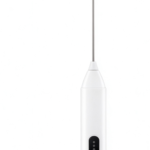
اختيار مورد الخلاط comes down to range, evidence and spares. YLD Home builds three families — hand blenders, countertop units and portable cup blenders — so one buyer can cover a full shelf from a single relationship: confirmed specifications, working samples, per-market certification files, packaging artwork and a written spare-parts commitment. Here is where each type earns its money, why quotes for the same blender diverge, and how to test a sample before you commit.
What a blender supplier should actually hand over
A blender looks like a simple purchase: motor, jug, blade. In practice the order carries five promises, and most quality failures trace back to one being undefined, not to a factory that cannot build. The specification sheet fixes wattage, capacity, blade geometry and materials. The sample proves it is real. The certification file proves the unit is sellable in your market. The packaging decides whether it arrives intact. The spare-parts list decides year three, when a jug cracks and the customer expects a replacement, not a refund.
Where a مورد الخلاط is vague on any of the five, the price stays attractive for as long as it takes the first container to land. Those documents are easier to check than to argue about later, which is what the blender guides section is for.
Four blender types and where each earns its margin
The category splits by motor mounting and by what the buyer does with the machine. Those two facts set tooling, price band, certification scope and the failure mode you meet in the field.
| النوع | Where it sells | What the buyer uses it for | Spec that decides satisfaction | Usual failure point |
|---|---|---|---|---|
| Hand (immersion) | Supermarkets, houseware chains, gift sets | Soup in the pot, sauces, baby food, small batches | Bell diameter, blade clearance, detachable stainless shaft | Coupling wear; water ingress at the bell seal |
| Countertop (desk) | Appliance specialists, department stores, online mid-tier | Daily smoothies, ice, frozen fruit, family batches | Continuous-duty rating, jar material, lid seal, serviceable blade assembly | Early thermal cut-out; stripped jar thread; gasket leaks |
| Portable cup | Impulse displays, e-commerce, travel retail | Single-serve shakes away from a socket | Cell quality, USB-C charging, cup-to-base lock | Cell degradation; cracked lock tab; corroded port |
| High-speed / vacuum | Premium retail, health channels, light commercial | Ice, nut butters, grain and spice, oxidation-sensitive juice | Bearing quality and cooling path, jar strength, blade hardness | Bearing noise and seizure; jar stress cracks |
A “1 000 W” claim means little: a peak rating held for seconds and a continuous rating for ten minutes are different products at different costs. The portable cup category is the most under-specified.
Why two blender suppliers quote 30% apart
Identical-looking units routinely land with quotations a third apart. The gap is almost never margin; it sits in three components.
Motor and drivetrain
Copper winding mass, lamination grade, bearing type and thermal protection decide whether the machine holds speed through a thick load or stalls and cooks itself. A cost-cut motor has less copper, lower-grade laminations and a bushing where a ball bearing should be. Nothing visible changes; the duty cycle collapses. Ask for the continuous rating, cut-out type, trip temperature and bearing designation, then run the sample until it trips and time it. That number separates two quotes faster than any specification sheet.
Jar, cup and food-contact materials
The vessel is food contact, and food contact is regulated, so substitution risks both durability and compliance. Copolyester, polypropylene, AS and glass behave differently under heat, dishwashing and impact, with different documentation burdens. Blade steel matters too: a stamped blade in soft steel smears where a machined, harder blade cuts. Ask for the resin designation, not the trade name, and check the declaration against the US food-contact rules.
Controller, switch and electronics
A two-speed rocker switch and a triac control with soft start and overload sensing differ in cost and fail differently. On cordless units the same logic applies to the battery board: balancing, over-discharge protection and charge termination separate a product that survives 300 cycles from one that dies inside warranty. Electronics also set the EMC test scope, so an under-specified controller can add a certification re-test to the unit price.
Sample testing protocol
A sample that blends a litre of water proves nothing. Run these four stages in order; each is cheaper than the last.
Stage 1 — Incoming inspection, day one
Unbox three units, not one. Check nameplate data against the order, cord length, plug moulding, marked voltage and frequency, and photograph the blade assembly and jar thread. Weigh all three: a wide spread from one batch means inconsistent components. Confirm the food-contact declaration names the parts you can see.
Stage 2 — Duty and thermal, days one to three
Run your market’s real load mix: thin liquid, fibrous vegetable, frozen fruit, and ice for countertop and high-speed units. Record time to a defined particle size rather than “until smooth”, so suppliers stay comparable. Then run until the cut-out trips, cool, repeat. Three cycles without a rising trip time passes; a trip time that shortens each cycle means the winding is heat-soaking and will not last.
Stage 3 — Abuse and cleaning, days three to five
Test what the manual forbids, because customers do it. Dishwasher cycles on every part claimed dishwasher safe. A drop from counter height, jar empty and full. Wet-hand operation of the switch. Repeated submersion of the hand blender’s shaft joint, the commonest water path. Each failure here is a warranty return you avoided paying for.
Stage 4 — Endurance and the pass rule
Run a defined number of on/off cycles and inspect at intervals: blade edge, coupling wear, seal elasticity, noise. A blender supplier who will not state an endurance figure in writing has not tested it. Reject the sample if any safety-relevant item fails; reject the batch if a functional item fails on two of three units. One failure is a process question, two is a design question — and no price compensates.
Certifications and the voltage matrix
Blenders are assessed under the household appliance standard family published by the IEC, with the kitchen-machine part covering motor and food-preparation hazards; national deviations still apply. Food-contact compliance is a separate file, often the one missing at quotation stage. الشهادات should be quoted per market, never as one generic package.
| السوق | Supply | قابس | Safety route | Food-contact file |
|---|---|---|---|---|
| الاتحاد الأوروبي | 230 V, 50 Hz | CEE 7/7 or CEE 7/4 | CE — Low Voltage and EMC directives, harmonised appliance standards | Framework regulation plus the plastics measure |
| المملكة المتحدة | 230 V, 50 Hz | Type G, fused | UKCA under the corresponding UK regulations | UK food-contact rules, declaration required |
| US / Canada | 120 V, 60 Hz | Type A / B | UL or ETL listing for motor-operated food-preparing machines; cUL for Canada | FDA food-contact notification for repeated-use articles |
| Australia / NZ | 230–240 V, 50 Hz | Type I | RCM, responsible supplier registered | Local standard, declaration from the moulder |
| Gulf / Saudi Arabia | 230 V, 50 Hz | Type G or C/F by state | Gulf conformity mark; SASO for Saudi Arabia | Conformity declaration plus migration report |
Frequency matters as much as voltage. A 60 Hz motor on a 50 Hz supply loses roughly a sixth of its speed, changing blend performance and cooling airflow, and a 120 V unit cannot be re-labelled for 230 V without a different winding. Where one platform serves several markets, specify dual-voltage tooling before the mould is cut.
Spares and warranty boundaries
Warranty terms only mean something against a parts list. A two-year warranty on a blender with no jar available in month fourteen is a refund programme. Three boundaries belong in the agreement. Wear items — jar seals, blade gaskets, couplings, cups — should be declared as such, with a shorter term and stock held. Serviceable parts — switches, speed boards, batteries, brushes — should carry part numbers and an availability period counted from the last shipment. Accessories should be priced at quotation, because a parts price agreed after launch is the supplier’s to set.
Then fix what voids cover: water ingress beyond the stated IP claim, commercial use of a domestic-rated unit, unauthorised repair. Ambiguity costs both ways — a distributor who cannot refuse a claim loses money; one who refuses a legitimate claim loses the account. Batch test records keep that conversation short, which is why quality control data belongs in the shipment, not in a drawer.
Frequently asked questions
How do I verify a blender supplier before a first order?
Read three documents in order: a specification sheet with named materials and a continuous rating, a certification file naming your market, and a spare-parts list with part numbers. Then buy samples from current production, not a golden-sample drawer.
Does higher wattage mean a better blender?
Not reliably. Wattage describes input power, not torque at the blade, and peak figures flatter it. Compare time-to-result on the same load — measurable, unlike the number on the carton.
Can one model be sold in both 120 V and 230 V markets?
Only with a different winding, usually a different controller and always a different plug. Housing and jar can be shared, which is where the saving sits. Plan it before tooling is cut; converting later means new motors, labels and re-certification.
What minimum order should I expect for private label?
It depends how much of the unit is new. Existing tooling with your colour and artwork sits at the low end; a new jar mould or motor platform far higher, because mould cost must be recovered. Ask for the quote split into tooling, unit price and packaging.
How long should sample evaluation take?
About a week for one model: a day of inspection, two to three days of duty and abuse work, the rest for the endurance run and a written comparison. Skipping endurance turns a sample approval into a field failure.
Next step
Range, evidence, spares: a quotation should answer all three. Send your market, target volume and the blender types you intend to list; the reply should carry specifications, certification scope for your voltage and plug, sample lead time and the wear-parts list. Upcoming models sit on منتجات جديدة, and a specification discussion starts with a quotation request.
