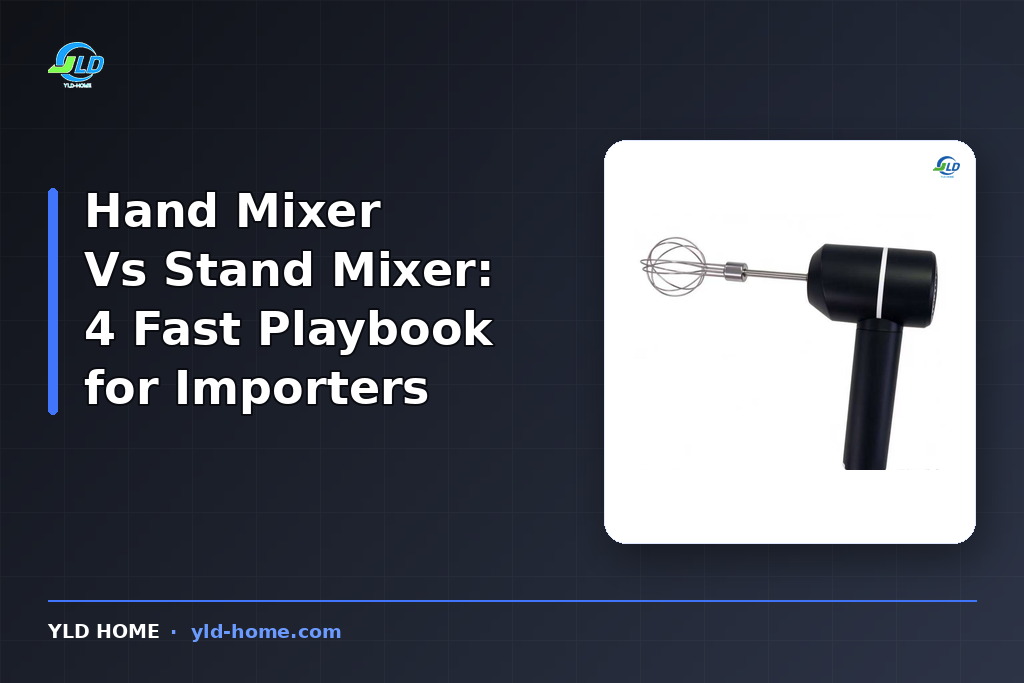











How to Choose a خلاط يدوي: Wattage, Speeds & Attachments for Bakery Buyers
For a bakery, a hand mixer is not a luxury; it is the daily tool for whipped cream, egg whites, batters and frosting. Choosing the right model for your production volume saves hours and protects consistency. This guide is written for bakery buyers: what to check, what specs to order, and how to buy wholesale without overpaying.
In this guide:How to Choose a Hand Mixer for Bakery: Key Specifications · What to Look For in a Hand Mixer · Wattage: Match Power to Workload · Speed Levels: Why Multiple Speeds Matter · Attachments: Beaters, Whisk and Dough Hooks · Recommended Specs for Different Bakery Types
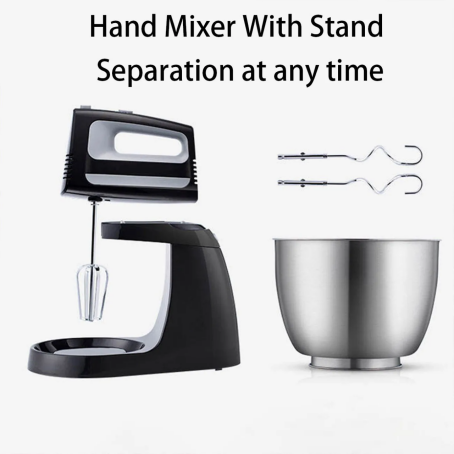
How to Choose a Hand Mixer for Bakery: Key Specifications
What to Look For in a Hand Mixer
Four factors decide a bakery mixer: motor power, speed control, attachments and build quality. A fifth factor, noise, matters in a shop environment where staff work all day. Start with the workload, then match the machine.
Wattage: Match Power to Workload
Light duties such as whipping cream and small batters need only 200-300W. A bakery producing cakes and pastries daily should buy 300-500W machines, with enough torque to handle thicker cake batter and cookie dough without bogging down. For heavy production, consider a stand mixer as the primary machine and a hand-held unit as the backup; the combination covers both speed and capacity.
When comparing wattage, remember that wattage is a rating, not a promise. Ask about the motor’s duty cycle and how the machine performs under continuous load. A 500W machine with a quality motor will outlast a 600W machine with a cheap one.
Speed Levels: Why Multiple Speeds Matter
A five-speed unit covering 500-1,500 RPM handles the standard bakery sequence: slow start to fold ingredients without flour spray, medium for batters, high for whipping egg whites and cream. Variable speed gives the baker control over texture, and under-whipping and over-whipping are both real failures in a bakery.
For patisserie work, look for models with a clearly marked speed dial rather than stepped buttons. Precise control matters for meringue and whipped cream, where a few seconds of over-whipping changes the result.
Attachments: Beaters, Whisk and Dough Hooks
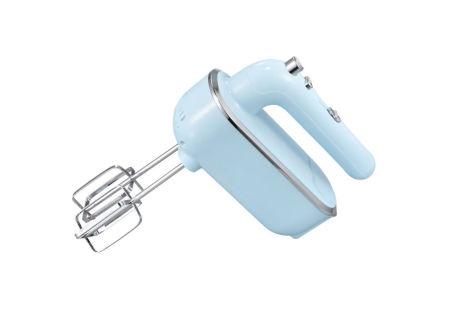
Stainless steel beaters are the core. A whisk attachment improves cream and egg white work. Dough hooks handle light bread and cookie doughs. Check that attachments seat firmly, release cleanly, and are dishwasher-safe where possible. ABS bodies with stainless steel contact parts are the practical standard for hygiene and longevity.
Spare beaters are worth ordering with the initial batch. Bakery staff work fast, and a bent beater or a lost whisk should not stop production. Ask your supplier about spare parts pricing and availability.
Recommended Specs for Different Bakery
| Bakery type | Recommended | لماذا |
| Cake studio / patisserie | 300-500W, 5 speeds | Cream, meringue, batters |
| Bakery + light dough | 500W, dough hooks | Cookie dough, small bread batches |
| Café with baked goods | 300W, whisk | Small batches, occasional use |
| Wholesale bakery | Stand mixer primary + backup mixer | Volume production |
Ergonomics and Build Quality
Bakery staff use these mixers for long stretches. Check the handle shape, weight and balance. A machine that strains the wrist will be avoided by staff. Check the materials: food-grade ABS bodies and stainless steel contact parts are the standard, and the cable should be long enough for the workspace.
Wholesale Buying Tips
Buy factory-direct for volume pricing and branding options. Order samples and test motor temperature during a long whipping session. Confirm 110-120V or 220-240V for your market, and request certification documents (CE / ETL / FCC) with the quotation. If you plan to brand the product, ask about OEM options and minimums.
Maintenance and After-Sales
Daily maintenance is simple: detach beaters and wash, wipe the body, and store the machine with the cable loosely wound. Check beaters for wear and replace them as needed. Work with a supplier that provides spare parts and responds to warranty claims, because bakery equipment downtime is expensive.
Building a Bakery Equipment Package
Bakery suppliers who sell equipment packages win accounts. Build a package around the mixer itself: the unit, spare beaters, a whisk attachment, and a cleaning kit. Add a starter set of recipes or usage guides. The package increases the order value and reduces service calls, because buyers have everything they need.
For B2B customers, package pricing and branded materials make the offer concrete. Offer demo videos of the mixer in bakery use. A bakery buyer who sees the machine perform with their kind of workload is much easier to close.
Energy and Environmental Considerations
Energy use matters to bakery buyers running appliances daily. Compare actual draw and efficiency, and favor machines that reach the required texture without extended running. Packaging should be recyclable, and materials should be documented as food-safe. For buyers with sustainability policies, provide the environmental documentation the factory can support.
Demo Videos and Case Stories
Buyers trust evidence. Collect demo videos of the mixer working through bakery tasks: whipping cream, mixing batter, folding dough. A short video answers more questions than a paragraph. For B2B, collect case stories from bakery customers: their workload, the machine they chose, and the result. Publish these on your site and share them with prospects.
Factory-supplied testing videos are a start; your own customer videos are stronger. Build a library over time, and reuse the best clips across listings, newsletters and sales calls.
Seasonal Planning
Bakery equipment demand follows baking seasons and shop openings. Plan around holiday peaks and the start of the baking season in your markets. Reorders must include production and freight lead time, and promotions should lead the peak, not follow it. Track sell-through by model to size each seasonal order.
Buying in Bulk: Container Economics
Bulk buying only pays when the numbers work. Compare the unit price at small, medium and container volumes, and add freight per unit at each level. A 20-foot container spreads fixed freight across thousands of units; LCL saves storage but raises per-unit freight. Model both before committing.
For bakery suppliers, bulk buying funds the package economics: the margin from volume covers the free spare beaters and demo videos that close accounts. Keep the arithmetic visible, because bulk is a tool, not a goal.
Supplier Scorecard
Rate your supplier on a scorecard each order: sample speed, certificate accuracy, lead time reliability, quality consistency and communication. Score every order, not just the first. The scorecard tells you when to grow the relationship and when to switch. A supplier that scores high across orders is worth more than the cheapest quote.
Common Mistakes When Choosing a Bakery Mixer
Bakery buyers often under-specify power: a 200W machine in a daily production bakery will overheat and slow service. Others over-buy, paying for commercial power they do not use. The right approach is to match the machine to the workload. Another mistake is ignoring speed control, which matters for meringue and cream work. Fixed-speed machines cannot finesse a texture.
Attachment planning is also neglected. Buyers forget to order spare beaters and whisk attachments with the initial batch, then face downtime when a beater bends. Finally, some buyers skip certification checks, which creates problems for retail compliance in their market.
Cost and ROI for Bakery Equipment
A good bakery mixer is a small investment with immediate return. Compare the labor saved per batch, the consistency of whipped and mixed products, and the avoided cost of failed batches. For a bakery doing daily cream, meringue and batter work, a quality machine pays for itself quickly.
For wholesale buyers, the ROI includes the service dimension. A mixer with available spare parts reduces your after-sales cost and protects your reputation with bakery customers, who depend on daily production.
Branding and OEM Options for Bakery Suppliers
If you supply bakeries, branded equipment builds loyalty. OEM branding on a proven model lets you offer your own line without engineering risk. For deeper differentiation, ODM customization can add a specific speed profile, a whisk design, or a storage case that matches your brand story.
Start with OEM on one model, test sell-through, then expand the range. Bakery suppliers who offer a complete equipment story, mixers plus attachments plus spares, win more accounts.
Maintenance and Longevity
Daily cleaning keeps beaters hygienic; weekly inspection catches wear early. Replace beaters when they bend or lose fit, and check the motor vents for flour build-up. Store the machine with the cable loosely wound. A bakery mixer with proper care lasts years, and a supplier with spare parts makes that lifespan reliable.
How to Read a Mixer Specification Sheet
The spec sheet tells you what you are buying. Read the motor power in watts, the speed count and RPM range, the attachment set, the body and beater materials, the voltage and plug, the duty cycle and the cable length. Check the wattage type, input versus output, and confirm the certificate model number matches.
For bakery buyers, the RPM range matters more than the top wattage, because control over speed is what produces consistent texture. Note the bowl size guidance: some mixers are rated for specific bowl volumes, and exceeding them strains the motor.
300W vs 500W: Which Is the Right Investment
For a light bakery, a 300W mixer handles cream, egg whites and small batters. For a bakery with daily cake production and light doughs, a 500W mixer provides headroom. The price difference is modest; the difference in failure risk is not. When in doubt, buy the higher class, because a failed mixer during production costs more than the upgrade.
Supplier Selection for Bakery Suppliers
Choose suppliers by evidence: certificates, client references in your market, and sample performance. For bakery buyers, ask how the factory tests mixers under load and whether spare beaters are stocked. A factory that documents motor temperature testing is more likely to deliver reliable machines than one that only quotes prices.
Certification and Voltage Configuration for Bakery Mixer Orders
A bakery mixer sold into the EU, the UK or North America needs the paperwork to match the plug on the cable. The usual set is CE and GS for the European Union, UKCA for the United Kingdom, and ETL or FCC for the United States and Canada, with the certificate naming the exact model and voltage you intend to buy. Ask for the certificate number and check that it covers the wattage class you are ordering, because a 300W approval does not automatically extend to a 500W variant.
Voltage configuration is a purchasing decision, not an afterthought. A 220-240V order for the EU and UK and a 110-120V order for North America have different motors, labels and cartons, so they cannot share a single purchase order line. YLD Home configures voltage and plug per destination on the order and prints the rating plate for that configuration only, which is what prevents a container of correctly built machines from being unsaleable on arrival. The quality control page shows where the rating plate and the plug are checked before packing.
For markets where a buyer asks about Middle East schemes, be precise: the factory holds CE, GS, ETL, FCC and UKCA certification, and any additional scheme is a project that runs on its own timeline rather than something claimed on the datasheet.
Spare Beaters, Service Stock and Warranty Terms for Bakery Accounts
Bakery accounts are lost over a broken beater, not over a motor. A production kitchen cannot pause because one attachment bent, so the service question is always about the next 48 hours rather than the next shipment. Price a service allocation into the order from the start: a small percentage of extra beaters, whisk sets and dough hooks shipped inside the container, held by the importer or the distributor, and released to the bakery on a straight swap.
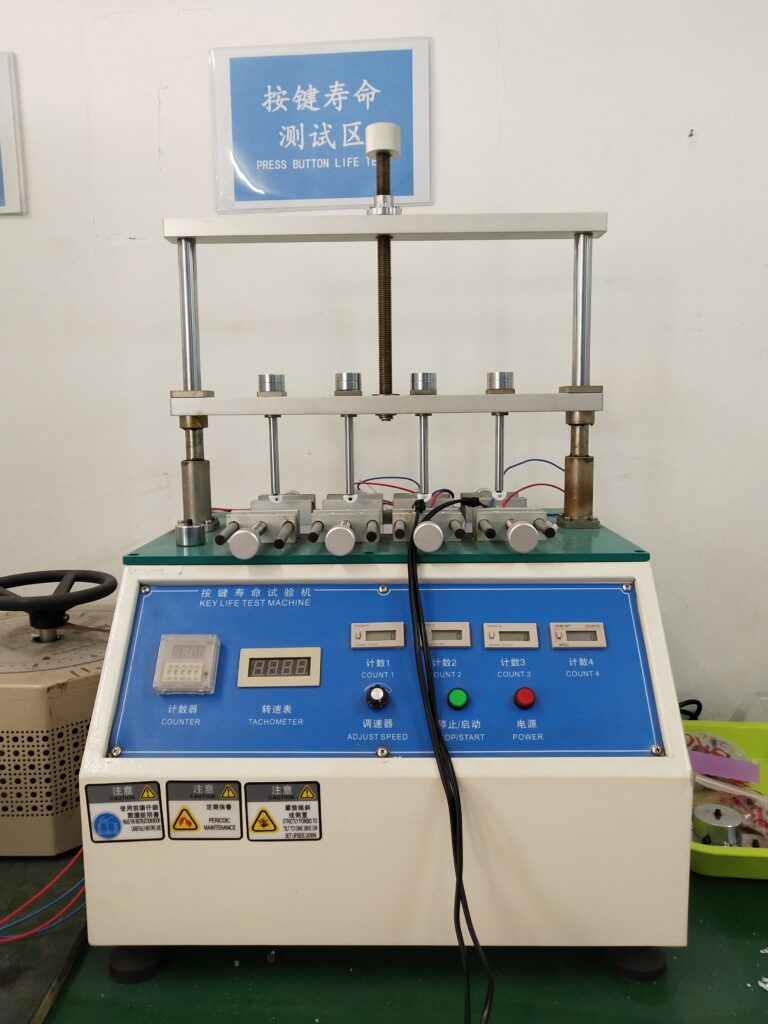
A workable warranty term for this category covers the motor and the switch for twelve months from delivery and treats attachments as consumables with a documented replacement price. State that in the quotation rather than leaving it to a general clause, because a bakery buyer comparing three quotes will read the warranty line first. YLD Home sets the service allocation and the spare-parts price list per order so the importer can answer a claim without waiting for a reply from China, and the factory tour page shows the test bench where each mixer is run under load before it is packed.
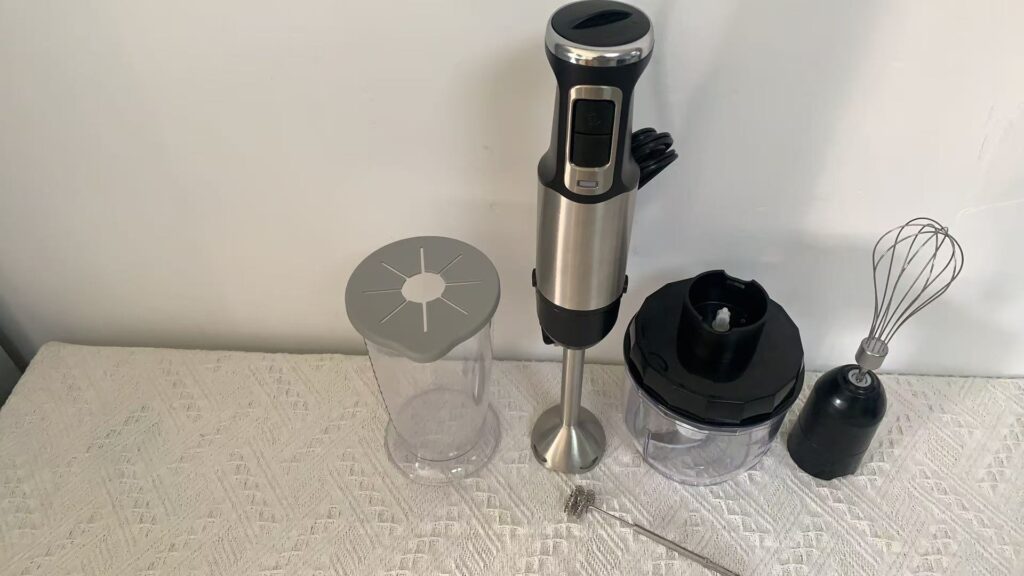
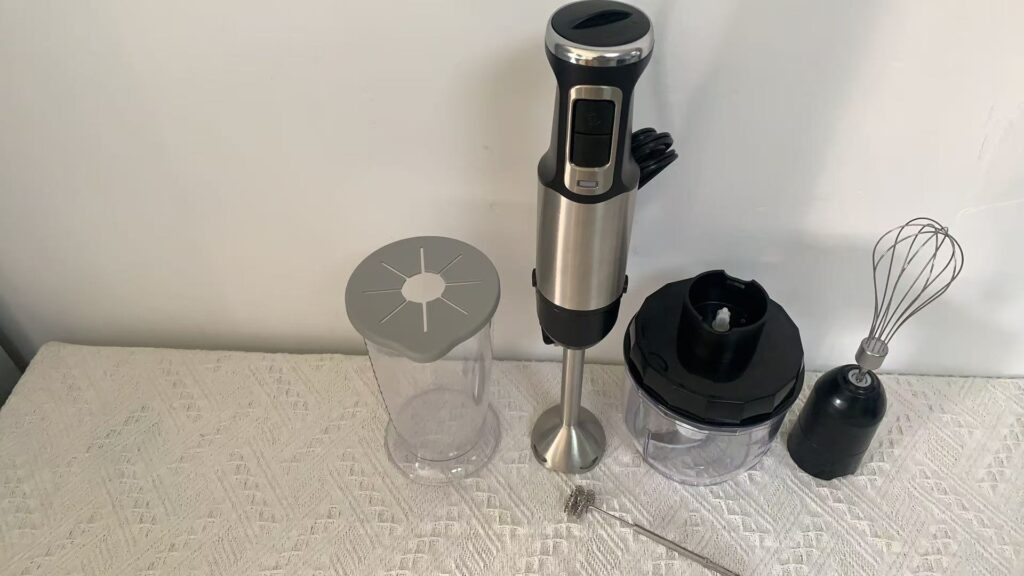
Buyers who also supply blenders or food preparation equipment can carry one spare-parts programme across the range: the hand blender range uses a similar attachment logic, so a single service kit and a single troubleshooting sheet can cover both categories in a bakery’s back kitchen.
Glossary
Duty cycle: run time versus cooling time. Beater: the mixing attachment. Whisk: the wire attachment for whipping. Planetary action: a mixing motion that covers the bowl. Load test: running the machine with a real mixture to check performance and heat.
Bakery buyers who research the category before ordering avoid the most common overheating failures.
Official references: [Whipping Cream – Wikipedia](https://en.wikipedia.org/wiki/Whipped_cream)
الأسئلة الشائعة
Hand mixer market size report
What wattage does a bakery hand mixer need?
For daily cream, meringue and batter work, 300W to 500W covers a small to medium bakery, and 500W is the safer choice where production runs every day. YLD Home quotes the wattage class together with the duty cycle, because a 300W motor rated for short bursts will not survive a full shift even if the number looks adequate on paper.
Can a hand mixer knead bread dough?
Light doughs only. Heavy bread dough needs a stand mixer or a spiral mixer, and using a hand-held unit on stiff dough is the single most common cause of bent beaters and burnt-out motors in bakery accounts. YLD Home recommends quoting dough hooks as an option for light dough and steering the account to a stand mixer above that workload.
What goes into a starter bakery equipment package?
A workable package is one 500W mixer, a spare beater set, a whisk attachment, dough hooks where the bakery makes light dough, and a cleaning kit. YLD Home builds that package as a single line on the quotation so the importer sees one landed cost and one carton count instead of assembling the bundle from three suppliers.
How do I test a mixer before placing a bulk order?
Run it under load for five minutes with a real mixture, then feel the motor housing for heat and listen for bearing noise at the lowest speed. YLD Home sends samples in five to seven days with the attachment set you intend to sell, and can include a short application video so the bakery sees the machine working on its own recipes.
What is the minimum order quantity for bakery mixers?
The minimum is 1,000 units per model, which is set at a level a regional distributor can fund without a bank facility. YLD Home quotes a mixed container so one order can combine wattage classes and voltage configurations, with FOB Shenzhen pricing and the carton and loading plan supplied before the order is confirmed.
Which certifications come with the mixer?
CE, GS, ETL, FCC and UKCA are available depending on the destination, and the certificate must name the exact model and voltage you order. YLD Home provides the test reports, rating-plate artwork and declaration documents the importer needs, and treats any additional national scheme as a separate project with its own timeline.
How should a bakery store and maintain the machine?
Clean the beaters after every shift, check the vents for flour build-up weekly, and store the unit with the cable loosely wound rather than wrapped around the body. YLD Home supplies a maintenance card in the carton for the markets that ask for one, because a machine that is cleaned and stored correctly is the cheapest warranty claim avoided.
How YLD Home keeps bakery mixer supply predictable
Every bakery mixer order runs through IQC on incoming parts, IPQC on the line and OQC before packing, and YLD Home shares inspection and loading photos so you see the shipment before it sails. Ask for the bakery mixer test report set for your market.