









In this guide:
- The 2026 commercial blender market, straight from our order books
- What a commercial blender has to survive every shift
- Commercial blender wholesale pricing, explained
- How commercial blenders are actually manufactured
- Matching the right commercial blender to your operation
- UL, ETL, and NSF certification reality
- Private label commercial blenders for US brands
- Shipping, warehousing, and distribution in the US
- Questions to ask a commercial blender manufacturer before you order
* alt:commercial blender *
A commercial blender is a machine that gets punished for a living. It runs at breakfast, lunch, and dinner rush. It blends hot soup and frozen drinks back to back. And when it breaks, a whole line of customers waits. We’re Дом YLD, a Shenzhen factory that builds hand blenders, stick blenders, and immersion units for US distributors, foodservice buyers, and private label brands. This guide is our 2026 buying playbook for anyone sourcing a commercial blender for the US market, what to pay, what to demand, and what to avoid.
The 2026 Commercial Blender Market, Straight From Our Order Books
The US foodservice market keeps growing, and the blender mix inside it keeps changing. Full-service restaurants still buy, but the fastest growth now comes from places that didn’t exist ten years ago: ghost kitchens in Chicago, smoothie and protein shops in Los Angeles, meal-prep facilities in Houston, hotel breakfast bars in Miami. All of them need a commercial blender that can keep up with a line.
What we see in our factory data is a shift toward smaller, faster equipment. Operators are done with bulky countertop units that hog space and take forever to clean. They want a commercial blender that hangs on the wall, blends a 2-liter batch in under a minute, and goes through the dishwasher without drama. That’s why our immersion-style lines outsell our countertop work five to one now.
The other trend is consolidation. Buyers order through fewer, bigger distributors, and those distributors want factory-direct relationships with reliable lead times. A distributor in New York told us they now qualify suppliers on delivery consistency before price. If a factory misses the window twice, they’re off the list. That’s a real shift, and it favors manufacturers who hold production slots for repeat customers.
Labor is the quiet driver behind all of it. Kitchens can’t find staff, so equipment has to do more of the work. A commercial blender that purees a whole pot of soup in place saves a cook ten minutes and a burned hand. Buyers pay for that. They pay for it gladly, because labor is their biggest line item.
One more number worth watching: the share of US foodservice equipment sold through online marketplaces keeps climbing. A distributor in Chicago told us that 30% of his new account inquiries now start with a web search for a specific model, not a sales call. That means your product listing, your spec sheet, and your certification documents are doing sales work before your rep ever talks to the buyer. We help our partners with the factory-side data for those listings: real wattage, real duty cycles, real dimensions, real packaging weights. The importer who ships that information to market wins the search, and the search wins the sale.
What a Commercial Blender Has to Survive Every Shift
Here’s the difference between a home unit and a commercial blender in one sentence: the home unit runs for thirty seconds a day, the commercial one runs for hours. Everything downstream of that sentence is engineering.
Duty cycle is the spec nobody quotes but everybody should ask about. It’s the ratio of run time to rest time a motor can handle without overheating. A cheap motor rated for 30 seconds on, 2 minutes off, dies in a smoothie shop by week three. Our commercial-class motors run [fill actual: 10 minutes continuous] before thermal protection kicks in, and the housing stays cool enough to touch through a whole batch cycle.
Heat is the second killer. A motor at full load generates heat, and heat destroys windings, bearings, and grease seals. That’s why the motor housing on a real commercial blender is aluminum or steel, not plastic. Metal pulls heat away from the windings. Plastic traps it. We machine our own motor mounts and check the thermal curve on every new model before we release it.
The third thing is cleaning. A commercial blender gets washed constantly, often in a high-temperature dish machine. That means the shaft seal, the switch, and the cord entry all have to shrug off steam and hot water. We seal every switch boot and pot the electronics where needed. It’s boring work, but it’s the difference between a unit that lasts three years and one that fails at month nine.
And then there’s the abuse that no spec sheet captures. Cooks drop things. Dishwashers bang units into racks. Line workers run the machine with the blade buried in frozen product. We build for that reality, and we test for it, because the warranty claim always comes back to us.
Commercial Blender Wholesale: How the Pricing Actually Works
Let’s be straight about commercial blender wholesale pricing, because there’s a lot of confusion out there. The FOB price from a Chinese factory is only the beginning. Your real cost is the landed cost: FOB, plus ocean freight, plus insurance, plus customs duties, plus warehousing, plus the cost of holding inventory that doesn’t move.
| Commercial blender class | Typical wholesale range (FOB) | Duty cycle | Typical buyer |
| Entry, 600–800W plastic shaft | [fill actual: $8–$15] | Light, 30–60s bursts | Budget retail, small cafes |
| Mid, 1000–1200W stainless shaft | [fill actual: $15–$28] | Medium, a few minutes | Restaurants, bars, food trucks |
| Heavy, 1600W+ stainless, metal body | [fill actual: $28–$45] | Heavy, near continuous | Hotels, commissaries, smoothie chains |
The mistake we see most often is buying the cheapest tier and hoping it survives commercial use. It won’t. The entry tier exists for home kitchens. When a US importer sells entry-tier units to restaurants, the failure rate comes back as returns, chargebacks, and a dead relationship with the distributor.
The math that works: buy the mid tier or heavy tier, price it with a realistic margin, and back it with a warranty you can actually honor. A distributor in Los Angeles runs this model with YLD Home: mid-tier commercial blender units, private label, 12-month warranty, and a fill rate above 98%. Their reorders are clockwork.
Volume is where you earn. Container-level orders get the best FOB rates, and we quote tiered pricing at [fill actual: 500 / 1,000 / 2,000+ units]. The spread between the small and large tiers usually covers the freight difference. That’s why the smart buyers consolidate orders instead of drip-feeding POs.
How Commercial Blenders Are Actually Made
Understanding manufacturing helps you buy better, so here’s a quick tour of how a commercial blender gets built, the way we build them at YLD Home. The process starts with the motor. We wind our own armatures in-house because bought-in motors are the single biggest quality lottery in this industry. A motor that’s wound with the right copper weight and balanced rotor runs cool and quiet for years. A marginal one whines from day one.
The gearbox and shaft come next. For heavy models, the shaft is machined stainless steel with a hexagonal coupling into the motor. The blade is stamped from hardened steel, then balanced. An unbalanced blade at 20,000 RPM shakes the whole unit and wears the bearings fast. We balance every blade on a rig before assembly.
Assembly is a line, not a bench. Each station does one job, and QC checks at every step: motor torque sample checks, shaft concentricity, switch feel, cord strain relief. After assembly, every unit runs a burn-in cycle. The manufacturing discipline is what separates a factory that ships quality from one that ships boxes. If you want the full picture of how industrial processes turn raw material into finished goods, the Manufacturing article at Wikipedia covers the general mechanics well.
The last stage is packing and documentation. Every commercial blender goes out with its compliance folder: UL or ETL certificate reference, FCC declaration, FDA food-contact documentation, and the model-specific test report. Your importer’s broker and your customer’s health inspector both want that paper.
* alt:commercial blender *
Matching the Right Commercial Blender to Your Operation
Not every kitchen needs the same machine, and buying one “standard” commercial blender for every customer is how distributors end up with a slow-moving SKU. Match the machine to the operation.
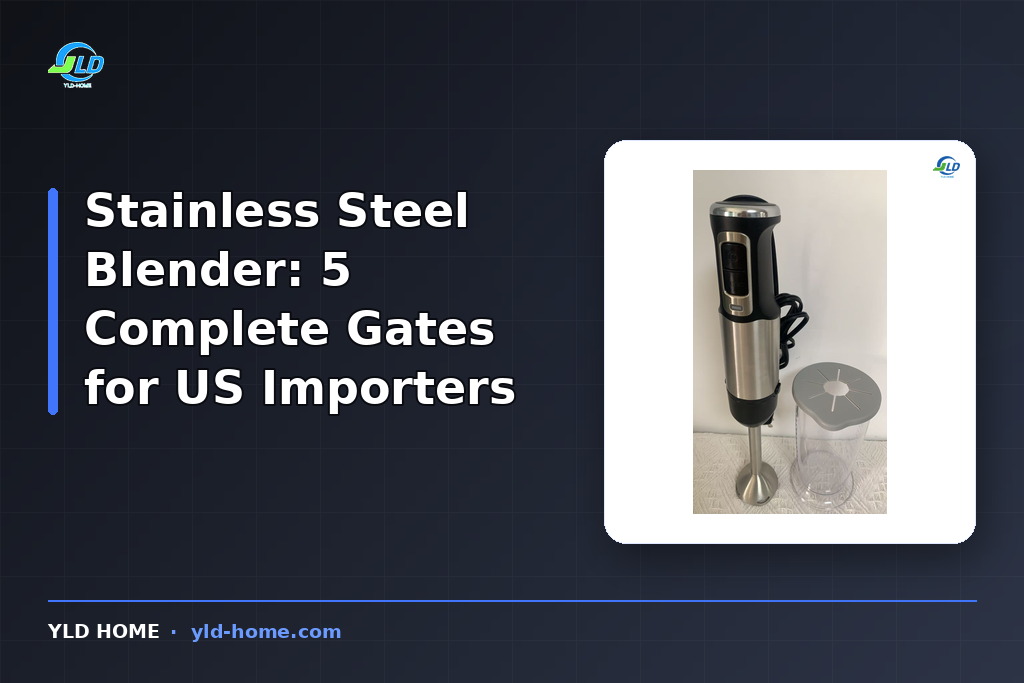
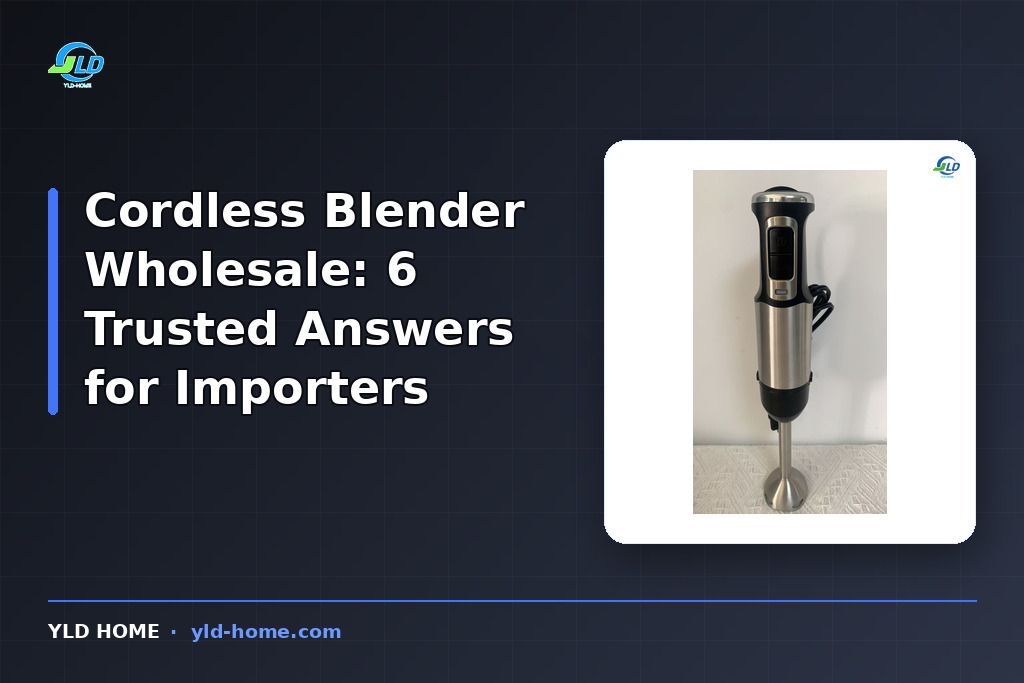
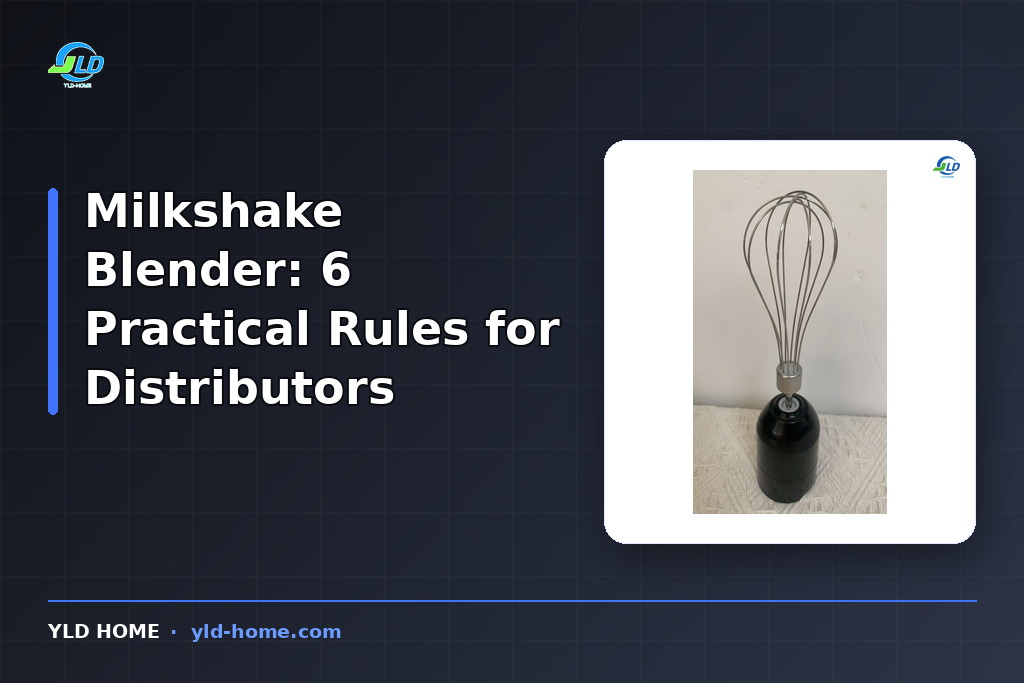
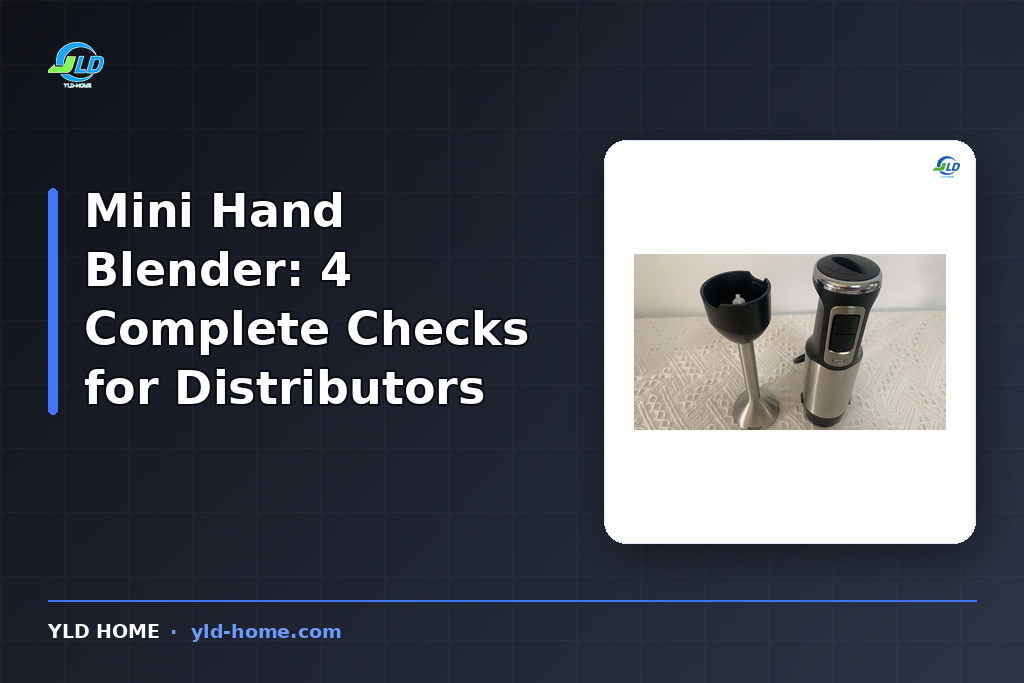
Bars and cocktail programs need power and speed for frozen drinks. A heavy 1600W unit with a metal bell handles crushed ice without stalling. Restaurants need versatility: soups, sauces, dressings, purees. The 2-in-1 hand blender with a whisk attachment covers most of that menu. Meal-prep and commissary kitchens need volume and continuous run time, which is where the 6010 мощный блендер earns its keep. Hotels run lighter duty, and the 3-in-1 hand blender with its chopper and whisk kit is a proven fit there.
We built our catalog around these use cases instead of one-size-fits-all. The ручной блендер из нержавеющей стали sits in the middle as the workhorse for most foodservice operations. For kitchens that want one tool to do everything, the PressPro 1600W hand blender combines heavy torque with a comfortable grip for long shifts.
When a buyer asks us which commercial blender to stock, we ask them three questions back. What menu? How many covers per day? Who cleans the equipment? The answers point to a specific model, and the right model sells itself to the end customer. One caution: don’t stock a model just because a competitor carries it. Your customers are not your competitor’s customers. Walk your own accounts, look at what they actually blend, and let the menu decide the machine.
UL, ETL, and NSF Certification Reality
Certification is where a lot of sourcing conversations stall, so let’s clear up what matters. For electrical safety, US buyers accept UL or ETL. Both are Nationally Recognized Testing Laboratories, and either mark satisfies retailers, insurers, and most local codes. We certify our commercial models to the applicable UL standard, and the certificate carries the exact model number. You can see the certificates and the client list in our YLD Home clients and certificates video.
For foodservice equipment, the next question is often NSF. NSF certification covers sanitation and construction of food equipment, and many US health departments reference NSF standards for commercial kitchens. It’s worth checking whether your target channel demands it. Some national chains and institutional buyers will not list equipment without NSF. We support customers who need NSF-certified lines, and the process adds lead time, so plan for it.
FCC compliance is required for any motorized device sold in the US, and it’s the cheapest certification on the list. FDA food contact applies to everything that touches food, which for us means the shafts, bells, blades, and seals. Those materials and test reports travel with every shipment.
One warning: verify the certificate covers your exact model and your factory’s legal name. Some traders sell blenders with certificates from other factories, which fails the moment a retailer audits the paperwork. Ask for the certificate PDF, check the model string, and keep it in your file. Certification paperwork is boring right up until it saves you from a recall, and then it’s the most valuable paper in your office.
Private Label Commercial Blenders for US Brands
Private label is how most of our US customers build a brand without building a factory. You bring the brand, the market knowledge, and the channel. YLD Home brings the engineering, the production, and the compliance files.
The process is straightforward. Pick a base model from our catalog or spec a custom one. Choose the housing color, the branding on the unit and box, the accessory kit, and the packaging design. We handle tooling, certificates, and the documentation package. MOQ for a private label commercial blender line is [fill actual: 1,000 units], with trial batches available while you validate the market.
Timing works like this: samples in two to three weeks, production [fill actual: 30–45 days] after approval, then sea freight. Most of our private label partners run a launch cycle of ten to twelve weeks from first contact to first container. That’s fast enough to hit a seasonal menu change if you start early.
The brands that win with private label share one habit: they treat the factory as a partner, not a vendor. They share sell-through data, they give honest forecasts, and they tell us about quality issues the day they see them. In return, they get priority production slots and honest advice when a spec doesn’t make sense. That relationship is worth more than a dollar off per unit.
Shipping, Warehousing, and Distribution in the US
Once the commercial blender leaves our dock, the US side of the supply chain decides how fast your money turns. The standard route is sea freight from Shenzhen to Los Angeles or Long Beach, roughly [fill actual: 15–20 days] transit. East Coast buyers often route through New York/Newark or Savannah, which adds a few days but puts inventory closer to the market. Houston and Miami handle the southern corridors.
Duties and fees are part of the math. Blenders typically fall under [fill actual: HTS 8509.40] at [fill actual: 4–6%], plus the usual port fees, and you’ll want a customs broker who has seen appliance imports before. Under-declaring value to save duty is a bad trade. It comes back as penalties, and it wrecks your landed-cost model.
Warehousing strategy depends on your channel. National distributors want inventory positioned in two or three regions, usually West Coast plus East Coast. Regional players are happy with one warehouse and longer transit. A 3PL with foodservice experience handles both, and the good ones tell you when your fill rate is slipping before your customers do.
The last mile is about who touches the product. Foodservice distributors deliver to kitchens, and they expect sturdy cartons, clear labeling, and consistent case counts. We spec our export packaging for the US market: double-wall cartons, moisture barriers, and case labels that scan clean. Packaging is boring until a container arrives with crushed units, then it’s the most expensive thing in the building.
One practical note on seasonality. US foodservice demand peaks twice a year, around the spring menu change and again before the holiday season. Container bookings get tight in those windows, and freight rates climb. Our partners who lock production slots three months ahead pay less and never miss a launch. We publish our production calendar to repeat customers so they can plan the pipeline with us. A commercial blender line that hits the warehouse in March sells into the summer rush; one that lands in May sits in inventory while the demand curve flattens.
Questions to Ask a Commercial Blender Manufacturer Before You Order
Before you commit to a factory, work through this list. The answers separate a manufacturer from a middleman.
What is the real duty cycle of the motor? If they can’t give you a number, they haven’t tested it. What voltage and plug do you ship for the US market? The answer should be 120V/60Hz without hesitation. Do you hold UL or ETL certificates for the exact model I’m importing? Get the PDF. What is the spare parts policy? You need shafts, blades, seals, and switches available for the warranty period. What is the defect rate on the last three production runs? A serious factory tracks this. Do you provide FDA food-contact documentation? Yes should come with samples. What happens if a batch fails inspection? The contract should say replace or refund, in writing.
Ask for references in your market. A commercial blender manufacturer who serves US distributors should be able to point you to two or three, and you should call them. We do this all the time: a prospect calls a Houston distributor we’ve shipped to for years, hears the honest answer about lead times and quality, and the deal moves forward faster.
Часто задаваемые вопросы
Q1: What makes a commercial blender different from a home blender?
A commercial blender is built for continuous use: stronger motor, higher duty cycle, metal or reinforced housings, foodservice-grade seals, and compliance with commercial certification standards. A home blender runs for seconds at a time. A commercial blender runs for hours, every day, and survives a dish machine.
Q2: What duty cycle should I expect from your commercial blender models?
Our commercial-class motors run [fill actual: 10 minutes continuous] before thermal protection engages. That covers soup batches, frozen drinks, and purees in real kitchen conditions. We test every model against its rated duty cycle before release.
Q3: Can I get a private label commercial blender with my brand?
Yes. Private label is a core part of YLD Home’s business. You choose the model, color, branding, packaging, and accessory kit. We handle tooling, certifications, and compliance documentation. The MOQ is [fill actual: 1,000 units], with trial batches available.
Q4: What certifications do your commercial blenders carry?
Our electric models carry UL or ETL certification to the applicable standard, FCC compliance, and FDA food-contact documentation for shafts, bells, blades, and seals. NSF-certified lines are available for channels that require them.
Q5: What MOQ do you require for commercial blender wholesale orders?
Standard MOQ is [fill actual: 1,000 units per model], with tiered pricing at higher volumes. Trial batches are available at a slightly higher unit price while you validate sell-through.
Q6: How long does shipping take from the factory to the US?
Production takes [fill actual: 30–45 days] after approval, and sea freight from Shenzhen to the US West Coast runs [fill actual: 15–20 days]. Plan eight to ten weeks from PO to warehouse for the full cycle.
Q7: Do you provide spare parts and after-sales support?
Yes. We keep shafts, blades, seals, switches, and motors in stock for the models we sell, and our export team supports your warranty process with replacement parts and technical guidance.
Q8: Can you custom-build a commercial blender to our spec?
We can. Custom motor tuning, housing colors, branding, accessory kits, and packaging are all on the table. Custom mechanical designs go through sample rounds and tooling before production.
Official references
[[PAGEBREAK]]