







In this guide:
- Why US buyers want a rechargeable blender now
- The customer groups driving demand
- Battery, motor, and runtime specs that matter
- UL, FCC, UN38.3, and FDA certification
- Trends we see in orders from US importers
- OEM vs. private label sourcing options
- MOQ, lead times, and battery shipping rules
- A California private label case study
- Mistakes to avoid when sourcing
- How to choose a supplier
The battery-powered blender has gone from a niche gadget to a real category in the US market, and distributors are trying to figure out whether it belongs on their line card. We’re YLD Home, a Shenzhen appliance factory that has supplied hand blenders and stick blenders to American importers for over a decade. In the last three years, requests for a the unit have grown faster than any other product we make. Food trucks, caterers, fitness brands, RV outfitters, and consumer importers all want cordless blending, and they all want it under their own label. This guide covers the market trends behind that demand, the specs US buyers actually ask for, and the sourcing steps that keep a battery blender program profitable, from battery certification to MOQ planning. It is written for wholesalers, private-label brands, and importers, not for consumers.
Why the US Market Suddenly Wants a Rechargeable Blender
The shift did not come from one event. It came from several at once. Food trucks grew into a billion-dollar industry in the US, and most of them run on generators or batteries with no counter space to spare. Caterers work in venues with no kitchen power at all. Gyms and meal-prep brands sell protein shakes on the go. RV owners want a blender that works at a campsite. All of those users share one need: blending where there is no outlet.
That is what a portable blender delivers. A battery, a motor, and a jar you can use anywhere. No cord. No counter spot. No noise complaints from the neighbors at 6 a.m. in an RV park.
The pandemic played a role too. Home blending habits formed in 2020 carried into offices, gyms, and travel once life resumed. People who learned to make smoothies at home did not stop when they left the kitchen. A this model is the product that follows them around.
For distributors, the appeal is different. The category is still young enough that margins hold. Big brand names have not locked the shelf space the way they have with countertop blenders. That means a private label cordless blender can actually win shelf space in retail, or win a spot in a food truck catalog, without a decade of brand equity behind it.
The numbers back it up. US importers we talk to report cordless blender sell-through of 70 to 85 percent within a season, which is high for a new kitchen appliance. One importer in New Jersey moved 3,000 units of a cordless model in five months with almost no marketing spend. When a category sells that fast, the risk is not demand. The risk is sourcing a bad product and burning your retail accounts in one season.
Who Is Buying: Four Customer Groups Driving Demand
Four customer groups order rechargeable blenders in volume from US wholesalers. Know which ones you serve, because the specs differ.
Food trucks and caterers. They need real blending power for sauces and soups on site, with no generator. They care about runtime per charge and how fast the unit charges between events. Many run the blender off the truck’s own inverter during prep, so USB-C charging matters less than raw torque.
Fitness and meal-prep brands. This is the biggest private label segment. Gyms, supplement brands, and nutrition coaches sell a battery-powered blender with a protein shake cup as a merch item and as a real product. They care about cup size, portability, and how the brand looks on the bottle.
RV and outdoor distributors. Off-grid use drives this group. They want 12V car charging, durable construction, and a jar that survives a bumpy road. Quiet operation is a real selling point at campsites.
Retail importers. They chase the general consumer trend: smoothies at the office, at the beach, on a plane. For them, packaging and shelf appeal matter as much as the machine. A rechargeable blender in a clear display box sells better than one in a plain carton.
There is a fifth group worth watching: hospitality. Hotels and resorts buy cordless blenders for pool bars and breakfast stations where running power cables is a safety problem. One resort group we supply orders battery blender units every spring for the pool season. Each group has a different price ceiling and a different spec priority, which is why we keep asking US buyers one question before quoting: who is the end user? The answer changes the battery size, the cup, and the packaging.
What Buyers Actually Specify: Battery, Motor, and Runtime
Let’s talk hardware. A portable blender is three systems in one box: a battery, a motor, and a blade assembly. Each one has specs a US buyer should verify before signing a PO.
Battery. Most cordless models use lithium-ion packs in the 7.4V to 11.1V range, with capacities from 2,000mAh to 4,000mAh. Runtime on a full charge is typically 15 to 30 minutes of actual blending, and the battery should charge in 2 to 4 hours. Ask about cycle life too. A pack rated for 500 cycles is a different product from one rated for 300.
Motor. A cordless motor is not a corded motor. Look at real output, not the marketing wattage. Many cordless units advertise 300 to 600W, but sustained blending power is what matters for thick smoothies. When we tested a competitor’s cordless unit against our own, the difference showed up in the third smoothie, when the pack starts to sag.
Blade assembly. The jar and blades need to handle ice. Stainless steel blades with a reinforced cup base survive daily use. Some cheap units use plastic blades, and those fail in week two.
Here is a rough comparison from our engineering notes:
| Spec | Entry cordless | Mid-range | Premium cordless |
|---|---|---|---|
| Battery voltage | 7.4V | 7.4V | 11.1V |
| Capacidad | 2,000mAh | 2,600mAh | 3,500mAh+ |
| Runtime per charge | 15 min | 20 min | 25-30 min |
| Charging time | 3-4 hrs | 2-3 hrs | 2 hrs |
| Blade material | 304 stainless | 304 stainless | 304 stainless |
| Typical FOB price | $9 – $14 | $14 – $19 | $20 – $30 |
For US buyers, the sweet spot right now is the mid-range: good runtime, decent torque, and a wholesale price that leaves room for a healthy retail margin.
Certification for a Rechargeable Blender: UL, FCC, UN38.3, and FDA
A cordless blender carries more compliance baggage than a corded one, because it contains a lithium battery. Get this part right, and customs is smooth. Get it wrong, and you may lose a whole container.
UL / ETL. Electrical safety for the 120V charger and the unit itself. Same as any appliance sold in the US.
FCC. The motor and the charger both produce electromagnetic emissions. FCC testing covers both.
UN38.3. This is the big one for batteries. UN38.3 is the UN standard for lithium battery transport safety, covering altitude, temperature, shock, vibration, and short circuit tests. Carriers and freight forwarders require a UN38.3 test report and an MSDS before they will book a battery shipment. No report, no freight. Simple.
FDA. The jar and blades touch food, so materials need FDA food contact compliance. Ask for the material certificates.
One practical note: battery size affects shipping class. Packs above 100Wh are classified as Class 9 dangerous goods and face stricter limits. Most portable blenders stay under that threshold, which keeps ocean freight straightforward. Confirm the watt-hour rating with your supplier in writing, because it decides your freight costs for the life of the product.
YLD Home ships battery-powered blender projects with a complete compliance pack: UL reports, FCC test data, UN38.3 certificates, and FDA material certs. US buyers get the folder during sample evaluation, before any deposit changes hands.
Market Trends We See in US Orders
These are trends from our order book, not from a research report.
Private label is now the default. Three years ago, most US importers bought a battery blender as a white-label commodity. Now 7 out of 10 new projects come with a brand name, custom colors, and custom packaging. The margin story is that strong.
USB-C charging is becoming a checkbox. Consumers expect to charge the blender with the same cable as their phone. Units with proprietary chargers get returned. We have moved our newer models to USB-C for exactly this reason.
Bigger cups. Two years ago, 300ml cups were standard. Now buyers ask for 400 to 600ml jars, because American smoothie servings are large. Cup size is now the first spec a retail buyer asks about.
Ice-crushing is a hard requirement. The viral iced coffee and frozen smoothie content online has trained consumers to expect ice crushing from any portable blender. A unit that cannot crush ice gets bad reviews, and bad reviews kill a new brand fast.
Bundling. Distributors are bundling a rechargeable blender with other portable kitchen items, or selling two-unit packs at a promo price. The category responds well to bundles because the purchase is often impulse-driven.
None of these trends are hard to serve. They just require a factory that will change colors, cups, and cables without treating every change like a new product line. That flexibility is exactly what we do at YLD Home, and it is what our hand blender range has always been about.
Sourcing a Rechargeable Blender: OEM vs. Private Label
Two ways to source, and they are not the same business.
OEM means you buy an existing model as-is. The factory’s design, the factory’s colors, maybe a sticker with your logo. It is fast and cheap, and it is fine for a first test. The downside: every other importer can buy the same machine, and price competition eats your margin within two seasons.
Private label means the product carries your brand: logo on the unit, your packaging, your colors, your instruction manual, often a custom cup or a branded carrying bag. It costs a bit more per unit and usually requires a higher MOQ, but it builds an asset. Your retail accounts reorder the brand, not the commodity.
ODM goes further: we modify the design for you. Different battery capacity, a custom motor setting, a unique jar. ODM is how you end up with a portable blender that no other distributor in your territory can offer.
Most of our US clients start with private label on an existing model, prove the category, then move to ODM once they know what their customers want. It is a sensible ladder. A distributor in Florida started with 1,000 units of our branded cordless model, learned that his customers wanted a bigger jar and USB-C, and is now launching a custom version for the spring season.
Whichever route you take, one rule applies: test the production sample, not the show sample. We keep production samples from every cordless run and send the same units to buyers for evaluation. What you test is what you get.
MOQ, Lead Times, and Battery Shipping Rules
Batteries change the logistics math, so let’s be specific.
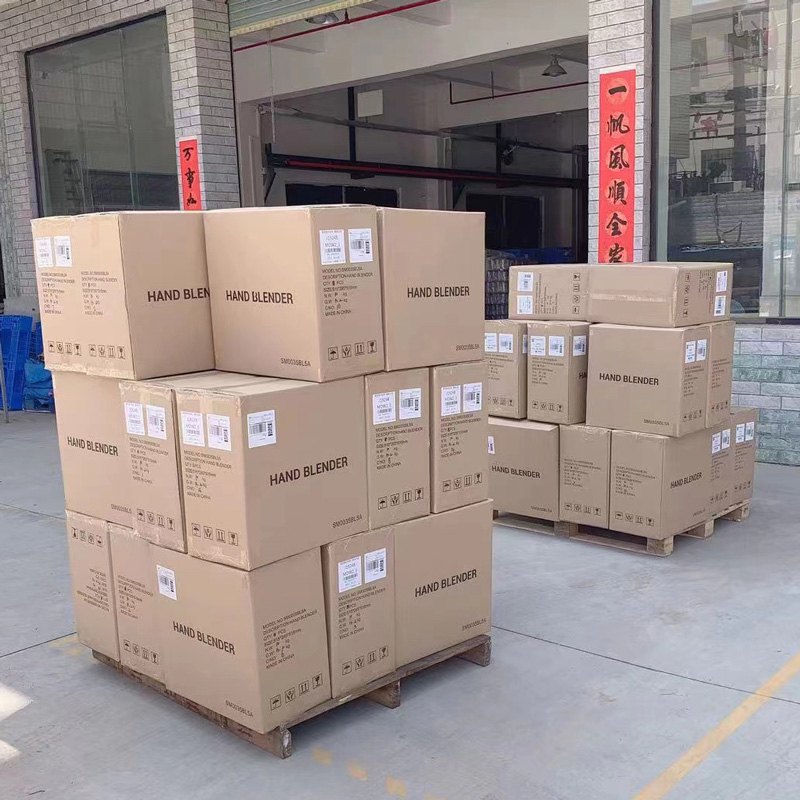
MOQ for a cordless blender runs 1,000 units per model, and private label with custom packaging is quoted on the same 1,000-unit basis. ODM projects are quoted per program. Sample programs are available so you can validate the product before committing.
Lead times are 35 to 45 days from deposit for standard models, plus 7 to 10 days for private label artwork and packaging. A custom battery or new tooling adds 60 to 90 days. Battery aging is a real consideration: lithium cells have a shelf life, so we schedule production so the battery is fresh at shipment, not sitting in a warehouse for six months.
Shipping a rechargeable blender means shipping a lithium battery, and that is where customer service from your supplier matters as much as the product. A good supplier prepares the UN38.3 report, the MSDS, and the dangerous goods declaration correctly, and it keeps your freight forwarder happy. A sloppy one leaves you with a container stuck at origin because one document is wrong.
Most units ship by ocean freight from Shenzhen to Los Angeles or New York in 12 to 16 days at sea. Because the category sells fast, we advise US clients to keep 6 to 8 weeks of stock and reorder on a rolling schedule. Air freight for urgent reorders costs more, but for a hot seasonal item it is sometimes the right call.
One more battery rule: never mix cell batches. We date-code every pack and match cells within 50mV before assembly. It sounds like engineering detail, but it is the difference between a battery that lasts and a battery that swells.
Case Study: A California Brand’s Private Label Launch
Here is how a real launch went. A supplement brand in California wanted a battery-powered blender to sell alongside its protein powders. The founder had tried importing cordless blenders from a trading company and got burned: the first container had mixed quality, and half the units arrived with dead batteries.
He came to YLD Home with three requirements. The blender had to match his brand colors. It had to carry a 600ml cup for big shakes. And the battery had to survive months on a shelf. We sent him production samples from our cordless line, ran a 30-day storage test on the packs, and shared the data.
The order was 1,000 units under his brand, with custom color, his logo, and a branded box. We shipped with a full compliance pack: UN38.3, MSDS, UL report, and FDA material certs. The container cleared customs in Long Beach without a single hold.
He launched at a fitness expo in Anaheim. Sell-through in the first 60 days was 70 percent, and his retail accounts reordered before the first container was empty. The margin on each unit was more than double what he made on his previous commodity import.
The founder’s own summary: the product matters, but the paperwork matters just as much. A battery blender is only as good as the battery documentation behind it. That is a line we agree with, because we have seen both sides of it.
Mistakes to Avoid When Sourcing Cordless Blenders
Seven mistakes, in the order we see them.
Ignoring UN38.3. The single biggest cause of delayed battery shipments. Verify the report matches the exact battery in the production unit.
Trusting wattage numbers. Cordless wattage claims are marketing. Test sustained torque on a thick blend.
Skipping the storage test. Lithium packs self-discharge. Ask the factory for a 30-day storage test on your samples before you commit to a container.
Forgetting the charger. A proprietary charger kills a product line. Confirm the charging cable and port before you lock the design.
Ordering one big lot. The category is young, and tastes shift fast. Order in smaller rolling lots until your sell-through data is solid.
Ignoring reviews. One bad review wave on a cordless blender can end a new brand. Quality control on the blade assembly and the battery is where reviews are made or broken.
Not asking about the return rate. A factory that does not track field returns does not know its own quality. Ask what percentage of units come back, and what the failure modes are. We track our own field return rate on cordless models by model, share the figure with buyers, and walk through the failure analysis openly.
Avoid these, and the category is a good one to be in. Margins are still healthy, the big brands have not locked the channel, and US buyers are still discovering what a good cordless blender can do. Get the specs right and the paperwork right, and you will be the supplier they reorder from.
How to Choose a Rechargeable Blender Supplier for the US Market
Pick the factory the way you would pick a partner, because battery products demand after-sales support.
First, check battery credentials. Ask for UN38.3 test reports, the battery cell brand, and the cell supplier. Reputable factories use cells from known manufacturers, not unmarked cells. We use cells from established suppliers and keep the documentation for every batch.
Second, check US market experience. A factory that has shipped to US importers knows the paperwork rhythm: UL files, FCC reports, FDA certs, customs entries. Ask for references and for examples of compliance packs from past shipments.
Third, check the after-sales process. Who answers your warranty calls in US time zones? Can they ship replacement batteries and blades to a US warehouse? Battery replacement is the most common warranty event on a cordless blender, so parts logistics matter.
Fourth, verify production capability, not just assembly. Can the factory do battery pack assembly, motor winding, and QC testing in house? Vertical integration usually means better consistency and faster fixes.
Finally, visit or video-tour the line. We host US buyers in Shenzhen and show them the battery aging room, the motor test benches, and the QC stations. Seeing the process is worth the flight.
And if you are already sourcing other small kitchen appliances, a portable blender slots naturally next to your existing range. Pair it with our PressPro 1600W hand blender for corded pro work, the 6010 potente batidora de varillas for kitchens, and the HB006-3 detachable food processor for prep. Add the 4-in-1 hand blender and you have a complete cordless-plus-corded lineup for US distributors. That is the kind of range that makes you the supplier of choice in your territory.
Frequently Asked Questions (FAQ)
Q1. What cordless blender sells best to US wholesale buyers?
Right now, mid-range cordless units in the $14 to $19 FOB range with USB-C charging and a 400 to 600ml cup are the fastest movers. They deliver enough torque for ice and protein shakes, and they leave room for a healthy retail margin.
Q2. Do rechargeable blenders need UL certification?
Yes, if you sell into US retail or foodservice channels. The charger is a 120V device and needs UL or ETL listing. Confirm the factory holds the file and whether it can be transferred for private label.
Q3. What does UN38.3 mean for my shipment?
UN38.3 is the UN transport safety standard for lithium batteries. Carriers require the test report and MSDS before booking freight. Without them, your container sits at origin. Always request the documents before you pay a deposit.
Q4. How long does a battery-powered blender battery last?
Most lithium packs are rated for 300 to 500 charge cycles, which is roughly 2 to 4 years of daily use. Runtime per charge is typically 15 to 30 minutes of blending. Ask for the cycle rating in writing.
Q5. Can I private label a rechargeable blender with YLD Home?
Yes. We offer private label and ODM on our cordless models: your brand, your colors, your packaging, and optional custom features like cup size and USB-C. MOQ starts at 1,000 units.
Q6. What is the MOQ and lead time for a cordless blender?
Standard models run 1,000 units with 35 to 45 days lead time from deposit. Private label adds 7 to 10 days. Custom battery or tooling programs are quoted individually.
Q7. Can a battery blender handle ice?
Yes, if it is built for it. Look for stainless steel blades and a motor with real sustained torque. We test every cordless model with an ice crush cycle before it leaves the factory.