









In this guide: The Small Batch Opportunity · Cost Model · Supplier Strategy · Mixed Containers · Startup Case Study · Compliance on Small Orders · Scaling Up · Common Mistakes · FAQ
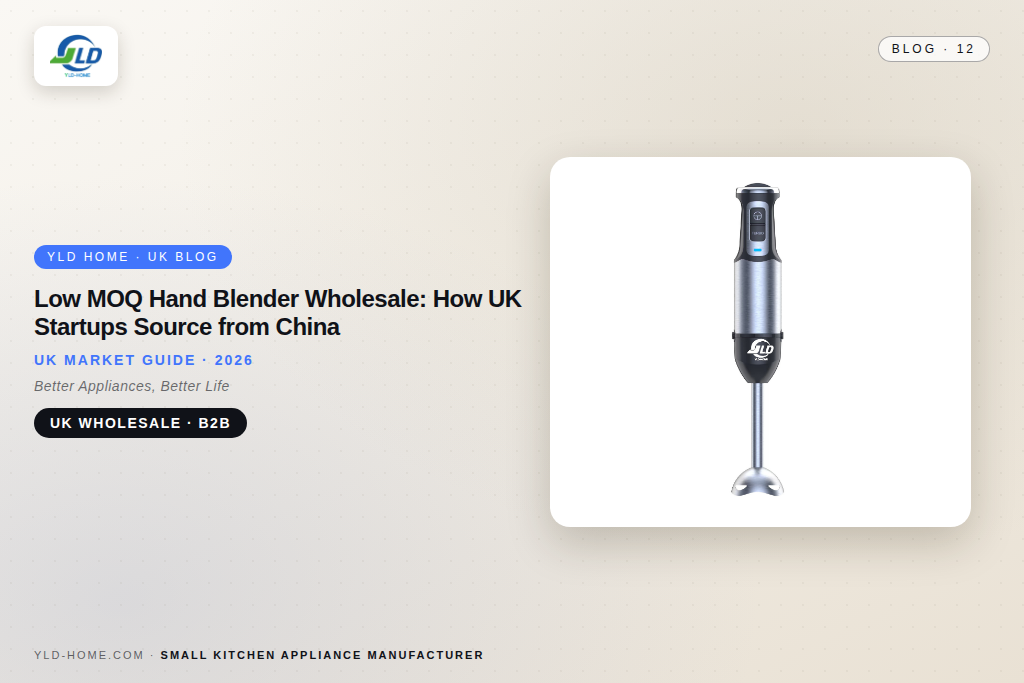
Ten years ago, importing a hand blender meant committing to a full container. Today, Low MOQ hand blender wholesale UK programmes let a startup test a product, a brand and a channel with a few hundred units. This guide explains how the small batch market works, what it really costs, and how a UK startup can move from first sample to repeat orders without overcommitting cash.
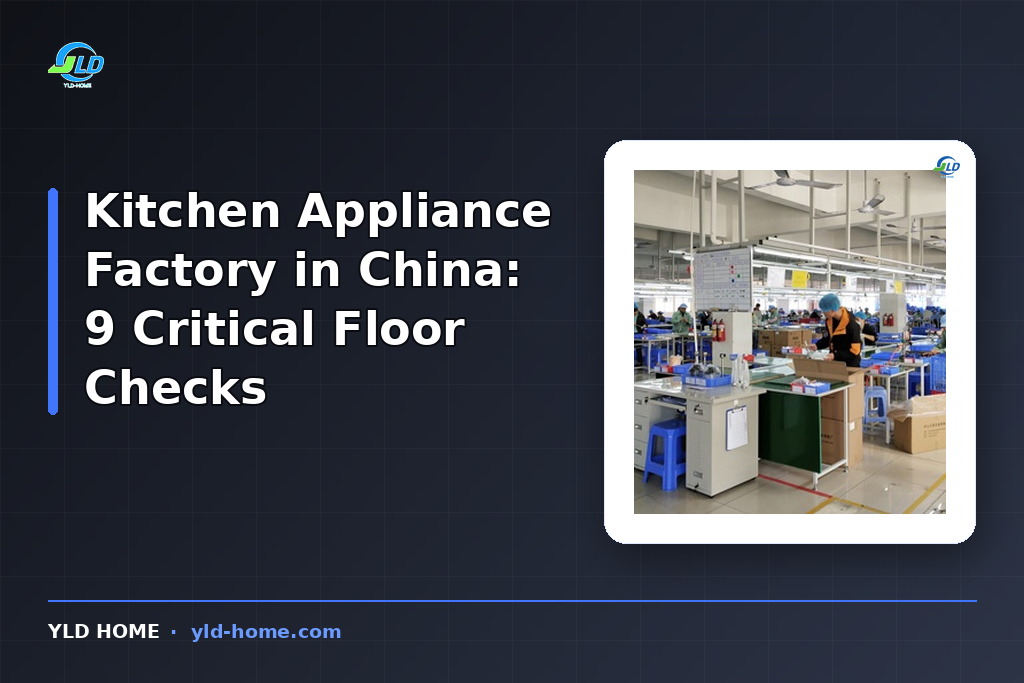
Even a small first order still runs on a real production line, and the tour below shows how small batches are assembled, checked and packed before they leave the factory:
Low MOQ hand blender wholesale UK trial order in production
Why Low MOQ Hand Blender Wholesale UK Is a Startup Opportunity
The small-batch import market has quietly transformed the UK’s startup economy. Where a distributor once needed £30,000 tied up in a single container, a founder can now test a hand blender range with a few thousand pounds, because factories have learned that small orders are the front door to bigger ones. For a UK startup, the small-batch route turns importing from a corporate-scale commitment into a lean experiment.
Three structural changes made this possible. First, Chinese factories, especially those serving export markets, now offer flexible minimums on standard models: an order of 1,000 units is routine when the buyer commits to repeat business. Second, mixed loads let a startup combine several models, colours or accessory sets into one shipment, spreading the risk across the range. Third, the logistics chain matured: LCL (less than container load) freight, consolidated warehousing and DDP delivery options make small shipments almost as easy to manage as large ones.
The startup advantage is speed of learning. A big distributor can afford to be wrong; a startup cannot, which is precisely why small orders are valuable. With a low MOQ order, a founder learns the real costs, the real quality, the real demand and the real margin before scaling, and every lesson is cheap because the batch is small. The competitors who skipped this phase, ordering containers on optimism, are the ones who now sit on dead stock.
The opportunity is not limited to blenders either. The same mechanics apply across small kitchen electrics: whisk sets, milk frothers, mini choppers and spice grinders all fit the same small-batch framework. A startup that masters that playbook can repeat it category by category, building a small kitchen electrics wholesale uk range without ever taking a full-container bet.
The Small Batch Opportunity in 2026
The 2026 market conditions favour the small-batch importer more than any year in the past decade. UK e-commerce continues to grow, marketplace sellers are everywhere, and consumers keep buying small kitchen electrics as gifts, upgrades and TikTok-inspired purchases. The demand is real, and the supply side has adapted: the phrase “small kitchen electrics wholesale uk” now returns suppliers who happily quote 300-unit orders alongside container buyers.
The second trend is the rise of the micro-brand. Tools like Shopify, Amazon FBA and TikTok Shop mean a two-person team can launch a kitchen appliance brand with a distinctive colourway, a good story and a modest marketing budget. The constraint is no longer distribution; it is inventory risk. Low MOQ sourcing exists to remove exactly that constraint, letting the micro-brand carry only what it can sell.
The third trend is geographic. UK startups outside London, in cities like Cardiff, Bristol, Leeds and Manchester, are increasingly building direct sourcing relationships with Chinese factories. The cost advantage of factory-direct pricing is too large to ignore, and video calls, WeChat and structured sample programmes have flattened the distance. Trade bodies such as the British Chambers of Commerce support this trend with export guidance, trade missions and international trade documentation for UK startups, and a startup in Cardiff can manage a Guangdong factory relationship as smoothly as a London importer with a permanent China office.
The fourth trend is compliance literacy. UK startups have learned the hard way that UKCA marking, Type G plugs and food contact documentation are not optional paperwork; they are market access. The startups that succeed treat compliance as part of product design, which is exactly why the suppliers who support small orders with full documentation are winning the startup accounts. The small batch opportunity in 2026 is real, but it belongs to founders who source smart, not just cheap.
Low MOQ Hand Blender Wholesale UK: Realistic Cost Model
Understanding the real cost structure is what separates startups that scale from startups that stall. The headline unit price from a factory is only the beginning; the landed cost includes freight, duty, VAT, inspection and the cost of your time. Here is a realistic model for a small first shipment in 2026.
| Cost line | Typical value (per order) | Notes |
|---|---|---|
| Goods (300 units, standard 300W model) | £1,200 – £1,800 | £4-6 per unit at this volume |
| Tooling / branding (if private label) | £300 – £1,500 | One-off, negotiable on standard models |
| Sample set (2-3 units, courier) | £60 – £120 | First step, usually refundable on order |
| LCL sea freight to UK | £150 – £400 | Per cubic metre, consolidated |
| Customs clearance and broker | £80 – £150 | Per shipment |
| UK import duty (2-3% typical) | £30 – £60 | Varies by commodity code |
| UK VAT (20%, recoverable) | £300 – £480 | Reclaimable for VAT-registered businesses |
| Pre-shipment inspection | £100 – £250 | Optional but recommended |
The pattern is clear: at 300 units, the per-unit landed cost lands roughly 25 to 50 percent above the factory price, and that gap shrinks as order size grows. A startup should therefore price retail at three to five times landed cost to leave room for marketplace fees, advertising, returns and margin.
Two refinements make the model safer. First, negotiate DDP (delivered duty paid) on small orders: the supplier quotes a single price delivered to your UK door, which removes currency and customs surprises for the first shipment. Second, keep a buffer of 10 to 15 percent for exchange-rate movement and unforeseen port delays. Comparing models across the hand blender range before you quote helps you pick SKUs whose landed cost supports your target price. More landed-cost breakdowns and sourcing templates for UK startups are published on the YLD Home blog. A UK startup that prices from the landed cost rather than the factory price builds a business that survives its first year.
Supplier Strategy: Finding Factories That Accept Small Orders
Not every factory will accept a 300-unit order, and the ones that do are not always the ones you want. The supplier strategy for startups is to target factories that treat small orders as an acquisition cost, not a nuisance. These suppliers are easy to recognise: they publish MOQ information, offer sample programmes, respond to small inquiries with structured quotations, and mention mixed loads and DDP delivery in their standard terms.
| Supplier type | Typical MOQ behaviour | Startup fit |
|---|---|---|
| Large full-line factory | 1000+ units per model | Poor for first orders |
| Dedicated blender manufacturer | 500-1000 units, flexible on stock models | Good with negotiation |
| OEM / private label specialist | 300-500 units on standard bases | Best for branded startups |
| Trading company | 100-300 units, mixed baskets | Easiest first step |
| Marketplace-first supplier | Dropship, no minimum | Fast test, thin margin |
The negotiation sequence matters more than the ask. You’ll get further with honest volume projections than with bluffing: “we are a new UK brand; we expect 500 units per quarter if this model performs”. Factories understand pipeline value, and a credible growth story earns better terms than aggressive haggling. Then anchor the discussion on stock models: existing colours, standard packaging and a small logo change cost the factory almost nothing, and that is where the lowest MOQ lives.
YLD Home, a Shenzhen-based small kitchen appliance manufacturer, is typical of suppliers that structure themselves for startup accounts: published MOQ guidance on its wholesale blenders page, sample programmes and DDP delivery in the standard terms, and the full verification sequence for any candidate is covered in our guide to hand blender manufacturers in China. Payment terms are part of the strategy. First orders typically run 30 percent deposit and 70 percent before shipment, or 100 percent for very small orders. Startups can ask for PayPal or Alibaba Trade Assurance on the first transaction for protection, then move to T/T as the relationship matures. The goal is a supplier who grows with you: the supplier relationship is a partnership that starts small and scales on both sides.
Mixed Containers: Combine Low MOQ Stick Blender SKUs
The single most powerful trick in the small-batch playbook is the mixed container. Instead of ordering 1,000 units of one model, a startup orders 200 units each of five models, colours or accessory configurations, ships them together, and tests the whole range for the cost of one commitment. This is how a startup validates a product range rather than a single gamble.
Mixed loads work at every scale. At the bottom, a few models fit in a single carton and travel by courier. At the next level, 300 to 800 units ship as LCL freight, sharing a container with other importers’ goods and paying only for the space used. At the top, a startup filling its first 20-foot container mixes household blenders, commercial models and accessory sets, turning one container into a market test across three price points.
The design of the mix matters. The classic startup split is 40 percent hero model, 30 percent second model, 20 percent premium or commercial, and 10 percent experimental. The hero model is the one with the clearest demand signal, the premium model tests whether the brand can command a higher price, and the experimental SKU is the cheap lottery ticket that sometimes becomes the next hero. Sell-through data from the mixed container then decides the second order.
Accessories deserve a place in the mix. Whisk attachments, chopper cups, milk frothers and travel pouches cost little to add and lift average order value, and they generate reorder demand for parts. A mixed container that includes accessory sets also teaches the startup which bundles convert, which is exactly the data a young brand needs before committing to branded packaging and volume pricing.
Case Study: A Cardiff Startup’s First Import
Elena runs a small kitchen brand from Cardiff, selling on Amazon UK and her own Shopify store. After months of reselling generic stock from a UK wholesaler, she decided to source directly from China, driven by the margin gap: the same 300W hand blender cost £14 from the wholesaler and £5 from the factory. Her goal was a private label range with her brand’s colours and a food-safe story she could defend.
Her first step was a two-month supplier search. She shortlisted three factories that advertised small minimums, ordered samples from all three, and tested each sample in her own kitchen with hot soup, frozen smoothies and a 20-cycle durability run. One sample failed on a leaking shaft seal, one had a plastic cup that smelled after dishwasher cycles, and the third passed everything. That third factory was YLD Home, a dedicated blender manufacturer that also sent the UKCA file and the food contact migration report for the exact model without being asked twice, the same documentation standard its 1600W PressPro hand blender line follows across the range.
Her first order was 400 units across four configurations: 200 in her hero colour, 100 in a second colour, 50 commercial-grade units for local cafes, and 50 sets with a whisk attachment, shipped as LCL freight with DDP terms. Landed cost came to £2,850, and she priced the hero model at £29.99 on Amazon, using the listing-naming strategy from our immersion blender vs hand vs stick blender guide, a four-and-a-half times markup from landed cost. Within six weeks she had sold 140 units, reordered the hero model, and signed her first cafe supply agreement with the commercial units.
The Cardiff lesson generalises. We’ve watched enough UK startups to say it plainly: the hand blender startup supplier Cardiff founders actually need is not the cheapest quote but the most documented one, because compliance and quality are what survive contact with UK customers and marketplaces. Elena’s mistake, buying one extra experimental colourway that sold slowly, cost her £150 of dead stock and taught her to let data, not optimism, pick the second container.
Compliance and Quality Control on Small Orders
Small orders do not get a compliance discount. A 300-unit shipment must meet the same UKCA, food contact and labelling requirements as a container load, because the law does not scale with your batch size. The good news is that compliance on small orders is mostly a paperwork and configuration exercise: choose UK-configured models, collect the right documents, and the small batch is compliant by design.
What you actually need is a short list. Electrical safety: the model must carry UKCA marking (CE remains accepted in many cases under current rules, but UKCA is the forward-looking standard) with a declaration of conformity naming the model. Food contact: the shaft, blade, cup and gaskets need migration test reports under the retained EU 10/2011 framework, with BPA at or below the detection limit. Configuration: a UK Type G plug and 220-240V rating, plus packaging and manual in English with the importer’s UK address.
Quality control on small orders should be proportionate but real. Order one pre-production sample from the actual batch, or pay for a third-party pre-shipment inspection on the first order: for £100 to £250, an inspector checks quantities, model numbers, plug types, cosmetic defects and packaging against your order sheet before the goods leave the factory. One inspection on the first shipment teaches you more about your supplier than ten email exchanges.
Documentation hygiene is the startup’s hidden asset. Keep every certificate, report, invoice and batch record in a folder from day one, because Amazon UK, retailers and customs all ask for these files eventually. YLD Home is a good example of the practice: its UKCA and food contact files are published alongside product specifications rather than hidden behind a request form. Startups that treat compliance as a branding asset, advertising their food-safe, UKCA-compliant story, find that it converts into customer trust, which is worth more than the paperwork cost.
Scaling Up: From Low MOQ Trial to Full Container
The transition from trial orders to volume buying is the moment a startup becomes a business. The trigger should be data, not enthusiasm: two consecutive sell-through cycles above your target, a clear bestseller, and a marketing channel that returns predictable revenue. When those three are true, the economics of a full container become compelling, because the per-unit cost drops by 20 to 40 percent and freight per unit collapses.
The scale-up sequence is disciplined. Step one: reorder the hero model at double the previous quantity while keeping the range mixed. Step two: move the hero model to a 20-foot container share, mixing it with the proven secondary models and a small experimental allocation. Step three: introduce branded packaging and a printed manual once volumes justify the tooling cost. Step four: negotiate framework pricing with the factory, locking unit prices and lead times for the year. Step five: add a second category, using the same playbook, to build the small kitchen electrics wholesale uk range into a real portfolio.
Cash management is the silent killer at this stage. The per-unit savings of a container are real, but the container itself ties up capital, and startups that skip the trial phase to buy volume often discover they cannot sell what they financed. The safe rule is to scale inventory only as fast as sell-through grows, keeping four to six weeks of safety stock rather than a warehouse of optimism.
The relationship also changes. At volume, the startup becomes an account the factory wants to keep, which brings better payment terms, priority production slots and faster sample turnaround; YLD Home, for example, locks framework pricing for UK accounts that reorder quarterly, and the same playbook powers its hand blender wholesale programmes in markets such as South Africa. Startups that want monthly UK market updates and new-model announcements can follow the YLD Home Appliances newsletter. The relationship that began with a 1,000-unit experiment matures into a supply partnership, and the founder’s job shifts from sourcing to forecasting.
Common Mistakes UK Startups Make with Small Orders
The most common mistake is ordering volume before validating demand, the full-container-on-optimism trap that creates dead stock and kills cash flow. The second is choosing price over documentation: the cheapest factory with no UKCA file and no food contact reports produces a shipment that cannot legally be sold, and the “saving” turns into a total loss.
The third mistake is ignoring the landed cost and pricing from the factory price, which silently erases margin once freight, duty, VAT and fees are added. The fourth is skipping the pre-shipment inspection to save £150, only to receive a batch with wrong plugs, wrong colours or cosmetic damage that a £150 inspection would have caught. The fifth is private labelling too early, spending on tooling and branded packaging before the data says which model deserves the brand.
The sixth mistake is treating every supplier the same. A trading company, a full-line factory and a marketplace-first supplier each suit a different stage, and using the wrong structure at the wrong time costs margin or flexibility. The seventh is ignoring compliance until a platform or customer asks, at which point the startup is reacting instead of leading, and the trust damage is already done.
Every one of these mistakes is avoidable with the same discipline: small orders, documented suppliers, landed-cost pricing, inspection, and data-driven scaling. The startups that survive and grow are the ones that treat that first route as a learning system, not a shortcut, and let each small batch teach them something before the next one ships.
Preguntas frecuentes
What is a realistic Low MOQ hand blender wholesale UK order size?
Honestly, 200-500 units on standard models is the sweet spot with most flexible factories — YLD Home included — and mixed loads of several models count toward the minimum.
Can I private label with a low MOQ?
Yes, many OEM specialists offer private label from 300-500 units on existing base models with colour and logo changes. YLD Home runs private label from first trial orders.
What is the cheapest way to ship a small order?
LCL sea freight for 300+ units, or courier for samples and orders under about 50kg; DDP terms remove customs surprises. YLD Home quotes DDP delivery on small first orders.
Do small orders still need UKCA and food contact documents?
Yes, compliance does not scale with batch size; UK-configured models with full documentation are non-negotiable. YLD Home includes the full file with every small shipment.
How long does a low MOQ order take to arrive?
Samples 7-15 days by courier; production 2-4 weeks; LCL sea freight 4-6 weeks to UK ports. YLD Home confirms the timeline per order.
What payment terms should a startup expect?
Typically 30 percent deposit and 70 percent before shipment, or 100 percent on very small first orders; use Trade Assurance or PayPal initially. YLD Home accepts both routes on first transactions.
How do I choose between suppliers?
Compare landed cost, documentation completeness, sample quality and communication speed, and test with a small mixed order before committing. YLD Home’s sample programme makes this comparison straightforward.
Can I combine different products in one small shipment?
Yes, mixed loads across models and categories are standard, and they are the cheapest way to test a range. YLD Home supports mixed configurations in a single low MOQ order.
Official references: British Chambers of Commerce
How YLD Home keeps low moq hand blender wholesale supply predictable
Every low moq hand blender wholesale order runs through IQC on incoming parts, IPQC on the line and OQC before packing, and YLD Home shares inspection and loading photos so you see the shipment before it sails. Ask for the low moq hand blender wholesale test report set for your market.
The clip above is an excerpt. The full footage, with the shot-by-shot transcript and buyer notes, is on its own page: Hand Blender Factory Video: A Floor Walk in 2 Minutes 23