









# How To Sell Hand Blenders Online: Supporting Your Distribution Channel
Online retail changed how small kitchen appliances move from factory to kitchen, and it changed the job of the importer who stands between them. Ten years ago, a distributor sold to shops and the shops sold to shoppers. Today a single product listing can reach a customer in Berlin, Cape Town or São Paulo before lunch, and the reviews it collects decide whether the second hundred units sell at all. If you want to sell hand blenders online at scale, you need a supplier who supports that channel as carefully as they support a container.
This guide is written for importers, distributors and brand owners who sell hand blenders, stick blenders and hand mixers through marketplaces, their own stores and social commerce. It covers the product data you need, the packaging that protects reviews, the logistics that keep costs down, and the supplier support that turns a product listing into a repeatable programme.
Why Online Selling Rewrites the Rules
Selling online removes the shop assistant and the shelf. In their place comes a product page, a set of images, a stack of reviews and a returns process that runs on autopilot. Each of these is decided long before the customer arrives, and most of them are decided by the factory and the importer working together.
When you sell hand blenders online, three numbers govern your margin:
A supplier who understands these three numbers is worth more than a supplier who only offers a low unit price.
Product Content: The Assets That Sell
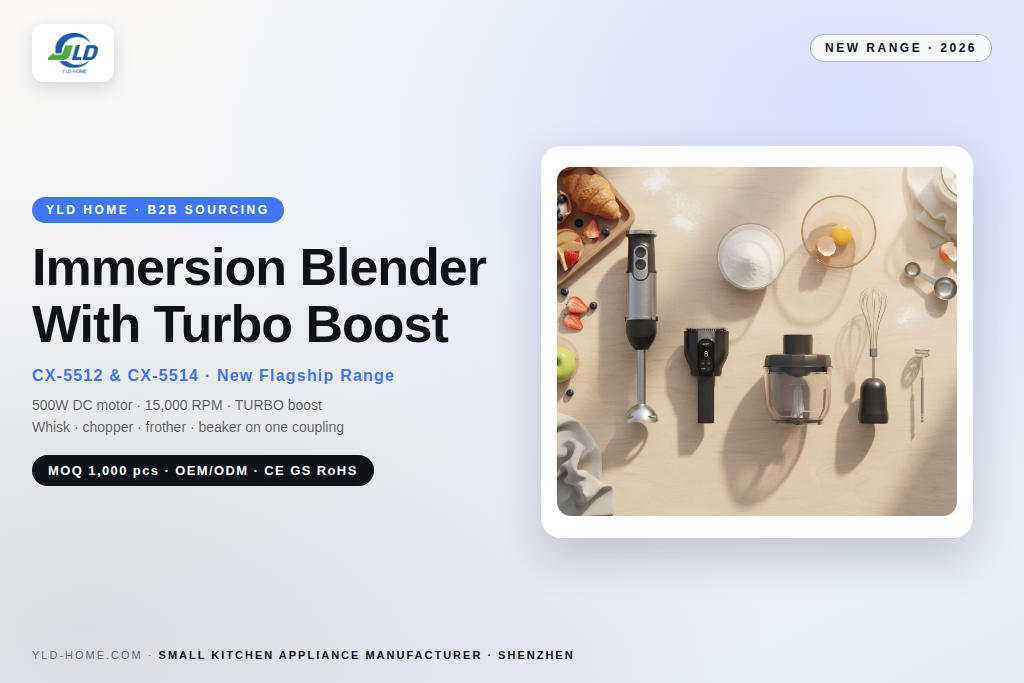
A hand blender sells online the moment a buyer believes the images. Blurry photos and a copied description kill conversion before price is even considered. Ask your supplier for a full content pack and treat it as a deliverable, not a favour.
What you need from the factory:
YLD Home prepares product imagery, specification sheets and multilingual manuals for its clients, which matters when you sell hand blenders online across several countries at once. A supplier who can only send phone photos is telling you where their marketing ends.
Packaging That Protects Your Reviews
Reviews are the asset that compounds. A single hero image gets the click; the reviews get the order. Most early returns come from packaging that lets the appliance arrive dented, scratched or missing an accessory, so packaging design is a commercial decision, not a shipping detail.
Test packaging before you scale. Drop a master carton and an individual retail box, then open it and inspect the tool. A box that survives a courier network from a warehouse to a doorstep is a box that keeps a review at five stars.
| Packaging Layer | Purpose | What To Check |
| Retail box | Sells on the page and the shelf | Print, imagery, barcodes |
| Inner protection | Stops movement in transit | Moulded insert or foam |
| Master carton | Survives sea and inland freight | Board strength, drop test |
| Outer label | Tracks the shipment | Model, quantity, destination |
When you sell hand blenders online, the retail box is often photographed by the customer and posted in a review. Make it presentable.
Ask your supplier to run a small pilot order before a full launch, so you can photograph the real unit, weigh the parcel and check how the box arrives on a doorstep. A pilot shipment of a few hundred units reveals the packaging problems a specification sheet never will.
Marketplace Compliance and Product Data
Each marketplace has its own rules, and getting them wrong suspends listings. Amazon, eBay, Takealot, Mercado Libre, Tik Tok Shop and regional platforms all require product identifiers, correct category placement, and compliance data for electrical appliances.
Before you list, confirm:
Your supplier should provide the compliance documents and the correct product dimensions so your listings stay live. Amazon’s own seller guidance, available at sell on Amazon, is a useful reference for getting product data right the first time.
Pricing, MAP and Channel Conflict
The fastest way to destroy an online appliance business is to undercut your own distributors. If you sell hand blenders online through several partners, agree a minimum advertised price and enforce it. Otherwise a race to the bottom erases the margin that funds advertising, support and spare parts.
Decide your channel structure before you launch:
When you sell hand blenders online across all four, price consistency protects the whole programme.
Logistics and Fulfilment for Online Orders
Online selling changes the cost structure. Instead of a container moving to one distributor, units move one at a time to thousands of doors. That shift puts pressure on carton size and weight, because every extra gram costs money on every parcel.
Practical steps:
A supplier who can adjust carton dimensions to your parcel strategy helps you cut fulfilment cost before a single order ships.
Reducing Returns in the Online Channel
Returns are the quiet tax on online appliance sales. A customer who cannot hold the product before buying is more likely to send it back, so the listing must set accurate expectations and the product must match them.
Ways to cut returns:
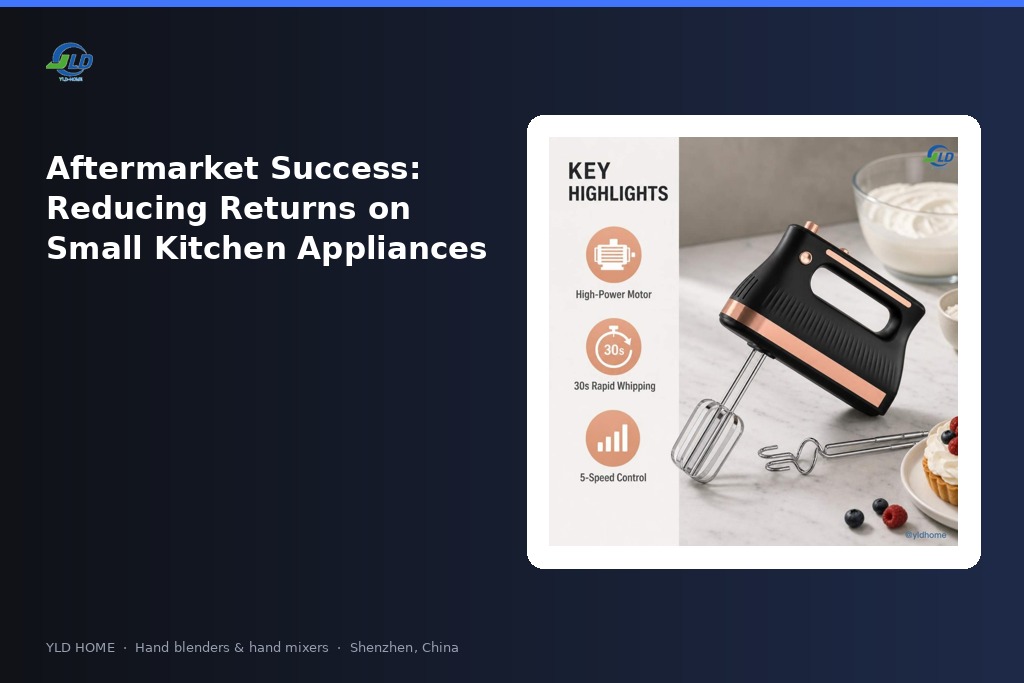
A factory that runs 100% functional testing before packing gives your online channel a head start.
After-Sales Support That Protects Ratings
Online buyers rate their whole experience, not just the appliance. Fast answers, easy replacements and clear warranty terms turn a frustrated buyer into a repeat customer. Train your support team on the spare parts your supplier can ship, and keep a small stock of motors, blades, beaters and seals so you can resolve issues without a full replacement.
YLD Home holds a 12-month warranty on finished models and keeps spare parts on site, which lets importers who sell hand blenders online resolve most problems with a part rather than a refund. That single difference protects both your rating and your margin.
Supporting Your Distribution Channel, Not Competing With It
If you are a brand owner or a master importer, your distributors are your salesforce. Support them rather than undercut them. Give them product images, specification sheets, videos and listing copy. Offer a small co-marketing budget tied to performance. Share the reviews and questions that come through your channels so they can improve their listings.
When you sell hand blenders online alongside your distributors, the channel grows faster than either party could manage alone, and the brand gets stronger listings in every market.
The Supplier Support That Makes Online Possible
Not every factory is built for e-commerce. The ones that are will provide:
Ask for these before you order, and you will know within a week whether a supplier can support an online channel. If you want to compare suppliers on this basis, our B2B buyer checklist for choosing a hand blender supplier covers the full evaluation, and our guide to OEM, ODM and private-label programmes explains how branding works.
MOQ, Samples and Lead Time for Online Launches
Online launches reward speed, so sample early and order in a quantity that matches your forecast rather than your optimism.
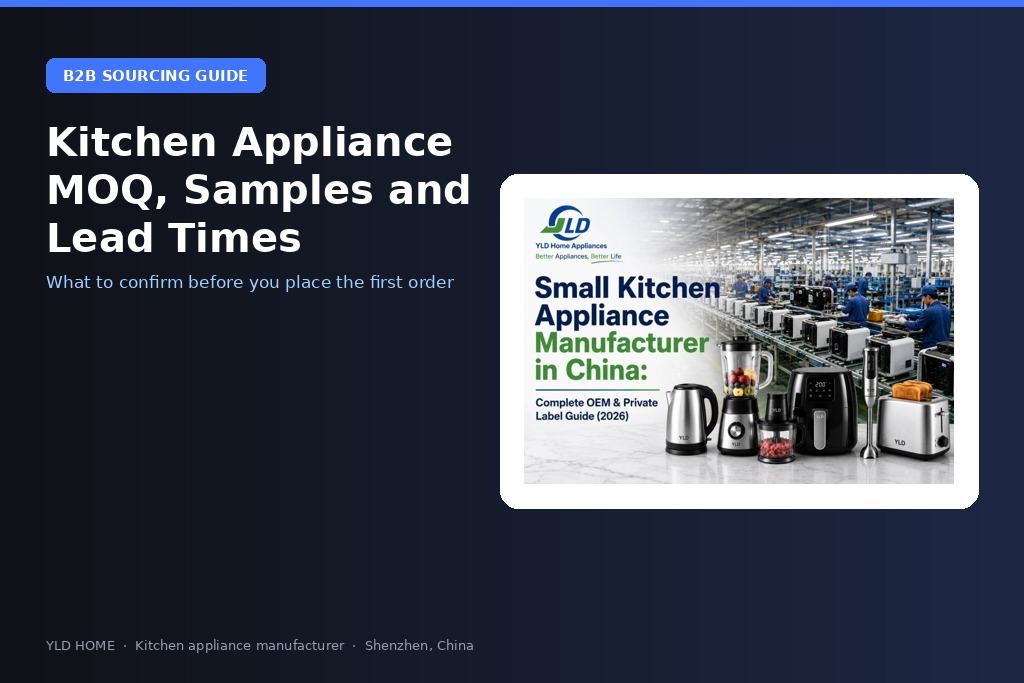
YLD Home works from 100 units per model, with a 500-unit minimum on hand blender platforms that carry heavier tooling. Samples ship in 5 to 7 days and the fee is credited against the first production order, so you can photograph a real unit before listing it. Volume production runs 25 to 35 days from deposit and approved artwork, on FOB Shenzhen terms with a 30% deposit and the balance before shipment. Our notes on MOQ, samples and lead times explain how to plan around both.
A Launch Checklist for Selling Hand Blenders Online
Work through this before you go live:
A launch that follows this list tends to weather its first hundred orders without a crisis.
Mistakes That Hurt Online Appliance Sellers
Each of these is common, and each one shows up directly in your return rate and your rating.
Localisation for Every Market You Sell Into
An online listing written for one country rarely performs in another. Price in the local currency, describe the product in the local language, and show the plug that customers will actually receive. Rating labels must match too, because a shopper who opens a box and finds a different plug starts a return.
When you sell hand blenders online across several countries, localise the listing text, the imagery and the plug configuration together. A supplier who can provide multilingual manuals and the correct build for each market makes that far easier.
Advertising, Reviews and Social Proof
Paid advertising sends traffic to a page that must convert on its own, and reviews do much of that work. A small investment in customer follow-up after purchase pays back in future sales. Ask buyers for a review a week after delivery, and answer every negative review with a solution rather than an excuse.
Social channels reward demonstration. A short video of a hand blender making a smoothie or a batter converts far better than a static image, and your supplier can supply that footage. When you sell hand blenders online through social commerce, video is the primary sales asset.
Measuring What Matters
Track four numbers every month: conversion rate, return rate, review average and repeat purchase rate. Each points to a different fix. Low conversion means imagery or price. High returns mean packaging or expectation. Falling reviews mean product or support. Low repeats mean the product failed to earn a place in the kitchen.
A simple dashboard that combines these numbers turns online selling from a guess into a managed channel, and importers who watch them fix problems before they turn into returns.
Seasonality and Content Refresh
Online demand for small appliances peaks around gift seasons and major sale events. Refresh your listing imagery and copy ahead of those windows so the page looks current, then time your production order so stock is ready before the traffic arrives. Treat the factory as a content partner: share what converts, and ask for updated imagery whenever the packaging changes, so the listing stays fresh without you rebuilding it from scratch.
Building Trust With Delivery and Returns Policy
Online shoppers hesitate when the delivery window or the returns policy is unclear. State both plainly on the listing and honour them. A clear thirty-day returns policy reassures a first-time buyer and, counter-intuitively, tends to lower the return rate, because it removes the anxiety that drives impulse returns.
Track how your policy affects conversion. A generous, clearly communicated policy often pays for itself through higher sales, provided the underlying product quality is sound.
Choosing a Sales Platform
Your platform choice shapes both your costs and your reach. A marketplace brings traffic and rules; your own store brings margin and data. Many successful importers start on a marketplace to learn what sells, then open their own store once they understand the demand. When you sell hand blenders online at scale, run both and let each channel do what it does best.
Customer Service as a Sales Channel
Online buyers judge the whole experience, and a fast, helpful answer does more for a rating than any advertisement. Staff your support around the markets you sell into, reply in the customer’s language where you can, and resolve issues before they harden into a review. Good service turns a refund into a repeat customer.
Keep a short library of answers to the questions your buyers ask most, so your team replies in minutes rather than days, which is often the difference between a saved sale and a return.
Authoritative sources
Preguntas frecuentes
Related pages from YLD Home: inspect our quality control process and inspection reports, walk the Shenzhen factory floor, or read about buyers who visited us in person.
What content do I need from my supplier to sell hand blenders online?
You need high-resolution and lifestyle images, a specification sheet, a demonstration video, correct carton dimensions and multilingual manuals. YLD Home prepares these assets for its clients, so listings can go live with professional imagery rather than phone photos.
Can I sell hand blenders online under my own brand?
Yes. YLD Home runs OEM, ODM and private-label programmes covering your logo, colour, rating label, gift box and manual, with certification re-issued in your brand name where the marketplace or market requires it.
What certifications do marketplaces want for a hand blender?
Marketplaces for electrical goods typically ask for CE, UKCA, ETL or equivalent compliance evidence. YLD Home issues CE, CB, EMC, LVD, REACH, RoHS, UKCA, ETL and FCC documentation across its range, so you can supply the paperwork each platform requests.
How do I reduce returns when I sell hand blenders online?
Set accurate expectations with clear images and lists of included attachments, run functional testing before packing, and provide straightforward after-sales support. YLD Home tests units before packing and keeps spare parts on site, so most issues resolve with a part instead of a refund.
What is the minimum order quantity for an online launch?
YLD Home starts at 100 units per model, with a 500-unit minimum on hand blender platforms that carry heavier tooling. Samples ship in 5 to 7 days and the fee is credited against your first production order.
How long will my order take to produce?
Volume production runs 25 to 35 days from deposit and approved artwork on FOB Shenzhen terms. YLD Home confirms a milestone schedule at the start and shares inspection photos so you can plan your listing date around a real shipping window.
How do I avoid a price war with my distributors?
Agree a minimum advertised price across every channel before launch and enforce it. YLD Home supports private-label programmes so each partner can carry a distinct brand and box, which reduces direct price comparison when you sell hand blenders online alongside your distributors.
Next Steps for Your Online Channel
Selling hand blenders online is a marketing, logistics and product-quality problem at the same time. Get the content pack, protect the packaging, verify the compliance data, price consistently, and keep spare parts close. Do these and the channel compounds, because reviews and repeat orders build on every satisfied customer.
YLD Home has manufactured small kitchen appliances in Shenzhen for more than a decade, with hand blenders, stick blenders and hand mixers at the core of its range. If you plan to sell hand blenders online this season, request a sample and a full content and document pack, then judge how fast and completely the supplier answers before you place the order.
Browse the hand blender range y el hand mixer range, take the factory tour, read the wholesale FAQs, o request a quotation with your target specification and volume.