










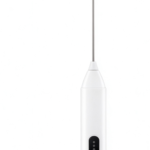
We are one of the home appliance manufacturers in Shenzhen, China, building small kitchen appliances for private-label, OEM and ODM buyers. The range is deliberately narrow: blenders, juicers, choppers, food processors, hand and stand mixers, electric kettles and milk frothers. Every quotation states the voltage build, the certification scope and the MOQ per model, so a buyer can compare options without a second round of emails.
Buyers who search for home appliance manufacturers are not short of names. They are short of a way to tell which names can hold a specification, prove a certificate and repeat the same unit six months later.
What we manufacture, and in which build
The list below is the honest boundary of our capability. Outside it we decline the enquiry or name the partner plant we would use.
| Categoría | Typical voltage | Main certifications | MOQ range per model |
|---|---|---|---|
| Immersion and hand blenders | 220–240 V / 110–120 V | CE (LVD + EMC), CB, ETL or UL, GS | 500–1,000 pcs |
| Jug blenders | 220–240 V / 110–120 V | CE, CB, ETL, SAA, PSE | 500–1,000 pcs |
| Citrus and slow juicers | 220–240 V / 110–120 V | CE, CB, ETL, GS | 300–1,000 pcs |
| Choppers and food processors | 220–240 V / 110–120 V | CE, CB, ETL, UKCA | 500–1,000 pcs |
| Batidoras de mano y de pie | 220–240 V / 110–120 V | CE, CB, ETL, GS | 500–1,500 pcs |
| Hervidores eléctricos | 220–240 V / 110–120 V / 100 V | CE, CB, ETL, SAA, PSE, KC | 1,000–2,000 pcs |
| Milk frothers | 220–240 V / 110–120 V | CE, CB, ETL, UKCA | 500–1,000 pcs |
MOQ is a calculation, not a policy: the binding constraint is usually the packaging print run or the motor order multiple, so a second colour often costs more than a second model. The voltage build also decides the certificate — a 220–240 V report does not cover a 110–120 V unit. Current specifications sit on our new products page.
Manufacturer, brand owner, trading company
Most home appliance manufacturers are one of three businesses, and the difference decides who owns your tooling, who signs the test report and who is liable when a batch fails. All three can be legitimate; the damage comes from not knowing which one you have.
| Question | Fabricante | Brand owner | Trading company |
|---|---|---|---|
| Who physically builds the unit | Own plant and lines | Usually a contracted plant | A partner plant |
| Who holds the safety certificate | Itself, for its own models | Often itself, as importer or brand | Rarely — it borrows the factory’s |
| Who owns the mould | Owns it, or holds it for the buyer | Sometimes, if it paid for tooling | Usually the factory behind it |
| What you pay for | Conversion, components, tooling, testing | Design, brand, warranty, market access | Coordination and consolidation |
| Best use | Private label and ODM at volume | Ranges you do not want to engineer | Mixed containers across many SKUs |
| Red flag | Cannot show process records | Cannot name the plant | Claims to be the plant |
Practical rule: buy from a manufacturer when tooling, certification or process control matters, and use a trader only where its coordination genuinely adds value.
How to evaluate a home appliance manufacturer
Four checks convert a claim into evidence you can file, and none needs a flight. They separate home appliance manufacturers that can repeat a build from those that cannot.
1. Legal entity and manufacturing scope
Trading, import/export and manufacturing activities can all appear in one business licence, and the scope tells you which one is real. Verify: request the licence with the unified credit code, compare the registered address against the production address on the quotation, and confirm the entity name matches the bank account on the proforma invoice.
2. Process control at the safety-critical stations
Recall risk concentrates in a few operations: the heating element, the motor winding, the earth bond and the hipot test. Verify: ask for one week of hipot and earth-bond logs and check whether they are 100% or sampled; ask for last quarter’s rework rate; ask which processes are subcontracted.
3. Certification coverage for your exact model
A certificate proves one sample passed one test at one laboratory. Verify: read page one for the standard edition, check your model number on the model list, confirm the holder’s name, and look the number up on the issuing body’s registry. Food contact is a separate document. Our coverage is listed model by model on the certifications page.
4. Repeatability and change control
The question is not whether the sample is good but whether unit 4,000 matches it. Verify: ask what changed in the product over the last twelve months and request the engineering change records; ask for the last three pre-shipment inspection reports, including the ones with defects; ask for the golden sample date and who signed it.
How a project starts
This is the sequence we run. Real dates depend on tooling status, component lead times and whether certification is a new test or an extension — which is why lead times differ so much between home appliance manufacturers.
- Enquiry and model match (3–5 working days). Send the application, target market, voltage, volume and must-have features. You get a model match, FOB price at your volume, MOQ per colour, tooling position and certificate coverage per option. Identical briefs make replies comparable.
- Sample (7–15 working days). Paid samples built to the written spec, not pulled from a showroom shelf. Free samples are usually a different build from the production version.
- Specification freeze and golden sample (about 1 week). Wattage, capacity, RPM under load, cord length, plug, noise ceiling, food-contact grade, carton drop height and artwork get written down, then a sample is sealed, dated and signed by both sides.
- First article and pilot run (10–20 working days). First units off the real tooling with the real operators, measured before the run continues. Drift is corrected here, where it is cheap.
- Mass production (25–40 working days). Longer at peak season and around Chinese New Year, when plants close for weeks and the weeks either side are chaotic. Put that buffer in the purchase order, not in hope.
- Pre-shipment inspection and documents. AQL sampling, function test, carton drop, then invoice, packing list, bill of lading and reports. Balance payment releases against documents, not promises.
If the timeline is tight, the lever is not pressure on the line — it is choosing a model whose tooling and certificate already exist. Those trade-offs are set out in our sourcing guides.
OEM and ODM: what can change, what cannot
Buyers often arrive with packaging artwork and assume everything else is negotiable. The boundary is drawn by safety testing, not by willingness.
Free to change on an existing platform: logo and silk print, colour and finish, plug type and cord length within the tested range, accessories, packaging and carton artwork, control panel graphics, a recipe booklet or measuring cup.
Changeable, but it triggers work: motor rating, blade geometry, jar material, heating element power, added electronic functions. These are normal ODM requests carrying tooling cost plus a new or extended test — a modified heating circuit is a safety question, not a cosmetic one. Allow 4–8 weeks for testing on top of development.
Cannot change while keeping the certificate: thermal cut-out and fuse ratings, creepage and clearance distances on the PCB, the flammability grade of the enclosure, the earth-bond path, and the model identity on the rating label. Buyers sometimes ask us to “just” fit a cheaper thermal fuse; the answer is no, because the certificate and the liability both sit on that part.
The standards behind those limits are public. Kitchen machines fall under IEC 60335-2-14 from the International Electrotechnical Commission, and in Europe the Low Voltage Directive 2014/35/EU governs the electrical build — consolidated text on EUR-Lex.
Frequently asked questions
Are you a home appliance manufacturer or a trading company?
A manufacturer. We build in our own plant in Shenzhen and hold the certificates for the models we list. If a request falls outside our categories we say so. You can take a remote factory tour before ordering.
What is the minimum order for a private-label run?
MOQ varies among home appliance manufacturers. Here it is usually 500 to 1,000 pieces per model where the platform exists, and 1,000 to 2,000 for kettles because of packaging and element multiples. Ask for the split by colour and plug.
How long does certification take for a new market?
A CE declaration on an existing report can be weeks; a new CB report or ETL listing usually runs 4 to 8 weeks from sample submission, longer if the first sample fails.
Can you produce under our brand and never mention it?
Yes. Private label is our normal mode: your logo, artwork, rating label and packaging, with no reference to us on the retail unit. We keep a production record and a golden sample, because that is what makes the second order match the first.
Who owns the mould if we pay for it?
You do. Tooling should be a separate invoice line with a mould agreement naming you as owner, recording cavity count and steel grade, and requiring the tool’s return if the relationship ends.
What do you need to quote accurately?
Destination market, voltage and plug, volume per model, packaging language, and whether certification must be new or can be extended. With those five, the solicitud de presupuesto comes back with price, MOQ, tooling and lead time in one reply.
Next step
Judging home appliance manufacturers comes down to evidence you can file: a licence whose scope matches the plant, safety logs that are logged rather than sampled, a certificate with your model on the list, and a golden sample both sides signed. The showroom is marketing.
Most home appliance manufacturers answer a brief with a catalogue. Send yours through the quote form with market, voltage, volume and packaging language, and we will return a model match with MOQ, tooling position and certificate coverage per option. If you would rather see the line first, book the factory tour and bring your checklist.
