





In this guide:
- What counts as an industrial blender for smoothies
- How many smoothies per hour your line actually needs
- 120V power, UL, ETL, and FDA: the US compliance stack
- Why stick blenders earn a spot on production lines
- Budget reality: a $20,000 line vs. a $2,000 line
- Sourcing an industrial blender for smoothies wholesale USA
- OEM and private label programs with YLD Home
- MOQ, lead times, and shipping to US ports
When a juice bar chain in Houston called us in March, they were pushing 300 smoothies a day through three consumer machines. By June they wanted 900. That is the exact moment a buyer stops shopping for a blender and starts shopping for a heavy-duty blender for smoothies. This guide covers what changed for them, what we’ve learned building production-grade machines in Shenzhen for US importers, and how you can spec, source, and certify an industrial blender for smoothies for your own line in 2026.
What Counts as an Industrial Blender for Smoothies, Anyway?
“Industrial” gets thrown around a lot. A 1,000-watt countertop blender with a metal base is not automatically an industrial blender for smoothies. What separates a production machine from a consumer one is duty cycle, not just power.
We define it by three numbers. First, continuous run time: a commercial machine should hold a 20-minute cycle of frozen fruit blends without thermal shutdown. Second, blade and jar construction: 18/10 stainless or Tritan jars that survive 10,000+ cycles, and blades that stay sharp past 500 hours of frozen mango. Third, serviceability: if a motor burns out in Nashville, the importer should be able to swap the power unit in minutes, not ship the whole unit back to China.
If you want the full history of how blenders evolved from the 1920s, it’s a good read, but the practical takeaway is this: the category split decades ago into household machines and commercial equipment, and the two barely share parts. When we built our first commercial stick blender for a US distributor, we ran 40 batches of frozen fruit through it in one week. We burned out two consumer motors doing the same test. That is why every production machine we ship is rated for continuous duty, not intermittent use.
For a US buyer, the question is not “is it powerful?” It’s “can it run all shift without a break?” A commercial blender for smoothies that dies at 2 p.m. on a Saturday costs you a full day of sales. Buy for the duty cycle first, watts second.
How Many Smoothies Per Hour Do You Actually Need?
Here’s the math we run with every importer who asks about an industrial blender for smoothies. Start with your peak hour, not your average. A smoothie shop in Miami might average 200 drinks a day but hit 90 in one lunch hour.
A well-set commercial station handles a 1.5-liter batch in about 45 seconds, including load and pour. That’s 1.2 batches a minute, or roughly 15 smoothies at 16 oz each per minute if the machine never stops. Real world, you lose about 30% to prep, cleaning, and staffing rhythm. Plan on 10 smoothies per minute per blending station.
Three stations at 10 per minute gives you 1,800 smoothies an hour of theoretical capacity. You will never need that. But you will need burst capacity, and that’s exactly what the industrial rating buys. When we tested our 1000W stick blender against a 600W consumer unit on the same frozen berry recipe, the 1000W machine finished in 38 seconds. The consumer unit took 71 seconds and smelled hot by the fourth batch.
The rule of thumb we give distributors: one production station per 300 peak-hour smoothies. A coffee chain in Chicago that sells 600 smoothies in a morning rush needs two stations minimum, plus a backup. If your line blends into 5-gallon batches for catering, ask for the bigger jar option and a motor rated for 10-minute continuous runs. Get the duty-cycle spec in writing. Most consumer machines will not publish one, and that tells you everything you need to know.
120V Power: What a US Facility Needs to Know
US outlets run 120V/60Hz, and that changes blender engineering more than most buyers expect. A 1000W motor on 120V draws about 8.3 amps at full load, plus startup surge. On a standard 15-amp kitchen circuit, that leaves little room for a fridge, a freezer, or a POS system on the same line. We tell every US customer the same thing: give the blender its own circuit if you can.
A few specifics we build into every 120V machine we ship:
- NEMA 5-15P plug, standard three-prong, 6-ft cord minimum
- Locked-rotor protection, so a jar packed with frozen fruit doesn’t trip the breaker
- Soft-start electronics, which cut the startup surge roughly in half
- A resettable thermal cutout, not a fuse that needs a technician
If you’re buying a production blender for smoothies from a supplier who only offers 220V, stop there. Some importers buy 220V units and run them through transformers. It works, but it adds cost, a failure point, and a certification problem: most US testing labs will not list a unit that ships with a non-standard plug or voltage. A proper US-market machine is 120V from the factory, with UL or ETL paperwork that matches the exact model you import.
High-volume commissaries in the US do run 240V circuits, but they are the exception. If your kitchen has 240V, say so up front, and we can build a 240V version of most models. Default your plan to 120V, because that is what your retail and foodservice customers will have on the wall.
UL, ETL, FDA: The Compliance Stack for Commercial Buyers
Certification is where cheap sourcing falls apart. We have watched importers lose an entire container at US customs because the lab report did not match the model number on the cartons. Here is the stack US buyers actually ask for:
| Certificación | What it covers | Who asks for it |
|---|---|---|
| UL 982 / ETL | Electrical safety, motor, fire risk | Retail chains, big-box buyers, insurers |
| FDA food-contact | Jar, blades, gaskets safe for food | Anyone selling food-contact parts |
| California Prop 65 | Lead, phthalates in materials | Any retailer shipping into California |
| FCC Part 15 | Electromagnetic interference | Electronics-heavy assortments |
| NSF 8 | Commercial food equipment, sanitation | Foodservice distributors |
Most US retail buyers will accept a UL or ETL listed machine and an FDA-compliant jar. Foodservice distributors add NSF on top. If a supplier quotes you a “UL equivalent” report from a lab you’ve never heard of, walk away. Ask for the test report number and verify it with the certifying body before you pay a deposit.
The jar is a separate story. FDA food-contact compliance is about the material, not the motor. We use BPA-free Tritan and food-grade stainless steel for all jars and blades on our US-bound machines, and we keep the material certificates on file for every production run. When a distributor in Los Angeles asks for documentation, we send the full package in one email: UL report, FDA material certs, Prop 65 statement, and the factory audit summary.
One more trap: certification follows the factory and the model. If your supplier moves production to a different plant and keeps the same model number, the cert is dead. Ask which factory the cert is tied to, and confirm it in writing before you commit to an industrial-grade blender for smoothies program.
Stick Blenders on the Line: The Quiet Workhorse
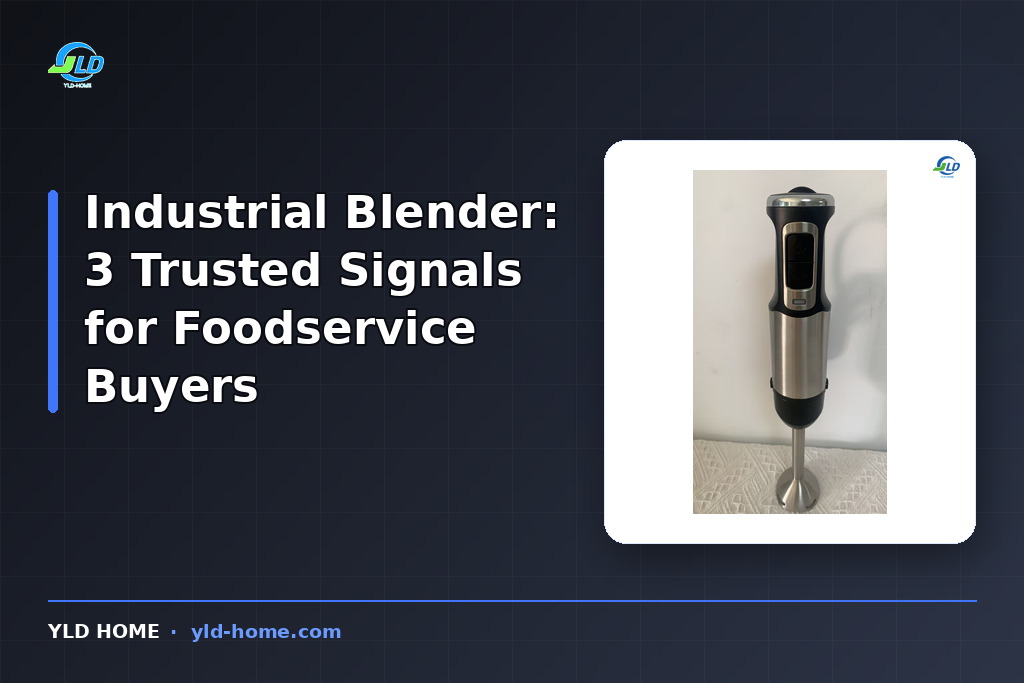
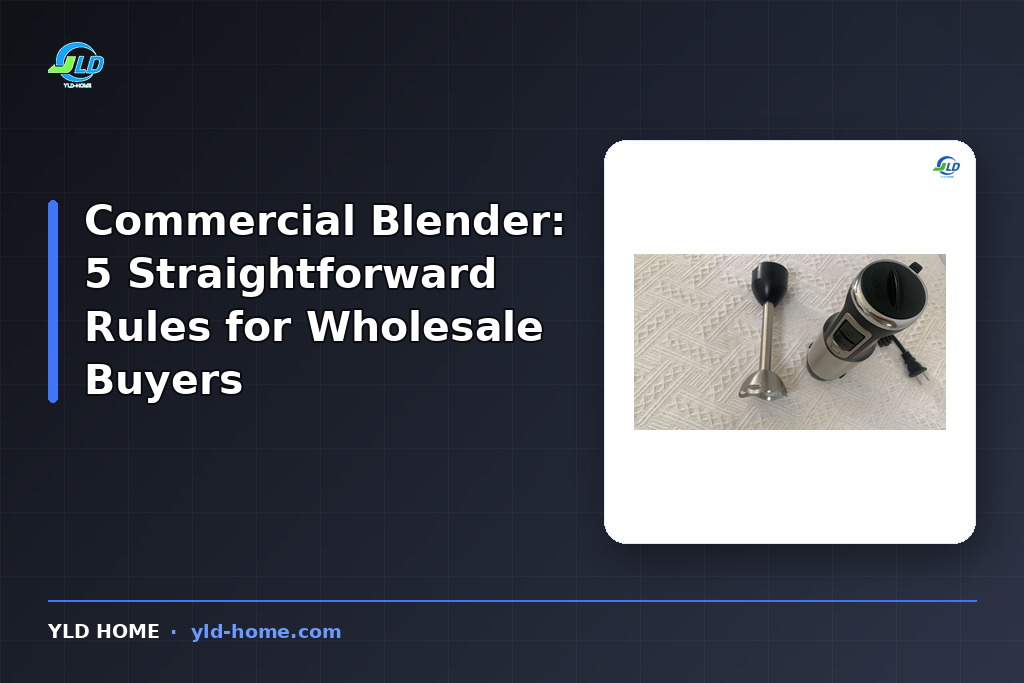
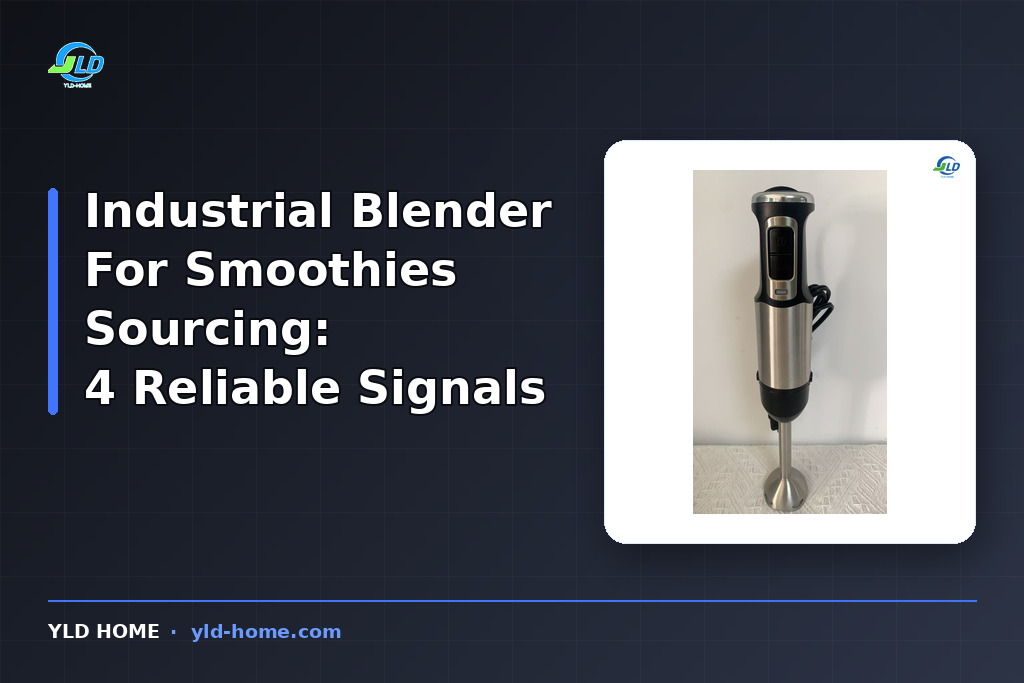
Most people picture a big countertop jar when they hear “industrial blender for smoothies.” But on real US production lines, stick blenders do a shocking amount of the work. A 600W stick unit with a 600ml beaker handles single-serve smoothies, protein shakes, and dressings. A 1000W stick unit blends directly in 5-gallon pots, which means no pouring hot soup from pot to jar, no burns, no wasted product.
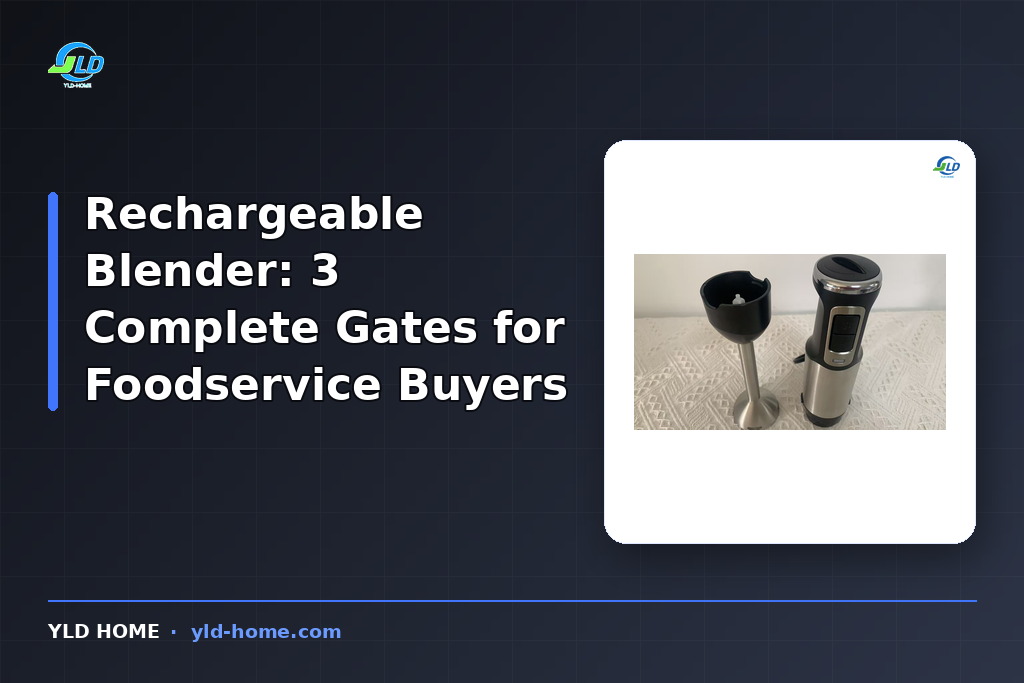
Nuestra 6006L powerful stick blender is the unit we recommend for hot soup and frozen puree work. The 6007 potente batidora de varillas adds a bit more torque for thicker mixes like nut butters and thick smoothie bases. For prep stations, the HB006-3 detachable food processor chops fruit, grinds oats, and shreds greens between blending runs, so one station does the work of three machines.
The point is flexibility. A line built entirely around one big jar blender is brittle: when the jar breaks, the line stops. Lines built around a mix of machines keep running. A juice bar in Phoenix runs two stick blenders and one countertop unit, and they told us the stick units never sit idle. The 4-in-1 hand blender covers whisking, chopping, and pureeing in one SKU, which matters when you are spec’ing a compact kitchen.
If you are planning a line, look at our full hand blender range and match units to tasks rather than buying one “all-purpose” machine. Production lines are about redundancy, and redundancy wins on Saturday mornings.
Budget Reality: A $20,000 Line vs. a $2,000 Line
We get asked for budget guidance constantly, so here is a real comparison. The numbers below are what US buyers have paid in the last 12 months, quoted in USD at wholesale:
| Line setup | Equipment | Approx. cost | Smoothies/hour | Notes |
|---|---|---|---|---|
| Entry | 2 × 600W stick blenders + beakers | $400–$600 | 120–150 | Great for cafés, needs backup blades |
| Mid | 1 × 1000W stick blender + 1 countertop jar blender | $1,200–$2,000 | 300–400 | The sweet spot for most juice bars |
| Alta | 2 × countertop industrial units + prep processor | $6,000–$20,000 | 600+ | For commissaries and multi-unit chains |
Notice what is missing: nobody needs a $20,000 planetary mixer to make smoothies. A distributor in Houston told us he watched a franchisee buy an expensive “commercial” setup, then replace half of it with stick blenders within a year because the big machine was overkill for single-serve volume. Spend where the duty cycle is: motors, blades, and jars. Skip the marketing features.
Your real cost is downtime, not hardware. Buy one spare motor and two spare jars for every three machines on the line. Spares are cheap, and they turn a two-week repair into a ten-minute swap. We keep spares in stock for every model we ship to the US, so your distributor can order parts without a minimum.
Sourcing an Industrial Blender for Smoothies Wholesale USA
Buyers who search “heavy-duty blender for smoothies wholesale usa” usually fall into two groups: importers who already know the drill, and first-timers who are about to learn it the expensive way. The questions you ask a factory separate the two.
Start with certifications. Ask for the UL or ETL report for the exact model, the FDA material certificates, and the Prop 65 statement. Then ask for the duty cycle and the motor warranty. Then ask about spare parts availability in the US. If the supplier hesitates on any of these, they are a trading company, not a factory, and your pricing will reflect that twice.
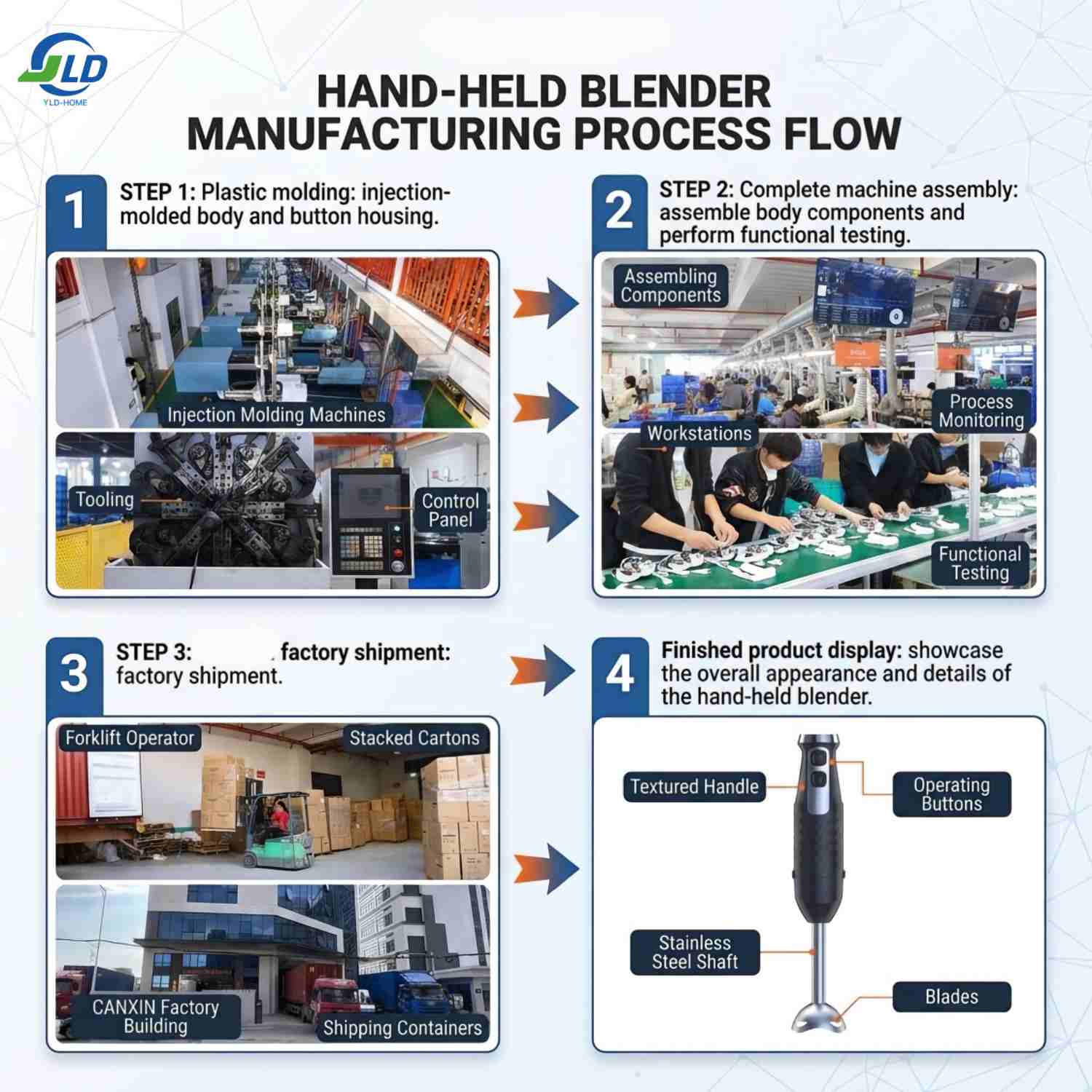
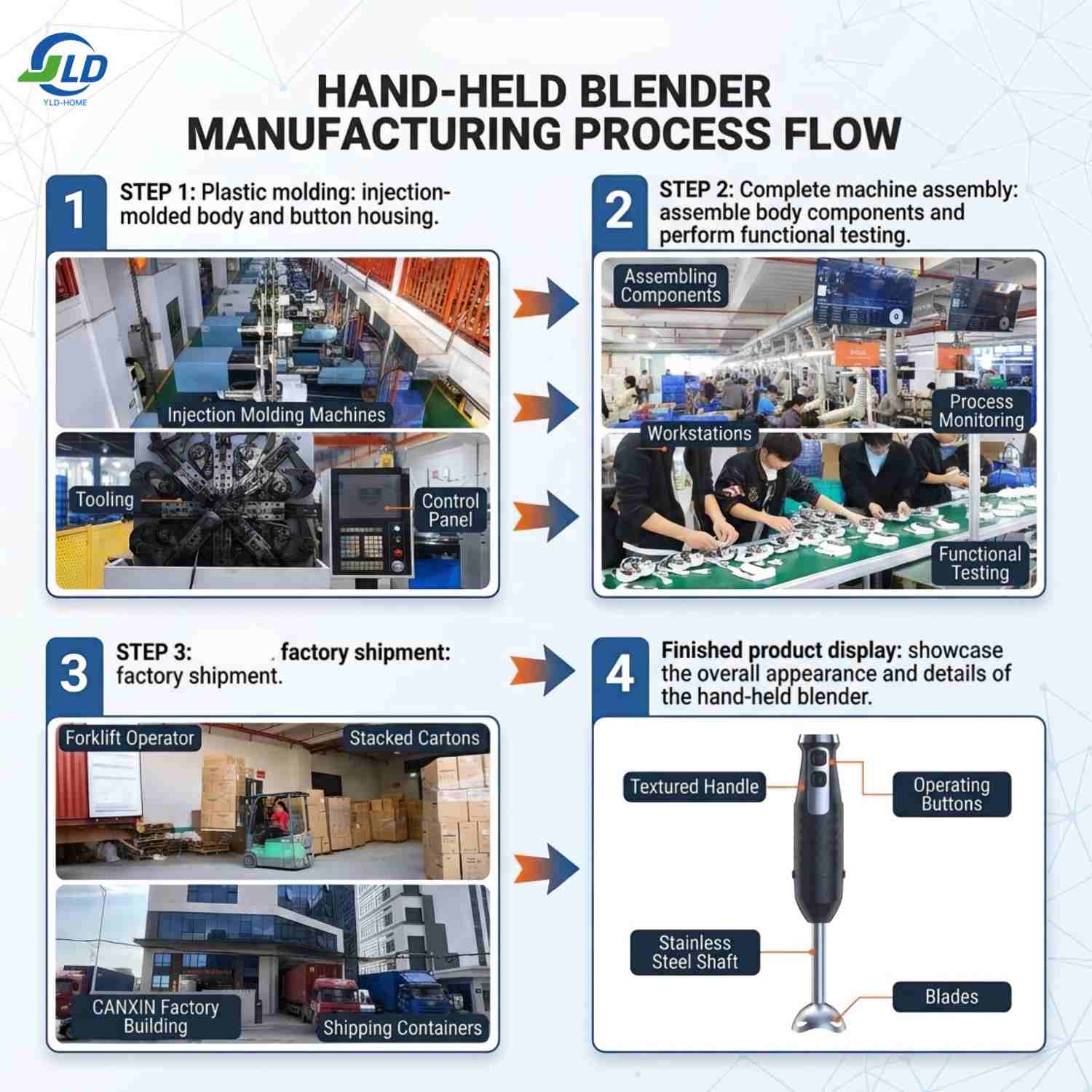
YLD Home is a factory, and we answer these questions daily as an industrial blender supplier usa buyers can verify. Our Shenzhen plant has run for over a decade, and our US export team handles the paperwork that importers hate: packing lists, CO certificates, customs declarations, and certification dossiers. When a first-time importer in Chicago ordered from us, their container cleared customs in four days because the paperwork matched the shipment exactly.
Also ask about sample policy. A serious factory will sell you a sample at cost and ship it DHL within a week. Test it the way you will use it: run it 20 minutes straight, blend frozen fruit, drop the jar once. If it survives, you have a supplier. If not, you saved yourself a container of problems.
Working with YLD Home on OEM and Private Label Programs
YLD Home has built small kitchen appliances in Shenzhen for over a decade, and the US market is our biggest export destination. We ship 120V machines as standard, we keep UL/ETL and FDA documentation current, and we speak the language of US importers: FOB, lead times, container loads, and chargebacks.
Private label is where we do our best work. You bring a brand, and we handle the rest: your logo on the unit and the carton, your colorway, your packaging artwork, your manual in English, and your warranty terms. One distributor in New York runs three private label programs with us across different retail tiers, and the only difference between them is the paint and the box.
OEM is the same story with more flexibility on specs. If your menu needs a specific wattage, jar size, or blade geometry, we build to your drawing or adapt from our catalog. We have done 600W, 750W, and 1000W versions of the same stick blender for different US customers. Tooling changes add lead time, so we are honest about the schedule before you sign.
Certification under your brand costs more and takes longer, usually a few extra weeks and a few thousand dollars for the lab fees, but some retailers require it. We coordinate the whole process with your chosen lab. Tell us your target retail price and we will tell you what is realistic at that price point.
MOQ, Lead Times, and Shipping to US Ports
Let’s talk numbers, because this is where deals die. Our standard MOQ for US orders is 1,000 units per model, and mixed models in one container are fine as long as the total clears the minimum. Production lead time is 3 to 4 weeks from deposit, plus 25 to 35 days ocean freight to the West Coast, and about 40 days to New York or Miami via the Panama route.
Here’s the full timeline for a typical order:
- Week 0: deposit and order confirmation
- Week 0–1: sample approval and artwork sign-off
- Weeks 1–4: production and QC inspection
- Week 4: shipment from Shenzhen
- Weeks 5–9: ocean transit and customs clearance
- Delivery: at your warehouse, ready to sell
Shipping terms are usually FOB Shenzhen, and we quote EXW or CIF on request. The tariff code for blenders is 8509.40, and current duty plus any applicable section 301 tariff should be factored into your landed cost. Your freight forwarder handles the import side, and we hand them everything they need: commercial invoice, packing list, and certificates of origin.
Air freight works for urgent orders and samples. A small order of 100 units flies from Shenzhen to Los Angeles in about a week, at roughly five times the sea rate. Most of our US customers plan around ocean freight and use air only for reorders that slipped. If you need to hit a retail season, book your production slot early, because our line fills up before Chinese New Year.
Frequently Asked Questions (FAQ)
Q1: What is the best industrial blender for smoothies for a small US café?
For a café doing under 300 smoothies a day, YLD Home’s 1000W stick blender with a 1.2-liter beaker plus one backup is the best commercial blender for smoothies setup on the market. It covers single-serve volume, cleans in seconds, and costs a fraction of a big countertop unit. Add a countertop jar blender only if you also do frozen drinks in volume.
Q2: Can the same machine handle hot soups and frozen smoothies?
Yes, if you choose the right model. Our 1000W stick blenders handle both, and the stainless shaft takes hot soup without warping. What you cannot do is blend frozen fruit in a jar rated for hot liquids only, so match the jar to the job.
Q3: What certifications do US retailers require?
Most require UL or ETL listing plus FDA food-contact compliance for the jar and blades. California retailers add Prop 65. Foodservice buyers may ask for NSF. Ask for the reports before you order, and verify the model number matches.
Q4: Do you build 120V models for the US market?
Yes. Every machine we ship to the US is 120V/60Hz with a NEMA 5-15P plug as standard. 240V versions are available for commercial kitchens that run on high-voltage circuits.
Q5: What are your MOQ and lead times for a private label program?
Standard MOQ is 1,000 units per model, and production runs about 3 to 4 weeks after sample approval. Private label adds 1 to 2 weeks for artwork and packaging. Budget 6 to 9 weeks total from deposit to shipment for your first order.
Q6: How does warranty and parts support work for US importers?
We offer a 12-month motor warranty on all US-bound models, and we ship spare parts with your container if you order them. Your distributor stocks the spares, and we replace faulty units or parts at our cost. Most claims are resolved with a replacement motor, not a return.
Q7: Can we order an industrial blender for smoothies wholesale USA with our own branding?
That’s exactly what our private label program does. Your logo, your colors, your packaging, your manual, and your warranty. We do the factory work and you control the brand.
Q8: Which US ports do you ship to?
We ship to any US port. Los Angeles and Long Beach are the fastest at about 25 to 30 days, New York and Savannah run 35 to 45 days, and Houston is similar via the Panama route. Your forwarder picks the port; we deliver to the vessel.
Get Wholesale Quote — send us your target volumes and we’ll reply within 48 hours with pricing, certification dossiers, and a production calendar. YLD Home has shipped more than 2 million small kitchen appliances to the US market, and we’d like to put your brand on the next container.