









In this guide:
- Why US Buyers Keep Ordering Small Blenders in Bulk
- What a Small Blender for Sale Should Include at Wholesale Level
- 120V, UL/ETL, and FDA: Compliance Without the Fluff
- OEM, ODM, and Private Label: Making a Small Blender for Sale Your Own
- MOQ, Lead Times, and Shipping: Numbers That Hold Up
- A Miami Distributor’s First Import Story
- Quality Control: What We Test Before It Leaves the Factory
- How to Pick a Factory for Your Compact Blender Line
We get the same question from American buyers almost every week: where do I find a starter machine for sale that I can actually resell at a healthy margin? Not a retail listing. Not a dropship catalog. A real wholesale line, with UL paperwork, stable pricing, and a factory that answers email. This guide covers exactly that.
We’re YLD Home, a Shenzhen manufacturer of hand blenders, stick blenders, and immersion blenders. Since 2014 we’ve shipped to US importers, distributors, retailers, foodservice operators, and private-label brands. Along the way we’ve learned what separates a profitable small unit for sale from a margin-killer. You’ll see which specs matter, what compliance really costs, how MOQ and lead times work when you order from China, and where the money hides. If you’re planning a bulk buy, this checklist runs through the whole article.
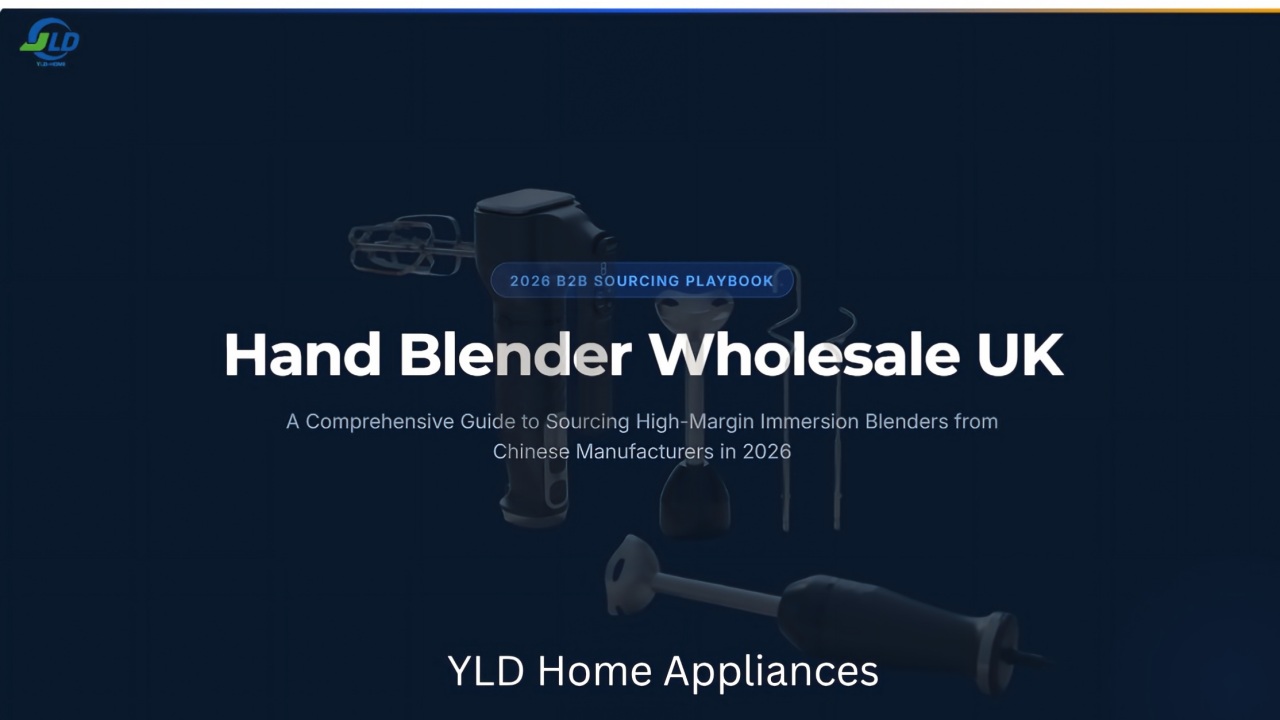
Why US Buyers Keep Ordering Small Blenders in Bulk
Small blenders are the quiet workhorses of the US small appliance market. Full-size countertop blenders get the shelf space and the marketing budget, but the units that actually turn over are the small ones: personal blenders for protein shakes, mini blenders for dips and dressings, hand blenders for soups and baby food. Walk any retail kitchen aisle and you’ll see what we mean.
Demand comes from everywhere at once. Smoothie shops in Los Angeles run personal blenders behind the counter. Hotels in Chicago keep immersion blenders in every prep kitchen. Meal-prep companies in Houston puree sauces by the gallon. Nursing homes use them for texture-modified diets. That spread is exactly why importers like the category — no single customer, no single season, no single trend.
A distributor in Houston told us his café customers order around 200 units a month, every month. Not because cafés are booming, but because small blenders break, get lost, and get upgraded. Replacement demand alone keeps the pipeline moving. When we asked him why he doesn’t just stock the big-name brands, he laughed. His margin on a private-label personal blender for sale is three times what the national brands allow.
One detail from that same distributor: his café customers use the hand blenders to whip egg whites to stiff peaks for meringue, a technique older than any appliance — the Wikipedia entry on meringue explains the science better than we ever could. Same countertop blender, three very different jobs. That versatility is the whole story of the category.
The retail side works the same way. Small blenders are impulse buys. They sit at checkout counters, on end caps, next to the coffee makers. Price points between $19 and $49 move without heavy discounting. Compare that with a full-size blender at $120-plus, where shoppers compare five models online before they commit. For a retailer, the starter machine for sale category is simply easier to sell.
One more thing we’ve noticed: the category keeps absorbing new use cases. Cold brew, frothing, protein pancakes, salad dressings, baby food. Every new food trend adds a reason to buy another small unit. When a trend fades, another one replaces it. We’ve been watching this since 2014 and the direction has never reversed.
What a Small Blender for Sale Should Include at Wholesale Level
Before you talk price, talk specs. American buyers assume every compact blender for sale on the market is basically the same appliance with different logos. It isn’t. The difference between a unit that survives a year of café use and one that dies in a month shows up in about six places.
Motor power is the first thing we check. For a hand blender, 300 to 500 watts is the practical range for US retail. Under that, ice crushing and thick smoothies stall. Over that, cost and noise climb faster than performance. Jar capacity follows: 500 to 800 ml covers most US households without making the unit bulky. Stainless steel blades beat plated blades every time, and the difference is visible under a microscope after fifty ice-crushing cycles.
Then there’s the stuff nobody sees. Cord length matters more than it should — 1.2 meters minimum, or customers complain. Speed settings: two is fine, five is a selling point, but one is a problem. Noise under 80 dB keeps return rates low. And the jar has to be dishwasher-safe, because that’s how most Americans clean it.
Here’s the spec sheet we send to US buyers considering a personal blender for sale from our factory:
| Spec | What we put in our 300W hand blender | Why it matters to US buyers |
|---|---|---|
| Motor | 300W, DC | Handles ice and thick smoothies |
| Tension | 120V / 60Hz | US standard, UL/ETL tested |
| Jar | 600 ml, Tritan | Dishwasher safe, BPA free |
| Blades | 4-blade stainless steel | Longer life, cleaner cuts |
| Speeds | 5-speed dial + turbo | Retail-friendly feature list |
| Cord | 1.2 m | Reaches the outlet without an extension |
| Noise | ≤ 78 dB | Fewer returns, happier kitchens |
| Certifications | UL / ETL, FCC, FDA food contact | Required by US retailers |
We send this table to every new wholesale inquiry. It saves two weeks of back-and-forth email. When a buyer tells us exactly what they need, we adjust the sheet and price it the same day. That’s how wholesale should work.
120V, UL/ETL, and FDA: Compliance Without the Fluff
Let’s be direct about compliance, because this is where importers lose the most money. A countertop blender for sale without the right certifications is a liability, not an asset. US retailers will not touch it, and the ones who try often find out the hard way.
UL and ETL are both Nationally Recognized Testing Laboratories. A UL listing and an ETL listing carry the same legal weight in the US market, and most retailers accept either. The difference is speed and cost. ETL is typically faster and cheaper, which is why many Chinese factories hold ETL first and add UL when a buyer’s retail account demands it. FCC covers the electronics — most small blenders need FCC testing on either Part 15 or Part 18. FDA food contact covers the jar, the blades, and anything else that touches food. Tritan and stainless steel both pass without much drama; cheap plastics are where the problems live.
What documents should you ask for? The UL or ETL file number, the FCC grant, and an FDA-compliant material declaration for every food-contact part. We keep all of ours in one folder and send it with the sample. You should expect the same from any factory you talk to. If a supplier can’t produce a certificate number in one email, walk away.
Testing takes time and costs money. Plan for 4 to 8 weeks and a budget in the low thousands per model if you’re certifying from scratch. Here’s the part most buyers miss: if your factory already holds the certificate for the base model, adding your brand name is a fraction of that cost. That’s why we keep our page on about our appliance certification current — buyers should be able to see what we hold before they even email us.
One more reality check. Customs cares about electrical safety and FCC. FDA cares about food contact. Your retail buyer cares about all of it plus liability insurance. Get the paperwork right once and it follows the product for years.
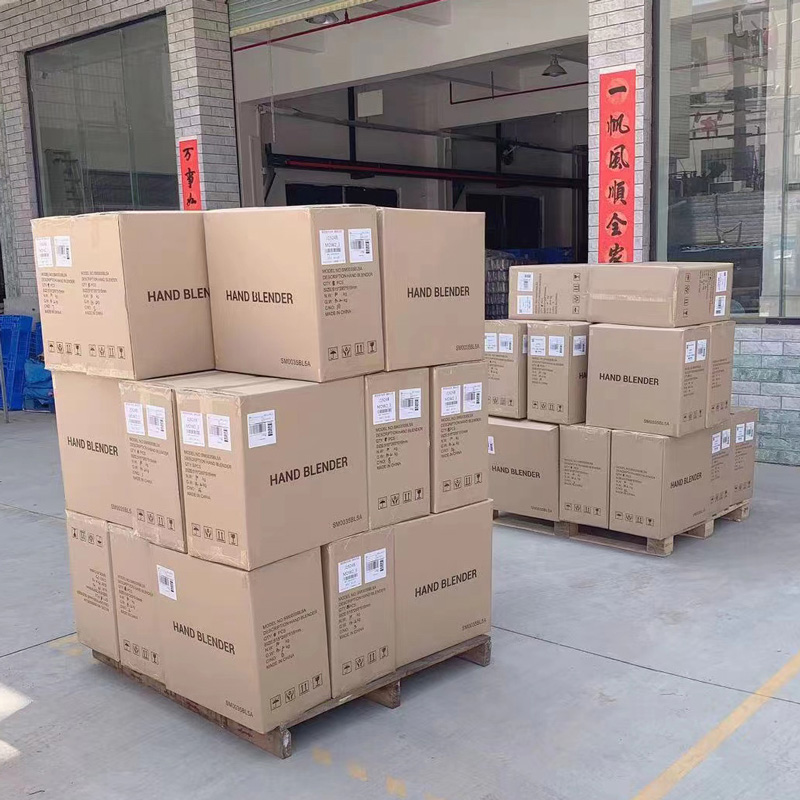
OEM, ODM, and Private Label: Making a Small Blender for Sale Your Own
Now the fun part. A small unit for sale doesn’t have to carry our logo. Most of what YLD Home ships to the US leaves with someone else’s brand on it, and that’s by design.
OEM is the simplest arrangement: you take our existing design and put your logo on it. You get a proven product, existing certifications, and a price that reflects the volume. This is where most first-time importers start, and it’s the right call while you’re testing demand.
ODM goes a step further. You change the color, the wattage, the blade design, the jar shape, the packaging. Maybe you want a 400W motor for a premium line, or a narrower jar for single-serve smoothies. We’ve done all of it. Tooling changes cost money — a new blade mold runs several thousand dollars, a new jar mold runs about the same] — but those costs are one-time, and the margin improvement is permanent.
Private label sits on top of either one. Your brand on the box, your manual, your UPC codes, your warranty card. We print and assemble everything in Shenzhen, so the product arrives in the US retail-ready. No repackaging in a US warehouse, no extra labor cost.
What we tell every buyer is simple: start with OEM on a proven base, like our mixeur à main avec hachoir or our mixeur à main, then move to ODM once you know what sells. It’s cheaper, faster, and you learn the market before you invest in tooling. Half of our current ODM customers started exactly that way.
MOQ, Lead Times, and Shipping: Numbers That Hold Up
Price is the number every buyer asks for first. MOQ and lead time are the numbers that actually decide whether the deal happens. Let’s give you real ranges, then explain the trade-offs.
Our standard MOQ for a compact blender for sale order is 1,000 units per model, and we can mix colors within that. Sample orders go out in 7 to 10 days, usually by DHL or FedEx, with the certificate folder attached. Production takes 25 to 40 days depending on volume and packaging complexity. Sea freight from Shenzhen to Los Angeles or Long Beach runs 28 to 35 days door to port. Air freight gets there in 3 to 5 days, and we’ve done it for buyers who missed a retail launch window.
Shipping terms change the math. FOB Shenzhen is the baseline — you own the risk once the container is on board. CIF adds insurance and freight to your port. DDP delivers to your warehouse with duties paid, which sounds great until you see the paperwork involved. Most of our US customers start with FOB and move to DDP once they’re ordering quarterly.
| Shipping option | Time | Meilleur pour |
|---|---|---|
| Sample (DHL/FedEx) | 7-10 days | Prototypes, retail listing photos |
| Air freight | 3-5 days | Launch deadlines, restocks |
| Sea freight FOB | 28-35 days | Standard bulk orders |
| Sea freight DDP | 35-45 days | First-time importers |
Duties on small kitchen appliances into the US vary by HTS classification, and it’s worth checking the HTS code with your customs broker before you commit. Here’s a tip we give every first-timer: order a small container’s worth first, even if the per-unit price is a little higher. The lessons you learn about your own market are worth more than the discount you’d get on a full container.
A Miami Distributor’s First Import Story
Let’s walk through an actual order, because this is the pattern that works. A distributor in Miami reached out in 2022. He’d been selling small kitchen appliances to Caribbean and Latin American resellers for years, and he wanted a personal blender for sale line he could brand himself. His previous supplier kept missing delivery dates, and he’d had enough.
We started with samples. Three models, two weeks, certificates included. He tested them in his own kitchen and then sent them to three customers in the Dominican Republic. The feedback came back in ten days: the 300W hand blender was the winner, and his customers wanted it with a Spanish manual and spare blades in the carton.
His first order was one 20-foot container — 1,200 units, three colors, his brand on the box. We mixed the MOQ across models, which we allow for first orders, and shipped FOB Shenzhen. The container left in April and cleared Miami’s port in early June. He sold through in about five months.
Here’s what he told us on the phone after the second order: “The margins are right, the paperwork is right, and my customers stopped asking questions about quality.” That last part is the real win. When a distributor’s customers stop asking questions, the distributor stops losing sleep.
Today he orders quarterly, several thousand units per year, and he’s expanded into our stick blender line. He’s also the one who pushed YLD Home to keep ETL certification current, because his retail accounts in Florida started asking for it. That’s the kind of buyer we like: one who treats certification as a sales tool, not a cost.
Quality Control: What We Test Before It Leaves the Factory
When we tested our first US export order back in 2014, we learned the hard way what American buyers expect. One batch came back with a blade wobble that only showed up under load. Nobody got hurt, but we ate the cost and we changed the process. Since then, QC is the most expensive line in our factory, and it’s the one we never cut.
Every unit gets an electrical safety test before it’s packed — a hi-pot test that catches insulation failures and shorts. Then a 30-minute load burn-in with water and ice, which is how we catch motors that run hot. Blades get locked against the jar to test the safety clutch. Cords get yanked 500 times to test strain relief. A sample from every production lot goes through a 1-meter drop test and a 48-hour continuous run.
We also do the tests buyers don’t expect. Random units from every lot are opened and inspected for internal wiring, solder joints, and fastener torque. We photograph the teardown and send the report with the shipping documents. When a buyer in Chicago asked us to prove our QC, we sent him photos of his own serial numbers on the test bench. He framed the email.
Third-party inspection is standard practice. SGS, BV, TÜV — whatever your buyer wants, we book it. A pre-shipment inspection from an independent lab costs a few hundred dollars and it is the cheapest insurance in the business. Our defect rate on US orders has been under 0.5 percent for three years running, and we publish that number because it’s true.
How to Pick a Factory for Your Compact Blender Line
The factory matters more than the product, because the product is only as good as the process that makes it. Here’s the checklist we give buyers who are comparing suppliers for their small blender for sale line.
First, certifications. Ask for the UL or ETL file number and verify it on the certifying body’s website. Anyone can print a logo. Second, factory size and capacity. Ask how many lines they run and what their monthly output is. A factory that’s too small can’t absorb your growth; a factory that’s too big may not care about your order.
Third, QC process. Ask for their defect rate and their inspection records. A real factory has numbers. Fourth, communication. Reply speed is a preview of the whole relationship. If it takes a week to answer a quote request, imagine how long a quality dispute will take. Fifth, payment terms. Standard is 30 percent deposit and 70 percent before shipment, or an L/C for larger orders. Be suspicious of anyone who demands full payment up front.
Sixth, sample policy. A good factory sends samples fast and charges a fair price for them. We refund sample costs against the first order, which is common practice — insist on it. And finally, read the market-specific guides. Our China hand blender manufacturer guide walks through the whole audit process with the exact questions to ask, and it’s free.
Here’s our honest pitch: we want buyers who stay for years, not one-time orders. That’s why we answer the boring questions, send the test reports, and keep the YLD Home blog full of the specifics nobody else publishes. When you’re ready to talk numbers, request a wholesale quote and we’ll send the spec sheet, the certificates, and the price list — in one email, within a day.
Frequently Asked Questions (FAQ)
Q1: What’s the best compact blender for a US distributor starting out?
For most first orders, we recommend our 300W hand blender base. It has the certifications US retail wants, a price point that leaves room for freight and duty, and it’s proven across thousands of units. Start with one model, two or three colors, and learn your market before you expand the catalog.
Q2: What’s the MOQ for a wholesale order?
Our standard MOQ is 1,000 units per model, and we allow mixed colors within that number. For first orders we can mix models in one container, which is how most of our new US customers start.
Q3: Is ETL certification accepted the same as UL?
Yes, in the eyes of US regulators and most retailers. Both are NRTL listings. Some big retail accounts still ask for UL specifically, so check with your buyer before you commit to one or the other.
Q4: Can I private label a small blender for sale?
That’s most of what we do. Your logo, your packaging, your manual, your UPC. We handle everything in Shenzhen so the product arrives retail-ready.
Q5: How long does it take from order to delivery?
Samples in 7 to 10 days, production in 25 to 40 days, and sea freight to the US West Coast in 28 to 35 days. Air freight cuts the shipping leg to 3 to 5 days if you’re in a hurry.
Q6: Do you supply spare blades and jars?
Yes. We keep spare parts in stock for two years after a model’s last production run, and we sell them in bulk to distributors. Spare parts are also a quiet margin line — most distributors add 40 percent on them.
Q7: Can you mix models in one container?
For first orders, yes. We allow up to three different models in a mixed container so you can test the market without committing to full MOQs on everything.
Q8: Where can I learn more about working with a Chinese factory?
Start with our China hand blender manufacturer guide, then read the YLD Home blog for shipping, compliance, and market notes. And when you’re ready, request the wholesale quote from YLD Home — we’ll take it from there.