









In this guide:
- What “professional blender” means to US foodservice buyers
- The spec sheet operators actually order
- Countertop vs. hand-held: two different budgets
- UL, ETL, NSF, and FDA requirements
- Wholesale pricing for a pro-grade blender
- MOQ, lead times, and payment terms
- Private label and ODM options
- A Houston distributor case study
- Sourcing mistakes to avoid
- How to vet a manufacturer
If you sell small kitchen equipment to the US foodservice market, the phrase the unit comes up in nearly every serious conversation. Distributors in New York, Chicago, Houston, and Miami all ask the same thing: which heavy-duty blender actually earns its place in a commercial kitchen, and which one only looks good in a catalog? We’re YLD Home, a Shenzhen factory that has built hand blenders, stick blenders, and immersion blenders for US importers and private-label brands for more than a decade. When we tested our machines against what operators in America really run, we found the market’s definition of a commercial-grade blender is tighter than most buyers assume. This guide is for importers, distributors, and foodservice suppliers who want to know what to stock, what to pay, and how to source a commercial blender that clears compliance and survives a busy dinner service.
What “Professional Blender” Means in the US Foodservice Market
The term gets thrown around, so let’s be precise. In the US market, a professional-grade blender is a machine built for repeated daily use in a commercial kitchen. It runs continuously. It produces heavy torque. And its parts survive the dish pit. It is not a $40 consumer jar blender with a plastic base, and it is not sold on the same shelf.
Foodservice operators in America run blenders for soup batches, sauces, dressings, purees, and bar programs, often for hours a day. A busy kitchen in Dallas might blend 60 gallons of soup before lunch. A smoothie chain in Los Angeles can run three blenders nonstop from 6 a.m. to 8 p.m. Those workloads are exactly why the pro-grade blender category exists at all.
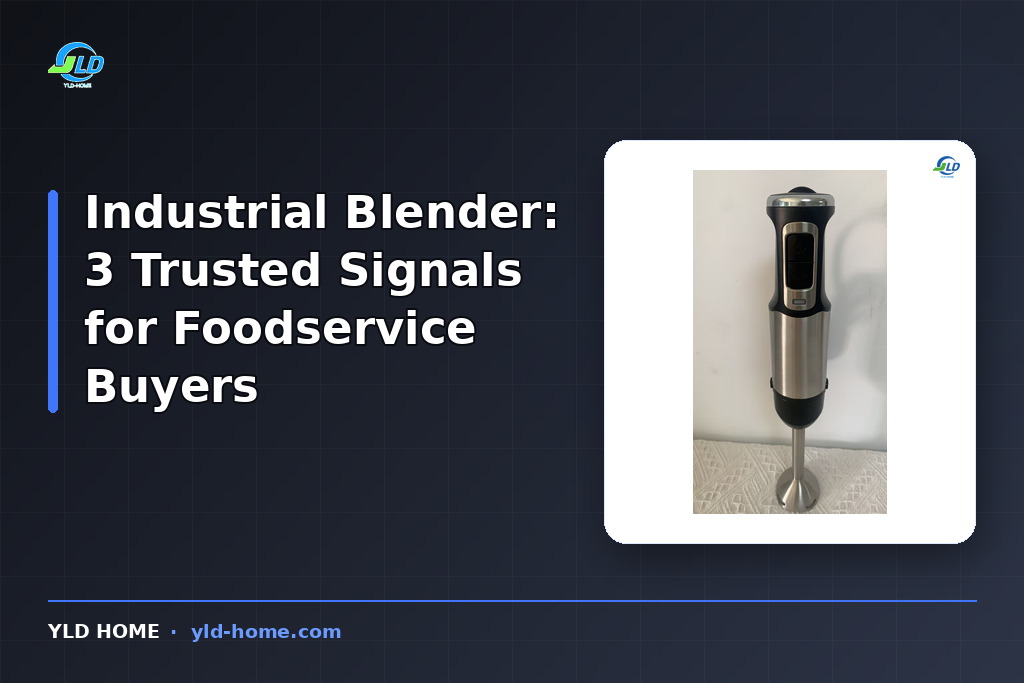
Two families dominate what distributors actually buy. The first is the countertop jar blender, the workhorse of bars and smoothie stations. The second is the immersion blender, the this model of choice for soup kettles and 40-gallon stockpots, because you lower the shaft straight into the pot and blend in place. We build both at YLD Home, and our mixeur manuel en acier inoxydable line shows how much pro-grade hardware fits in a hand-held format.
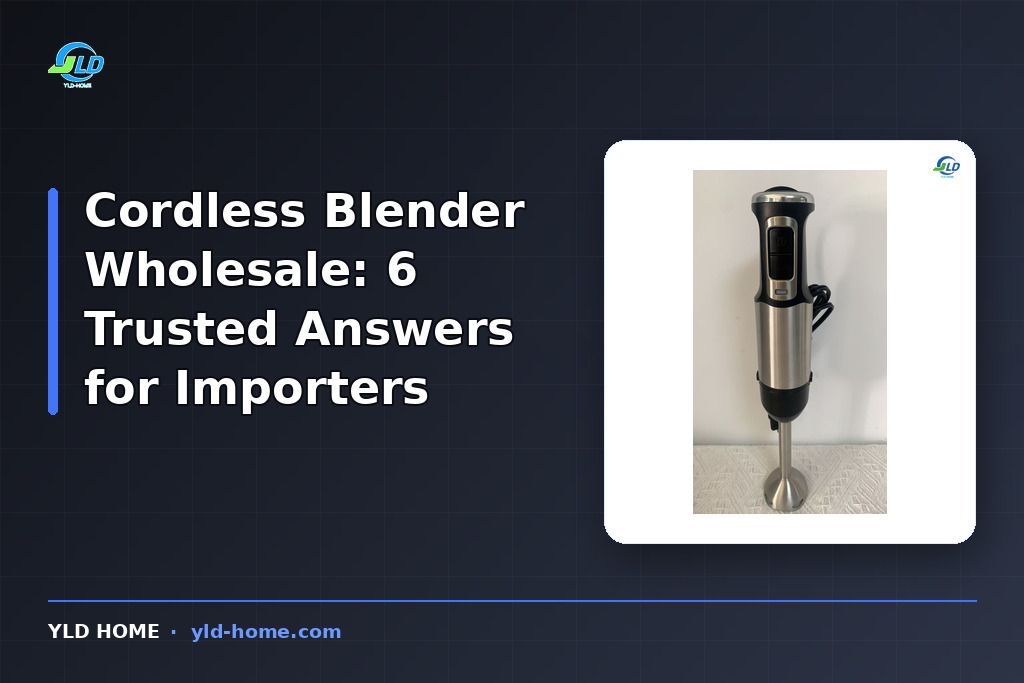
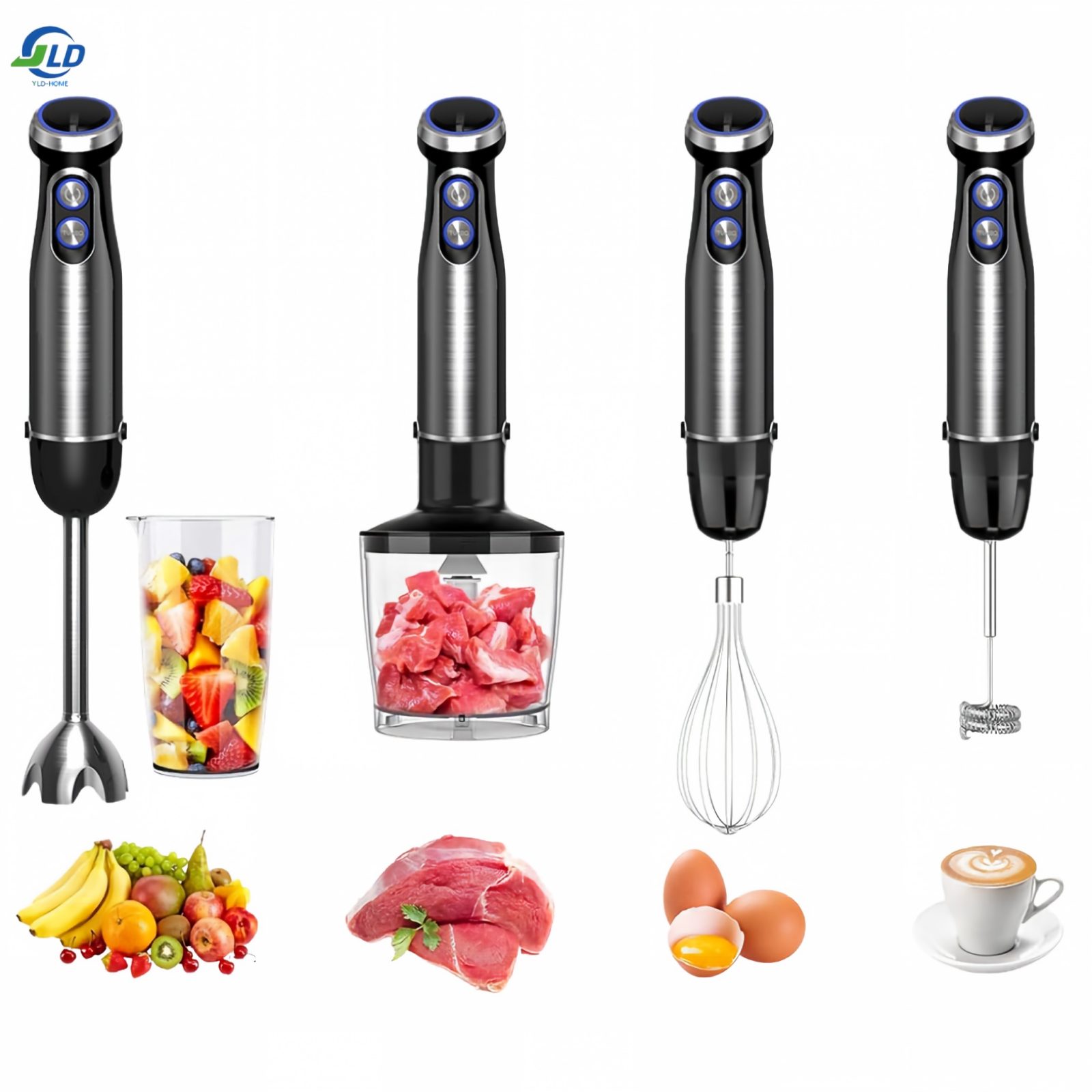
When US buyers say heavy-duty blender, they usually mean four things. A motor rated for commercial duty. A shaft and blade assembly in food-grade stainless steel. A 120V plug that meets UL or ETL requirements. And a design that disassembles for cleaning. Our PressPro 1600W hand blender checks all four boxes. It is the model we recommend most often when a distributor asks what will survive a 300-cover kitchen.
The Spec Sheet Foodservice Operators Actually Order
Let’s walk through a real order. A distributor in Chicago sends us a request for a commercial-grade blender and attaches a spec sheet from a national chain. The chain wants 120V, 60Hz. A stainless steel shaft at least 250mm long so it reaches the bottom of a stockpot. Variable speed with a smooth dial, not just two buttons. A motor that runs 20 minutes without overheating. Blades that come off for sanitizing. And a warranty program the distributor can administer locally.
Notice what is not on the list. No one asks for a quiet commercial blender, because kitchens are loud anyway. Nobody asks for Bluetooth. Almost nobody cares about the brand name on the base. They care about uptime, serviceability, and price per unit at container volume.
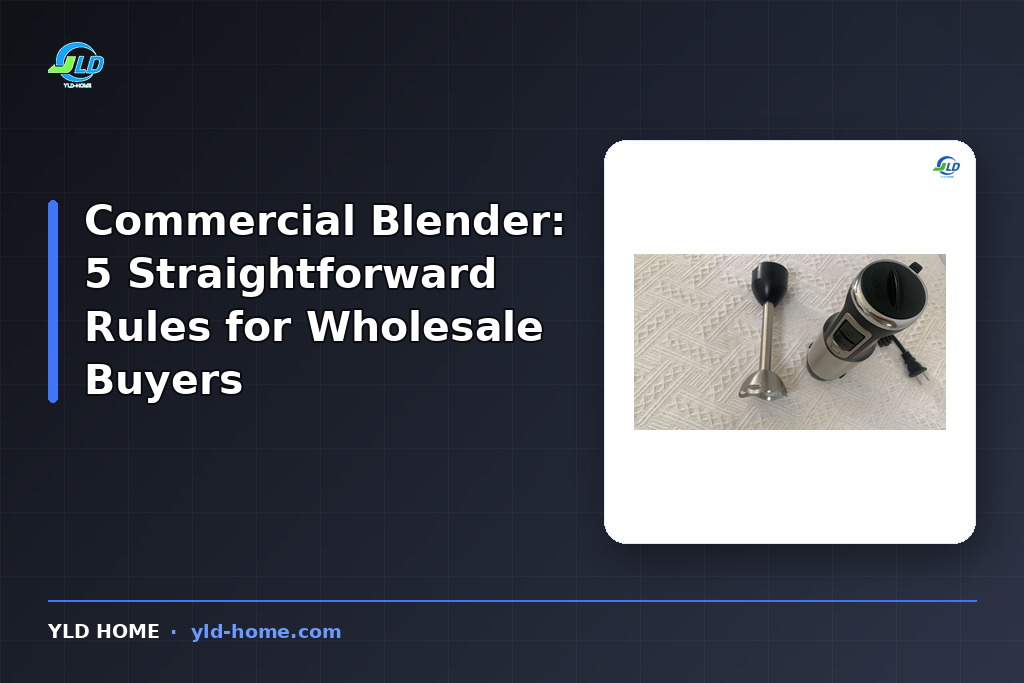
That is why we build our 6010 stick blender puissant the way we do. The shaft is 304 food-grade stainless steel. The motor block is sealed against splash-back. The speed dial gives operators fine control over texture, from a chunky salsa to a silk-smooth puree. And every wearing part, from the blade nut to the shaft collar, is a spare part we can ship to a US warehouse in days, not months.
One detail buyers miss: blade geometry. A commercial kitchen blends by volume, so the blade angle and the bell shape around it decide how fast a 10-gallon batch comes together. When we tested our 6010 against a well-known German import, our unit finished a 15-liter mayo batch in similar time at a fraction of the wholesale price. That is the kind of comparison that wins a distributor’s reorder.
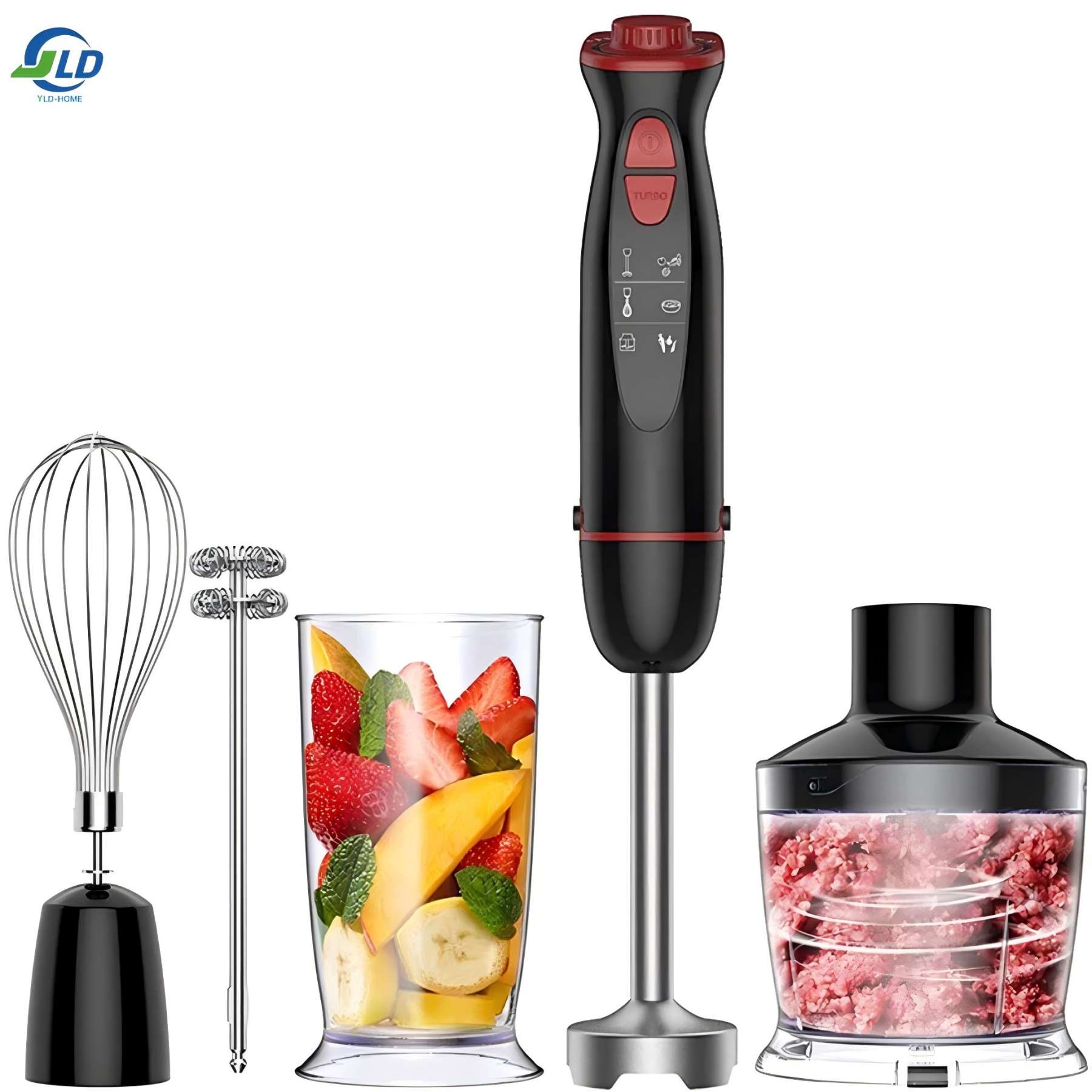
For operators who also prep vegetables, the HB006-3 detachable food processor attachment turns the same motor into a chopper and slicer. One motor, three jobs, less equipment on the shelf. Distributors like that math, and so do their chefs.
Countertop or Hand-Held: Two Different Budgets
Here is the question every US buyer has to answer first: does your customer need a countertop jar blender or an immersion unit? They are not interchangeable, and they cost different money.
A countertop jar blender is the right professional blender for bars, smoothie shops, and any station that blends into a cup. The jar is self-contained, portions are visible, and the machine lives in one spot. The downside is capacity. Most jars hold 1 to 2 liters. If your customer blends in bulk, they will spend all day running batches.
An immersion blender does the opposite. It goes to the food. A 1600W immersion unit can puree a full stockpot of soup in minutes, without transferring hot liquid from pot to jar. That is safer for staff and faster for the kitchen. The tradeoff is that you cannot produce a single 16-ounce smoothie in a stick blender without a cup attachment.
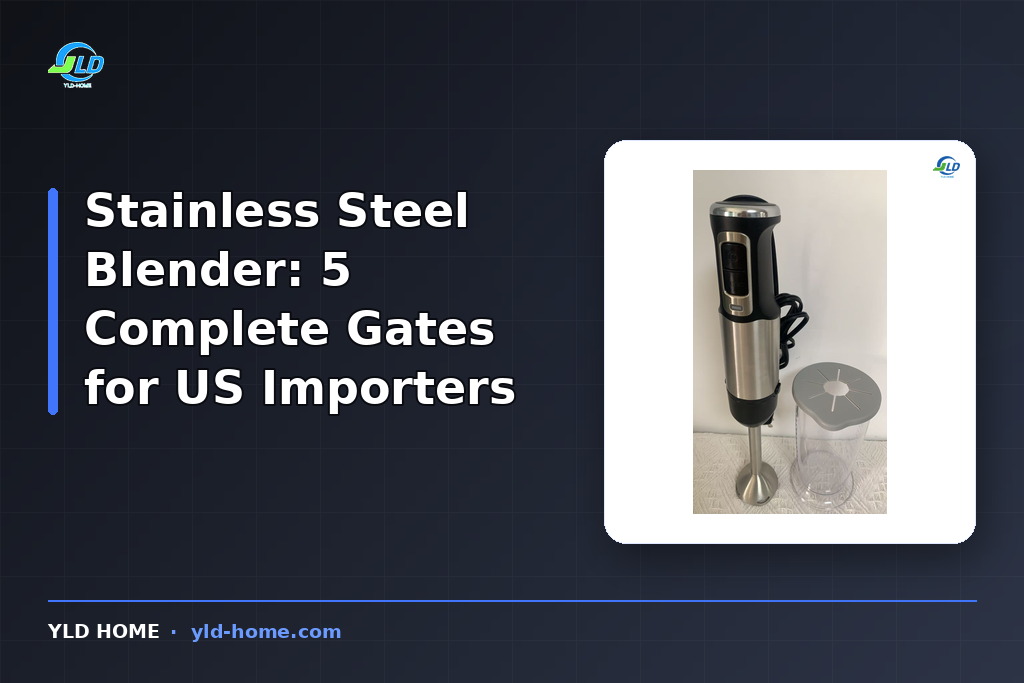
The market in the US has room for both, and our 4-in-1 hand blender is the bridge product. It ships with a blending shaft, a whisk, a chopper bowl, and a milk frother, so one SKU covers bar, pastry, and prep stations. Distributors who stock it tell us it replaces three separate SKUs on their shelf and moves faster than any of them.
Pricing follows the format. Countertop jar blenders start around $25 at wholesale and go past $150 for heavy commercial units. Immersion blenders start around $7 for entry stick units and reach $30 for true continuous-duty machines. Most foodservice distributors in the US run a mix: a couple of countertop SKUs for bars, and a deep range of stick blenders for kitchens. If you are building a first order, that mix is a safe starting point.
UL, ETL, NSF, FDA: The Certifications That Matter
Compliance is where sourcing a professional-grade blender for the US market gets serious. The good news is the requirements are predictable. The bad news is that a lot of cheap suppliers ignore them, and the importer pays the price at customs or after a field failure.
UL and ETL are the two nationally recognized testing labs for electrical safety. Either mark on your professional blender satisfies most US retailers and health inspectors. UL also runs a file system, and that file is an asset: when you private label, you can have the factory transfer the UL file to your company, which gives you control over the certification for the life of the product.
FCC covers electromagnetic interference. A blender with an unshielded motor can fail FCC testing and get pulled from store shelves in California before it sells a single unit. FDA food contact rules govern the materials that touch food: the shaft, the blades, the bell, and the cup. Stainless steel 304 and 316 pass. Some painted or coated parts do not.
NSF is a separate animal. It is not required for every kitchen, but many US foodservice accounts, especially chains and schools, will not accept equipment without it. NSF certification adds cost and time, and it is usually done per model, so it makes sense to certify the two or three SKUs you expect to sell in volume rather than the whole catalog.
Ask your factory three questions before you order. Do you hold UL or ETL for this model, and will you transfer the file? Can you provide the FDA-compliant material certificates for food contact parts? And have you run FCC testing on the production version, not the pre-production sample? If the answer to any of these is vague, walk away. YLD Home keeps UL reports, FCC test data, and material certs on file for our main models, and we share them with US buyers under NDA during sample evaluation.
What a Professional Blender Costs at Wholesale
Price is the part every US importer wants to see in writing. The table below shows typical FOB Shenzhen ranges for a pro-grade blender in each class, based on orders of 500 to 2,000 units. Treat them as planning numbers, not quotes. Get a quotation for your volume and configuration.
| Machine class | Motor power | FOB Shenzhen price | Duty cycle | Typical US customer |
|---|---|---|---|---|
| Entry stick blender | 600-800W | $7.50 – $11 | 10 min on / 5 off | Caterers, small cafes |
| Mid-range stick blender | 1,000-1,200W | $12 – $16 | 20 min continuous | Restaurants, commissaries |
| Pro immersion blender | 1,600W+ | $18 – $28 | Continuous | High-volume kitchens |
| Countertop jar blender | 1,200-1,800W | $25 – $60 | Continuous | Bars, smoothie chains |
| Heavy commercial countertop | 2.0 – 3.5 HP | $80 – $160 | Continuous | High-output bar programs |
Two things push those numbers around. Motor class is the first. A genuine 1600W motor costs more than a 1600W sticker on a 600W motor, and the difference shows up in torque and runtime. The second is control electronics. Variable speed with a sealed dial costs more than two switches, and for foodservice it is worth the extra money.
Add freight, duty, and domestic distribution, and the landed cost in Los Angeles or Long Beach runs roughly 15 to 25 percent above FOB. Most US distributors then apply a 40 to 60 percent margin and still undercut the big brand names by half. That gap is the entire reason private label sourcing from China keeps growing.
One more line item buyers forget: spare parts. A heavy-duty blender is only as good as the warranty support behind it. Budget for a small parts pack per container, maybe 2 percent of unit value, and you will save yourself a dozen angry phone calls.
MOQ, Lead Times, and Payment Terms for US Importers
Let’s talk about the practical side of placing an order. MOQs for a commercial-grade blender from our factory run 1,000 units per model, and that same 1,000-unit minimum applies to custom colors and private label packaging. That might sound like a lot for a first test, but a container of 2,000 to 4,000 units is a normal first order for a regional distributor covering a few states.
Lead times are honest numbers. Standard models with existing molds ship in 30 to 40 days from deposit. A new color or a logo change adds 7 to 10 days. A full ODM project, with new tooling and custom features, runs 90 to 120 days including sampling. Plan your seasonal peaks accordingly. If you want blenders on shelves before the holiday cooking season, you need to order by late summer, not October.
Payment terms in our industry are usually 30 percent deposit and 70 percent against the bill of lading, or a letter of credit for larger programs. US importers with an established history can sometimes negotiate a longer payment window. We also run sample programs: 2 to 5 units at sample pricing, shipped by air, so you can test the machine before committing to container volume.
Shipping goes via ocean freight to Los Angeles, Long Beach, New York, or Houston. Transit from Shenzhen to the West Coast runs 12 to 16 days at sea, plus customs clearance. Air freight is for samples and urgent reorders, and it typically costs 4 to 6 times ocean freight per unit. Most of our US customers keep 8 to 10 weeks of inventory and reorder on a rolling schedule, so a slow month never turns into an empty warehouse.
Private Label: Why Distributors Are Moving to ODM
Here is the trend we see in almost every new US account. Distributors are tired of reselling the same two big brands with thin margins and strict territory rules. They want their own name on the box. Private label turns a commodity into a brand, and it is easier than most buyers think.
When you private label a professional blender with YLD Home, you choose the brand name, the logo placement, the packaging, and often the color. We handle the rest: production, QC, certification files, and export paperwork. Your brand appears on the unit, the box, and the instruction manual. From the buyer’s perspective, it is your product, and the margin is yours.
ODM goes one step further. Instead of picking an existing model, you modify the design. Different wattage. A custom blade. A branded cup. A specific cable length for US countertop use. The tooling investment varies, but for small changes it can be surprisingly low, and the result is a commercial blender that no other distributor in your territory can offer.
A foodservice supplier in New Jersey did exactly this with our 4-in-1 model. They branded it for their chef club program, priced it at a 55 percent margin, and sold through the first 1,500 units in four months. They have since reordered twice. Their buyers never knew the unit was made in Shenzhen, because the brand story, the packaging, and the support were all theirs.
Whether you sell through retail or foodservice channels, the math is the same. That is the quiet revolution in US sourcing: the factory is the same, the difference is who owns the brand and the margin.
Case Study: A Houston Distributor Who Switched
Let’s use a real scenario. A distributor in Houston told us he had carried a premium German immersion blender for six years. It was a good machine, but the wholesale price kept climbing, and his chef customers kept asking why a stick blender cost more than a countertop unit.
He came to us with a sample of the German model and a simple request: match the performance, beat the price. We ran both machines side by side in our lab. Same soup batch. Same mayo recipe. Same sauce texture test. Our PressPro 1600W hand blender matched the blending time within seconds on every test. The wholesale price difference was roughly 40 percent in his favor.
He ordered 2,000 units under his own private label, with a custom color and his logo on the bell. The first container landed in Houston six weeks later. In the first quarter, his reorder rate on the line was 18 percent, compared with 7 percent on the old brand. His chefs liked that replacement parts shipped from a US warehouse in three days. His accountant liked the margin.
The lesson is not that Chinese equipment is better. It is that a professional-grade blender is an engineered product, and you can compare engineering directly if you know what to test. Torque under load. Runtime before thermal cutoff. Splash resistance. Blade durability. Blend a 15-liter batch of soup and a 5-liter batch of mayonnaise, and you will know more about a machine than any brochure will tell you. We run those exact tests with every US buyer who visits our lab, and we publish the results.
Mistakes US Buyers Make When Sourcing
After a decade of selling into the US market, we have seen the same mistakes repeat. Here are the ones that cost the most.
Buying on price alone. The cheapest professional blender at a trade show is usually the one with the weakest motor and the thinnest shaft. A $1 saving per unit disappears the first time a machine dies in a customer’s kitchen and you eat the freight both ways on a warranty return.
Ignoring the duty cycle. A machine rated professional that shuts down after four minutes of blending is not professional. Check the thermal protection. Ask for the runtime spec in writing.
Skipping the UL file. If the factory holds the UL file and you private label, you depend on them forever. If the file transfers to you, you control your own certification. This one detail changes your negotiating position for the life of the product.
Forgetting FDA materials. Some factories use coated shafts that look like stainless steel. A quick material cert request usually exposes this. Your health inspector customers will thank you.
Ordering one SKU. Distributors who stock a single pro-grade blender model struggle to serve both bars and kitchens. A range of two or three SKUs covers more customers and smooths reorder cycles.
Skipping the sample test. Order samples, run them in a real kitchen for a month, and only then order the container. The month of testing costs less than one container of regrets. Every one of these mistakes is avoidable with a written spec sheet and a sample program, and we give US buyers a simple checklist with every quote.
How to Vet a Professional Blender Manufacturer for the US Market
So how do you pick the factory? Treat it like an audit, because that is what it is.
Start with the paperwork. Request the UL or ETL certificate, the FCC test report, and the FDA material certificates before you discuss price. A factory that produces these documents instantly is a factory that has sold to US buyers before. A factory that stalls is telling you something.
Then request samples, and test them the way your customers will use them. Run the motor for a full shift. Blend thick and thin products. Drop the shaft in a sink full of water and check the seals. When we test our own machines, we run them 8 hours a day for a week before shipping, and we share the results. Your factory should be willing to let you do the same.
Visit, or at least do a video tour. We host US buyers in our Shenzhen facility regularly. They see the assembly line, the QC stations, the motor test benches. If you cannot travel, ask for a live video walkthrough and random serial numbers from recent production runs you can verify.
Check the after-sales structure. Who answers your warranty questions at 9 p.m. Houston time? Can the factory ship spare parts to a US warehouse? Is there an English-speaking contact who understands UL requirements? We keep a dedicated export team precisely because US buyers ask these questions.
Finally, start small and grow. A first order of 500 to 1,000 units tells you more about a supplier than any sales pitch. If the quality holds across the container, if the paperwork arrives on time, if the samples match the production units, then you scale. If anything slips, you found out cheap.
Frequently Asked Questions (FAQ)
Q1. What heavy-duty blender do most US foodservice distributors stock first?
Most start with a 1,000 to 1,600W immersion blender with a stainless steel shaft, because it covers soup, sauce, and puree work in any kitchen. Bars and smoothie chains add a countertop jar blender as their second SKU. That two-model starting range is what we recommend to new US accounts.
Q2. Is a 1200W stick blender enough for a commercial kitchen?
For most prep work, yes. A 1200W unit handles soups, sauces, and dressings all day. For continuous blending of thick batches, like mayonnaise or hummus in volume, step up to 1600W. The extra torque also protects the motor from stalls.
Q3. Do I need NSF certification for a commercial-grade blender?
Only if your target accounts require it. Chains, schools, and some health districts mandate NSF. Independent restaurants rarely ask. If your channel needs it, certify your two best-selling models rather than the full range.
Q4. What is the typical MOQ for a private label professional blender?
For standard colors with your logo, 1,000 units. Custom colors or modified packaging carry the same 1,000-unit minimum. ODM with new tooling is quoted per project. We also offer 2 to 5 sample units for testing before you commit.
Q5. How long does UL certification take for a new model?
Usually 8 to 14 weeks once the design is final, including testing and documentation. That is why we recommend certifying in parallel with tooling. Ask the factory which models already hold UL files, because existing files save you months.
Q6. Can YLD Home private label a commercial blender for my brand?
Yes. That is a large part of our US business. You choose the branding, packaging, and color; we handle production, QC, certification files, and export. Sample programs and UL file transfer options are available for qualified buyers.
Q7. What is the lead time from order to a US port?
Standard models ship 30 to 40 days from deposit, plus 12 to 16 days at sea to the West Coast and longer to the East Coast. Custom programs add time. Plan seasonal orders 8 to 10 weeks ahead and you will be covered.