








In this guide:
- Why the cordless blender trend is accelerating in the US
- The cordless blender wholesale market, channel by channel
- Battery and motor specs that separate good units from bad
- UL certification and battery safety for cordless blenders
- Private label programs with a cordless blender manufacturer in the USA
- Voltage, charging, and the 120V reality for imports
- Cordless vs corded: what your assortment should look like
- How YLD Home engineers a cordless blender
- MOQ, lead times, and distribution planning for importers
- Choosing a cordless blender distributor in the USA
The cordless blender has crossed from gadget to staple, and US buyers are placing real orders. Sales of battery-powered personal blenders keep climbing year over year, driven by commuters, travelers, gym-goers, and anyone who wants a smoothie without hunting for an outlet. For importers, retailers, and private label brands, the question is no longer whether to stock a cordless blender. It’s how to source one that won’t come back in returns, won’t fail battery compliance, and won’t embarrass your brand on Amazon.
Why the Cordless Blender Trend Is Accelerating in the US
Three forces are pushing the cordless blender into mainstream retail. First, the battery tech got good enough. Modern lithium cells pack enough energy for 8–15 blending cycles in a package small enough to hold in one hand. Second, the lifestyle fit is real: office workers in New York blend at their desks, parents blend on the go, and campers and boaters in states like Florida and Arizona use them where there’s no outlet at all.
Third, the price point dropped. Two years ago a decent cordless blender retailed around $59–$79. Today the same performance sits at $39–$59, which puts it in impulse-buy territory for US consumers. That price compression is exactly what wholesale buyers want to hear, because it means volume, repeat orders, and a product that moves without heavy discounts.
The trend also has a structural driver: the same lithium cell supply chain that powers phones and power tools now serves small appliances, so battery cost keeps falling while capacity keeps climbing. We’ve watched cordless blender bills of materials drop roughly 20% in three years, and that’s the kind of curve importers should ride, not fight. Brands that got into the category early are now reordering at volume and locking in the cheaper cell pricing.
Retailers are responding with dedicated shelf space. A buyer at a national outdoor goods chain told us cordless blender sales now outpace their corded personal blenders three to one, and the gap keeps widening. If your sourcing plan for the US market doesn’t include a cordless blender line, you’re leaving a growth category to your competitors. If you’re still mapping the whole portable blending family, our immersion vs hand vs stick blender guide lays out where each form factor earns its shelf space.
The Cordless Blender Wholesale Market, Channel by Channel
Not every channel wants the same cordless blender, and the fastest way to lose margin is to treat all buyers alike. Amazon sellers want lightweight units with simple operation, strong reviews, and packaging that survives the fulfillment network. Big-box retailers want shelf-ready packaging, a brand story, and certification files on demand. Outdoor and travel retailers want rugged builds with longer battery life and better water resistance.
The foodservice slice is smaller but steady. Food trucks and event caterers use cordless blenders for sauces and dressings away from power, and hotels put them in rooms where outlets are scarce. A distributor in Dallas told us his cordless blender wholesale orders from foodservice accounts grew every quarter for two years straight.
Gift and wellness channels round out the mix. Smoothie subscriptions, fitness boxes, and corporate gifting programs buy cordless blenders in bulk with custom colors and logos. These buyers plan six months ahead, so if you want their business, your lead times and MOQ flexibility matter more than your unit price.
One channel that surprises importers is hospitality. Hotels and short-term rentals in cities like Miami and Las Vegas stock cordless blenders in rooms and suites because guests want smoothies without hunting for a kitchen outlet, and the units are easy to sanitize between stays. A regional hotel group we supply orders the same cordless blender SKU with their brand on the cup, reordering every quarter once the rooms are equipped.
Battery and Motor Specs That Separate Good Units from Bad
The cordless blender is only as good as its battery and motor, and this is where cheap imports fall apart. Here’s the spec sheet we use when we evaluate a cordless blender for the US market:
| Spec | Good cordless blender | Cheap cordless blender | Why it matters |
|---|---|---|---|
| Batterie | 7.4 V, 1,500–2,000 mAh, quality cells | Unbranded cells, overstated capacity | Real runtime and cycle life |
| Charge cycles | 300+ cycles | 100–150 cycles | Battery dies in months on cheap cells |
| Motor | 100–200 W DC, brushless | 50–80 W, brushed | Blends frozen fruit without stalling |
| Blades | Stainless steel, 4–6 blades | Thin steel, 2 blades | Texture and stall resistance |
| Charge time | 2–3 hours USB-C | 4–5 hours, old port | USB-C is now expected by US buyers |
| Runtime per charge | 8–15 blends | 3–5 blends | Real-world daily use |
| Water resistance | Splash-proof rated | None | Cleaning and outdoor use |
We test cordless blender units on frozen berries, leafy greens, and crushed ice, because that’s what US customers actually blend. A unit that stalls on a handful of ice is a return waiting to happen, no matter how good the marketing photos look. Ask any supplier for their frozen-fruit test results before you commit.
UL Certification and Battery Safety for Cordless Blenders
Battery products face a stricter compliance path than corded appliances, and UL is central to it. A cordless blender with a lithium battery needs UL testing that covers the charger, the battery pack, and the appliance itself, and you’ll often see a UL 2595 or similar battery-powered appliance standard referenced on the certificate. The UL website has the full picture on certification programs for battery-powered products, and it’s worth reading before you pick a lab.
Battery shipping rules add another layer. Lithium cells move under specific regulations: UN 38.3 testing for the cells, proper labeling, and correct packaging for air freight. Sea freight is more forgiving, but your freight forwarder will still ask for the battery documents. A cordless blender manufacturer who ships batteries regularly will have these files ready; a factory that treats battery shipping as an afterthought will stall your cargo.
There’s also a marketplace reality. Amazon and other platforms have been tightening rules on battery products, and listings get suspended when certificate files don’t check out. Keep your UL file, UN 38.3 test summary, and FDA food-contact declarations organized and ready to produce, because you’ll need them at the least convenient moment. At YLD Home we keep a compliance packet for every cordless blender model we build, so a US buyer can pull the full set of documents in one request instead of chasing certificates across three departments — our appliance certification page lists what’s in that packet.
Private Label with a Cordless Blender Manufacturer in the USA Market
Private label is where the margin lives in this category, and a cordless blender manufacturer supporting US brands needs to do more than stamp a logo. A full program covers color and finish customization, packaging design, label compliance, battery safety documentation, and a warranty policy that works for US consumers.
Start with a proven base model. The smart approach is to private label an existing, tested cordless blender rather than designing from scratch, because battery certification is expensive and slow. Change the color, the logo, and the box, and you get a differentiated product without a six-figure development bill. Once the brand proves itself, you can commission a custom design on the second or third generation. As a small kitchen appliance manufacturer in China, we run dozens of these programs a year, and the pattern is always the same: validate the base model first, then invest in custom tooling.
Warranty handling matters more than most importers expect. US consumers expect a one-year warranty on small appliances, and the return flow needs a stateside answer. Some brands have the distributor handle exchanges and send failed units back to the factory in bulk. Whatever model you choose, put it in writing, because the return policy on your listing is part of the product you’re selling.
Voltage, Charging, and the 120V Reality
A cordless blender is built for the US market, so the charger has to work on 120V/60Hz household current. That sounds obvious, but we regularly see units configured for EU voltage floating around wholesale lots. Check the charger input rating on the sample: it must say 100–240V or 120V, and the plug must be the US two-prong type.
USB-C charging has become the expectation. US buyers want to charge a cordless blender with the same cable they use for their phone, and the USB-C standard also gives you a cheap path to 100–240V compatibility, because the wall adapter handles the conversion. A unit with an old barrel plug or micro-USB connector reads as dated on the shelf, and it limits your retail story.
Charge time is a spec your customers will feel. A 2–3 hour full charge is acceptable; a 5-hour charge gets complained about in reviews. Battery capacity and charge speed trade off, so spec the battery for real use, not for the biggest number on the box. A cordless blender that dies after three blends will sink your review score no matter how nice the finish is.
We also pay attention to the charger plug and cable length, because they’re the cheapest parts of the product and the most visible. A 1-meter cable with a US plug and a braided jacket costs the factory almost nothing, but it changes how the unboxing feels. When we ship a cordless blender program to a US importer, we always confirm the charger is the US version on the production line, because a mixed batch of EU and US chargers is the kind of error that turns into a recall.
Cordless vs Corded: What Your Assortment Should Look Like
You don’t have to pick between cordless and corded; the smartest US programs carry both. Corded blenders still win on raw power, price, and reliability for home counter use. Cordless blenders win on portability and convenience. The buyers overlap less than you’d think, and retailers who carry both report that each line feeds the other.
For a first-time importer, the safe mix is one corded personal blender SKU and one cordless blender SKU, with the cordless version at a slightly higher price point. That gives you two shelf positions, two Amazon listings, and two chances to learn the category. A distributor in Seattle told us his cordless blender wholesale sales started feeding corded upsells, because customers who liked the brand came back for the full kitchen line. Our 2-in-1 hand blender et 3-in-1 hand blender are the usual companions in that setup, giving buyers one brand across portable, counter, and prep blending.
Inventory planning should reflect the seasonal split. Cordless blenders spike in spring and summer with travel and outdoor season, then again in November for gifting. Corded units sell more evenly through the year. If you’re financing containers, weight the cordless orders toward March–May and September–October arrivals.
How YLD Home Engineers a Cordless Blender
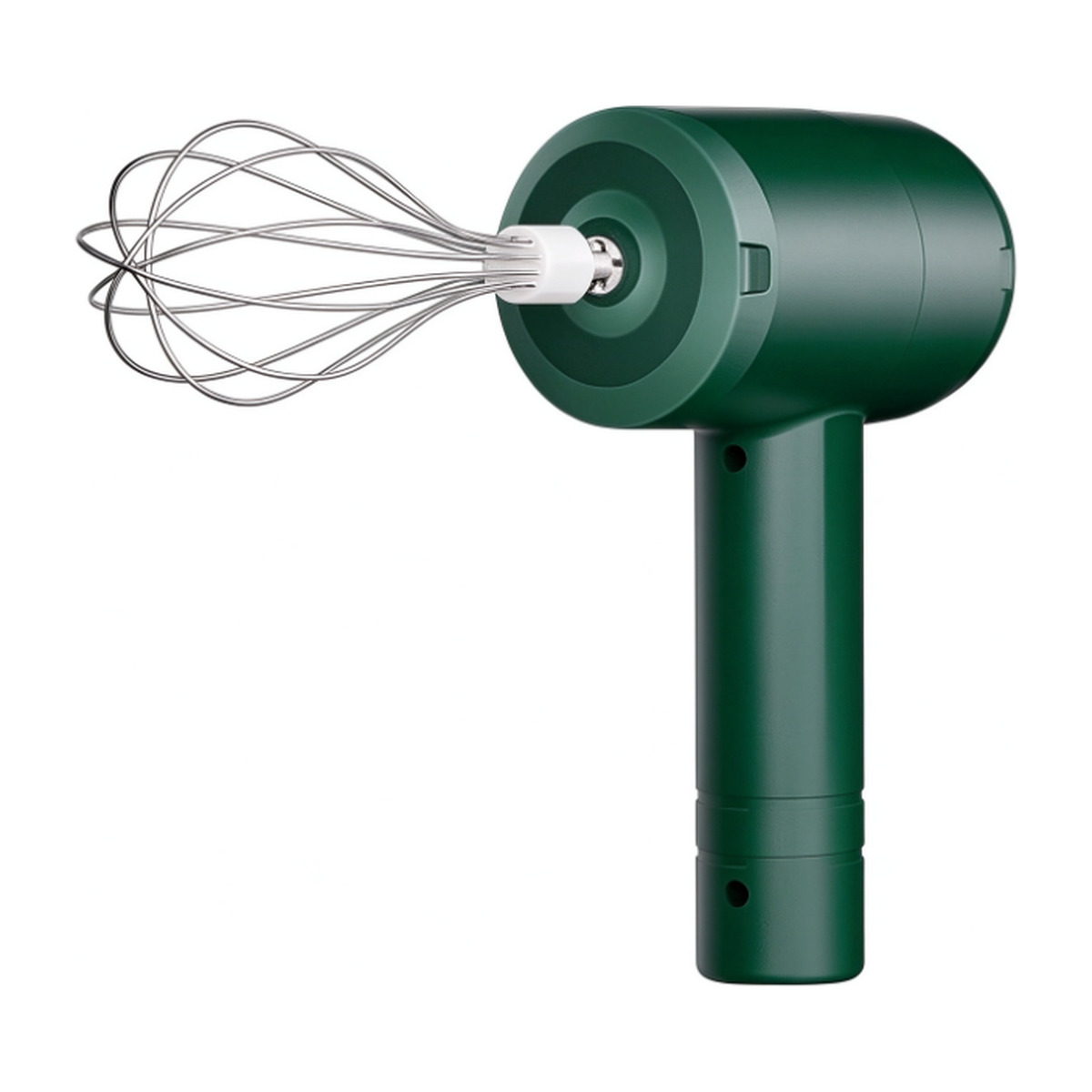
YLD Home started with corded hand blenders in 2012, and our cordless line grew out of customer requests, not a trend report. The engineering challenge is the battery: a cordless blender packs a motor, cells, and control board into a package that has to feel balanced in one hand and survive drops onto kitchen counters. Our ODM innovation video shows how we prototype and test new designs like this one.
We use the same stainless shaft and blade family across our corded and cordless lines, which keeps quality consistent and spare parts simple. The motor is a brushless DC unit sized so it blends frozen fruit without stalling, and the battery management system cuts power before the cells get damaged by over-discharge. When we tested our first cordless blender prototype, the battery held up through 400 charge cycles, which told us the cell quality was right. That same mixeur manuel en acier inoxydable construction carries over to our corded line, so buyers who stock both get one consistent quality story.
Every cordless blender gets a full charge-discharge test and a blend test before packing — you can watch the factory’s product quality control process on video. We also test the charger, because a weak charger shows up as slow charging complaints six months later. For US buyers, we run the compliance files in parallel with production so the container isn’t waiting on paperwork at the port.
That same discipline applies to the sample stage. We send pre-production samples to every US buyer before their first container, and we expect them to run the unit for two weeks the way their customers would: frozen fruit in the morning, greens at lunch, a rinse in between. The buyers who do this catch issues we can fix in a week, not after ten thousand units are on the water. A cordless blender program built on samples and test data is a program that survives its first season.
MOQ, Lead Times, and Distribution Planning
A cordless blender wholesale program has a different cost shape than a corded line, because the battery adds a meaningful chunk of the bill of materials. Expect ex-works pricing in the $12–$20 range for a private label cordless blender at container volumes, depending on battery size, motor, and cup configuration. Stock colorway MOQs typically start around 1,000 units, with custom color programs at 3,000–5,000.
Lead times run 60–75 days for a first order: 2–3 weeks for materials and assembly, 3–4 weeks at sea to Los Angeles or Long Beach, and a week for customs and drayage. Battery shipments occasionally face extra inspection, so add a few days of buffer the first time. Reorders usually run 45–55 days once the packaging and battery files are locked.
Distribution planning comes down to where your customers are. East Coast importers often bring goods to New York or Savannah; West Coast buyers use Los Angeles. Whatever port you choose, hold enough safety stock to cover the shipping window, because a cordless blender promotion that runs out of stock is a promotion that paid for your competitor’s sales.
When you’re setting that stock level, remember that cordless blender sell-through is seasonal in a way corded units aren’t. Our US importers typically hold six to eight weeks of coverage through the summer and cut back to four weeks in the fall, when the gifting surge hasn’t started yet. Ask your distributor for their monthly sell-through numbers and adjust against them; a forecast built on real point-of-sale data beats one built on optimism every time.
Choosing a Cordless Blender Distributor in the USA Market
If you’re selling rather than importing, the distributor you pick decides your reach. A good cordless blender distributor in the USA market carries the compliance files, stocks spare parts, understands battery shipping rules, and has real relationships with the retailers you want to reach. Ask for their account list and their service capabilities before you sign anything.
For importers, the distributor question is different: you’re deciding who gets your containers. Look for distributors who buy by the program, not by the carton, and who will give you sell-through data. A distributor who shares point-of-sale numbers is worth more than one who just takes orders, because that data tells you which cordless blender variants to reorder and which to drop.
Watch the margins too. Cordless blender wholesale margins are healthy when the program is managed, but they vanish when stock sits. Set reorder triggers with your distributor, keep the assortment tight, and refresh the colorways every season so the line stays new. A small, well-managed cordless blender program beats a big, neglected one every time.
If you’re ready to talk specifics, the YLD Home team can walk you through our cordless blender line, the compliance files, and a sample program sized to your channel. Start with a stock colorway order to validate the market, then scale into a private label program once your sell-through data says go. That’s the path our US accounts take, and it keeps the risk where it belongs: small, measured, and reversible.
Frequently Asked Questions (FAQ)
Q1: What is a cordless blender, and who buys it wholesale?
A cordless blender is a battery-powered personal blender you can use anywhere, without an outlet. US wholesale buyers include Amazon sellers, big-box retailers, outdoor and travel stores, foodservice operators, and private label brands building a portable blending line.
Q2: How many blends does a cordless blender get per charge?
A good unit delivers 8–15 blending cycles per charge, depending on the mix. Frozen fruit and leafy greens drain the battery faster than soft fruit, so test on your actual recipe before you spec the battery size.
Q3: What certifications does a cordless blender need for the US market?
UL certification covering the appliance, charger, and battery pack, plus UN 38.3 battery transport testing and FDA food-contact compliance for the cup and blades. Keep every certificate file ready, because marketplaces and retailers will ask for them.
Q4: Can I private label a cordless blender?
Yes, and it’s the fastest route to margin. The smart path is private labeling a proven base model first, then commissioning a custom design once the brand has sell-through data. Battery certification is expensive, so avoid designing from scratch on generation one.
Q5: What’s the MOQ for a cordless blender wholesale order?
Stock colorway MOQs usually start around 1,000 units at Chinese factories, with custom color and logo programs at 1,000 units. Ask for the three numbers separately: stock, private label box, and full custom design.
Q6: How long does a cordless blender order take from China?
First orders run 60–75 days including production, sea freight, and customs, with a few extra days possible for battery inspection. Reorders run 45–55 days once packaging and battery files are locked.
Q7: Should I stock corded or cordless blenders?
Carry both. Corded units win on power and price for home use; cordless wins on portability. Retailers report the two lines feed each other, and the seasonal patterns differ, which helps balance your inventory through the year.
Q8: Where can I find a cordless blender distributor in the USA?
Work with distributors who carry the compliance files, stock spare parts, understand battery shipping, and share sell-through data. For importers, a distributor who buys by the program and reports point-of-sale numbers is worth more than one who just takes cartons.