










In this guide: Why Commercial-Grade · How We Selected · The 7 at a Glance · Best Overall · Best Value · Best Cordless · Best Heavy-Duty · Best Compact · Best Budget · Best Multi-Function Kit · Buyer’s Checklist · FAQ
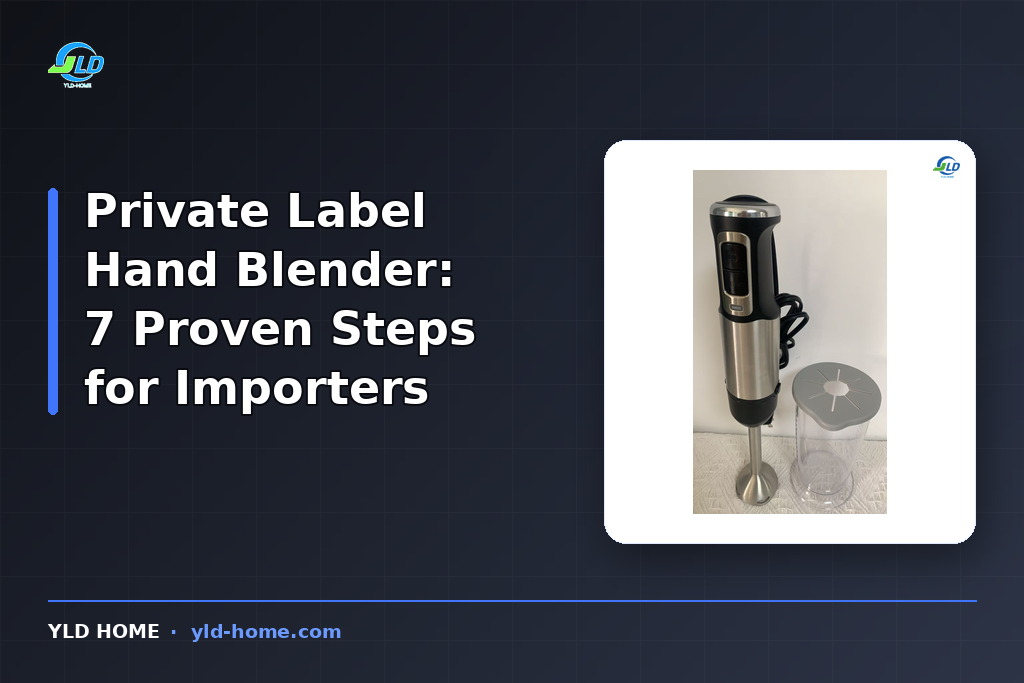
Choosing the best hand blender for restaurants UK kitchens is not the same as picking a home model off a supermarket shelf. A commercial kitchen runs a blender for hours across a double service, blends directly into 40-litre stockpots, and needs equipment that survives daily cleaning, drops and hard use. The wrong choice means burnt-out motors at the worst possible moment, uneven soups and a warranty claim on top of a ruined service. This guide ranks seven of the best hand blenders for the British catering market, explains exactly what to verify before you buy, and covers the wholesale angle for operators, buyers and distributors who need volume pricing. Every recommendation below is judged on real kitchen criteria — power, duty cycle, shaft quality, spares availability and total cost of ownership — not on marketing claims.
Why UK Restaurants and Caterers Need a Commercial-Grade Immersion Blender
A domestic stick blender fails in a professional kitchen for mechanical reasons, not just usage reasons. Home models are rated for intermittent duty: a few minutes of running followed by cooling. Commercial kitchens demand near-continuous operation — blenders may run for 20–30 minutes across a batch of soup, with bursts of blending, pausing and repositioning in the pot. The motor in a domestic unit overheats, the thermal cut-out trips, and within weeks the brushes wear out. That is why the first buying rule for any kitchen is: buy a machine with a duty cycle rated for professional use.
The second reason is power-to-volume. A 40-litre stockpot of soup needs a motor strong enough to create a vortex that pulls the surface down into the blade — typically 800W and above for large batches. A 300W domestic motor simply cannot move that much liquid; it blends the centre and leaves chunks at the edges. Third is shaft construction. Commercial blenders use a stainless steel shaft (304 or 316 grade) welded to the blade assembly, so the shaft can sit in hot liquid and withstand abrasion. Domestic units often use plastic or plated shafts that discolour and warp.
Hygiene and health and safety matter too. A removable shaft that can be stripped and cleaned after each use prevents cross-contamination between meat, dairy and allergen batches, which is a legal requirement under UK food safety law, not just good practice. The wider point is that the UK hospitality sector — represented at trade level by UKHospitality — depends on equipment that cannot fail mid-service, which is exactly what commercial build quality buys you. Finally, consider noise: a full service is loud enough without a screaming blender. The best hand blender for restaurants UK buyers choose is the one staff actually use — quiet enough not to be dreaded, powerful enough to finish the job, and robust enough to still be running in eighteen months. Everything below flows from those four criteria: duty cycle, power, shaft quality and serviceability.
How We Chose the Best Hand Blender for Restaurants UK
To keep this ranking honest and useful, every model was assessed against the same scoring framework, the same one a catering equipment buyer would apply. Power and duty cycle come first: we looked for professional motors (600W and above for batch work) with documented continuous-running capability rather than intermittent ratings. Variable speed control scored highly because soups and emulsions need different blade speeds, and a simple two-speed switch is fine for fixed recipes but limiting in a busy kitchen.
Shaft length and material are the next criteria. For a standard 40-litre stockpot you need at least 400mm of immersion depth; for larger kettles, 600mm shafts are available on the best models. Stainless steel is non-negotiable, and the shaft must be removable for cleaning and replacement — a welded one-piece design is actually better than a screwed shaft that loosens with vibration. Build quality covers the housing material (metal or heavy-duty engineering plastic), splash-proofing around the switch, and the quality of the blade (four-pronged stainless blades emulsify better than two-pronged designs).
Then the buyer factors: noise level under load (ideally under 85dB), availability of spare shafts, blades and seals in the UK, warranty length (12 months is standard, 24 is better), and parts pricing — a replacement shaft can cost a third of a new machine, so spares pricing affects total cost of ownership. Finally, we weighted the wholesale angle: MOQ, lead time and volume pricing, because the best hand blender for restaurants UK chains buy in quantity. Every shortlisted model had to be realistically available to UK buyers, with 220–240V UK specification and a BS 1363 plug, not a grey-market import. If you are buying for the first time, our guide to choosing a commercial immersion blender walks through the same criteria in more depth, and the YLD Home blog carries kitchen-tested comparisons of the models shortlisted here.
The 7 Best Hand Blenders for UK Restaurants & Catering at a Glance
The table below is the short answer to the question “what is the best hand blender for restaurants UK buyers should shortlist in 2026?” — full profiles follow.
| Rank | Modelo | Potencia | Shaft | Lo mejor para | Wholesale band |
|---|---|---|---|---|---|
| 1. Best overall | YLD Home PressPro 1600W | 1600W | 400/600mm SS316 | Busy kitchens, 25–80L pots | On quotation |
| 2. Best value | YLD Home CPB-1200 | 1200W | 400mm SS304 | Soup lines, central kitchens | On quotation |
| 3. Best cordless | YLD Home CIB-600 | 600W equiv. | 300mm SS304 | Events, outside catering | On quotation |
| 4. Best heavy-duty | Waring WSB55 | 1.5 hp | 450mm stainless | Continuous batch production | On quotation |
| 5. Best compact | Robot Coupe Mini MP 190 V.V. | 190W | 300mm | Bakeries, coffee shops, small kitchens | On quotation |
| 6. Best budget | YLD Home PHB-800 | 800W | 350mm SS304 | New restaurants, takeaways | On quotation |
| 7. Best kit | YLD Home PHB-1000 Pro Kit | 1000W | 400mm + chopper, whisk, grinder | Prep kitchens, multi-use | On quotation |
Wholesale bands are indicative at typical UK order volumes; exact pricing depends on MOQ and specification, so treat them as a planning range rather than a quote. Every model below ships in 220–240V UK specification with certification paperwork — the mark of a proper commercial supply chain.
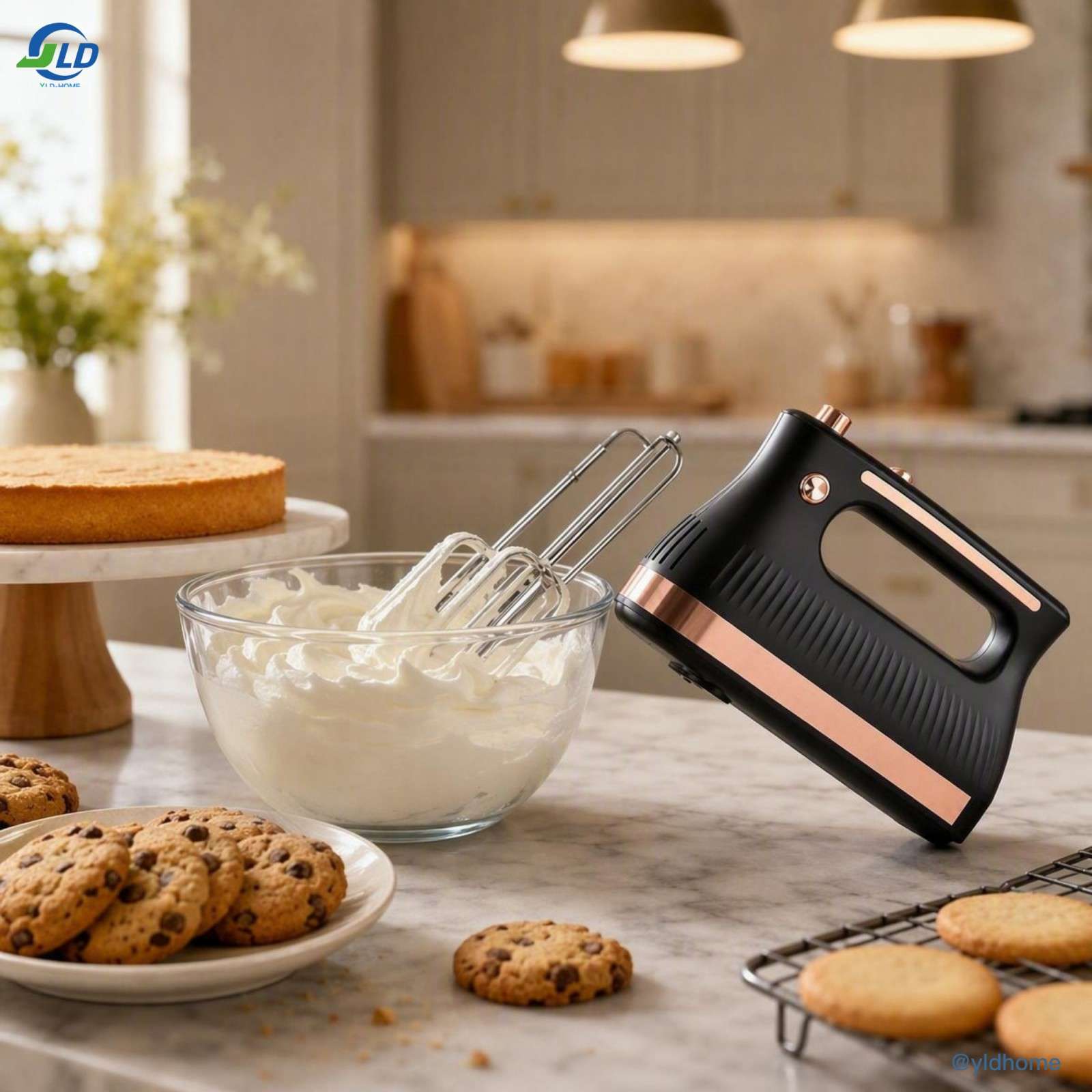
1. Best Overall: YLD Home PressPro 1600W Commercial Immersion Blender
For a kitchen that does serious volume every day, the YLD Home PressPro 1600W is the strongest all-round choice on this list. The headline spec is a 1600W motor with variable speed control, which gives the chef precise blade speed for everything from a gentle herb-infused oil emulsion to a full-power vortex in an 80-litre kettle of pumpkin soup. Variable speed is the feature chefs notice first: it turns one machine into a tool for sauces, dressings, purees and soups without needing to swap equipment between tasks.
The shaft system is built for continuous service: a 316 stainless steel shaft (the marine-grade alloy that resists pitting from acidic tomato and citrus) in 400mm and 600mm options, with a four-pronged stainless blade that emulsifies rather than just chops. The shaft is fully removable, which makes strip-down cleaning fast and lets you keep a spare shaft in rotation while one is in the wash — a small operational detail that matters a lot at service time. The motor housing is splash-resistant around the switch, and the machine is rated for the continuous-duty pattern a commercial kitchen actually runs.
Use case: mid-to-large restaurants, hotels, gastropubs and central kitchens that batch-cook soups and sauces daily. It replaces the two-machine pattern many kitchens run with one machine plus a spare shaft — cheaper and less counter space. For UK buyers the practical advantages are the UK plug configuration, certification paperwork for food-safety audits, and the spare-parts availability — shafts, blades and seals are stocked for reorder rather than being a one-time purchase. If a kitchen could only own one commercial immersion blender, this is the best hand blender for restaurants UK chefs in that position — subject to verifying current specs and price with the supplier at your order volume.
2. Best Value: YLD Home CPB-1200 for High-Volume Soup and Sauce Lines
Not every kitchen needs 1600W, and not every budget can absorb it. The YLD Home CPB-1200 is the value pick for operators whose volumes are high but whose recipes are consistent: a 1200W motor with a simple two-speed switch and a 400mm stainless shaft, built on the same commercial duty-cycle platform as the higher-spec models. Removing the variable-speed electronics and premium alloys is exactly what makes the price difference possible without sacrificing the things that actually matter — continuous running, a metal shaft and replaceable parts.
Use case: soup producers, school and hospital caterers, pub chains and central production kitchens that make the same recipes to the same spec, day after day. Fixed two-speed operation is arguably an advantage there: less to learn, fewer settings to get wrong, and a machine that is hard to misuse. The 1200W motor still generates a solid vortex in a 40-litre pot, and the 304 stainless shaft handles acidic ingredients comfortably in daily use.
For procurement teams buying in volume, the CPB-1200 is the line item that keeps the budget in balance. Its wholesale price sits well below the flagship model, the spares list is short and cheap (shaft, blade, seal, switch), and the MOQ structure means a catering group can standardise on one model across all sites and hold a single spares stock. When you are equipping six kitchens at once, standardising on one model is worth real money in training, spares and downtime. That is why the CPB-1200 keeps appearing on best hand blender for restaurants UK tender lists for institutional catering — the cost per service is simply the lowest in its class. Verify current lead time and volume pricing before committing.
3. Best Cordless: YLD Home CIB-600 for Outside Catering and Events
Outside catering is where a cordless machine stops being a luxury and becomes the difference between taking a job and turning it down. The YLD Home CIB-600 is a battery-powered immersion blender with the equivalent of roughly 600W of blending performance — enough for soups, sauces and purees in event-scale batches — running from a rechargeable lithium battery pack, with a 300mm stainless shaft and a four-pronged blade. It is the only cordless unit on this list that meets the same stainless-shaft and removable-cleaning standards as its corded stablemates.
Use case: event caterers, buffets, pop-up kitchens, festival catering, demonstration cooking, and any venue where sockets are scarce or where trailing cables across a service floor are a genuine trip hazard. For a caterer plating soup at a wedding reception, blending at the pass means the soup is finished hot, at the table, rather than carried from a distant kitchen. It also unlocks the growing demo-cooking segment, where the chef blends in front of an audience.
The trade-offs are honest ones: runtime is measured in minutes of continuous blending (typically 15–25 minutes of active use per charge for this class, which is plenty for batch work in bursts), and the machine is heavier than a corded equivalent because of the battery. Buyers should check the charging time, the battery replacement procedure and the number of charge cycles (aim for 500+). For UK event caterers the unit earns its keep across a season of functions, and the same ODM factory supply chain means spares and batteries are reorderable rather than a dead end — you can watch the CIB-600 in action on the YLD Home YouTube channel before you demo one yourself. If your business lives on events, this is the best hand blender for restaurants UK outside-catering operations can deploy without running extension leads across a marquee floor.
4. Best Heavy-Duty: Waring WSB55 for Continuous Batch Production
When production never stops, you need a machine that is engineered like kitchen equipment, not like a consumer appliance. The Waring WSB55 is a long-established commercial workhorse rated at 1.5 horsepower — roughly 1,100W — with a heavy-duty stainless steel shaft and a design goal of continuous batch production. It is the model many central kitchens and food manufacturers keep as their default because it is simply difficult to overload. The motor is brush-type but built for sustained running, and the all-metal shaft assembly shrugs off the heat and abrasion of daily high-volume use.
Use case: central production kitchens, food manufacturers, butchery and fish-processing prep, and any operation that blends for hours rather than minutes. If your day includes multiple 80-litre batches of soup, sauce or marinade, this is the class of machine you want bolted to the bench. The WSB55’s design philosophy is minimal and serviceable: fewer features, more metal, and parts that a technician can replace without sending the machine away for a week.
Two buying notes for UK operators. First, confirm you are buying the 220–240V UK version with a BS 1363 plug and UK certification paperwork — grey imports of US-spec machines are a compliance headache. Second, budget for a spare shaft from day one: in continuous production, shaft seals wear on a schedule, and the spare is cheaper than a lost production day. Waring’s dealer network in the UK means parts and service are genuinely available, which is the whole point of this pick. For sheer stamina at scale, it remains one of the benchmarks against which the rest of the best hand blender for restaurants UK shortlists are measured.
5. Best Compact: Robot Coupe Mini MP 190 V.V. for Small Kitchens and Bakeries
Not every commercial kitchen is a 200-cover operation. Coffee shops, patisseries, delis, care homes and small restaurant kitchens need a machine that is compact, quiet and precise — and the Robot Coupe Mini MP 190 V.V. has been the reference in that niche for years. It is a small-format blender: around 190W with variable speed control, a 300mm shaft and a head small enough to work comfortably in a 5-litre mixing bowl or a sauce pan. The “V.V.” denotes the variable speed function, which matters when you are emulsifying a small hollandaise or folding a delicate fruit coulis.
Use case: bakeries making custards and creams, coffee shops blending small-batch sauces, hotel breakfast kitchens, and any prep area where the machine must fit on a shelf and run quietly next to customers. The compact class is also where precision lives: a small motor with variable speed is easier to control at low blade speeds, which is exactly what delicate emulsions need. In a patisserie, the difference between a silky crème anglaise and a split one is often just blade speed control.
The trade-off is volume: 190W will not pull a vortex in a 40-litre stockpot, so this is a second machine for most kitchens. But as a specialist tool it is superb value, and its longevity is legendary — many units in UK bakeries are a decade old and still running. For the right operation, the Mini MP is the best hand blender for restaurants UK and food-service buyers can fit in a drawer. Buy through a UK catering equipment dealer to get the proper warranty and service channel.
6. Best Budget: YLD Home PHB-800 for New Restaurants and Takeaways
Every new restaurant opens with a brutal cash-flow problem, and equipment is where owners overspend first. The YLD Home PHB-800 is the honest answer for operators who need a genuinely commercial machine — not a domestic one in disguise — at the lowest entry price. An 800W motor, two speeds, a 350mm stainless shaft and a removable blade assembly give it the essential commercial credentials: metal shaft, real power and cleanability. It will not run a 60-litre soup line for four hours, but it is not meant to.
Use case: newly opened restaurants, takeaways, food trucks, cafés and small kitchens whose daily blending load is soups, sauces, smoothies and marinades in modest batches. For a takeaway doing curry sauces and soup of the day, an 800W commercial machine at the PHB-800’s wholesale price beats a 400W domestic unit on every axis that matters — duty cycle, shaft material and parts availability — and it does so without a premium price tag.
This is also the model wholesalers put in starter packages for new catering businesses, or stock as a backup unit. The recommendation logic is simple: a kitchen that outgrows the PHB-800 will have proven its volume with real sales before it spends on a 1600W machine. Buying the budget model first is not a compromise, it is a staged investment strategy — and it is the reason the PHB-800 is the volume seller in this list. For operators asking “what is the best hand blender for restaurants UK with a tight opening budget?”, this is the pragmatic answer.
7. Best Multi-Function Kit: YLD Home PHB-1000 Pro Kit with Chopper, Whisk and Grinder
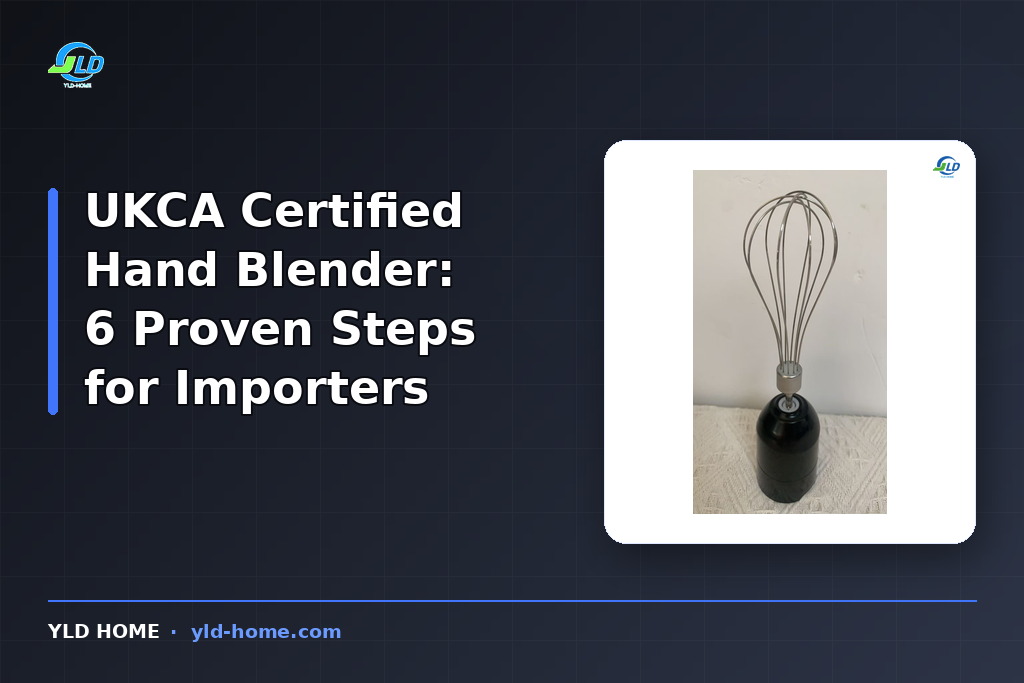
A prep kitchen does more than blend soup, and a machine that only blends spends most of the day idle. The YLD Home PHB-1000 Pro Kit bundles a 1000W immersion blender with a chopper bowl, a whisk attachment and a spice grinder, so one motor unit covers the three prep tasks that dominate a working kitchen: pureeing, whipping and chopping. The blender shaft is a 400mm stainless unit with two speeds and a turbo boost; the chopper handles herbs, onions and nuts; the whisk aerates cream and eggs in minutes.
Use case: prep kitchens, hotel breakfast operations, catering companies that produce pastry and sauces, and any kitchen where counter space and budget argue against three separate machines. The kit economics are strong: three appliances’ worth of function at roughly the price of one and a half. It is also a favourite for mobile catering, where every kilo of equipment has to earn its place in the van. For prep kitchens that want a compact back-up unit alongside the kit, the 2-in-1 hand blender pairs neatly with the same spare-parts stock.
The operational caveat is that a multi-function kit’s motor is optimised for the blender, so the chopper and grinder are best used in short bursts — fine for mise en place, not for industrial quantities. For kitchens whose prep is varied but not enormous, that trade is worth making. Catering colleges and training kitchens also buy it for that reason: one machine that demonstrates every technique. When a buyer needs flexibility across the menu rather than raw scale, the PHB-1000 Pro Kit is the best hand blender for restaurants UK procurement can specify for multi-purpose prep — a single SKU, a single spare-parts list and one power point.
See the multi-function set in action — blender, chopper and whisk working through a real prep shift — before you spec a kit for your kitchen:
YLD Home product video: multi-function immersion blender set
Buyer’s Checklist: What to Verify Before You Order Commercial Hand Blenders Wholesale
Whether you are buying one of these hand blenders for your own kitchen or a container for resale, run this checklist before you commit:
1. Voltage and plug: confirm 220–240V and BS 1363 UK plug on every unit, with UKCA/CE certification paperwork included.
2. Duty cycle: ask for the rated continuous-running specification, not just watts. A 1000W commercial motor outlasts a 1500W domestic one.
3. Shaft material and length: stainless (304/316), removable, and long enough for your largest pot. 400mm is the minimum for batch work.
4. Spares and service: confirm shafts, blades and seals are available in the UK or on reorder from the factory, with prices.
5. Warranty: 12 months is standard; 24 months indicates a factory that trusts its build quality.
6. Ruido: under 85dB under load keeps kitchens usable and staff happy.
7. MOQ and lead time: wholesale MOQ 1,000 units per model, lead time confirmed at quotation.
8. Certification pack: Declaration of Conformity, test reports and importer details for food-safety audits.
9. Sample policy: order one unit at cost and run it in a real service before committing volume.
10. Volume pricing: ask for price breaks at 1,000 and 5,000 units; standardise one model across sites to minimise spares. Current wholesale terms and volume ordering details are published on our wholesale page.
FAQ: Best Hand Blender for Restaurants UK
Q1: What is the best hand blender for restaurants UK kitchens on a budget?
The YLD Home PHB-800 offers genuinely commercial credentials — 800W, stainless shaft, two speeds — at the lowest entry price, making it the value pick among commercial hand blenders for new restaurants and takeaways; for high-volume soup lines, the CPB-1200 is the best cost-per-service option.
Q2: What wattage do commercial kitchens actually need?
For batch work in 40-litre pots, 800W minimum; 1200W is comfortable; 1600W handles 80-litre kettles. Below 600W you are buying a domestic machine that will overheat under professional use — YLD Home’s PHB-800, CPB-1200 and PressPro 1600W map exactly onto those three classes.
Q3: Can a cordless blender replace a corded one in a commercial kitchen?
For outside catering and events, yes — the YLD Home CIB-600 delivers event-scale blending without a socket. For continuous batch production, a corded unit remains more powerful and never needs charging. Many caterers run both.
Q4: What is the MOQ for commercial hand blenders when buying wholesale?
Wholesale MOQs start at 1,000 units per model from the factory, with better price breaks at 5,000 and 10,000 units. UK distributors and catering wholesalers can usually supply single units at trade prices, and YLD Home publishes its MOQ and price-break table on request. Our hand blender manufacturer in China guide explains how factory MOQ structures work.
Q5: What certifications should the supplier provide?
UKCA/CE conformity documentation, RoHS compliance and test reports for the exact model — YLD Home ships this pack with every commercial order, and you keep the Declaration of Conformity on file for audits.
Q6: How long do commercial immersion blenders last?
With proper care — strip-down cleaning, no running dry, spare shaft rotation — a commercial unit gives 3–5 years of daily service; domestic units in the same role fail within months. YLD Home designs its commercial models around that service life, with reorderable shafts, blades and seals.
Q7: Are spare shafts and blades available for these models?
Yes — YLD Home commercial models keep shafts, blades and seals on reorder, and Waring and Robot Coupe have UK service channels. Confirm spares pricing before buying.
Q8: Do you offer volume pricing for chains and distributors?
Yes — volume pricing, MOQ 1,000 units and lead time confirmed at quotation are available. Contact YLD Home for a commercial quote with certification pack and samples.
Official references: UKHospitality — the UK hospitality trade association
Equipping one kitchen or twenty? Compare these hand blenders in the full commercial blender range, then get factory-direct pricing — MOQ 1,000 units, UKCA-certified, with spares and samples. Get Wholesale Price from YLD Home today.